FTSE 100 trades above key resistance level

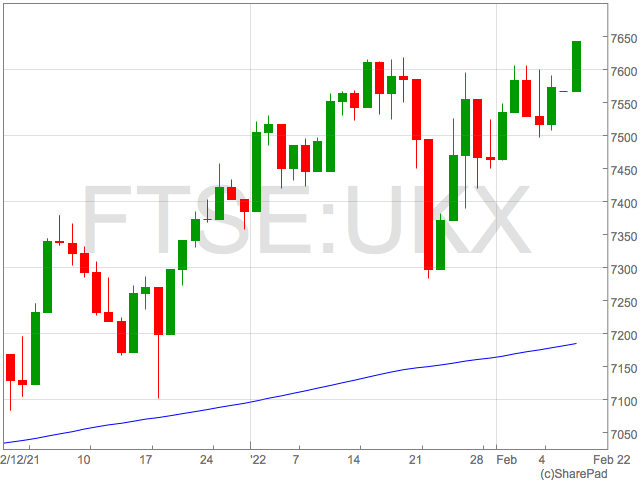
The FTSE 100 rallied on Wednesday to trade above a key resistance level that capped gains in January and potentially opens the way for further gains in the index.

The FTSE 100 traded above 7,630 on Wednesday having broken through the 7,619 mark that proved a bridge too far for London’s leading index in January.

Having pushed through 7,640, the FTSE 100 traded at the highest levels since the beginning of the pandemic in a broad rally which saw most sectors gain. Technical traders will now be looking for a consolidation in the 7,620-7,630 region for the FTSE 100 to form a base for the next higher.
Notwithstanding the favourable FTSE 100 price action, investors will also take confidence from the favourable macro picture and the composition of the index.

With a strong weighting towards commodity shares, the index is shaping up to benefit from a continued rally in commodity prices.

BP and Shell have recently reported strong revenue generation on higher oil prices and with many analysts predicted $100 per barrel prices in the short term, the stage is set for a move to the upside in the oil majors.

Couple this with surging metals prices and favourable conditions for the miners, the index is set to enjoy support in the short term.

GlaxoSmithKline

Although most sectors rose on Wednesday, there was a drag in the form of GlaxoSmithKline which dipped 2% after it announced earnings for the 2021 full year. GSK’s revenue grew on 5% on a constant currency basis, but it wasn’t enough to please investors who wanted a more solid strategic outlook given the potential sale of their consumer business.

“Our experts tell us the spotlight is focused on the consumer health spin-off, set to occur mid year, following news of Unilever’s three unsuccessful bids and reported Private Equity interest.  The market eagerly awaits a more detailed strategy overview at GSK’s capital markets day in late February,” said Sebastian Skeet, Senior Analyst for healthcare sector clients at Third Bridge.
SulNOx Investor Presentation Feb 2022

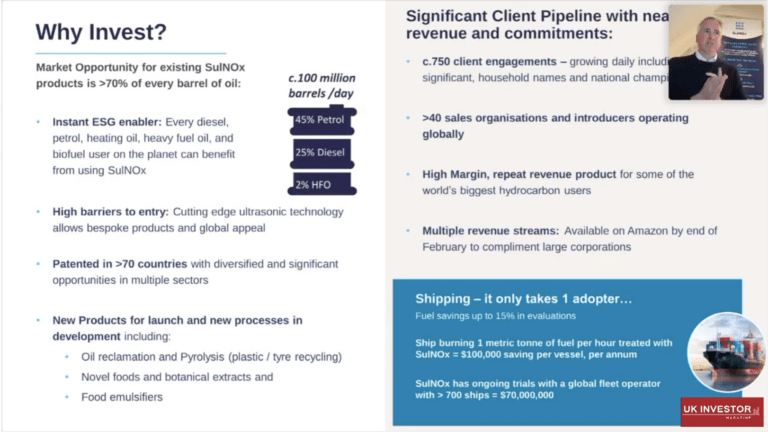
SulNOx presents at the UK Investor Magazine & AQUIS Virtual Investor Event. SulNOX is a Greentech company providing next generation, natural solutions, for immediate progression towards carbon neutrality.

Download presentation slides.

SulNOx are inventors of natural, biodegradable fuel conditioners which demonstrate significant fuel savings for users of all liquid hydrocarbon fuels including petrol, diesel and biofuels. SulNOx have demonstrable savings of c.10% in multiple, long-term tests on cars, vans, loaders, buses and trucks and emerging data from an ongoing, large scale shipping trial. SulNOx formulations improve combustion by increasing the availability of oxygen to the fuel and adding significant lubricity.

Given the amount of emissions also depends on the quality of combustion, SulNOx dramatically reduces Particulate Matter emissions (e.g smoke and soot > 50%) and greenhouse gases like CO2and NOx. 

SulNOx is a key ESG enabler for users of fossil fuels, providing increasingly recognised solutions to immediately improve air quality and combat global warming at a time when climate is top of the global agenda. 

Good Energy Investor Presentation Feb 22

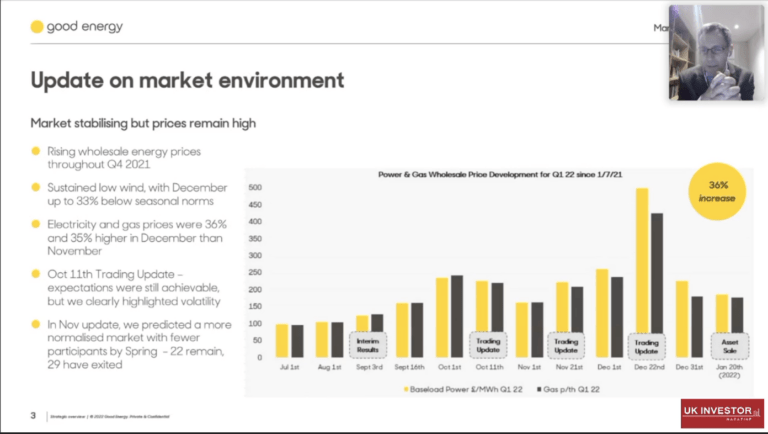
Good Energy is a generator and supplier of 100% renewable power and an innovator in energy services. It currently owns two wind farms, six solar farms and sources electricity from a community of 1,600 independent UK generators.

Download Presentation Slides Here

 Since it was founded 20 years ago, the company has been at the forefront of the charge towards a cleaner, distributed energy system. Its mission is to support UK households and businesses generate, store and share clean power.

Good Energy is recognised as a leader in this market, through our green kite accreditation with the London Stock Exchange and as the only energy supplier with Gold Standard Uswitch Green Tariff Accreditation for all tariffs.

National Milk Records Investor Presentation Feb 22

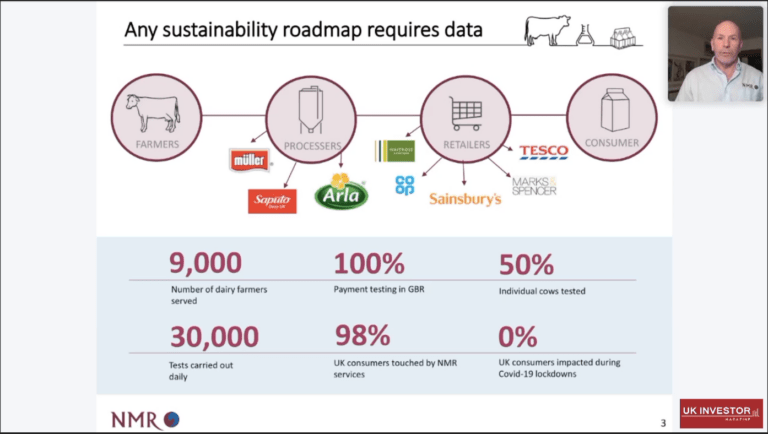
NMR is the leading agri-tech supplier of management information to the UK dairy supply chain. Through a team of self-employed milk-recorders, it collects and tests milk samples for approximately 50% of the UK’s two million cows.

Download Presentation Slides

In addition, its laboratories provide payment testing and disease testing services for Britain’s milk processors. It is currently piloting its revolutionary GENOCELLS technology, a genomic testing service under its brand, GeneEze, which will identify the genetic potential of cattle from a very young age.

NMR has a joint-venture laboratory in the Republic of Ireland providing similar services to farmers and processors across the whole of Ireland. Another division of the Group is a livestock traceability business, Nordic Star, which services the UK dairy and beef sectors.

John Menzies shares fly on takeover approach

Shares in aviation company Menzies soared on Wednesday after the group rejected what it called a ‘highly opportunistic’ approach from a Kuwaiti rival.

Menzies received 510p per share cash offer which they said undervalued the company and does no reflect their propsects.

Menzies had previously rejected a 460p from Kuwaiti company National Aviation Services Holding. Menzies shares rose 36% to 456p as they unanimously rejected the bid.

“The Board of Menzies has unanimously rejected this unsolicited and highly opportunistic Proposal, which we believe does not reflect Menzies’ true intrinsic business worth or its prospects,” said Philipp Joeinig, Chairman and CEO of John Menzies plc.

“Menzies continues to make good progress with strong performance across a number of service lines, which together with productivity gains, saw the Group to finish last year strongly”

“This strong performance and momentum in 2021 has continued in 2022 with further contract wins and renewals alongside the continued recovery of global flight volumes. The Board remains fully confident in the recovery and outlook for the global aviation services industry as it returns to pre-pandemic trading levels and benefits from long term structural growth drivers. The Board believes the strong portfolio mix, positioning of Menzies and the ongoing execution of Menzies’ strategy will create significant value for shareholders in the near and medium term.”

Menzies currently has a market cap of £418m and has announced a number of new contract wins in recent months.

GlaxoSmithKline, UK house prices, and Sovereign Metals with Alan Green

Average UK house prices hit a record high of £276,759 in January according to data from Halifax. This is strong backdrop for Barratt Developments who updated the market with strong forward reservations and we discuss whether this will be enough to offset fears of a slowdown in the UK housing market.

GlaxoSmithKline reported a 5% increase in revenue for the last year helped by strong pharmaceutical sales. As a FTSE 100 heavy weight, we delve into the numbers and the shares outlook.

Sovereign Metals is the owner of a rare rutile asset that produces Titanium for a range of applications including white paint. The market is awaiting a further assessment of their assets which could make their current £100m market cap look very good value.

BATM Advanced Communications is trading near year lows and we delve into their biomedical operations and explore potential value in the company.

GlaxoSmithKline profits rise on strong pharmaceutical sales

GlaxoSmithKline have released Q4 results and unveiled a 1% CER increase in operating profit to £895m driven by a 9% jump in revenue to £9.5bn.

A strong 4th quarter meant GSK recorded £34bn turnover in 2021 which was flat on actual exchange rates but rose 5% on constant exchange rates.

The group benefits from strong pharmaceutical sales providing a welcome boost to revenue but some analysts cautioned on the GSK’s pipeline and sales of key treatments such as Shingrix.

“Despite an encouraging performance in Q3, GSK’s shingles vaccine Shingrix – the key revenue driver and therefore swing factor – suffered at the hands of Omicron and a global focus on prioritising Covid boosters,” said Sebastian Skeet, Senior Analyst for healthcare sector clients at Third Bridge.
“Full year shingrix sales came in at 9% lower YoY although management expects strong double digit growth in the year to come. In addition, pipeline woes continue as Chief Scientific Officer Hal Barron leaves for a biotech start-up. Only time will tell how successful his efforts were to revitalise GSK’s pipeline with some bold bets.”

Glaxo received three major product approvals in 2021 including HIV drug Apretude and COVID-19 treatment Xevudy.

GlaxoSmithKline said profits are expected to rise 12-14% in 2022 which would exclude any contributions from COVID-19 treatments. The company is also gearing up for the sale of the consumer health business following interest from Unilever.

“Things are ticking over nicely at GlaxoSmithKline as the group gears up to separate its Consumer Healthcare business later this year. This arm of the business garnered a lot of attention when Unilever expressed an interest in buying it, but there’s been no word of another potential suitor. The group offered very few details on the future plans for Consumer Healthcare, but a comprehensive outlook and strategy has been promised on 28 February,” said Laura Hoy, Equity Analyst at Hargreaves Lansdown.

GlaxoSmithKline will pay a dividend of 23p for Q4 totalling 80p over the full year.

New AIM admission: Artemis Resources Western Australian projects

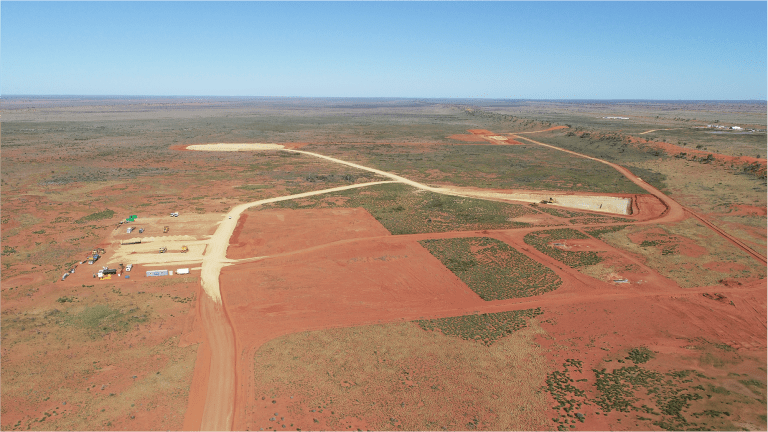
Artemis Resources Ltd has 100% interests in two projects in the same area as existing resources north of Perth in Western Australia. Retaining 100% stakes means that the company will have flexibility when it comes to finding partners to exploit any commercial resources.
The company’s Paterson Central project is adjacent to the Havieron project that is being developed by Newcrest Mining and Greatland Gold (LON: GGP).
Artemis joined AIM so that it can access money from European investors. Any investors that want to switch their shareholding from ASX to AIM or the other way round can do so on the...

FTSE 100 dips despite strong commodity shares

The FTSE 100 flirted with gains on Tuesday as commodity shares rallied on strong iron ore prices and a respectable set of results from BP.

Miners dominated the FTSE 100 top risers on Tuesday with Glencore, Antofagasta, Rio Tinto and Anglo American rising between 2%-3.5% in early trade.

News China are going to push back green targets on steel production helped Iron Ore break through $150/t and provided a boost to the outlook of mining profits.

BP reported its highest profit on more than a decade and announced a $4bn share buyback programme which saw its shares rise over 1%. However, analysts pointed to the possibility of taxes on oil firms to help tackle the cost of living crisis as reason to be cautious around major energy companies.

“BP followed Shell by reporting bumper profits but both companies probably wished the timing didn’t coincide with the rise in the UK energy price cap which piles pressure on households already facing a cost of living crisis,” says Russ Mould, investment director at AJ Bell.

“The UK Government has ruled out a windfall tax for the oil and gas sector for now, but the threat of a legislative intervention hangs in the air given the contrast between voters struggling to heat their homes and two of Britain’s biggest companies announcing such strong results and billions in giveaways to shareholders.”

Ocado

Ocado shares sank 10% after pre-tax profits accelerated on higher development costs despite a 7.2% increase inn full year. revenue to £2.5bn.

“As household incomes are stretched thinner than they have been in a very long time, more premium options like M&S and Ocado food may find themselves rubbed off shopping lists. Ocado’s core retail operation was a natural beneficiary of lockdowns, as the world shifted to online shopping. A reasonable portion of that increased demand should be permanent. However, Ocado is also battling against very strong comparatives from the pandemic, and growth looks lacklustre. It’s positive it can stoke more impressive levels of growth, but this may well prove more challenging in an inflationary environment,” said Sophie Lund-Yates, equity analyst at Hargreaves Lansdown.

“The real driver of subdued market sentiment comes from commentary around Ocado’s Solutions business. Enormous amounts are being funnelled into building out the Ocado Smart Platform and Customer Fulfilment Centres.”

BP shares gain as higher oil prices lift profit

BP shares rose on Tuesday after the oil and gas major announced a significant increase in profits driven by higher oil and energy prices.

Underlying RC profit for the 2021 year was $12.8bn compared to a $5.7bn loss in 2020.

BP shares rose 1.3% to 414p on news the sharp increase in profit is being returned to to shareholders in the form of dividends and sharebuybacks.

BP’s ordinary dividend for the fourth quarter will increase to 5.46 cent per share, up from 5.25 cents in the same period last year.

“2021 shows bp doing what we said we would – performing while transforming. We’ve strengthened the balance sheet and grown returns. We’re delivering distributions to shareholders with $4.15 billion of buybacks announced and the dividend increased,” said Bernard Looney, Chief executive officer.

BP benefited from higher energy prices and recorded average oil prices of $63.60 in 2021, rising from $36.63 in 2020.

“A week after Shell reported surging profits driven by their gas portfolio, BP has announced earnings that have also been bloated by the high oil and gas price environment. The company announced RC profit for the quarter of $4.1 billion beating consensus expectations of $3.9 billion, and a full year result of $12.8 billion. BP will look to increase its dividend, buy back shares, and continue investing in their energy transition strategy,” said Allegra Dawes, senior analyst at Third Bridge.

BP also took the opportunity to update the market on their clean energy activities that include offshore wind in New York and the establishment of a network of EV charging points.

“While oil majors have maintained that their traditional hydrocarbon businesses are essential for funding and enabling the energy transition, they are coming under increased pressure to decarbonize and invest in green energies,” said Dawes.

“BP has embarked on an aggressive strategy, with oil and gas production expected to be reduced by one million barrels of oil equivalent a day by 2030. They are also planning to develop a portfolio of 50GW by 2030 in renewable energy while becoming a leader in solar over the same period.”