Unilever shares embrace inflationary pressures

Unilever shares jumped one Thursday after the group released third quarter figures that pointed to a 4% increase in turnover to €13.5bn.

Unilever’s revenue growth was combination of underlying sales growth of 2.5% and increasing prices of products.

The group said it had to increase prices in some regions to combat the impact of rising input costs.

Nonetheless, investors cheered the trading statement and Unilever shares rose 2.4% on Thursday morning.

“Unilever reckons inflation is here to stay. That’s bad news not just for investors in the consumer goods giant but also for central bankers,” AJ Bell financial analyst Danni Hewson.

“The like of the Federal Reserve will have been hoping inflationary pressures would ease sooner rather than later as they walk the tightrope of keeping prices from overheating while not choking off the recovery by raising interest rates too far and too fast.

“However, given the breadth of costs Unilever is exposed to and the fact that dealing with input costs is bread and butter for a consumer goods company, a warning that inflation will be higher in 2022 carries weight.”

Analyst Danni Hewson also highlighted the impact rising costs and rising prices would have on margins, in that there would be little change in the coming year.

“For now Unilever hopes price increases, running at the highest rate in years, will keep margins flat year on year but the company faces its own balancing act of not increasing prices so much that its products are no longer competitive. It is a real test of the strength of the company’s brands,” Hewson said.

Dividends

Investors would have also been happy to see sales figures that posed no threat to the resilience of Unilever dividend that had been maintained throughout COVID-19 restrictions.

“All too easily overlooked is the group’s dividend. Unilever declared a quarterly pay-out of 35.98p per share for the quarter. The group paid dividends throughout the pandemic, demonstrating the sheer strength of the business, which comes from selling millions upon millions of everyday products to consumers all around the world, each and every day,” said Steve Clayton, HL Select fund manager.

Barclays posts record profits for Q3

1

Barclays has posted record pre-tax profits for the third quarter.

Profits hit £6.9bn, which is up from profits of £2.4bn that were made in the same period a year previously.

“We continue to support our customers and clients through the COVID-19 pandemic, have achieved a double-digit RoTE in every quarter year to date, and expect to deliver a full-year RoTE above 10 per cent,” said James E Staley, the group’s chief executive officer.

“While the CIB performance continues to be an area of strength for the group, we are also seeing evidence of a consumer recovery and the early signs of a more favourable rate environment. Against that backdrop, we are focused on balancing cost efficiencies with further investment into high-returning growth opportunities.”

The latest figures from the bank have beat expectations from the City. Barclays shares have doubled in the last year and opened today at 196p.

“Today’s Q3 report from Barclays continued to show strong corporate and investment performance, which had their best Q3 YTD on a comparable basis, along with a good rate of consumer recovery,” Walid Koudmani, market analyst at financial brokerage XTB comments

“Overall it was a positive report which also pointed to higher expectations of return while highlighting the need to evaluate costs and adjust dividends as well as potentially implementing share buybacks as appropriate.”

Tesla posts record earnings

0

Tesla has posted record quarterly net earnings thanks to a high sales of electric vehicles.

The news comes despite global supply chain issues leading to a shortage of computer chips.

Tesla posted $1.62bn profits, which is higher than the $1.14bn profits it made in the second quarter of this year which was the previous record.

Jesse Cohen, senior analyst at Investing.com, said: “Elon Musk delivered another terrific quarter as Tesla continues to execute flawlessly.”

“It has done an outstanding job navigating through global supply chain and logistics challenges, weathering the storm significantly better than rival automakers.”

Despite industry shortages, the company sales were up 72% compared to the same period last year.

“A variety of challenges, including semiconductor shortages, congestion at ports and rolling blackouts, have been impacting our ability to keep factories running at full speed,” said Tesla in a statement.

“We believe our supply chain, engineering and production teams have been dealing with these global challenges with ingenuity, agility and flexibility that is unparalleled in the automotive industry.”

Government borrowing below forecasts

0

UK government borrowing almost halved this year.

The number fell £7bn from September last year and was £21.8bn. It is still the second highest amount borrowed in a September since records began.

Borrowing this year has been under the forecasts from OBR. The national debt is now up to £2,218.9bn, which is 95.5% of the UK’s gross domestic product.

“Stronger-than-expected tax receipts continued to account for the bulk of the borrowing undershoot, though spending has also fallen back more quickly than anticipated,” said Martin Beck, senior economic advisor to the EY ITEM Club.

“In both cases this reflects a much stronger recovery in activity than the OBR’s cautious forecast. These improvements are set to be sustained, and the EY ITEM Club expects full-year borrowing to come in at just over £200bn, well below the OBR’s forecast of £234bn.”

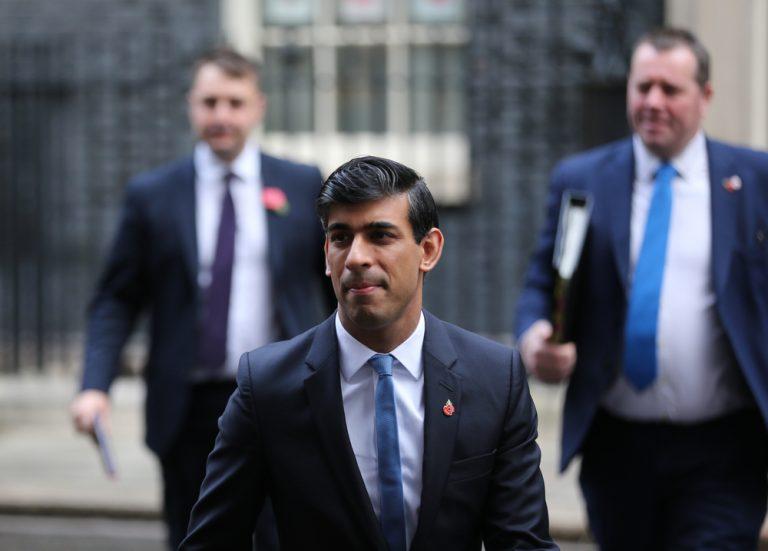
Rishi Sunak commented: “Our recovery is well underway – with more employees on payrolls than ever before and the fastest forecast growth in the G7 this year – but the pandemic has had a huge impact on our economy and caused our debt levels to rise.

“At the Budget and Spending Review next week I will set out how we will continue to support public services, businesses and jobs while keeping our public finances fit for the future.”

BUA FIT Breaks £400,000 in Pre-Seed Funding

UK Investor Magazine are excited to announce that BUA FIT is now overfunded on Seedrs in their pre-seed funding round between private and public investors. 

BUA FIT is a marketplace platform for outdoor and online group fitness classes. Their secret sauce is to connect fitness professionals to consumers with e-commerce and social fitness technology. Their team is posting well over 10,000 consumer transactions connected to trainers at their super early pre-seed stage. 

They are backed by the founding partner of a venture capital firm and 5 professional athletes. This includes rugby superstar, Rob Kearney, and Australian marketplace founder, Kevin Cliffe, who floated his company on the London Stock Exchange. Cliffe says “The data is looking really strong for scale” after he re-invested with Kearney into the fitness tech brand. BUA means ‘victory’ in Gaelic and the brand comes to the table with further support from Google for Startups and London Sport’s Sport Tech Hub. 

 The appetite for health and fitness apps is strong with consumer spending jumping 70% in the last year in Europe to a record $544 million. This fundraise gives flight to their goal of reaching 1,000 classes a month whilst also deepening their product development based on customer feedback.    

The raise currently supports a newly appointed Sales Manager, Sheikh Ceesay, who is heading up the corporate arm of the start-up. Sheikh comes with over 12 years’ marketing experience at the leading gym brand, Fitness First, he notes “BUA is filling a huge gap in the market and when Dave demonstrated the traction to date I could see how quickly this platform could scale and I couldn’t miss out on the opportunity.” This new hire brings the BUA team to 5 full-time with a total of 12 including part-timers, led by Dave Stapleton, CEO, and Sam Woodbridge, CTO. Stapleton bootstrapped the brand for just shy of 3 years to follow his passion in fitness.  

BUA FIT’s founder and CEO, Dave Stapleton, comments,    

“As it stands, we’re a tiny company with HUGE ambitions. Our unit economics is looking strong for scale. Over the next few years, the plan is to service millions of people to take the platform across the world. Before this though we need to prove the model further in London and the UK.”   

Check out their pitch on Seedrs https://www.seedrs.com/buafit or if you are interested in private investment, please contact Dave directly on dave@buafit.com.  

FTSE 100 shakes off inflation fears, miners fall

London’s leading index recovered Fromm early losses on Wednesday as investors looked past the threat of rising prices.

CPI Inflation fell to 3.1% as the impact of ‘Eat Out to Help Out’ fell out of core inflation data.

The FTSE 100 was trading 7,222, up 0.07% shortly after midday in London.

“The FTSE 100 started a bit lower on Wednesday after UK inflation moderated to come in just short of expectations,” says AJ Bell financial analyst Danni Hewson.

“However, these figures are already firmly in the rear-view mirror and probably bear little comparison to current realities given the surge in energy prices and mounting supply chain issues seen in October.”

Despite inflation easing slightly there is a consensus building that the Bank of England will have to act given inflation at 3.1% is way above their 2% target.

Rising fuel prices and energy bills are the main driver of inflation and are eroding household spending, igniting fears economic conditions are likely to deteriorate.

“UK CPI announced this morning was a little behind expectations, there’s a lot of noise and distortion in the release. I don’t think it will change any minds on the MPC. The real anxiety that the committee need to decide on is rising fuel prices over the next five months, as they will inflate headline inflation and will depress retail sales, but they could feed through into higher wage settlements,” said Guy Foster, chief strategist at wealth manager Brewin Dolphin.

“Edging interest rates up makes sense, although in truth consumers are not particularly exposed to interest rate risk in the short term. Energy bills will be hurting them much more than the Bank of England is likely too. The Chancellor could cut VAT on utilities bills but it feels at odds with the prevailing COP26 mood.”

Miners fall

Mining companies were among the biggest fallers of Wednesday as investors digested further bad news from Chinese property developers. China are the biggest consumer of natural resources with much being used in the construction industry.

Rio Tinto, Antofagasta and Anglo American were down 3.5%, 3.3% and 1.7% respectively.

Antofagasta was also hit by poor production figures.

“An iffy production report from Antofagasta has put the miner on the back foot. Blaming the weather would often get short shrift from investors but it is possible to have some sympathy with the epic drought conditions Antofagasta is facing at its copper operations in Chile,’ said Danni Hewson.

“Getting metals out of the ground requires plenty of water and Chile has faced years of minimal rainfall. There is also some concern about looming changes to Chilean mining royalties which could see the company get a smaller share of production revenues.”

Argo Blockchain, Bellway and UK Inflation with Alan Green

Alan Green joins the Podcast as we drill down into the biggest themes in markets and a selection of UK shares.

For this Podcast it would be hard to avoid the latest inflation data and what it means for a potential rate hike from the Bank of England this year. We explore what this could mean for markets.

Alan has been watching Argo Blockchain and we delve into the latest developments and whether the valuation is justified.

Having discussed Barratts last week we compare Bellway and their response to supply chain issues after a bumper set of results.

MoneySuperMarket is also paid consideration and we give our views on how the business should evolve if investors are to see shares reach recent highs again.

Lorry drivers in UK hit record lows

0

New figures have found the number of lorry drivers in the UK to have fallen by 53,000 over the past four years.

The Office for National Statistics (ONS) found the number of lorry drivers in the UK to fall by 17% to 268,000.

Fewer people from the EU, an ageing workforce and higher costs amid Brexit have there is a much lower number, which is having widespread effects across multiple industries. The shortage of lorry drivers has led to empty supermarket shelves and a shortage in petrol across the UK.

The Government is issuing visas for EU lorry drivers to tackle the shortage. It is also changing the driving test requirements to encourage more people to join.

Inflation dips in September

0

UK inflation has dipped slightly, however, still remains above the Bank of England target.

In August inflation hit its highest rate in nine years but has since dipped back down to 3.1% in September.

“Annual inflation fell back a little in September due to the unwinding effect of last year’s ‘Eat Out to Help Out,’ which was a factor in pushing up the rate in August,” said Mike Hardie, who is the head of prices at the Office of National Statistics.

“However, this was partially offset by most other categories, including price rises for furniture and household goods and food prices falling more slowly than this time last year.”

The Bank of England has said that it expects inflation to jump to 4% next year.

The inflation report found petrol prices to jump to an eight-year high. The cost of petrol in September was 134.9p per litre, which is 113.3p per litre the same period a month earlier.

Analysts highlighted the problems facing the Bank of England who face inflation well above their target but now begins to fall back.

“The debate surrounding temporary versus persistent inflationary pressure intensifies this morning as the September inflation rate remained above target, 3.1% in the 12 months to September 2021 – down from 3.2% in August,” said Sukhdeep Dhillon, Senior Economist at BNP Paribas Real Estate.

“Although temporary factors continue to push up inflation, the rate is likely to remain elevated over the next two years, and this, combined with slowing output and an earlier than anticipated potential rate hike is creating a real tightrope for the Bank of England to walk.”

Netflix boosted by Squid Game

0

Netflix expects to have added 8.5 million new subscribers added in the next quarter, thanks to the success of Squid Game.

Whilst previous expectations were 8.3 million, the South Korean show that came out earlier this month has been the most-streamed original show.

It has been estimated that the show will create almost $900 million in value for Netflix.

“Like some of our other big hits, Squid Game has also pierced the cultural zeitgeist, spawning a Saturday Night Live skit and memes/clips on TikTok with more than 42 billion views,” said the company.

Shares in Netflix have grown three percent, whilst revenue at the group has also increased 16 percent to $7.5bn.

Netflix co-CEO Reed Hastings said: “We’re in uncharted territory. We have so much content coming in Q4 like we’ve never had, so we’ll have to feel our way through and it rolls into a great next year also.”