US bipartisan Infrastructure bill only the first step says fund adviser

0

The US bipartisan Infrastructure Investment and Jobs Act was first introduced in the summer and swiftly passed.

It includes around $550bn in new federal investment in America’s roads and bridges, water infrastructure, resilience, internet, and more.

It is intended ‘to grow the economy, enhance US competitiveness, create good jobs, and make the US more sustainable, resilient, and just’.

However, there are hopes that there is more to come, as it left some stones unturned.

Will Argent, fund adviser to the VT Gravis Clean Energy Income Fund (CLEAN) said: “In the US, the bipartisan Infrastructure Bill disappointed somewhat on climate change initiatives, but it is a start and includes various elements that will promote clean energy alongside climate resilience measures.”

There has been allocations to rebuild the electricity grid, which includes thousands of miles of new power lines and expanding renewable energy capacity as well as elements designed to promote the electrification of transport and improving the network of EV charging points.

It should be noted, however, that the bipartisan deal is a first step,” says Argent, “There is a proposed Democratic-only Budget Bill of c.$3.5trn in the pipeline, which is meant to address President Biden’s promise to move the country towards a carbon-free economy. Within this there is a proposed $150bn payment program designed to reduce greenhouse gas emissions from the electricity sector.”

Utilities could be rewarded to increase their production of power from low-emissions sources like solar, wind and hydro. There could also be penalties for those that don’t.

“Regardless of the exact monetary figures, investment in the US decarbonisation effort will be a very long-term structural dynamic.”

“Companies with strong strategic positions in the US renewable energy sector will likely benefit with opportunities arising from future renewable energy generation capacity build out in the country – whether the direct result of Federal initiatives, State-level initiatives, or broader corporate sustainability ambitions,” says Argent.

JD Sports forays into beauty business after acquiring stake in Hairburst

0

JD Sports has been considering venturing into other industries for some time

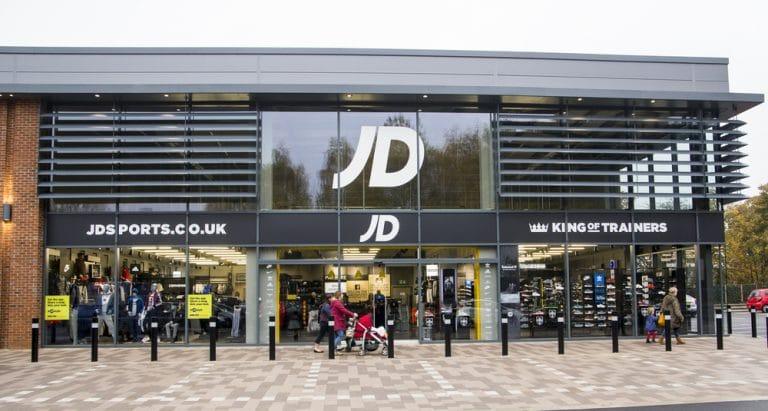
JD Sports is all set to move into the beauty industry having acquired a stake in Hairburst, an online beauty brand.

Hairburst, which sells vitamins, shampoos and styling products, has 45 staff and 1.5m followers across social media was founded in 2014.

The size of the deal has not yet been confirmed. It has been suggested that JD Sports will assist Hairburst in buying a number of bolt-on acquisitions to grow its collection of beauty brands.

It is a signal of the growth of online brands within the beauty industry.

JD Sports has also signalled its intention to grow beyond the sportswear industry.

It had considered making offers for both Debenhams and Topshop as the high street brands became available earlier this year.

While some shareholders expressed concerns about taking the business away from its area of expertise.

Peter Cowgill, executive chairman, had played down the company’s interest in other companies saying that JD Sports “looked at everything which either extended its geographical reach or sold other products “which are relevant to a style-conscious consumer”.

Cowgill said of the Hairburst stake: “We are pleased to have made this initial acquisition in the beauty sector and have been impressed by the capabilities of the management team, who have a strong identity and connection with millennials and Gen Z consumers.”

The JD Sports share price is down by 1.04% on Monday.

Rolls-Royce share price jumps after securing deal with US Air Force

0

Rolls-Royce deal could earn $2.6bn for firm

Rolls-Royce confirmed on Monday that it was chosen to provide engines for the US Air Force B-52 Stratofortress bombers.

The deal could be worth as much as $2.6bn for the British engineering company.

The F-130 engines will be made at Rolls-Royce’s Indianapolis, Indiana facility.

They were selected as replacement engines for the bombers, for an initial $500m six-year deal, which could reach as high as $2.6bn over the long-term.

The Rolls-Royce share price is up by 6.73% during the morning session on Monday, its highest point since June 2020.

“Rolls-Royce continues to bounce back. Having already seen a pick-up in its share price in recent weeks thanks to more restrictions being lifted on air travel which should benefit its plane engine maintenance operations, its shares have now hit an 18-month high after a new contract win. It has a struck a deal with the US Air Force which means its F-130 engine will power the B-52 for the next 30 years,” says Russ Mould, investment director at AJ Bell.

Jefferies analyst Andy Douglas told Reuters that the news “provides additional comfort to longer-term consensus forecasts and is a positive for sentiment”.

The new engines will enable the bombers to continue missions into the 2050s.

FTSE 100 moves up as oil prices nears three-year high

0

The FTSE 100 advanced 0.5% to 7,087, with oil producers and banks leading the way. European stocks did their best to press ahead, but Asia was more volatile.

“There were plenty of factors to trouble investors as the new trading week kicked off, yet there certainly isn’t panic in the air,” saysRuss Mould, investment director at AJ Bell.

Evergrande’s problems have not gone away, while “Inflation remains problematic for many companies and is hurting profit margins, and Germany’s elections failed to produce a clear winner which means short-term uncertainty until a coalition can be agreed.”

Nonetheless, investors have not been deterred from seeking more opportunities in the markets.

“The Brent Crude oil price continued to rally, rising 1.2% to $79.03 a barrel on supply concerns and putting it back at levels not seen since October 2018. That helped put Royal Dutch Shell’s share price at its highest level since March 2020, although it is still some way off its levels seen pre-Covid.”

“Many investors, including big asset managers, will be kicking themselves that they shunned oil stocks as part of a global shift towards more ESG-friendly companies. Despite the transition to renewable energy around the world, it is clear oil is still needed in today’s world.

FTSE 100 Top Movers

Rolls-Royce (7.37%), IAG (4.35%) and Compass Group (4.10%) are leading the pack during the morning session on Monday.

At the other end, Halma (-2.79%), Ashtead Group (-2.32%) and Antofagasta (-2.42%), have seen the biggest falls across the FTSE 100.

Bushveld Minerals confirms jump in revenue in half-year results

0

Bushveld’s cash or cash equivalents at $31.6m at end of June

Bushveld Minerals (AIM:BMN) made $47m over the six months to June 2021, as its revenue rose by 9% compared to the same period a year prior.

Despite overall sales being lower, the average realised price of vanadium was up.

Bushveld produced 1,574 metric tonnes of vanadium during this period.

Other operational enhancements, including a maintenance programme, raised Q2 production by 28.8% during Q2.

The AIM-listed company recorded an EBITDA loss of $10.8m, meaning its cash or cash equivalents was at $31.6m at the end of June.

During the period, approximately US$12.7mln was realised from the sale of the investment in Invinity Energy Systems PLC, although the profit on the sale is not included in EBITDA.

The profit realised on the original investment of US$5 million was approximately US$7.7 million.

The Bushveld Minerals share price is down by 3.24% on Monday morning.

“The operational stability and improved production performance achieved in the last two months of the period under review was carried through into the first two months of the second half, which bodes well for reducing unit costs in the remainder of the year,” said Bushveld chief executive Fortune Mojapelo.  

“We are confident of maintaining this rhythm, putting us on course to meet our production and cost guidance for the full year.”

China’s energy consumption policies see suppliers of Tesla and Apple halt production

0

Coming months generally the busiest time of the year for electronic goods

At factories in China, suppliers of Apple and Tesla have halted production in order to abide by the country’s energy consumption policies.

The news means supply chains will be interrupted ahead of what is generally the busiest time of the year for electronics goods.

Tighter controls on coal supplies, in addition to an increased focus on emissions, have resulted in a slowdown in a number of regions, which could act as a lag on the country’s economic growth.

Unimicron Technology, which supplies Apple, confirmed yesterday that three of its subsidiaries in China halted production for a number of hours in order to comply with government policy.

A host of other suppliers have made similar announcements.

Seeking yield in UK equities

By their nature, income investors aren’t known for their risk appetite. Rather than hunting for hot new trends, dividend hunters have tended to stick to the same process: backing time-tested assets in pursuit of reliable yields that will benefit from compounding.

For years, this method has held up. And then along came Covid: a macro shock that overturned the certainties of dividend investing. Many of the most reliable payers – some of whom had paid out for decades – were forced to slash their dividends. As fears of a financial crisis rose, banks were blocked from paying out. Bruised investors found themselves chasing a vanishing pool of potential yields.

Two years on and normality looks to be resuming – at least from above. According to one analysis (published by S&P Dow Jones Indices), around one third of the US blue-chips who suspended their dividend have now reinstated them, with more set to do so before long. In the UK, meanwhile, the FTSE 100 is tipped to deliver a healthy-looking average yield of 3.7pc.

Yet look under the surface and it’s clear that, even as markets remain buoyant, yield investors face a very different picture from two years ago. A climate of elevated asset prices, continued macro uncertainty, and the shifting definition of ‘safe haven’ will all likely weigh heavily on any income-strategy, and not just in the short term.

First off, valuations. While traditional dividend stocks – banks, energy majors, consumer staples – may not be obvious beneficiaries of the tech-driven bull-market that took hold in spring 2020, there’s no denying their prices have risen sharply. In many cases, dividend-paying stocks now exceed their pre-Covid valuations.

If those valuations prove to be sustainable, that won’t be a problem. But you don’t have to be an obsessive pessimist to take the opposite view. Could it be that the exuberant bull market in growth equities has shifted the gravity of markets more generally, inflating income stocks in its wake? And, if so, what happens if it runs out?

These questions present problems for all investors – but for income investors there is a particular risk. While single-figure yields might provide a fruitful investing strategy in a stable market, they are less useful in a turbulent one. Put simply: what good is a 6pc yield on a stock that then drops 20pc of its value?

If the possibility of a Covid- or inflation-inspired market correction weren’t enough to worry yield-seekers, there are other factors to consider too – many of which remain particularly pertinent to blue-chip dividend-payers.

Take ESG, for example. While oil majors and mining stocks have long been a portfolio staple for income investors – with some of the latter even managing to maintain their pay-outs in 2020 – their evergreen shine looks a little less bright in a market increasingly driven by environmental concerns.

For their part, BP and Shell – the FTSE’s biggest energy companies and long-term dividend stalwarts – have both published ambitious plans to ‘go green’, investing heavily in low-carbon technologies. It’s the feasibility of these projects, analysts say, which will determine their future profitability. Meaning that investors will need to do their ESG homework.

How about the FTSE’s non-energy dividend payers? Banking shares recently received a jolt when Threadneedle St overturned its temporary ban on paying dividends. And with expected yields of 3-4pc (with some forecasters predicting a tantalising 6pc), you can see why some income investors might be rushing back to the sector.

A safe bet? With markets still hyper-sensitive to inflation data, banking shares may well experience a rocky autumn. Yet many analysts point out that, while this short-term noise will affect valuations, investors can take comfort in the solid balance sheets which underpin the likes of Lloyds and Natwest. Which should help protect those payouts. 

The broader consumer sector looks strong too: with Unilever, Burberry and Diaego forecast to yield 3.93pc, 2.22pc and 2.08pc respectively. Tesco, meanwhile, comes in even higher, with an expected yield of 3.93pc – and a valuation that looks seriously cheap compared to its FTSE competitors. Even better, it’s dividend looks safe too.

And what can yield-seekers do to prepare the worst? Pre-2020, many will have operated on the assumption that – when growth expectations underwhelm – investment flows will inevitably head towards safe havens: making fixed-income bond funds, in particular, a savvy investment in an economic downturn.

But on that front, too, investors face a changed environment. After a turbulent year (which has seen bond funds swing between large outflows and inflows), bond prices remain volatile, as markets predict that inflation will prove more stubborn than policy-makers expected.

All in all, the end result is a mixed picture for income investors. Unless markets face a major upset, there will certainly be yields to be had. Investors just might need to tread slightly more carefully than they used to.


China bans all crypto transactions

Bitcoin down by over $3,000 since news broke

China’s central bank confirmed on Friday that all cryptocurrency transactions are now illegal, including Bitcoin.

“Virtual currency-related business activities are illegal financial activities,” the People’s Bank of China said, adding that it “seriously endangers the safety of people’s assets”.

At present, China is one of the largest markets for crypto in the world, and price fluctuations of cryptos are often caused by moves in the country.

Bitcoin has fallen by over $3,000 following the announcement.

China’s view of crypto is that it is a volatile, speculative investment, in addition to a means of illicit activities.

It has been illegal to trade crypto in China since 2019, however, activity has remained via foreign exchanges.

This year, there has been a robust, widespread crackdown, including a previous ban on mining crypto.

Sophie Skelton Managing Associate, Financial Regulation, Addleshaw Goddard, said: “Crypto is disrupting traditional investments and currencies in a rapidly evolving digital financial services landscape.”

“While we’re unlikely to see a blanket ban on crypto in the UK, it’s vital that the regulation keeps pace with technology to maintain confidence in the financial system.”

Argo Blockchain share price dips on news of Nasdaq floatation

1

In August Argo mined a total of 206 Bitcoins

Argo Blockchain, the only Bitcoin miner listed in the UK, confirmed it has raised $112.5m in a US share sale.

The firm is selling 7.5m American depositary shares, which is equal to 10 of its UK shares.

Argo confirmed in a statement that its US shares are valued at $15 each.

The shares began trading yesterday on the Nasdaq Global Market and will be listed under the ticker “ARBK.”

On Friday the Argo Blockchain share price is down by 12.89%, as well as being down by 27.24% over the past five days, as a result.

In August Argo mined a total of 206 Bitcoins, taking its tally for the first eight months of 2021 to 1,314.

The company made £6.83m of mining revenue in August and retained a holding of 1,659 Bitcoins.

The price of Bitcoin is down by over 5% over the last 24 hours to $41,451.

Mexican fast food chain Tortilla announces AIM float intention

0

Tortilla will also open up delivery-only kitchens

Tortilla, the Mexican food chain, is set to list on the AIM market in London.

In addition, it has confirmed plans to expand by adding 45 new restaurants over the next five years.

Currently the fast food company has 62 restaurants, of which 50 are in the UK.

Tortilla’s aim is to list on the AIM in order to capitalise on opportunities for growth.

The pandemic means the opportunity is there for expansion due to a “dramatically increased number of vacant units”.

Tortilla’s move will also include the opening of more delivery-only kitchens.

Richard Morris chief executive of Tortilla, said: “We are delighted to announce Tortilla’s intention to float on AIM, which marks an incredibly exciting milestone in our continued growth journey.”

“Since its launch in 2007, Tortilla has established a long-term track record of strong financial performance driven by considered expansion of the property portfolio and like-for-like growth.”

“The business has shown itself to be extraordinarily well positioned throughout the pandemic, as the Tortilla product proposition is well-suited to the growing delivery market and we have proved the brand’s flexibility to operate across a range of locations and formats, including smaller sites and cloud kitchens.”