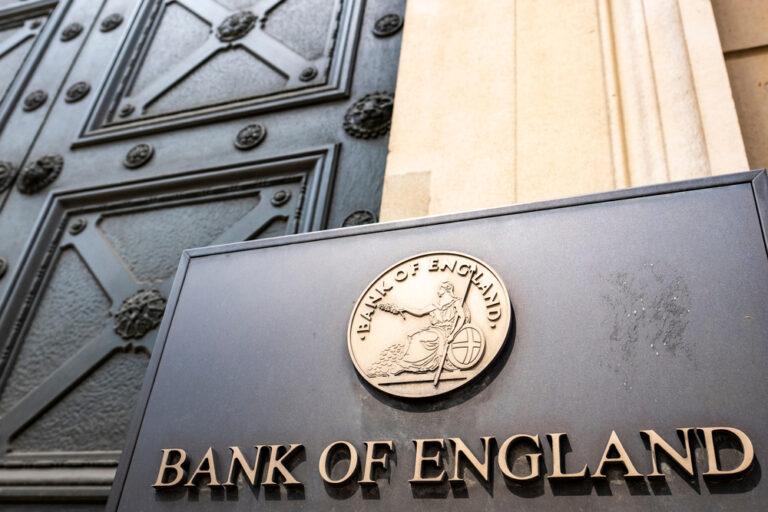
The Bank of England raises rates to 0.25%

The Bank of England has raised rates to 0.25% for the first time in three years in a surprise move that sent the pound and bond yields higher.

USD/GBP was 0.79% higher at 1.3367 and the UK 10-year gilt yield rose to 0.797% in the immediate market reaction. The FTSE 100 dipped slightly 7,241 but held onto 1% gains on the day.

The Bank of England had to balance the impact of soaring inflation on households and businesses with the economic impact of the new coronavirus variant. The possible negative impact of inflation won.

Inflation has recently hit 5.1% – the highest level for 10 years – driven by rising food and fuels costs. This proved too much for the Monetary Policy Committee who voted 8-1 in favour in hiking rates.

Today’s move would suggest the Bank of England is planning to walk a similar path as the Federal Reserve in embarking on a series of hikes to help fight rising prices.

However, trying predict what the Bank of England will do next could be a source of uncertainty because the Bank of England has surprised markets on a number of occasions now and provided mixed messages.

The Bank of England did say they saw inflation peaking around 6% in April. A sustained period of inflation would demand further action from the Bank of England to help preserve household spending power.

“Whilst there was some thought that the emergence of Omicron may delay any rate rises, the rise has only been marginal with rates moving from 0.10% to 0.25% and this is unlikely to slow the economy much,” said Dan Boardman-Weston, CIO at BRI Wealth Management.

“We think the Bank needed to send a message that they are taking the threat of inflation seriously and leaving rates at the same level in the same week inflation moved over 5% would have been poorly received.”

Petrofac’s woes show little sign of abating

Energy services provider Petrofac has suffered during the pandemic and a trading statement released today suggests their woes may persist for the foreseeable future.

The company said it expects revenue to be $3 billion and profit similar to last year and market expectations. Petfrofac recorded at $189 million loss in 2020.

Revenue of $3 billion would be less than the $4 billion recorded in 2020 and significantly less than 2019’s $5.5 billion revenue.

“Petrofac’s expecting full year revenue to come in significantly below last year’s as low order intake and coronavirus-related troubles continued to weigh on the business. While the Securities and Fraud Office investigation into bribery claims has finally been settled, the group will be feeling the impact of the ordeal for some time to come,” said Laura Hoy, Equity Analyst at Hargreaves Lansdown.

“Not only was it dealt a £77m pound fine, but the group was unable to do business in some of the most lucrative oil and gas markets which has had a significant impact on this year’s results.”

“Today’s update suggests the group’s hit the ground running as it rebuilds its order backlog under new CEO Sami Iskander. But there’s a long road ahead and covid-related headwinds aren’t helping matters. With revenue and profits expected to remain significantly below 2019 levels for the foreseeable.”

Sami Iskander, Petrofac’s Group Chief Executive, commented:

“In 2021 Petrofac has taken an important step forward, closing out the SFO investigation and embedding a strategy focused on future growth. During this period we have continued to deliver projects and operations safely for our clients worldwide, despite the ongoing challenges of the Covid-19 pandemic which continue to impact our current E&C portfolio.”

Having previously been included in the FTSE 100, Petrofac shares are a shadow of their former selves, trading at 111p on Thursday valuing the company at just £577m. Petrofac shares traded above 1,750p in 2012.

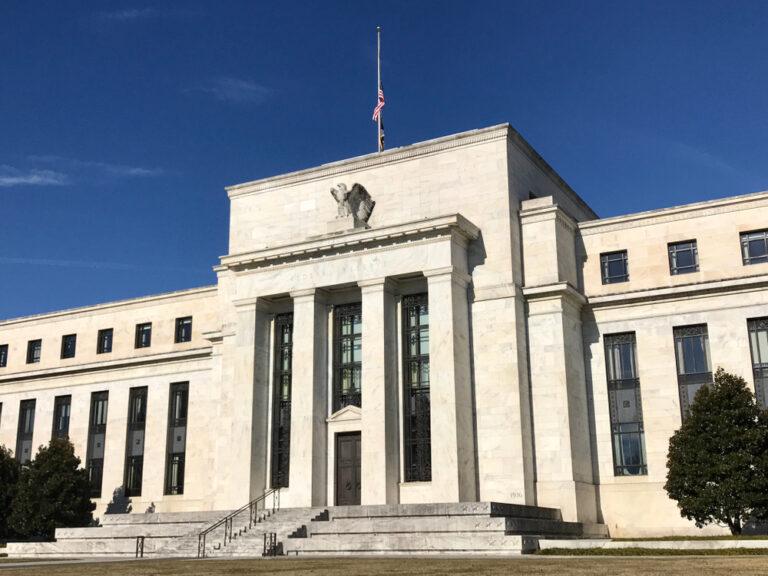
Stocks jump on hawkish Federal Reserve plans

Stocks have reacted positively to the decision by the Federal Reserve to taper their asset purchases in a hawkish turn of events on Wednesday.

The Federal Reserve said they planned to reduce their monthly asset purchases by $30 billion per month, double the previously expected taper pace of $15 billion.

The Federal Reserve also signalled there would be three rate hikes next year to help bring soaring inflation under control.

US rates are currently at 0.25% and the market now expects this to rise to 1% by the end of next year.

Global equites rallied on the clear guidance provided by the Fed and the promise they would act to bring record inflation under control.

“Markets certainly seem to have a spring in their step, with the major indices across Europe, Asia and the US all pushing forward,” says Russ Mould, investment director at AJ Bell.

“The US Federal Reserve’s monetary policy update last night has gone down well with the markets.”

“The prospect of three US interest rate hikes in 2022 would suggest the central bank has a clear plan to not let inflation get out of control. Equally, it isn’t being too aggressive to trip up the economy. This sense of balance is exactly what investors want, and an upbeat tone from the Fed certainly seems to have rubbed off on markets.

“The S&P 500 closed 1.6% higher last night, and Japan’s Nikkei followed suit with a 2% advance on Thursday. In mainland Europe, markets enjoyed gains of between 1.2% and 1.7%, while in the UK the FTSE 100 advanced 1.1%.”

News from the Federal Reserve come sin what will be a busy week for central banks – Thursday will see the Bank of England release their interest rate decision amidst soaring inflation and rising coronavirus cases.

No extra restrictions ahead of Christmas, government confirms

The UK health minister confirmed that there would be no tighter restrictions ahead of Christmas.

Gillian Keegan confirmed that no extra measures would be bought in ahead of December 25. Keegan also confirmed that extra measures would be bought in to protect businesses.

 “We do still have support in place for businesses,” Keegan sain on Sky News this morning.

“So we’ve still got VAT reductions, we’ve still got business rate cuts of 66 per cent, and we’ve still got recovery loans in place”.

Walker Crips swings to profit

0

Walkers have swung to profit for the first half of the year.

Revenues were up by 9.3% and increased from £14.35m to £15.69m. Profits grew from last years loss of £374,000 to a profit of £232,000.

“The Group reports a small profit at the half-year compared to the prior period loss, and continues to generate positive adjusted EBITDA and underlying operating cash, which enable continued support of our revenue and growth initiatives,” said Martin Wright, Chairman of the group.

“Headwinds include inflationary cost pressures and our focus continues to be on revenue growth, improving operating efficiency and cost control,” he said.

Shareholders received an interim dividend of 0.30 pence per share.

Boohoo lowers guidance, shares plunge

0

Boohoo has lowered its full-year sales growth guidance, from 25% to 12% – causing shares to plunge. Shares fell 11% this morning to 122.05p.

Despite strong demand, guidance was lowered due to continued supply chain issues and inflation.

Chief executive John Lyttle said: “The group has gained significant market share during the pandemic. The current headwinds are short term and we expect them to soften when pandemic related disruption begins to ease.

“Looking ahead, we are encouraged by the strong performance in the UK, which clearly validates the boohoo model.”

Gross sales increased by 28% whilst  UK net sales were up 32% compared to the same period a year earlier.

“It’s never good when the name of your company is the same sound as the management are making after issuing a profit warning,” said Russ Mould, investment director at AJ Bell.

“Boohoo has already had a troubled year; add in the damage from the latest setback and you’re looking at a 66% share price slump so far in 2021.

“Last year the business was dragged over the coals for poor ESG practices, and it spent a long time trying to rectify what had become a PR disaster.

“This year supply chain issues and cost inflation are to blame for the online fashion retailer’s struggles, with a spike in product return rates also dragging the business down.”

New AIM admission: LBG Media digital plan

Digital media company LBG Media joined AIM in order to build a cash pile on the balance sheet so that organic and acquisitive growth can be achieved.
Digital advertising is growing rapidly, particularly mobile and in video advertising. There is plenty of competition, but LBG Media’s youth focus means that it has a strong market position in its niche. The plan is to expand in the US.
The share price opened at 195p and after hitting 202.95p it ended the day at 200p. There were 725,000 shares traded, including some very small trades – one trade was for seven shares. There were some large sales wo...

Fulcrum seeks cash for smart meter assets

Multi-utility connections and electric vehicle charging installer Fulcrum Utility Services Ltd (LON: FCRM) is raising £19.5m at 12p a share and it could raise up to £6m more via an open offer. The cash will help Fulcrum to invest in smart metering assets.
Bayford & Co and Harwood Capital are two major shareholders and they have committed to invest up to £18.5m. The placing and open offer price is below the underlying NAV of 15.4p a share, although more than 50% of that figure relates to intangible assets.
Fulcrum has done badly in recent years, although the sale of electricity connection a...

Locket smashes second round of crowdfunding, now 45% overfunded on Seedrs

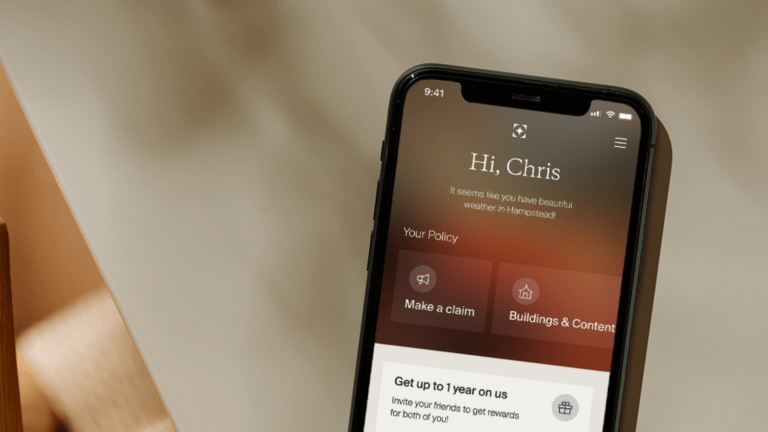
Locket is a new kind of home insurance that helps people to actively protect their homes and families with smart technology. The company made waves last week as its latest crowdfund on Seedrs raised more than £1 million from 430 investors, overfunding the campaign by more than 45%. It’s a demonstration of just how popular the company’s “prevention is better than cure” philosophy is proving with homeowners and renters across the UK. The campaign remains open for investment at the time of writing but is expected to close by 17th December 2021.

When investing, your capital is at risk.

Locket’s data shows that people who use smart technology are up to 35% less likely to suffer major damage to their homes. And because those homes are significantly safer, Locket home insurance is available at very competitive rates for many people across the UK. It’s a win-win model where customers get more of what they really want from insurance – safety, security, peace of mind – and often pay less for it, too. 

“We feel as though traditional insurance misses the point”, says CEO and co-founder Krystian Zajac. “You buy insurance to protect the things you love, but it does nothing to actually protect you. It just tries to compensate you after the damage is already done”. But many of the most valuable things in life can’t be replaced with money, Zajac points out – family heirlooms, photo albums, or a child’s favourite teddy. Or even just the sense that your home is a safe place – around 60% of burglary victims say they never feel safe at home again, and many ultimately end up having to move house. Locket’s approach emphasizes proactively protecting those things in the first instance, and makes payouts a secondary safety net rather than the sole feature of home insurance. 

Locket has already created an alliance of leading, global smart home manufacturers including Ring video doorbells, Yale smart locks and Philips Hue smart lighting. Zajac says they plan to partner with many more in the near future and expand their offering into new insurance verticals such as intelligent cover for AirBnB lets. “People live in a world where they can summon food, products or transport to their door in a couple of swipes on a smartphone”, says Zajac. “And yet over here in insurance, 86% of providers say fax is still a crucial part of their business. We think it’s time the industry caught up”


View the Locket Campaign on Seedrs– Closing Friday 17 Dec 2021. 

Statistics correct at time of writing. Investing involves risks, including loss of capital, illiquidity, lack of dividends and dilution, and should be done only as part of a diversified portfolio. This blog post has been approved as a financial promotion by Seedrs Limited, which is authorised and regulated by the Financial Conduct Authority (No. 550317)

Cineworld shares cash over 30% on £720m court ruling

Cineworld share were rocked on Wednesday by the news of a court ruling ordering the cinema group to pay Cineplex C$1.23 billion, equivalent to £720 million at current exchange rates.

The legal proceedings relate to the termination of a takeover approach by Cineworld of Cineplex in June 2020.

Cineplex alleged Cineworld broke their obligations under the agreement and Cineplex set about claiming damages.

Cineworld filed counter claims that were rejected by the court.

The ruling will be a hammer blow to Cineworld and their investors who have faced dire trading conditions during the pandemic.

Cineworld shares were down 30% on Wednesday as investors questions the ongoing viability of the company with such a large penalty hanging over them.

“Cineworld’s hunger for growth has come back to haunt it,” said AJ Bell investment director Russ Mould.

“Pre-pandemic the company had expanded through acquisitions including taking on considerable debt to plant a flag in the US via the purchase of Regal Entertainment.

“Despite having borrowings up to its eyeballs, Cineworld then chased more growth by striking a deal in December 2019 to buy Canada’s Cineplex. That was a bold move, and many people suggested its eyes were bigger than its belly.

“The timing couldn’t have been any worse. The pandemic struck and it looked like Cineworld’s only way to survive this crisis was to bail out of the Cineplex deal, given that it had massive debt repayments and suddenly no income.”

The latest court ruling came shortly after another legal case that saw Cineworld pay out to prior shareholders of Regal which Cineworld took over in 2018.

“Ironically the ruling comes three months after an agreement by Cineworld to pay $214 million to disgruntled Regal shareholders who argued that the £2.7 billion acquisition of the US cinema chain in 2018 wasn’t done at a fair price,” Mould said.

“Cineworld is losing credibility fast with investors, having taken too many risks with expansion and paid the price for unscrupulous tactics.”