Novacyt share price surges as company announces 50% increase in revenue

0

Novacyt Share Price

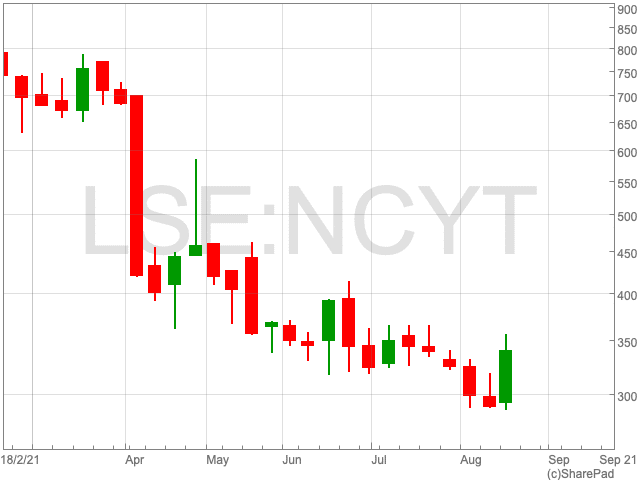
The Novacyt share price (LON:NCYT) was trading up on Wednesday as the biotech company delivered its trading update for the first half of the year. At the time of writing, the company has added 13.54% to its stock value. Despite the move today, year-to-date, the Novacyt share price is still down 59.76%. A wave of uncertainty gathered around the future direction of the company following the pandemic, causing its share price to dip in 2021. However, today’s update suggests a brighter outlook.
Trading Update

Novacyt reported on Wednesday that its revenue rose by 50% to £94.7m. The AIM-listed firm said that £54m came from the UK private testing market and overseas sales.

Its wholly-owned subsidiary Primerdesign was awarded a new contract under the Public Health England (PHE) National Microbiology Framework, effective immediately, for the supply of ‘PROmate’ Covid-19 tests to the NHS.

The PROmate tests were developed to run on the company’s ‘q16’ and ‘q32’ PCR instrument platforms.

Novacyt said the q16 and q32 near-patient PCR instrument platforms, using the PROmate Covid-19 test, had been validated and could be used at selected NHS hospitals.

The AIM-listed company has also entered into a two-year Long-Term Agreement (LTA) with the World Health Organization for the supply of its genesig COVID-19 tests. UNICEF has also confirmed that its existing LTA has been extended by 12 months to July 2022.

Graham Mullis, Group CEO of Novacyt, commented:

“Novacyt is continuing to address COVID-19 testing for both current and future demand. We continue to ensure that innovation is at the centre of our strategy and that our growing portfolio of COVID-19 tests are available to customers in both private and public health settings to expand existing, and support new, partnerships. Throughout the pandemic, NHS testing demand has remained a key priority for the Company and the contract award under the PHE National Microbiology Framework is a testament to our continued commitment.”

“We believe our long-term strategy also supports the growth of Novacyt post-COVID-19. In particular, our progress and growth potential in the private sector will not only help us maximize the COVID-19 testing opportunity but also ensure we are well placed, with both technologies and partners, for sustainable growth beyond COVID-19. We therefore believe Novacyt is well positioned to continue to build on its business transformation.”

UK House Prices, Persimmon and South American Energy with Alan Green

Alan Green joins the UK Investor Magazine Podcast in the midst of the summer lull in market with holidaying traders meaning lower volumes across markets and tepid price action.

Nonetheless, we have received strong data from the ONS on UK house prices that confirmed what most in the market had already knew; Uk house prices have soared boosted by Stamp Duty Holidays and lack of supply.

We discuss Persimmon (LON:PSN), Zenova Group (LON:ZED) and Echo Energy (LON:ECHO).

ONS: house prices rise at fastest rate in 17 years

0

Average house price reached £266,000 in June 2021

The average price of a house in the UK is up by 13.2% for the year to June 2021.

It is the highest level of yearly growth seen in the UK since November 2004 according to the Office for National Statistics (ONS) House Price Index.

House prices are £31,000 higher than this point last year, reaching a record high level of £266,000 in June 2021.

London remains the region with the lowest yearly growth, at 6.3%, for the seventh month in a row.

However, the capital remains the most expensive of any region across the country with an average price of £510,000 recorded in June.

Hugh Gibbs, co-founder of SearchLand, said: “House prices always consume a lot of attention in the UK, and that is particularly true right now, with homebuyers, investors and developers eagerly waiting to see the impact of the first stamp duty holiday deadline.”

“Clearly, the ONS data shows us that even in the build-up to the deadline on 30 June, house price growth continued its rapid march upwards – although this is a trend that is unlikely to have continued into July and August.”

The statistics suggest that the stamp duty holiday has more than achieved its aim.

“It has incentivised a huge amount of transactional activity and fuelled growth across the property sector. And, while the remarkable surge in property values over the past 14 months will eventually come to an end, the predictions of a sudden market crash this summer have certainly not come to fruition,” said Gibbs.

“Make no mistake, the market remains highly competitive even as the stamp duty holiday tapers down, with desirable properties and land still attracting a great deal of attention from prospective buyers. Do not expect this to change any time soon.”

UK inflation comes in at target level of 2%

0

There have been suggestions that the respite in inflation is only temporary

There was a pause in inflation levels on Wednesday as the CPI rate arrived below expectations at 2%.

Analysts were expecting a recording of 2.3% for last month, 0.2% below the inflation figure recorded in June.

According to the Office for National Statistics, clothing and footwear prices were subdued, helping to keep inflation rates down.

However, there have been suggestions that the respite is only temporary with businesses set to face rising costs.

Commenting on the UK CPI slowing to 2%, Ian Warwick, Managing Partner at Deepbridge Capital, said “While inflation may have slowed slightly to fall within the Bank of England’s target of 2% this does not mean that rates won’t pick up over the coming months. Many early-stage businesses will be thriving in the recently reopened economy, but they will continue to watch the debate around the decision on a subsequent rise in interest rates very closely as this will directly impact how much they are able to borrow at a crucial time.”

With inflationary pressure continuing, it also raises the question of exactly how long the Bank can hold interest rates at current levels before it is forced to step in.

“This could cause a problem for growing, early-stage companies who require access to funding as we focus on economic recovery. It therefore remains critically important that scale-up businesses, particularly in high-growth sectors such as digital technologies and life sciences are supported as they will be at the very heart of economic growth as we create an economy fit for the twenty-first century,” Warwick says.

The Bank of England says that inflation will rise to 4% by the end of 2021, double its target, while there are concerns that it could go even higher.

ONS Deputy National Statistician Jonathan Athow said: “Inflation fell back in July across a broad range of goods and services, including clothing, which decreased with summer sales returning after the pandemic hit the sector last year.”

“This was offset by a sharp rise in the price of second-hand cars amidst increased demand, following a shortage of new models.”

FTSE 100 dips on UK inflation retreat

0

The FTSE 100 is down by 0.4% to 7,152 points during the morning session on Wednesday as UK inflation eased back more than anticipated.

“This is good news for those fretting about rising prices but potentially raises some questions about the strength of the UK economic recovery,” says AJ Bell investment director Russ Mould.

Mining firm BHP proved to be a drag on the index after confirmation yesterday that its corporate restructuring would mean an exit from the FTSE 100 as the primary listing for the shares goes to Australia.

“This move will mean products which track the FTSE 100 and funds with investment policies barring them from buying shares with their main listing overseas will have to exit their shareholding,” says Mould.

“The turmoil in Afghanistan and continuing threat posed by the Delta variant of Covid is seeing funds flow into the dollar – a traditional safe haven – with Chinese and US equities both falling overnight.”

FTSE 100 Top Movers

Leading the way on the FTSE 100 is Ocado (1.22%), Just Eat (0.97%) and Vodafone (0.81%).

BHP (-3.83%), Persimmon (-2.44%) and Evraz (-2.12%) are dragging on the FTSE 100 on Wednesday, as the day’s top fallers so far.

BHP to leave FTSE 100 for Sydney

0

BHP’s move raises question marks over the attractiveness of London

BHP, the mining giant, has dealt a blow to the FTSE 100 by revealing plans to move its primary listing to Sydney.

The company said that it will lose its dual corporate structure and separate listings in Sydney and London. As a result, and pending approval from shareholders, BHP will separate from the FTSE 100.

This means that index funds will be required to sell their positions in the company which mines resources including iron ore, copper, nickel and metallurgical coal.

“Now is the right time to unify BHP’s corporate structure,” said chairman Ken MacKenzie. “BHP will be simpler and more efficient, with greater flexibility to shape our portfolio for the future.”

“Our plans announced today will better enable BHP to pursue opportunities in new and existing markets and create value and returns over generations.”

Fund managers, who have long benefited from BHP’s substantial dividend and the increase in the value of its share price, have been left frustrated by the news.

In addition, it has raised a question mark over the attractiveness of London as a destination for listing companies.

“Today’s announcement is very significant — with the likely outcome that BHP leaves UK indices,” Nick Stansbury, head of climate solutions at Legal & General Investment Management, a top-ten shareholder, told The Times. “If this is indeed the case for UK index investors, it is our view that losing a company of the calibre of BHP is disappointing.”

“However, BHP’s proposal is supported by a robust and clearly articulated value case with the potential for investors in the UK company to benefit from the possible narrowing of discount to the Australian company.”

“It is important that UK index investors are able to realise that benefit and we will continue to review the proposal with this in mind.”

Over the past five years the BHP share price has added 115.48%.

AJ Bell rings changes at board level to push investment platform forward

0

AJ Bell appoints third woman to the board

AJ Bell has made changes to its management in order to reflect its plans for new growth opportunities.

The investment platform has added two new leadership roles and the third woman to a board that has previously faced criticism for a lack of representation.

AJ Bell on Wednesday announced that current CFO Michael Summersgill will take up his new position as deputy chief executive on October 1.

The firm has began an external search to find a new CFO, after Summersgill held the role for a decade.

Roger Stott, the current group finance director, will take on the role of chief operating officer, while Margaret Hassell is set to join AJ Bell as a non-executive director.

Les Platts, outgoing chair of AJ Bell, said: “These changes will further strengthen the board, both at executive and non-executive level, as the business embarks on the next phase of its long-term growth.

“The changes, together with the planned recruitment of a new chief financial officer, will bring greater experience and diversity to the board. This will benefit all of our stakeholders and enable the board to continue to maintain effective oversight as the business continues to grow.”

CEO Bell added: “Our business is growing quickly and there are exciting opportunities to take advantage of in the investment platform market.

“It is important that we have the resources and expertise within the business to support this growth and that includes the board.

“I am as enthusiastic as I have ever been about the prospects for the business and I am looking forward to working with Michael, Roger, Margaret and the rest of the team as we embark on our next phase of growth.”

AJ Bell has £70.4bn in assets under management, the company confirmed at the end of Q2.

The AJ Bell share price (LON:AJB) is up by 0.26% during the morning session on Wednesday.

Persimmon sales surge past 2019 levels

0

Housing market set to return to more regular levels after pandemic-caused swings in activity

Following an upturn in activity during the pandemic, Persimmon is expecting the market to get back to a more normal level.

In its half-year earnings report released on Wednesday, Persimmon revealed that its sales rate for new homes was 20% quicker than the same period of 2019, before the pandemic. The FTSE 100 house builder also said that its forward sales were 9% higher than the same six-month period in 2019.

Persimmon made a profit before tax of £480m from £1.84bn in revenue, compared to £292m and £1.19bn for the first six months of 2020, a period that was affected by the pandemic.

While the UK market will be healthy moving forward, Persimmon says, it is expecting more normal levels of trading to resume following the easing of restrictions.

However, the housebuilder believes that demand for new homes will remain above pre-pandemic levels.

Completions increased to 7,406 from 4,900 with prices on average rising by 4.9% at £236,000.

“Expectations were high for Persimmon and certainly well ahead of other similar operators in the housebuilding sector. However, it has delivered half year results in-line with these expectations. The business is clearly well on its way to recreating 2019’s figures, reporting sales volumes of 7,400 (-2% vs 2019) and an operating margin of 27.6% (vs 31.0% in H1’19). Overall profit before tax was only -5% down on the equivalent 2019 figure,” said Oli Creasey, property research analyst at Quilter Cheviot.

“It could be argued that in some ways the company is actually ahead of its position in 2019 and has recovered from the pandemic. The cash balance is now over £1.3bn, and provides considerable support to the 8% dividend payout for 2021 & 2022, and likely beyond as well. Similarly, the company is monitoring its Home Builders Federation satisfaction score, which at 92% is trending well ahead of the 5-star threshold. It was inevitable that the renewed focus on customers’ experience would have come to impact on both volumes and margins, and so to achieve this score while operating so close to 2019 financial metrics is remarkable, particularly within the further context of a global pandemic.”

Dean Finch, chief executive, said: “We have a strong platform for future growth with high-quality landholdings, a diverse UK wide network and a business operating from approximately 300 outlets on average throughout the current year.

“We are expecting an increase of c.10% in new home legal completions this year (FY 2020: 13,575 legal completions).

“With c.85 new outlets opening by the end of this year and a similar number of new outlets targeted to open in the first half of 2022 , subject to the timely granting of planning permission, we have a good pipeline of new outlets coming through the business.”

The Persimmon share price is down by 0.77% during the morning session on Wednesday.

New AIM admission: Likewise plans to repeat Headlam success

Floorcoverings distributor Likewise is switching from The International Stock Exchange to AIM as part of its plans to consolidate the sector. The management team of Likewise have predominantly come from fully listed floorcoverings distributor Headlam (LON: HEAD) which had a similar strategy in its earlier days and is the major player in the sector.
Likewise chief executive Tony Brewer joined Headlam in 1991 and became chief executive in 2000. He left the company in 2016.
The cash raised will provide working capital for growth and cash for acquisitions. There will also be investment in further ...

Sunrise Resources share price: outlook brightens on update from America and US infrastructure bill

0

Sunrise Resources Share Price

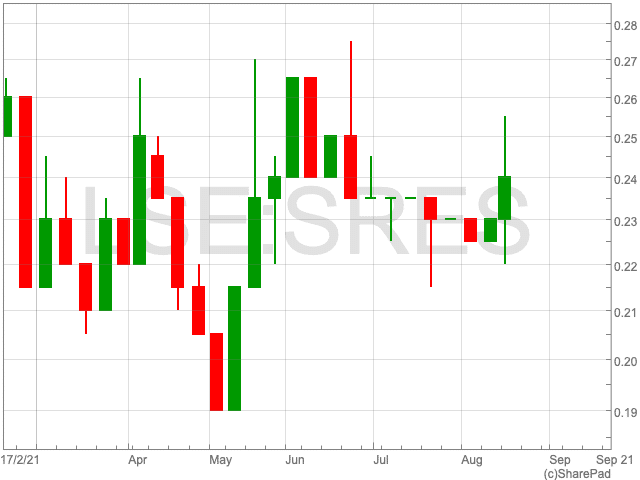
The Sunrise Resources share price (LON:SRES) is up by 10% on Tuesday following a positive update from Nevada, USA. The move comes on the back of what has been a disappointing year so far for the AIM-listed mining company.

Year-to-date the Sunrise Resources share price has lost 21.94% in value after a series of ‘frustrating’ mining delays. The company is expecting its outlook to brighten on today’s update, along with Joe Biden’s stimulus package.

CS Project in US

Sunrise Resources confirmed positive test results from recent commercial concrete pours using natural pozzolan from CS pozzolan-perlite deposit in Nevada, USA.

Two commercial concrete pours carried out by large cement & ready-mix company as due diligence towards commercial agreement.

Preliminary results show early strength gain in excess of target strengths, while seven-day concrete strengths exceed the 24-day target strengths after just 7 days curing.

Commenting today, Executive Chairman Patrick Cheetham said: “We are delighted to be announcing these exciting results which come after a number of frustrating delays. The preliminary results from the concrete pours using CS natural pozzolan are first-rate and, we anticipate, will provide the basis for a more structured arrangement with the CRMC carrying out this work.”

“Interest in using the CS natural pozzolan in concrete continues to grow and a number of additional companies have requested samples in recent weeks, no doubt driven by the bleak long-term outlook for coal fly ash supplies in the USA.”

Looking forward, Cheetham considered the positive impact of the $1.2 trillion infrastructure spending stimulus recently passed by the US Senate and embraced by President Joe Biden.

“Together with Biden’s climate plan will give further impetus to pozzolan demand and so we are looking at possibilities to grow our business by acquiring additional pozzolan deposits favourably located for other regional centres of concrete demand in the western United States.”

“Whilst development of the perlite for uses other than for natural pozzolan is the smaller of the two business opportunities at the CS Project, we are pleased to have received great feedback from the most recent customer trials of our horticultural grade raw perlite and look forward to advancing this and other production options in tandem with the production of natural pozzolan.”