It has taken more than two decades but fully listed Highway Capital (LON: HWC) has finally found a suitable reverse takeover target.
Originally known as Superframe, the original business manufacturing retail display equipment was sold to its management at the beginning of 2001. That was when the name was changed to Highway Capital. That year there were plans to acquire software bundling business Vector OEM, but that fell through.
The cash that Highway Capital had two decades ago has dwindled away over the years. At the end of February 2021 there were net borrowings of £684,000 and net liabilit...
ASOS shares sink on profit decline expectations, CEO exits
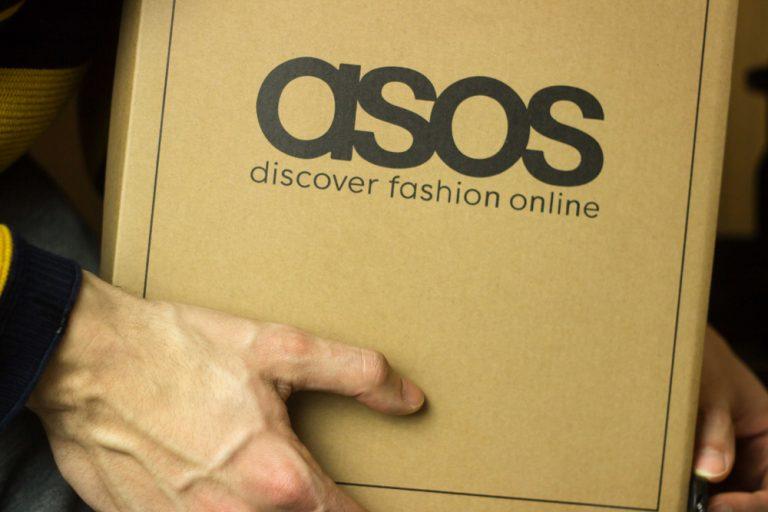
ASOS shares (LON:ASC) sank on Monday after the online retailer said it expected profits to decline and their CEO, Nick Beighton, was stepping down with immediate effect.
ASOS shares were down over 10% in early trade before rebounding.
Following a strong year aided by lockdowns and lower returns rates, ASOS said the next year would be fraught with supply chain issues leading to the group revising down their pre-tax profit to £110m-£140m, well below consensus of £193m.
“ASOS has enjoyed a huge boost to trading over lockdowns, albeit for less-lucrative casual wear as its core demographic was stuck at home. A reluctance to leave the house meant return rates were lower, resulting in XL margins. However, the tailwinds are easing and the ASOS bubble has burst,” said Sophie Lund-Yates, equity analyst at Hargreaves Lansdown.
ASOS follows Boohoo in the release of a sobering update that pointed to a less than sparkling fast fashion industry.
“The market had a sense that life has been a bit of struggle for ASOS, given the gloomy update from rival Boohoo in recent days which seemed to confirm that the fast fashion industry was not enjoying the best of times,” says Russ Mould, investment director at AJ Bell.
“The scale of the problems at ASOS appear to have been underestimated but the company parting ways with its chief executive is less of a surprise. Nick Beighton has been struggling to steer the ship through problems that go back quite a few years.”
“The near-term outlook is somewhat bleak for ASOS. Sales growth is expected to slow quite dramatically; cost pressures and supply chain problems could remain intact for a while, which means profit margins will be squeezed; and consumer uncertainty could result in volatile trading patterns.”
“ASOS is guiding for pre-tax profit in the year of £110 million to £140 million, which is 35% below the market consensus forecast of £193 million if you take the mid-point of the profit range.”
Royal Mail’s drive for 20,000 seasonal workers
Royal Mail has announced plans to hire 20,000 seasonal workers from late October through to early January.
Companies including Amazon, John Lewis and Morrisons are also carrying out a huge drive in temporary employment over the Christmas season.
Of the new roles, 17,150 will be in the mail centre sorting.
“Being part of delivering Christmas is a brilliant experience and one that we know offers lots of opportunities for employment and engagement in the communities we serve,” said the group’s chief executive, Zareena Brown.
New figures have found that demand for staff is reaching high rates, whilst employee availability is near record lows.
“The sharp rise in hiring activity is a reason to be hopeful, but competition is fierce,” said Claire Warnes, who is the head of education, skills and productivity at KPMG UK.
“The end of the furlough scheme should be bringing tens of thousands of new people to the jobs market, but many do not have the right skills to transfer to the sectors with most demand.”
Commenting on Royal Mail’s plans, AJ Bell investment director Russ Mould, said: “On a day when Royal Mail launched a drive to take on 20,000 Christmas workers in the UK the group also signalled its ambitions closer to Santa Claus’ neck of the woods with a sizeable acquisition in Canada.
“The deal to pick up freight carrier Rosenau looks to fill in the gaps in its Canadian business and should help with realising growth ambitions for its GLS international logistics arm.”
“Arguably this is the part of the group with the most potential and it is not faced with the same level of structural issues as its UK-based business.”
Investing in the future of car ownership with CarCloud’s Geoff Turral
The UK Investor Magazine Podcast is joined by Geoff Turral, the Founder of CarCloud.
CarCloud is the app for the UK’s 33 million drivers to organise their cars in one place on their phones. We’ve got used to managing nearly every aspect of our lives remotely on our phones. But for most, car admin is spread across different websites, offline services, and a drawer at home stuffed full of car paperwork.
We discuss the current environment for car ownership and the opportunity to streamline time consuming process.
CarCloud are currently raising funds on Seedrs to propel their business forward and reach more users and begin monetisation.
Please visit Seedrs below for more details. Capital at Risk.
Hollywood Bowl sees strong results thanks to rise in ‘staycations’
Hollywood Bowl has posted strong results over the summer as more people stayed in the UK for holidays.
After reopening in May, the group said it was “well ahead” of expectations and sales over August jumped 50% compared to pre-pandemic levels in August 2019.
Stephen Burns, chief executive of Hollywood Bowl Group, commented on the results: “I am delighted at the pace and strength of our recovery since reopening.”
“It has been fantastic to welcome our customers back in record numbers, and to see families and friends enjoying their time in our bowling and mini-golf centres once again.”
Between May 17 to September 30, like-for-like growth was 29%.
Commenting on the results, AJ Bell investment director Russ Mould, said: “Hollywood Bowl has posted a strike with its latest trading update. Boosted by people taking their holidays in the UK during a somewhat soggy summer, revenue has notably beaten pre-Covid levels by a sizeable margin since the chain reopened in May.
“Thanks to a tight control on costs, profitability is also significantly improved, and this provides the impetus to press ahead with a plan to add 14 to 18 new sites by 2024, supported by a strong cash position.
“It seems ten-pin bowling is an activity people feel safe doing as we emerge from the pandemic. Despite being indoors, it is a well-controlled environment with a decent amount of space to observe social distancing,” he added.
Ireland increases corporation tax to 15%
Ireland will be increasing corporation tax from 12.5% to 15%.
The country will be signing up to a global tax reform for minimum rate internationals. Small and medium enterprises won’t be affected by the new rates.
Its previously low tax rates led to both Facebook and Apple basing their headquarters in Ireland.
Irish finance minister Paschal Donohoe said: “The government has now approved my recommendation that Ireland joins the international consensus. This is the right decision, it is a sensible and pragmatic decision.”
“We will remain an attractive location and ‘best in class’ when multi-nationals look to investment locations,” he said.
“These multinational enterprises support our economy with high-value jobs and at the same time, Ireland provides a stable platform and a long proven track record of success for MNEs choosing to invest here,” he added.
The new rate will affect companies that have an annual turnover of over €750m (£636m).
Chinese services sector grows in September
The Caixin China General Services PMI rose to 53.4 in September signalling an expansion in the Chinese services sector.
September’s expansion came after a contraction in August with a reading of 46.7.
A PMI reading above 50 signals expansion and a reading below 50 means the sector is contracting.
A fall in COVID cases in China was attributed to helping optimism and growth in the services sector as the outlook improved.
However, the Chinese services sector was not immune to the threat of rising prices seen across the globe and both input and output prices rose from August.
Commenting on the China General Composite PMI TM data, Dr. Wang Zhe, Senior Economist at Caixin Insight Group said:
“The Caixin China General Composite PMI rose to 51.4 in September from 47.2 the previous month. Both market supply and demand recovered, and improvement in the services sector was stronger than in the manufacturing sector. Impacted by the pandemic, overseas demand was weak. Employment was stable overall. Prices gauges remained high, indicating strong inflationary pressure.
“Overall, because the impact of the pandemic was less severe in September than the previous month, services quickly rebounded. In contrast, the recovery in the manufacturing sector was limited, showing the economy still faced downward pressure.
“On the one hand, the epidemic continued to impact demand, supply, and circulation in the manufacturing sector. The state of the epidemic overseas and the shortage of shipping capacity also dragged down total demand. Epidemic control measures have clearly impacted the logistics industry. Domestic demand varied based on different types of goods. The demand for intermediate goods and investment goods was relatively high, while the demand for consumer goods was weak, reflecting consumers’ lack of purchasing power.”