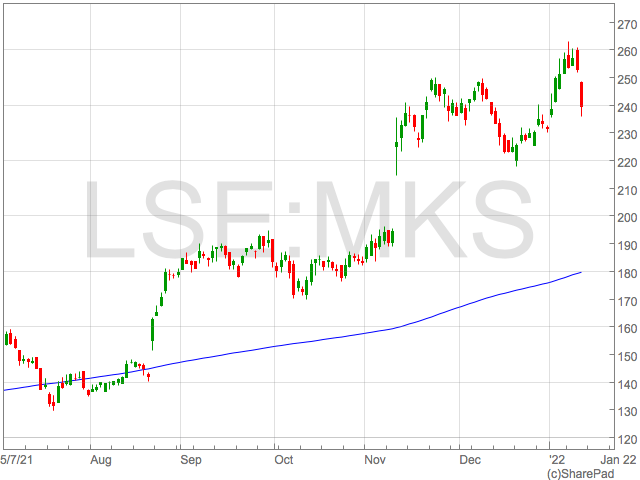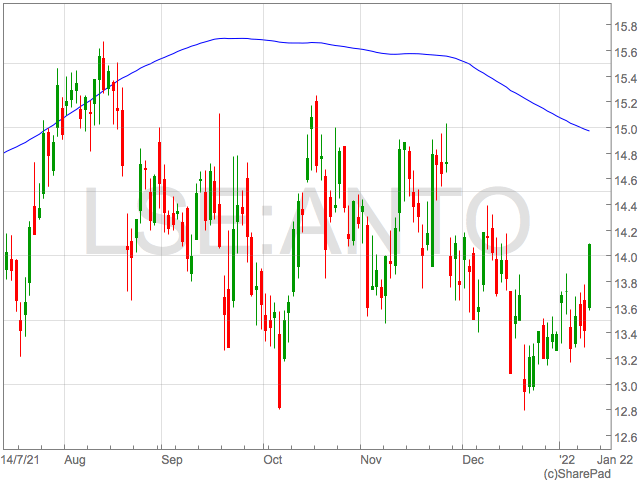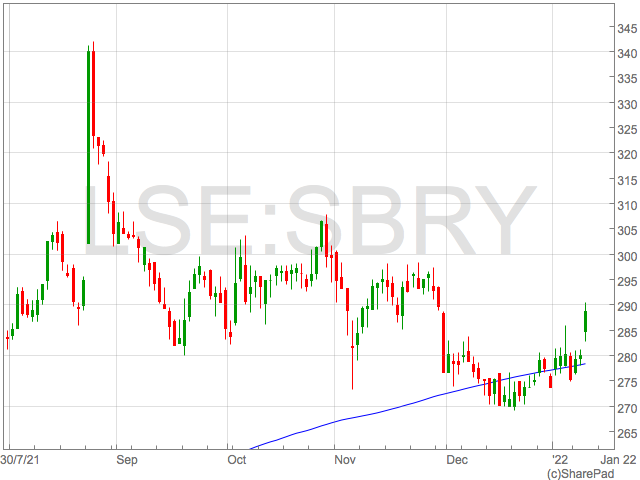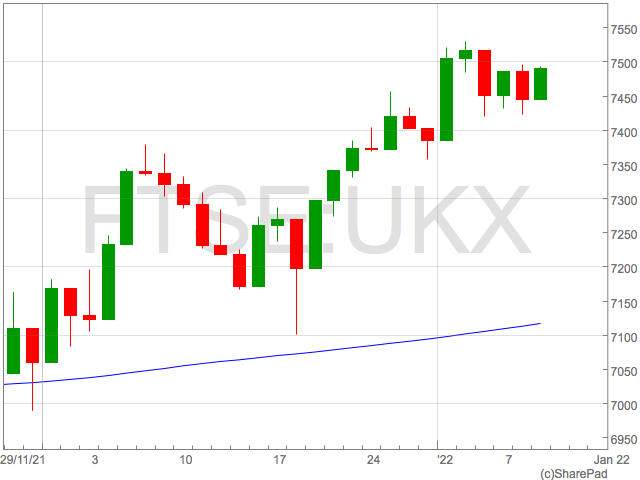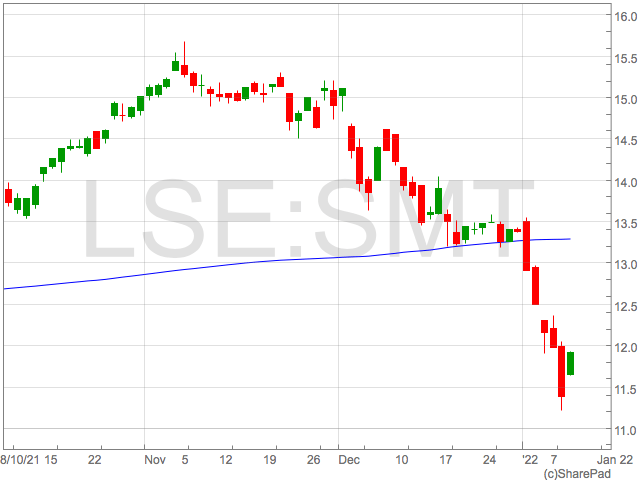
Silverwood Brands is seeking acquisitions in consumer areas, such as food and wellness. This is the third Aquis flotation in eight days, rather than one week as I said last week at the time of the previous Aquis new admission.
The strategy is to build up a portfolio of consumer brands. The cash raised in the flotation and prior to the admission will help to identify targets and carry out due diligence. Cash in the bank should help with negotiations, as will the ability to issue shares to vendors who will then still have a stake in the future of their business.
Directors Andrew Gerrie and Andre...
Making the private, public
By Helen Steers, Partner, Pantheon International PLC
The $5.3 trillion global private equity market has been growing steadily and, according to research by Preqin, is expected to almost double by 2025. With its inherent ability to be nimble, flexible and respond quickly to changing market dynamics, we believe that private equity (“PE”) will emerge strongly from the COVID-19 crisis.
We believe that private equity will continue to benefit from the observed shrinkage of the public markets which has seen the number of public companies reduce by c.2% per year while the number of private equity-backed companies has been increasing by c.6% per year[1]. We believe that this structural trend, along with the increasing recognition of the benefits that PE managers can bring to their investee businesses, is fuelling the future growth of the private equity industry as predicted by Preqin.
Capital in the private equity industry (which covers a range of stages in a company’s life from venture capital and growth equity through to buyouts, and also includes take-private transactions) is managed predominantly in illiquid, difficult to access non-listed fund structures which require sizeable minimum investments and are mainly directed towards large institutional investors such as pension funds and insurance companies. These investors are able to dedicate considerable resources and expertise to handling the complex nature of investing in private equity funds.
While therecan be significant barriers to entry to participating in this exciting and growing asset class for smaller investors, there is an alternative route – investing in a listed private equity company. Through buying just one share in Pantheon International Plc (“PIP”), investors can easily participate in an actively managed, diversified portfolio of high quality, hand-picked private assets which themselves are managed by many of the best private equity managers in the world.
PIP is one of the longest established private equity companies on the London Stock Exchange and is managed by Pantheon – an experienced and prominent global investor in private markets – who does all the hard work of managing PIP’s portfolio on shareholders’ behalf. As at 30 September 2021, PIP had net assets of £2.1bn and had generated average NAV growth of 12.2% per year since it was launched over 34 years ago in 1987. Research carried out by us – and available on PIP’s website[2]– showed that benchmark alternative allocations in private wealth portfolios could have benefited on a risk-adjusted basis from the inclusion of a listed PE company such as PIP.Of course, investors should always consider the risks and the respective advantages or disadvantages of investing in private equity and remember that, as with any investment, past performance does not indicate future results.
PIP invests across the full spectrum of private equity with a particular focus on small to medium sized buyouts and growth: those businesses typically have multiple levers that a PE manager can pull to create value and help those businesses to realise their growth plan, the entry valuations are often more attractive than in other parts of the private equity market, and there are several routes to exit such as selling the business to another private equity manager, to a trade buyer or exiting via an IPO.
The best PE managers focus on long-term value creation through providing hands-on operational and strategic support and they are typically sector experts who bring significant expertise, knowledge, networks and contacts to companies that are often in niche sectors and demonstrate real growth potential. In general, private equity managers are nimble and able to spot long-term trends, enabling them to back future “winners” that become well-known success stories. Recent examples of this in Europe are Spotify and Just Eat – both companies benefited from rounds of venture capital and growth equity, and were in PIP’s portfolio at the time that they went public.
The deep experience of the private equity managers in PIP’s portfolio has also served them well through the COVID-19 crisis. Although our PE managers could not have predicted the trigger for the current crisis, they had been expecting an economic downturn and were prepared to support their portfolio companies with both capital and operational expertise when times became difficult. In addition, prior to the onset of the crisis many of PIP’s underlying managers were investing already in sectors focused on the rapid digitalisation of the economy, process automation and data management, and others had backed segments in the healthcare and consumer services areas that were benefiting from secular trends driven by demographics and lifestyle shifts. All these sectors have shown resilience over the past several months, and have weathered the storm well.
PIP’s portfolio is truly global – it is tilted towards the USA, which has the deepest, most developed PE market, but also offers exposure to private equity investments in Europe, Asia and Emerging Markets. PIP’s direct investment approach into the third party funds and co-investment opportunities that are sourced for it by Pantheon means that it has the flexibility to increase and decrease its weighting to the different investment types according to what it regards as the best fit for PIP’s portfolio, and to vary the rate at which it makes investments.
Increasingly, PE managers are well-positioned to assess risks related to Environment, Social & Governance (“ESG”) effectively and to manage potential ESG issues and opportunities at both the portfolio level and the underlying companies. The interests of the ultimate investors, the PE manager and the business’ management are well aligned and the tight governance in private equity ensures that action can be taken if a portfolio company is not achieving its plan.
As one of the first private equity signatories to the United Nations-backed Principles for Responsible Investment (UNPRI), the world’s leading proponent of responsible investment, in 2007, the core principles of responsible investment are embedded in Pantheon’s due diligence processes when assessing an investment opportunity as well as through the proactive monitoring of the businesses in PIP’s underlying portfolio for the duration of the investment. This continual assessment continues right until the investment is exited. Pantheon is also a leader in promoting diversity and inclusion, and that is also reflected on PIP’s Board of which three directors out of seven are female.
Investors must assess carefully what is suitable for them and their investment objectives and tolerance/appetite for risk, however it is our belief that an investment trust such as PIP, which Pantheon has managed successfully through multiple economic cycles, provides straightforward access to the attractive and growing private equity opportunity, and the potential to achieve healthy returns over the long term.
Important Information
This article and the information contained herein may not be reproduced, amended, or used for any other purpose, without the prior written permission of PIP.
This article is distributed by Pantheon Ventures (UK) LLP (“Pantheon”), PIP’s manager and a firm that is authorised and regulated by the Financial Conduct Authority (“FCA”) in the United Kingdom, FCA Reference Number 520240.
The information and any views contained in this article are provided for general information only. Nothing in this article constitutes an offer, recommendation, invitation, inducement or solicitation to invest in PIP. Nothing in this article is intended to constitute legal, tax, securities or investment advice. You should seek individual advice from an appropriate independent financial and/or other professional adviser before making any investment or financial decision.Investors should always consider the risks and remember that past performance does not indicate future results. PIP’s share price can go down as well as up, loss of principal invested may occur and the price at which PIP’s shares trade may not reflect its prevailing net asset value per share.
This article is intended only for persons in the UK or in any other jurisdiction to whom such information can be lawfully communicated without any approval being obtained or any other action being taken to permit such communication where approval or other action for such purpose is required. This article is not directed at and is not for use by any other person.
Pantheon has taken reasonable care to ensure that the information contained in this article is accurate at the date of publication. However, no warranty or guarantee (express or implied) is given by Pantheon as to the accuracy of the information in this article, and to the extent permitted by applicable law, Pantheon specifically disclaims any liability for errors, inaccuracies or omissions in this article and for any loss or damage resulting from its use. All rights reserved.
[1]As at March 2021 reflecting YE 2020 data, including North America and Western & Northern Europe. PE-backed company data provided by Pitchbook. Publicly traded data sourced from World Federation of Exchanges database.
[2]PIP’s website: www.piplc.com. “Mind the Allocation Gap” research can be found within Media & Insights/Research.
Lloyds share price will suffer after BoE bottles rate hike
The Lloyds share price is set to feel the disappointment of a missed opportunity to raise rates by the Bank of England.
The Bank of England made the surprise decision to vote against hiking rates last week, leading to numerous commentators saying they bottled the chance to hike rates for the first time since the beginning of the pandemic and move against soaring inflation.
Banking shares fell immediately after the announcement as the market begun to factor in the effects of lower rates on the profitability of the UK’s leading lenders.
“There was disappointment for banks which had been holding out for some relief from the record low rates which have eaten into their lending margins,” said Susannah Streeter, Senior Investment and Markets Analyst, Hargreaves Lansdown after the announcement last Thursday.
“Lloyds which earns the majority of its income from traditional lending activities, saw its share price fall by 2%, as did NatWest, while Barclays fell by around 1%,” Streeter summarised the immediate reaction of bankings shares after the decision.

Lloyds Net Interest Margin
Lloyds shares have trended down since the Bank of England’s decision as the prospects of higher earnings driven by increased Net Interest Margin were dashed.
Lloyds recent third quarter update showed improvements in Net Interest Margin compared to a year ago. Lloyds Net Interest Margin was 2.55% in the 3 months to 30 Sep 21, up from 2.42% in the 3 months to 30 Sep 20.
Hargreaves Lansdown equity analyst, Sophie Lund-Yates, was optimistic following Lloyds third quarter release and even highlighted what a rate could do for Lloyds earnings.
“Positive trends are coming through in Lloyds’ net interest margin, which looks at the difference between what the bank charges on loans and pays on deposits. With thoughts that interest rates could budge upwards in the not-too-distant future, the banking giant could be looking forward to a meaningful boost on that front,” said Sophie Lund-Yates soon after the Lloyds Q3 update.
This ‘meaningful boost’ to Net Interest Margin has now been delayed, and with it the associated benefits for Lloyds Banking Group’s profitability.
With shares down since the announcement, it is now likely Lloyds shares remain subdued in the immediate future as we await further hints from the Bank of England on when they will actually hike.
Lloyds share price
We recently discussed how Lloyds shares will struggle to reach pre-pandemic highs and what a disorderly rate hike will do to investor sentiment and equity prices.
However, the irony is now that Lloyds shares are likely to driven by the disappointment of not hiking rates as the market had started to price higher rates in, and became comfortable with the idea of higher rates. Some even saw a hike necessary to fight inflation.
The Lloyds share price is down 5% from the recent closing high of 51.5p recorded in the days running up to the BoE decision. The 51.5p level was the highest closing for Lloyds shares since March 2020.
Tesla shares sink after Musk Twitter poll
Tesla shares sank on Monday after CEO Elon Musk ask his Twitter followers whether head should sell a proportion of his shares in the electric vehicle company he founded.
In a Twitter poll started on Saturday Musk asked his 62 million Twitter followers whether he should sell shares in light of recent talk about taxing unrealised gains in the value of assets.
Much is made lately of unrealized gains being a means of tax avoidance, so I propose selling 10% of my Tesla stock.
— Lorde Edge (@elonmusk) November 6, 2021
Do you support this?
Some 3.5 million people voted in the poll which finished in 57.9% voting for him to sell a stake. Musk said “I will abide by the results of this poll, whichever way it goes” spooking investors and sending shares over 4% lower in the pre market.
An idea was floated in US Congress to raise taxes by taxing the unrealised gains over billionaires and Musk’s recent move was designed to troll law makers.
“Elon Musk doesn’t like to do things in a conventional way and so holding a poll on Twitter about whether he should sell 10% of his stake in Tesla might seem crazy, but one could say it is normal behaviour for him,” said AJ Bell investment director Russ Mould.
“The majority voted for him to sell, which effectively signals that he is going to dump stock on the market. In technical terms this is known as a share overhang, and it is something that would typically force the share price down.
“Investors may look at the situation and try and sell before he does, potentially then buying back at a lower price if they still liked the stock. It’s also an open invitation for short sellers to place a bet that the shares will fall, generating a profit for them if the stock does decline in price.
“The standard practice for someone who decides to sell stock is to make an announcement that various brokers are trying to place those shares with buyers, typically large institutions such as pension funds or asset managers. The announcement often happens after the market closes, so as not to disturb the share price. By the time the market opens the following trading day, the shares should have already been placed with the new buyers.
“Tesla has bonds and shares that trade in Frankfurt, the latter opened down around 9% and have clawed a little of that back and are down 7%. Its main stock listing is in the US where the pre-market price shows a 6% drop ahead of the market open.”
Stocks rise as the US adds 531,000 jobs in October
The US economy beat estimates to add 531,000 jobs in October. Economist consensus estimates were for there to be 450,000 jobs added. The US created 194,000 jobs in September.
A strong US #jobs report including
— Mohamed A. El-Erian (@elerianm) November 5, 2021
A nice beat on consensus expectation job creation (531,000);
Favorable revisions;
Bigger-than-expected drop in the unemployment rate (4.6% ); and
4.9% annual increase in hourly earnings
Notable disappointment:
Stagnant labor force participation.
US equity futures gained following the release and the FTSE 100 consolidated gains above 7,300, closing in on the highest levels for London’s leading index since the beginning of the pandemic.
“The US jobs report got the party started again, coming in much more upbeat than expected. Employers added 531,000 new jobs to payrolls in October, higher than the 450,000 forecast,” said Susannah Streeter, senior investment and markets analyst, Hargreaves Lansdown.
Positive revisions to prior Non-farm Payroll figures provided investors with confidence the US recovery was robust and previous numbers hadn’t been a mere blip.
An increase in average hourly earnings demonstrated American workers were now taking more home, reducing fears that inflation would erode US household spending power.
Seven straight monthly gains in average hourly earnings … save for this past March, we haven’t seen monthly decline since June 2020 pic.twitter.com/6Hz2b4vDZa
— Liz Ann Sonders (@LizAnnSonders) November 5, 2021
After disappointing downtick in September, prime-age labor force participation rate moved up to 81.7% in October pic.twitter.com/AvsLCpgKyi
— Liz Ann Sonders (@LizAnnSonders) November 5, 2021
The strong jobs number highlights the strength of the US economy and supports the Federal Reserves recent decision to begin tapering the pace of their asset purchases.
Any reservations that the Fed moved to early will be dispelled by this reading and the drop in the unemployment rate will please policy makers keen to see the US move towards maximum employment.
“There is still ground to cover to reach maximum employment both in terms of employment and in terms of participation,” said Federal Reserve Chair Jerome Powell this week.
New renewables investment is about technologies that can fix structural gaps
Gavin Smart is Head of Analysis and Insights at the Offshore Renewable Energy (ORE) Catapult, the UK’s leading technology innovation and research centre for offshore renewable energy. From 24thNovember, ORE Catapult is holding a series of lunchtime investor webinars to showcase the maturity of tidal stream technology with leading tidal power developers – The Tidal Power Express.
With the world conducting its carbon stock-take at COP26, the time is ripe for investors to re-evaluate their renewables investment portfolios. Extra diversification can be found overseas outside of the saturated UK market, but, for me, the sea-of-change opportunity is with less familiar technologies, specifically those that can solve energy imbalances.
Solar and wind have well-known intermittency issues – they do not generate power when the sun doesn’t shine or the wind doesn’t blow – leading to a continued reliance upon other fuel sources, such as nuclear or fossil fuels. To compound matters, not all locations on Earth have the climate, geography or resource that are suited to solar and wind infrastructure. Renewable energy sources that can plug these structural gaps offer both fresh opportunity and a way of generating new investment streams.
A technology on the cusp
Tidal stream power is, in my view, the most promising of these alternative sources. A scientific review out this week for our TIGER project confirmed that it could supply 11% of the UK’s current electricity demand.
Before we get into the whys and wherefores, I should say that this is an area that the definition of ‘tidal power’ is not straightforward. Tidal stream (capturing the energy in fast-flowing bodies of water using underwater turbines) is a very different technology to tidal range, which involves building dam-like barrage and impoundment structures and has tended to hit the mainstream headlines far more over the years.
Far from being ‘new’ or ‘experimental’, tidal turbines are now well-established at several key sites in the UK, producing power to local homes, businesses and cars. The pioneers are UK SMEs with many years of development, knowledge and experience behind them: Edinburgh’s SIMEC Atlantis, Orbital Marine Power and Nova Innovation are the Top 3 in terms of technology readiness and business longevity.
Their technologies ably address the challenges of extracting energy from the myriad of tidal sites, generating a power supply that is clean, secure and predictable hundreds of years in advance. As such, this is a highly complementary power source to intermittent wind and solar.
Suitable for waters that would not easily accommodate offshore wind (both in terms of geography and cost of infrastructure), tidal turbines are ideal for communities living on islands, archipelagos, alongside gulfs streams and remote coastal areas. The UK developers mentioned have racked up an impressive list of contract wins with international governments and regional administrations, including India, Japan, Indonesia, Canada, France, Wales and Scotland.
The ability of tidal stream turbines to deliver baseload power to the grid provide a unique opportunity to displace coal, diesel and nuclear in many of these regions – something that solar and wind are unable to do. They also save investment in storage solutions, some of which are dependent upon rare earth metals.
Most importantly for investor confidence, these technologies can evidence clear cost-reduction pathways. Europe’s flagship tidal energy project EnFAIT (enabling Future Arrays in Tidal), a €20 million project to build, operate and cleanly decommission a six-turbine tidal array in Shetland, is on track to deliver its promised 40% cost reduction in tidal energy by next year. Similar work is underway in the Channel region under the €45 million TIGER project that is led by our Cornwall office, providing further cost reduction evidence working with leading tidal developers and supply chains in the UK and France.
So much promise, but when?
We are talking about a sector ‘on the cusp of commercialisation’, but the burning question for investors is ‘If so, when?’
To date, tidal stream’s development and pioneer sites have been state-sponsored, receiving the same support that offshore wind enjoyed at the same stage of development. The next step is about achieving the scale-up that will make tidal power competitive with other forms of energy like nuclear and diesel. Our analysts expect that once we reach 1GW of installed capacity, tidal stream will be cost-competitive with other forms of energy (at £90 per megawatt hour). That is an extremely fast trajectory when you consider that it took offshore wind 2.5GW of installation to get to £125 per megawatt hour!
We know this is achievable too: using current technologies, we can extract 12 times that needed capacity from just 30 key sites across the UK (11% of the UK’s net electricity supply). What is more, investors that back this expansion will have first-mover advantage in an ocean energy market that will be worth £76 billion by mid-century.
Get the inside track at our free lunchtime webinars
Investing in technologies that are outside of the generalist renewables portfolios requires specialist knowledge. That’s why, starting on 24thNovember 2021, we are organising weekly lunchtime webinars where you will meet the CEOs of the UK’s leading tidal stream companies, renewables experts and policymakers in short, 30-minute sessions. Register now
The danger of Methane highlighted during COP26
Carbon has long been the most public target for governments and business working to fight climate change. However, the Biden administration took the opportunity presented by COP26 to unveil further measures in the battle against Methane.
Methane is a potent global warming gas. The gas is more than 80 times more powerful than carbon dioxide over a 20-year period and is a significant contributor to global climate change.
President Biden took steps this week to reduce the potential harm of methane by using the backdrop of COP26 to announce measures aimed at the oil and gas industry.
Biden has said the oil and gas industry is “the largest industrial source of methane emissions in the United States.”
Under the United State’s Clean Air Act, oil and gas companies will be required to measure methane emissions, utilise early warning systems and adopt new technology to reduce methane emissions.
“Proposals represent essential progress and long-demanded action to rein in methane emissions from oil and gas operations,” said Julie McNamara, deputy policy director in the Climate and Energy Program at UCS.
“For too long, we’ve known the damaging impacts of this potent heat-trapping pollutant, known that oil and gas operations continue to be a major source of it, and known that solutions to drive rapid reductions across the sector already exist–yet still, oil and gas operations continue to release untenably high and entirely preventable methane emissions. This is no accident, but rather the result of a concerted industry lobbying campaign to block, delay, and roll back federal regulations.
“Swiftly reducing methane emissions will result in significant and much-needed near-term climate progress.”
The UK government says they have reduced Methane emissions by 60% over the past three decades. Over 100 countries joined a pledge to reduce methane emissions this week but China, Russia, India and Australia declined.