HSBC upgrades easyJet and Ryanair ratings ahead of travel easing

0

The EU has reached an agreement on its Digital Covid Certificate to make travelling easier

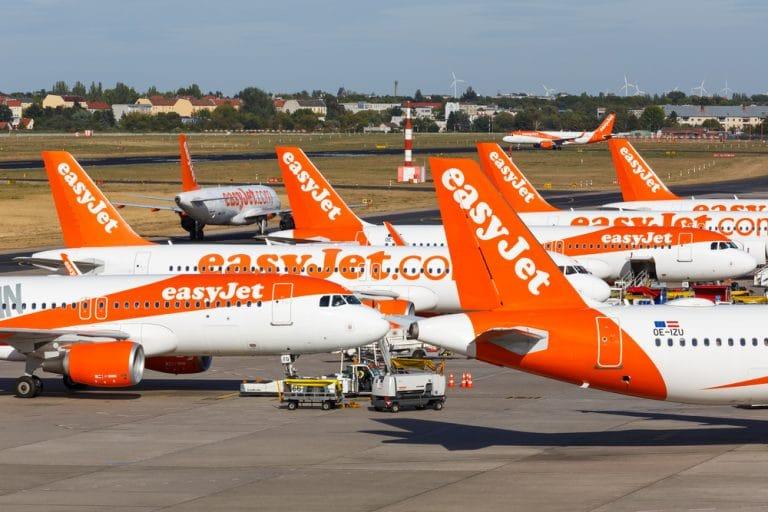
As travel slowly begins to reopen, budget airline companies are likely to see their share prices rise. That is the view of HSBC, which has upgraded both Ryanair and easyJet to ‘buy’ ratings.

The EU has reached an agreement on its Digital Covid Certificate to make travelling easier, and HSBC sees this as a turning point in allowing the aviation industry to make up lost ground.

The European Union looks set to open its borders to visitors from non-EU countries, while HSBC expects the UK to ease its current restrictions, but says it cannot predict when or how.

“The EU is also opening up to visitors from outside the EU, subject to vaccinations or testing. Whilst UK policy is not easily predicted, we expect UK travel restrictions to ease. We think the US may soon rescind its Executive Order banning UK and EU travellers entering the US,” the broker said.

“We see the EU moving fast to reopen the US-EU market. This could prompt the opening of the US-UK market. Once the US is defined as a green territory under the UK traffic light system, we would see pressure to open European destinations.”

News that ministers are considering the use of vaccine passports to allow for foreign holidays this summer gave a much-needed boost to shares in airlines and travel companies yesterday.

“British Airways owner IAG was one of the FTSE 100’s top gainers finishing up 1.86%. Over on the FTSE 250 EasyJet also jumped 2.44% and travel company TUI gained 2.43%.  Some summer has to be better than no summer at all for the sector. Without it, ABTA has warned that more than half of SME travel agents believe they won’t survive,” said Danni Hewson, AJ Bell financial analyst.
Retail sales reversal in May sends cable to a near 7-week low

The Bank of England could follow the ‘hawkish’ lead of its American counterpart before the eurozone

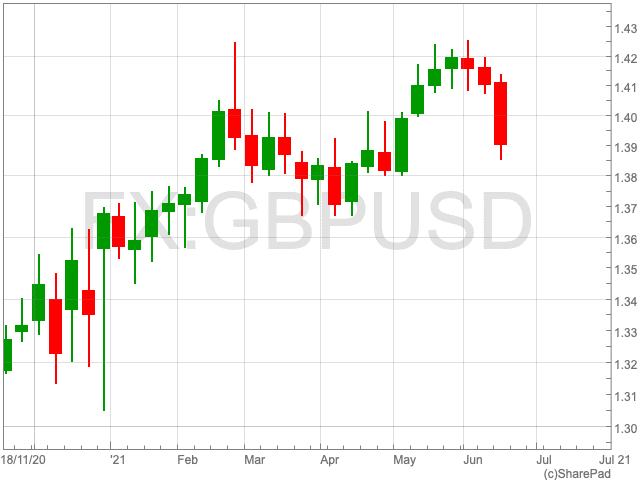
The pound is down by 0.24% against the dollar on Friday, extending what has been a poor few weeks for cable. At the time of writing it is at $1.39, its lowest point in nearly seven weeks.

It is much the same for the pound against the euro, which is down by 0.3%. “However, the currency’s stronger long-term performance against its rival meant that it has simply pulled back from yesterday’s 2-and-a-half-month peak,” said Connor Campbell, financial analyst at Spreadex.

“Blame appears to lie at the feet of the latest retail sales reading out of the UK. Analysts were always expecting a slowdown from April’s 9.2% increase. Yet instead of a 1.5% rise, May saw a 1.4% contraction,” Campbell added.

Markets also reacted to a hawkish shift in tone by the Fed, which boosted the value of the dollar against other major currencies.

Officials at the Federal Reserve are anticipating a rise in interest rates in 2023, earlier than previous estimates. 

The news comes on the back of economic forecasts of quicker growth and higher inflation in 2021.

Lee Hardman, currency economist at MUFG, told Reuters sterling’s strength versus the euro is because the Bank of England could follow the lead of its American counterpart ahead of the eurozone.

“It’s a reflection of the view that the Bank of England is likely to be one of the first central banks to raise rates as well. If the Fed is willing that could give the Bank of England confidence to move earlier,” Hardman said.

The pound’s retreat failed to fully safeguard the FTSE 100, which itself fell 1%, dropping under 7,080. Elsewhere the CAC was down 0.1%, while the CAC was flat at a devilish 6,666.

“As for the Dow Jones, following its latest round of losses on Thursday, coming in the aftermath of a hawkish(ish) Fed, the index is looking ahead to a flat start, leaving it at 33,830,” said Connor Campbell

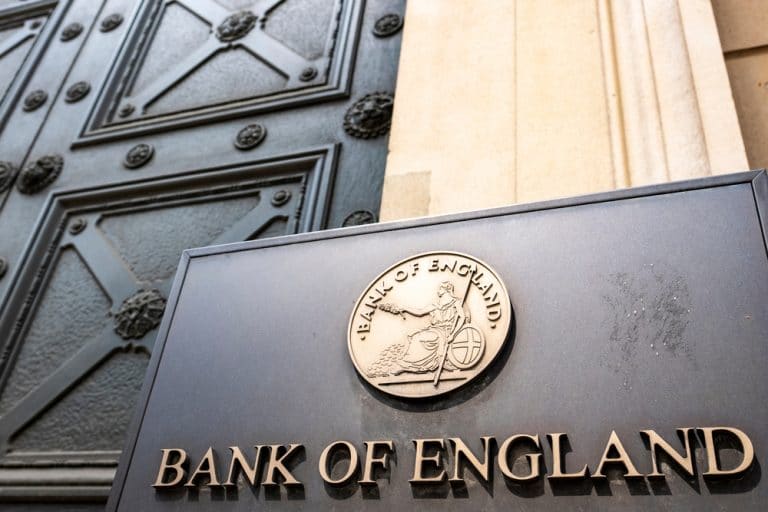
Bank of England faces pressure to address inflation ahead of interest rate decision next Thursday

0

It is the last for the Bank’s chief economist Andy Haldane

For the first time in nearly two years, inflation went beyond its target, putting pressure on the Bank of England to increase interest rates.

Consumer price inflation (CPI) jumped from 1.5% in April to 2.1% in May as the cost of fuel, clothes and dining out all surged.

The UK central bank, headed up by Andrew Bailey, is facing increasing pressure from City experts to bring the issue under control, by easing quantitative easing measures and/or raising the interest rate.

The Bank’s goal is to keep inflation at 2% however it failed to do so in May as the pandemic made an impact.

The Bank of England’s meeting of its rate-setting monetary policy committee on 24 June will be closely watched. Particularly as it is the last for the Bank’s chief economist, Andy Haldane, a prominent hawk who has warned of the growing dangers from inflation.

Laith Khalaf, financial analyst at AJ Bell, comments:

“Inflation is rising and unemployment is falling, but the Bank of England isn’t going to do anything about raising interest rates until it’s sure these aren’t just transitory factors emanating from an economy that’s gone from red to green. Markets will therefore be watching for any change in rhetoric rather than concrete action, particularly following the latest hawkish shift in interest rate expectations from the US central bank. We’re now beginning to reach that topsy turvy part of the cycle where good news becomes bad news, because markets worry that positive economic signals will hasten the withdrawal of central bank liquidity,” Khalaf said.

“The forthcoming meeting will be Chief Economist Haldane’s last, before he leaves the Bank of England after a 32 year career at Threadneedle Street. Haldane has been a consensual member of the MPC in his seven year stint on the committee, going against the majority decision on interest rates only once, in June 2018, when he voted for a 0.25% hike. Just a month later, the MPC voted unanimously to raise rates, so this was hardly a controversial stand.”

“Haldane has courted some controversy off the pitch, when in 2016 he said he didn’t understand pensions, and said financial advisers had “no clue” either. Quite clearly a feather ruffler in certain quarters. As many pointed out at the time, Haldane enjoys the benefits of being a member of public service defined benefit scheme, which guarantees a retirement income, and means pension planning probably isn’t quite as pressing a matter as it is for the majority of people. However he was absolutely right to point out at the same time how the lack of supply in the housing market would lead to a property price boom, a phenomenon which continues apace today, aided by low interest rates and government policies designed to incentivise and facilitate house purchases.”

Markets are calm on Friday as investors took time to digest the Fed shock earlier this week

0

Following a loss yesterday, the FTSE 100 is down by 0.44% on Friday, after a mild opening, putting it in the red for the whole week.

“Markets were relatively calm on Friday as investors took time to digest the Federal Reserve’s shock earlier this week that US interest rates might go up sooner than previously expected,” says Russ Mould, investment director at AJ Bell.

“Industrials and miners were among the top risers, including Rio Tinto which staged a small recovery after being in a falling trend since the start of June. China recently said it would release metal reserves to calm a strong rally in commodity prices, and this has weighed on the mining sector in general.”

The more UK domestic-focused FTSE 250 moved 0.2% higher to 22,570 with miners, industrials and airlines catching favour with investors. Dr Martens continued to slide following yesterday’s big slump.

There is not much going on next week with large cap stocks, with only DS Smith and Nike standing out.

FTSE 100 Top Movers

Fresnillo (2.29%), Halma (1.43%) and Renishaw (1.22%) were the top risers during the morning session on Friday.

Trailing the FTSE 100 pack is Reckitt Benckiser (-2.49%), Johnson Matthey (-2.47%) and Tesco (-2.25%)

Tesco

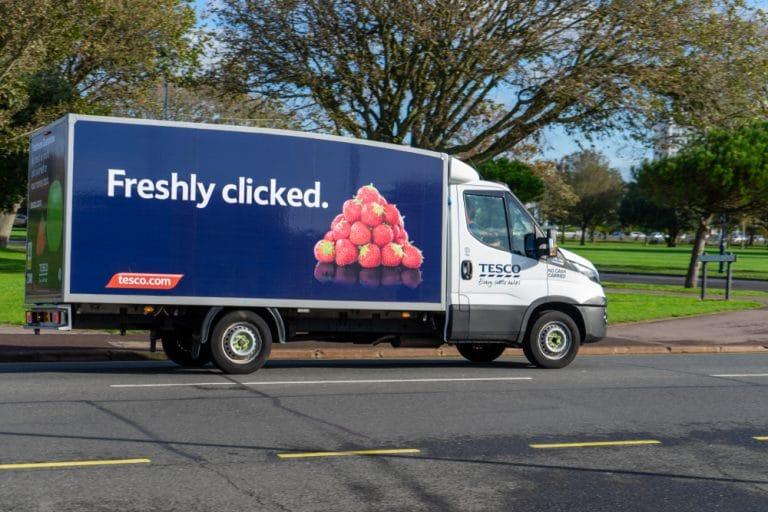
Tesco saw its underlying UK sales growth slow during Q1, in contrast to the same period a year ago when many rushed to the supermarket to bolster their supplies for the first lockdown.

For the quarter ending in May, the FTSE 100 company’s sales rose by 0.5%, above analysts’ predictions of a drop of 1%. However, it was way down from a growth rate of 8.8% in the quarter before. Tesco said that people were eating more meals at home than before the pandemic, causing a growth in sales.

Tesla being investigated following crashes linked to assisted driving

0

Year-to-date the Tesla share price is down by 15.51%

Tesla (NASDAQ:TSLA) is up against a probe in America as regulators have initiated 30 investigations into crashes possibly related to the use of assisted driving systems.

Since 2016 the respective incidents have caused around 10 deaths.

The National Highway traffic Safety Administrations (NHSTA) released information about the crashes which are being reviewed by its Special Crash Investigations.

Autopilot, Tesla’s automated driving system, has come under fire recently following a series of accidents and in anticipation of the launch of a fully driverless vehicle.

Speaking in January, Elon Musk, the Tesla boss, said that the company’s self-driving software would bring huge profits and that he had a great deal of confidence that the car would drive itself by the end of 2021 and would be more reliable than people.

It was reported in April that a fatal crash took place in Texas, as two men driving Model S electric vehicle crashed into a tree. Local police confirmed that no-one was found sitting the driver’s seat.

Cameras are now being used to analyse driver alertness in Tesla cars with Autopilot features, according to notes released on social media.

The cars already have sensors installed to see if drivers’ hands are placed on the steering wheel. If this is not the case then the cars make a series of alerts.

On Wednesday, Senate Commerce Committee chair Maria Cantwell evoked Tesla crashes as the panel voted against moving ahead with regulations to speed the adoption of self-driving cars.

“It seems like every other week we’re hearing about a new vehicle that crashed when it was on Autopilot” Cantwell said.

Year-to-date, the Tesla share price is down by 15.51%.

Retail sales down in May as Brits head to bars and restaurants

0

Food store sales remain higher than their pre-pandemic level

Retail sales are down by 1.4% between April and May as UK consumers spent their money at restaurants and bars over supermarkets.

The Office for National Statistics (ONS) revealed that sales were down especially at food shops as people made the most of the easing of lockdown restrictions by eating out with friends.

On the other hand, more people were buying outdoor furniture as sales at non-food shops increased. The number of online sales as a proportion of overall sales fell as consumers flocked back to physical stores.

The ONS confirmed it is the third consecutive month that online sales are down, however it added they are still over 50% above the levels seen in February, before the pandemic.

Reuters reported that its poll of economists on average predicted a 1.6% monthly increase in retail sales, with only three out of 19 predicting a fall.

Food store saw a 5.7% fall in sales, with Tesco reporting a slowdown in growth of its underlying sales during Q1.

“Anecdotal evidence suggests the easing of hospitality restrictions had an impact on sales as people returned to eating and drinking at locations such as restaurants and bars,” the ONS said.

However, despite the fall, food store sales remain higher than their pre-pandemic level, as sales during May this year were 2.6% higher than in February 2020.

“Feedback from retailers suggested that sales were negatively affected in May by both the reopening of all retail sectors and the relaxation of hospitality restrictions, with specialist retailers of alcoholic drinks and tobacco reporting a monthly decline of 8.4%,” the ONS added.

Tesco sees slowdown in sales growth in Q1

0

Tesco specifically drew attention to sales of general merchandise and clothing

Tesco (LON:TSCO) saw its underlying UK sales growth slow during Q1, in contrast to the same period a year ago when many rushed to the supermarket to bolster their supplies for the first lockdown.

For the quarter ending in May, the company’s sales rose by 0.5%, above analysts’ predictions of a drop of 1%. However, it was way down from a growth rate of 8.8% in the quarter before.

Tesco said that people were eating more meals at home than before the pandemic, causing a growth in sales.

Fuel sales rose by 68.1% in a signal of a recovery as the vaccine roll-out continues apace in the UK.

However, with total fuel sales at £1.4bn for the quarter, sales are 15.2% below their level before the pandemic.

Tesco specifically drew attention to its sales of general merchandise and clothing, as like-for-like sales jumped by 10.3% and 52.1% year-on-year respectively.

Tesco also retained its profit guidance for the 2021/22 fiscal year.

Chris Beckett, head of equity research at Quilter Cheviot commented on the FTSE 100 company’s trading statement:

“Tesco continued its growth trajectory in the first quarter of the year, despite the comparison being made with a truly exceptional period a year ago when there was widespread panic buying at the start of the first lockdown,” said Beckett.

“Sales are 9% ahead compared to pre-pandemic 2019 levels, but this measure has declined in the last two months as restrictions have eased and consumers can go back out to buy food in restaurants and elsewhere. This could well imply that current trading is negative, and Tesco executives will no doubt be grilled on this point during the investor call today.”

“The boom in online food delivery shows no sign of slowing, with sales up 22% year-on-year and up a staggering 82% since the start of the pandemic. The growth of online delivery is a structural trend accelerated by Covid, but one that is here to stay. Consumers value the convenience of online shopping and it’s clear they are sticking with it.”

In early morning trading the Tesco share price is down 1.8% to 227p.

New premium listing: Made.com

Online furnishings and homewares retailer Made.com is losing money and it is not totally surprising that it did not achieve the hoped-for valuation of £1bn. Even so, trading in the shares got off to a rocky start before recovering.  
Following two days of conditional trading, the share price ended at 200p – the low was 182.14p. There were 10.8 million shares traded on the first day and 2.99 million shares on the second day. The valuation is still three times ongoing annualised revenues.
The original shareholders still own the majority of the shares. All investors get the chance to deal in...

Open Orphan finalises Poolbeg Pharma spin-off

Open Orphan (LON: ORPH) has completed the arrangements for the demerger of non-core infectious disease assets in the form of Poolbeg Pharma, which will seek an AIM admission and raise cash to finance development. However, Open Orphan shareholders will not be getting their hands on the shares immediately.
Shareholders on the Open Orphan register on 17 June will be given one Poolberg share for every 2.98 Open Orphan shares they own. The influenza treatment and vaccines developer will be making an offer to private investors via PrimaryBid.
The Open Orphan share price fell from 35p to 30.2p, but i...

US weekly jobless claims reach highest level in over a month

0

Economists were expecting 360,000 new jobless claims for the week

Jobless claims jumped last week against expectations as the US employment market is undergoing a recovery, the US Labor Department said on Thursday.

First-time requests for unemployment insurance reached 412,000, up by 37,000 from the week before. It is the highest number recorded since May 15.

CNBC reported that economists were expecting 360,000 new claims for the week, well below the recorded figure.

The rise came pretty much totally from Pennsylvania and California, which saw new claims of 21,590 and 15,712 respectively.

Th news draws attention the the fact that the US economy has not fully recovered, and that the jobs market has not returned to its level before the pandemic. At that point, claims were just above 200,000 per week.

Jerome Powell, the chair of the Fed, unsurprisingly provided an optimistic outlook for the US jobs market during a press conference on Wednesday. Powell said that the recovery had been curbed by labour supply, but it should recover fully as the economy continues its reopening.

Powell added that a number of factors were at play in keeping Americans out of jobs. This includes: skills mismatches, concerns over Covid-19 and childcare.

“I think it’s clear, and I am confident, that we are on a path to a very strong labor market,” Powell said. “I would expect that we would see strong job creation building up over the summer and going into the fall.”