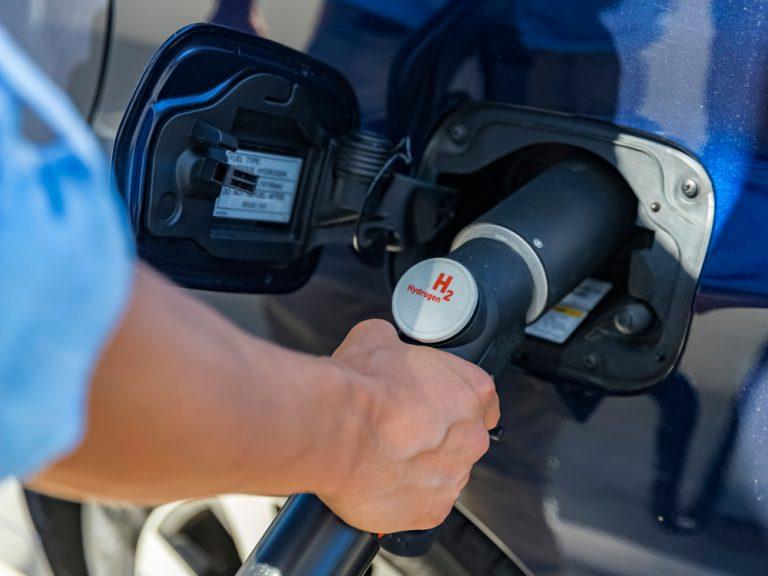
South America-focused oil and gas firm President Energy (LON:PPC) is on course to spin off the UK-registered subsidiary Atome, which is focused on hydrogen and ammonia production and sales.
AIM-quoted President has interests in Argentina, the US and Paraguay. It generates revenues from Argentina and Louisiana
At the interim stage, revenues rose by one-quarter to $17.1m, even though production fell by 2% to 2,648 barrels/day. Cash was generated, although net debt increased was $16.7m at the end of June 2021. The majority of debt is owed to a company owned by President executive chairman Peter L...
Light Science Technologies is a contract electronics manufacturer and a developer of controlled environment agriculture technology. The latter is yet to generate revenues and the loss it makes is much higher than the profit from the contract electronics manufacture.
The agricultural technology helps farmers to maximise crop productivity and monitor the growing environment. Management says that there is already a strong pipeline of potential orders for the agricultural technology, but it is yet to become commercial.
The cash raised in the flotation will be used to expand facilities and increase...
A strategic review by the board of Gresham House Strategic (LON: GHS) has led to a decision to change the manager of the smaller company investment firm and the incumbent Gresham House (LON: GHE) is not happy, even though it requested the review.
The strategic review led to six proposals and the decision to drop Gresham House and change to Harwood Capital, where the company’s former investment manager Richard Staveley moved earlier this year. Harwood has agreed to reduce the management fee and the investment company’s directors believe that this will save £270,000 a year – based on the current...
Bitcoin has smashed through $60,000 and towards it’s all time high of $64,000.
The rally in Bitcoin was met with excitement across financial Twitter accounts as the prospect of fresh highs further fuels interest in cryptocurrencies.
Bitcoin traders and investors have faced a volatile month with high profile criticism of crypto causing declines that were bought into by investors.
The news that Bitcoin futures ETFs will go live in the US has been attributed to the recent rally and the SEC has warned investors of the potential risks.
Before investing in a fund that holds Bitcoin futures contracts, make sure you carefully weigh the potential risks and benefits.
"There's a possibility a lot of people feel that you can get a short-term peak, or maybe a real peak as people just run ahead of the ETFs," says @jimcramer on a #Bitcoin ETF approval. "I might cash out half my $ETH." pic.twitter.com/48MJP047yK
A study has found 33% of UK investors have suffered a decline in their portfolios, meaning the remaining 66% had either experienced their portfolios increasing or staying the same.
The survey by Butterfields also found 44% were optimistic about the 12 month outlook for their portfolios.
The study also provided insight into the activity of UK investors and revealed 37% of investors held back on any action during the pandemic.
The pandemic meant investors had more time to pay attention to their portfolios and many investment platforms experienced a huge spike in the number of new accounts being opened.
Alpa Bhakta, CEO of Butterfield’s UK-based mortgage operations, said: “Navigating the turbulent economic landscape during the pandemic has been a challenge for investors. The option for many has been to pause on making major investment decisions, or to adopt a more risk-averse financial strategy. Clearly, however, it has not stopped a significant number of investors from being hit financially by Covid-19.
“It is positive to note that the number of optimistic investors more than doubles those lacking confidence. With interest rates remaining at record lows and the UK government’s economic policies evolving all the time, it will be interesting to see how investors now adapt their strategies in the months to come and which assets or markets attract the most attention.”
CarCloud was born out of a deep frustration shared by founders Paul Jewell and Geoff Turral. With over 50 years experience between them, on both the customer and manufacturer sides of the industry, they became increasingly frustrated that, as the world has moved rapidly to mobile, customer-centred solutions, the options for car ownership remain rooted in the 20th century.
CarCloud is a free to download app that enables the UK’s 33 million drivers to manage their second highest monthly spend on their phones, just like they can for virtually every aspect of their lives.
Our customer mission is simple. To help drivers save time, money, reduce stress and the environmental impact of car ownership.
How Does It Work?
Customers download CarCloud for free from Google Play and Apple’s App Store.
You enter your car’s registration, CarCloud retrieves your vehicle data and securely stores it on the cloud.
From then, 3 things happen.
You receive ‘stay legal’ reminders to ensure you never miss a key date. (7.1M UK drivers missed their MOTs by an average of three weeks during 2020)
You can easily upload car documents and paperwork to be securely stored on the cloud and always accessible when you need them with one tap of your screen.
CarCloud takes time, cost and hassle out of buying those services we have to by manage our cars
How does the revenue model work?
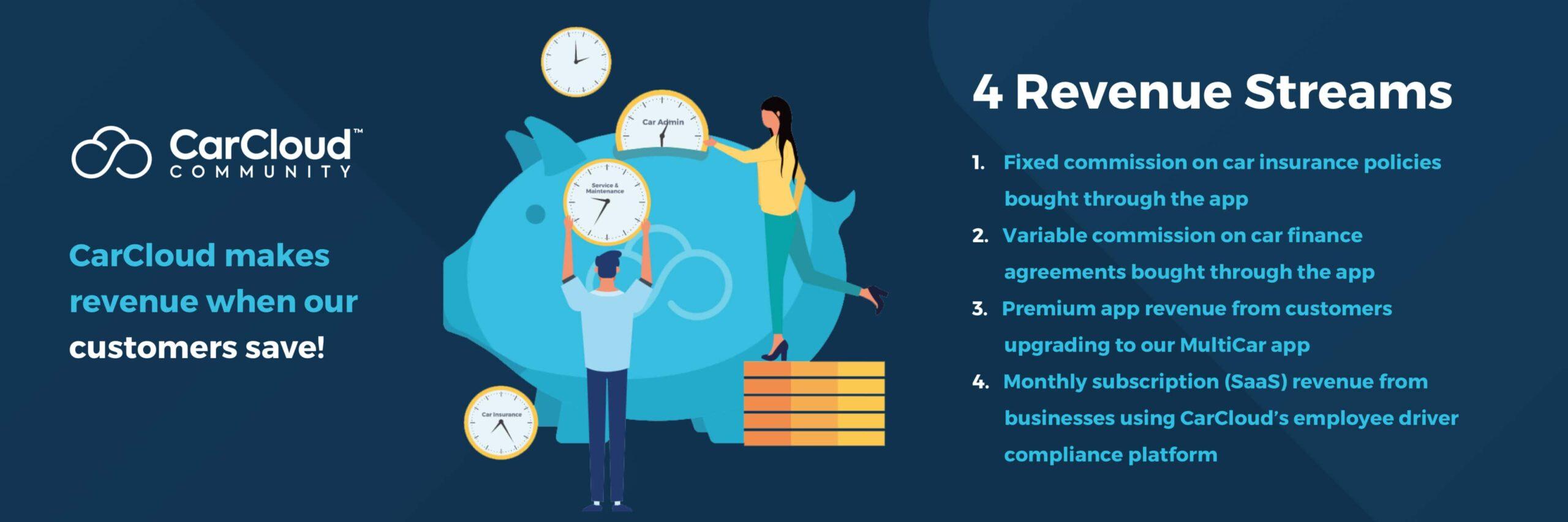
We don’t take advertising, we don’t sell customer data – we make revenue when our customers save time and money.
Customers download CarCloud to take time and stress out of car ownership. But, once they’re on CarCloud we have a lot of car and personal data. With their permission, we use it to pre-populate those tiresome, repetitive forms, taking chunks of time out of the process. By taking time and hassle out, we put the customer in a position of strength to make informed decisions.
Revenue Streams
There are 4 revenue streams – 3 consumer and 1 B2B
Insurance commission – applicable to 100% of customers, with a 12 month cycle (Live)
Finance commission – 89.5% of cars are financed, with an average 27 month change cycle. (Dec 2021)
CarCloud MultiCar – premium app upgrade subscription revenue. You can store up to 3 cars on the free CarCloud app. MultiCar allows customers to store 4-10 cars and targets families, enthusiasts and small businesses. (Dec 2021)
CarCloud’s B2B compliance platform – SaaS monthly recurring subscription revenue. for the 90% of business journeys that are undertaken in the employee’s personal car (March 2022)
Customer Acquisition
CarCloud acquires customers through 3 validated digital channels;-
Digital content and display – regional and local
Paid & organic social media – national
Interactive media partnership – Reach Plc – regional, national and local
We are targeting 111,000 users by December 2022 and 1.15M by December 2026, at an average cost per account set-up of £2.93 per user.
CarCloud’s key point of marketing difference is that we do not compete for customers at the (very expensive) point of sale. Customers join the platform as a life-hack, to get looked after and reduce the headaches that come with managing your cars.
The Investment Proposition
CarCloud is raising on Seedrs. We hit our investment target 48 hours after launching, and we’re now overfunding prior to closing the campaign out. We are targeting 7-12X return for investors in this round, in 4-6 years with a planned exit via a trade sale.
Click here to take a closer look at the CarCloud business and investment proposition.
The FTSE 100 has hit the highest level since February 2020.
The blue-chip stocks was up to 7242.73 in early trading, driven largely by oil stocks and also banks, airlines, and hospitality.
The biggest risers in oil this morning were BP, which gained 1.7% and RoyalDutchShell, which was up 1.3%.
Commenting on the news, Russ Mould, investment director at AJ Bell, said: “Anyone who gets excited by charts should note that the FTSE 100 has seen a breakout and is now trading at a higher level than any of its closing prices year-to-date.”
“The best performing stocks on the FTSE 100 this year are gambling group Entain (+84% thanks to takeover interest and strong trading), construction equipment rental business Ashtead (+70%, a benefit of economic growth and a likely beneficiary of plans for big infrastructure spending in the US), and Glencore (+67%, riding high from the surge in commodity prices).
“It is interesting to see markets continue to press ahead despite the whirlwind of pressures from supply chain disruption, higher energy prices, rising wages and the threat of rising interest rates.
“For now, strong results from banks, a decline in new jobless claims and lower than expected producer price inflation all from the US have served to put investors in a more positive mood,” he added.
Analysts also pointed to surprising nature of the economic backdrop for the rise in the FTSE 100 although the index is made up from companies largely earning revenue overseas.
“The FTSE 100 managed to extend its upward move and after closing higher the last 6 sessions has reached the highest level since January 2020. The UK index is up almost 3% since the beginning of October and despite recent supply issues, labour shortages and rising fuel prices, was able to break through previous highs and today reach the highest level in 20 months,” said Walid Koudmani, market analyst at financial brokerage XTB
In the latest Brexit U-turn, the government has said it will provide butchers to enter the UK on temporary visas.
Environment secretary, George Eustice, said that 800 butchers would be granted 6-month visas to address staffing shortages in abattoirs and meat processing plants.
He said on Thursday evening: “That will help us to deal with the backlog of pigs that we currently have on farm, give those meat processors the ability to slaughter more pigs, and crucially as well we are going to make available what is called private storage aid to help those abattoirs to temporarily store that meat.”
The new temporary visas come in as the culling of thousands of healthy pigs was reported amid staffing shortages.
The limit on contactless cards on Friday has more than doubled to £100.
Back at the start of the pandemic, the limit was increased to £45 to reduce contact. The new limit will take a while to roll out as retailers change their technologies.
“Contactless payments have become increasingly popular, and the payments industry has worked hard to ensure retailers are able to offer customers the new higher limit,” said David Postings, the chief executive of the British Retail Consortium.
There have been warnings of increased fraud with the higher limit. Sarah Pennells, a consumer finance specialist at Royal London, commented: “The higher limit could encourage people to become ‘tap-happy’ and spend more than they can afford, and it can be harder to keep track of what you’re spending if you don’t get a receipt every time.”
“Although fraud on contactless cards is relatively low level, it can be distressing to those who experience it. You should treat your contactless card the same way as you’d treat cash in your pocket, so be careful when you use it and don’t give it to anyone else.”
The FTSE 100 rose on Thursday as commodity prices resume their march higher helping shares in London’s oil companies.
“A 0.7% rise in the FTSE 100 to 7,188 should certainly bring a smile to investors, with similar gains seen across most of the key markets in Europe. Even parts of Asia had a spring in their step, with the Nikkei up 1.5%,” said Russ Mould, investment director at AJ Bell.
“Brent Crude pushed ahead 0.8% to $83.85 per barrel, natural gas showed no sign of stopping as it advanced another 6.7% to 251.73p per therm, and even sterling was intent on making ground as it rose 0.2% against the US dollar to $1.3699.”
Whereas higher energy prices have recently caused strife in markets due to fears over inflation, investors today focused on what it could mean for the earnings of the UK’s major oil companies.
“Stronger energy prices provide a tailwind to the FTSE 100 because Shell and BP are such big constituents of the index and their shares tend to do well when oil and gas prices rise,’ said Mould.
BP and Shell were up both up around 1% in early trade on Thursday.
Stronger pound
Indeed, investors were even happy to ignore the impact of a stronger pound which typically has an inverse relationship with the FTSE 100.
“The reason why the currency movement hasn’t weighed on the FTSE today is down to the strength in the broader natural resources sector. Stocks like Anglo American, Antofagasta and Rio Tinto are rising because metal prices are moving ahead, most importantly copper,” said Russ Mould
Mining shares were among the top risers with metals and minerals companies accounting for 5 or the 6 top risers on Thursday morning. Anglo American was the top riser gaining 3.6%.
Analyst Russ Mould cautioned on the short term volatility of commodity prices if the global growth picture started to falter.
“On a broader basis, a slowdown in the global economic recovery could easily trigger a pullback in commodity prices in the near-term, but for today it seems that investors are very much risk-on.”