FCA research paints a positive and yet worrying picture of crypto space

The average crypto holdings have gone up by £40 to £300

The FCA released a consumer research paper on Thursday detailing statistics and attitudes around the British public’s approach to cryptocurrencies.

The UK regulator found that the profile of cryptocurrenices, such as bitcoin and Ethereum, has risen. 78% of adults say they have heard of cryptocurrency, up by 5% in a year.

While most users said they purchased their crypto using their own cash, 14% said they used a form of borrowing, such as a credit card or borrowing from a friend.

The average holdings have gone up by £40 to £300, however the level of understanding of cryptocurrencies is declining. Only 58% of people surveyed agreed with the statement ‘I believe I have a good understanding of how cryptocurrencies and the underlying technology works’. While only a third strongly agreed.

Laith Khalaf, financial analyst at AJ Bell, comments:

“The FCA’s latest research on crypto paints a broadly positive picture and shows most consumers are using crypto sensibly and moderately. The average holding value is just £300 and those who have bought crypto tend to be further up the income scale, which means they have greater capacity to sustain losses. A high proportion of consumers recognise cryptocurrency is a gamble and a growing number are using it as part of a wider investment portfolio, which indicates they understand the risks and how to mitigate them.”

However, Khalaf adds that there is a more ominous aspect to the research’s findings.

“The fact that 14% of crypto buyers have borrowed to invest is simply terrifying. The extreme volatility and uncertain long-term outlook for crypto means holdings can be wiped out, leaving borrowers with nothing but their debt as a memento. Around one in five crypto buyers said they were driven by FOMO, which is never a good motivation for financial decisions. A similar proportion said they were buying crypto instead of shares or other investments, which suggests some consumers are leapfrogging traditional assets which can help to build long term wealth.”

Gold price falls as sterling drops below $1.40

Investors rush to sell gold as Fed adopts a more hawkish tone

Gold prices have dropped £37.09, or 2.8%, on Thursday on the release of the Federal Reserve’s interest rate statement.

At the time of writing the price of gold now stands at £1,280.58.

Following Jerome Powell’s statements about inflation, the US central bank’s dot plot and tapering plans, the spot price of gold came under selling pressure.

As the Fed adopted a more hawkish tone, investors took to the markets to sell of their holdings in the precious metal.

While investors reacted to the 1.58% rise in US treasury yields, they will be keeping a close eye on the attitude of the Fed toward inflation moving forward.

“Gold was crushed overnight by a more hawkish Fed. It has staged a modest recovery in Asia, but the rally looks more like speculative dip buying and fast money short-covering, than a vote of confidence in the yellow metal,” Jeffrey Halley, a senior market analyst at OANDA, told Reuters.

“The recovery in gold should be approached with caution as we have yet to see how a change in tone from the Fed will fully play out in markets. Gold’s daily close below $1,797.50 will signal a deeper correction is in prospect.”

Silver was flat at $26.97 per ounce, while palladium fell 1% to $2,770.72 and platinum held steady at $1,122.

Sterling

Sterling dipped below $1.40 and reached a 10-week high against the euro on Thursday in the aftermath of the shift in tone by the Fed.

On Thursday the UK currency has mostly traded sideways at $1.39840.

Lee Hardman, currency economist at MUFG, said the relative strength of the pound could be because the Bank of England is likely to follow America’s lead at a quicker pace than the ECB.

“It’s a reflection of the view that the Bank of England is likely to be one of the first central banks to raise rates as well. If the Fed is willing that could give the Bank of England confidence to move earlier,” Hardman said.

JP Morgan to acquire Nutmeg for undisclosed figure

0

JP Morgan set to launch a digital bank in the UK later in 2021

JP Morgan, the world’s largest investment bank, is set to acquire Nutmeg, the robo-adviser, for an undisclosed figure.

The US bank confirmed on Thursday that it will takeover Nutmeg subject regulatory approval.

JP Morgan is set to launch a digital bank in the UK later in 2021 and said that the Nutmeg model will ‘complement’ this move.

Sanoke Viswanathan, chief executive, JPMorgan Chase said: “We are building Chase in the UK from scratch using the very latest technology and putting the customer’s experience at the heart of our offering, principles that Nutmeg shares with us. We look forward to positioning their award winning products alongside our own, and continuing to support their innovative work in retail wealth management.”

Towards the end of 2020 Nutmeg partnered with J.P. Morgan to launch a range of five risk-rated portfolios.

The digital ‘Smart Alpha’ portfolio combined JP Morgan Asset Management’s (JPMAM) expertise, with Nutmeg’s popular fintech interface – to “bring active security selection to the Nutmeg investment range”.

Neil Alexander, chief executive of Nutmeg said: “Nutmeg’s customers can expect the same level of transparency, convenience and service that helped make us a leading digital wealth manager in the UK. 

Nutmeg holds £3.5bn in assets, although it has not yet made a profit. Losses at Nutmeg widened to more than £21m last year as the robo-adviser struggled to break even for the eighth year in a row. That figure was a bigger loss than the £18.4m reported for 2018.

The fintech company did however see its revenue jump by 66%, while it increased its customer base by 53% to more than 130,000.

The JP Morgan share price is trading sideways on Thursday at $156.27.

Fed signals earlier than expected interest rate hike

1

Most Fed officials thought that current rates would remain in place until 2024 at the earliest

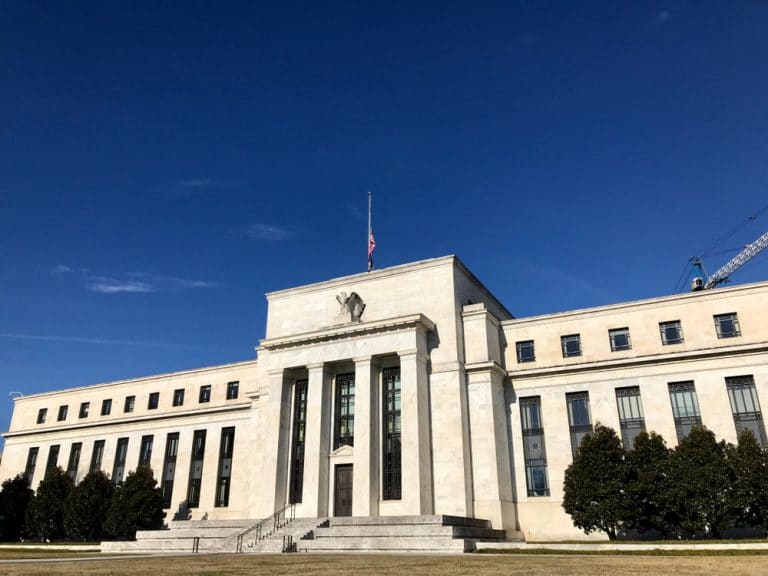
Officials at the Federal Reserve are anticipating a rise in interest rates in 2023, earlier than previous estimates.

The news comes on the back of economic forecasts of quicker growth and higher inflation in 2021.

Following the Fed’s policy meeting on Wednesday, which spanned two days, the US central bank kept its main interest rate the same, between 0 and 0.25%, its level since the beginning of the pandemic.

The move represents a curveball as initially most Fed officials thought that current rates would remain in place until 2024 at the earliest.

During a press conference on Wednesday, chair of the Fed Jeff Powell provided an optimistic outlook around the economic, specifically regarding employment, Covid vaccinations and the easing of lockdown restrictions.

“There’s every reason to think that we’ll be in a labour market with very attractive numbers, with low unemployment, high participation and rising wages across the spectrum,” Powell said.

Commenting on the Fed meeting and the surprising ‘dot plot’, Rupert Thompson, Chief Investment Officer at Kingswood, said: “The Fed meeting caught the markets somewhat on the hop with the infamous Fed ‘dot plot’ the source of the surprise. A majority of the FOMC are now forecasting two rate hikes in 2023 rather than none as before. The market had already been pricing in two rate hikes in 2023, so in one sense the Fed has merely moved into line with the market. Fed Chair Powell also emphasised that the forecasts in the dot plot should be taken with a big grain of salt. Still, no-one had really expected such a large shift in voting yesterday.”

“The reason for the shift in view is clearly the recent upturn in inflation, which has surprised the Fed by its size, and increased confidence in the rebound in growth. The Fed has raised its forecast for core inflation this year to 3.0% from 2.1% but has stuck to its guns that the rise should prove temporary. It continues to forecast inflation falling back to 2.1% in 2022.”

“Meanwhile, the start of QE tapering (the slowing of QE purchases) has moved a bit closer, at least in one sense. The Fed is now saying that it is talking about talking about tapering. So, an announcement of the Fed’s tapering plans looks likely over the summer with a start late this year or early next.”

“The market reaction saw 10-year US Treasury yields rise 7bps yesterday to 1.57%, US equities drop 0.5% and the dollar rise 0.7%. European equities have opened this morning down no more than 0.25% or so. So the equity moves are relatively small and 10-year yields remain some 20bps below their end-March high.”

European markets remained relatively calm on Thursday morning despite the Federal Reserve saying that the first interest rate rise could come in 2023.

The FTSE 100 is up by 0.52%, or 37 points, to 7,147.68, as investors digest the Fed’s hawkish outlook. 

Across the eurozone, Frankfurt’s DAX 30 index fell 0.2% and the Paris CAC 40 was down by 0.3% in response to the Fed’s curveball.

Markets digest Fed’s hawkish tone

0

Markets remained relatively calm on Thursday morning despite the Federal Reserve saying that the first interest rate rise could come in 2023.

The FTSE 100 is up by 0.52%, or 37 points, to 7,147.68, as investors digest the Fed’s hawkish outlook.

Across the eurozone, Frankfurt’s DAX 30 index fell 0.2% and the Paris CAC 40 was down by 0.3% in response to the Fed’s curveball.

“The US Federal Reserve has proved a bit of an unreliable partner to the markets, promising not to raise rates too far or too fast and then suddenly announcing an acceleration in its plans on this front,” says AJ Bell financial analyst Danni Hewson.

“For now investors seem to largely be taking these developments in their stride – perhaps reassured by Fed chair Jay Powell’s comments that the guidance for two interest rate hikes in 2023 should be taken with a ‘grain of salt’.

“After all, we’re still talking about something which might happen in two years’ time and plenty could change in the interim, plus the reason rate rises are moving up the agenda is an improving economic outlook, so there is positive news here too.”

“However, it is a reminder that investors will eventually have to confront the reality that the current ultra-loose monetary policy won’t last forever and there were signs of volatility in the bond market off the back of the Fed’s announcement with the dollar also rising to multi-month highs,” Hewson said.

FTSE 100 Top Movers

IAG (3.35%), Standard Chartered (2.93%) and Rolls-Royce (2.75%) are leading the way during the Thursday morning session.

While Halma (-4.98%), 3i Group (-3.88%) and Hikma Pharmaceuticals (-3.62%) have shed the most on the FTSE 100 so far today.

Whitbread

Whitbread (LON:WTB), owner of Premier Inn, confirmed on Thursday that there are strong levels of demand at its destinations across the UK as Brits seek domestic holidays

Whitbread, which also owns a number of restaurant companies, struggled throughout 2020 as its sites closed down, but confirmed its outlook is now positive, as restrictions across the country have eased, including hotels reopening. Hotel sales in the UK were at 73% of their level from before the pandemic as domestic tourism surged post-lockdown.

Halfords

Halfords (LON:HFD) cycling sales continued to soar during lockdowns, in addition to its car services, the company said on Thursday as it revealed its results. 

Having been considered as an essential shop, Halfords stayed open during the lockdowns. Its revenue for the year ending in April came to £1.04bn, up by 9.4% compared to the year before.

Premier Inn owner Whitbread reports surge in bookings

0

Whitbread confirmed that 98% of its hotel and restaurants are now open

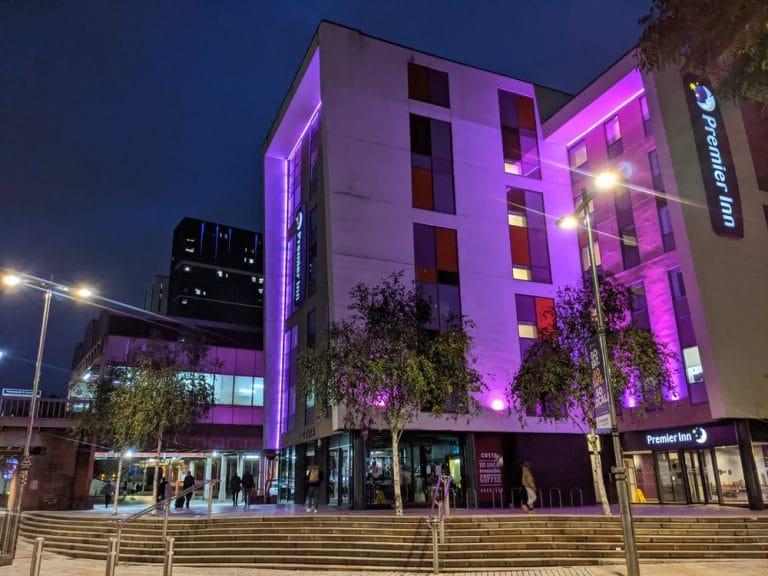
Whitbread (LON:WTB), owner of Premier Inn, confirmed on Thursday that there are strong levels of demand at its destinations across the UK as Brits seek domestic holidays.

Whitbread, which also owns a number of restaurant companies, struggled throughout 2020 as its sites closed down, but confirmed its outlook is now positive, as restrictions across the country have eased, including hotels reopening.

Hotel sales in the UK were at 73% of their level from before the pandemic as domestic tourism surged post-lockdown.

Whitbread confirmed that 98% of its hotel and restaurants are now open. It also said that forward booking trends in tourist locations over the summer were strong, aside from central London and airport locations.

For the year ending in February, Whitbread lost £1bn, while it let go of 6,000 staff in September.

Alison Brittain, chief executive of Whitbread said:

“The Group traded significantly ahead of the market during the quarter, despite the impact of the UK Government restrictions that were in place for the majority of the first quarter. Trading in the UK since May 17, when overnight leisure stays were permitted, and when our restaurants fully reopened for indoor service, has been encouraging. Additionally, our forward bookings continue to improve, benefiting from the anticipated post-lockdown bounce in leisure demand, and a continued gradual improvement in business bookings. During the first quarter we opened 10 new hotels in the UK.”

We hold a uniquely advantaged position in the UK, built on our scale, market-leading direct distribution, and strength of the Premier Inn brand. Our position as the market leader in the fast-recovering budget sector is combined with a broad, domestic focussed customer mix. This, alongside our financial flexibility and ability to invest in our customer proposition when others are constrained, means we are well-positioned to continue our strong performance,” Brittain added.

The Whitbread share price is up by 2.69% during the morning session on Thursday to 3,378.61p.

Shell unveils plan for large solar farm in Singapore

0

The farm is still being conceptualised at this stage

Shell (LON:RDSA) has established an agreement with a government company from Singapore called JTC Corp to look into developing a solar farm on a section of a landfill site in the south of Singapore, it was revealed on Thursday.

The capacity of the farm on one of the Southern Islands would be 72 megawatt-peak (MWp), producing enough energy to power up to 17,500 households.

The farm is still being conceptualised at this stage, while the FTSE 1OO oil giant and JTC have now signed a non-binding memorandum of understanding.

The Energy Market Authority (EMA) and the National Environment Agency (NEA) have backed the project, which could move Singapore nearer to its goal of producing sufficient solar energy to power 260,000 households by 2025.

“This multi-agency-corporate partnership is a great showcase of the creativity and collaboration that are vital to success in energy transition. With a common goal of enabling more and cleaner energy, we look forward to exploring with our partners this opportunity to maximise the use of Semakau in a way that is compatible with its primary purpose as a landfill,” said Aw Kah Peng, Chairman of Shell Companies in Singapore.

“This project is aligned with our 10-year plan to repurpose our core business, cut our own CO2 emissions in the country and help our customers decarbonise.”

The farm will be the first major solar project in Singapore where a landfill is also used for clean energy generation.

EMA Chief Executive Ngiam Shih Chun said: “Our energy sector is moving towards a cleaner and more sustainable future. Solar is our most promising renewable energy source and is a key switch for decarbonisation. Given our limited land space, EMA has been working with government agencies and industry players on innovative ways to harness more solar energy. I look forward to the successful implementation of this offshore solar farm on Semakau Landfill which will demonstrate how we can be creative in our solar deployment.”

The Shell share price is trading sideways early on Thursday morning at 1,473.80p.

Halfords resumes dividend as cycling sales continue to surge

0

Halfords revenue increased by around 13% to £1.29bn

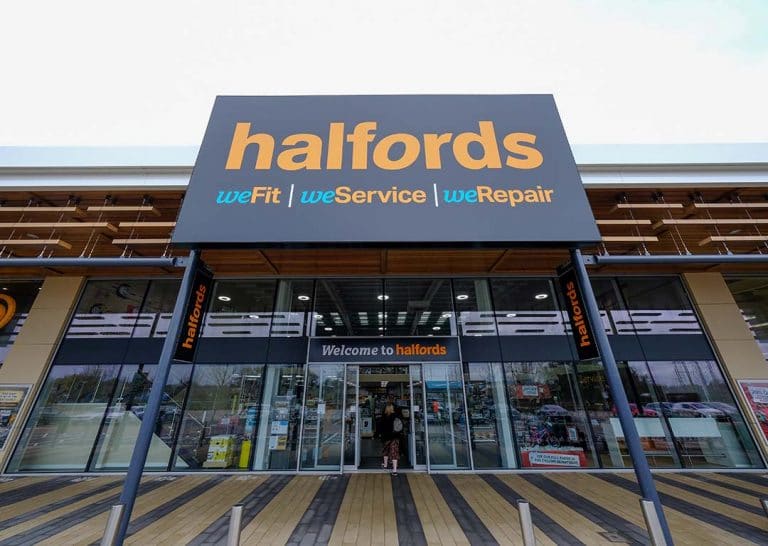
Halfords (LON:HFD) cycling sales continued to soar during lockdowns, in addition to its car services, the company said on Thursday as it revealed its results.

Having been considered as an essential shop, Halfords stayed open during the lockdowns. Its revenue for the year ending in April came to £1.04bn, up by 9.4% compared to the year before.

The firm expects its pre-tax profits after IFRS 16 adjustments to come in above £75m during the current year. This is after its profit before tax for the year gone climbed to £64.5m, an increase of 184%. Underlying earnings grew by 72% to £96.3m.

The firm also put forward a dividend of 9p per share, as it predicts that ongoing travel restrictions will boost demand for its products.

Graham Stapleton, chief executive of Halfords, commented:

“We are delighted to have delivered a year of very strong financial and operational progress, especially in light of the extraordinary challenges presented by the pandemic. As ever, I would like to thank our outstanding colleagues across the business for their hard work, professionalism, and dedication,” Stapleton said.

“It was a year in which Halfords’ transformation into a service-led business was rapidly accelerated, and we were particularly pleased to achieve a record revenue performance in the strategically important area of Motoring services. We have continued to increase our scale and capacity in this area and customers can now receive our services at almost 800 fixed locations, or at home from one of our 143 mobile expert vans.”

“We have also continued to lead the transition to an electric vehicle future by investing in training and technology. By the end of the current financial year, we will have trained more than 2,000 of our store and garage colleagues to service electric cars, bikes and scooters.”

“Demand for our services remains strong in the new financial year, and our touring categories are currently performing particularly well given the trend towards staycations this summer. In the longer-term, we remain confident in the future prospects for the UK’s motoring and cycling markets and our ability to compete strongly in both.” 

Dr Martens repays furlough scheme money as earnings jump

0

Dr Martens recorded a profit before tax of £70.9m

Dr Martens (LON:DOCS), the British bootmaker, confirmed on Thursday that its earnings increased by 22% over the year as online sales stepped up while physical stores remained closed due to lockdowns.

The company was able to return the money it borrowed under the furlough scheme as its first set of results as a listed company proved to be strong.

Dr Martens received £1.3m from the government during the early part of the pandemic.

The firm recorded a profit before tax of £70.9m, down by 30% as costs do with its IPO amounted to £80.5m.

Dr Martens confirmed that it continued to invest throughout the pandemic, increasing its staff by more than 250 people, and opening 18 new locations.

“The pandemic presented challenges to our operations and ways of working, and our priority throughout was to keep our people and consumers safe. I am very proud of the resilience, dedication and agility of our teams across the globe,” said chief executive Kenny Wilson.

Dr Martens said the guidance it outlined when the company listed remains the same. For the full year 2022, it expects growth in the high teens compared to the year before. While from full year 2023 and over the medium-term, it anticipates the same.

Best of the Best share price slumps despite special dividend

Online competitions organiser Best of the Best (LON:BOTB) is paying a second special dividend in less than a year, but it will still have plenty of cash in the bank. Over the past ten years, the Best of the Best share price has risen by 10,800%.
Best of the Best is even paying a final dividend of 5p a share, which is better than forecast, on top of the 50p a share special dividend. There was an interim special dividend of 40p a share, which means the total for the year is 95p a share – costing £8.9m. The previous year the total pay out was 37p a share.
However, the share price slumped by 730p ...