Wishbone Gold (AIM & Aquis: WSBN) has provided an exploration update on its Red Setter Gold Dome Project, located 20km south-west of Greatland Gold’s Telfer gold mine in Western Australia.
Today’s announcement provides investors with little more than an update on which holes the company has been drilling and what’s next for the programme.
The market will have to wait for updates on grades and results of recent drilling.
Diamond drilling on hole 2 has been completed at 950 metres, and operations have now moved to a planned 500-metre deep hole situated 1.6km north of the first two holes.
Core samples from hole 2 revealed multiple zones of fracturing with pyrite and will be dispatched to ALS Laboratories in Perth for cutting and assay.
Hole 3 is targeting the area where previous drilling intercepted 7 metres at 2g/t gold and 0.38% copper from 273 metres depth.
The next phase will kick off from 21st October, targeting shallower copper-gold intercepts from 117 metres.
“Diamond drilling is now on double shift and with the Reverse Circulation drill rig arriving this weekend we are ramping up activities to expedite exploration,” said Ed Mead, Wishbone Gold WA director.
“I look forward to the results arriving soon from the first drill hole, and while we await these results, we have sent the diamond rig to nearby hole 3 to investigate past findings. I look forward to presenting further updates on progress shortly.”
Modular housing company Eco Buildings Group (LON: ECOB) has expanded its geographical reach and the computerisation of the production process. The share price improved 24.2% to 10.25p.
Gunsynd (LON: GUN) says assay results at the Bear Twit project in Canada and they confirm high-grade lead, zinc and siler mineralisation. There are also elevated concentrations of gallium, germanium and copper. The project will move towards a drill-ready stage. The share price rose 11.9% to 0.165p.
Shuka Minerals (LON: SKA) says the loan from Gathoni Muchai Investments has been further delayed, but funds could be cleared next week. This will enable the $1.35m payment for Leopard Exploration and Mining. The share price is one-fifth higher at 6p.
Iodine producer Iofina (LON: IOF) produced 215.8 metric tonnes of crystalline iodine from eight plants. That is a 32% increase. Production started at IO#11 in July. Production is in line with guidance. Foundation wok on IO#12 could start before the end of the year. The share price increased 7.61% to 24.75p.
FALLERS
Premier African Minerals (LON: PREM) is seeking further disapplication of the pre-emption provision for share issues to make it easier to raise the cash it requires. A total of $6.3m is required to settle debts and fund phase 5 of pre-production readiness. This follows the share consolidation earlier this week and the share price declined 14.7% to 0.145p.
Data analysis software provider Cirata (LON: CRTA) has data integration bookings of $3.4m in the first nine months of 2025, although there was a slowdown in bookings in the third quarter. So far, $2.5m has been received for the sale of the DevOps assets with a further $1m expected in December. Annualised costs are $12-$13m. Third quarter cash outflow was $800,000 with cash of $5.4m at the end of September. The share price slipped 10.9% to 18.85p.
Pulsar Helium Inc (LON: PLSR) has filed a preliminary short form base shelf prospectus, which will enable the issue of securities to raise cash up to $50m over a 25-month period. There is no immediate plan to raise money. The share price fell 8.04% to 51.5p.
Pre-clinical antibody supplier Fusion Antibodies (LON: FAB) generated interim revenues of £838,000, down from £1.2m in the first half of last year. Gross margin improved from 22% to 30%. Cash was £251,000 at the end of September 2025. Management is still confident that is has sufficient cash until 2027. The share price is 5.66% lower at 12.5p.
Regenerative medical devices developer Tissue Regenix (LON: TRX) is restating 2024 EBITDA from $1.9m to a loss of $1m. This is due to changes in inventory and cost of sales. It also means that interim positive EBITDA of $200,000 has become a $2.3m loss. There is cash of $1.1m at the end of June 2025 and headroom of debt of $5.6m. Chief executive Daniel Lee is leaving, and Kirsten Lund has been reappointed as finance director. There is a $2m plus cost reduction. The share price slid 5.56% to 8.5p.
Semiconductors designer EnSilica (LON: ENSI) has been hit by a contract delay and a cybersecurity incident at an automotive client that slowed orders. That means that full year EBITDA of £300,000 is expected, compared with £500,000 previously forecast. That is before a £1.6m bad debt provision relating to the contract delay. That contract with SIAE Microelectronics is on hold because of the client’s lack of cash and EU funding may be issued in 2026. The 2026 EBITDA guidance has been reduced to £3.5m-£4.5m. The share price dipped 4.4% to 43.5p.
Ex-dividends
Animalcare (LON: ANC) is paying an interim dividend of 2.2p/share and the share price declined 3p to 228p.
Next 15 Group (LON: NFG) is paying an interim dividend of 4.75p/share and the share price fell 12.25p to 364.75p.
The FTSE 100 was fighting to turn positive on Thursday amid disappointment around the slow pace of UK economic growth.
Declines in UK-centric sectors, including housebuilders and retailers, sent the FTSE 100 0.1% lower as investors digested the soggy state of the UK economy, following August’s 0.1% GDP expansion.
“Rachel Reeves might be reaching for a buck’s fizz after the UK economy showed growth in August after contracting in July. However, the celebration may be short lived as a 0.1% expansion is minuscule and lower than the 0.2% growth expected by some economists,” said Russ Mould, investment director at AJ Bell.
“We’re just six weeks away from the Chancellor’s Budget and the nation is eager to know how Reeves plans to get the country moving while also repairing the black hole in public finances.
“A lot of people view the UK as being in a difficult spot – lacklustre growth and a weak financial position. The outlook is far from rosy and there is a big risk that tax tweaks could further dampen consumer and business sentiment.”
The mood was a lot more positive in the US, with banks producing bumper earnings growth and interest rate hopes overcoming concerns about Chinese tariffs.
“Monster Q3 earnings from the big banks on Wall Street supported the mood. Bank of America and Morgan Stanley joined the party started by Goldman Sachs, Citi and Wells Fargo on Tuesday,” said Saxo UK Investor Strategist Neil Wilson.
Wilson continued to explain that AI-related stocks remained a key driver of global equities amid a wave of mega deals and strong earnings from chipmakers.
“Elsewhere, AI and chips are still building a positive narrative, even if it looks like a bubble. TSMC profit jumped 39% to beat estimates and hit another record on AI chip demand. CoreWeave rose a further 4% a partnership with Poolside to provide more than 40,000 Nvidia GPUs to bolster the development of Poolside’s AI models. ASML reported bookings 10% ahead of estimates, offsetting some weakness in China.”
Earnings in the UK on Thursday weren’t as encouraging.
Whitbread was rooted to the bottom of the FTSE 100 leaderboard after the hotel group reported a 2% drop in revenue and 7% lower operating profits. Although Whitbread said falling food and beverage sales were expected, investors checked out, sending the stock 9% lower.
“Investors had clearly expected better service from Whitbread, with the shares down sharply in early trading,” said Chris Beauchamp, Chief Market Analyst at IG.
“However, it does look like a work in progress, with a steady shift to more profitable operations underway, but it seems that Whitbread might be at risk of overpromising and underdelivering, signalling it needs to manage its next few updates rather carefully”.
Croda was the top FTSE 100 riser following news that group sales grew 4% in the third quarter.
Hot on the heels of a 50% jump in shares earlier this week, driven by news of expansion into Sudan, Eco Buildings surged again on Thursday as the modular housing group released an operations update.
Eco Buildings shares were over 20% higher at the time of writing and have tripled since the beginning of September.
The group said it has completed the computerisation of its entire modular housing production process. This has clear benefits for automating manufacturing lines that could span multiple continents as housing shortages intensify worldwide.
The AIM-listed company’s system centres on a proprietary Vertical Panel Casting Machine paired with Glass Fibre Reinforced Gypsum technology, capable of producing up to 6 60-square-metre homes per production line per day. The model’s scalability is a major attraction.
Initial deployment targets Albania, Kosovo, Chile, Senegal and recently announced Sudan – all regions facing urgent housing needs. The firm said the second phase will focus on affordable, ESG-compliant housing in Western Europe and North America.
Dr Etrur Albani, Executive Vice Chairman of Eco Buildings, called on the UK government to consider the solution to improve the supply of homes.
Eco’s expansion strategy mandates localised production—eliminating shipping costs whilst stimulating regional economies—with a minimum of two automated lines per country. Eco believes the initial phase will be immediately cash generative.
“I am pleased by the progress Eco is making as we continue to successfully expand our technological and manufacturing capacity,” said Dr Etrur Albani.
“Our aim is to deploy our unique technology in all countries where there are acute housing shortages, across both developed and emerging economies.
“In the UK, where affordable housing remains one of the most pressing national priorities, we believe our technology offers a ready-to-deploy, scalable solution. We encourage policymakers to explore how innovative approaches like ours can become part of the solution to the country’s housing challenge.”
Electronic waste is now one of the world’s fastest-growing environmental challenges, with 62 million tonnes of e-waste generated last year and less than 20% being recycled. Within that, printed electronics recycling rates are less than 1%, highlighting a critical gap in the global transition to circular manufacturing.
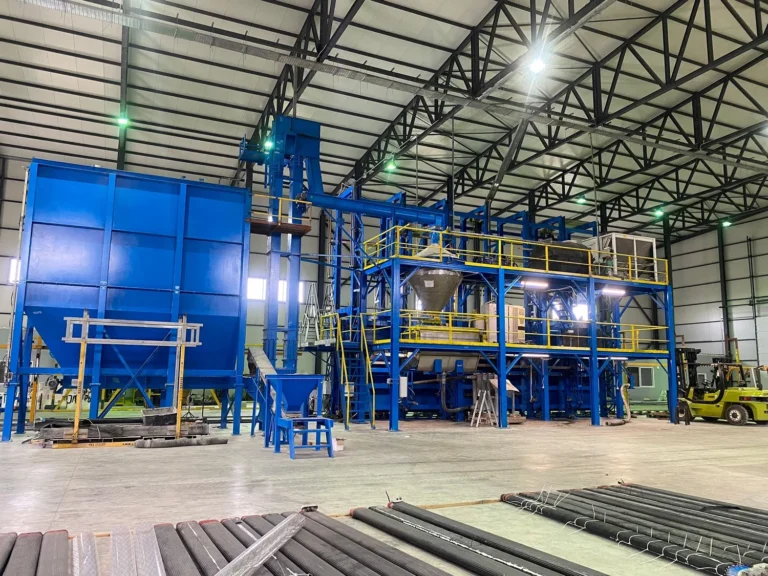
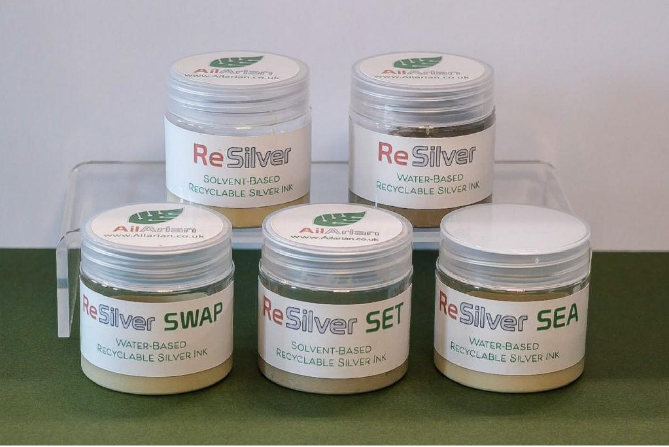
Ail Arian, founded in Swansea, South Wales in 2024, is tackling this challenge head-on. The company has developed a patented, recyclable silver ink for use in printed electronics, a breakthrough that allows high-performance circuits to be recovered, reused, and reintegrated into the manufacturing cycle.
Turning Waste into Value
Printed electronics power everything from wearable technology to medical sensors and smart packaging. Yet, many materials behind these innovations are single-use, contributing to growing environmental waste and tightening regulatory scrutiny.
Traditional conductive inks present a double challenge. Not only is the silver within them difficult to recover, but contaminate the substrates, rendering the entire component non-recyclable. This contamination means valuable materials, plastics, films, and papers are lost to landfill or incineration rather than reintroduced into the supply chain.
“Our mission is simple,” says Dr James Claypole, CEO and founder of Ail Arian. “We’re proving that sustainability and commercial success can coexist. Every gram of silver that’s reused is a win for both industry and the planet.”
Our Technology: A New Standard in Sustainable Conductive Materials
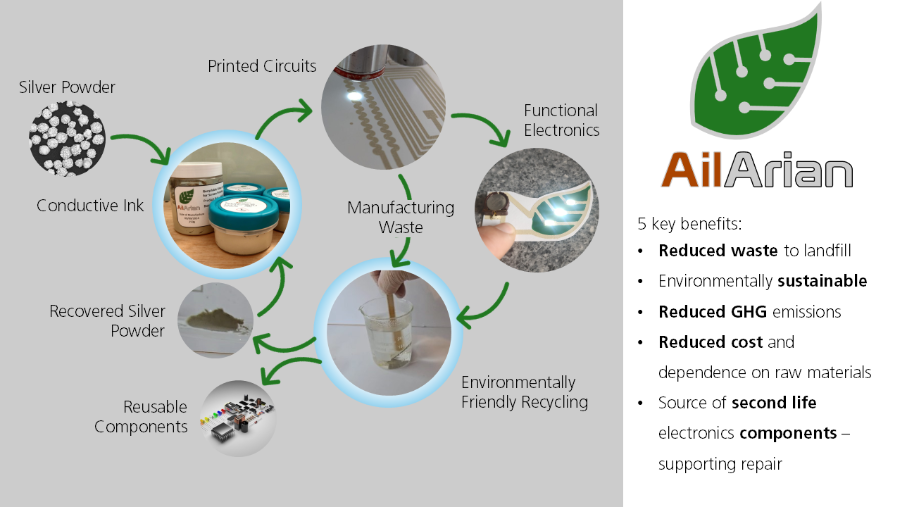
Ail Arian’s patented ink is manufactured using a specially modified silver material that has been engineered to be both conductive and magnetic. This enhanced silver is blended with selected polymers and solvents to create an application-specific conductive ink for printed electronics.
Crucially, the ink can be used by manufacturers as a direct, drop-in replacement for existing silver inks, requiring no changes to current printing processes or equipment.
By making the silver magnetic at the very first stage of production, Ail Arian enables the efficient recovery of silver and printed circuits using magnetic separation from the waste stream. This innovation unlocks a truly sustainable, closed-loop solution for printed electronics, reducing waste, conserving resources, and setting a new benchmark for circular manufacturing.
Global legislation is rapidly evolving to make sustainability a requirement, not a choice. Across the UK and EU, new rules on eco-design, digital product passports (DPPs), extended producer responsibility (EPR), and electronic waste recovery are holding manufacturers accountable for the full lifecycle of their products.
The introduction of Digital Product Passports, a key part of the EU’s Eco-design for Sustainable Products Regulation (ESPR) will soon require every electronic product sold in Europe to include a traceable digital record detailing its materials, recyclability, and environmental impact.
For producers of printed electronics, this means that adopting recyclable and recoverable materials is no longer optional, it’s essential for compliance, competitiveness, and future resilience.
“Ail Arian’s technology positions manufacturers ahead of the curve,” explains Hannah Claypole, Chief Marketing Officer. “Our recyclable silver ink not only meets the coming standards but helps companies future-proof their operations in a market where sustainability will define success.”
Regulatory Landscape Snapshot
WEEE Directive (2012/19/EU) – Requires producers of electronic equipment to finance and organise end-of-life collection, treatment, and recycling.
Ecodesign for Sustainable Products Regulation (ESPR) – Expands eco-design rules to include durability, repairability, and recyclability, and introduces Digital Product Passports (DPPs) to track product materials and environmental data.
Digital Product Passports (DPPs) – Expected to become mandatory for electronics and batteries by 2027, giving every product a digital identity linked to sustainability and circularity data.
Restriction of Hazardous Substances (RoHS) Directive (2011/65/EU) – Limits hazardous materials, making recycling safer and more efficient.
UK Ecodesign Regulations – Promote energy and material efficiency for goods sold in the UK, aligning with EU sustainability goals.
Extended Producer Responsibility (EPR) – Expanding frameworks that make manufacturers responsible for the full lifecycle of their products.
Together, these frameworks are driving a new industrial standard, one where circularity, transparency, and material recovery are fundamental to business success.
A Growing Market with Circular Potential
The global conductive ink market is valued at around $3 billion USD, with silver-based inks accounting for approximately 60% and representing a $1.7 billion early-adopter market for recyclable alternatives.
As demand for flexible and sustainable electronics accelerates, Ail Arian’s patented recyclable ink is positioned at the forefront of this transition, offering manufacturers a route to circularity without compromising performance or scalability.
Recognised for Innovation and Impact
Ail Arian’s leadership in sustainable materials has already earned major recognition. The company received an Innovate UK Start-Up Grant of £250,000 and a Welsh Government SMART FIS Grant of £200,000 to advance its R&D and scale-up plans.
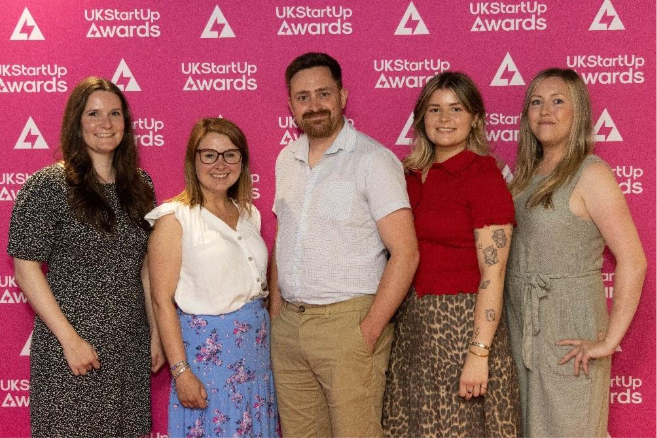
It was also named Welsh Winner of the Manufacturing & Engineering Start-Up of the Year Awards, and is a finalist in the LOPEC Start-Up Awards, the UK Start-Up Awards, and a nominee for Innovation Entrepreneur of the Year at the Allica Bank Entrepreneur Awards next month.
Educating the Next Generation
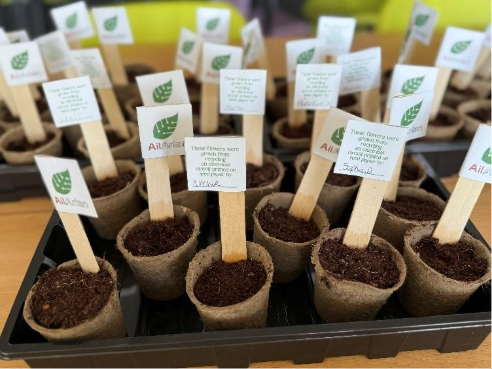
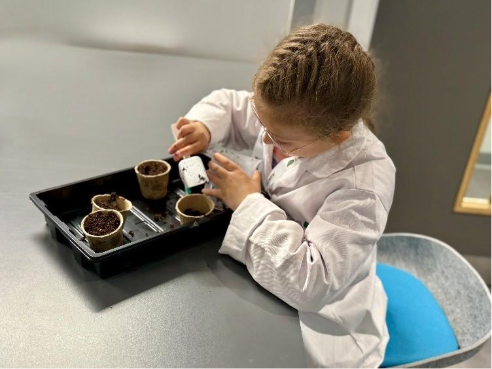
Beyond innovation, Ail Arian is deeply committed to community impact. Through its school’s outreach programme, the company educates young people across Wales about recycling, electronic waste, and sustainable engineering, inspiring the next generation of innovators. The session includes a hands-on experiment which allows the children to transform a printed circuit into planted wildflowers, with the silver ink being recovered and reused.
“Our outreach work is about showing students that science and sustainability can go hand in hand,” adds Hannah “We want to empower young minds to see how responsible design can shape the future.”
Scaling for Growth
Ail Arian is now seeking investment to scale production and accelerate market entry. With rising interest from UK and European manufacturers, the company is poised to lead the shift toward sustainable materials in a printed electronics market projected to exceed £50 billion globally by 2030.
To support this next phase, Ail Arian offers SEIS tax relief to qualifying investors, providing attractive incentives for those looking to participate in the early stages of a high-growth, impact-driven business.
“With circularity at the heart of our business model, we’re aligning environmental responsibility with economic opportunity,” says Dr Claypole. “Ail Arian’s recyclable silver ink isn’t just a product, it’s a pathway to a more sustainable, profitable future for manufacturing.”
A Vision for Circular Electronics
As Ail Arian grows, its mission remains clear: To make every circuit recyclable, and every innovation responsible.
For investors, Ail Arian offers the opportunity to help shape the future of sustainable manufacturing, where technology, regulation, and profitability move forward together.
Whitebread shares tumbled on Thursday after the hotel group posted a 7% decline in operating profit in the 26 weeks to 28 August 2025.
Group revenue declined 2% as growth in the UK hotels flatlined and food and beverage sales fell. Although the fall in food and beverage sales was expected, the 11% drop in sales weighed heavily on overall sales for the UK, which fell 3%.
Germany fared better, but the region makes up just 10% of sales.
“Investors had clearly expected better service from Whitbread, with the shares down sharply in early trading,” said Chris Beauchamp, Chief Market Analyst at IG.
However, one wonders whether Whitbread’s 9% decline presents a buying opportunity for investors.
The company is undergoing several strategic improvements that should position it well for growth when the UK economy picks up.
“Premier Inn owner Whitbread shrugged off its first quarter weakness to deliver first half UK accommodation sales in line with last year,” said Derren Nathan, head of equity research, Hargreaves Lansdown.
“The second quarter market recovery was supported by a string of events in London and that’s continued into the second half, with the likes of Lady Gaga, Oasis and the less glamorous Defence and Security Equipment International conference keeping demand for hotel rooms high.
“Once again Premier Inn outperformed the competition, with rooms on average generating £6.10 per day more than other midscale and economy operators. That wasn’t enough to offset a double-digit drop in food sales however, mainly driven by a slimming down of the group’s pub and restaurant offer. The drop in revenue and increased finance charges saw underlying pre-tax profit fall by 7% to £316mn bang in line with market forecasts.”
At 16x earnings, Whitbread is neither cheap nor expensive. That said, a recovery in earnings growth could quickly make the group look good value.
UK GDP grew at the meagre rate of 0.1% in August, as the economy was paralysed by fears of what the UK government may do to damage sentiment ahead of the upcoming budget.
The construction industry was a drag on overall activity as output fell 0.3%. Services flatlined while production grew 0.4%.
“The UK economy grew marginally in August, but remains firmly stuck in the slow lane. Recent data shows that growth tailed off over the summer and was downgraded in July, disappointing many after a strong start to the year,” explained Scott Gardner, investment strategist at Nutmeg.
“Driving this has been a distinct slowdown in economic activity, with the construction sector particularly weakened and services sector flat during August while the labour market deteriorates. Housing market activity has also been muted with the industry reporting a notable reduction in asking prices and demand over the summer months. For the UK economy to regain momentum, the housing market needs to become unstuck as this drives additional consumption beyond the purchase.”
The housing market’s associations with the UK wealth effect will need to be addressed to improve consumer confidence, which remains firmly in negative territory.
Analysts highlighted that the UK economy is likely to remain subdued in the coming months, with companies fearful of what the Chancellor has in store.
‘With HMS Brittania firmly off economic course, fiscal policy is going to be the likely lever required to chart a course back to safer waters,” said Isaac Stell, Investment Manager at Wealth Club.
“However, uncertainty reins, and until the spectre of the budgetary iceberg passes, UK PLC is likely to remain cautious and the economy certain to drift into stagnant waters.”
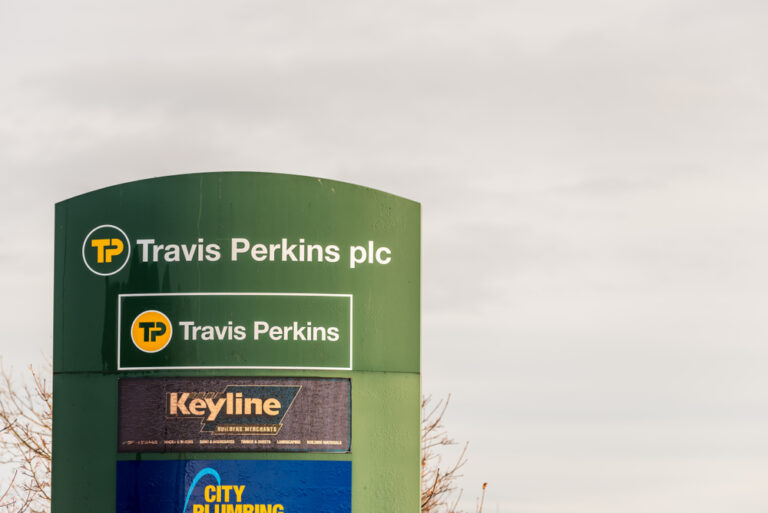
Travis Perkins offered investors reason to be optimistic by recording modest revenue growth in the third quarter, with like-for-like sales rising 1.8% in the three months to 30 September 2025.
The building materials supplier said actions taken to sharpen its competitive proposition in the Merchanting segment have improved performance.
Its General Merchant business showed notable improvement, with like-for-like volumes up 2.5% despite a 0.8% decline in price and mix.
However, trading conditions remain challenging in Specialist Merchants’ markets, which continue to face subdued demand. The Labour government can be blamed for the conditions impacting Travis Perkins and the rest of the construction industry.
Travis Perkins shares were down 1% at the time of writing on Thursday, but there is only minor profit taking in the context of recent gains.
“As we outlined at our half year results, in the third quarter we have consciously focused on building top-line momentum and regaining market share in the Merchanting businesses,” said Geoff Drabble, Chair of Travis Perkins.
“I am pleased with how our teams have responded to this challenge with Merchanting returning to revenue growth and our operating performance stabilising.
“In what remains a highly competitive market, we have invested in pricing and targeted promotions and will continue to do so in the near-term. We continue to demonstrate good discipline on capital allocation and overheads which will allow us to reinvest in our proposition and position the Group well as we look forward to Gavin Slark’s arrival as CEO in January.”
Toolstation delivered solid results with like-for-like revenue growth of 2.3% and total revenue up 3.0%. The tool retailer is focusing on strategy execution whilst taking steps to drive further operating margin improvement.
Although Q3 growth will be welcomed, the group will need to do more to prove that the worst is behind them.
For the year to date, the group has seen like-for-like sales decline 0.2%, with total revenue down 1.3%. Merchanting has struggled with a 2.1% fall in total revenue, whilst Toolstation has proved more resilient with growth of 2.8%.
The company said it continues to make good progress on enhancing cash generation, further strengthening its balance sheet.
The FTSE 100 missed out on a global equity rally on Wednesday as pharma stocks and other overseas earners weighed on the index amid hopes of a US interest rate cut.
London’s leading index was 0.4% in the red at the time of writing, underperforming the German Dax’s 0.2% gains and a surging 2% rally in the French CAC.
The softer session for the FTSE 100 also ran counter to S&P 500 futures, which pointed to a higher cash open.
The key driver of stocks on Wednesday was the uptick in hopes of US interest rate cuts after a speech by the Federal Chair that signalled rate setters were preparing to lower borrowing costs.
“Markets have been lifted by the rekindling of rate cut expectations in the US after comments from Fed chair Jerome Powell which highlighted sluggish hiring were taken as an indication that not one, but two further cuts were very much on the table for 2025,” says Danni Hewson, AJ Bell head of financial analysis.
“Buoyed by continued deal making in the frothy AI sector, investors seem prepared to overlook the growing number of warnings about the potential for a market correction at the moment, but this earnings season will be crucial if that optimism is to continue.”
This optimism wasn’t evident in London, and the FTSE 100’s lack of tech exposure and inverse relationship with the pound can be blamed for the drop on Wednesday.
Pharma giants AstraZeneca and GSK were down heavily. As the FTSE 100’s largest constituent, Astra’s 2.3% drop weighed on the index, offsetting gains for Burberry and Ashtead.
Burberry enjoyed the positive effects of strong results from LVMH that showed the luxury brand had returned to growth. LVMH shares were 14% higher at the time of writing, helping propel the CAC over 2% higher.
Entain was the FTSE 100’s top faller after the betting firm released a reasonable, but uninspiring, third quarter trading update.
“It was very much a case of ‘steady as she goes’ from Entain this morning,” explained Chris Beauchamp, Chief Market Analyst at IG.
“The group remains on track, but after the surge from April’s low the share price is clearly looking for something more exciting, though it has only been three months since it upgraded guidance for the year. So long as Entain can show more progress at its next update then shareholders will remain content – the longer-term picture in the share price suggests it has turned a corner, after a severe decline from 2021-2024.”
Entain shares were down over 3% at the time of writing.
Growth is accelerating at decision intelligence software supplier ActiveOps (LON: AOM) with interim revenues 45% higher at £20.8m, including three months of the Enlighten acquisition. Annual recurring revenues are 55% higher at £44.6m and still grew 27% excluding Enlighten. Organic net revenues retention was 116%. Net cash is £13.3m. The full benefits of the Enlighten acquisition will come through next year. The interim results will be published on 27 November. The share price jumped 25.3% to 213p.
Red Rock Resources (LON: RRR) has conditionally agreed to sell its subsidiary that holds gold exploration licences in the Ivory Coast to ASX-listed Dalaroo for 13.25 million shares. The shares are currently valued at A$715,500. There will also be a resource definition royalty of A$2 pe ounce of indicated resource. The share price increased 14.3% to 0.04p.
North America was the bright spot in revenues at interior design brands owner Sanderson Design Group (LON: SDG). North American revenues rose 1%, while elsewhere they fell 9%. There are signs of recovery outside of the UK. Interim revenues fell 4% to £48.3m. Cost savings meant that underlying pre-tax profit was flat at £2.2m. Restructuring the manufacturing business improved its margins, but there was lower internal production as inventory levels fell. That helped improve the cash balance which was £7.8m at the end of July 2025. A further £1m of annual cost savings have been made and August and September revenues wee 5% ahead. Full year pre-tax profit is expected to recover from £4.4m to £5m. The share price improved 10.5% to 52.5p.
Sensing and motion capture software developer Oxford Metrics Group (LON: OMG) confirmed that profit and revenues are broadly in line with expectations, despite problems with academic funding in the US. Smart manufacturing has performed strongly. Revenues ae slightly below forecast, but operating profit is in line with the expectations of £2.38m. However, the 2025-26 operating profit has been downgraded to £3m. Cash was £37m at the end of September 2025. The share price recovered 12.2% to 43.75p.
Light Science Technologies (LON: LST) has increased the quoted AgTech business pipeline to £45m. It has also extended its distribution framework agreement with horticulture lighting supplier Gavita International. Recent orders have been won internationally. The share price rose 8.86% to 4.3p.
FALLERS
Renewable energy projects developer Coro Energy (LON: CORO) has secured a new EPC loan for the next 2MW of rooftop solar with Mobile World Group. This will fund 70% of the cost of the 2MW installation and will be repaid in monthly instalments over five years at an annual interest charge of 10% in the first year. This helps to match income and cash outflows. The share price declined 5.56% to 0.425p.
Gresham House Asset Management increased its stake in financials businesses investor TruFin (LON: TRU) from 19% to 20.2%. The share price fell 4.78% to 109.5p.
Podcast platform operator Audioboom (LON: BOOM) increased third quarter revenues by 9% to $20.4m and EBITDA by 18% to $1.2m. There is strong growth of video views, following the Adelicious acquisition. Nine months revenues are 5% higher at $55.5m, while EBIDA more than doubled to $3m. Booked revenues for 2025 are more than $79m. A strategic review is ongoing. The share price dipped 4.03% to 595p.