Argo Blockchain signs crypto climate accord

0

Argo Blockchain share price jumps up on announcement

Argo Blockchain (LON:ARB), confirmed on Friday that it has signed a crypto climate accord (CCA), alongside DMG Blockchain, in an effort to push forward decarbonisation of the crypto industry.

The bitcoin mining firm announced that, in partnership with DMG Blockchain, it will develop a group set on outlining the goals of the accord, while implementing new technologies aimed at fostering transparency over the renewable energy sourcing of mining procedures.

The CCA, a private sector-led initiative with 40 signatories including 20 prominent cryptocurrency companies, has outlined its objectives as part of its effort to decarbonise the global cryptocurrency industry and transition the sector to net-zero greenhouse gas emissions by 2040.

Firstly, to achieve net-zero emissions from electricity consumption for CCA Signatories by 2030.

And also to “develop standards, tools, and technologies with CCA Supporters to accelerate the adoption of and verification of progress towards 100% renewably powered blockchains by the 2025 UNFCCC COP30 conference”.

Peter Wall, CEO of Argo Blockchain, commented on the announcement: “As more data continues to surface regarding Bitcoin and Bitcoin mining’s impact on the environment, it’s imperative that the industry takes real, tangible action. The Crypto Climate Accord helps lay the groundwork for that action and we are both eager and determined to ensure that Supporters and Signatories remain committed to the group’s goals.”

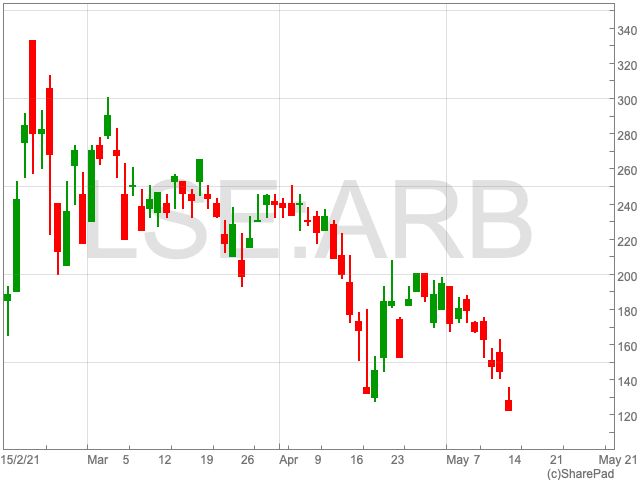
Argo Blockchain’s share price is up by over 15% during the morning session to 155.40p.

The news comes a day after Elon Musk’s announcement that Tesla will not be taking payments via bitcoin over environmental concerns. Following the announcement by Musk, the price of bitcoin, along with Argo Blockchain shares, plummeted.

Sheldon Bennett, CEO of DMG Blockchain Solutions, said: “Since our inception, DMG has been committed to transparency and good governance. Partnering with the Crypto Climate Accord alongside Argo allows us to apply those values to put us on a path to become a more sustainable industry. Together, we can finally put the wheels in motion to transition the cryptocurrency industry into one that focuses on renewable energy.”

Bushveld Minerals completes essential maintenance work at Vametco asset

0

Vanadium expected to remain stable for the remainder of Q2 2021

Bushveld Minerals (AIM:BMN), the integrated primary vanadium producer and energy storage solutions provider, announced on Friday that is has successfully completed its essential maintenance work at its Vametco asset in South Africa.

The AIM-listed company said that its group sales during Q1 of 788 tonnes were down compared to 1,080 tonnes in Q1 of 2020 due to lower production volumes as a result of the planned maintenance shutdown.

The group confirmed said its guidance for the full-year is towards the lower end of 4,100 tonnes and 4,350 tonnes, while risks to this forecast exist as a result of Vametco’s challenges in achieving consistent plant performance. This is in addition to Vametco’s slower-than expected ramp-up following the maintenance shutdown, the recent industrial action, as well as risks associated with the ramp-up of Vanchem’s first phase refurbishment.

Vanadium prices have continued to rise during the first quarter of 2021 after a strong start to the year.

Prices had risen in China in the midst of the Spring Festival while in Europe, prices increased due to strong demand and tight inventories, the company said. Vanadium demand remains robust, and prices are expected to remain stable for the remainder of Q2 2021.

Fortune Mojapelo, CEO of Bushveld Minerals Limited, commented:

“We recognise that Vametco has underperformed at times and work such as the 35-day maintenance shutdown is expected to improve on the reliability and performance issues experienced in the past. Since the industrial action and ramp-up we have seen a stable period of normalised production levels.”

“Various workstreams remain underway to maintain this stability, including maximizing safety and house-keeping initiatives, better managing process system constraints and optimizing preventative maintenance programmes. In light of Vametco’s challenges in achieving consistent plant performance during Q1 2021 as well as risks associated with the ramp-up of Vanchem’s first phase refurbishment, Group guidance is expected towards the lower end of 4,100mtV to 4,350mtV, albeit there are risks to achieving this target.”

It was reported back in April that workers at the AIM-listed company’s Vametco mine in South Africa went on a strike to protest an employee participation plan (EPP).

The strike came despite employees already signing an EPP with the Association of Mineworkers and Construction Union (AMCU).

Airbnb sees growth in rural vacations as bookings jump

0

During Q1 24% of Airbnb stays were 28 days or more

Airbnb said that holiday bookings are surging as a number of countries begin their emergence from lockdowns.

In Q1 its bookings surpassed levels seen before the pandemic, while the online travel platform saw improvements in the UK and France.

Overall, the number of bookings jumped up by 52% to $10.3bn as customers opted for vacations in rural areas and long-term stays.

However, the Nasdaq-listed company posted an overall loss, despite its high revenues, as it paid back Covid-related loans.

Airbnb made a pre-tax net loss of $59m, compared to the same period the year before, despite its revenue rising to $886.9m.

Many people stayed away from their homes in order to work remotely. During Q1, 24% of stays were 28 days or more, an increase compared to 2019, while over 50% of bookings lasted longer than a week.

Airbnb increased its listings in non-urban areas by nearly 30%, as the platform now has 4m hosts over 100,000 cities across the world.

“While conditions aren’t yet normal, they are improving, and we expect a travel rebound unlike anything we have seen before,” the company said in an update to investors.

Susannah Streeter, senior investment and markets analyst at Hargreaves Lansdown, told the BBC that the growth in the use of rural locations could serve to boost Airbnb’s reputation in the long-term.

“That trend could also help reduce the number of complaints from neighbours about rowdy weekend revellers which has plagued the company in recent years, along with accusations that the platform limits the amount of housing available for locals. Those concerns have led to restrictions on how the company operates in some big cities around the world.”

Scottish Mortgage Investment Trust sells Tesla stock while gaining exposure to China

0

Scottish Mortgage Investment Trust’s top holding is now Tencent

Scottish Mortgage Investment Trust (LON:SMT) confirmed that it sold 80% of its Tesla holding over the past 12 months, as well as selling-off a number of Silicon Valley tech stocks, the Financial Times reported today.

The UK’s largest investment trust also increased its exposure to China.

By the end of March, Tesla was its fifth-largest holding, down from second the year before, as Scottish Mortgage cashed in on its investment.

The trust’s co-manager Tom Slater commented on the decision to remove Tesla from its portfolio:

“The value that Tesla has created by addressing the need to decarbonise has forced a hostile investment community to reconsider its position. Tesla has become one of the world’s largest companies as its highly-rated products have continued to improve, along with its ability to manufacture them at scale,” Slater said.

“Other companies are now following, and history tells us that the more generous funding environment that has ensued is a prerequisite for further progress. Over the course of the year we sold around 80% of our Tesla shares as we strived to maintain appropriate diversification and to focus on the long term return potential.”

Baillie Gifford’s flagship trust revealed that its net asset value (NAV) per ordinary share increased by over 111% for the year ending in March, compared to a rise of 39.6% in the benchmark FTSE All-World Index.

The trust’s top holding is now Tencent, the multinational technology conglomerate holding company, as well as food delivery company Meituan, as it increased its exposure to China.

“The pace of innovation at scale in China now exceeds anything we can find in the rest of the world. Pinduoduo was founded in 2015 and has already overtaken Alibaba’s audience size in online commerce with more than 750m users. Meanwhile, the world’s most valuable private startup, ByteDance, dominates China’s online advertising landscape less than a decade after its founding,” Slater said.

The trust has sold its shares in Facebook and Google’s parent company Alphabet, as well as cutting its stake in Amazon. 

It was confirmed in March that James Anderson, who manages the trust alongside Tom Slater, will step down in April 2022 after nearly 40 years at Baillie Gifford. 


Argo Blockchain share price dives as Musk questions sustainability of bitcoin mining

0

Argo Blockchain Share Price

The Argo Blockchain share price (LON:ARB) took a dive on Thursday, down 12.25% early in the afternoon. Argo now stands at 127.24p per share, more than 50% below its all-time-high of 284p, reached in February. Having said that, the stock remains up by 286% since the turn of the year, and over 2500% up over the past 12 months.

Elon Musk, Bitcoin and the Environment

It would seem that today’s fall which, similar to bitcoin, can be put down to the Tesla chief’s announcement that the electric car company will not be taking payments via bitcoin over environmental concerns. Following the announcement by Musk, the price of bitcoin is down by over 10% to $50,376. The news has been the catalyst for a sell-off across the cryptocurrency market, which includes miners, such as Argo Blockchain.

The decline of the value of bitcoin will see a fall in the revenue of Argo Blockchain. In an update provided by the company in April, Argo said that it had mined 163 bitcoin, two fewer than in March. Its revenues, as a result, fell from £6.7m to £6.6m over the same time period.

The crucial issue from Musk’s Twitter statement, and for the industry in general, revolves around bitcoin’s substantial energy consumption. Argo Blockchain confirmed today that it purchased data centres in Canada, as part of its wider mining vision.

“Argo’s purchase of data centers in Canada represents another milestone for the company as we seek to take greater control over our mining production and mining cost base, while also laying solid foundations for long-term growth,” Argo CEO, Peter Wall said in a statement.

The two data centres will generate a combined power capacity of 20MW. They will also be run almost solely by locally generated hydroelectricity. This is a positive step for Argo and a sign of its intentions moving forward. Argo, as will as the wider bitcoin community, may have some way to go to convince investors that it is an industry which is able to clean up its act.

Hargreaves and Lansdown share price dips despite record share dealing volumes

1

Hargreaves and Lansdown Share Price

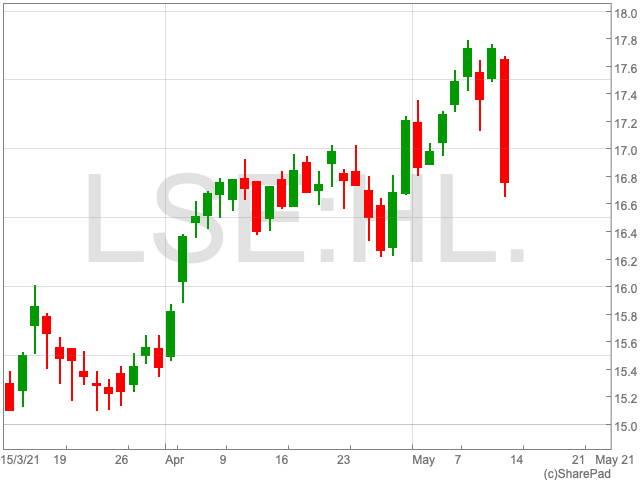
The Hargreaves and Lansdown share price is down by 5.57% on Thursday heading into the afternoon session, now at 1,673.38p. This follows an upward surge since November, which saw the company add 25% in value. The slide came despite record levels of ISA subscriptions and share dealing volumes. With the UK on the road to recovery from the coronavirus pandemic and pressure coming on Hargreaves from competitors, now is a good time to analyse the FTSE 100 company’s credentials looking forward.

Trading Update

Hargreaves did record levels of business during the first four months of 2021, it revealed in its trading update today. The investment platform’s net inflows came to £4.6bn, exceeding analysts’ expectations by £0.3bn. Its total assets under administration also rose by nearly 30% to £132.9bn at the end of April.

Raised volatility, in addition to market highs, brought about a sharp increase in the amount of share dealing by Hargreaves and Lansdown’s clients. This resulted in a 19% increase in group revenue to £532.7m for the year to date.

“We have also continued to see significantly elevated levels of client engagement throughout the period, with a 150% increase in the number of people logging into their accounts, particularly via the mobile app,” said chief executive Chris Hill.

Proactive reported that Broker Peel Hunt restated its “buy” rating for Hargreaves and Lansdown.

Risks

Hargreaves and Lansdown has come under criticism over its high fees. The platform charges up to 0.45% on funds for the first £250,000 invested. This is significantly higher than the fees Close Brothers and AJ Bell charge – 0.25% up to £500,000 and £250,000 respectively

When investments take into account the long-term, these costs can add up, and may well begin to put off clients who may want to explore other options. “Paying too much can potentially wipe thousands off your returns over time. Check how much you are paying and don’t be afraid to move,” Justin Modray from Candid Financial Services told The Times.

If investors begin to desert the platform in search for more favourable fees then the Hargreaves and Lansdown share price could suffer in the long-term.

Homeownership remains key life goal despite impact of Covid-19 on housing market

0

The average property price in Britain is around £250,000

Research by Wayhome, the Gradual Homeownership provider, has revealed that 58% of renters in the UK consider buying a home a priority, despite the pandemic putting many people’s plans on hold.

Owning a home takes precedence over getting married or entering a civil partnership (49%), or entering an early retirement (30%).

Although lockdowns brought the housing market to a temporary halt for a significant portion of 2020, and house prices continued going up, 45% of 18-23 year olds remain steadfast in their desire to own a home.

The desire only intensifies as people get holder. 56% of 24 to 42 year olds and 58% of 43 to 54 year olds consider home ownership as a key life milestone.

However, significant barriers to home ownership remain. The ONS revealed the average property price in Britain to be around £250,000. As buyers are likely to spend nearly 8 times their salary, affordability, as well as jobs security, remain significant concerns for many.

Nigel Purves, CEO of Wayhome commented: “It’s clear that the pandemic has done nothing to dampen people’s appetite for homeownership and we know it remains the ultimate life goal for significant numbers of people. 

“But the reality is that following on from the pandemic and subsequent lockdowns, becoming a homeowner may be far harder than it ever was before. Indeed, with house prices ballooning, the cost of living rising and additional Government support still in force – great numbers of people have no choice but to continue renting for the foreseeable future or compromising on the type of home they can afford to buy, which might not be suitable for their needs long-term. If we want a sustainable housing system, which enables more people to take a step onto the ladder earlier in their lives, we need to see innovation within the industry. Aspiring homeowners deserve the security and stability that comes with homeownership.”

BT pledges to bring broadband to 25m homes

0

BT to reinstate dividend at 7.7p for the 2021/22 financial year

BT said on Wednesday that it plans to deliver 7,000 new jobs as it speeds up its roll-out of a nationwide net-generation broadband network to 25m homes by 2026.

This represents a significant increase on its previous target of 20m premises.

The FTSE 100 telecommunications company also reported a fall in its profit before tax to £1.8bn a year ago as firms used its services less during lockdowns.

BT has committed to spending £12bn to deal with the UK’s problem of falling behind the world in terms of the scale of its full-fibre broadband. The pledge is in line with the government’s promise to deliver nationwide “turbocharged” broadband to all homes in the UK.

“BT is already building more full-fibre broadband to homes and businesses than anyone else in the UK. It will get fibre to more people, including in rural communities. And it will help fuel UK economic recovery, with better connectivity and up to 7,000 new jobs,” said Philip Jansen, the chief executive of BT.

BT also said it will reinstate its dividend, which was stopped for two years at the outset of the pandemic. It will be 7.7p for the 2021/22 financial year.

Russ Mould, investment director at AJ Bell, unpacked BT’s results and its outlook.

“The company effectively has three significant drains on its financial resources. These are its substantial pension commitments, the rollout of fibre broadband and funding the acquisition of content rights for its BT Sport channel,” Mould said.

“The latest valuation of the pension reveals a massive deficit which will require hundreds of millions of pounds worth of funding every year.”

“The company’s net debt pile is also pretty eye-watering, and the surprise isn’t really that dividends remain off the table for now but that they are likely to come back in the current financial year. The UK’s new super deduction tax on capital expenditure is clearly doing a lot of the heavy lifting here.”

Opportunity for change in real estate markets

  • The pandemic has brought significant shifts in key areas of the real estate market, such as offices and accelerated trends in others such as retail and logistics.
  • Dealing with this changing environment means assessing deals individually and on their own merits.
  • Effective management of individual assets, particularly around environmental, social and governance (ESG) considerations, and ensuring they remain future fit and sustainable, will become increasingly important.

The real estate market was a mixed bag in 2020. While industrials, particularly logistics and certain alternatives, did well during the year, there were also pockets of weakness, particularly within the high street and office markets. It would be tempting to expect the same again in 2021, but the reality may be more nuanced. 

Jason Baggaley, manager of the Standard Life Investments Property Income Trust, says commercial property investors should expect change and that this will undoubtedly bring opportunity. He has been careful not to respond hastily to the shifts brought about by the pandemic and believes it is important to adapt the portfolio to the new world as it emerges from the post pandemic era: “We have used the period for some very deep reflection. That means challenging ourselves and our assumptions.”

What will emerge? In the short-term, there will be economic recovery, which will ease the pressure on rental payments. Baggaley says: “Our real focus over the next stage is not rental collection but assessing sustainable levels of rents. Within areas such as restaurants and town centre cafes, there has been a decline in rental values because they had become overstretched and now there is less demand. In offices, we can be fairly sure there will be less overall demand but offices themselves will need to adapt to accommodate greater flexibility of working practises. We want to ensure the rental income generated by the trust is sustainable in the long-term.” 

Adapting to agile working

The office market is perhaps the area subject to the greatest change. The pandemic has ushered in a mass agile working experiment. There is now a real consensus that the work life balance is unlikely to return to where it was before, with long-term implications for the office market. Craig Wright, Head of Real Estate European Research at Aberdeen Standard Investments, says: “We don’t believe in the death of offices, but we do believe that tenants will be much more selective about what constitutes an office ‘fit for the future’. Investors have to respond to that as well and be more selective in the properties they’re targeting.” This includes flexibility, amenities, technology and sustainability. 

While the office market has been particularly hard-hit by the pandemic, there are potential changes for all real estate markets. In the surging logistics market, for example, Evert Castelein, manager of Aberdeen Standard European Logistics Income, says that in spite of the strong year in 2020 the team is continuing to focus on the expansion of ecommerce and changing supply chains across Europe. He adds: “It has become clear that long distance supply chains are susceptible to external shocks. Take Jaguar Land Rover, for example. It was struggling to finish its cars because parts were still stuck in Asia. The near-shoring of such operations and de-globalisation of manufacturing is becoming an important trend – for many companies the labour cost arbitrage of having production offshore is starting to become less pronounced now that wage costs are rising in Asia. We see some manufacturers moving back to Europe. We believe this trend will continue in the years ahead.”

New real estate assets

There are also new opportunities across real estate markets as different types of asset are packaged up into an investable format. Emma Scott, Multi-Asset Investment Manager at Aberdeen Standard Investments, says: “We’re investing more in alternative areas of real estate. That includes investment companies benefiting from long-term, inflation-linked cash flows – GPs surgeries, social housing, logistics, supermarkets. We look to them for long-term stable cash flows.” 

She says that yields often compare favourably with other asset classes on offer. The income available is higher than listed equity and private equity, more akin to infrastructure and asset-backed securities.

Looking under the bonnet

At Aberdeen Standard Investments, we believe the most compelling way to deal with this changing environment is to assess deals individually and on their own merit. Jason says: “For each property we assess, we ask whether it is going to meet our investors needs in the future.” This nuanced approach is reflected in how he has re-engineered the portfolio in the wake of the crisis. 

For Standard Life Investments Property Income Trust the area that witnessed the highest level of sales was in industrials, despite the sector performing well during 2020 he says. “We sold some multi-let estates, which we thought could be much more at risk in an economic downturn. Perhaps surprisingly, our only major purchase was a retail asset – a B&Q warehouse. It may be retail, but it has been posting very strong figures and the unit has fantastic credentials.”

Evert is doing similar in-depth research for new European logistics options. As the real estate business is a local business he can call on Aberdeen Standard Investment’s team of transaction and asset managers based in local offices across Europe: This network of feet-on-the-ground experts gives us access to off-market opportunities, where we are not bidding against other buyers in an open market. This is a key advantage for us in this ‘in demand’ sector as it allows us to negotiate good terms.” “We always want to know that a building  has good optionality for the future if the tenant were to leave the building. We are one of the largest real estate investors in Europe and have local offices across Europe in Amsterdam, Paris, Frankfurt, Madrid.

We also believe that effective management of individual assets will become increasingly important. That means ‘green’ buildings that suit people’s changing lifestyles. Properties need good showers for people cycling to work and green areas for them to eat their lunch to aid employee wellbeing, plus the energy efficiency and renewable energy sourcing (e.g. solar panels) which helps tenants and satisfies our increasingly ESG-focused investors. Evert adds: “We want to protect our future cash flows and that means future proofing by focusing on ESG characteristics. This is really important for us and really important for our tenants.”

Craig is clear that the commercial property sector still has some short-term risks to get through: recovery is vaccine-dependent and increasingly divergent between countries. However, monetary and fiscal policy will remain supportive for the sector and real estate has historically performed well in a climate of recovery. It can still fulfil its role in delivering stable, inflation-adjusted capital and income returns in a portfolio. 

Companies selected for illustrative purposes only to demonstrate the investment management style described herein and not as an investment recommendation or indication of future performance. 

For more information, please visit our websites:

Standard Life Investments Property Income Trust Limited

Aberdeen Standard European Logistics Income PLC

Aberdeen Diversified Income and Growth Trust plc

Important information

Risk factors you should consider prior to investing: 

  • The value of investments and the income from them can go down as well as up and you may get back less than the amount invested. 
  • Past performance is not a guide to future results. 
  • Investment companies are specialised investments and may not be appropriate for all investors. 
  • Investment companies can borrow money in order to enhance investment returns. This is known as ‘gearing’ or ‘leverage’. However, the use of gearing can result in share prices being more volatile and subject to sudden or large falls in value. Where permitted an investment company may invest in other investment companies that utilise gearing which will exaggerate market movements, both up and down. 
  • There is no guarantee that the market price of the Company’s shares will fully reflect its underlying Net Asset Value. 
  • As with all stock exchange investments the value of the Company’s shares purchased will immediately fall by the difference between the buying and selling prices, the bid-offer spread. If trading volumes fall, the bid-offer spread can widen. 
  • Investing globally can bring additional returns and diversify risk. However, currency exchange rate fluctuations may have a positive or negative impact on the value of your investment. 
  • The Ordinary Shares may trade at a discount to the Net Asset Value per Ordinary Share and Shareholders may be unable to realise their investments through the secondary market at the Net Asset Value per Ordinary Share. 
  • There is no assurance that the Company will be able to secure suitable logistics assets. This may affect the Company’s ability to meet the Target Returns and may have an adverse effect on the Company’s performance, financial condition and business prospects. 
  • The Company may hold a limited number of investments. If one of these investments declines in value this can have a greater impact on the fund’s value than if it held a larger number of investments. 
  • Property values are a matter of the valuers’ opinions and can go up and down. There is no guarantee that property values, or rental income from them, will increase so you may not get back the full amount invested. 
  • Property investments can take significantly longer to buy and sell than other investments, such as bonds and company shares. If properties have to be sold quickly this could result in lower prices being obtained for them. 
  • The Company invests in a specialist sector and it will not perform in line with funds that have a broader investment policy. 
  • Yields are estimated figures and may fluctuate, there are no guarantees that future dividends will match or exceed historic dividends and certain investors may be subject to further tax on dividends. 
  • Derivatives may be used, subject to restrictions set out for the Company, in order to manage risk and generate income. The market in derivatives can be volatile and there is a higher than average risk of loss.
  • The Company may invest in alternative investments (including direct lending, commercial property, renewable energy and mortgage strategies). Such investments may be relatively illiquid and it may be difficult for the Company to realise these investments over a short time period, which may make it difficult to realise investments and may lead to volatility in the market price of the Company’s shares.

Other important information:

Issued by Aberdeen Asset Managers Limited which is authorised and regulated by the Financial Conduct Authority in the United Kingdom. Registered Office: 10 Queen’s Terrace, Aberdeen AB10 1XL. Registered in Scotland No. 108419. An investment trust should be considered only as part of a balanced portfolio. Under no circumstances should this information be considered as an offer or solicitation to deal in investments.  

Find out more by registering for updates or by following us on Twitter. and LinkedIn.

Elon Musk says Tesla will not accept bitcoin payments over environmental concerns

Bitcoin price plummets as Musk backtracks on support for cryptocurrency

Elon Musk back peddled on his support for bitcoin on Wednesday as the Tesla chief announced the company was suspending its plans to receive payments for its vehicles in the cryptocurrency.

The electric car manufacturer drew attention to concerns over its consumption of fossil fuels via a tweet. Musk said that bitcoin’s future “cannot come at great cost to the environment”.

Over the past 24 hours bitcoin is down by over 11% to $50,276 as perhaps its most prominent supporter delivered the warning against it. Year-to-date the cryptocurrency remains up by 70%.

Back in February Tesla announced that the company had purchased $1.5bn worth of bitcoin, in addition to pledging to accept bitcoin payments, causing a surge in the price of the digital currency to a record high of $44,100.  

Tesla has already sold some of its bitcoin holding, on which it made a $101m profit, however it has said that it will not be selling any more.

Previously Musk has agreed with Twitter founder Jack Dorsey, who said that bitcoin “incentivises” renewable energy, which would appear to contradict his recent statement. While studies have suggested that bitcoin’s carbon footprint is equal to some of the world’s major cities, including research at Cambridge University, which said it uses more energy every year than the whole of Argentina.

Laith Khalaf, financial analyst at AJ Bell, commented on the significance of the news and what the future may hold for bitcoin, following Elon Musk’s statement.

“Tesla and Bitcoin were always odd bedfellows, given the environmental credentials of the electric car maker, and the colossal amount of energy consumed by the cryptocurrency. Musk hasn’t closed the door on Bitcoin entirely, and Tesla says it will return to using the cryptocurrency once it transitions to using more sustainable energy. Even if that happens, one could question whether that energy couldn’t be used more productively in the global economy, rather than solving a payments problem that for most people, simply doesn’t exist,” Khalaf said.

Bitcoin backers will be wondering where this leaves the future of the cryptocurrency.

“Environmental matters are an incredibly sensitive subject right now, and Tesla’s move might serve as a wake-up call to businesses and consumers using Bitcoin, who hadn’t hitherto considered its carbon footprint. Tesla’s decision certainly puts pressure on other big companies who accept Bitcointo review their practices, because boardrooms will now be wary about getting it in the ear from ESG investors on the shareholder register. This highlights that the long-term adoption of cryptocurrencies by businesses, consumers and investors is still highly uncertain, as Tesla itself has pointed out,” added Khalaf.