Trainline confirms £100m operating loss as sales dive

0

Trainline’s volume of UK passengers fell to 5% at outset of pandemic

Trainline (LON:TRN) announced on Thursday that it made a £100m loss as lockdown restrictions across the UK caused its passenger numbers to dive.

Having made a £2m profit the year before, Trainline posted an operating loss of £100m, as net ticket sales dropped by 79% to £783m.

The FTSE 250 company saw its revenue fall by 74%, down from £261m to £67m at the end of February.

At the outset of the pandemic, Trainline’s volume of UK passengers fell to 5%, in what was the beginning of a very challenging year for the company.

It is possible that consumer demand for train travel remains low as companies are often sticking with their hybrid working approaches.

Russell Pointon, Director, Consumer & Media at Edison Group commented: “Lockdowns, social distancing and a year of working from home impacted domestic train travel exponentially over the last year. It is, therefore, not surprising to see Trainline posting a poor set of full-year results today.”

However, Pointon suggests that the measures the train company took during the pandemic could allow it to bounce back strongly.

“As the pandemic hit, the company put in steps to reduce cash flow, halting marketing efforts and utilised the government furlough scheme for its teams. This resulted in its average cash burn being reduced to £5 million per month, outperforming its initial guidance of £8-9 million. With all furloughed teams back at work and marketing programmes beginning to be ramped up again, the Trainline is looking to bounce back strongly.”

While chief executive Jody Ford gave his thoughts on how Trainline is adapting itself to the future.

“Our continued investment in product and tech through COVID-19 means, despite the ongoing COVID-19 uncertainty, we are well positioned to support the wider industry recovery and continue driving the market shift to online and mobile tickets,” chief executive Jody Ford said. 

“Looking ahead I feel very confident about Trainline’s prospects for the future. We remain committed to championing rail as a greener mode of travel for millions of customers around Europe, and to driving the significant long-term growth opportunity for this business.”

BHP Share Price: iron ore price to continue rising

0

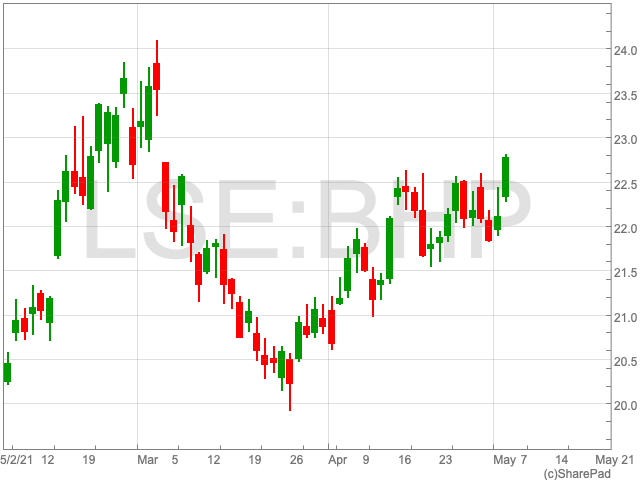
The BHP share price (LON:BHP) performed relatively well during the pandemic, making a swift recovery and then getting far beyond its pre-pandemic level during 2021. Since the turn of the year the FTSE 100 mining giant is up by 18.6% to 2,302p.

Iron Ore

UK Investor Magazine outlined earlier this year that BHP’s performance would be dependent on the price of iron ore during 2021. While there was a possibility that the Chinese government could move to suppress the price of iron ore, so far, the commodity is close to an all-time-high. Iron ore has been getting near a record $200 per tonne, over double its price 12 months ago.

The price of iron ore is high because of soaring Chinese steal prices, as reported by S&P Global Platts, in addition to output reductions for environmental reasons boosting an already overheated sentiment.

The question now is whether or not iron ore has much further to go? China’s steel output grew by 16% year-on-year during Q1, which suggests demand for iron ore is likely to rise. Another potential cause of a fall in the price of iron ore is a global increase of supply. However, S&P Global Platts has suggested that both outcomes are unlikely and that “the market expects steel prices to continue rising, supported by falling steel inventories and robust orders”.

Analysts’ Views

Stockopedia has reported that out of 16 analysts covering BHP, three have given ‘buy’ recommendations, 12 have said to ‘hold’ and one gave the stock a ‘sell’.

Facebook oversight board to uphold Trump suspension

0

Facebook shares gain ground during morning session

Donald Trump will remain banned from Facebook (NASDAQ:FB) after an independent oversight board ruling.

The decision means the former US president will be without a major communication tool for the time being, as the company will review its ruling in the next six months, the panel concluded.

Just over four months ago the social media company gave Trump an indefinite ban as it feared he could incite further violence and civil unrest in the aftermath of the US Capitol Building being stormed by protesters on January 6.

“We believe the risks of allowing the president to continue to use our service during this period are simply too great,” Facebook CEO Mark Zuckerberg commented at the time.

Later in January, the month that the storming of the capital building occurred, Facebook requested an appointed oversight board to review the ban, in addition to making further recommendations about how the platform should treat rule-breaking continent from prominent politicians.

The board confirmed on Wednesday that it had upheld its decision to restrict Trump’s account it added that Zuckerberg’s decision to ban the former president “indefinitely” was an “indeterminate and standardless penalty”.

It added: “The Board insists that Facebook review this matter to determine and justify a proportionate response that is consistent with the rules that are applied to other users of its platform. Facebook must complete its review of this matter within six months of the date of this decision.”

The Facebook share price is up by 0.26% during the morning session to $319.17 as investors appear to have welcomed thee news. It followed days of consecutive falls in the company’s value as tech stocks were sold-off on mass.

Former deputy prime minister and current Facebook vice-president of global affairs and communications, Nick Clegg, reiterated that the company’s decision was the correct one: “We’re pleased the board has recognised that the unprecedented circumstances justified the exceptional measure we took.”

Boohoo Share Price: well positioned financially but ESG concerns remain

0

Boohoo Share Price

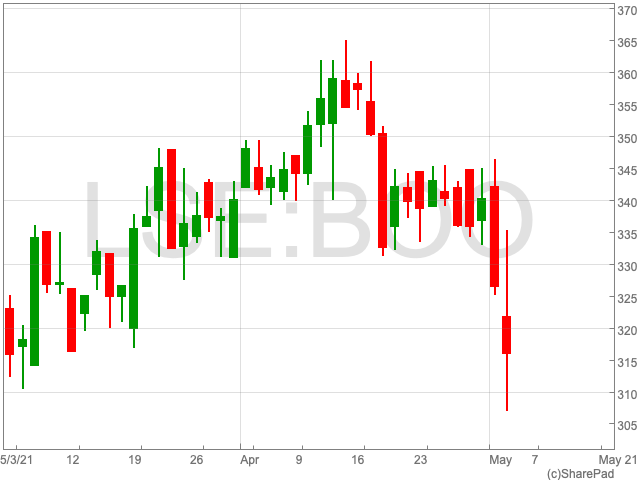
The Boohoo share price (LON:BOO) has seen impressive growth over the past five years, rising from 47.5p per share in May 2016, to 320p, its value at the time of writing. However, more recently, the online fashion retailer has come into some difficulty. Year-to-date Boohoo shares are down by 6.24%, as the FTSE All-Share Index has added 7.24%. While the company saw its sales and profits jump up last year during the pandemic, questions will now arise over Boohoo’s investment credentials as the dust settles post-lockdown.

Financials

The FTSE 250 company revealed on Wednesday morning that its revenue rose by 41% during the year ending on 28 February, as sales rose by just over £0.5bn to £1.75bn. Pre-tax profit soared too, up 35% to £124.7m over the same time period, while earnings per share increased 36% from 5.35p to 7.25p.

The company made an EBITDA of more than £173.6m, which was better than the expected £171.3m. It also boosted its forward guidance, saying that it expects its revenue to jump by 25% in the new year.

“Boohoo has strutted ahead of flailing high street rivals showing that its bang on trend when it comes to the way fashion followers want to shop and the styles they want to buy,” said Susannah Streeter, senior investment and markets analyst, Hargreaves Lansdown.

Superstar sales have meant Boohoo has piled up the cash, with its operating cash flow hitting more than £200 million, compared to £127 million in 2020. With plenty of cash in the bank, Boohoo is in a position to continue acquiring rival businesses, as it did with Dorothy Perkins, Wallis and Burton.

“This plan is on track with revenue growth for international up 44% over the year, now accounting for a bigger slice of the overall sales pie,” said Streeter.

“Boohoo is now a fashion powerhouse, and investment in scaling the platform is expected to keep paying off, with even higher margins expected in the second half of the year. But the catwalk isn’t completely clear, with hurdles of uncertainty ahead.”

ESG Concerns

It is well documented that Boohoo has received backlash over its practices during the pandemic. In particular as ESG principles are firmly etched into the minds of would-be investors now. The company will now have to make firm steps to distance itself from past practices, including accusations of modern slavery.

In response, the company has announced an initiative with the purpose of linking the pay of its senior executives to the improvements they make in ESG principles. On Monday, Boohoo Group chairman Mahmud Kamani told the Environmental Audit Committee (EAC) about the firm’s plan to link bonuses to sustainability practices.

“Boohoo’s response to our committee’s letter sends promising signals that we are reaching a turning point in fast fashion’s awareness of its environmental and social responsibilities,” EAC chairman Philip Dunne said.

Activist investor Gatemore adds to Superdry stake

Activist investor Gatemore Capital Management is building up its stake in fashion brand and retailer Superdry (LON: SDRY) and it has a record of changing the management and strategy of underperforming companies.
The fully listed company has gone through many directors in recent years and founder Julian Dunkerton has returned as chief executive. Shaun Willis was appointed finance director on 26 April.
Superdry is a former stockmarket star, whose recent performance has been poor. There is the appearance of a lack of leadership in recent years. The share price high was at the beginning of 2018 an...

IAG share price rallies as passengers await ‘green list’ announcement

0

IAG Share Price

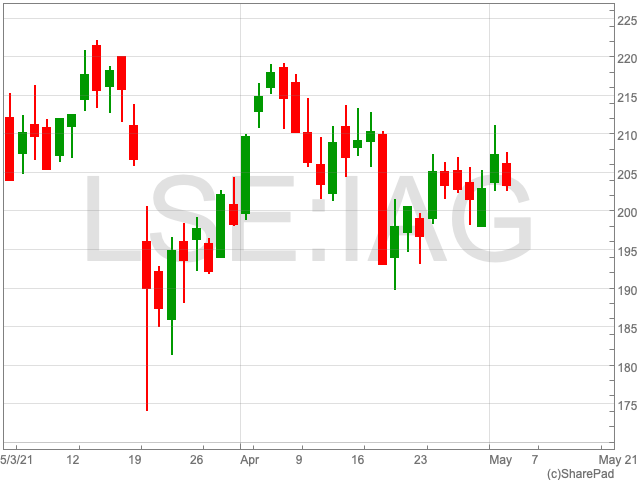
Going back as far as November 2020, the IAG share price (LON:IAG) was valued at 92p. Now, as a roadmap out of lockdowns have been set forward, and the vaccine roll-out is running smoothly, the FTSE 100 company is valued at 203p per share. IAG, owner of British Airways, added further value to its share price yesterday too, as the UK looks set to announce which countries have made it on the ‘green list’. While there is still uncertainty around the speed of the economy reopening, investors may consider an investment at the current price a risk more worth taking.

Up Again From Here?

There was good news for airlines yesterday, who may dare to dream of a somewhat normal summer, as the EU suggested it could open up to fully vaccinated tourists. “Time to revive EU tourism industry and for cross-border friendships to rekindle – safely,” EU Commission President Ursula von der Leyen tweeted. One drawback is that all passengers will be required to have had a vaccine.

In addition, reports are suggesting that the UK government will set forward ‘green list’ of between ten or 12 countries, including Malta, Gibraltar, Portugal and Israel, that passengers will be able to travel to.

Major tourists destinations including Spain, Greece and France are also rumoured to be on the list. The government’s travel plans involve a traffic light system of red, amber and green classifications for countries depending on the perceived COVID-19 risk.

IAG was also bolstered by the EU’s decision to allow entry for vaccinated people from low-risk countries.

“Foreign holidays are looking like they could actually happen this year, lifting demand for travel and tourism stocks, which were severely battered across the crisis,” said Sophie Griffiths, analyst at OANDA.

JP Morgan’s View

Sharecast has reported that JP Morgan upgraded IAG shares to ‘overweight’ from ‘neutral’ as the prospects for 2022 onwards “look promising as global air travel starts to normalise”, despite there being challenges ahead.

“We anticipate turbulence on this journey but consider IAG an attractive long-term investment,” JP Morgan said.

“It is still unclear when widespread intra-European travel will be allowed, but by late summer we would expect a meaningful pick-up across the region,” the investment bank added.

ITV sees a strong rebound in revenue as broadcaster looks ahead to summer

0

ITV’s total external revenue rose by 2% to £709m during the quarter ending on 31 March

ITV (LON:ITV) is retaining a level of cautious optimism over its recovery during 2021 as its advertising sales have seen a resurgence in recent months.

The UK broadcaster told shareholders that it has been “encouraged” by trading levels over the past quarter as revenues rise on robust growth of its ITV Studios production and distribution arm.

ITV’s total external revenue rose by 2% to £709m during the quarter ending on 31 March in the face of pandemic-related restrictions.

The FTSE 250 company said that ITV Studios made £372m, up by 9%, as production, for the most part, continued in the face of the pandemic.

“The weather may be unseasonably chilly, but the advertising market is heating up according to free-to-air broadcaster ITV.

Despite people now being allowed outdoors, there is reason for ITV bosses to be optimistic over the coming months, according to Russ Mould, investment director at AJ Bell.

“Even the biggest devotee of reality show Love Island won’t be as excited about its return as ITV given its importance to driving online viewing.”

“The lack of a ‘winter’ Love Island in the first three months of 2021 meant online viewing was down 11% for ITV but when it was stripped out, eyeballs on the ITV Hub were actually up by nearly a quarter.”

“The Euros football tournament will provide another reason for people to switch to ITV and combined with the reopening impact, and assuming the UK keeps the virus under control, advertising growth is likely to be very significant for some time to come,” Mould said.

The broadcaster is fighting to stay relevant having seen both the television market and advertising space heavily disrupted by giant US companies in recent years – Disney, Netflix and Amazon Prime on the streaming side and Google and Facebook competing for advertising spend.

“However, TV as a medium still has reach, particularly with certain sections of the population, and ITV has a chance to prove it still has a place as it benefits from the reopening boom,” Mould said.

FTSE 100 climbs above 7,000 on growth of mining sector

0

With especially strong growth in its sizeable mining sector, the FTSE 100 climbed 1.14%. Just enough for the UK index to get back to 7,000.

“On Wednesday the UK index traded 1.14% higher at 7,002 thanks to the best efforts of miners and financials. Cyclical stocks were very much in favour, with construction groups CRH and Ashtead also joining the top risers,” says Russ Mould, investment director at AJ Bell.

A bait and switch from US Treasury Secretary Janet Yellen helped the European markets try and recover some of Tuesday’s losses after the bell.

“Yellen had said on Tuesday that ‘it may be that interest rates have to rise somewhat’ to prevent the post-covid economy from overheating. A statement, obviously, that didn’t go down well with investors, who were already fretting over the impact of the ongoing chip shortage on tech and car stocks,” said Connor Campbell, financial analyst at Spreadex.

Such was the reaction that the former Fed chair issued a correction, of sorts, assuring the markets that a rate hike is neither something she is ‘predicting or recommending’.

FTSE 100 Top Movers

CRH (3.42%), BHP (3.32%) and Croda International (3.28%) all made solid gains during the morning session on Wednesday.

Just Eat (-1.49%), Ocado (-1.09%) and Land Securities (-0.97%) are the biggest fallers on the FTSE 100 at mid-morning trading.

New UK Car Sales up 3,000%

New car sales in Britain surged by 3,000% in April as car showrooms were reopened to the public, boosting the numbers from the year before when lockdowns decimated car sales.

According to the Society of Motor Manufacturers and Traders (SMMT), new registrations came in at 141,583 vehicles, up from only 4,321 in April 2020, which was the lowest level of any single month since February 1946.

New car sales in UK up 3000% from lockdown low one year ago

0

New registrations at 141,583 vehicles

New car sales in Britain surged by 3,000% in April as car showrooms were reopened to the public, boosting the numbers from the year before when lockdowns decimated car sales.

According to the Society of Motor Manufacturers and Traders (SMMT), new registrations came in at 141,583 vehicles, up from only 4,321 in April 2020, which was the lowest level of any single month since February 1946.

Dealerships were open to the public from April 12 in England, in addition to purchases being made by delivery and other online methods.

But last month’s performance was still 13% below the 2010-2019 average, the SMMT said.

“After one of the darkest years in automotive history, there is light at the end of the tunnel,” said SMMT boss Mike Hawes.

“A full recovery for the sector is still some way off, but with showrooms open and consumers able to test drive the latest, cleanest models, the industry can begin to rebuild.”

Excess cash set to bolster UK economy says Sunak

1

People have set aside £140bn over past year with £100bn on corporate balance sheets

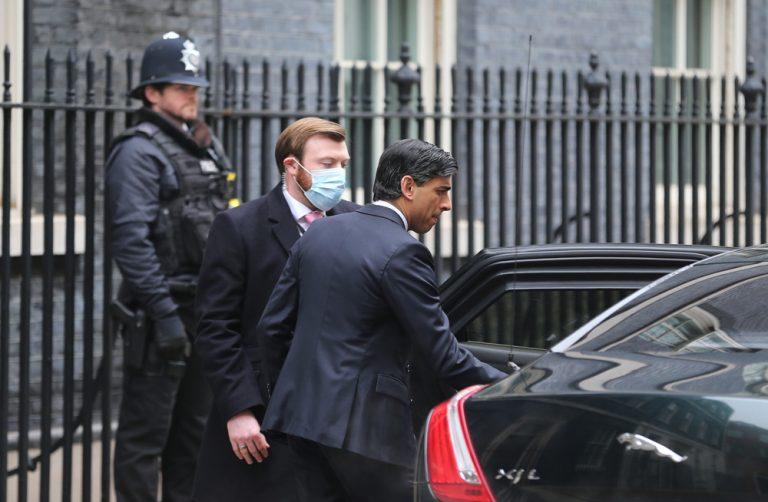
Cash-heavy households and businesses are set to boost the UK’s economic recovery over the coming year as the spend money accumulated during lockdown, the chancellor has said.

People have set aside around £140bn over the past year, with £100bn on corporate balance sheets, as confidence is getting back to levels seen before the pandemic and economic activity is rising at a fast rate, Sunak told The Wall Street Journal’s CEO Council Summit.

“As we look forward to reopening over the coming weeks and months, there are signs to be cautiously optimistic and we can see that in the data. I’m hopeful that will be sustained through the rest of the year,” he said.

Sunak’s comments were timely, coming soon after a UK PMI survey revealed that UK manufacturing grew at the fastest rate in nearly 27 years in April.

Mortgage lending has also spiked, up by £11.8bn in March, as households sought to take advantage of the stamp duty holiday on the first £500,000 of a purchase before the policy is withdrawn in June.

In recent weeks, economists have upgraded projections for GDP growth for the UK this year from 5% cent to 7%, a pace last seen in 1941, with the Bank of England expected to confirm the rapid recovery in its latest forecasts tomorrow.

“We are seeing consumer confidence back to pre-pandemic levels. Chief financial officers are very positive. Various manufacturing and services indices are trading above [trend] and we know that there is an enormous amount of excess savings both in the household sector, approaching £140 billion, and £100 billion sitting on corporate balance sheets,” Sunak said.

“We have tried to put things in place to unlock some of that cash, particularly the [corporation tax] super deduction. The signs are promising. Our policy a year ago was to help people and protect businesses so that when we got to this point we could bounce back strongly.”

Britain suffered its biggest recession in three hundred years last year, as the economy shrank by 9.8%. However, this time around, households and companies have built up an excess of cash which could go some way to supporting the UK’s recovery.