Podcast surge during lockdown sees Audioboom confirm maiden profit

0

Audioboom share price up 4% in morning session

Audioboom (LON:BOOM), the podcast company based Jersey, recorded its first ever profit during Q1 as demand has continued to grow during the pandemic.

The AIM-listed company has released its adjusted earnings before interest, tax, depreciation and amortisation of $30,000 during the first quarter of the year, a swing from a substantial $500,000 loss the year before.

Revenue over the period rose by nearly 50% to $9.5m.

The average number of downloads across the world grew by 37% from the year before to 87.1m, getting as high as 91.6m in March.

As well as being a platform for podcasts, Audioboom expanded its range of content by launching Relax! hosted by Colleen Ballinger and Erik Stocklin. The show made it to number one on the Apple US podcast chart.

Audioboom is expecting its revenue for the year to exceed its market expectations, as it has now signed 90% of its forecast advertising bookings.

Shares in the company are up by over 4% on early morning trading.

Stuart Last, CEO of Audioboom, commented: “Q1 2021 was a breakthrough period for Audioboom, reaching adjusted EBITDA profitability for the first time and demonstrating the strength of our business model. I am delighted with our revenue performance and continued cost control. It is important to note that the 49% year-on-year revenue growth we have delivered is benchmarked against the one quarter in 2020 that was not significantly impacted by Covid-19.”

“Our record performance is driven by our content focused expansion strategy. New content partnerships and successful Audioboom Originals Network launches delivered strong growth in our Global Downloads key performance indicator, with more than 90 million downloads in March. As a result, Audioboom became the fourth largest podcast publisher by number of average weekly users in the US on the Triton Digital ranker.”

FTSE 100 in positive territory following record highs in America

0

The FTSE 100 was up marginally by 0.24% in the morning session on Tuesday at around 6,906. “The index’s hopes of rebuilding momentum were in part harmed by Tesco, which fell more than 3% following its full year update,” according to Connor Campbell, financial analyst at Spreadex.

“The FTSE 100 was hampered also by a rebounding pound. Sterling added 0.3% against the dollar and 0.2% against the euro, as it continues to try and claw back its recent losses,” Campbell said.

Things were no more exciting in the Eurozone than they were in the UK. The DAX dropped 0.1% and the IBEX 0.2%, but with the CAC climbing 0.2% to a fresh all-time high of 6,200.

Closing lower following a higher than forecast set of inflation readings and news that the Johnson & Johnson vaccine rollout is to be paused, the Dow Jones still finds itself only 120 points off its all-time peak.

FTSE 100 Top Movers

The top risers early on Tuesday are miners Antofagasta (2.81%) and Glencore (2.6%), as well as Anglo American (2.09%).

While at the other end, Tesco (-2.38%), following its results, BT Group (-1.82%) and Ferguson (-1.43%) are the day’s biggest fallers so far.

Tesco

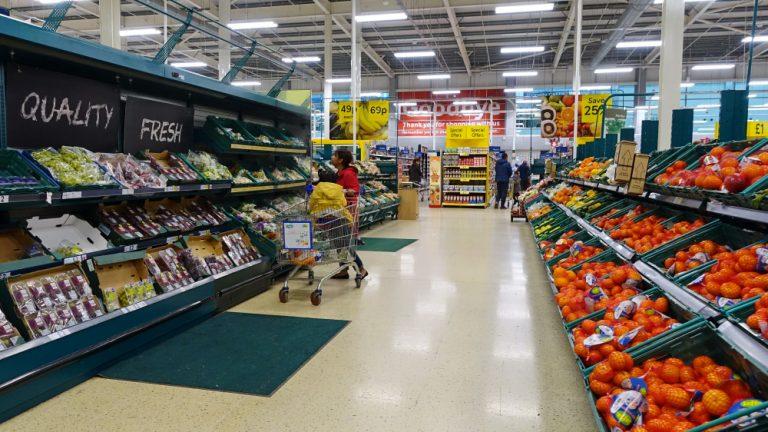
Tesco felt the impact of the pandemic as 20% was wiped off the supermarket’s full-year profits even though it achieved “exceptionally strong” sales growth. The FTSE 100 company confirmed it made a profit before tax of £825m for the year to 27 February, 19.7% low than the year before, despite its sales in the UK growing by 7.7% to £39.4bn.

“In many ways it was a banner 12-months for Britain’s biggest supermarket, its pandemic offerings wooing customers away from its rivals and leading group sales 8.8% higher to £53.4 billion. Yet covid-related costs were an unavoidable factor, causing profits to plummet 20% to £825 million, turning off investors in the process,” said Campbell.

Robert Walters forecasts annual profit to surpass market expectations

0

Robert Walters reported an 11% fall in its group net fee income in Q1 to £77.3m

Robert Walters (LON:RWA), the recruitment company, has forecasted its yearly profit to be above expectations after a strong performance in Q1.

The FTSE All-share company disclosed an 11% drop in its net fee income in Q1 to £77.3m, while its fees fell by 24%, 31% and 33% respectively in the previous three quarters.

The recruitment industry has been particularly affected by the pandemic as companies stopped hiring although competitors PageGroup and Hays showed some recent signs of optimism.

Robert Walters said in a trading update released on Tuesday that its activity across permanent, contract, interim and recruitment process outsourcing had all seen an increase in activity during the period confirming that 78% of the firm’s net fee income now came from its international operations.

The group’s Asia Pacific division’s net fee income fell by 3% to £32.8m with green shoots in Japan, the group’s most profitable business.

New Zealand and China returned to growth increasing net fee income by 16% and 58% respectively.

Robert Walters, chief executive, commented on the results as well as his confidence in the company’s ability to exceed market expectations in the coming year.

“I am pleased to report that the positive momentum in the Group’s performance since quarter two 2020 has continued through the first quarter of 2021, with candidate and client confidence sequentially improving across most of the Group’s global footprint. As a reflection of the improving market sentiment, we increased headcount during the quarter, with hiring focused in those geographies and disciplines showing the strongest signs of growth.”

“The improvement in market conditions has already enabled the Group to benefit from operational gearing. Whilst it is still difficult to be certain that there will be no further globally disruptive events ahead, the Board is currently confident that profit for the year is likely to be comfortably ahead of market expectations.”

Tesco sees profits fall by 20% due to pandemic

0

Tesco hires Thierry Garnier as non-executive director

Tesco (LON:TSCO) felt the impact of the pandemic as 20% was wiped off the supermarket’s full-year profits even though it achieved “exceptionally strong” sales growth.

The FTSE 100 company confirmed it made a profit before tax of £825m for the year to 27 February, 19.7% low than the year before, despite its sales in the UK growing by 7.7% to £39.4bn.

A major factor was the extra costs due to Covid-19, which included £892m worth of bonuses for staff, as well as the company returning £535m of business rates relief to the government.

The supermarket chain said it had taken customers from a number of its competitors as its sales grew significantly at the beginning of the first national lockdown and more recently when consumers were stockpiling goods.

Tesco said it was expecting the gains it made in extra sales to lessen as lockdown restrictions ease.

Ken Murphy, chief executive of Tesco, commented on the company’s results, as well as the decision to maintain its dividend:

“While the pandemic is not yet over, we’re well-placed to build on the momentum in our business. We have strengthened our brand, increased customer satisfaction and improved value perception. We have doubled the size of our online business and through Clubcard, we’re building a digital customer platform. Sustainability is now an integral part of our business strategy and we’re doubling down on our efforts to reach net zero,” Murphy said.

“Our decision to protect and hold the dividend flat for this financial year demonstrates our commitment to shareholders. We believe we can create significant further value for them and every stakeholder in our business by continuing to focus on value, loyalty and convenience for customers, underpinned by strong capital discipline.”

Tesco also announced that it has named Thierry Garnier, the chief executive of B&Q’s parent company, as a non-executive director.

Non-core opportunities for Open Orphan

Open Orphan (LON: ORPH) is planning to demerge a non-core asset inherited from the merger with hVIVO and not even mentioned in the merger document published at the end of 2019. There are other non-core assets that could be worth even more.
Management of the contract research outfit wants to focus on the services business, and it plans to demerge the wholly owned development IP assets. The major asset is HVO-001, which is a small molecule, immunomodulator drug that could become a treatment for severe flu.
The last time hVIVO mentioned HVO-001 was in its announcement when it reported its 2017 fi...

Aquis reverse takeover: Apollon Formularies plc

AfriAg Global has held a stake in Apollon Formularies Ltd for nearly two years and it has decided to acquire all the shares in the company. This reflects the strategy of becoming involved in the medicinal cannabis sector.
The main operations are carried out by the Jamaican associate company, which holds medicinal cannabis licences. The licences allow therapeutic services and cultivation of medicinal cannabis. Although, this company is an associate Apollon Formularies is entitled to 95% of profit.
The long-term strategy is to go from growing cannabis all the way through to developing cannabis-b...

US dollar falls as consumer prices jump

US dollar index down to 92 as Consumer Price Index rises by 6%

Consumer prices jumped up in March on a robust economic recovery from a year ago when the coronavirus pandemic took a stranglehold of the US economy, the Labor Department said on Tuesday.

The consumer price index increased by 0.6% compared to the month before, while it was up by 2.6% from the same month a year prior. The year-on-year gain is the highest since August 2018 and was significantly higher than the 1.7% recorded in February.

According to estimates by Dow Jones, the index was anticipated to rise by 0.5% on a monthly basis and 2.5% from March 2020.

The report “is the clearest indication so far that the signs of mounting inflation evident in business surveys and producer prices are feeding through to stronger consumer prices,” wrote Michael Pearce, senior U.S. economist at Capital Economics. “For all the focus on supply disruptions pushing goods prices higher, the strongest upward pressure on prices is coming from the services sector.”

Gas prices were the biggest contributor to the monthly gain, surging 9.1% in March and responsible for about half the overall CPI increase. Gas is up 22.5% from a year ago, part of a 13.2% increase in energy prices.

The US Dollar Index fell to 92.00 on the back of both the inflation news and the pause of the Johnson and Johnson vaccine pending further investigation by authorities.

“As inflation was only slightly hotter than expected, the dollar, which was rising ahead of the data, eased back down to levels it was trading prior to the publication of data,” says Fawad Razaqzada, Market Analyst at ThinkMarkets.

US stocks shrug off call for Johnson and Johnson vaccine to be paused

0

S&P 500 opened flat as experts analyse Covid-19 vaccine

Health agencies in America have called for the roll-out of the Johnson and Johnson coronavirus vaccine to be paused while they investigate reports of blood clots.

Despite the news the S&P 500 opened flat on Tuesday following days of solid gains on the US index.

The S&P 500 opened higher by 0.05%, at 4,130.10, while the Nasdaq Composite gained 0.38%, to 13,902.45, at the opening bell.

The Centers for Disease control and Prevention and the Food and dRUG administration released a joint statement on Tuesday which said they were looking into six reported cases in the US of “rare and severe” blood clots in people who had received the Johnson and Johnson vaccine.

The individuals concerned were all women between the ages of 18 and 48, and they developed the symptoms between 6 to 13 days after the being vaccinated.

Just under 7m of the doses have been administered throughout the US.

The CDC is having a meeting of its advisory committee on immunisation practices on Wednesday, where it will review the cases, while the FDA will also investigate the nature of the blood clots.

“Until that process is complete, we are recommending a pause in the use of this vaccine out of an abundance of caution,” they said, while Johnson and Johnson confirmed it is continuing to analyse the relevant data alongside the relevant health bodies.

“We are aware that thromboembolic events including those with thrombocytopenia have been reported with Covid-19 vaccines. At present, no clear causal relationship has been established between these rare events and the Janssen Covid-19 vaccine,” it said.

EasyJet Share Price: outlook remains foggy

0

EasyJet Share Price

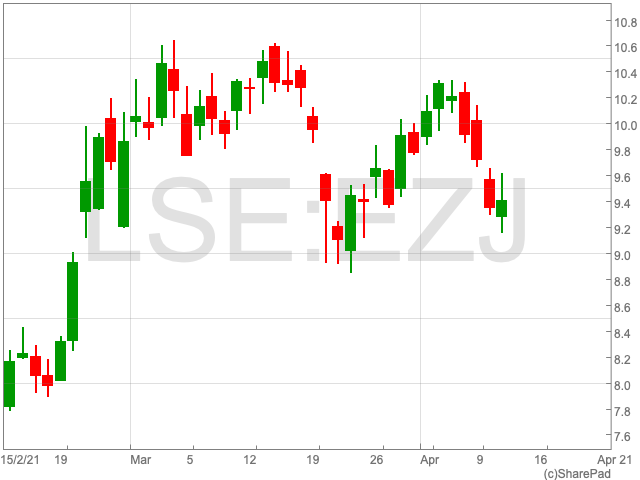
As reported a month ago, the EasyJet share price climbed back to 1050p per share following a devastating period for the industry during the pandemic. As economies around the world opened up, the prospects of the travel industry following suit gave cause for hope for investors in airlines with depleted share prices. However, while much of the vaccine roll-out has been a success, and economies are beginning to grow again, a question mark remains over the near-term prospects of the airline industry, a a third wave engulfs Europe. Over the past 30 days the company’s share price has fallen down to 942.2p per share from just under 1050p.

Europe

The key reason for EasyJet’s recent struggles is the current Covid-19 situation in Europe. After a slow start to their vaccine roll-outs, which was troubled by supply shortages, there have been third waves in France, Germany and Italy. As a result, in countries that are key destinations for EasyJet, lockdown restrictions have been reinforced.

However, in an effort to install confidence into the British public, Grant Shapps, the UK Transport Secretary, recently said Brits can start thinking about booking foreign holidays again this summer. Shapps added that the cost of the Covid tests required would need to be significantly reduced.

Declaring the conclusions of the Global Travel Taskforce set up by the government to examine how leisure travel could be reopened safely after lockdown, Mr Shapps said foreign holidays would resume on 17 May at the earliest.

He told the BBC: “This is the first time I’m able to come on and say I’m not advising against booking foreign holidays.”

“But for the first time I think there is light at the end of the tunnel and we’ll be able to restart international travel, including cruises by the way, in a safe and secure way, knowing about the vaccinations, everything we know about the disease this year, and of course that abundance of caution – having the tests in place.”

Shapps said the government will make a list which will be under constant review and that he was hopeful European countries would be upgraded as their vaccination rates improve.

Despite the uncertainty in Europe, spending in the travel industry fell by a smaller amount when compared to January and February. This suggests a growing confidence, in addition to demand, for holidays at some point this year. However, it could be a big ask for EasyJet’s share price to recover to its pre-pandemic level before the end of 2021.

March consumer spending down 7.2%

0

Hospitality and leisure showed signs of recovery

Consumer spending fell 7.2% in March compared to the same period in 2019, as lockdown continued, according to a report by Barclaycard.

However, spending on hotels, resorts and accommodation, as well as entertainment, showed early signs of improvement as Brits began to make plans for when restrictions are lifted.

Spending on essential items rose by 7.7% compared to 2019, the area of highest growth, while non-essential spend was down 14.5%. Although this represents a slight improvement compared to the previous two months of lockdown.

The report by Barclaycard suggests that spending at restaurants should improve following the easing of restrictions, as 26% of Brits have already pencilled in a post-lockdown activity, 41% of which are customers making reservations to eat outdoors at restaurants.

There is also a glimmer of hope for the travel industry as the 54.3% decline in spending on accommodation marked an improvement on the respective 75.4% and 70.3% falls in January and February. This suggests that holidaymakers have begun booking trips for the remainder of the year.

Raheel Ahmed, head of consumer products at Barclays, said: “With springtime finally here and restrictions starting to ease, it’s encouraging to see a renewed sense of optimism across much of the UK. There are also signs that some of those sectors most heavily impacted by the pandemic, such as hotels, resorts, accommodation and entertainment, are beginning to turn a corner, as many look forward to long-awaited trips and activities with family and friends after lockdown.”

“As Brits spent March sprucing up their homes and garden in preparation for warmer weather, DIY stores also enjoyed significant growth. While it remains a very challenging environment for high-street and hospitality outlets, the fact that many consumers are making plans for the future is a positive sign, and we hope to see this pent-up demand lead to growth in more categories as life after lockdown starts to resume,” Ahmed added.