UK government borrowing falls in June on reopening of UK economy

0

UK public sector net borrowing was recorded at £22.8bn in June

UK public borrowing fell in June when compared to the same month a year ago, as the economic recovery allowed for reductions in spending and increased tax revenues.

The figure for public sector net borrowing was recorded at £22.8bn in June, down from £28.3bn for the same month in 2020, according to data from the Office for National statistics.

Despite the fall, the figure is the second-highest level recorded for June since records began.

As measures have been taken to support the economy during the pandemic, such as furlough payments, borrowing reached record highs.

However, the overall picture is less than pretty for the UK’s finances as rising inflation made an impact and interest payments on government debt rose by more than 200% to £8.7bn.

After the UK chancellor Rishi Sunak dealt with pandemic-induced issues by borrowing more money, his attention in the aftermath of the pandemic could now turn to the soaring levels of government debt.

On the whole, the amount the UK borrowed was below the expected £25.5bn predicted by the Office for Budget Responsibility (OBR) back in March.

Danni Hewson, AJ Bell financial analyst, comments on today’s public spending figures. Hewson argued that while the figures are proof that the lifting restrictions is powering the economy forward, it is not all good news.

“Government spending actually increased by £2.5bn in June compared to the June 2020 with falling furlough costs offset by spending on vaccines and the test and trace programme as well as interest payments on the debt pile. That figure of £8.7bn, up by a whopping £6bn from the same month last year, is the highest since records began in April 1997. It’s a timely reminder of the impact inflation can have with the hikes in interest down to gilts pegged to RPI increases,” said Hewson.

“It’s something that will certainly have the Chancellor taking a long look at his ledger as will the simple fact that though tax take has gone up, the country is still living considerably beyond its means. Going forward he’ll be under pressure to shake that magic money tree to find extra cash to help fuel the recovery particularly in areas like health and education. And if inflation runs hotter for longer than economists are predicting the money tree’s magic potion may have an unpalatable aftertaste.”
Next share price surges as retailer lifts profit forecast on summer sales boom

5

Next’s sales jumped by 18% over the past 11 weeks to July 17

Next raised its profit guidance on Wednesday as pent-up demand for its clothes combined with periods of warm weather saw it easily surpass its sales forecast over the previous 11 weeks.

The UK fashion retailer’s sales jumped by 18% over the past 11 weeks to July 17 when compared to the same time period two years ago, before the pandemic.

“Consumers have had the need and means by which to go on a spending spree, and that’s created a tailwind for Next. The retailer has a habit of beating expectations and its latest update is true to form,” says Russ Mould, investment director at AJ Bell.

The FTSE 100 company’s profit before tax for the year to January 2022 could come to £750m according to its central guidance. This represents an increase of £30m.

Total full price sales, including interest income from Next’s credit business, increased by 7.8% in H1, and 18.6% in Q2 to 17 July.

It is a reflection of strong growth in homeware, third party brands and overseas online, which offset deadlines in the store estate.

The Next share price (LON:NXT) rose by 7.82% during the morning session on Wednesday.

Sophie Lund-Yates, Senior Equity Analyst at Hargreaves Lansdown said:

“Customers have clearly missed having reasons to shop, so with restrictions easing, plus unseasonably warm weather, means a spark’s been lit under Next’s sales, and it knocked its targets for six in the second quarter.”

“Don’t forget, consumer wallets are heavier with spare cash than usual too, with a lack of foreign holidays and increased savings during the pandemic, giving them the confidence to go out and splash the cash on new outfits and homeware. This has a positive read across for the rest of the discretionary consumer sector – rather than hoard the spare pennies, it looks like people are happy to spend them,” Lund-Yates added.

“Next has done particularly well, not least because of its great online operation, which has helped offset declines in the physical estate. Next also has a strong presence in out-of-town retail parks which are proving more resilient than town centre locations. That helps keep Next’s popular click and collect proposition thriving too. A stronger digital business should hold Next in better stead should the so-called ping-demic get much worse.”

Positive company news lifts FTSE 100

0

The FTSE 100 is up by 1.48% on Wednesday as the index sustained positive momentum for a second day in a row. At 6,986.27 points, the FTSE 100 is closing in on the 7,000 marker again.

“Yesterday’s market rebound was welcome, but also raised questions as to whether it was a dead cat bounce,” said Russ Mould, investment director at AJ Bell.

“Helping to focus investors’ minds on stock opportunities and divert attention away from general worries about the economy and inflation is a step-up in companies reporting their latest earnings.”

Across the board, there was a sense that investors were regaining their appetite for higher risk stocks, with notable gains among airlines, transport operators and leisure companies. Cineworld rose by nearly 8%, while Trainline advanced by 5.7% and EasyJet is up 3.6%.

“Across the FTSE 350, Next surprised the market with better than expected figures, so did media group Future which anticipates its full year profitability to be materially ahead of current market forecasts,” Mould said.

The question now is whether another day of positive news can serve to lift sentiment for a sustained period.

FTSE 100 Top Movers

Next (9.02%), Rolls-Royce (6.59%) and IAG (5.98%) led the way atop the FTSE 100 on Wednesday, each making outstanding gains.

At the other end, Avast (-1.63%), Royal Mail (-1.51%) and National Grid (-0.58%) were the biggest fallers out of only five companies in the red during the morning session on Wednesday.

Royal Mail

Royal Mail (LON:RMG) revealed its parcel deliveries slowed during the previous quarter as the pandemic-induced boom in online sales lost some momentum. 

However, the parcel delivery company also suggests that the trend established during the pandemic is here to stay. 

The FTSE 100 company’s revenue during the quarter ending in June 2021 is up by 12.5% from the year before. When compared to the same period in 2019, before the pandemic, it has increased by 20.2%.

Next

Next raised its profit guidance on Wednesday as pent-up demand for its clothes combined with periods of warm weather saw it easily surpass its sales forecast over the previous 11 weeks. 

The UK fashion retailer’s sales jumped by 18% over the past 11 weeks to July 17 when compared to the same time period two years ago, before the pandemic

“Consumers have had the need and means by which to go on a spending spree, and that’s created a tailwind for Next. The retailer has a habit of beating expectations and its latest update is true to form,” says Russ Mould, investment director at AJ Bell.

Netflix falls short of growth forecast as doubts loom over near-term outlook

0

Netflix set to move into gaming

Netflix fell short of its growth forecast during the previous quarter. The streaming company put the news down to a fall in interest following the lockdown, as well as pandemic-induced delays in production.

The American company increased its overall number of subscribers by 1.54m, 0.21m short of what analysts were forecasting. It is also well below the 10m added during Q2 12 months ago, as viewers across the world were confined to their homes.

In the US and Canada Netflix lost 430,000 subscribers during Q2. It also revised down its forecasts for the remainder of the year.

The news has created a sense of doubt from investors over the streaming company’s outlook as the world economy is reopening more by the day.

The streaming sector has become more saturated over the last year, with Apple and Disney, among others, stepping up their efforts.

While the pandemic caused delays over the past 12 months, Netflix said a body of new content will build through the remainder of the year.

Netflix also confirmed its plan to venture into gaming. “We’re excited as ever about our movies and TV series offering and we expect a long runway of increasing investment and growth across all of our existing content categories, but since we are nearly a decade into our push into original programming, we think the time is right to learn more about how our members value games,” the company said.

Investor’s curiosity into these plans supported the Netflix share price (NASDAQ:NFLX) on Tuesday as it closed 0.23% down.

With 209m subscribers, Netflix is above and beyond its competitors, with its closest rival being Disney Plus, at 104m subscribers.

However, as viewer habits could noticeably change post-lockdown, and competition intensifies, Tuesday’s results mark a defining moment for Netflix.

Royal Mail anticipates permanent shift to online sales

0

Royal Mail parcel volumes retreat as online boom eases

Royal Mail (LON:RMG) revealed its parcel deliveries slowed during the previous quarter as the pandemic-induced boom in online sales lost some momentum.

However, the parcel delivery company also suggests that the trend established during the pandemic is here to stay.

Royal Mail’s revenue during the quarter ending in June 2021 is up by 12.5% from the year before. When compared to the same period in 2019, before the pandemic, it has increased by 20.2%.

Despite the volume of parcels being sent falling by 13%, income generated from parcels increased. This is down to Royal Mail achieving a better product mix, the company said.

Speaking before the FTSE 100 company’s annual shareholder meeting on Wednesday, chairman Keith Williams said: “As expected, parcel volumes decreased and letter volumes increased compared to the exceptional period last year encompassing the UK’s first lockdown, when non-essential retailers closed for the first time.”

“We are starting to see evidence that the domestic parcel market is re-basing to a higher level than pre-pandemic, as consumers continue to shop online.”

Williams added that it is too soon to know what’s in store for the remainder of the year due to uncertainty, particularly with regard to Covid-19. The Royal Mail chairman is retaining a sense of optimism.

Ben Nuttall, Senior Analyst at Third Bridge, provided additional context to the results announced by Royal Mail on Wednesday.

“As the UK begins to open up parcel volumes have declined compared to last year down 13%, but there are early signs that some of the behaviour of buying online is sticking as domestic parcels remain 19% above 2019 levels,” Nuttall said.

“International parcel volumes were down more, as we still see impacts of passenger flights reducing air freight capacity and increased conveyance costs as well as Brexit impacts while the country transitions into a new trade deal.”

“Overall structural letter decline continues compared to 2019, but there is a nice jump from last year as businesses reopen compared to the same period last year.”

“Any decline in volumes in parcels has been more than offset by pricing increases, showing lasting benefits for Royal Mail of delivering last year under tough conditions when we all wanted home delivery.”

The Royal Mail share price is down by 1.32% during the morning session on Wednesday to 523.60p

New AIM admission: Lords Group Trading

Lords Group Trading appears to have a chosen a good time to float on AIM with current trading at record levels.  
The builders’ merchant plans to increase revenues to £500m a year by 2024. That is a more than 50% increase on the current annualised figure, and it will require a significant amount of acquisition activity. Lords Group Trading already has plenty of experience as a consolidator. Management will spend time with potential sellers to understand why they are selling and the culture of the business.
There are around 900 independent builders’ merchants in the UK and there is little ...

Short-term uncertainty could hold back the Lloyds share price

0

Lloyds Share Price

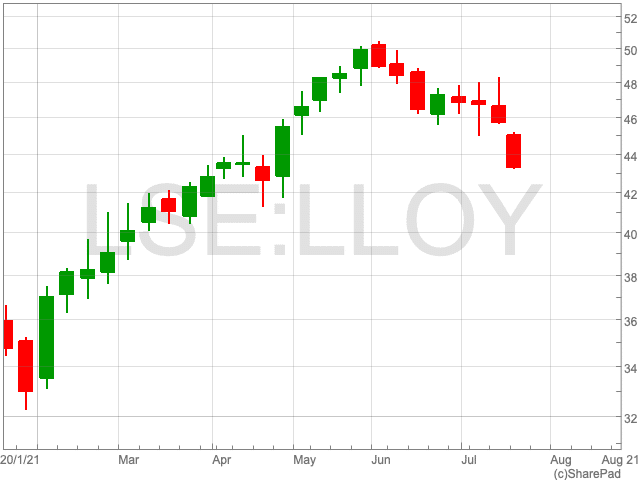
The Lloyds share price (LON:LLOY) is down by 7.68% during the afternoon session on Tuesday. It is the seventh day out of the last eight that the Lloyds share price has been in the red. However, despite the recent dip, it has been a solid 2021 so far the the FTSE 100 company, which has added 23.88% to its share price since the turn of the year. A creeping uncertainty over the recovery of the UK economy has been reflected in the Lloyds share price. However, it could provide an opportunity to find value for those whose faith remains strong in the UK’s outlook.

UK Outlook

When the UK economy is doing the well, the Lloyds share price will grow alongside it. Therefore, for investors curious about the current state of the major bank, it is useful to paint a broader picture of where the country is at on the whole.

Despite the uncertainty, it is not all doom and gloom for the UK economy, which is clearly making strides, albeit stumbling at times, towards a full recovery. Enough for the the IMF to forecast that the British economy will grow by over 5% this year and the next.

Strong growth within the UK could be good for Lloyds for a number of reasons. Firstly, its means lower default rates and higher demand for credit. It could also result in higher interest rates being introduced down the line, which could lead to Lloyds getting more income from mortgages.

Risks

However, for investors with their eye on the Lloyds share price, there are a handful of events which could derail the UK recovery. Firstly, the sustainability of the UK housing market. A large portion of Lloyds’ business comes from being a mortgage lender. Therefore, it benefitted from the stamp duty holiday and the ongoing housing boom. However, as the policy is phased out, property purchases may cool off, causing Lloyds’ revenue to do the same.

With restrictions removed it remains unclear what the impact will be on infection rates and hospitalisations. Professor Neil Ferguson, British epidemiologist, has warned that the UK is in for a difficult summer, with Covid cases in the UK possibly reaching 200,000 a day, and hospitalisations getting to 2,000 admissions per day.

In the short-term it is likely that at best there will be uncertainty. This might not be what investors want to hear as the Lloyds share price could take some time to find its momentum again.

Litigation funding as an investment with Cormac Leech

The UK Investor Magazine Podcast is joined by Cormac Leech, founder of Litigation Funding platform AxiaFunder.

AxiaFunder is the only investment platform available to UK investors to access the new asset class of Litigation Funding.

AxiaFunder was established after Cormac’s personal experience within litigation funding found that while there was a substantial market for litigation funding, there wasn’t an available platform for high net worth and sophisticated investors.

One of the standout attractions of litigation funding is the absence of correlation with the broad economic environment.

Litigation, and the need to pursue litigation, is not largely impacted by economic growth in the same way traditional assets such as equities and bonds are. 

Find more information on the AxiaFunder website.

Investing in offers promoted by AxiaFunder involves risks. Capital is at risk and projected returns are not guaranteed. Investors have a significant risk of losing all of their investment if the case fails. Investments promoted by AxiaFunder are not listed or traded on any recognised exchange. This means you will not be able to easily sell your investment if you need to get your money back quickly. Investments are not covered by the Financial Services Compensation Scheme (FSCS). The investments on this website are intended for Sophisticated and High Net Worth Investors as defined by the FCA.

600 Group share price jumps on increased order book

1

600 Group Share Price

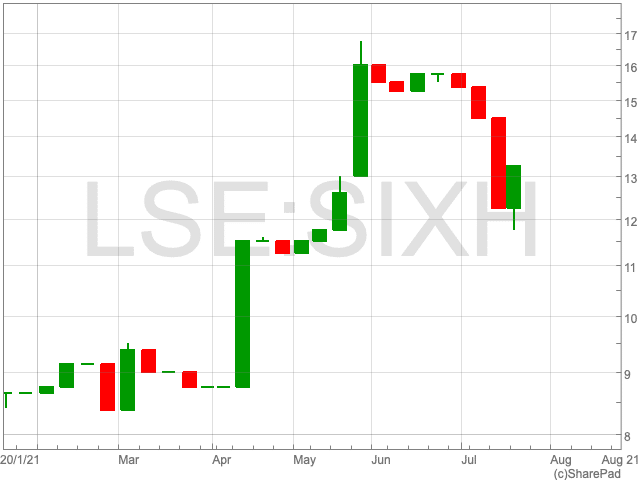
The 600 Group share price (AIM:SIXH) surged by 12.8% on Tuesday as the engineering company said its order book rose, while its trading levels during Q1 of fiscal 2022 were robust.

It caps of a busy period for the 600 Group share price. During the first few months of the year it traded sideways between 8 and 9p per share. However, heading into April, there began some big moves upwards. With today’s news taken into account the 600 Group share price is up by 59.76% in the last six months.

Results

A key update which served to support the 600 Group share price on Tuesday is the fact its order book at July 15 came in at $22.5m, up from $14.1m at March 31.

The 600 Group did however see its revenue fall by 20% to $53.5m, which the company put down to the impact of the pandemic on its trading levels.

The company is expecting to announce revenue of $53.5m and EBIT (adjusted earnings before interest and taxes) of $2.5m for the year ended March 31. This is a fall in the figures from fiscal 2020 to $67.2m and $2.7m respectively.

600 Group will report its earnings for the year ended March 31 by the end of September. This is due to delays caused by the pandemic.

The 600 Group is a distributor, designer and manufacturer of industrial products with three principal areas of activities: Industrial Laser Systems, Machine Tools and Precision Engineered Components.

CVS upgrades profit expectations was momentum continues post-lockdown

0

CVS Group’s like-for-like sales jumped by 17.4% for the full year

CVS Group revealed strong full-year sales and upgraded its profit guidance on Tuesday as demand for pets soared during the pandemic.

The British vet’s like-for-like sales jumped by 17.4% for the full year, as the company opened more clinics with the easing of restrictions.

CVS is now expecting its underlying cash profits (EBITDA) to exceed its upgraded targets, which it confirmed towards the end of April.

The group also said it expects its EBITDA margins to rise above the 18.4% seen at the end of H1, as well as the 16.6% reported last year.

CVS is expecting its full year net debt to be well below its EBITDA, while it is “well placed to pursue further targeted acquisitions”.

Just after lunchtime on Tuesday the CVS Group share price (LON:CVSG) is down by 0.44%.

Sophie Lund-Yates, senior equity analyst at Hargreaves Lansdown commented:

“Pandemic or no pandemic, the UK still needs to care for its pets. While there was some disruption to service because of restrictions, on the whole CVS Group’s vet clinics fared much better than other businesses. As restrictions have allowed clinics to offer a wider range of treatments once more, business has boomed, allowing full year profit expectations to be upgraded yet again. A best-in-show performance is especially welcome given the group’s arguably frothy valuation. CVS Group has reached the point where even a good performance could see the share price wobble, so its results need to stand out from the crowd.”

“CVS Group is also likely being buoyed by the phenomenal rise in pet ownership brought about during lockdowns, which should act as a long-term boon. CVS Group’s revenues are particularly attractive, because once a pet owner registers an animal with a clinic, they’re very likely to be a repeat customer over its lifetime. Recurring revenues are somewhat of a luxury in the world of business, adding a layer of certainty others could only hope for.”

CVS will publish more detailed full year results on 23 September 2021.