Shanta Gold confirms high-grade drilling results from West Kenya Project

Shanta Gold finds the precious metal in seven different intersections

Shanta Gold (AIM:SHG), the East Africa-focused gold producer, provided an exploration update for its West Kenya Project on Tuesday.

The report outlined seven different intersections as part of an 11-hole drilling programme in the West Kenya Project.

The AIM-listed company said that its update was regarding 2,489m of drilling across the 11 holes which took place over March and April 2021 at the Isulu deposit.

A resource update for West Kenya, focused on approximately 10% of the total NI43-101 inferred resource of 1.2 Moz, between 0-200 metres in depth, is expected in Q3 following completion of Phase 1 drilling at the end of June 2021.

Shanta said it was on course to complete around 40% of total planned drilling at the project by the end of 2021.

Eric Zurrin, Chief Executive Officer, commented:

“The intersection of 219.5 g/t over 6 metres in hole 237 has a grade x width of over 1,300 g/t Au, the highest to date on this metric at the West Kenya Project. These new intercepts verify the current model and can be linked with other high-grade intercepts nearby, indicating that exceptionally high-grade shoots should be present not only below the 400 m depth, as previously thought, but also at the higher levels of the deposit.”

“Current drilling has also discovered an up-dip extension of the additional parallel zone, which was previously modelled only at deeper levels. Results so far have been strong with some intersections demonstrating remarkably high grades and we look forward to updating the market on ongoing performance in due course.”

“We will soon be transitioning into Phase 2 drilling as well as expanding our exploration drilling to regional high priority targets across our portfolio of 1,162 km2 licences at West Kenya.”

The Shanta Gold share price is up by 6.65% to 16p early on Tuesday morning.

Government borrowing remains high in April

0

ONS says public sector borrowing estimated at £31.7bn in April

Borrowing by the UK government exceeded economists’ expectations in April, as pandemic-induced restrictions caused high pubic spending and reduced tax income.

Data released by the Office for National Statistics on Tuesday showed that public sector borrowing was estimated at £31.7bn in April.

This figure is the second highest seen during April since borrowing records were first recorded back in 1993. However, it remains below the £47.3bn seen during the same month in 2020.

It came in higher than the £30.9bn forecast by economists, although it was well estimates from the Office for Budget Responsibility of £39bn.

The ONS also confirmed that the central government spent around £96bn in April, including the continuation of the furlough scheme.

Paul Craig, portfolio manager at Quilter Investors, commented on the UK government borrowing figures and what it means going forward.

“The Treasury will be wishing it could return to the role of the “invisible hand” but in reality public borrowing is going to be noticeable for a number of years. The level of borrowing remains severely elevated and will continue to do so while government support remains in place throughout the year. The role of the Treasury will evolve however as the vaccine programme gets nearer to offering everyone their first jab, and we will move from keeping the economy alive to ‘building back better’,” said Craig.

“But even so, the scale of this borrowing is vast. Even with welcome improvements in the government’s finances and the unlocking of the economy ongoing, government borrowing for the last year is still equivalent to 14.3% of GDP.”

“However, perversely, this is good economically and leaves the UK in somewhat of a sweet spot. Conditions are in place to jump start nicely and we are seeing this in the data that is feeding through. All sectors have been surprising to the upside and we are seeing strong job advert figures. The government will be hoping this will lead to an economic boom in the summer.”

New AIM admission: Kitwave

Kitwave is a grocery wholesaler which has a strategy of consolidating smaller wholesale businesses. The company has less than 2% market share in UK grocery and foodservice wholesaling, although it is 4% in the frozen food market. Kitwave is the 14th largest UK grocery wholesaler.
There is an experienced management team that understands its markets. Kitwave has a solid track record and moving into areas such as frozen food has improved margins.
The flotation should increase the profile of the group and enable it to make more acquisitions. Most of the borrowings will be paid off.
The share price...

New AIM admission: Dianomi

Dianomi is a fast-growing digital advertising business with scope to broaden its business base to other sectors. Financial services is the main generator of revenues, with advertising clients including Fidelity, Nomura and Hargreaves Lansdown and publishers such as Wall Street Journal, the Times and Bloomberg.
Digital advertising spending by financial services businesses in the US is expected to reach $23.6bn in 2021. Dianomi focuses on the premium segment of the market and it turns down many potential advertisers.
Dianomi has a good growth record, and this has continued into the first quarter...

Wetherspoons share price: has a strong summer already been factored in?

0

Wetherspoons Share Price

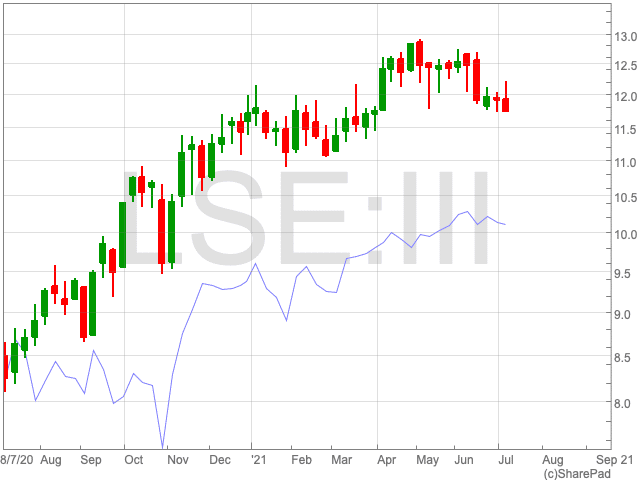
The Wetherspoons share price (LON:JDW) has moved sideways over the past few weeks. This is despite the continued success of the vaccine roll-out and the opening up of the UK economy. It is however possible that anticipated success has already been factored into the FTSE 250 company’s value.

At £13.83 the Wetherspoon share price is up by 23.9% since the turn of the year. Ahead of a potentially very busy summer, investors are now curious to know how much further it can go as the UK continues on its return to normality.

Expansion

Many hospitality and service sector business were forced to close down during the pandemic. This allowed JD Wetherspoon to expand its estate. As a result, the company may emerge from the pandemic in a stronger position.

The group recently disclosed plans for a £145m investment aimed at expanding and upgrading its pubs – providing there is not another lockdown. The FTSE 250 company has confirmed that the 75 projects would take over a year to complete and provide 2,000 new jobs. Over the coming decade the group is looking at investing an additional £750m, which would create a further 20,000 jobs.

The initial funding, set to begin this summer, will see 18 new pubs as well as 57 “significant” upgrades and extensions to existing sites.

JD Wetherspoons Business Model

Wetherspoons owns 8.8% of the pub market, more than any other company in the UK. It will be able to fall back on its tried and tested business model of cheap beer and economies of scale this summer.

This is backed up by the company’s performance during the year before the pandemic. In 2019 Wetherspoons made a pre-tax profit of £95m, and earned £1.8bn in revenue.

Therefore a bet on Wetherspoons doing well over the coming months and beyond could be viewed as a bet in favour of the UK economy, and more specifically the pub trade.

The prospect of further lockdowns remains a risk, while it is possible that a strong summer has been factored into the Wetherspoon share price. On the other hand, the company’s aggressive expansion plan during the pandemic may prove fruitful for the Wetherspoons share price over the long-term.

BHP Share Price: will China continue intervention in commodities markets?

0

BHP Share Price

The BHP share price (LON:BHP) performed relatively well during the pandemic. The company made a swift recovery and then far exceeded its pre-pandemic level during 2021. Over the last couple of weeks it has seen a substantial dip of 7%, as momentum around commodities markets has stalled.

Production Numbers

Production numbers serve as a useful guide to the true value of the BHP share price. The FTSE 100 mining giant confirmed it achieved record production at Western Australia Iron Ore over the last quarter.

Petroleum output rose by 7% to 25.4m. While copper and iron ore output fell by 9% to 391.4kt and by 4% to 59.9Mt respectively. Energy coal production jumped by 34% thanks to higher volumes at Carrejon due to a strike during the period before.

BHP chief executive, Mike Henry commented: “BHP’s strong safety and operational performance continued during the quarter, with record year-to-date production at Western Australia Iron Ore, the Goonyella Riverside metallurgical coal mine in Queensland and concentrator throughput at Escondida in Chile.”

“We are reliably executing our major projects, bringing on new supply in copper, petroleum and iron ore. The Spence Growth Option and Samarco are ramping up and West Barracouta, in Petroleum, started production this month. First production from Petroleum’s Ruby project is expected in the coming weeks and South Flank, with its higher grade and lump proportion, is on track to begin production in the middle of the year.”

BHP said it is continuing its efforts to decarbonise, in line with the Paris Climate Accord. The company has developed partnerships with three major steelmakers whose combined output adds up to 10% of the global production.

Iron Ore

UK Investor Magazine outlined earlier this year that BHP’s performance would be dependent on the price of iron ore during 2021. The price of iron ore, the ingredient used to make steel, dived on Monday as China suggested that it would aim to calm rising prices amid concerns over inflation.

China’s economic planning agency said it would come down on monopolies in commodities markets, as well as the spread of false information. Following a recent surge, the iron ore composite fell by 6.03% to $161.09 as the announcement by the Chinese government made its way through markets.

While the iron ore price has seen a drop over the past two weeks, it remains up by 20.1% over the past three months. Robert Rennie, head of market strategy at Westpac, anticipates further intervention by the Chinese state. This could represent an issue for the BHP share price moving forward, especially as China is the largest consumer of iron ore.

BitcoinPoint: Bitcoin volatility and empowering the 1.7 billion unbanked

BitcoinPoint is aiming to create the ‘Western Union’ of Bitcoin and in the process provide around 1.7 billion unbanked people globally with the opportunity to transact with other users.

We recorded this Podcast on the back of a tumultuous week in Crypto currencies which set the perfect scene for a discussion around recent volatility in the alternative assets space and how BitcoinPoint is navigating the ever-changing environment.

BitcoinPoint allows users to withdraw cash from over 16k ATMs in the UK and there are plans to take the model global.

There is also attention paid to BitcoinPoint’s crowdfunding campaign. BitcoinPoint have smashed through their target funding amount and we delve into some of key metrics of interest to investors and what to expect from the company as they deliver on their strategy.

Find out more about BitcoinPoint’s crowdfunding campaign on Crowdcube.

Iron ore price falls as China intervenes over concerns of excessive speculation

Iron ore still up by over 20% over past three months

The price of iron ore, the ingredient used to make steel, dived on Monday as China suggested that it would aim to calm rising prices amid concerns over inflation.

On Monday China’s economic planning agency said it would come down on monopolies in commodities markets, as well as the spread of false information.

Following a recent surge, the iron ore composite fell by 6.03% to $161.09 as the announcement by the Chinese government made its way through markets. Although the commodity remains up by 20.1% over the past three months.

Despite rising commodity prices boosting China’s recovery from the pandemic, it remains concerned.

“I think there is increasing evidence of speculative excess,” Robert Rennie, head of market strategy at Westpac, told the Financial Times. Rennie also anticipates further intervention by the Chinese state.

China is easily the world’s largest consumer of commodities and higher raw material prices will affect production costs.

Two weeks ago iron ore reached its highest ever point thanks to strong demand for steel in China.

The FTSE 100 traded higher despite miners’ share prices being pulled down by falling iron ore prices as Chinese authorities warn of excessive speculation.

Fresnillo, Antofagasta and BHP have all lost ground on Monday.

Oil price up as doubt cast over revival of Iran deal

Goldman Sachs restates optimistic outlook for oil

The price of oil rose on Monday as the revival of the Iran nuclear deal appears to be at risk.

The West Texas Intermediate composite is up 1.25% to $64.6796 at lunchtime in the UK, while the Brent crude oil composite is up by 1.34% to $67.492.

Despite the possibility that the hiccup could increase oil supply through Iranian exports, Goldman Sachs believes prices will continue to rise.

Just a week ago, the price of oil dropped by nearly 3% following statements by Iran president Hassan Rouhani that the US was ready to lift sanctions on his nation’s oil, banking and shipping sectors.

However, the speaker of Iran’s parliament confirmed that a monitoring deal between Iran and the UN nuclear watchdog had expired and that it would stop having access to images from a number of Iranian nuclear sites.

Diplomats from Europe said that failure to agree an extension of the deal would bring the possibility of future talks between Washington and Tehran into crisis.

“All in all, it seems to be only a matter of time before the sides involved put pen to paper on a new nuclear accord,” Stephen Brennock of oil broker PVM told Reuters.

“Investors are bracing for a fresh wave of what will surely be heavily discounted Iranian crude … yet for all this alarmism, an aggressive ramp up in Iranian production and exports is unlikely to stall the drawdown in global oil stocks”.

Analysts at Goldman Sachs believe the case for the oil price rising in the future remains solid as it will be driven by increased demand as the vaccine roll-out continues.

“Even aggressively assuming a restart in July, we estimate that Brent prices would still reach $80 per barrel in fourth quarter, 2021, with our new base case for an October restart still supporting our $80 per barrel forecast for this summer,” Goldman said.

FTSE 100 makes ‘sedate progress’ on Monday following wild week

0

The FTSE 100 is up by 0.19% to 7,031.29 on Monday morning in a positive start to the week for the index.

“The FTSE 100 made sedate progress on Monday morning although you would imagine investors would take that after something of a wild ride last week driven by inflation fears and a bitcoin crash,” says AJ Bell investment director Russ Mould.

The cryptocurrency added further losses over the weekend, before a modest recovery, as China continued its crackdown.

“The cryptocurrency remains more up and down than a yo-yo, enduring further heavy losses over the weekend before staging a modest recovery amid a crackdown in China.

The UK’s flagship index traded higher despite miners’ share prices being pulled down by falling iron ore prices as Chinese authorities warn of excessive speculation.

“Observers will be asking if this is the week the FTSE 100 finally pushes ahead of the 7,000 mark after a period of going backwards and forwards around this level,” Mould added.

“A second estimate of US GDP on Wednesday may provide some direction, in addition to consumer confidence and price data which should help show whether the world’s largest economy is simmering nicely or is in danger of bubbling over.”

“After recent evidence of rapidly rising prices in the UK, there is likely to be considerable attention on Bank of England Governor Andrew Bailey and his colleagues when they appear before MPs to testify later.”

FTSE 100 Top Movers

Flutter Entertainment (2.01%), Compass Group (1.61%) and Vodafone Group (1.38%) are the top risers midway through the morning session on Monday.

At the other end, Fresnillo (-2.93%), Antofagasta (-1.59%) and Barratt Developments (-1.44%) have lost the most ground.

Cineworld

Cineworld praised a “strong” opening weekend across the country and anticipates a continued recovery after cinemas were forced to close down for months due to the pandemic

The cinema group said that Peter Rabbit 2: The Runaway was to thank for its opening weekend success as families flocked to cinemas in droves. 

Cineworld said that its performance over the weekend surpassed its own expectations as “customers were eager to return to the movies and enjoy the full movie experience”.