DRILLING INTO THE FIGURES
Ironridge Resources (LSE:IRR) - 18.2p - Increased value seems unnoticed.
There is a blindness when exploration companies announce drilling grades as IRR have today. Cynical investors have also learned that a fund rise will often follow. Ironridge recently raised £12m at 20p as they are developing two metals reserves; they're near to a FS (Feasibility Study) for the Lithium Ewoyaa project and is highly prospective.
So drilling into today's announcement, further high grade results are reported from Ironridges Ewoyaa lithium Project...
Hurricane Energy (LON:HUR) slumped to a $625.3m loss as the company implements its financial restructuring on the back of a testing year.
A major factor behind the losses for the year ending in December were the $567.1m impairment charges to do with its flagship Lancaster field.
The AIM-listed company said the past year had been “profoundly challenging” on a number of levels.
Hurricane Energy confirmed that Lancaster field had produced an average of 14,900 bopd in 2020, although it was lower than expected as the field underperformed against its expectations.
Having once been considered the keystone to a 2.6bn-barrel portfolio, the field was downgraded to 7.1m barrels of proven plus probable reserves via a report in April.
A restructuring plan was outlined last month, but the board said it was most likely that the field would be discontinued when Lancaster stops producing in 2024.
Antony Maris, chief executive of Hurricane, commented:
“This has been a profoundly difficult period for Hurricane and its stakeholders. The understanding of the West of Shetland fractured basement play has changed significantly. As a result, the potential of the Lancaster field is much smaller than originally thought and cannot support the level of debt in the Company which was sized for a much larger Reserves and Contingent Resources base.”
“Against this extremely challenging backdrop, the Company has explored all potential options to resolve the Company’s financial situation, with the proposed financial restructuring ultimately being deemed the best possible outcome. We understand the impact this will have on our shareholders and the strong feelings that have been expressed as a result, but this was a necessary move in order to secure the Company’s future.”
“If the proposed restructuring is approved and implemented, we will focus our efforts on maximising Lancaster cash flows to pay down debt, as well as making the case for further development of our West of Shetland asset base”
The FTSE 100 rose by a nominal amount early on Tuesday, up to 7,052.27. UK borrowing figures surpassed expectations, but remained the second highest ever, failing to significantly impact the UK index.
“It didn’t help that the pound continued to make inroads against the dollar, adding another 0.2% to cross $1.419. If cable can maintain that slender growth all the way until the end of the day, it will achieve its best close in over 3-years,” said Connor Campbell, financial analyst at Spreadex.
Returning from their Bank Holiday rest, the DAX and CAC saw contrasting fortunes on Tuesday. The German bourse was up close to 0.7%, and trading at 15,550. Its French counterpart, meanwhile, struggled to move beyond 6,400 as it opened the session as unchanged as the FTSE.
“Looking to this afternoon and the Dow Jones is set to continue its creep back towards 35,000. A 0.2% addition when the bell rings on Wall Street would equate to a 60-point increase, lifting it to 2-week peak of 34,460,” Campbell added.
FTSE 100 Top Movers
Aveva (4.43%), Just Eat (2.47%) and Ocado (1.89%) are the biggest risers on the FTSE 100 during the morning session on Tuesday.
Losing the most ground this morning was Vodafone (-0.99%), Fresnillo (-0.96%) and Admiral Group (-0.84%).
Aveva
Shares in software group Aveva rose this morning as the FTSE 1OO company reported strong H2 growth following an initial downturn thanks to the pandemic.
Aveva confirmed revenue of £820m for the year to the end of March, down by 1.6% albeit matching expectations, while adjusted earnings rose 4.4% to £226.4m.
London banks emitted 805m tonnes of carbon emissions in 2019 study finds
British banks and asset managers finance nearly double the annual carbon emissions of the UK, a report has revealed.
Greenpeace and WWF co-published the study, which found that loans and investments provided by London finance companies for projects and businesses, emitted 805m tonnes of carbon emissions in 2019.
The figure amounts to 1.8 times the UK’s yearly net emissions for 2019, totalling 455m tonnes.
If the City was ranked as a country, it would surpass Germany as the ninth largest emitter of carbon emissions in the world.
Both Greenpeace and WWF are encouraging the UK government to implement new regulations that would align the finance sector with the Paris Climate Accord.
Executive director of Greenpeace UK John Sauven said the UK could not ignore its financial institutions’ contribution to climate change, especially ahead of the Cop26 conference in Glasgow.
“Finance is the UK’s dirty little secret,” Sauven said. “Banks and investors are responsible for more emissions than most nations, and the UK government is giving them a free pass. How can we say we’re ‘leading the world on climate action’ while allowing financial institutions to plough billions into fossil fuel production every year? The claim is almost laughable.”
Tanya Steele, the chief executive of WWF UK, called on the financial sector to move to zero carbon transition plans that cover their investments all over the world.
“Trying to set a path to net-zero emissions without tackling the UK financial sector is like sticking a plaster when the patient needs open heart surgery,” she said.
“Despite seeing ambitious commitments to tackle the climate emergency, our finance sector is still driving global investment towards the old, destructive ways of doing business that are destroying our one shared home.”
Shanta Gold finds the precious metal in seven different intersections
Shanta Gold (AIM:SHG), the East Africa-focused gold producer, provided an exploration update for its West Kenya Project on Tuesday.
The report outlined seven different intersections as part of an 11-hole drilling programme in the West Kenya Project.
The AIM-listed company said that its update was regarding 2,489m of drilling across the 11 holes which took place over March and April 2021 at the Isulu deposit.
A resource update for West Kenya, focused on approximately 10% of the total NI43-101 inferred resource of 1.2 Moz, between 0-200 metres in depth, is expected in Q3 following completion of Phase 1 drilling at the end of June 2021.
Shanta said it was on course to complete around 40% of total planned drilling at the project by the end of 2021.
Eric Zurrin, Chief Executive Officer, commented:
“The intersection of 219.5 g/t over 6 metres in hole 237 has a grade x width of over 1,300 g/t Au, the highest to date on this metric at the West Kenya Project. These new intercepts verify the current model and can be linked with other high-grade intercepts nearby, indicating that exceptionally high-grade shoots should be present not only below the 400 m depth, as previously thought, but also at the higher levels of the deposit.”
“Current drilling has also discovered an up-dip extension of the additional parallel zone, which was previously modelled only at deeper levels. Results so far have been strong with some intersections demonstrating remarkably high grades and we look forward to updating the market on ongoing performance in due course.”
“We will soon be transitioning into Phase 2 drilling as well as expanding our exploration drilling to regional high priority targets across our portfolio of 1,162 km2 licences at West Kenya.”
ONS says public sector borrowing estimated at £31.7bn in April
Borrowing by the UK government exceeded economists’ expectations in April, as pandemic-induced restrictions caused high pubic spending and reduced tax income.
Data released by the Office for National Statistics on Tuesday showed that public sector borrowing was estimated at £31.7bn in April.
This figure is the second highest seen during April since borrowing records were first recorded back in 1993. However, it remains below the £47.3bn seen during the same month in 2020.
The ONS also confirmed that the central government spent around £96bn in April, including the continuation of the furlough scheme.
Paul Craig, portfolio manager at Quilter Investors, commented on the UK government borrowing figures and what it means going forward.
“The Treasury will be wishing it could return to the role of the “invisible hand” but in reality public borrowing is going to be noticeable for a number of years. The level of borrowing remains severely elevated and will continue to do so while government support remains in place throughout the year. The role of the Treasury will evolve however as the vaccine programme gets nearer to offering everyone their first jab, and we will move from keeping the economy alive to ‘building back better’,” said Craig.
“But even so, the scale of this borrowing is vast. Even with welcome improvements in the government’s finances and the unlocking of the economy ongoing, government borrowing for the last year is still equivalent to 14.3% of GDP.”
“However, perversely, this is good economically and leaves the UK in somewhat of a sweet spot. Conditions are in place to jump start nicely and we are seeing this in the data that is feeding through. All sectors have been surprising to the upside and we are seeing strong job advert figures. The government will be hoping this will lead to an economic boom in the summer.”
Kitwave is a grocery wholesaler which has a strategy of consolidating smaller wholesale businesses. The company has less than 2% market share in UK grocery and foodservice wholesaling, although it is 4% in the frozen food market. Kitwave is the 14th largest UK grocery wholesaler.
There is an experienced management team that understands its markets. Kitwave has a solid track record and moving into areas such as frozen food has improved margins.
The flotation should increase the profile of the group and enable it to make more acquisitions. Most of the borrowings will be paid off.
The share price...
Dianomi is a fast-growing digital advertising business with scope to broaden its business base to other sectors. Financial services is the main generator of revenues, with advertising clients including Fidelity, Nomura and Hargreaves Lansdown and publishers such as Wall Street Journal, the Times and Bloomberg.
Digital advertising spending by financial services businesses in the US is expected to reach $23.6bn in 2021. Dianomi focuses on the premium segment of the market and it turns down many potential advertisers.
Dianomi has a good growth record, and this has continued into the first quarter...
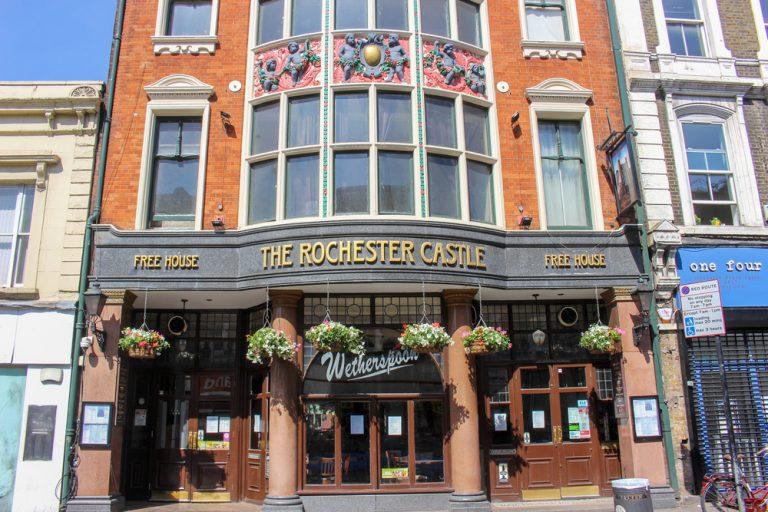
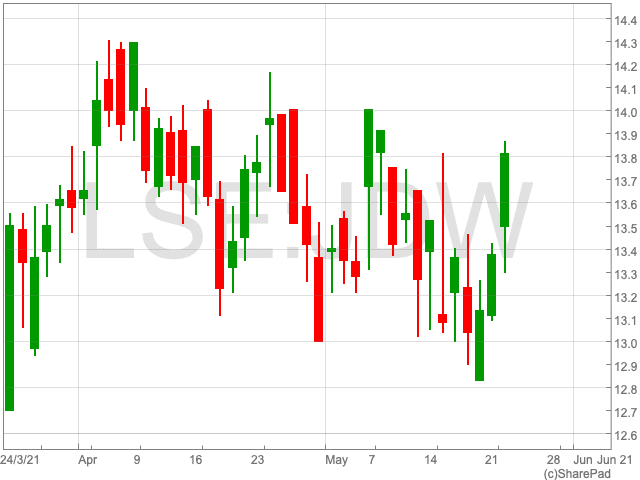
The Wetherspoons share price (LON:JDW) has moved sideways over the past few weeks. This is despite the continued success of the vaccine roll-out and the opening up of the UK economy. It is however possible that anticipated success has already been factored into the FTSE 250 company’s value.
At £13.83 the Wetherspoon share price is up by 23.9% since the turn of the year. Ahead of a potentially very busy summer, investors are now curious to know how much further it can go as the UK continues on its return to normality.
Expansion
Many hospitality and service sector business were forced to close down during the pandemic. This allowed JD Wetherspoon to expand its estate. As a result, the company may emerge from the pandemic in a stronger position.
The group recently disclosed plans for a £145m investment aimed at expanding and upgrading its pubs – providing there is not another lockdown. The FTSE 250 company has confirmed that the 75 projects would take over a year to complete and provide 2,000 new jobs. Over the coming decade the group is looking at investing an additional £750m, which would create a further 20,000 jobs.
The initial funding, set to begin this summer, will see 18 new pubs as well as 57 “significant” upgrades and extensions to existing sites.
JD Wetherspoons Business Model
Wetherspoons owns 8.8% of the pub market, more than any other company in the UK. It will be able to fall back on its tried and tested business model of cheap beer and economies of scale this summer.
This is backed up by the company’s performance during the year before the pandemic. In 2019 Wetherspoons made a pre-tax profit of £95m, and earned £1.8bn in revenue.
Therefore a bet on Wetherspoons doing well over the coming months and beyond could be viewed as a bet in favour of the UK economy, and more specifically the pub trade.
The prospect of further lockdowns remains a risk, while it is possible that a strong summer has been factored into the Wetherspoon share price. On the other hand, the company’s aggressive expansion plan during the pandemic may prove fruitful for the Wetherspoons share price over the long-term.
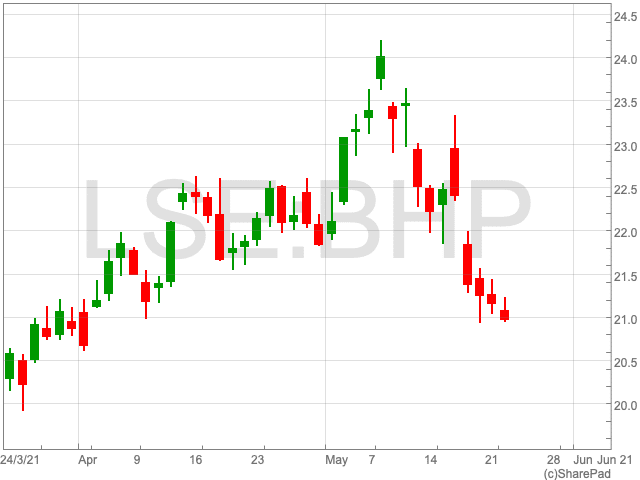
The BHP share price (LON:BHP) performed relatively well during the pandemic. The company made a swift recovery and then far exceeded its pre-pandemic level during 2021. Over the last couple of weeks it has seen a substantial dip of 7%, as momentum around commodities markets has stalled.
Production Numbers
Production numbers serve as a useful guide to the true value of the BHP share price. The FTSE 100 mining giant confirmed it achieved record production at Western Australia Iron Ore over the last quarter.
Petroleum output rose by 7% to 25.4m. While copper and iron ore output fell by 9% to 391.4kt and by 4% to 59.9Mt respectively. Energy coal production jumped by 34% thanks to higher volumes at Carrejon due to a strike during the period before.
BHP chief executive, Mike Henry commented: “BHP’s strong safety and operational performance continued during the quarter, with record year-to-date production at Western Australia Iron Ore, the Goonyella Riverside metallurgical coal mine in Queensland and concentrator throughput at Escondida in Chile.”
“We are reliably executing our major projects, bringing on new supply in copper, petroleum and iron ore. The Spence Growth Option and Samarco are ramping up and West Barracouta, in Petroleum, started production this month. First production from Petroleum’s Ruby project is expected in the coming weeks and South Flank, with its higher grade and lump proportion, is on track to begin production in the middle of the year.”
BHP said it is continuing its efforts to decarbonise, in line with the Paris Climate Accord. The company has developed partnerships with three major steelmakers whose combined output adds up to 10% of the global production.
Iron Ore
UK Investor Magazine outlined earlier this year that BHP’s performance would be dependent on the price of iron ore during 2021. The price of iron ore, the ingredient used to make steel, dived on Monday as China suggested that it would aim to calm rising prices amid concerns over inflation.
China’s economic planning agency said it would come down on monopolies in commodities markets, as well as the spread of false information. Following a recent surge, the iron ore composite fell by 6.03% to $161.09 as the announcement by the Chinese government made its way through markets.
While the iron ore price has seen a drop over the past two weeks, it remains up by 20.1% over the past three months. Robert Rennie, head of market strategy at Westpac, anticipates further intervention by the Chinese state. This could represent an issue for the BHP share price moving forward, especially as China is the largest consumer of iron ore.