The FTSE 100 rose on Tuesday morning despite the UK entering another national lockdown.
The blue-chip index was up almost 0.5% to 6,605 points. Top risers this morning was retailer Next, where shares shot up following a positive trading update.
Fallers this morning included British Land (-2.3%), Land Securities (-2.2%), AB Foods (-1.6%), Polymetal International (-1.8%) and IAG (-1.7%)
Across Europe, shares were down. The FTSE 250 is down 0.4%, Germany’s DAX fell 0.3%, France’s CAC 40 opened 0.5% lower and Spain’s IBEX is down 0.6%.
Commenting on this morning’s markets, Conner Campbell from SpreadEx said: “At points on Monday, the UK index was up 2.9%, galloping to levels last seen at the start of March 2020 following the Oxford/AstraZeneca vaccine rollout. Then it was shot down by the announcement Boris Johnson would be addressing the nation to outline the latest set of restrictions.
“It shows how keen investors were to start 2021 on the front foot that the FTSE still managed to end Monday up 1.7% despite a fresh 6-week lockdown (with the pound admittedly taking much of the flak).
“There was evidence of such again this Tuesday. While the rest of Europe started essentially flat – the DAX down 0.1%, the CAC up the same amount – the FTSE rose 0.5%, desperate to keep above 6,600. Sterling held up as well as it could, nudging 0.1% higher against the dollar but remaining unchanged against the euro. Not great, given the extent of yesterday’s fall against both rival currencies.
“How the index and currency perform throughout the rest of the day may well come down to what additional support Chancellor Rishi Sunak announces this Tuesday, ideally at least a return to the kind of aid offered during Lockdown 1.0,” he added.
Yesterday the FTSE started 2021 with strength and outperformed its European rivals to end the day up 1.7 per cent.
The FTSE 100 started 2021 with strong gains on Monday as London’s leading index jumping sharply in early trade before easing off into the afternoon.
Analyst pointed to enthusiasm surrounding Brexit as reason for the jump as markets continued to position for the consequence of the UK and EU reaching a trade deal.
“The FTSE 100 is kicking off 2021 in style, with the headline UK market enjoying an impressive 3% gain in early trade. With Brexit finally here, there are precious few signs of initial difficulties allaying some of the fears over what the eventual exit could look like,” said Joshua Mahony, Senior Market Analyst at IG.
The optimism was also evident in markets across the Atlantic as US indices headed towards all time highs in their first trading session of the season.
“A lot of people that may have missed out or sold at the wrong time last year are now saying I want to get in. The coast is clear, the vaccines are coming, and they want to start to participate in the market,” said Thomas Hayes, managing member at Great Hill Capital LLC to Reuters.
FTSE 100 shrugs of higher COVID-19 cases
The FTSE 100 rose despite record UK COVID-19 cases announced over the weekend and speculation the entire UK would once again be plunged into a lockdown.
However, with vaccine rollouts on the horizon, any economic activity is likely to confined to one or two months before the global economy can resume a form of normalcy.
Gaming M&A
Ladbrokes owner, Entain, was the FTSE 100’s top riser after the group rebuffed at takeover approach from US Casino operator MGM.
“Entain Group understandably leads the way after a rejected takeover bid from MGM Resorts highlighted the potential for a new enhanced offer in the near future,” said Joshua Mahony, Senior Market Analyst at IG.
“With the US providing the new frontier for gambling websites, it is clear that the sector could enjoy a period of substantial growth if they successfully tap into this newly-deregulated market.”
In an era of diminished dividend pay-outs due to the COVID-19 pandemic, the iShares UK Dividend ETF (LON:IUKD) offers a diversified approach to high yielding UK companies.
With a distribution yield of 4%, this ETF provides investors with a basket of income shares with a higher yield than peer funds that track the FTSE 100 index.
For example, the iShares Core FTSE 100 ETF now yields just 3%.
iShares UK Dividend ETF achieves a higher yield than the broader benchmark by selecting the top highest yielding 50 companies from the FTSE 350, excluding investment trusts.
iShares UK Dividend ETF is listed on multiple exchanges, including the London Stock Exchange, and has a Total Expense Ratio of 0.4%.
Triple Point Social Housing REIT
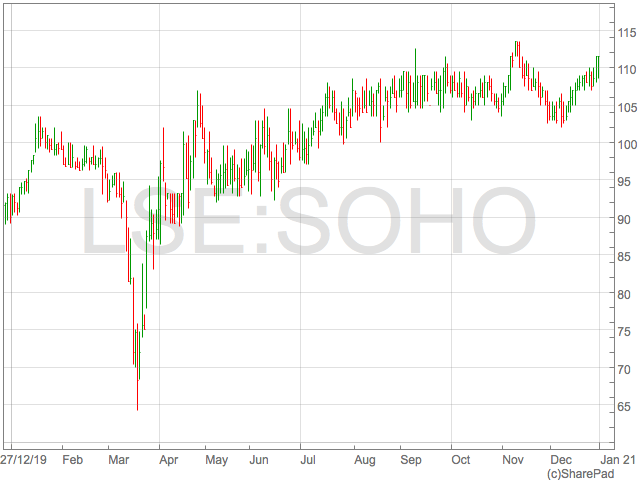
The Triple Point Social Housing REIT (LON:SOHO) will provide investors with the assurance their investments are making a positive impact in 2021, whilst yielding 4.7% (share price of 111p).
The Triple Point Social Housing REIT has a portfolio of specialised social housing that accommodates some of the most vulnerable people in the UK.
As of October 2020, Triple Point operated 404 properties in the UK which are specially adapted with features such as widened hallways and full wet rooms to meet the needs of their residents.
The social housing market is a very different proposition to commercial or residential property due to the government funding of rental payments.
Demonstrating the resilience of the social housing sector, Triple Points defaults rates far outperformed that of the private residential and commercial sectors through the pandemic.
In fact, when Triple Point Investment Director, Freddie Cowper-Coles, presented at the UK Investor Magazine Virtual Conference in October 2020, he highlighted the fund had collected 100% of their rents during the first half of 2020, despite COVID-19 ravaging the residential and commercial property sectors.
The trust’s resilience was reflected in a strong share price in 2020 that helped a Total Return of 25%.
The Triple Point Social Housing fund is structured as a Real Estate Investment Trust and trades on the LSE under the ticker LON:SOHO.
Artemis Alpha Trust
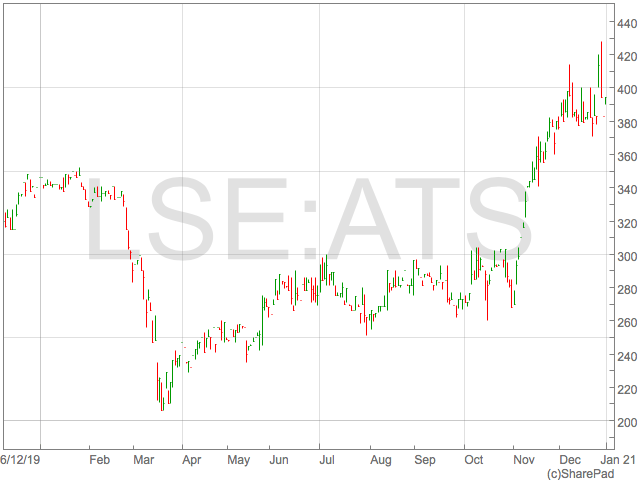
The attractiveness of the Artemis Alpha Trust (LON:ATS) stems from a portfolio highly weighted to the UK consumer with 45.5% of the portfolio allocated to consumer services, and 24.2% to consumer goods.
The UK economic recovery will likely be driven by increased consumption as the economy reopens post-COVID, and something resembling normal life resumes.
The top ten holdings are deftly balanced between those companies that have benefitted directly from the restrictions imposed by the pandemic, and those set the benefit from a broad economic reopening.
Holdings such as Just Eat Takeaway, Hornby and Plus 500 are perfect examples of companies that have harnessed and benefitted from the changes to consumer behaviour during COVID-19.
In the third quarter of 2020, Just Eat processed 151 million orders globally, up 43% from the year prior whilst model-maker Hornby enjoyed a 33% jump in first-half sales as hobbyist spent more sore time in the home. Hornby investors will look forward to second half sales results – up to 60% of revenue is typically recorded in the period encompassing the festive season.
Looking to those ripe for recovery as the UK economy reopens, easyJet and Redrow exhibit cyclical characteristics in sectors that have been heavily hit by the pandemic and now presents themselves as value propositions.
Trading at 394p, the Artemis Alpha share price has a 10.9% discount to NAV.
Standard list shell National World (LON: NWOR) is acquiring JPI Media Publishing, which is the core of the previously quoted Johnston Press. It appears to have a bargain on its hands if it can reconfigure the business and reduce the dependence on revenues from the printed editions.
At the end of 2018, Johnston Press was placed in administration and the business was acquired by its bondholders.
National World is paying £10.2m and no debt is being taken on. JPI Media Publishing is the third largest local news group in the UK and includes titles, such as The Scotsman, Yorkshire Post, Portsmouth N...
Geospatial software provider IQGeo (LON: IQG) had a strong end to 2020 acquiring a business that fits well with the core business, winning new contracts and selling a minority stake in a former subsidiary.
Analysis and storage software provider OSPinsight was acquired for an initial $5.6m in cash and $1.1m in shares, with a further $2.2m deferred. A placing at 78p a share raised £5.3m to help pay the cash portion.
Both businesses help telecoms and utilities companies to plan and maintain their network infrastructure.
IQGeo is still losing money and that is likely to continue until 2023, but th...
Red Rock Resources shares fell on Thursday after the group shared Final Audited Results for the year ended 30 June 2020.
The group reported a pre-tax profit of £5.2m, which was up from the reported loss of £1.7m in the previous year.
Red Rock said that they had mitigated the impacts of the pandemic and saw a growth in profits and received £419,000 of dividend income from its investments over the year.
“There is much that is uncertain in the world outlook. China has become so big a demand factor for many commodities, iron ore and copper included, that sharp recent price increases have been seen in these commodities. Chinese steel production for the first nine months of the year has run at 6.8% above 2019 levels,” said the group in a statement.
“Demand for copper from China also reflects the recovering economy, at a time when South American production has been interrupted by the effects of the pandemic.”
“Longer term, the forecast for copper demand is for 2% growth p.a., and copper investment to replace consumed reserves has been insufficient in recent years.
“One may also wonder whether, if the world is to be converted to alternative energy and electric cars, the implications for demand for the world’s best conductor have been fully thought through and reflected in projected prices.
“Not only do electric cars contain more copper, but the transmission network necessary to take the electricity to the point of use, substituting for all the petrol tankers in the world, will be far greater than that currently existing. Moreover, alternative power generation technologies require large amounts of copper to mitigate their inherent inefficiencies,” it added in a statement.
After raising its bid to £130m, Countrywide has accepted the takeover offer from Connells.
Connells has won support from 51.03% of the group’s shareholders. When the deal is completed in the first three months of 2021 it will bring together brands, including Bairstow Eves and King & Chasemore, with Allen & Harris, Bagshaws Residential and many more.
Countrywide has £91.9m worth in debts. Connells has said it will introduce job losses when the two head offices are merged.
David Livesey, Connells’ chief executive, commented: “We have the right management team, strategy and investment firepower to work with the talented teams at Countrywide and lead Countrywide into a bright future.”
David Watson, acting chairman of Countrywide, said: “Following a thorough evaluation of options and extensive consultation with the company’s major shareholders, we have been encouraged by their recognition of the need to put in place a sustainable capital structure and a willingness to support the company, which is a great business that has been constrained by too much debt.”
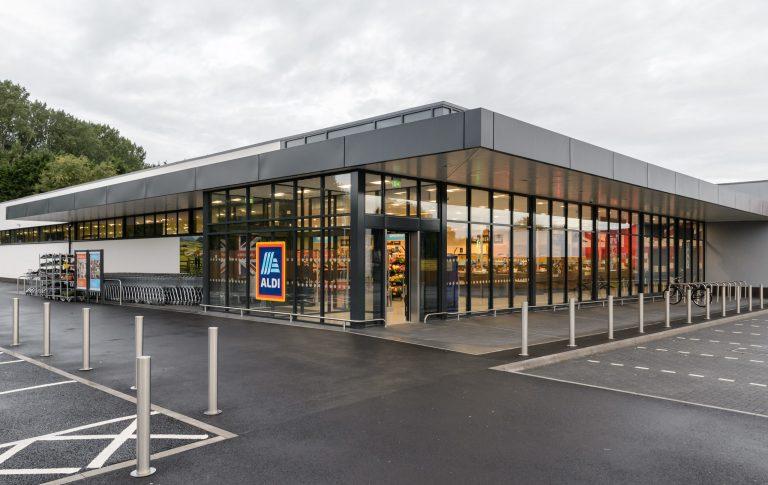
Aldi has announced plans to spend £3.5bn more on UK-produced food products annually within the next five years.
The discount supermarket’s decision will be a positive step for over 1,000 small businesses. The group has already shared plans to create an additional 4,000 jobs UK jobs.
Aldi has over 900 stores and 36,000 employees.
Chief executive, Giles Hurley, said: “We are expecting significant sales growth in 2021 as we open new stores and bring Aldi to more locations across the UK. With the vast majority of our grocery products now coming from British suppliers, our growth will lead to additional jobs and investment in our UK supply chain.”
The supermarket already sources all of its fresh meat, eggs, milk, butter and cream from UK suppliers.
One of the small businesses that Aldi has a partnership with is Manchester Drinks Company.
Richard Benjamin, a co-owner of Manchester Drinks Company, said: “Our new contract with Aldi is a fantastic opportunity to showcase our flavoured gins and liqueurs to shoppers across the country, and will help to provide stability for our business in an uncertain climate.”
Earlier this year, Aldi introduced a click and collect service.
“The business performance has been very, very solid… but we also recognise customer habits are changing and that we need to evolve our business to meet the new demands and we’re actively doing that,” said Hurley.
“We have a unique model, a set of efficiency principles unrivalled in the market, and that it is my firm belief that we can apply those principles to picking and packing stock in a very efficient way for customers… I’m very excited about it,” he added.
The FTSE 100 is on track for its worst day of the year as it slides 1% at opening.
The blue-chip index dropped 101 points to 6454 points and most stocks are in the red as they enter the New Year.
The top faller today is British Airways owner, IAG, which was down 3%. Also down was Diageo and Johnson Matthey, which were down 2.76% and 2.75% respectively.
#FTSE 100 top fallers: #IAG International Consolidated Airlines -3.05%#DGE Diageo -2.76%#JMAT Johnson Matthey -2.75%#BLND British Land -2.61%
The FTSE 100 has lost over 14% of its value in 2020 amid the pandemic. This is, however, much worse than stocks in other countries. Germany’s DAX has gained 3.5% this year whilst Japan’s Nikkeirose 16%, and China’sCSI 300is up 27% since the start of 2020.
Russ Mould of AJ Bell wrote earlier this month: “The UK was a turgid performer, weighed down by its sector mix and heavy exposure to banks and oils and limited exposure to technology, as well as Brexit and perceptions (fair or unfair) that the pandemic has not been handled that well.
“In fact the UK was the worst performer in the second half of the year when Latin America, the Middle East/Africa and Asia were the best.
“This switch toward emerging markets again hints at investors looking for cyclical growth – value for want of a better turn of phrase – rather than secular growth – or more reliable, almost defensive progress – as well as global export and inflation plays,” he added.
Despite the falling FTSE 100, the pound has risen and is up a third of a cent at $1.366 as the US dollar continues to fall.
Jeffrey Halley, senior market analyst at OANDA, comments: “Even the A-Team’s “Hannibal” Smith would be impressed at how well the financial markets buy everything, sell the US Dollar plan is coming together as the year ends.
“US 10-year yields eased slightly overnight, equities are moving higher, along with precious metals, commodities and energy, and currency markets spent the overnight session clubbing the greenback harder than a harp seal harvest.
“Although the US Dollar has been grinding lower throughout the week, it is interesting that currency markets have waited until the year’s penultimate trading session to press the accelerator.
“Part of that is probably down to the UK approval of the Astra Zeneca/Oxford University Covid-19 for immediate use. The Astra Zeneca vaccine is a potential game-changing accelerator in the Covid-19 battle, being producible rapidly in massive amounts, and storable at room temperatures, instead of environments that mimic the South Pole in the middle of winter.”
Think tank Autonomy has released a report that says a four-day week would be affordable for most firms.
The organisation is campaigning for four-day weeks without a loss in pay and has said most of the 50,000 firms it studied would be able to cope with the changes through higher productivity levels or raising prices.
Even in worst-case scenarios, a four-day week with no pay loss would still be affordable once this phase of the pandemic has passed.
Will Stronge is the director of research at Autonomy. He said: “For the large majority of firms, reducing working hours is an entirely realistic goal for the near future. By providing a hypothetical ‘stress test’, we can dispel any myths about the affordability of a four-day working week.
“Any policy push will have to be carefully designed, and different strategies would need to be deployed for different industries. However, what is remarkable is that if it happened overnight, with no planning, most firms would still remain profitable.
“The four-day week is picking up momentum across the world post-Covid-19 and we’re calling on the government to begin investigating the best options for rolling it out.”
Labour MP for Bootle and former shadow chief secretary to the Treasury, Peter Dowd, supports the research and said the government should consider rolling out a shorter working week.
“If the government is serious about levelling up this country then they should consider the four-day week as it represents one of the best opportunities for sharing work more equally across the economy.
“I’m in favour of the four-day week being introduced as all the evidence shows it would boost wellbeing, improve productivity and give British workers a much better work-life balance.”