Vietnam Holding: investing in Asia’s rising star

Vietnam Holding

Vietnam Holding (LON:VNH) is a closed-ended fund that invests in high-growth companies in Vietnam, focusing on domestic consumption, industrialisation and urbanisation. The London-listed investment trust, launched in 2006, offers nimble stock selection with integrated ESG.

“We have a team of 12 people on the ground in Vietnam actively managing the fairly concentrated portfolio”, said Craig Martin, chairman of Dynam Capital, the manager of Vietnam Holding.

Vietnam

Vietnam has liberalised its economy over the past few decades and has recorded high economic growth in the process. With the country’s ideal location for manufacturing and established trade deals, in addition to a young and increasingly literate population, this phenomenon shows no sign of letting up. Vietnam was one of the highest growing economies in the world last year at just under 3%.

“Many of you will think of Vietnam through the lens of the 50s, 60s and 70s when it was a country at war. However, the country has evolved into a stable centre for foreign direct investment and is a pre-eminent export player,” Martin said.

Emerging Consumer Market

Vietnam is seeing the emergence of a consumer market with increasing disposable income. While car ownership in the country has doubled over the past five years, there are still only 23 cars per 1,000 people in Vietnam, compared to 205 across ASEAN (Association of Southeast Asian Nations), and 200 in China. This is due to the high level of motorbike use, suggesting there is still room to grow for an automotive industry, typically associated with higher living standards.

Vietnam is also a fast-growing consumer market in terms of modern trade as swathes of convenience stores are popping up across the country’s major cities. The growth of its modern grocery stores is outpacing other ASEAN (Association of Southeast Asian Nations) nations.

Global Trade

Vietnam is playing an increasingly important role in the global supply chain. Having established trade partnerships with the WTO, ASEAN and the USA, Vietnam has been exporting progressively more goods to the rest of the world.

From just over 0.4% in 2010, Vietnam’s market share of global exports now stands at 1.5%, as it benefitted from recent trade tensions between America and China. Its exports to the US are valued at $83bn. Vietnam has also shifted from its reliance on agricultural products (rice, coffee and fruit) to include high-tech products such as smartphones, tablets, computers and accessories.

Public Investment

Vietnam’s government has plans in motion to turn the country into a modern industrialised economy. Over the next five years the government plans to mobilise $120bn in public investment projects. In addition, the government is implementing a new Law on Public Investment (2019) to encourage private investors to join via Public-Private-Partnership (PPP) initiatives. Craig Martin suggests that these policies will have a multiplier effect on economic growth which will benefit Vietnam Holding in the long-term.

Vietnam Holding Portfolio

The fund’s portfolio is concentrated with two thirds of its holdings in its top ten companies. Banks, the top sector, makes up 27% of the fund’s portfolio, closely followed by industrial goods and real estate at 22% and 15%. Its weighting towards industrial goods and real estate play towards the aforementioned processes of industrialisation and urbanisation in Vietnam, Martin explained during the March UK Investor Magazine conference.

Vietnam Holding is up by 9.2% since the turn of the year, and 59.1% over the past 12 months. The fund also trades at a discount to NAV at approximately 18%.
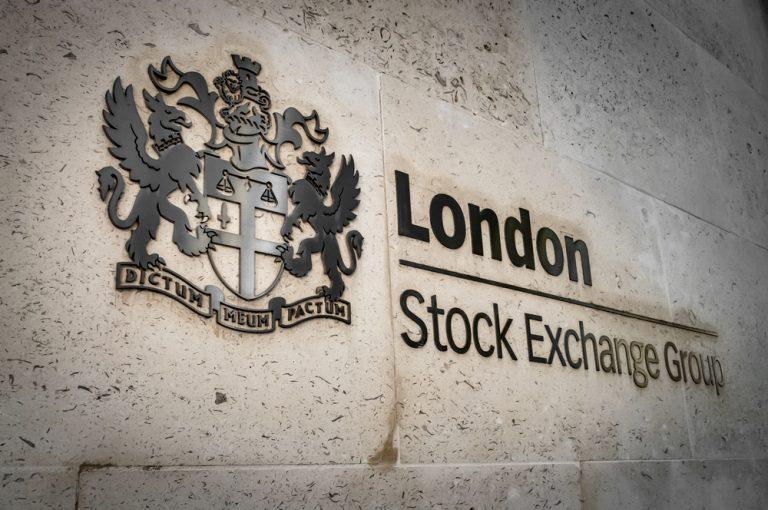

FTSE 100 makes ground amid upbeat mood in markets

0

FTSE 100 rose by 0.8% to 6,731 as a strong end to the week helped to lift investors’ spirits.

“Japan’s Nikkei 225 rising 1.6% and pre-market indicative prices suggesting the core US markets will open 0.4% higher. The key issue is how long markets remain upbeat,” says Russ Mould, investment director at AJ Bell.

“Miners and oil producers drove the FTSE higher despite growing concerns about parts of the world failing to get Covid under control and what that might mean for economic recovery,” Mould added.

The blockage of the Suez Canal by the Evergreen will be playing on investors’ minds.

“What’s important is how that might affect global trade and the fact it is already causing shipping rates to rise, which in turn could fuel inflation as extra costs are passed on to the consumer,” says Mould.

“This all suggests we remain at a fragile point for markets and one that could lead to heightened volatility.”

FTSE 100 Top Movers

Leading the way on Friday at the top of the FTSE 100 is Smiths Group (5.12%), Antofagasta (4.13%) and Glencore (3.49%).

While at the bottom, Imperial Brands (-1.77%), Burberry (-1.26%) and Ocado (-1.11%) are the day’s biggest fallers so far.

Retail Sales

The retail sector was handed a boost in February as people spent money on garden furniture and improving their homes ahead of the return of outdoor socialising. Retail sales rose by 2.1% last month while the rest of the sector continued to struggle as non-essential stores remained shut.

The Office for National Statistics (ONS) said that despite the recovery, the 8.2% dip in January kept retail sales below the figure of 12 months ago, and said that they would have fallen again if not for online sales at department stores.

Suez Canal

The owner of the cargo ship that has been blocking the Suez Canal since Tuesday has apologised for disrupting global trade, while rescuers confirmed the container ship could block the canal for “weeks”.

Japanese company, Shoei Kisen Kaisha, said it was striving to resolve the situation, but it was proving to be very difficult.

Retail sales ‘partly recover’ thanks to garden furniture sales

0

Retail sales rose by 2.1% in February

The retail sector was handed a boost in February as people spent money on garden furniture and improving their homes ahead of the return of outdoor socialising.

Retail sales rose by 2.1% last month while the rest of the sector continued to struggle as non-essential stores remained shut.

The Office for National Statistics (ONS) said that despite the recovery, the 8.2% dip in January kept retail sales below the figure of 12 months ago, and said that they would have fallen again if not for online sales at department stores.

Economists had predicted a more modest annual fall of 3.5%.

Jonathan Athow, the deputy national statistician for economic statistics at the ONS, said: “Despite national restrictions, retail sales partially recovered from the hit they took in January.”

“Food and department stores benefited from essential retail remaining open, with budget-end department stores seeing increased sales.”

“Household goods also fared well, with feedback suggesting spending on home improvement and outdoor products boosted sales as consumers prepared for an easing of lockdown restrictions.”

“However, clothing stores continue to struggle with sales down more than half on their pre-pandemic level.”

While Danni Hewson, financial analyst at AJ Bell, commented on the mood of the country as well as the wider economic outlook:

“The tantalising prospect of being able to share a garden with friends and family has helped bump retail sales up slightly after the January slump,” Hewson said.

“Household goods sales were up 16% mainly thanks to purchases of outdoor products as gardens get a makeover ahead of lockdown restrictions easing. Unsurprisingly online sales from those retailers received the biggest boost, a record monthly bump for the sector of almost 36%.”

“And that’s repeated across the board with the amount people are spending online at a record high of 36.1%. Compare that share with the 20% enjoyed the previous February and it reinforces what all retailers know in their bones, lockdown has sped up already changing habits.”

“The decision by John Lewis to close a further eight stores indicates they don’t expect that trend to reverse.  But all retailers will take comfort in these figures.  Consumers clearly want to spend, they just need the right conditions; a fine sunny spring would undoubtedly help that along.”

LV= confirms profit in the face of tough trading conditions

0

LV=’s retirement and protections arms negatively impacted by the pandemic

LV=, formerly known as Liverpool Victoria, confirmed an operating profit of £40m in 2020, up from a £16m loss in 2019, despite challenging trading conditions.

Such challenges, that came about due to the coronavirus pandemic, negatively impacted LV=’s retirement and protections arms.

New business sales in savings and retirement came in at £1.039bn this year, down from £1.143bn in 2019. While the pension provider’s new protection sales also fell to £263m.

In better news for LV=, the company increased its market share for the first time since 2016. While its pre-tax profit came in at £37m for 2020, its Solvency II capital surplus fell by £254m to £690m.

Mark Hartigan, LV= Chief Executive, said: “Despite the unprecedented challenges presented by the pandemic, LV= has delivered a good financial performance in 2020. Through the year we have created significant momentum in our trading businesses and I am particularly pleased that we increased market share in both Savings & Retirement and Protection. By taking quick and positive actions in response to Covid-19, as well as delivery of planned change initiatives, we continue to improve service for customers and have strengthened the propositions we offer the market.”

“We are reporting a strong Solvency II capital surplus of £690 million and an increased operating profit of £40 million. I am pleased that we have again been able to share some of the financial benefits with our With-profits members through the allocation of a £28 million pounds mutual bonus. This has been applied by uplifting the asset share of relevant With-profits policies by up to 1%.”

“The vast majority of our people have been working from home since the first lockdown in March 2020. I was impressed with how quickly our teams were able to adapt to home based working. It is thanks to the hard work and dedication of our people that we maintained good levels of service and didn’t need to close our phone lines at any stage. Over the course of the year we managed to increase our Net Promoter Score among financial advisers.”

Recent news emerged over talks of a sale of LV= to Bain Capital, the American private investment firm.

Octopus Energy makes power move in £3bn deal

0

Octopus Energy to acquire Octopus Renewables

Octopus Energy (LON:OOA) confirmed its intention to acquire Octopus Renewables on Friday in a deal worth up £3bn.

The agreement with its sister company means the energy startup will become one of the biggest renewable energy investors in Europe, bringing green energy to 50m homes in the next six years.

While the acquisition remains subject to regulatory approval, it would see the formation of a new business area from June and beyond called Octopus Energy Generation. This arm will manage Octopus Renewables’ European portfolio of more than 300 clean energy assets with a combined capacity of 2.8GW across six countries, according to the company.

The rapidly expanding energy company is aiming to grow its international business to 50m customers by 2027, as well as plans to scale-up its renewable energy division to generate as much clean electricity as it distributes.

After its launch in 2015 by the asset manager Octopus Group, which also owns Octopus Renewables, Octopus Energy saw rapid growth over the past couple of years, including a number of acquisitions helping to push its valuation above $2bn.

Greg Jackson, CEO and founder of the energy startup, said: “We are absolutely thrilled to join forces with Octopus Renewables, bringing the supply and the generation side of energy together under one roof.”

“This move will allow us to create a business that is unrivalled on the global stage; by combining our tech and consumer-led approach with the fund management expertise of Octopus Renewables, we can change the entire energy lifecycle, make every green electron matter, and deliver the green energy transition faster and cheaper for everyone,” Jackson added.

Jackson owns a 7.4% stake in in the company and became one of the most successful green energy entrepreneurs in UK history after earning a paper fortune of around £115m following the company’s £2bn valuation last year.

Cineworld Share Price: enormous debt pile poses risk to recovery

0

Cineworld Share Price

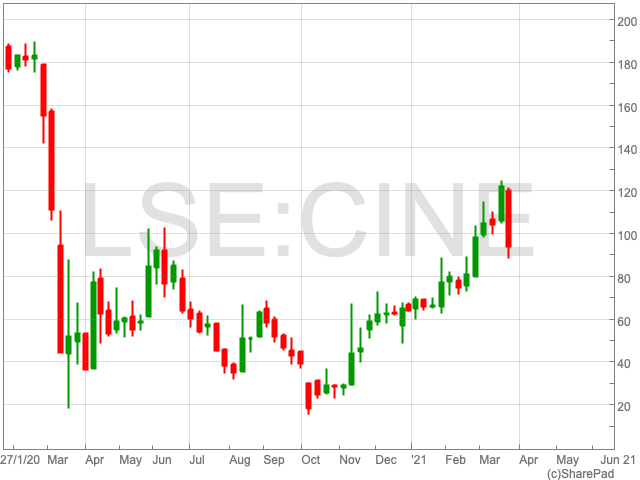
Cineworld (LON:CINE) shares fell by 9.32% on Thursday to 92.68p per share, a way off its recent high of 122p. However, the company is up by 57% over the past 12 months, after making a solid recovery since its inevitable crash when lockdowns begun. With its earnings release being announced and economies gradually opening up, now could be a pivotal time for investors looking at the leisure group.

Cineworld Reopening

The good news is that Cineworld has set firm dates for its reopening. The FTSE 250 company has said it will open a number of sites in its biggest market, the US, in early April, ahead of the Godzilla vs Kong opening. While it plans to open in the UK, its next biggest market, in early May.

The company confirmed that capacity restrictions will allow occupancy of 50% or more in most US states. CEO Mooky Greidinger says that this means “we will be able to operate profitably in our biggest markets.”

Of course a emergence of Covid-19 in Europe or America could threaten the company’s reopening.

Performance

Cineworld confirmed a $3bn loss for the financial year gone as the devastating impact of lockdowns on the cinema chain became clear. The FTSE 250 company’s revenues plummeted by over 80% to $852m, down from $4.3bn the year before. The chain also posted a pre-tax loss in 2020 of $3bn, a swing from a profit off $212m if 2019. Cineworld’s board confirmed it had raised an additional $213m to see it through to when cinemas are able to reopen in April, so now the company’s net debt stands at $8.3bn.

Risks

While news that Cineworld is opening up its venues across the world is positive, there are reasons to suspect that consumers may not flock to cinemas in their droves. The group penned a deal with Warner Bros to secure the release of its films in its cinemas for 45 days before the studio can load them on to its streaming platform HBO Max. Put simply, this shortens the cinema’s exclusivity window, and creates an incentive for film lovers to wait until their favourite movies are on streaming platforms. Morgan Stanley said that it “cements an industry-wide shortening of the window, a negative for exhibitors and reflecting of increased premium video on demand/streaming risk”. However, it is better than Warner Bros films going straight to streaming service and people well have a strong appetite for going to the movies after being locked down for so long.

Suez Canal could be blocked for weeks as ship owner apologises

0

Over 150 ships are said to be waiting to pass through the Suez Canal

The owner of the cargo ship that has been blocking the Suez Canal since Tuesday has apologised for disrupting global trade, while rescuers confirmed the container ship could block the canal for “weeks”.

Japanese company, Shoei Kisen Kaisha, said it was striving to resolve the situation, but it was proving to be very difficult.

Dredgers arrived on Thursday to assist in digging out the 220,000-tonne Ever Given after it became unstuck in the canal, blocking the passage for other ships.

The boat became wedged in across the canal following a sandstorm, which lead Boskalis, a company partaking in the rescue, to compare the mission to trying to free a beached whale.

Over 150 ships are said to be waiting to pass through the vital maritime route.

The Suez Canal connects the Mediterranean Sea to the Red Sea, providing the shortest sea route from Asia to Europe, with around 12% of global trade passing through the canal.

“The more secure the ship is, the longer an operation will take,” Boskalis chief executive Peter Berdowski told the Dutch media. “It can take days to weeks. Bringing in all the equipment we need, that’s not around the corner.”

One alternative route, is to go around the Cape of Good Hope on the southern tip of Africa, however, it can add 14 days on to the journey time.

Toshiaki Fujiwara, an official at Shoei Kisen Kaisha, informed Reuters that the ship had an insurance policy, but that he was not totally sure of the details or any costs involved at this stage. “It’s just the beginning,” he said.

“Every port in Western Europe is going to feel this,” Leon Willems, a spokesman for Rotterdam Port, Europe’s largest, said. “We hope for both companies and consumers that it will be resolved soon. When these ships do arrive in Europe, there will inevitably be longer waiting times.”

Nationwide to allow staff to ‘work from anywhere’ following lockdown

0

Nationwide confirms there will be space for staff who wish to at the office

Nationwide (LON:NBS) is going to allow the majority of its 13,000 office-based staff to work from home after the end of the coronavirus pandemic if they wish to do so.

The UK’s second largest mortgage provider confirmed its plan to introduce a”work from anywhere” policy as over 4,500 employees responded to an internal survey saying they wish to work from home full-time.

Nationwide chief executive Joe Garner vowed to lead the way promising in an interview that he would work away from the office between one and two days a week. His goal is to make Nationwide’s staff more comfortable in the fact that they would not damage their career prospects by working away from the office.

“Whatever leaderships of organisations say they want to happen, people will follow behaviour more than words,” said Garner.

“The evidence so far is showing you can have better outcomes, productivity, and wellbeing by being more flexible. But if organisations want that to happen, the leadership needs to behave the same way,” he added.

The Nationwide chief did confirm that there would be space for staff who wished to work from, as 6% out of 8,500 respondents to the survey wanted to work in an office for five days per week.

Firms across sectors are deciding on plans on how to resume work once the pandemic eases and offices become accessible again.

A number of companies have said they are looking at hybrid models whereby staff would spend some time working in an office and some at home.

Nationwide’s decision will enable the building society to close down three of its offices near its headquarters in Swindon, while allowing the company to advertise jobs without a set location. “We can recruit talented individuals where they are, not where the office is,” the company said.

Finally, the Nationwide chief said cost-cutting was not the reason for the decision. “If indeed we’re more productive and making better decisions [working from home], the benefits can be multiples of the hard cost saved,” Garner said.

FTSE 100 errs on side of caution ahead of EU summit

0

The FTSE 100 fell by 0.2% just minutes after opening, before climbing back to 6,713.14. Today marks a big day for the UK and Europe as EU leaders discuss whether to ban vaccine exports, which could have further ramifications for the UK’s relationship with the bloc. The DAX, meanwhile, fell by the same amount, as did the CAC, knocking the German and French indices below 14,600 and 5,930 respectively.

“Since the summit is set to continue into Friday, and may produce no firm answer given the reservations officials reportedly have over decision-making done via virtual meetings, the markets could be left wanting,” said financial analyst at AJ Bell, Connor Campbell.

“However, any hint as to which direction the EU will swing could have an outsized impact on the UK markets especially.”

“In anticipation of the summit, the markets were erring on the side of caution, reluctant to move too much after the bell,” Campbell concluded.

FTSE 100 Top Movers

Intertek (3.65%), Experian (2.32%) and Halma (2.29%) are the top movers on the FTSE 100 at early morning trading.

At the other end, the day’s top fallers at the time of writing are Burberry (-2.63%), British American Tobacco (-2.42%) and Glencore (-2.28%).

Cineworld

Away from the FTSE 100, Cineworld confirmed a $3bn loss for the financial year gone as the devastating impact of lockdowns on the cinema chain became clear.

The FTSE 250 company’s revenues plummeted by over 80% to $852m, down from $4.3bn the year before. The chain also posted a pre-tax loss in 2020 of $3bn, a swing from a profit off $212m if 2019.

Cineworld swings to a $3bn loss

0

Cineworld to reopen cinemas in April

Cineworld (LON:CINE) confirmed a $3bn loss for the financial year gone as the devastating impact of lockdowns on the cinema chain became clear.

The FTSE 250 company’s revenues plummeted by over 80% to $852m, down from $4.3bn the year before. The chain also posted a pre-tax loss in 2020 of $3bn, a swing from a profit off $212m if 2019.

Cineworld’s board confirmed it had raised an additional $213m to see it through to when cinemas are able to reopen in April.

Thee group operates 660 cinemas, which including the Odeon chain in the UK, confirmed that its sites had mostly remained shut since March last year.

Commenting on these results, Mooky Greidinger, chief executive of Cineworld Group plc, said:

“For all of us across the world, this has been an incredibly challenging year. COVID-19 has created a huge amount of stress and uncertainty, both in business and in our personal lives. At Cineworld, I never imagined a time that we would see the closure of our entire cinema estate, nor that varying restrictions would remain in place for so long as we continue to navigate our way through this crisis.”

“I am immensely proud and inspired by the response of our people to these very difficult circumstances. We have worked hard to strengthen the long-term prospects of the business and, looking forward, Cineworld enters 2021 confident about the next chapter in our development; not least the intention to reopen our cinemas starting April 2nd.”

Cineworld is aiming to reopen cinemas in the US, its largest market, from the beginning of April in time for the release of Godzilla vs Kong.

The group penned a deal with Warner Bros to secure the release of its films in its cinemas for 45 days before the studio can load them on to its streaming platform HBO Max.