JP Morgan hires Chuka Umunna to oversee ESG investing

0

Investment bank turns its focus towards ESG investing

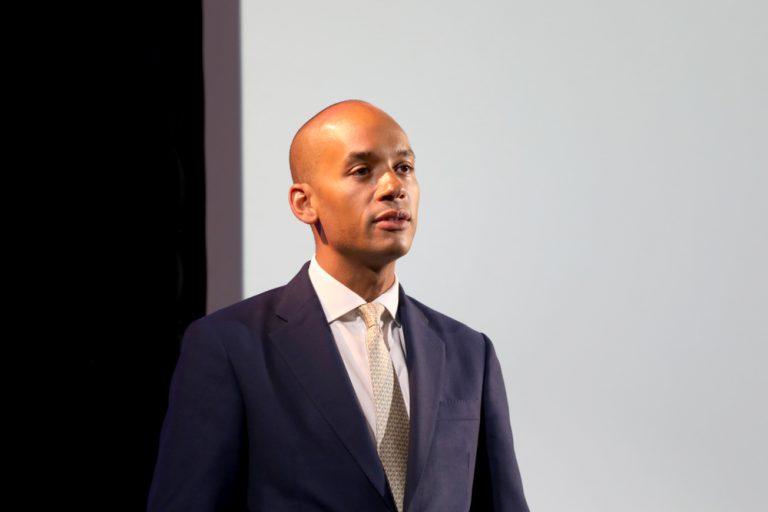
The former Labour leadership candidate has joined US investment bank JP Morgan to lead its European environmental, social and governance (ESG) mission.

Umunna, the former employment lawyer and MP for Streatham, will take up the newly created position, as reported by the Financial Times. 

Vis Raghavan, JP Morgan’s chief executive of EMEA (Europe, Middle East, and Africa), addressed employees at the US bank regarding the decision to hire Umunna, via a memo.

“He has more than 20 years of private and public sector experience in managing ESG issues at a senior level and was recently named one of the top five ESG influencers in the UK.

We welcome Chuka to the firm and look forward to supporting his efforts as we bolster our ESG commitment,” Raghavan wrote in the memo to JP Morgan staff. 

Umunna joins from Edelman, the global communications firm where the former MP jointly headed up the ESG consulting team.

The appointment comes as JP Morgan and its competitors step up efforts around ESG investing. 

After facing mounting pressure from its shareholders and environmental activists, JP Morgan set about abiding by emissions targets, as well as calling on its clients to do the same.  

ESG ETFs grew exponentially in 2020, up by 223%, with nearly 200 new listings. 

Anaelle Ubaldino, head of ETF research and investment advisory at TrackInsight, believes this is only the beginning.

“It’s clear that 2020 was a long-awaited turning point for ESG ETFs with huge growth in this sector. As competition for potentially trillions of dollars of new ESG assets heating up, we expect to see more issuers enter the ESG ETF market over 2021,″ Ubaldino said.

At one point tipped as the future leader of the Labour Party, Umunna was the MP for Streatham for nearly a decade. Although he never made it into a cabinet, Umunna served in various shadow cabinet positions. 

In September 2019 Umunna vacated his seat in the House of Commons, defecting from Labour to the Liberal Democrats. He contested the London and Westmister seat at the general election but lost to the Conservative candidate by fewer than 4,000 votes.

A commodities supercycle will lift the FTSE 100

The FTSE 100 has lagged the major indices in the US and we question the drivers behind this as Alan Green joins the UK Investor Magazine Podcast.

We pay particular attention to the weighting of natural resources of the FTSE 100 and AIM and how a supercycle in commodities could lift indices in the coming years.

We look specifically at EVs and how the increased demand for metals such as copper and lithium will benefit London markets.

We discuss Greatland Gold (LON:GGP), Power Metal Resources (LON:POW), Cadence Minerals (LON:KDNC), Logistics Development Group (LON:LDG) and Coinsilium (LON:COIN).

Sign up for the Mast Energy Developments IPO Presentation here.

FTSE 100 remains range bound as pound caps gains

0

The FTSE 100 has again been constrained by a strengthening in the value of the pound. It is the fifth day in a row the pound has risen against the dollar, following the Bank of England’s announcement that it will not introduce negative interest rates.

“While the currency got off to a tepid start, it doesn’t take a lot these days for the pound to hit fresh multi-year highs. A 0.2% rise against the dollar, for example, has pushed cable above $1.3835 for the first time since the very start of May 2018,” said Connor Campbell, financial analyst at Spreadex. 

The news does not bode well for the FTSE 100 companies selling goods abroad. Products and services will become more expensive to overseas buyers and the profits made outside of the UK are devalued when converted back into sterling. 

This is reflected by the continued flatlining of the FTSE 100 during Wednesday’s pre-lunchtime trading.

FTSE 100 movers

Smurfit Kappa (3.28%), Glencore (2.91%) and Anglo American (2.63%) have made the most ground so far today at the top of the FTSE 100. 

Ocado (-3%), along with two home builders, Barratt Homes (-2.5%, and Taylor Wimpey (-1.87) sit at the bottom of the index at mid-morning trading.

Smurf Kappa

Smurfit Kappa raised its final dividend on Wednesday as the company revealed it made a pre-tax profit during 2020.

A provider of sustainable packaging for goods, Smurfit Kappa has benefited from the increase in online shopping during the lockdowns.

Ashmore Group

The FTSE 250 asset management firm saw its pre-tax profits for the second half of 2020 climb by 14% to £150.6m.

The result was driven by a strong “investment performance”, with 97% of Ashmore Group’s assets under management (AuM) outperforming benchmark indices over the six month period.

‘Confident’ Smurfit Kappa raises dividend after making profit in 2020

0

Smurfit Kappa share price up 3% on market opening

Smurfit Kappa increased its final dividend on Wednesday as the company revealed it made a pre-tax profit during 2020. 

The packaging firm reported €748m pre-tax profits, up by 10% from €677m in 2019.

Smurfit Kappa reported a 6% year-on-year fall in revenue from €9.05bn to €8.5bn. The FTSE 100 company put this down to adverse currency movements and a fall in box prices. 

Smurfit Kappa also announced it would be hiking up the value of its final dividend up by 8% to 87.4 cents per share.

Smurfit Kappa capped its financial results announcement by confirming an EBITDA of €1.15bn with an EBITDA margin of 17%. 

The company’s share price jumped up by 3% to 3,648p as the market opened on Wednesday morning following the release of its final results. 

Since March 2020 the Smurfit Kappa’s share price has grown steadily from a dip below 2,000p per share to well above 3,500p.

Tom Smurfit, chief executive of Smurfit Kappa, projected confidence in the company’s ability to perform in 2021 despite the ongoing pandemic, and said its dividend payment reflected this.

“While there remains some uncertainty on the impact and duration of COVID-19, the year has started well with the continuation of the demand trends seen during the last quarter. 

Reflecting the Board’s confidence in this performance and prospects for the business looking forward, the Board is proposing an increase in the final dividend of 8% to 87.4 cent per share,” said Smirfitt. 

Smurfit Kappa has benefited from market trends which have been exacerbated by lockdowns according to the company’s CEO. 

“Driven by strong secular trends such as e-commerce and sustainability, the outlook for our industry is increasingly positive. 

SKG has positioned itself as the leading company within the industry, with great people, providing our customers with unique packaging solutions centred around innovation, efficiency and sustainability,” said Smurfit.

Smurfit Kappa is well capitalised to pursue growth opportunities after raising €660m via a placing in November.

Ashmore Group sees profit increase by 14%

0

97% of Ashmore Group’s assets under management outperform benchmark

Ashmore Group’s pre-tax profits for the second half of 2020 rose by 14% to £150.6m.

The result was driven by a strong “investment performance”, with 97% of Ashmore Group’s assets under management (AuM) outperforming benchmark indices over the six month period.  

Net revenue fell to £150.67m compared to £177.3m for the same period in 2019, while its assets under management rose by 11% to $93bn.

Ashmore Group’s share price dropped by over 1% to 474p per share on the FTSE 250 as markets opened on Monday. Following the share price plummeting in March 2020, Ashmore shares have rebounded somewhat towards their pre-lockdown 570p value in February. 

Mark Coombs, chief executive of Ashmore Group, suggested that the company’s ongoing recovery could be slower as it awaits investment to further increase its assets under management.

“Ashmore’s performance in this period reflects the early stages of a typical recovery cycle, with strong investment performance driving AuM growth and delivering mark-to-market gains on the firm’s seed capital investments. 

Given the recovery in average AuM and revenues naturally occurs with a lag, Ashmore has continued to focus on managing operating costs and has therefore maintained the Group’s operating profitability at a high level,” Coombs said. 

Looking forward, Coombs outlined the importance of the vaccine roll-out.

“The delivery of vaccination programmes around the world will be critical to the ongoing economic recovery in 2021, and in the meantime government and central bank stimulus provide near term support but will lead to a weaker US dollar over time,” Coombs said.

Robert Murphy, managing director of Edison Group, believes there are opportunities for Ashmore within ESG investing and that emerging markets will continue to offer value for money.

“In the medium-term Ashmore Group’s process of diversification should continue to provide growth opportunities including areas such as ESG funds. On a global scale, a keen eye will be kept on the potential long-term growth of Emerging Markets which still trade at a significant discount to developed markets,” said Murphy.

Electric vehicle sales set to cause a surge in demand for copper

50% increase in copper demand forecast over next 20 years

The ever-growing market for electric vehicles will cause a huge increase in demand for copper in the coming years. 

With other factors coming into play too, the metal could be in store for a price surge in 2021. 

Research by Canalys, the technology analyst, shows that global sales of EVs in 2020 increased by 39% to 3.1m units from the year before. Overall sales in the car market declined by 14%. 

The Canalys report also forecasted the number of EVs to rise to 30m in 2028. This would mean EVs will represent nearly 50% of all cars sold globally by 2030. 

Internal combustion engine vehicles require up to 23kg of copper each, whereas EVs use 40kg of copper, and plug-in hybrid EVs use 60kg.

Therefore the transition from internal combustion engine vehicles to EVs also means a higher demand for copper, and pressure on supply. 

The Copper Alliance has projected a 50% increase in demand for copper over the next 20 years.

With other economic forces coming into play, including a Chinese stimulus to support copper demand, and the expected global recovery, Canaccord Genuity mining analysts are predicting a significant price increase over 2021.

“We now expect copper prices to average $3.50/lb in 2021, an approximate 17% increase on our previous forecast of $3.00/lb,” Canaccord said. 

Previous low prices have constrained supply in recent years, holding back investment in new mining projects. 

James Johnstone, co-head of emerging and frontier markets at RWC Partners, says there “needs to be a price blowout to bring on the new supply”. 

London-listed copper miners will be on high alert.

Barclays share price provides better value than UK banking peers

0

After recovering somewhat from a dramatic fall to 80p in April 2020 after lockdowns first came into effect, Barclays has moved in a sideways direction since the beginning of the year, sitting at around 148p per share.

With the British bank’s share price yet to rebound to its pre-lockdown value of 180p, investors will be paying attention to the stock as hopes are raised of an economic recovery.

Barclays forward price-to-earnings ratio

Forward price-to-earnings ratios use forecasted earnings to give investors an insight into the future value of a stock purchase. In other words, it is a prediction of the company’s future price-to-earnings.

Barclays forecasted price-to-earnings stands at 16.8. Of Barclays’ closest competitors, HSBC is the most comparable, with a forecasted price-to-earnings ratio of 17.6. Natwest and Lloyds have significantly higher figures of 59.5 and 29.0 respectively. 

With a relatively low forward price-to-earnings ratio compared to their peers, investors could consider Barclays if they are looking for the lowest valued bank based on earnings.

Barclays year-to-date performance

While the forward price-to-earnings ratio provides an insight into the potential future performance of a stock, the year-to-date performance of Barclays’ share price indicates Barclays has lagged the rest of the UK banking sector. 

Barclays has experienced gains of 1.19% in its share price value since the beginning of 2021.

HSBC, Lloyds and Natwest meanwhile have made more significant gains, up 3.9%, 3.84% and 3.97% respectively on the year-to-date. 

With Barclays so far underperforming in 2021, there is the possibility that Barclays’ share price snaps back up in line with the rest of the banking sector. However, with updates due at the end of February we will soon find out whether the market is justified in giving Barclays a low valuation compared to its peers.

Consumer spending down 16.3% in January as lockdown strikes a fresh blow

0

Other sectors saw vast increases in spending

UK consumer spending in January felt its sharpest decline since May, according to a data report by Barclaycard. 

Compared to January 2020, one year ago, this is a 16.3% fall. 

Bars/pubs, restaurants and airlines have all experienced dramatic falls of 93.7%, 84.2% and 81.6% respectively. Spending on non-essential items dropped by 24.2%, as physical shops were forced to close down due to restrictions. 

Raheel Ahmed, head of consumer products at Barclays, noted a common theme among the industries which experienced the biggest falls in consumer spending.

“As the impact of the latest lockdown starts to take its toll, we’ve seen particular sectors struggle, as physical premises across the UK were forced to close. Last month’s glimmer of hope for the travel sector also seems to have stalled as tougher border controls saw bookings drop,” said Ahmed. 

Other sectors fared better in January as their business models are more adapted to widespread lockdowns. 

Takeaways saw a 32.6% increase in spending while online retail gained a 73.2% rise. Spending on essential items rose by 3.9% compared to a year ago, with surging demand for online shopping deliveries causing a 126.8% increase in spending. 

Raheel Ahmed outlined the willingness of British people to spend within the sectors they are able to do so. 

“Yet, on a more positive note, we have seen a surge in many online categories as the demand for home deliveries continues to rise. From meal kits and subscription services, to online grocery shopping, Brits have continued habits they formed in the first lockdown, with a record high seen in spending on takeaways and fast food,” said Ahmed.

Barclycard gathers this data by tracking up to 50% of the UK’s credit and debit card transactions.

Thousands sign petition to keep LISA withdrawal penalty at 20%

0

Hargreaves Lansdown says Government decision penalises savers

Thousands of people have signed a petition aimed at permanently reducing the withdrawal penalty of Lifetime ISA (LISA) from 25% to 20%. 

The penalty was cut on a temporary basis to 20% to aid those suffering financially due to the ongoing coronavirus pandemic. However, with the nationwide lockdown ongoing, the reduction is set to end on 5 April 2021. 

Hargreaves Lansdown have said that while the 20% withdrawal penalty removes the benefits of the LISA, the 25% penalty penalises savers.

Nathan Long, senior analyst at Hargreaves Lansdown, said the government should cut the penalty to avoid putting people off saving money in the long-term. 

“People are worried about putting money into a LISA, because they risk getting back less than they paid in if they need to access the money should they face unexpected hardship.

The government needs to cut the penalty if they do this, so they only lose the amount the Government gifted them on the way in, not an additional 6.25%,” Long said.

With the world still reeling from the economic impact of the coronavirus, people across the country will continue to be affected beyond April when the decision comes into effect.

“The Covid impact could be hanging around on working patterns for a long time, making it incredibly important to act now. It’s why we’ve set up a petition to force Parliament to draw attention to the issue,” said Long. 

Hargreaves Lansdown have set up a petition to ensure the issue is discussed further in parliament. 

The LISA allows people to receive a 25% Government bonus on their savings. The annual subscription limit is £4,000.

FTSE 100 trades sideways as market digests corporate news

0

A day after Elon Musk tempted financial institutions into the world of crypto currencies, everything remained calm on the FTSE 100. While Ocado revealed positive results following a recent share price rally, the FTSE 100 index barely flinched, as it awaits further news. 

Chris Beaucamp, chief market analyst at IG, described the lay of the land. 

“Stocks have moved modestly lower this morning, with the FTSE 100 dropping by around 5 points in early trading,” Beaucamp said.

“The February rally has finally run into some tougher ground, with European markets on the slide after a week of gains that has, for the most part, put the global equity market back on an upward path,” he continued.

FTSE 100 movers

A handful of companies have made modest gains today at the top of the FTSE 100. The top risers in the index are Whitbread (1.79%), M&G (1.43%) and Compass (1.41%). 

At the other end, Experian (-2.12%), Smurfit Kappa (-1.72%) and The Sage Group (-1.56%) are the day’s top fallers so far.

Ocado

Ocado improved its sales by 32.7% over 12 months driven by a mass exodus to online shopping during the pandemic. Despite positive financial results, Ocado’s share price dropped by over 3% on Tuesday’s early morning trade to 2,630p per share. 

“Given the surge in Ocado’s shares over the last year it was going to be hard for the stock price to avoid a fall this morning, but on balance a 2.5% drop seems a fair enough price to pay for the rally,” said Beaucamp.

Bitcoin

The digital currency continued to surge through the night reaching an all-time high of $48,000 before retreating. This came after Tesla confirmed it would be using $1.5bn of its cash reserves to buy bitcoin as well as accepting the currency for payments.

Bellway

Moving on to the FTSE 250, housebuilder Bellway built a record number of homes in the first half of the year, with its output up 6.3% to 5,321 new homes. The company’s revenue also shot up by more than 12% to £1.72bn over the same period, up from £1.52bn the year before.