Is a second lockdown the correct approach?

It appears the public opinion snowball has picked up enough momentum, and the optics look favourable enough for prime minister Boris Johnson to consider a second lockdown, even if it is implemented incrementally. And, while a tragedy for businesses and communities alike, I think the prime minister airs on the side of the prudent majority who, when pushed, would probably sigh and agree to observe tighter restrictions, if they are deemed necessary.

So who says a second lockdown is the wrong course?

Interestingly, however, the ‘herd immunity’ narrative appears to be moving into more creditable channels of public opinion. Granted, most don’t apply the exact verbiage of Dominic Cummings’ sinister-sounding master plan, but outlets such as the Telegraph, pundits such as Andrew Neil, and even the World Health Organisation Director General’s Special Envoy, Dr David Navarro, are now speaking out about the risks of a second lockdown. One of the driving forces behind the challenge to lockdown is infectious disease epidemiologist and Oxford Professor of theoretical epidemiology, Sunetra Gupta, who believes that the economic and social harms experienced by the worst off – in the UK and in poorer countries – outweigh the potential harms the virus might cause. She adds that areas which have already been hit hardest by the virus, are less likely to see the same degree of reuptake. Speaking to the Biomedical Scientist magazine about the suspected second wave, Professor Gupta stated that: “It’s not really a resurgence. It’s just where it didn’t increase in the first place. Now all the barriers have been removed, it is increasing. I don’t see any surprises in that pattern. What I do think is interesting is that it’s not resurgent in many areas that did suffer the full brunt of the pandemic, so in London, New York, northern Italy, Sweden.” Her view is that herd immunity has not yet been reached, but that early signs of resistance appear in certain geographies. She states that the next step is to use serological testing, and try to determine not just who has COVID, and what proportion of the population has been exposed to it. On the prospect of a second lockdown, she says that: “I don’t see any clear and rational thought behind it. More importantly, my primary reason for being vocal has all along been my deep concern about the economically vulnerable, in this country and globally. I am terrified when I read reports of 260 million people going under the poverty line as a result of these measures. We also have to think of the young and what they have been denied.” The alternative to lockdown, however, still appears somewhat fudged, and awkwardly apologetic about what it would mean for the safety of vulnerable people. She adds: “I think the best strategy for protecting the vulnerable is to shield. Obviously mistakes were made in terms of sending infected people back to care homes. I think we should be very careful, especially when we move back into winter. But in many parts of the UK, the infection rates are down to a point where people can make a sensible decision about what level of risk to take.” Professor Gupta adds that the initial Oxford study of the virus’ spread also noted that the disease may have appeared in the UK a month before it was officially declared. This loss of time likely limited the effective roll-out of key preventative and research procedures, which could have been used to identify key characteristics about how the virus transmits, and where. “We’ve been looking at blood banks in Scotland and can see infections going up in mid March, which suggest the virus was there in February. Then there’s the work in the sewers where they’re looking for the virus. I think it’s important to have these sentinels in place to try and see when the virus arrived and where it spread.” Overall, though, she believes the political outlook is skewed, and that the UK’s efforts to cocoon, are plunging tens of millions around the world into destitution: “I think it’s important not to look at the situation along the one dimension of ‘how are we going to get this under control?’ We must consider all the consequences. I think we also need to take a more holistic view and not just this individual, nationalistic view. Think globally, think internationally.”

COVID teaming, looks to blight Christmas

Not quite as cheery as Bing Crosby’s holiday classic, but it appears that despite the threat of business closures, isolation, life being put on hold, and now the very credible counter-narrative of millions being pushed back into poverty, the UK might observe a second lockdown over the festive period. Hopefully the government has learned lessons from round one – including not turning care homes into incubation chambers, and not handing billions in taxpayer funds to companies who don’t pay UK corporation tax. For now, Boris has given himself the traffic light system, which will probably afford the PM a couple of weeks to decide whether the public are calling for escalation or de-escalation of lockdown measures. He still remains in an unenviable position, stuck between the centre-ground who are likely, onerously in favour of a second lockdown, and his more ardent right-wing, who are thoroughly fed up of restrictions. Though only representative of my small following of Twitterati, here is the response to my question, ‘Would you agree with existing/new Covid lockdown measures over the Christmas period?’:  

Aminex shares soar 200% gas project gains approval

0
Aminex shares (LON: AEX) soared over 168% on Monday as the group Ruvuma gas project gained approval from the Tanzanian government. The wholly-owned subsidiary, Ndovu Resources Limited, has received approval and the transaction is expected to be completed in the next few days. Robert Ambrose, chief executive of Aminex, said: “We are delighted to finally receive Government approval of the Farm-Out and would like to thank all agencies of the Tanzanian Government that were involved in the process. “We would also like to thank ARA Petroleum for its invaluable assistance and support in securing Government approval of the Farm-Out and in advancing $5m to the Company over the past 12 months. We now look forward to completing the transaction within the next few days and handing operatorship over to APT.” Aminex shares (LON: AEX) are currently trading +200% at 1.20 (1511GMT).

Aveva shares down by 5% as revenues fall by an eighth

FTSE 100 listed IT company, Aveva (LON:AVV), saw its shares slide on Monday morning, as the company saw half-year revenues slide due to COVID disruption. The company said that revenues are expected to finish at £333 million for the first half period, which it said was ‘broadly in-line’ with the group’s plans, save for FX-related headwinds and two medium-sized subscription deals slipping from the second to third quarter.

One of these contracts was the renewal of a ‘significant’ global account. With revenues from this contract being pulled forwards into September 2019, unadjusted revenues declined by 12% in H1 2020. Accounting for the contract renewal, revenues declined year-on-year by 7% during the first half.

Speaking on the confidence it has in its offering, and future prospects, the Aveva statement read: “Notwithstanding Covid-19 related disruption, there has been solid demand for AVEVA’s software due to its ability to drive efficiency, flexibility and sustainability for customers across a wide range of industries. AVEVA has performed creditably in the first half against this backdrop and its outlook for the full year remains unchanged.”

“The order pipeline for the remainder of the financial year is strong, underpinned by a higher volume of contract renewals, including major Global Account contracts, as well as the contracts that slipped from the second quarter. As such, the Board expects to see solid revenue growth in the second half and remains confident in the full year outlook.”

Following the update, Aveva shares slid by 4.79% or 227.00p, to 4,499.00p 21/10/20 11:45 GMT. This more than 6% above its consensus target price of 4,209p, but far below its year-to-date high of 5,290p. The company currently has a consensus ‘Hold’ rating, and a 63.49% ‘Underperform’ stance from the Marketbeat community. Its p/e ratio is 43.57, below the IT and tech average of 65.37.

National Express shares dip as group names new chief executive

1
National Express shares (LON: NEX) fell over 3% on Monday’s opening as the group announced a new chief executive. The FTSE 250 transport firm said Ignacio Garat will replace Chris Davies as the new chief executive from 1 November. Ignacio was previously the Senior Vice President Southern Europe, France, and Benelux Operations for FedEx and will receive a base salary of £575,000. In a statement released on Monday, Sir John Armitt, National Express chairman, said: “I am delighted to welcome Ignacio to National Express Group. “Ignacio has the extensive international operational and strategic experience to lead National Express Group through the challenges presented by the pandemic, as well as the significant future opportunities that exist. Ignacio’s track-record of focusing on safety, operational excellence and strong financial performance, aligns closely with National Express Group’s priorities. On behalf of the whole Board, I look forward to working with Ignacio in the months and years to come and thank Chris Davies for his steady hand during his time as interim Group Chief Executive.” Garat said: “I have watched National Express Group’s growth in recent years to become the leader in its sector, so it is a privilege to be given the opportunity to lead the company as it navigates the pandemic and positions itself for future growth. “National Express has an international portfolio of market-leading businesses and a strong reputation for service and safety excellence. I look forward to working with my new colleagues to drive further improvement and deliver for both the communities we serve and our investors,” he added. National Express shares (LON: NEX) are down 3.97% at 167,95 (1002GMT).

FTSE 100 falls ahead of new lockdown concerns

2
The FTSE 100 had a sluggish start to the week amid concerns of new lockdown measures. The blue-chip index 0.2% to 6,004.77 just before 9 am on Monday ahead of the government’s emergency Cobra committee. The FTSE 100 slipped as shares in energy firms fell due to a drop in oil prices. BP was down 1.8% and Shell fell 1.6%. The FTSE 250, however, was up 0.6%. “Further lockdowns would jeopardise the already fragile economic recovery and have lasting, negative effects on consumer confidence,” said Milan Cutkovic, an analyst at Axi. However, European investors “have not lost faith that further stimulus measures will follow, and that an effective Covid-19 vaccine will soon be placed on the market, bringing the pandemic somewhat more under control,” he added. Ahead of the Cobra meeting, a spokesperson said: “Our primary focus has always been to protect lives and livelihoods while controlling the spread of the virus, and these measures will help achieve that aim.” Boris Johnson will announce a new three-tier lockdown system for England today. The alert levels will be “medium”, “high” and “very high”.

Eddie Stobart shares rise as group returns to profitability

0
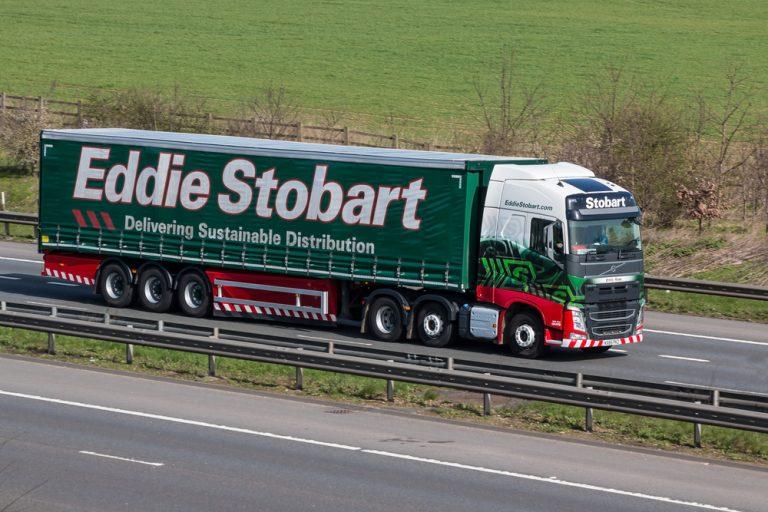
Eddie Stobart Logistics (LON: ESL) said on Monday that the group has returned to profitability, leading shares to jump over 12% on opening. The group’s holding company said that it has seen customers increase over the course of the pandemic as well as ended loss-making contracts. Revenues of £416.5m are broadly in line with the same period last year and the group expects further profitability and a positive cash flow. William Stobart, the executive chairman of GWSA, said: “I am pleased to be back leading the GWSA Group. These results show we have put past challenges firmly behind us. The past six months have shown the strength of our differentiated business model which has allowed us to grow existing customer relationships, win new business, return the GWSA Group to profitability and overcome challenges presented by Covid-19. “Looking ahead, we are confident that our renewed focus on our historic core capabilities as transport and logistics services provider for the FMCG and grocery sectors, and as a leading player in e-commerce logistics and fulfilment, will allow us to drive profitable growth going forward,” he added. Eddie Stobart Logistics shares (LON: ESL) are trading 15.07% higher at 7.65 (0904GMT).  

Cake Box Holdings shares surge 5% on strong sales

1
Cake Box Holdings shares (LON: CBOX) jumped 5.45% on Monday morning as the group shared a trading update for the six months ended 30 September 2020. The update included six-weeks when all stores had closed over lockdown, which impacted sales. Total sales over the six months dipped 2% to £8m. In the 20 weeks to September 30, however, the group experienced strong trading with like-for-like sales increasing 12% and total sales rising 23% thanks to delivery platforms including Uber Eats. Cake Box Holdings have opened six new stores bringing the total number of stores to 139. Sukh Chamdal, co-founder and chief executive, said: “This result is testament to the dedication, agility and entrepreneurial spirit of the Cake Box family, particularly our franchisees and their employees. “We continue to see strong momentum across the business both in store and online, with like-for-like sales of 12.1% since reopening the business. We have received a record number of new store applications, giving us confidence that the momentum in our national rollout will return to pre-COVID levels. “Despite the wider environment, our unique proposition for customers and potential franchisees remains highly attractive and we are confident of further progress in the second half,” Chamdal added. Cake Box Holdings shares (LON: CBOX) are trading +2.55% at 169.20 (0852GMT).

British Airways boss, Alex Cruz, to step down

0
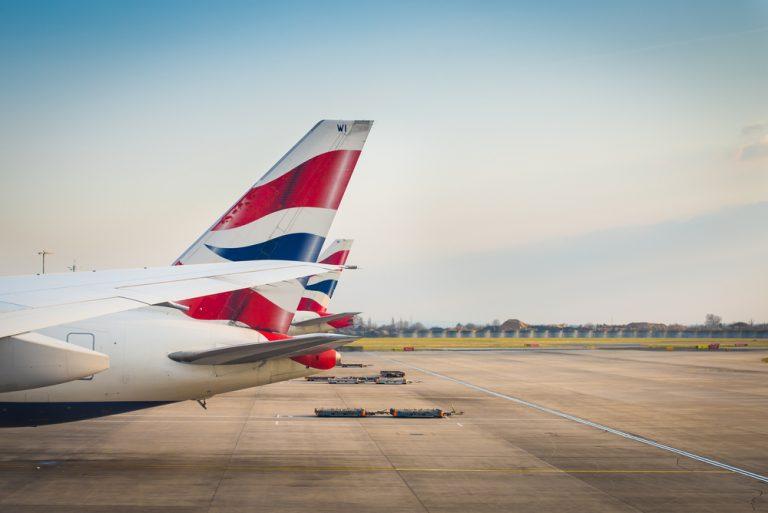
The British Airways chief executive, Alex Cruz, is stepping down from the airline with immediate effect. The airline’s parent group, International Airlines Group (IAG), said on Monday that Cruz will be replaced by Sean Doyle from Aer Lingus. IAG boss, Luis Gallego, said that the sector is currently facing “the worst crisis faced in our industry”. “We’re navigating the worst crisis faced in our industry and I’m confident these internal promotions will ensure IAG is well placed to emerge in a strong position,” said Gallego. He added: “I want to thank Alex for all that he has done at British Airways. He worked tirelessly to modernise the airline in the years leading up to the celebration of its 100th anniversary. Since then, he has led the airline through a particularly demanding period and has secured restructuring agreements with the vast majority of employees.” “Sean Doyle has extensive experience at British Airways having worked there for 20 years before moving to head Aer Lingus nearly two years ago where he has done an excellent job. I am confident that will continue at British Airways.” Doyle, British Airways’ new boss, worked at the airline 20 years ago before moving to the Irish carrier, Aer Lingus. British Airways has faced criticism from unions and MPs as the group has undergone a drastic cost-cutting scheme and cut thousands of jobs. A total of 13,000 employees are expected to lose their roles at the airline this year.

Margins the key for ASOS future

Online fashion retailer ASOS (LON:ASC) has performed strongly this year. The past problems appear to be behind the retailer and the 2019-20 results will be published on Wednesday 14 October. Sales are growing and costs have been rebased so ASOS should be on course for an even better year to August 2021.
Pre-tax profit is expected to have bounced back from £33.1m to £140.8m in the year to August 2020. This is on the back of revenues growing by more than 17%. Net debt is estimat4ed at £79m.
The key to the improvement, though, was much better margins. These have improved more quickly than expecte...

Mode cardless plan

Fintech firm Mode Global Holdings (LON: MODE) has joined the standard list and this will help to finance the launch of a payments service powered by Open Banking that would replace the need for cards.
Mode raised £7.5m in a placing at 50p a share. Trading commenced on 5 October. The share price has fallen back to 48.5p.
The company owns the Mode app, which is a digital banking app that enables users to manage assets in one place, and the JGOO payment processing company. Subsidiary Greyfoxx plans to gain FCA authorisation as an electronic money institution providing services to the other operat...