Seraphim Space IT narrows discount

Seraphim Space Investment Trust (LON: SSIT) has narrowed the discount to NAV over the past two months. The NAV has held up over the third quarter to March 2025, while the share price has increased from below 50p to 72.9p since early April. That has reduced the discount to NAV to 28%.

At the end of March 2025, NAV was 100.78p/share, compared with 101.04p/share at the end of December 2025. That includes £16.5m in cash. Since March, £7.9m has been raised from the sale of 95% of the stake in AST SpaceMobile, one of the few quoted companies in the portfolio. The current cash balance is £22.6m.  

Most of the portfolio is unquoted. There was growth in the value of the portfolio, but it was offset by currency movements. That is mainly down to the US dollar, which has since recovered. Investment demand for space-related investments continues to grow. Money invested was 13% higher in the 12 months to March 2025.

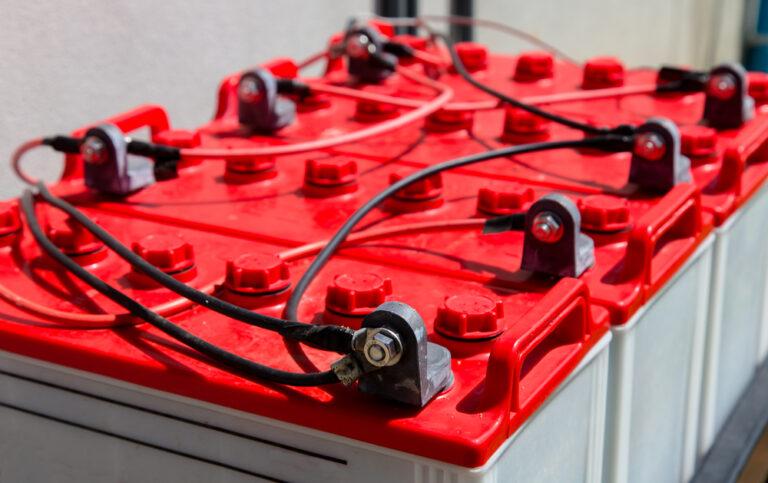
There was £2m invested in two follow-on investments and an initial £4.1m investment in Zeno, which is developing nuclear batteries for autonomous systems, defence equipment and off-grid infrastructure. Uses natural decay of radio isotopes, nuclear power by-products, to provide steady power generation. This is useful for harsh environments – space, bottom of the ocean, etc. Zeno has been able to reduce the size and cost of these batteries.

Investee company Voyager is planning to float in the US, and a prospectus has been filed. There is continued uncertainty in the capital markets, but Voyager could still be attractive to investors.

There has been a slow down in US Department of Defense procurement, but more of the budget is expected to be invested in space-related opportunities.

The UK defence review has been published and acknowledges need for change in procurement. The government intends to invest £400m in new defence organisation to improve procurement.

Space will be part of the investment plans, but Seraphim Space Investment Trust investee companies have technologies that can also be used in defence and other sectors.  

AIM movers: GENinCode share price recovers and 4Global set to leave AIM to save £500,000/year

0

Predictive genetics company GENinCode (LON: GENI) has started to generate revenues in the US but the major growth came from the UK and the Europe. In 2024, revenues were one-quarter higher at £2.7m. Overheads were reduced. Following a de Novo submission for CARDIO inCode, the FDA has requested that deficiencies in relation to clinical validation be addressed, but management believes that US approval can be achieved. The timing is uncertain. However, the current forecasts assume most of the growth in revenues to £4.3m in 2025 will continue to come from the UK and the US. There is enough cash to take the company into the first quarter of 2026 and the company could be approaching breakeven by then. The share price rebounded by two-fifths to 2.1p.

Metals One (LON: MET1) has commenced field work on Uravan Uranium-Vanadium Project in Colorado, which it is in the process of acquiring. A geophysical survey has been undertaken, and sample will be sent for analysis. The share price improved 16.3% to 28.35p.

Pawnbroker Ramsdens (LON: RFX) continues to benefit from the high gold price and the strong interim results have led Panmure Gordon to raise its 2024-25 pre-tax profit forecast by 17% to £15.4m. Interim revenues were 18% ahead a £51.6m with precious metals sales 31% ahead. Retail jewellery sales were 18% higher. Underlying pre-tax profit jumped from £4m to £6.13m. The interim dividend is one-quarter higher at 4.5p/share and there is also a special dividend of 0.5p/share. Net cash was £7.4m at the end of Mach 2025. Three stores will be opened in the second half. The share price increased 6.06% to 350p.

Full year results for Avacta (LON: AVCT) will be published on 6 June following additional work that was required by the auditors. The share price initially fell but is 5.71% higher at 37p.

FALLERS

Sports and fitness data analyser 4Global (LON: 4GBL) plans to leave AIM after less than four years on the market. It was unable to raise additional funding to finance its growth in North America. Leaving AIM would save £500,000 each year. There has been limited trading in the shares and the cancellation, which is dependent on shareholder approval, would be on 7 July. The share price slumped 43.2% to 12.5p, having been even lower earlier in the morning. The December 2021 placing price was 91p.

Generative AI services provider GenIP (LON: GNIP) reported its maiden results, which are for just over ten months to the end of 2024. Initial revenues were $123,000 and the operating loss was $889,000. Cash was $972,000 at the year end. The order book is growing, and prepayments are helping the cash position. The share price dipped 10% to 22.5p.

In 2024, EMV Capital (EMVC) increased its core revenues from £1.4m to £2.5m following the acquisition of Martlet Capital. The underlying loss of the core investment business rose from £1.1m to £1.5m due to additional costs after the acquisition. The reported consolidated figures also include revenues from majority-owned investee companies, which are loss-making. Assets under management rose by one-third to £98.5m. There was £1m in cash at the end of 2024 and net assets were £14m. The share price fell back 7.41% to 37.5p.

Agentic AI, Autonomous Vehicles, and NAV Growth with Tekcapital

Tekcapital’s CEO joins the podcast to delve into the company’s annual results and plans to broaden investments in Generative AI.

CEO Dr Clifford Gross starts by running through Tekcapital’s 2024 financial performance and the 40% uplift in the group’s portfolio value.

The conversation quickly moves to generative AI and the company’s plans to make further investments in the sector. Gross outlines and interest in early-stage Agentic AI startups. 

We touch on the autonomous vehicle safety company Guident and preparations for its NASDAQ IPO, framed in the context of the rapid adoption of the technology in the United States.

B&M European Value shares tumble as sales splutter and profits fall

B&M European Value shares were lower on Wednesday after the discount retailer announced preliminary results that highlighted the impact of increased competition and rising finance costs.

Although group revenue increased 3.7%, the higher sales were a result of new store openings as opposed to shoppers boosting their spend. B&M UK like-for-like sales dropped 3.1%.

This will be a concern for B&M investors given that the discounter relies heavily on volume and the company says its long term growth strategy is based around like-for-like growth in the UK. 

B&M pointed to disappointing FMCG sales and the timing of Easter as a key factor behind falling sales.

The company relies heavily on lower-income groups to support sales, and this customer base, unfortunately, is feeling the hit from the cost-of-living crisis the most. 

Group profit before tax fell 13% to £431m as higher interest and finance costs weighed on profitability.

B&M shares were down 6% at the time of writing. 

Adam Vettese, market analyst for eToro, summarises the issues facing B&M perfectly:

“B&M is continuing to feel the pressure of the tougher consumer environment, as profits have dipped by a little over 13%, accompanied by a negative like-for-like sales trend of -3.6%. B&M offers consumers familiar brands at low prices but now also face stiff competition from other discounters, with multiple retailers competing hard for less disposable income out there under current macroeconomic conditions. 

“The company can show revenue numbers which are growing, but this is coming primarily from stores that have just opened, which will get that initial surge in sales as shoppers flock to see what’s new in their area. This in itself can be papering over the cracks of the wider issues of margins, and profit coming under more pressure. 

“Shares have been on a downward trajectory since the beginning of last year and are worth a little over half of what they were then. B&M may need to see consistency come back into their store network as a whole to convince investors of a turn around.”

Alphawave IP Group – the final deadline for Qualcomm making a bid is now just a day away – just what will happen, shares up 22% in two months but is there more upside? 

At the start of April, I featured the shares of Alphawave IP Group (LON:AWE) at 117p, following their swift rise from 91.50p on the last day of March. 
The reason for that rise was the approach made by the $163bn capitalised NASDAQ-quoted semiconductor group, Qualcomm Incorporated (QCOM). 
To Bid Or Not To Bid 
On Tuesday 1st April, Qualcomm announced that it was considering making an offer to acquire the entire issued and to be issued share capital of Alphawave. 
The initial deadline was set to declare its intentions to bid or not was by 5pm on Tuesday 29th April. &nb...

FTSE 100 turns positive despite growth concerns

The FTSE 100 dipped in early trade on Tuesday with traders choosing not to push the index above the 8,800 level amid concerns around China’s economy, global growth and the ongoing trade tensions.

London’s leading index was up 0.1% at the time of writing, having recovered early losses.

“European equity markets struggled to find direction early on Tuesday, with investors still showing signs of nervousness around tariffs and the economic outlook,” said Russ Mould, investment director at AJ Bell.

The FTSE 100 succumbed to selling across the natural resources sectors with the US/China spat rumbling on and poor Chinese economic data weighing on markets.

Names such as Rio Tinto, Anglo American, and Glencore were among those that were most heavily hit on Tuesday.

China’s manufacturing sector is showing signs of slowing, with PMIs dropping as a result of US tariffs. This isn’t good news for metals demand dynamics. 

We’re starting to see the first signs of poor economic data resulting from Trump’s tariffs, and slowing economies due to US trade policy will likely be the next big test for equities after a rip-roaring rally from recent lows.

“The OECD has downgraded its forecast for global economic growth as the effects of the trade war start to be felt. It’s only a small revision – from 3.1% to 2.9% for 2025 – but it’s still enough to cause investors some digestion as they consume their morning news. The downgrade weighed on the mining sector as the market fears it could mean reduced demand for commodities, and therefore a potential knock to the price of metals and minerals,” Russ Mould explained.

“The 90-day pause on tariffs has just over a month before expiration, meaning the pressure is on countries to do deals with the Trump administration. Reports suggest that Trump wants best offers on trade negotiations by Wednesday, perhaps to avoid any last-minute rush or stalemate situations.”

Trump’s actions have aptly led to the coining of the term ‘TACO’ ( Trump Always Chickens Out) among traders for his hesitancy to follow through on tariffs, but it’s the uncertainty for businesses around potential tariffs that is leading to economic disruption.

Although the index turned positive, there was a risk-off tone to trade with the FTSE 100 being supported by more defensive safe haven names such as Centrica, BAE Systems, and Fresnillo.

Babcock was still feeling the benefits of the government decision to upgrade its nuclear submarine fleet. Shares rose 2%.

AIM movers: Rockhopper Exploration reports potential value of Sea Lion and Mkango moves towards Nasdaq listing for subsidiary

0

URU Metals (LON: URU) reported results of the 3D inversion of aeromagnetic and gravity data for the Zeb Nickel project in South Africa. Four targets have been identified with the fourth target having the densest feature. The data confirmed that the depth of the zones was greater than previously expected. The share price improved 9.09% to 6p.

Quantum Blockchain Technologies (LON: QBT) attended Bitcoin 2025 and had meetings with chip designers and pool miners about its AI Oracle Bitcoin mining technology. The share price rose 4% to 0.65p.

Mkango Resources (LON: MKA) subsidiary Lancaster Exploration has entered a $750,000 note purchase agreement relating to the proposed merger with US shell company Crown PropTech Acquisitions and listing on Nasdaq. The merged company will own the Songwe Hill rare earths project in Malawi. The share price increased 2.96% to 17.375p.

FALLERS

AI-based services provider to smaller businesses Pri0r1ty Intelligence Group (LON: PR1) has raised £1.05m at 2.5p/share. The reverse takeover at the end of 2024 was based on a price of 13.5p. The cash will be invested in growing the business. There is also a potential all-share deal to acquire sports data management business Halfspace, which the company already has a joint venture with. That would require the issue of 30.8 million shares. The share price slipped 34.5% to 2.375p.

Virtual reality technology developer Engage XR (LON: EXR) revenues fell from €3.7m to €3.4m in 2024, although there was growth in licence revenues. The loss was €3.8m. Net cash was €3.6m at the end of 2024 and although the loss is set to fall the cash could decline to €800,000. A move into profit is forecast for 2026. The share price dipped 15.8% to 0.8p.

Rockhopper Exploration (LON: RKH) published an independent resource evaluation for the Sea Lion project in the North Falkland Basin. The gross 2C resource is still 917mmbbls. Rockhopper Exploration’s 35% stake for development pending 2C resources is $1.84bn. The share price fell 10.4% to 46.75p.

LPA Group (LON: LPA) reports that there have been delays in delivery requirements by two rail customers and this means that the electronic and electro-mechanical components supplier will make a loss in the year to September 2025. Order intake was £17m in the first half. There is no change for 2025-26 expectations and a pre-tax profit of £600,000 is forecast. The share price declined 10.5% to 47p.

Telecoms services provider Maintel (LON: MAI) says the start to the year was slower than expected, but sales momentum has improved. This is helped by the focus on specialist, higher margin services. Full year profit will be second half weighted. The share price decreased 8.33% to 220p.

Pennon shares dip as Devon parasite costs hit profits

Pennon shares slipped on Tuesday after the water supplier revealed the impact of higher costs after parasites were found in Devon’s water supply and rebased its dividend following a £490m rights issue.

The group swung to a loss despite revenues increasing 15%, as non-underlying costs of £37.6m related to restructuring and the breakout of parasite cryptosporidium in Devon wiped out any profits for the group.

Pennon shares were down 2% at the time of writing.

Although the group recorded a loss in the last year, there are some reasons to be optimistic. The company will benefit from higher water bills that promise to help support Pennon’s ambitious, yet overdue, upgrade of its water systems.

“Pennon managed to keep revenue streaming in last year, with the acquisition of SES Water helping the full-year total float 15% higher to £1.0bn. And with Pennon accepting the regulators’ price review, customers’ bills look set to continue growing. Markets are currently forecasting this year’s total to buoy to a new high-water mark of £1.2bn, up a further 14%,” explained Aarin Chiekrie, equity analyst, Hargreaves Lansdown.

“The top line growth should help to fund Pennon’s mammoth investment plans, with the group required to spend £3.2bn fixing and upgrading its water networks over the five years to March 2030. Pennon’s made good early progress in this area, with record levels of capital expenditure last year as public scrutiny on the sector has been mounting due to pollution of rivers and lakes. While it was pleasing to see early progress on this front, with the overall number of pollution incidents falling year on year, the increased investment weighed on profitability last year.”

Water companies aren’t the most exciting companies at the best of times, and the increased regulatory pressures and requirements to upgrade the systems make the sector just a little less attractive.

In addition, Pennon has created problems for itself with the parasite problem, and analysts highlight the difficulties the group is having shaking this off.

“The Brixham water incident, which involved parasites being found in the Devon water supply have hit the firm reputationally and may well still see further repercussions down the line as a result. Add to that a dividend cut and the investment case sees more risks appearing for less reward. High debt, regulatory scrutiny, and reduced income will temper enthusiasm, and this is evident when looking at the trajectory of shares,” said Adam Vettese, market analyst at eToro.

Pennon cut its dividend to 31.57p from 36.67p during the year due to a rebase of the payout following a rights issue.

Seraphim Space Investment Trust – shares up 44% in a month, Q3 Update tomorrow could well spell out further upside  

Six weeks ago, in my feature on the Seraphim Space Investment Trust (LON:SSIT), I wrote about just how much I liked the look of the trust and how undervalued I felt its shares were at the then price of 50p. 
“There is definitely space for growth in this trust’s portfolio valuation, while its shares at just 50p represent an excellent purchase of over 100p per share of value.  
There is potential upside of an easy 40% to rest then at around the 70p level and still be favourably discounted.” 
The fund’s shares, after hitting 75.60p in the middle of last week, are now at 72p, but st...

FTSE 100 recovers early losses as Babcock flys

The FTSE 100 was trading broadly flat on Monday as Babcock led a recovery following a soft start to the week.

London’s leading index is trading up 7 points at the time of writing after falling as much as 30 points in early trade. Donald Trump’s erratic approach to trade policies was again the main detractor from investor sentiment, but strength in the defence sector helped steady the ship after the UK government outlined plans to boost defence spending.

“Donald Trump has upset markets once again,” said Russ Mould, investment director at AJ Bell. 

“Doubling import taxes on steel and aluminium, and aggravating China once again, mean we face a situation where uncertainty prevails. Trump’s continuous moving of the goal posts is frustrating for businesses, governments, consumers and investors.”

However, markets are approaching a stalemate with Donald Trump’s trade policies, with the threat they pose not going away, but doubts they will ever be enacted offsetting concerns about their potential impact on the global economy.

“We’re back in a situation of one step forward, two steps back, but there do appear to be expectations that more concessions will be struck,” said Susannah Streeter, head of money and markets, Hargreaves Lansdown.

“Investors are getting used to aggressive statements being rolled back, so much so the TACO trade theory has rippled through Wall Street, which stands for ‘Trump Always Chickens Out’. But there’s no guarantee that the US President won’t follow through with more onerous restrictions, given he’s stayed steadfast to his pledge to bring more manufacturing back to the US.”

Beyond Trump’s latest volley of threats, investors in defence stocks welcomed the UK government’s commitment to increasing defence spending to 2.5% of GDP in the near term.

“The defence sector was in demand ahead of the UK government setting out its plans to protect the country and support allies. Babcock, BAE Systems and Rolls-Royce were among the stocks in positive territory as investors targeted an industry with a clear earnings tailwind,” Russ Mould explained.

Babcock was the top riser as traders positioned for a boost in spending on its submarines. Babcock currently supports the UK’s entire nuclear submarine fleet, accounting for more than a third of the group’s total revenue.

Anglo American was the top faller after announcing the demerger of Valterra. Anglo American shares were down 11% in London.