
DFS shares rise despite £57m loss
After trading was on pause during the lockdown, DFS posted a £56.8m loss for the year ending 28 June.
Despite the fall in profit and a slump in revenue from £724.5 million a year earlier to £271.7m, the furniture company said that sales have been strong thanks to a pent-up demand post-lockdown.
All stores have reopened and online sales remain strong.
“We believe that this growth is due to a combination of pent up demand from lockdown, consumers spending relatively more on their homes and the strength of the DFS and Sofology propositions in particular,” said chief executive Tim Stacey.
“While the reported decline in profit is undoubtedly disappointing in headline financial terms, a significant proportion of this profit has already been recovered in the current year as we resumed customer deliveries,” he added.
The group has forecast an additional £226m of revenues for this next financial year.
Peel Hunt analyst Jonathan Pritchard said: “DFS has enjoyed another strong month of trading since the last update. Customers are continuing to trade up, a nod to the stronger ranges across the DFS group.”
The group said earlier this year that cut jobs as part of a restructuring programme.
DFS shares (LON: DFS) are trading +2.74% at 172,60 (1010GMT).
Funding Circle shares down on £113m loss

Funding Circle shares (LON: FCH) fell over 6% on Wednesday on the group’s half-year results.
The lender revealed an operating loss of £113.5m for the six months to 30 June, compared to the £31.3m loss it recorded for the same period a year earlier.
“Early Covid-19 trends suggest a permanent change in the SME borrowing market that we believe will benefit Funding Circle in the medium to long term,” said Funding Circle.
“Government support has demonstrated the strategic importance of small businesses to economic growth. A higher proportion of SMEs are now accessing finance as a result and we believe this is likely to continue in the future.”
Samir Desai CBE, CEO and Founder, said: “We started Funding Circle after the financial crisis to help small businesses access funding, and we are proud that since becoming accredited to SME government guarantee programmes in the UK and US, we have approved more than £2 billion of loans, and are the 5th largest CBILS lender with c.20% market share of loans approved.”
“We believe that Covid-19 has led to an acceleration in the adoption of online small business lending and small businesses are increasingly drawn to the unique Funding Circle model, which provides access to finance in a fast and affordable way with excellent customer service. Our Instant Decision lending technology launched this year is already transforming the SME borrowing experience with average loan applications being completed in 6 minutes, and decisions in 9 seconds.
“Our advanced data driven credit assessment and the actions we have taken are protecting investor returns – after applying our central Covid-19 stress scenario, we expect all cohorts in the UK to deliver positive annualised returns to investors,” he added.
Funding Circle shares (LON: FCH) fell on Wednesday morning and are now trading -6.61% at 57,90 (0913GMT).
Pets at Home shares surge 17% on strong sales

Pets at Home shares (LON: PETS) rallied on Wednesday after strong sales through the eight weeks to 10 September 2020.
The retailer said that it expects full-year profit to be ahead of the current market expectations.
“This is testament to several factors, not least the inherent resilience in our pet care model and the underlying pet care market,” said Pets at Home.
“We continue to benefit from the adaptability of our operations to changes in customer behaviour and preferences, our continuing investment in omni-channel capacity and customer acquisition channels, and the clear advantages of our unique owner-managed First Opinion veterinary model.”
“Although Pets at Home did not discount the threat of a second UK-wide lockdown the retailer said it maintained a “strong balance sheet and liquidity,” the group added.
Pets at Home shares (LON: PETS) are trading +16.97% at 357,00 (0838GMT).
Pubs: one quarter of hospitality sector may collapse

A new survey has suggested that one quarter of pubs and restaurants could collapse by Christmas without government help.
The new 10 pm curfew has been called ‘devastating’ by the hospitality sector who warned the pandemic could have let to 675,000 job losses by February.
The British Beer & Pub Association, UK Hospitality and the British Institute of Innkeeping carried out a survey to find that 23% of pubs, bars and restaurants said they would expect to collapse within three months under the new rules.
BBPA chief executive, Emma McClarkin, said: “This research shows pub businesses were already teetering on the edge.”
“Now the prime minister has announced even more restrictions for them, it is clear much more support will be needed from the government to ensure they survive.
“An immediate stimulus package is required for our sector in the form of an extension to the furlough scheme and business rates relief, plus continuation of the VAT cut to food and soft drinks and a significant cut to the UK’s excessively high beer duty,” added McClarkin.
So far, one in eight hospitality members of staff has been made redundant, with many more job losses expected following the furlough schemes end.“The future of the sector is still very much in the balance,” said Kate Nicholls, the chief executive of UK Hospitality.
“The additional restrictions announced this week place even further burdens on a sector that is operating with razor-thin margins and needs all the help it can get. It is vital that these restrictions are reviewed regularly.” Chancellor Rishi Sunak will unveil his new “winter economy package”. Sunak is not having his November Budget because “now is not the right time to outline long-term plans and people want to see us focused on the here and now.”

FTSE stays on top with Boris Johnson committed to avoiding second lockdown

The FTSE 100 led the European equities rally for a second consecutive day on on Wednesday, following the public address by Boris Johnson the previous evening, in which the prime minister reiterated his reluctance to implement a second lockdown.
With promises to “keep the economy open” and “wrap [his] arms around workers and industries”, the FTSE was sufficiently comforted to manage a 1.20% rally, at one point touching 5,972 before settling back down to 5,899 points.
Following close behind, with more modest rallies, were the FTSE’s Eurozone equities cousins. Recovering from a couple of days of acute Covid fears, the CAC rallied by 0.62%, to 4,802, while the DAX nigh-on mirrored its Tuesday performance, up 0.39%, to 12,642 points.
A real talking point in global equities, though, was the opening of the Dow Jones during the afternoon, which saw the audacious early gains in European markets somewhat taper off. The reason for this was a 1.36% decline by the Dow Jones, taking it to another, renewed, seven-week nadir of 26,916 points.
This level, well shy of the 28,000 point level it spent much of its time before the pandemic and during the summer, is unlikely to be bettered until big tech reticence, and pre-election jitters, fade.
Asian equities were largely flat as they closed for the day, with Shanghai’s SSE Composite up by a modest 0.17%, to 3,279 points; Hong Kong’s Hang Seng rising 0.11%, to 23,742; and Japan’s TOPIX falling 0.13%, to 1,644 points.
Speaking on the FTSE reaction to disappointing PMI data, and the possibility for further Covid restrictions to be implemented, Spreadex Financial Analyst, Connor Campbell, stated:
“This also meant the FTSE was fine with shaking off some disappointing flash PMIs. The manufacturing reading fell from 55.2 to 54.3, while the services sector suffered a sharper than forecast drop from an ‘Eat Out to Help Out’-boosted 58.8 to 55.1. That latter reading, however, puts it well above the 47.6 seen for the Eurozone as a whole.”
“It is worth remembering that, as Dominic Raab conceded, the measures announced in the last few days are by no means a ‘silver bullet’ when it comes to seeing off – or mitigating – a second wave, and further restrictions could still be implemented, especially with the UK’s current daily case figures.”
Government warns up to 70% of traders not prepared for Brexit border controls
According to the government’s predictions, a reasonable worst-case scenario (RWCS) would be that the EU would enforce third country controls against UK goods at the end of the Brexit transition period. In a RWCS, the government anticipates between 40-70% of trucks travelling to the EU might not be ready for new border controls, and as a result, largescale disruption would ensue.
It also stated that the lack of capacity to hold unready vehicles in France, or turn away freight prior to boarding in the UK, could reduce the flow rate to as low as 60-80% of normal levels, which could lead to queues of up to 7,000 vehicles in Kent and maximum delays of up to two days. The report adds that HGVs in the queue will be both unable to travel to the EU to deliver their goods, nor collect another consignment – and thus both imports and exports could be affected to a similar extent.
It continues, saying that while there could be lower initial degrees of disruption, these are likely to increase over the first few weeks as freight demand builds and queues back up. Also, while more HGVs arrive at ports fully prepared, the risk remains that Schengen passport controls at opposing controls could continue until the French either relax checks or expand their capacity.
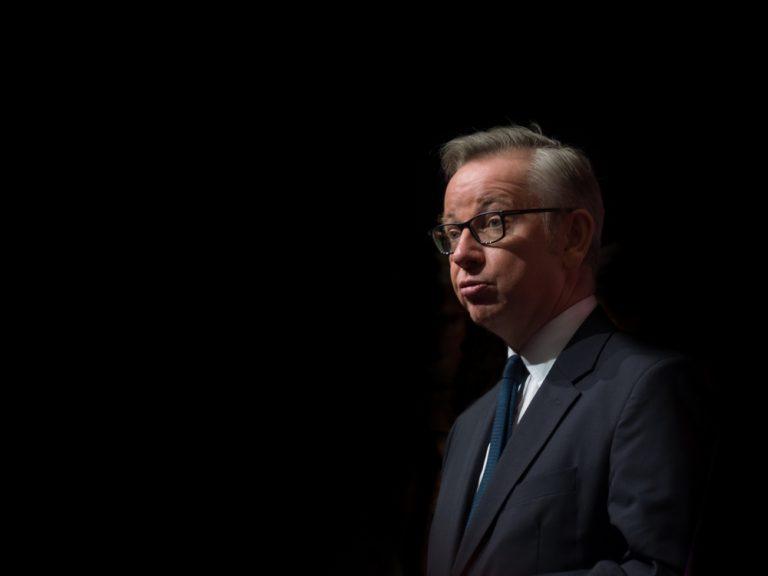
In a letter to colleagues, the Duchy of the Chancellor of Lancaster, Michael Gove, stated:
“As a responsible government we continue to make extensive preparations for a wide range of scenarios. Officials have been working closely with key stakeholders on a range of plans to minimise and manage the risk of disruption to the flow of goods. This includes the procurement of freight capacity to ensure Category 1 goods including critical medicines can continue to be imported.”
“The biggest potential cause of disruption are traders not being ready for controls implemented by EU Member States on 1 January 2021. Irrespective of the outcome of negotiations between the UK and EU, traders will face new customs controls and processes. Simply put, if traders, both in the UK and EU, have not completed the right paperwork, their goods will be stopped when entering the EU and disruption will occur.”
Mr Gove finishes the letter:
“Please emphasise the importance of getting ready. We are confident that if everyone takes action now this will reduce the likelihood of disruption occurring at the border in the future.”
The government statement was keen to stress the role of hauliers in minimising disruption, with Mr Gove saying that the government would be directly contacting haulage companies in the UK and EU, running targeted advertising, publishing an updated haulier handbook, and will launch advice stands at UK service stations. He added that the government are also delivering a ‘Smart Freight’ IT service that would allow drivers and hauliers to complete a border readiness check.
Deal or No Deal, tariff-free trade agreement or otherwise, this does not change the requirement for customs, safety and security declarations. At present, the fear is that traders have yet to come to terms with this fact, with hauliers reporting that many of their customers believe they can just carry on as before if a free trade agreement is reached.
At present, political intelligence providers state that there is an 80% chance of either a No Deal or ‘shallow’ Deal scenario, though an agreement on fishing rights and level playing field may still be possible. However, for political reasons – for instance Conservative Brexiteers, keeping the favour of red wall voters and Northern Ireland – this may not come to fruition.
Regardless, unless traders get their act together before the transition date, there will likely be a two-stage disruption period, on New Year’s Day, and on 1 July 2021, when the UK fully implements its new border processes. At this stage, the traders have known they need to prepare post-transition paperwork for more than two years. It is expected that while a fair number of large haulage companies will be ready, many of those in the unprepared bracket are SMEs and independent businesses.
Why did Tesla shares plummet by $50bn?

Tesla shares (NASDAQ: TSLA) are down on Wednesday after Elon Musk said cheaper and more powerful batteries wouldn’t be available for another three years.
During a live presentation given on Tuesday, hinted towards a cheaper Tesla becoming available which would have five times more energy and six times more power.
Speaking at the event, Musk said the new technology would take three years to implement. Investors did not react well to the news and $50bn was wiped off its stock market value.
“In three years… we can do a $25,000 car that will be basically on par [with], maybe slight better than a comparable gasoline car,” he told his audience.
Casper Rawles, head of price assessments at Benchmark Mineral Intelligence, said that the move would be “challenging”.
“Even with really experienced car manufacturers, we tend to see a very high scrap rate of production in the first couple of years. You can only reduce the cost down to a point,” said Rawles.
Tesla is currently the most valuable car company in the world and its share price has soared over the past four quarters.
Tesla shares closed 5.6% lower and fell another 6.9% in after-hours trading on Tuesday.
The share price (NASDAQ: TSLA) is currently trading -7.32% at 393,16 (1642GMT).
NatWest launches attention-grabbing savings account with ‘3% interest rate’
NatWest (LON:NWG) announced on Wednesday that it had launched a new savings account, for customers with little-to-no savings.
The account can be set up with an initial deposit of between £1 and £50, with a standing order for regular deposits thereafter. What has been grabbing headlines, though, is the account’s seemingly enticing 3% interest rate.
The issue is that this interest rate only applies while an account’s balance is under £1,000, and once your savings surpass that threshold, any sum over that amount are subject to an entirely underwhelming 0.01% interest rate.
NatWest said the new savings account would help consumers create a buffer zone during economic uncertainty, and said it would aid in their efforts to try and help an additional 2 million customers to save with them by 2023.
Speaking on the launch of the new account, Lewis Broadie, a savings expert at NatWest, said: “During lockdown many of our customers started to save for the first time. We are introducing the new digital regular saver to help our customers start and maintain a long-term savings habit which will help them to become more financially secure.”
The news also comes shortly after the popular NS&I Savings Account had its interest rate cut from 1% to 0.15%, while the return on income bonds is set to fall from 1.15% to 0.01%. These announcements prompted popular money-saving expert, Martin Lewis, to Tweet the following:
Unfortunately, it appears the new NatWest account is just another bit of attention-grabbing to get customers through the door, with the interest rate offered on anything-but-minimal savings being just as dismal as those offered by any other savings account or ISA in these difficult times. However, being more positive, Bankrate UK Mortgage Expert, Nisha Vaidya, stated the following: “This is a positive move from NatWest which recognises the financial challenges many people are facing in the context of COVID-19. Incentivising customers to save little and often is a good way of getting people into the savings habit at a time of deep economic uncertainty.” “We know that young people in particular are facing real financial challenges right now – not just because they’ve been hit hardest by job losses, but because soaring property prices have priced many potential first time buyers out of the market.” “While this account is aimed at customers with little or no savings, rather than those trying to grow their existing balances, it’s good to see banks innovate and launch new products that recognise the extraordinary financial circumstances many people are facing.” Alas, if it were my money I’d probably just ignore the hype, or for someone looking for a beginners’ savings account: take a look at HSBC‘s (LON:HSBA) fixed term regular saver’s account, which offers 2.75% on savings up to £3,000.NEWS: NS&I announces unprecedentedly large rate cuts on 24 Nov. Currently best buy across the board. -Income Bonds drop from 1.15% to 0.01% -Direct Saver drop from 1% to 0.15% -Investment account from 0.8 % to 0.01 ISA & Junior ISA similar A devastating blow for savers Share
— Martin Lewis (@MartinSLewis) September 21, 2020