
FTSE bounces back from lunch-time dip thanks to modest Dow Jones gains
After starting the week on a bright note, the FTSE looked set to repeat yesterday’s regression. That was, before the Dow Jones opened with a relatively meagre rally, that proved enough to give the FTSE a burst of energy and finish the week in the green.
Having dropped by just under a percent by midday, the FTSE then recovered during the afternoon, up by 0.34%, to 5,842, as the final bell went. At this level, it is still short of the 6,000 point benchmark which has become something of a target since the pandemic kicked in (though I can remember the target once being 7,500 points).
Forgetting the larger picture, however, we can take some consolation from finishing the week on a tentatively positive note. This was only made possible, mind, by reassurance offered by the Dow Jones. Initially, US politics had offered the FTSE cause to falter around lunchtime, with Spreadex Financial Analyst, Connor Campbell, saying that:
“This appeared to be on fears that Congress is nowhere near getting a covid-19 spending plan signed off, with a huge gap between the $2.4 trillion the Democrats want, the $1.5 trillion Trump is willing to agree to, and the measly $1 trillion cap set by Republicans.”
Later, these fears were somewhat put out of mind by short-term gains from the Dow.
“It helped that the Dow Jones avoided dropping to 26550 as suggested at point by the futures, instead opting for the same kind of wishy-washy gains as the FTSE. Adding 0.2%, the Dow finds itself lurking just above 26850, but lacking the confidence to push beyond that level with any gusto.”
Now up 0.31%, to 26,899 points, the day is still young for the US index – with every chance that events later in the day will in some way inform the FTSE open next Monday.
In a less cheery mood on Friday, the DAX fell by 1.19%, to 12,456 points. Following close behind, the CAC shed 1.12%, to 4,709.
Bahamas Petroleum shares rally 21% with spud expected before year-end

Caribbean and Atlantic-focused oil and gas company, Bahamas Petroleum Company (AIM:BPC), saw its shares rally as it announced that it had both chosen a spud date for its Perseverance #1 prospect, and had nominated a drilling rig to use on the project.
Having received formal notification from Stena Drilling, the company stated that, consistent with the existing contract, it had nominated the Stena IceMAX as the intended drill rig for the upcoming Perseverance #1 drilling campaign.
The company boasted that the Stena IceMAX is ‘one of the most advanced drillships’ around, and designed specifically for safe and efficient operations in a wide variety of conditions.
Bahamas Petroleum also added that the start of the contracted window – 15 December 2020 – would be the approximate arrival of the drill ship in the field, with an anticipated well spud coming coming 3-4 days later, once the rig is on station.
The company continued, stating that it expects the Perseverance #1 well to target probable oil resources of around 0.77 billion barrels, with an upside of 1.44 billion barrels.Speaking on the Perseverance well and Covid disruption, company CEO, Simon Potter, stated:
“In March 2020, the Company was within weeks of commencing the drilling of the Perseverance #1 well when compelled to defer operations due to the anticipated impacts of the Covid-19 pandemic.”
“As might be expected when such an advanced well plan is halted so close to final implementation, major elements were already in train or sufficiently well established such that reactivation is a relatively straightforward matter.”
“With the clarity of the anticipated delivery date of the Stena IceMAX into the field this work can now be reactivated against a detailed timetable and progressed. I very much look forward to updating shareholders in the coming months as we get closer to drilling.”
Following the update, Bahamas Petroleum Company shares rallied by 21.28% or 0.50p, to 2.85p a share 12:00 GMT 25/09/20. This is far ahead of its year-to-date nadir of 1.20p, seen in April, but far behind its high of 5.30p, seen in February.
The company was given an ‘Underperform’ rating, courtesy of 55.65% of Marketbeat’s community. They currently have a p/e ratio of -7.83.Pennon shares manage modest rally with trading in line with expectations

FTSE 100 listed water company, Pennon Group plc (LON:PNN) saw its shares post a modest rally on Friday, as it told investors it had booked ‘resilient’ trading during the first half, and ‘in line with expectations’.
The company said that the impact of Covid had been broadly in line with its previous predictions, with a net revenue hit of £10 million.
It added that during the period, it had sold Viridor – a waste management company – for £4.2 billion on 8 July, with Pennon receiving £3.7 billion in cash from the sale.
The company also said it had not utilised any government support during the period, with none of its employees having been furloughed. It continued, saying that ‘the vast majority’ of its operations has continued in Covid-secure environments. Pennon also said it had signed up to the Kickstart Scheme, in order to support the Government’s ‘build back better’ campaign.Speaking on the impacts of Coronavirus on the company’s operations, the Pennon statement read:
“As expected, the largest impact of COVID-19 on water usage has been on businesses and commercial customers (non-household). Overall revenue has reduced with an increase in household revenue offset by lower non-household revenue. Ofwat’s regulatory model allows for differences in revenue compared to the Final Determination to be trued up in future years.” Speaking on its financial outlook, it added: “Following the completion of the sale of Viridor in July, Pennon’s debt restructuring programme is progressing well, with around two thirds repaid to date of the up to £900 million the Group announced it would seek to retire. With shorter term deposit rates remaining low, the swift repayment of debt has significantly reduced the Group’s cost of carry. Alongside this, a contribution of £36 million has also been made into the Group pension schemes.” The Group said its South West Water business is also on track to outperform on it return on regulated equity, with a £1 billion investment programme underway, alongside a £30 long funding finance lease, its WaterShare+ expected to outperform by £20 million, and its successful expansion into the Isles of Scilly.After mustering around a 1.5% rally, Pennon Group shares have since tapered off, now up 0.44% or 4.61p, to 1,044p a share 25/09/20 11:42 BST. The company currently has a 12-month consensus price target of 1,135.00p a share, which would represent around a 9% upside on its current price.
The company also has a consensus ‘Hold’ rating, with 54% of Marketbeat’s community voting ‘Underperform’, and a p/e ratio of 16.86 below the utilities sector average of 19.82.What will the 10pm curfew mean for pubs, bars and restaurants?

Widely-ridiculed for its arbitrary timing, the government‘s 10pm curfew comes into effect today, and will mean that all pubs, bars and restaurants will have to close their door to customers mid-way through a typical evening’s late seating. So, what will this new rule mean for food and drink outlets, and other hospitality businesses?
According to the Director of Conister Bank, Douglas Grant, the new 10pm curfew will force business owners to ask themselves a lot of difficult questions about the long-term viability of their businesses:
“For many businesses operating in the bar, restaurant and other hospitality sectors, the introduction of tonight’s curfew will represent a difficult choice over whether this is sustainable in the long run, especially considering that post 10pm takeaway is said to represent around half of all takings of many hospitality businesses, particularly those selling food and drink.”
To be clear, takeaway and delivery of food and drink will not be included in the 10pm cut-off, with government guidance stating that, “Businesses and venues selling food for consumption off the premises, can continue to do so as long as this is through delivery service or drive-thru.” Instead, it will only be the eat-in facilities of eateries that must close at 10pm.
Mr Grant adds that the new restrictions will force companies to rethink their business models: “In the brewing industry for example, Covid-19 has led to a rethink of their distribution models and we are seeing many brewing businesses now looking to transition from pubs to supermarkets for their distribution. Carbonated beer, for instance, has enjoyed improved sales driven by increased consumer demand at supermarkets. We believe that smaller sized breweries that have adapted to new consumer behaviours will likely weather the crisis and thrive, others should act fast to do the same.”
Indeed, as seen with the first company to raise over a billion dollars on Crowdcube, Brewdog, breweries are doing their best to expand their offerings outside of pureplay drinking establishments. For instance, in Brewdog’s case, the company has been rolling it a growing range of its products in supermarkets over the last few years. And during lockdown, the company had to compensate for reduced footfall in its pubs, by offering burger and beer deliveries, and launching loyalty schemes. At present, the company is still finding new ways to adapt, and is currently hosting an equity crowdfund to plant a sustainable forest in Scotland – though many are wary of the business’s limited income potential.
Mr Grant finished by saying that renewed government support is vital, especially in the process of hospitality sector companies adapting to the ‘new normal’:
“We are now at a critical point where more resilient sectors, like the brewery industry, are protected by a tripartite level of sustainable support from Government, alternative and traditional lenders working together to ensure their existence is guaranteed. Specialist leasors have been stepping in to help the UK’s brewing industry to resolve some of these issues, enabling brewers to outsource some of their equipment so they can focus on making their products commercially available as soon as possible to capitalise on supermarket distribution and demand.”
Today, the UK Chancellor launched the Job Support Scheme, which aims to supplement the wages of ‘viable jobs’ (where people are still working at least one third of their usual hours). He also announced ‘pay-as-you-grow’ measures which defer payments for the business interruption loans and bounce-back loans, as well as delaying the date of previously deferred VAT to be paid, and extending the VAT cut on the hospitality sector, with the 5% rate remaining in place until March 31.
Smiths Group shares down 8% amid “challenging market conditions”
Smiths Group shares (LON: SMIN) tumbled on Wednesday’s after the group reported a 26% fall in pre-tax profits.
In the 12 months to the end of July, pre-tax profits at the industrials conglomerate tumbled from £376m last year to £278m.
Revenue at Smiths Group ticked up 2% to £2.54bn and the group said it would pay a final dividend of 24p per share.
“The strength and flexibility we have built into the business, and the benefits of the group’s strategic positioning, underpinned a robust performance in challenging market conditions,” said chief executive, Andy Reynolds Smith.
“We have continued to enhance the group’s strategic positioning, through execution of the restructuring programme, completion of three further bolt-on acquisitions and our unchanged commitment to separate Smiths Medical.We are seeing a stabilisation of recent trends; but we are not complacent and are continuing to strengthen the business to deliver sustainable outperformance in the future,” he added in a statement with the results.
The company is carrying out cost-cutting savings, which is expected to save the group £70m by 2022.
Smiths Group has not provided financial guidance for the full-year due to uncertainties around the pandemic.
Smiths Group shares (LON: SMIN) are trading -7.82% at 1.320,00 (1415GMT).
Sunak doubles down on keeping economy open with jobs, loans and VAT support
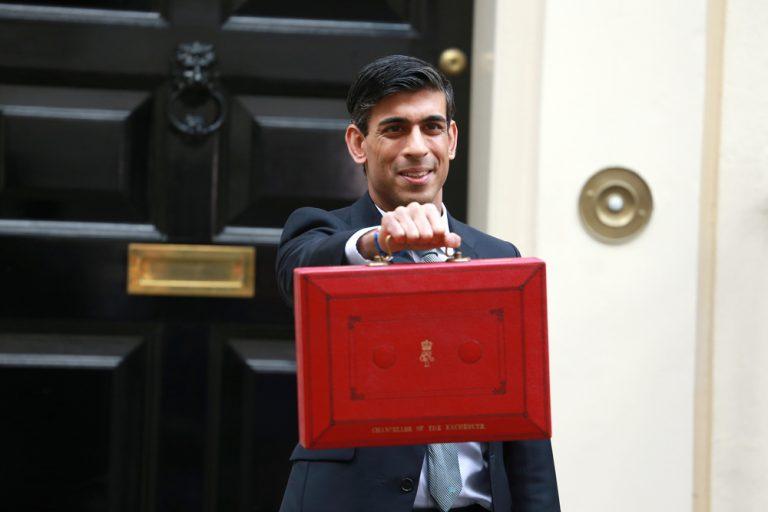
Perhaps almost as eagerly anticipated as the prime minister’s public address earlier in the week, Chancellor of the Exchequer Rishi Sunak today addressed Commons with his Winter Economy Plan, which doubled down on keeping the economy open, while providing support to businesses and their employees.
The Chancellor began his statement by saying he felt “cautiously optimistic”, both concerned about keeping the economy open but taking heart from three months of consecutive economic growth, and believing the government had learned a lot of lessons from the spike in Covid cases earlier in the year.
He added, that while almost any measures to stem the spread of the virus would “threaten the recovery”, he said that the UK needs to adapt to the fact that:
“the economy is likely to undergo permanent change”With businesses facing ‘uncertainty and reduced demand over winter’, Mr Sunak said that focus needed to shift away from a revival of the furlough scheme. He said furlough had been the right measure for the time, with people asked to stay at home needing immediate and expansive support to stay afloat.
Sunak’s new Job Support Scheme
Now, however, the Chancellor emphasised the need to keep the economy open, and as part of that, protect what he described as ‘viable jobs’. These jobs, he said, would be protected by the implementation of the government’s new Job Support Scheme, which will support ‘viable jobs’, which are those in which employees work at least one third of their regular working hours. Under the scheme, people in viable jobs will work for at least the requisite amount of time and be paid accordingly, and then the government will subsidise the shortfall in their regular pay, up to two-thirds – essentially a training wheels initiative, between furlough and regular work. Mr Sunak added that companies will be eligible for the new scheme, even if they didn’t sign up to the furlough scheme earlier in the year. He also said that the Job Support Scheme will last for six months, and that the self-employed grant will also be extended under similar terms and conditions to the new job scheme.From 1 November, for the next six months, the Job Support Scheme will protect viable jobs in businesses who are facing lower demand over the winter months due to Covid-19. pic.twitter.com/8NpIKpQV8y
— HM Treasury (@hmtreasury) September 24, 2020
Protecting cash flow with more loan and VAT goodies
Perhaps necessarily kicking the can further down the street, the Chancellor also announced a series of measures to support businesses, via loan and VAT repayment deadline extensions. On loans, Mr Sunak said that bounce-back loans had provided £38 billion in support, and that repayment of these loans would now be subject to ‘pay-as-you-grow’ criteria. This, in practice, means that loan paybacks have been extended from six years, to up to ten years, and that businesses can now apply for interest-only payments, or even to suspend all payments for up to six months. The Chancellor added that 60,000 businesses had taken out business disruption loans, and that the government now plans to extend the guarantee on these loans to up to 10 years, in order to help lenders provide additional support. He added that the government would extend the deadline to apply to any of their loan schemes until the end of the year, and that it would be introducing a ‘new successor’ loan guarantee scheme In January. On VAT, the Chancellor noted that more than 500,000 businesses had deferred over £30 billion in VAT so far this year, and that payments would now be spread out. As opposed to paying out in one block in March, businesses can now spread the payments owed over 11 smaller amounts with no additional interest, and self-employed income tax payers will be able to extend their payment over 12 months, starting from January. His final concession was to the ailing hospitality and tourism sector, to whom he has offered to extend the current low rate of VAT – currently at 5% but previously due to revert back to 20% on 13 January 2021 – until March 31 of the new year, which he stated will help support the 2.4 million jobs in these sectors. Responding to Mr Sunak’s statement, Shadow Chancellor, Anneliese Dodds, said the measures were welcome but too hesitant. According to Ms Dodds, she had proposed targeted wage support and repayment extensions exactly forty times, only to be rebuffed on several occasions. She added that the deadline for redundancy consultations by large schemes before end of furlough scheme was last week, so these new schemes were sufficiently late enough to give a lot of people sleepless nights. Overall, she did say that it was a “relief that the government has u-turned”.Gold nears 6 week low against dollar gains

The price of gold hit a six-week low on Thursday, wavering against the “robust” performance of the US dollar.
A lack of additional economic stimulus from central banks has seen investors lose some interest in the precious metal, which is often treated as a safe haven-esque hedge against inflation and market turbulence.
August saw gold extend a record-breaking rally to a high of $2,000, on one of its longest consistent upward trajectories in recent history.
The Financial Times explained that investors flocked to the metal due to economic uncertainty, reporting a “surge in revenue stems from a sharp rise in interest among investors for exposure to gold — either as a hedge or as a bet on rising prices — and rare anomalies thrown up by disruptions to global gold deliveries”.
A brief pause in gold coin production helped to spur on the rise in prices, with a sudden supply shortage prompting investors to respond to the “sense of urgency”.
The Financial Times Advisor pointed out that it was not just “experienced retail investors” leading the charge, but also some first-time buyers dipping their toes into the precious metal stocks for the first time.
“Once reserved for the use of wealth managers and financial advisers, the proliferation of fintech apps and other platforms has laid the gold-buying marketplace open to all”.
The breakneck rally came to a crashing end just a week later, with prices plummeting in the largest one-day drop since 2013 to $1,872.19, with market analysts pointing out that the rally was never expected to be sustainable anyway.
IG Markets analyst Kyle Rodda stated that the “euphoria” had drained from the gold market, citing the importance of the strength of the US dollar in determining the value of gold.
Continuing a recent downward spiral, the price of gold fell 4.64% in the past week, with spot gold falling to $1,857.72 per ounce at midday on Thursday – its lowest level since August 12.
The drop comes as somewhat of a surprise, given that gold tends to thrive in periods of market uncertainty.
Doubts about an economic recovery gripped equities around the world earlier in the week, careering to a 2-month low among fears of a second wave of coronavirus.
Meanwhile, reports of a slump in business activity in both the United States and Europe also dampened hopes of a steady revival of the global economy.
Nevertheless, precious metal revenue at the world’s 50 largest banks is predicted to hit some $2.5 billion by the end of 2020, spurred on by the burst in interest over the summer, according to a report by consultancy firm Coalition.
Standard Chartered analyst Suki Cooper weighed in:
“Gold is currently taking its cue from the dollar … and the dollar strength continues to weigh on gold. We could see a retest of the lows from early August, the next technical support level thereafter is around $1,840 per ounce, however prices are closing in on oversold territory”.
However, chief market strategist Phillip Streible from Blue Line Futures added that gold is still a valuable investment to consider in the months ahead, and investors should not be overly discouraged by the recent fall:
“Long-term uncertainties are still looming and no investor would lose the opportunity of adding gold to their portfolio when prices are low”.
Cineworld faces curtain call with $1.6bn loss and shares falling 10%
Ailing cinema giant Cineworld (LON:UK) watched its shares slide as it posted its results for an extremely challenging six months of trading.
With attendance greatly hampered by lockdown and a lack of new releases thereafter, the company saw revenues fall year-on-year by 66.9% for the six months ended 30 June, down from $2.15 billion, to $712 million.
This slide also saw group earnings EBITDA contract by 93%, from $759 million to $53 million, and a swing from a $140 million profit for the six month period in 2019, to a $1.64 billion loss during the same period in 2020.
The situation was equally bleak for the company’s shareholders, with both basic and diluted earnings per share swapping from 8.6c earnings, to 115.3c losses, respectively. Similarly, the company.
Similarly, while the company will be pleased to have raised a much-needed $361 million of cash from sale and leaseback agreements, it also meant cancelling its dividend back in April, with this suspension having being sustained in Thursday’s announcement.
Looking ahead, the company says it has reopened 561 of it 778 sites, with the majority of those yet to open being in the US (200 still closed). It added that negotiations are ongoing with banks, in efforts to obtain covenant waivers in respect of December 2020 and June 2021 – Cineworld might also attempt to carry out similar negotiations with its landlords, should more Covid restrictions come into force in the coming months.
Cineworld continued, saying that there can be no certainty as to the future impact of Covid, though it stated that further restrictions could see it close its estate once again, and further push back movie releases.
Speaking on the results and the company’s outlook, Third Bridge Senior Sector Analyst, Harry Barnick, said the following:“In today’s climate, content is king and trading is likely to remain subdued until the pipeline improves. Additional delays in Black Widow and Soul could further limit attendance levels in what was already a challenging environment pre-covid. If James Bond is also delayed, the full year outlook for the UK is bleak.”
“The results confirm that capacity constraints have not limited sales and that the challenge now lies in stimulating demand in a cautious consumer environment”.
“As expected, Cineworld will not follow AMC in shortening the theatrical window. Management has been clear that the model simply doesn’t make sense. This poses a challenge to the current deal as Universal will struggle to make decent returns on wide release movies without Cineworld and Cineplex also agreeing to a shortened theatrical window.”
“With rents making up a large proportion of fixed costs, support from landlords will be crucial to limiting cash burn”.
“Despite the Paramount Consent Decrees being abolished, studio resources are being allocated towards streaming platforms and a move into exhibition is unlikely. The more likely candidates to enter the theatrical space would be streamers like Netflix or Amazon, who are looking to attract renowned film-makers with the prospect of a theatrical release.”
Following the news, Cineworld shares slid by more than 10%, before recovering slightly, down 9.32% or 4.52p, to 44.00p a share 24/09/20 11:20 BST. The company’s p/e ratio currently stands at 2.88.
Go-Ahead swings to loss

Go-Ahead group swung to a £200,000 loss in the year to 27 June.
The loss is compared to a £97m profit in the same period a year earlier.
Shares in the group, however, rose slightly on Wednesday after the transport group said that regional services were back to 50-60% capacity.
Despite the fall in profits, total revenue grew 6.1% to £3.9bn.
Most of the losses are related to £30.4m due to failings in the German operations.
David Brown, the group’s chief executive, said: “Our financial results for the year have been significantly impacted by the pandemic despite only four months of the crisis period falling within our financial year.”
“While our German rail contracts have not been materially impacted by the crisis, this business continues to face significant operational and commercial challenges associated with the delayed delivery of trains and driver shortages.
“Through management action, we have seen operational performance improve and we have a clear plan to deliver profitability over the medium term.”
Go-Ahead’s basic earnings per share, before exceptional items, were down 69.5% to 51.6p.
Coach provider National Express also posted a loss on Wednesday as the travel industry was hit by the pandemic, however, shares rose after it traded “slightly above” its expectations.
National Express shares rise as group is “slightly above” expectations

National Express shares (LON: NEX) are trading almost 10% higher on Wednesday after it traded “slightly above” its expectations.
The transport group has been awarded an up to a nine-year contract to run 240 buses in Lisbon, Portugal as well as a five-year, paratransit contract for 75 vehicles in California.
“We continue to be pleased that our strong customer relationships are sustaining high levels of revenue during the pandemic’s on-going uncertainty. We are grateful to our customers and the public authorities who have recognised the essential role our services play in maintaining the ability of people to get to work and to keep the economy functioning, even during such challenging times,” said Chris Davies, Interim Group Chief Executive and Group Finance Director.
“This robust revenue collection and on-going tight cost control is underpinning positive EBITDA and cash flow projections. We are encouraged to see continued passenger growth across the Group, as our services provide safe and reliable services to those choosing to travel.
“We remain resolutely optimistic about the longer term opportunities for the Group. The enduring strength of our customer and stakeholder relationships during the pandemic demonstrate that our reputation for safe and excellent service has provided a crucial resilience as we navigate this uncertain period. In addition – as the recent contract wins in Lisbon and California demonstrate – they also provide the platform for future growth once we emerge from the pandemic,” he added.
National Express shares (LON: NEX) are trading +9.28% at 136,00 (1101GMT).