
British Honey sanitiser sales ‘exceed all expectations’

Gin and Honey producer, British Honey (LON:BHC), have said a quick pivot into the production of hand sanitiser has helped offset a drop in demand for their core products.
British Honey produce a range of honey, jams and spirits utilising British ingredients and have harnessed their capacity to produce hand sanitiser to help the fight against coronavirus.
The company said sales from hand sanitiser have exceeded £500,000 which more than offset a reduction in sales elsewhere in the business.
In a COVID-19 update released on Tuesday the company said the recent IPO meant they had a strong balance sheet and that they had been able to keep supply disruption to a minimum.
British Honey listed on the Aquis Exchange, formerly known as the NEX Exchange, in 2019.
Michael Williams, CEO of British Honey, commented:
“Very early on during the Covid-19 outbreak we identified a clear opportunity for the Company to move into the production of alcohol-based sanitisers, to meet exceptional demand and supply shortages, given the basic ingredient is the same as for our infused spirit brands. I’m delighted to report that sales of these products have been exceptional. BHC obtaining BS EN 1500 certification for “Drip+Drop” products is another milestone in its development.
“Whilst there is no doubt that, across the industry, problems in the alcohol supply chain are starting to emerge, I am pleased to confirm that we as a company have sufficient alcohol for our own spirits business plans through to the end of 2020. List Distillery are also continuing to supply rum and bourbon from their distillery in Florida.
“The health, safety, and welfare of our employees remain our first priority. Our production and support operations are fully committed to meeting our customers’ needs with all staff continuing to work normal hours, albeit with various measures taken to enable required social distancing and adherence to government guidelines.
“Furthermore, we continue to support key front-line workers, local care homes and other charitable institutions with complimentary products”.
FTSE 100 travel shares crash offsetting gains in cyclicals

Shares in FTSE 100 travel shares fell sharply on Monday as London’s leading index managed to carve out small gains drive by cyclical shares.
easyJet (LON:EZJ) was the FTSE 100’s top faller, down 9.8% going into the close. Peer International Consolidated Airlines (LON:IAG) was also weaker, off by 4.5%. Shares in Cruise operator Carnival (LON:CCL) sunk by 2.6%.
The FTSE 100 was largely unchanged on Monday in a choppy session after the market had the weekend to digest news US-drug maker Gilead’s positive trials of experimental drug Remdesivir.
“We’ve seen a tale of two halves for equities. It started on a strong note but markets fell back towards week-end and are down again today. The initial gains were driven both by the tentative easing in lockdowns now underway in much of Europe and some states in the US and encouraging drug news,” said Rupert Thompson, Chief Investment Officer at Kingswood
“A new trial showed the drug being developed by Gilead to treat seriously ill coronavirus patients is in fact of some use, in contrast to an earlier study concluding it wasn’t. Either way unfortunately, this drug is not really a game changer and the holy grail of a vaccine continues to look very unlikely to be developed until next year at the earliest.”
BP and Royal Dutch Shell were among the top risers and helped the FTSE 100 post gains due to their large weighting in the index.
The FTSE 100 was trading at 5,778, up 12 points just after 4pm on Monday.
Bushveld Minerals sales and production increases despite lockdown

Integrated Vanadium producer, Bushveld Minerals (LON:BMN), released a rise in first quarter production figures at their flagship Vandium mine on Monday.
Output increased at the Vametco mine despite disruption caused by coronavirus and heavy rain. The Vametco mine produced 652 mtV in the first, up from 649 mtV in the same period a year ago.
However, whilst production was disrupted by the lockdown, Bushveld Minerals said sales jumped 77% in the first quarter because of higher production in Q4 2019 and generally higher demand.
Bushveld Minerals has a 76% stake in the Vametco vanadium mine which has seen increased demand for its trademark Nitrovan product.
As a vertically integrated producer, Bushveld is also working on vanadium redox flow batteries (VRFB) with a range of projects including use across the gird in South Africa and modular batteries solutions. Bushveld Minerals also has ambitions for a VRFB investment platform and a series of recent acquisitions and deals demonstrate their intent.
Fortune Mojapelo, CEO of Bushveld Minerals Limited, commented:
“We are fortunate to operate in a country whose leadership has taken early decisive action to limit the spread of the Covid-19 virus while ensuring that we build the necessary public health care capacity and identify fiscal responses to manage the coming wave of infections, while treatments and vaccines are still under development. Navigating this situation requires us to meet the immediate challenges of ensuring the safety and health of our workers, sustain business continuity and ensure readiness to scale back up to full capacity in due course, while also supporting the fight against Covid-19 among our host communities.
“We used the lockdown period to strengthen our health and safety protocols together with business continuity measures, conducted maintenance and processed intermediary stockpiles, as per the guidelines received from our authorities. We are pleased that both Vametco and Vanchem are safely increasing production to normal levels.”
In addition to the measures undertaken to combat COVID-19, Fortune Mojapelo touched on the cash position of Bushveld and how they were managing Capex through the crisis.
“From a liquidity perspective, we started the year with a healthy cash balance. We retain a cautiously positive growth outlook on the vanadium market and the Company’s role therein. This notwithstanding, we have undertaken a review of our capital spending, deferring some non-essential capital expenditure for the near term whilst preserving the long term integrity of our business and still positioning the company for growth in the vanadium market in the medium to long term. Furthermore, to enhance our liquidity position and financial flexibility we drew down the full ZAR375 million of bank debt facilities. Meanwhile, the Company’s finances have benefitted from a weakening Rand, given its revenue and cost bases are mostly foreign currency and local currency denominated, respectively. This places us in a stronger position to navigate through this evolving situation.
CEO Fortune Mojapelo continued with his feelings that Bushveld could come out of the crisis stronger than when the went in.
“We are confident that the measures we have taken will enable us to build an even more resilient Bushveld Minerals, well positioned to exploit the upturn when it comes.”
“We are releasing this announcement later than we would have typically done. This has been necessitated by the need to better understand and so provide clarity on the impact of the pandemic and the fast-evolving environment and regulatory landscape we are operating in. We also expect to be in a better position to disclose more on our renewed plans and capital expenditure requirements in our 2019 full year results announcement, when we believe there will be more clarity on what the rest of the 2020 financial year will hold.”
IG Group CEO interview: ESG, diversity and IG’s Brighter Future programme

In an interview with UK Investor Magazine, IG Group’s CEO, June Felix, discusses IG’s work in the community and how the online trading company is balancing shareholder returns with making a positive impact on wider society.
What steps are you taking to ensure IG’s core business is providing a positive impact to the UN’s SDGs? In line with the UN’s Sustainable Development Goals and our own well-established purpose and values, it’s important that IG shows it is a responsible company. Most notably, we have committed to helping the most vulnerable children in the markets in which we operate by improving their access to a good education and future opportunities. The creation of IG’s Brighter Future programme, the related IG fund and our international partnerships means we can help young people in society to reach their full potential, irrespective of gender, colour, race, sexual orientation or socio-economic background. This work is based on meritocracy, giving people the right environment and the right tools to succeed. This is a core part of our purpose and values as a company, empowering and educating our clients to succeed in executing their trading strategies. One of IG’s key measures is revenue per client, how are you balancing this with the need to facilitate financial inclusion in the community? Our clients are very sophisticated, financially savvy and risk aware, who want access to trade 24 hours a day in 16,000 markets globally on our platform. Our products are not for everyone. We have a very rigorous selection policy for our clients testing them based on appropriateness, market knowledge and if they have the financial means to trade markets. For some potential clients we have to say unfortunately we are not the right platform for you. The key measure for IG is actually delivering the world’s best trading experience because it ensures strong client loyalty and longevity in our relationships. Within the UK, 68% of our revenue is generated by clients who have been with IG for more than three years. Our business model is always aligned with the interests of our clients. For instance, we think it’s important that we execute our client orders first and then we hedge, so we are not on the other side. The establishment of the IG Brighter Future programme and our ongoing partnership with organisations like Teach First reflects our commitment to inclusion. When our employees go into the schools we partner with they are helping build understanding of global markets and economics, improving financial literacy at the grass roots level. IG offers clients synthetic tradable indices such as the Cannabis Index and Crypto Top 10 Index but nothing related to Impact Investing or ESG, what is the thinking behind this? Our traders choose to come to IG to express their ESG views because we offer access to over to 470 ‘socially responsible’ ETFs. All these are listed in full on our public website. Is there more you feel IG can do to boost your ESG credentials? ESG is a powerful discussion in boardrooms globally. Last year we established our Brighter Future programme as part of our overall ESG workstream because we recognise that society, our shareholders and our employees expect us to focus on this agenda. We polled 1,900 IG employees globally on what our initiative should focus on and the overwhelming feedback was on helping the environment, helping improve access to education and to improve social mobility. The launch of the Brighter Future programme was just the start; we continue to address the environmental impact of our offices globally and are working to be a carbon neutral firm in FY2020. Our existing partnership with Teach First is improving the educational opportunities available to the least privileged children in UK communities, particularly by helping to train teachers in “STEM” subjects. I’m also very excited that we’ve hired our first-ever dedicated ESG manager, who joins next IG week, to really drive our ESG agenda and all our related new initiatives. The launch of the Brighter Future Fund coincided with a trading statement revealing higher revenue due to volatility from coronavirus. If the coronavirus crisis had not occurred, how different would the Brighter Future Fund look in terms of size and focus? I’m sure we all wish the coronavirus had not occurred, given how much uncertainty and sadness it has brought. We are all facing these exceptional times together, be that as corporates or individuals, within the wider communities we are part of. The IG Brighter Future Fund reflects our wish to help others in an extreme time of need and on a scale never experienced in our life time. What’s made me so proud has been the work of our colleagues globally, who are doing what they can to help others in this crisis; by raising money to help fight the virus, supporting local food banks or providing medical supplies for staff in their local hospitals. As a leadership team, we knew immediately we had to make a swift and positive contribution but one that also reflected the priorities of our Brighter Future programme. We decided the best way to do this was to launch our fund, and provide support to Teach First and other international partners to help the most vulnerable children deal with the fallout from the virus. Our extended partnership with Teach First will go directly towards the education of upwards of 40,000 pupils in over 100 UK schools most impacted by COVID-19. Only 31% of IG’s employees were female in 2019, up from 30% in 2018. Many of the UK’s major financial institutions are close to a 50/50 split and some banks employ more women than men. Why is IG so far behind? Improving our gender balance is a key part of our internal ONE IG goals, which focus on inclusion, diversity and collaboration. A large proportion of our workforce are in technology roles, which given the proportion of male to females in technology generally, provides the backdrop to our current diversity ratios. We are undertaking several partnerships with external organisations such as Code First Girls and TechSheCan to support women changing careers and encourage more women into STEM subjects at grassroots level. We also have a vibrant and active women’s network, which is integral in how we attract and develop female talent within IG. In the past 12 months we have welcomed several senior women to our key Executive roles in UK, Europe and Asia proving we are tackling this top-down as well as bottom-up. As a female CEO I am proud that 40% of our executive committee members are female, and over a third of our board members too. However, there is always more work to be done to improve diversity in the City, be it gender, ethnicity or socio-economic backgrounds.
RBS profit halves on COVID-19 provision

RBS (LON:RBS) shares rallied on Friday after the UK bank revealed a 49% decline in first quarter profit due to provisions for bad loans related to the coronavirus pandemic.
RBS set aside £800m to deal with the impact of coronavirus meaning first quarter profit fell to £519m, down from £1,013m in in the same period a year prior.
RBS shares rallied despite the sharp reduction in profit with shares up over 2% at 112p in the first hour of trading on Friday.
Investors may have taken heart from the fact that if RBS had not set aside £800m to deal with COVID-19, the bank would have actually had a very stronger quarter and been well ahead of last year’s profitability.
Barclay’s shares rallied in a similar fashion after their first quarter results. The absence of significant PPI provisions were just starting to become evident in bank’s earnings and this combined with strong underlying earnings would have made the banks an attractive prospect.
However, bank COVID-19 provisions have almost wiped out profit for the first quarter so investors will now have to focus on whether there will be further provisions in the second quarter.
Commenting on the operations of RBS, the bank highlighted a successful shift to working from home despite managing to keep 90% of their branches open.
“We remain available to support as required; our systems remain robust and we have ensured that more than 90% of our branch network remains open, alongside our telephone, internet and mobile app channels. Across the Bank, over 60,000 colleagues, including those working in call centres, are now set up to work from home. Additionally, the Bank has committed to support special leave with full pay for all colleagues for six months as required,” RBS said in a statement.
RBS also pointed to increased capital ratios due to the scrapping of the dividend. A CET1 ratio would support the resumption of dividends if this can be maintained through the crisis.
“Following significant capital strengthening in recent years, the Bank is currently in a strong position to deal with a likely significant economic downturn. The CET1 ratio increased to 16.6% in the quarter following the cancellation of proposed dividend payments partially offset by the impact of increased RWAs. The Liquidity Coverage Ratio (LCR) remains strong at 152%.”
NatWest Markets also released a first quarter updated which pointed to disruption due to COVID-19 but largely had a strong quarter with income rising to £385m.
Avacta share price spikes on COVID-19 testing collaboration
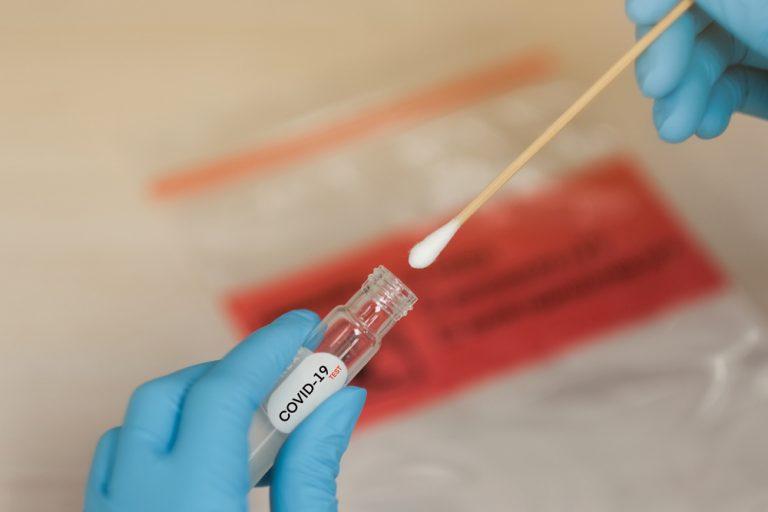
Avacta (LON:AVCT) shares spiked higher on Friday after the group announced a collaboration with US-based Adeptrix to develop an antigen COVID-19 test.
The tests will utilise Avacta’s Affimer® biotherapeutics and help to significantly increase the number of tests clinicians are able to conduct in hospitals. With the WHO and governments around the world emphasising the importance of testing, the demand for the tests will be substantial.
Tests using technology such as Avacta’s Affimer® antigen technology will be crucial to tracking the spread of coronavirus and help reopen global economies.
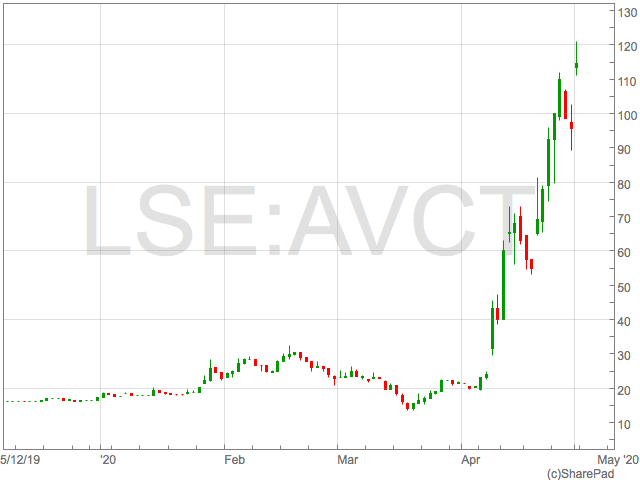
Avacta shares entered an auction after the open on Friday morning as shares spiked on the announcement. The Avacta share price was up in excess of 12% when shares eventually began trading.
Shares in Avacta have now increased more than 400% in April alone.
 Avacta’s Affimer® technology targets uses SARS-COV-2 spike proteins to target virus particles in tests such as swabs and saliva samples.
There were no commercial details released, but it was confirmed Avacta will earn a royalty from Adeptrix.
Dr Alastair Smith, Chief Executive Officer of Avacta Group, commented:
“We are delighted to have established this partnership with Adeptrix in our push to develop Affimer -based COVID-19 antigen tests. Jeff and his team are world-renowned in the mass spectrometry field, and the BAMS diagnostic platform is highly sensitive and specific, giving us great confidence that a high performance COVID-19 antigen test can be developed and launched commercially very quickly.”
“We believe that the BAMS test will be hugely attractive as an adjunct to PCR testing because it uses laboratory equipment that is already in hospital labs but not currently used for COVID-19 testing so it provides incremental testing capacity.”
“A consensus view is building around the world that hundreds of millions of COVID-19 tests are going to be required per month for a long period, and that the disease will be endemic after the initial pandemic has passed, meaning that testing for COVID-19 is going to be needed for many years.”
“I have made it clear that we intend to partner the SARS-COV-2 spike protein Affimer reagents with several select companies to support antigen test development on multiple diagnostic test platforms. This will contribute most effectively to the urgent need to increase antigen testing capacity globally and maximise the commercial return to Avacta. Adeptrix is one example of this and other discussions are underway. I look forward very much to further updating the market in the near future.”
Avacta’s Affimer® technology targets uses SARS-COV-2 spike proteins to target virus particles in tests such as swabs and saliva samples.
There were no commercial details released, but it was confirmed Avacta will earn a royalty from Adeptrix.
Dr Alastair Smith, Chief Executive Officer of Avacta Group, commented:
“We are delighted to have established this partnership with Adeptrix in our push to develop Affimer -based COVID-19 antigen tests. Jeff and his team are world-renowned in the mass spectrometry field, and the BAMS diagnostic platform is highly sensitive and specific, giving us great confidence that a high performance COVID-19 antigen test can be developed and launched commercially very quickly.”
“We believe that the BAMS test will be hugely attractive as an adjunct to PCR testing because it uses laboratory equipment that is already in hospital labs but not currently used for COVID-19 testing so it provides incremental testing capacity.”
“A consensus view is building around the world that hundreds of millions of COVID-19 tests are going to be required per month for a long period, and that the disease will be endemic after the initial pandemic has passed, meaning that testing for COVID-19 is going to be needed for many years.”
“I have made it clear that we intend to partner the SARS-COV-2 spike protein Affimer reagents with several select companies to support antigen test development on multiple diagnostic test platforms. This will contribute most effectively to the urgent need to increase antigen testing capacity globally and maximise the commercial return to Avacta. Adeptrix is one example of this and other discussions are underway. I look forward very much to further updating the market in the near future.”
 Avacta’s Affimer® technology targets uses SARS-COV-2 spike proteins to target virus particles in tests such as swabs and saliva samples.
There were no commercial details released, but it was confirmed Avacta will earn a royalty from Adeptrix.
Dr Alastair Smith, Chief Executive Officer of Avacta Group, commented:
“We are delighted to have established this partnership with Adeptrix in our push to develop Affimer -based COVID-19 antigen tests. Jeff and his team are world-renowned in the mass spectrometry field, and the BAMS diagnostic platform is highly sensitive and specific, giving us great confidence that a high performance COVID-19 antigen test can be developed and launched commercially very quickly.”
“We believe that the BAMS test will be hugely attractive as an adjunct to PCR testing because it uses laboratory equipment that is already in hospital labs but not currently used for COVID-19 testing so it provides incremental testing capacity.”
“A consensus view is building around the world that hundreds of millions of COVID-19 tests are going to be required per month for a long period, and that the disease will be endemic after the initial pandemic has passed, meaning that testing for COVID-19 is going to be needed for many years.”
“I have made it clear that we intend to partner the SARS-COV-2 spike protein Affimer reagents with several select companies to support antigen test development on multiple diagnostic test platforms. This will contribute most effectively to the urgent need to increase antigen testing capacity globally and maximise the commercial return to Avacta. Adeptrix is one example of this and other discussions are underway. I look forward very much to further updating the market in the near future.”
Avacta’s Affimer® technology targets uses SARS-COV-2 spike proteins to target virus particles in tests such as swabs and saliva samples.
There were no commercial details released, but it was confirmed Avacta will earn a royalty from Adeptrix.
Dr Alastair Smith, Chief Executive Officer of Avacta Group, commented:
“We are delighted to have established this partnership with Adeptrix in our push to develop Affimer -based COVID-19 antigen tests. Jeff and his team are world-renowned in the mass spectrometry field, and the BAMS diagnostic platform is highly sensitive and specific, giving us great confidence that a high performance COVID-19 antigen test can be developed and launched commercially very quickly.”
“We believe that the BAMS test will be hugely attractive as an adjunct to PCR testing because it uses laboratory equipment that is already in hospital labs but not currently used for COVID-19 testing so it provides incremental testing capacity.”
“A consensus view is building around the world that hundreds of millions of COVID-19 tests are going to be required per month for a long period, and that the disease will be endemic after the initial pandemic has passed, meaning that testing for COVID-19 is going to be needed for many years.”
“I have made it clear that we intend to partner the SARS-COV-2 spike protein Affimer reagents with several select companies to support antigen test development on multiple diagnostic test platforms. This will contribute most effectively to the urgent need to increase antigen testing capacity globally and maximise the commercial return to Avacta. Adeptrix is one example of this and other discussions are underway. I look forward very much to further updating the market in the near future.” Reckitt Benckiser shares jump on strong Dettol and Lysol sales
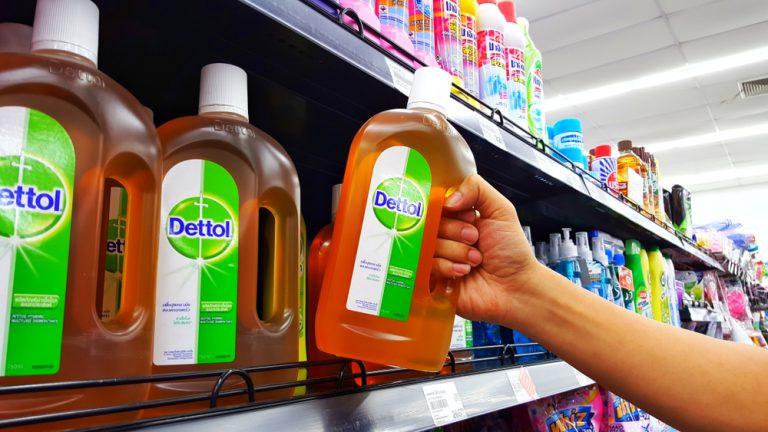
Shares in Reckitt Benckiser (LON:RB) rallied on Thursday as the FTSE 100 consumer group said they had a bumper first quarter driven by a jump in sales of hygiene products.
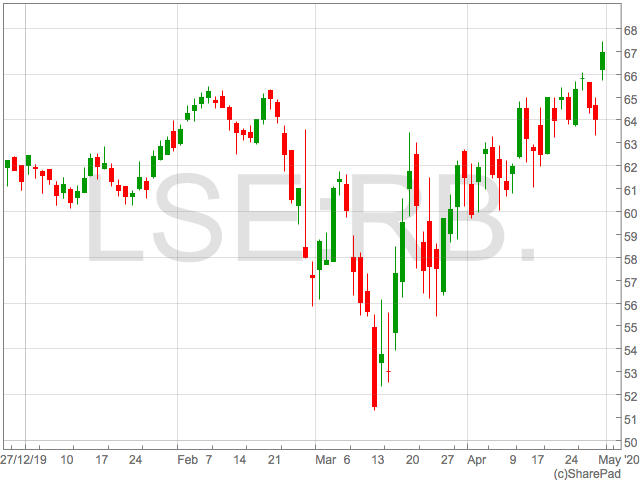
The Reckitt Benckiser share price rose over 4% to 6.679p, their highest level in 2020.
Reckitt Benckiser is one of only 12 companies in the FTSE 100 with shares in positive territory for 2020.
Group like-for-like sales increased by 13.3% in the first quarter as consumer stocked up on brands including Dettol, Lysol, Mucinex and Nurofen.
Reckitt Benckiser also enjoyed a 50% jump in online sales as consumer followed the ‘stay home’ guidance from governments.
However, the future performance of RB’s sales was unclear as sales may tail off after consumers stocked up on goods that may not necessarily need to be replaced.
Despite doubts surrounding the continuation of sales through 2020, RB said they had increases expectations for their full year performance after the strong first quarter.
Reckitt’s will provide further guidance in the half-year report.
Laxman Narasimhan, Chief Executive Officer of Reckitt Benckiser, commented on the results:
“We have seen strong consumer demand, particularly in March and April but the split between defensive buying and higher levels of underlying consumption is unclear. At this stage, it is uncertain how quickly this will change in the months ahead. Improved penetration and usage, particularly for products like Dettol and Lysol, may well sustain, although we will likely see some unwinding of ‘pantry load’ as we work our way through the crisis. The near- term operational challenges to meet additional demand and handle lockdown conditions, with the associated costs, are also likely to continue for some time.”
“As we set out in February, this is a good house in a great neighbourhood. There are four long-term trends that are shaping our business. Urbanisation and global warming continue to drive hygiene as the foundation of health.”
“Pressures on state-funded healthcare are growing demand for self-care. Sexual health and well-being are big societal issues that are growing demand for effective protection and related products. And an ageing and growing population is driving demand for personalised infant and adult nutrition. At the same time, technology and e-commerce are changing the way consumers know both what and how to buy, and where to look for information and advice.”
“Against this positive environment, we are making good strategic progress to position our business for success. I am heartened that the ambitions we have outlined to rejuvenate RB have gained support throughout the business. As a result, we are already executing our plan and making progress during this transformational year – one that lays the foundations for our success in the future; investing in our people, brands and operations, improving delivery performance and increasing productivity.”
 Reckitt Benckiser also enjoyed a 50% jump in online sales as consumer followed the ‘stay home’ guidance from governments.
However, the future performance of RB’s sales was unclear as sales may tail off after consumers stocked up on goods that may not necessarily need to be replaced.
Despite doubts surrounding the continuation of sales through 2020, RB said they had increases expectations for their full year performance after the strong first quarter.
Reckitt’s will provide further guidance in the half-year report.
Laxman Narasimhan, Chief Executive Officer of Reckitt Benckiser, commented on the results:
“We have seen strong consumer demand, particularly in March and April but the split between defensive buying and higher levels of underlying consumption is unclear. At this stage, it is uncertain how quickly this will change in the months ahead. Improved penetration and usage, particularly for products like Dettol and Lysol, may well sustain, although we will likely see some unwinding of ‘pantry load’ as we work our way through the crisis. The near- term operational challenges to meet additional demand and handle lockdown conditions, with the associated costs, are also likely to continue for some time.”
“As we set out in February, this is a good house in a great neighbourhood. There are four long-term trends that are shaping our business. Urbanisation and global warming continue to drive hygiene as the foundation of health.”
“Pressures on state-funded healthcare are growing demand for self-care. Sexual health and well-being are big societal issues that are growing demand for effective protection and related products. And an ageing and growing population is driving demand for personalised infant and adult nutrition. At the same time, technology and e-commerce are changing the way consumers know both what and how to buy, and where to look for information and advice.”
“Against this positive environment, we are making good strategic progress to position our business for success. I am heartened that the ambitions we have outlined to rejuvenate RB have gained support throughout the business. As a result, we are already executing our plan and making progress during this transformational year – one that lays the foundations for our success in the future; investing in our people, brands and operations, improving delivery performance and increasing productivity.”
Reckitt Benckiser also enjoyed a 50% jump in online sales as consumer followed the ‘stay home’ guidance from governments.
However, the future performance of RB’s sales was unclear as sales may tail off after consumers stocked up on goods that may not necessarily need to be replaced.
Despite doubts surrounding the continuation of sales through 2020, RB said they had increases expectations for their full year performance after the strong first quarter.
Reckitt’s will provide further guidance in the half-year report.
Laxman Narasimhan, Chief Executive Officer of Reckitt Benckiser, commented on the results:
“We have seen strong consumer demand, particularly in March and April but the split between defensive buying and higher levels of underlying consumption is unclear. At this stage, it is uncertain how quickly this will change in the months ahead. Improved penetration and usage, particularly for products like Dettol and Lysol, may well sustain, although we will likely see some unwinding of ‘pantry load’ as we work our way through the crisis. The near- term operational challenges to meet additional demand and handle lockdown conditions, with the associated costs, are also likely to continue for some time.”
“As we set out in February, this is a good house in a great neighbourhood. There are four long-term trends that are shaping our business. Urbanisation and global warming continue to drive hygiene as the foundation of health.”
“Pressures on state-funded healthcare are growing demand for self-care. Sexual health and well-being are big societal issues that are growing demand for effective protection and related products. And an ageing and growing population is driving demand for personalised infant and adult nutrition. At the same time, technology and e-commerce are changing the way consumers know both what and how to buy, and where to look for information and advice.”
“Against this positive environment, we are making good strategic progress to position our business for success. I am heartened that the ambitions we have outlined to rejuvenate RB have gained support throughout the business. As a result, we are already executing our plan and making progress during this transformational year – one that lays the foundations for our success in the future; investing in our people, brands and operations, improving delivery performance and increasing productivity.” Lloyds profit wiped out by COVID-19 provisions

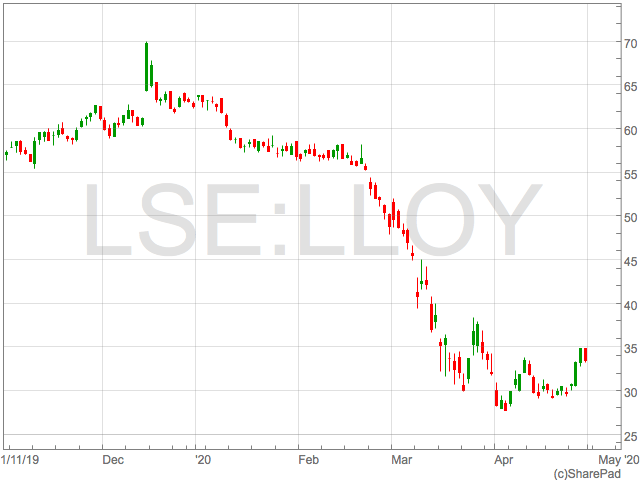
Lloyds (LON:LLOY) first quarter pre-tax profit has been almost completely wiped out by a £1.4bn provision for the increased macro uncertainty due to the COVID-19 pandemic.
Lloyds statutory pre-tax profit fell to £74m, considerably lower than the £1.6bn reported in the first quarter of 2019.
Lloyds shares were down as much as 4% in the first hour of trading on Thursday.
Just as Lloyds cut their dividend inline with other UK banks in April, Lloyds followed in the steps of other UK banks by saying their would be no consideration given to resuming dividends until the end of 2020.
UK banks scrapped dividends in April to help preserve cash for the possibility of a prolonged economic downturn, despite the banks having much stronger balance sheets than they did in the financial crisis.
Although Lloyds reported a sharp drop in profits, the bank said the company’s operations had been resilient to the spread of COVID-19 with around 90% of their branches remaining open.
In statement attached to the first quarter results, CEO António Horta-Osório highlighted Lloyds’ strong balance sheet and how this will be used to facilitate the UK economy.
“The coronavirus pandemic presents an unprecedented social and economic challenge which is having a significant impact on people and businesses in the UK and around the world. The economic outlook is clearly challenging with the longer- term outcome dependent on the severity and length of the pandemic and the mitigating impact of Government and other measures in the UK and across the world,” said António Horta-Osório, Group Chief Executive
“Throughout this period of uncertainty we will continue to work closely with Government, regulators and other authorities and use the strength of our balance sheet and business model to ensure that we play our part in supporting our customers and the UK economy.”
“I would like to pay tribute to the exemplary dedication being shown by all our colleagues across the Group providing vital banking services to those in need, but also in going above and beyond in countless and often unseen ways to support the most vulnerable.”
 Although Lloyds reported a sharp drop in profits, the bank said the company’s operations had been resilient to the spread of COVID-19 with around 90% of their branches remaining open.
In statement attached to the first quarter results, CEO António Horta-Osório highlighted Lloyds’ strong balance sheet and how this will be used to facilitate the UK economy.
“The coronavirus pandemic presents an unprecedented social and economic challenge which is having a significant impact on people and businesses in the UK and around the world. The economic outlook is clearly challenging with the longer- term outcome dependent on the severity and length of the pandemic and the mitigating impact of Government and other measures in the UK and across the world,” said António Horta-Osório, Group Chief Executive
“Throughout this period of uncertainty we will continue to work closely with Government, regulators and other authorities and use the strength of our balance sheet and business model to ensure that we play our part in supporting our customers and the UK economy.”
“I would like to pay tribute to the exemplary dedication being shown by all our colleagues across the Group providing vital banking services to those in need, but also in going above and beyond in countless and often unseen ways to support the most vulnerable.”
Although Lloyds reported a sharp drop in profits, the bank said the company’s operations had been resilient to the spread of COVID-19 with around 90% of their branches remaining open.
In statement attached to the first quarter results, CEO António Horta-Osório highlighted Lloyds’ strong balance sheet and how this will be used to facilitate the UK economy.
“The coronavirus pandemic presents an unprecedented social and economic challenge which is having a significant impact on people and businesses in the UK and around the world. The economic outlook is clearly challenging with the longer- term outcome dependent on the severity and length of the pandemic and the mitigating impact of Government and other measures in the UK and across the world,” said António Horta-Osório, Group Chief Executive
“Throughout this period of uncertainty we will continue to work closely with Government, regulators and other authorities and use the strength of our balance sheet and business model to ensure that we play our part in supporting our customers and the UK economy.”
“I would like to pay tribute to the exemplary dedication being shown by all our colleagues across the Group providing vital banking services to those in need, but also in going above and beyond in countless and often unseen ways to support the most vulnerable.” Royal Dutch Shell cuts dividend

Royal Dutch Shell (LON:RDSB) has cut their dividend as earnings fall due to the ongoing COVID-19 crisis and volatility in the price of oil.
Shell has reduced their first quarter dividend to 16 cents, down from 47 cents in the same period a year ago.
Royal Dutch Shell shares opened 4% lower in London on Thursday.
The deterioration in the macroeconomic picture due the pandemic was instrumental in Shell’s decision to cut their sacrosanct dividend for the first time since world war two.
“Shareholder returns are a fundamental part of Shell’s financial framework. However, given the risk of a prolonged period of economic uncertainty, weaker commodity prices, higher volatility and uncertain demand outlook, the Board believes that maintaining the current level of shareholder distributions is not prudent,” said Chad Holliday, Chair of the Board of Royal Dutch Shell.
“Following the announcement not to continue with the next tranche of the share buyback programme, the Board has also decided to reduce the first quarter 2020 dividend and reset to 16 US cents per share.”
The chair went on to outline the board’s thinking and highlighted the preference was to maintain the strength of the balance sheet as opposed to their investor’s income, in the short-term.
“As conditions allow, the Board will continue to evaluate our capital allocation priorities between ongoing investment in our business, maintaining a strong balance sheet and increasing returns to shareholders which remains our ambition.”
Royal Dutch Shell’s decisions to cut dividends comes just days after peer BP maintained their dividend, despite an increase in net debt.
However, just as BP earnings suffered, Shell did see profit falling as the impact of lower oil prices dented revenue.
Shell reported revenue of $60.96bn in the first quarter compared to $85.66bn in 2019.
Shell reports earnings based on Current Cost of Supplies (CCS) which takes into consideration the current price of oil instead of the historic price. It also accounts for the carrying cost of oil. CCS earnings reporting means profit tends to be higher when oil prices are falling and lower when prices are rising.
Shell reported first quarter CCS earnings of $2.9bn in the first quarter, down from $5.4bn in the same period last year.