Topps Tiles shares (LON:TPT) rose after the company published a trading update on Wednesday.
The tile retailer said total revenues for the 26 week period to 30 March were £108.8 million, down slightly from the £109.4 million reported a year before.
Meanwhile, like-for-like revenues increased by 0.2%, whilst trading over the second quarter ‘improved’, with like-for-like sales rising 1.8%.
Matthew Williams, Chief Executive Officer, commented on the update:
“Developing and reinforcing our specialism in tiles is at the heart of our growth strategy. I am encouraged by our overall performance in the first half and believe the successful execution of this strategy is enabling us to outperform the overall tile market. Our commercial business is growing at pace and we remain open to opportunities to accelerate its expansion.”
Topps Tiles is set to report its interim results later this year, on 21 May 2019.
In its most recent results published in January, the company saw a dip in sales amid a ‘challenging market backdrop’.
Sales were down 1.4% for the 13 week period through December 29th, however, Topps Tiles said it was making progress.
Shares in the company are currently +4.92% as of 14:38PM as investors react to the trading update(GMT).
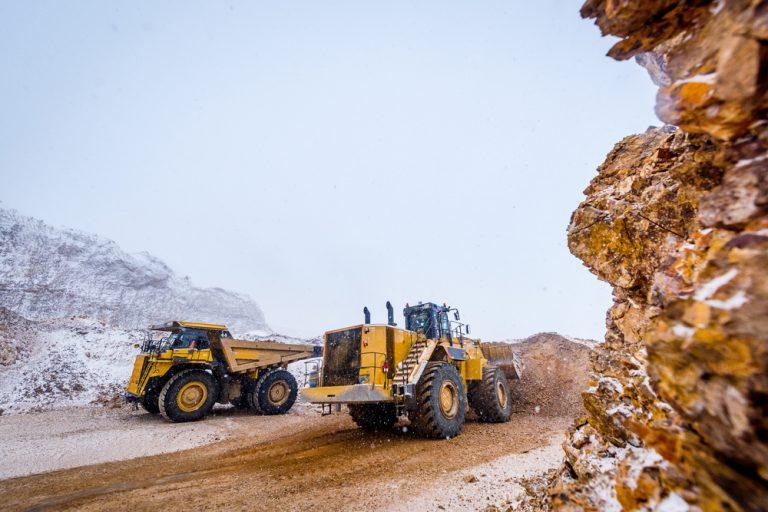
ECR Minerals (LON:ECR) re-affirmed its commitment to expanding its assets in West Australia in its latest results released last week, despite widening losses.
The precious metals exploration company is looking to its Central Victorian Goldfields and the Yilgarn Craton projects in Western Australia as key to its business strategy moving forward.
Back in January, the AIM-listed firm said it had applied for new applications in the Yilgarn region, which is named the Windidda gold project.
The area covers a total of 523 graticular blocks, which amounts to roughly 1,600 km2 of the Yilgarn Craton.
The area was highlighted as hosting potential greenstone-hosted gold trends.
Last month, ECR Minerals reported significant high-grade gold assays from the reverse circulation (RC) drilling programme recently completed at the Blue Moon prospect in Australia.
Shares shot up as much as 6% on the day of the announcement, as investors welcomed the promising results.
Most recently, the company reported its final results last week, with losses widening slightly for the year.
Specifically, ECR Minerals reported a £550,018 loss for the year to September end, slightly higher than the £511,124 loss reported a year before.
Commenting on the results, Investor Paul Johnson stated:
“Over the past year, ECR has continued to advance and augment its portfolio of gold exploration projects in Australia, which is one of the world’s principal gold producers and one of the foremost destinations for global mining investment,”
“The board remains confident in ECR’s strategic objective of discovering a multi-million ounce gold deposit, and we look forward to reporting further progress towards this goal,”
hVIVO (HVO) is a specialty biopharma discovery and clinical testing company that is pioneering a human disease technology platform that models respiratory (airway) and infectious diseases. After raising £20m at 225p this could be the last year of losses…….
The Interims to June reported the strongest sales pipeline for several years and translation into active negotiations, with top-tier pharmaceutical companies, should lead to long term contracts. Based in the UK, more than 50 clinical studies have conducted with over 2,500 volunteers inoculated. hVIVO is currently presenting at the Influenza...
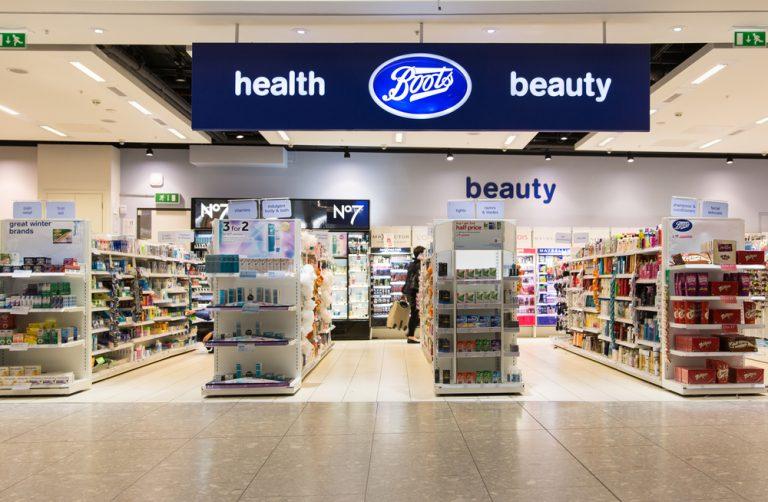
The owner of Boots, Walgreens Boots Alliance, has warned of store closures, amid falling sales in the “most difficult quarter” since its merger.
Walgreens Boots Alliance slashed its full-year earnings forecast in its second results on Wednesday, blaming weaker sales both in the UK and US.
Despite a 9.8% rise in prescription sales at its US stores across the period, gross profit at the group fell 3.2%.
Meanwhile, UK like-for-like sales slid 2.3%, amid a backdrop of weak consumer confidence.
The group said it now expects profit to be flat for the full year, revising earlier guidance of 7% to 12% growth.
As a result of the disappointing second quarter, Walgreens Boots Alliance said it consider reviewing underperforming sites as it looks to streamline costs.
Executive Vice Chairman and CEO Stefano Pessina commented on the results: “The market challenges and macro trends we have been discussing for some time accelerated, resulting in the most difficult quarter we have had since the formation of Walgreens Boots Alliance.
She continued: “During the quarter, we saw significant reimbursement pressure, compounded by lower generic deflation, as well as continued consumer market challenges in the U.S. and UK. While we had begun initiatives to address these trends, our response was not rapid enough given market conditions, resulting in a disappointing quarter that did not meet our expectations. As a result, we are now expecting roughly flat adjusted EPS growth for fiscal 2019.”
Boots has 2,485 stores across the UK, employing about 56,000 staff.
Shares in Walgreens Boots Alliance (NASDAQ:WBA) are down -12.81% as of 12:40PM (GMT).
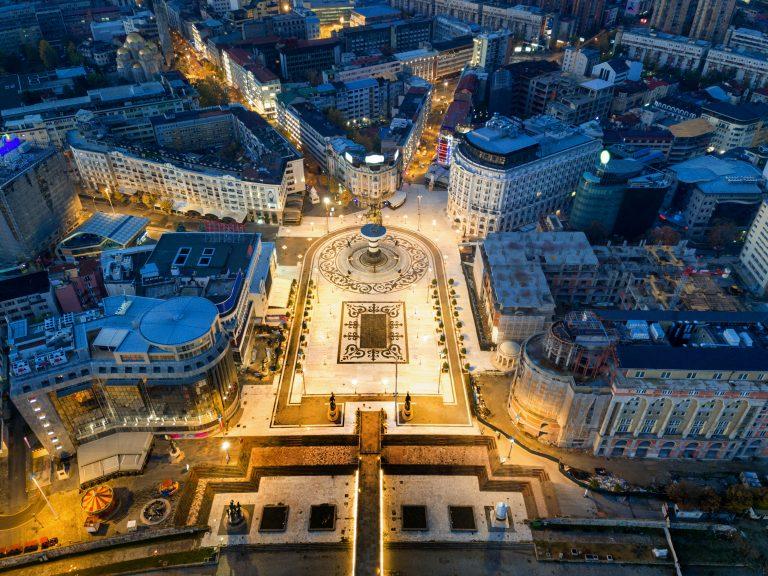
North Macedonia received a boost in its bid to become a member of the European Union this week, with a historic visit from Greek Prime Minister Tsipras.
Whilst all eyes in Europe have been on Westminster as of late, the symbolic visit has signalled the ushering of a new era in another corner of the continent.
Tsipras is the first Greek Prime Minister to visit the nation since 1991, making it a momentous occasion for diplomatic relations between the Balkan nation and Greece.
— Republic of North Macedonia in EU (@MKmissionEU) April 3, 2019
https://platform.twitter.com/widgets.jsBack in January, North Macedonia completed a historic deal with Greece putting an end to a decade long feud between the neighbouring nations.
In accordance with the Prespa accord agreed back in the summer, the Balkan successor state became formally recognised by Greece as The Republic of North Macedonia or North Macedonia, for short.
In return, Greece agreed to back its bid to become a member of the European Union. Notably, North Macedonia has been a candidate for accession since 2005.
However, up until recently, Greece had consistently vetoed North Macedonia’s membership for both the EU and NATO, amid an on-going dispute over the region’s previous name.
Greece has long opposed its use of the name amid concerns over the misappropriation of Greek culture and history, in particular referencing the Greek region of Macedonia and the Greek Kingdom.
The dispute has dated back to as far back as World War II.
This only escalated further after the break-up of Yugoslavia and when the Socialist Republic of Macedonia, as it was formally known, gained independence back in 1991.
Whilst the Balkan successor state joined the United Nations in 1993, Greece did not formally recognise the country, instead opting to impose a trade embargo.
Protesters in Skopje holding a Macedonian flag pictured in 2015.
However, following the withdrawal of Greek’s veto, the European Union approved the commencement of accession talks with the Republic, with official talks are expected to take place later this year.
Tspira’s visit is the next step in the process to start a new chapter between the two nations, in turn providing a boost to North Macedonia’s global ambitions.
“We are here to build bridges and break down walls,” Tsipras stated at a joint press conference alongside, Zoran Zaev, North Macedonia’s Prime Minister.
“This is a historic moment not only for our countries, but for the Balkans and Europe.”
Similarly, Zaev welcomed the historic moment, he said: “This agreement is an example to be mimicked by all,”
“We showed Europe and the world that with bold decisions anything is possible … Greece is our friend now, she will remain our friend and will become an even greater friend in the future”, He added.
Nevertheless, it’s still a long road ahead for North Macedonia to cement its place among the 28, soon to be 27 member states of the EU.
Consider for instance, Turkey, has also remained a consideration for accession into the union in Brussels since 2005, yet the nation is no closer to securing entry.
When UK Investor Magazine visited the capital back in March, the country was in the midst of coming to terms with the administrative headache of embracing its new name.
Momentum is nonetheless building. Back in February, the country signed an agreement to become the 30th member of NATO, and upcoming EU official talks also indicate progress.
However, its not just the geo-political landscape that is potentially shifting in favour of North Macedonia. The economy is also showing promise.
Companies operating in North Macedonia are also starting to show signs of the economic expansion, with profits soaring at companies listed on the Macedonian Stock Exchange.
Take Makpetrol, the leading distributor of oil and oil products in North Macedonia, as an example.
The company posted a 151% increase in non-consolidated net profit in 2018 in a year that GDP grew 3.7% year-on-year in the final quarter.
The broad GDP increase has been propelled higher by consumer spending with growth rates hitting 9.3% in October 2019, hovering around 7% ever since.
The increase in activity was noticeable in the capital city, Skopje, with busy shops, malls and bazaars enjoying the increased spending of North Macedonians.
Umbrellas decorating the streets in the Old town bazaar, May 7th 2018, Skopje.
In addition, signs of further growth on the horizon were visible by the number of large construction sites in a city that resembles a mix of Middle Eastern traditions and the growth-seeking capitalism of the west.
Granit AD Skopje, an MCE-listed construction firm, is reaping the benefit of this drive having seen share rise over 10% in the past year, as investors position themselves in one of the country’s largest and diverse construction companies.
As a whole, the MCE is up over 50% since the beginning of 2018 and may see further increases if the current economic trajectory is maintained.
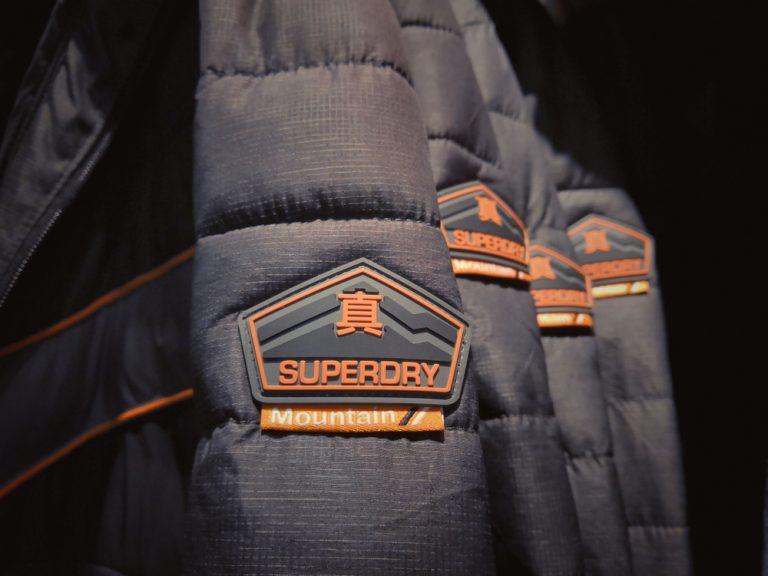
Most of Superdry’s board members have quit following the return of founder Julian Dunkerton. Top executives are among the board members who have left their positions.
Earlier in March, Superdry asked its shareholders to reject Julian Dunkerton’s pledge for a seat on the board. It believed that his appointment would lead to the company pursuing a strategy that would fundamentally fail, adding that the return of its founder would distract the business from its current global digital brand strategy.
However, the majority of shareholders who voted at the general meeting supported the founder’s return.
Shares in the fashion brand were trading over 10% lower on Wednesday morning following the events a day earlier.
On Tuesday Julian Dunkerton won the vote of 51.15% of shareholders. His return comes after he quit a year ago over a disagreement of strategy.
Only hours after this was confirmed the company announced the departure of Chief Executive Euan Sutherland and Chairman Peter Bamford.
The departure of the two contribute to a wider departure of the company’s management, and comes after five years of leadership.
“Peter Bamford, Chairman of the Board, Euan Sutherland, Chief Executive Officer, Ed Barker, Chief Financial Officer, and Penny Hughes, Chairman of the Remuneration Committee, have resigned from the Board and will stand down with immediate effect,” a statement announced Tuesday afternoon reads.
“Dennis Millard, Minnow Powell, Sarah Wood and John Smith have given three-months’ notice under their contracts and will stand down as directors with effect from 1 July 2019,” it continued.
Founder Julian Dunkerton was appointed as Interim Chief Executive Officer and Peter Williams as Chairman of the Board. “We are very pleased to be joining the Board of this great British company. We look forward to rebuilding the Superdry brand and the business,” they both said in a statement.
As the fashion brand battles with a difficult trading climate, it announced a 49% decrease in its half-year profits in December, in addition to a profit warning released October last year.
At 10:38 BST Wednesday, shares in Superdry plc (LON:SDRY) were trading at -9.89%.
Time Out Group (LON:TMO) announced on Wednesday that it has entered into a management agreement with Emaar Malls in order to open a new Time Out Market in one of Dubai’s most highly visited attractions.
Time Out Market was launched in 2014 in Lisbon. The restaurants and artisan kiosks enable people to discover local specialities and cultural delights.
Time Out Mercado de Ribeira made the Guardian’s list of the top ten best restaurants and cafes in Lisbon, and the food court has become a favourite amongst Lisboans.
Emaar Malls is a shopping mall and retail business which is majority owned by Emaar Properties.
The global media and entertainment business, who announced its stock market floatation in 2016, said that this was Time Out Market’s third management agreement. It aims to enable the business extend its global expansion of this successful food and cultural market.
“We are pleased to have entered into our third management agreement, partnering with Emaar Malls to open Time Out Market Dubai,” Julio Bruno, CEO of Time Out Group commented in a statement.
“This enables us to scale this successful format globally and drive growth. Time Out Market Dubai will be the first site to open outside of Europe and North America – where we have a pipeline of new sites – demonstrating the strength of our brand and its appeal for the world’s leading real estate companies,” he continued.
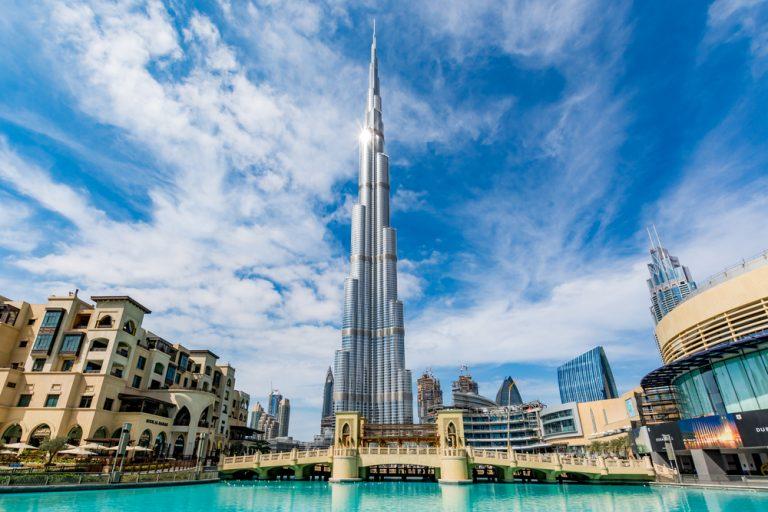
Time Out Market Dubai will be located in Souk Al Bahar – an Arabic-style retail, entertainment and dining location in Downtown Dubai. Positioned next to the Dubai Mall and the Burj Khalifa, the location attracts millions of visitors annually.
The new Dubai Market will offer food from 16 of Dubai’s top chefs and restaurants, as well as providing three lounges and cultural experiences.
Time Out Market Dubai expects to open at the end of 2020.
“We are excited to open Time Out Market Dubai together with Emaar Malls in the beautiful Souk Al Bahar. In this city you couldn’t find a more iconic location, right next to the world-famous Burj Khalifa, the spectacular water fountains and the popular Dubai Mall – all attracting millions of visitors every year,” Didier Souillat, CEO of Time Out Market, said.
Time Out made headlines earlier this year when it sold its stake in Flyt Limited to the global online takeaway delivery market place, Just Eat.
At 08:46 BST Wednesday, shares in Time Out Group (LON:TMO) were trading at +1.60%.
Intercede shares rallied on Tuesday after the company announced it had received a $4.3 million order from the U.S federal government.
The company said the order includes software licenses as well as annual support and maintenance services.
It specified that $2.05 million of the funds which will be recognised in the financial year to March-end, which is set to be revealed in its upcoming full-year results.
As a result, Intercede said it expects revenues for the year to be in excess of £10 million, ahead of market expectations.
The figure is set to be approximately 10% higher than the year before.
Intercede attributed the growth in profits to a series of contract wins in the U.S, Europe and South-East Asia.
The firm added that as of the end of the March, gross cash balances remained unchanged from the year ago at £3.2 million.
Its full-year results are expected to be announced in June.
Intercede is a cyber security firm that provides services for governments, financial institutions and the military and police.
The company operates from offices both in the U.S and the U.K.
Some of the businesses it provides services for include the U.S. Department of Homeland Security, Airbus, Boeing, Coutts and Swedbank.
It was founded back in 1992 and is listed on the London Stock Exchange.
Shares in Intercede (LON:IGP) are currently +77.27% as of 13:24PM (GMT) on the back of the trading update.
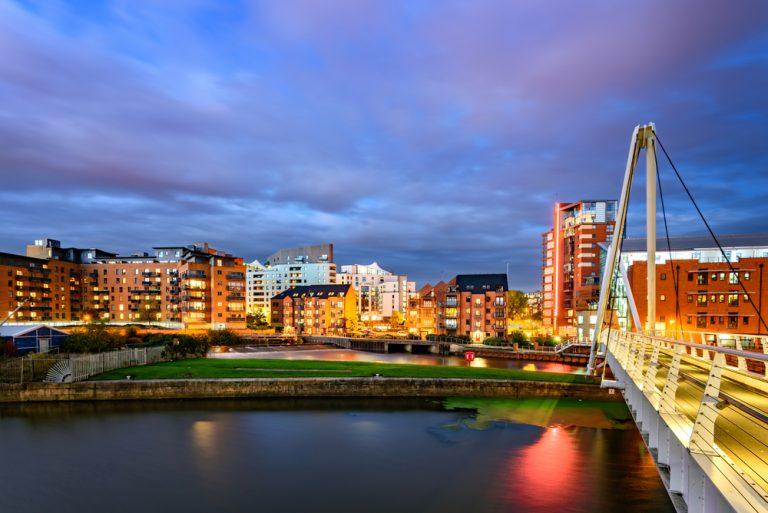
Channel 4 have confirmed its new headquarters will be in Leeds, in a boost for the so-called Northern Powerhouse project.
The broadcaster said it is in advanced discussions to set up base across three floors in the city’s Majestic Building, which is just opposite the train station.
In the meantime, Channel 4 employees are set to move into a temporary office in Leeds.
The Majestic Building was initially built in the 1920’s as a cinema, it later transformed into a nightclub, inspiring a Kaiser Chief song.
The decision will be a boost to the the government’s ambition to boost economic growth in Northern cities as part of its Northern Powerhouse strategy.
Jonathan Allan, Channel 4’s chief commercial officer, said: “Leeds offered a wealth of potential locations for our national HQ but the Majestic really stood out as an iconic building, which will put Channel 4 at the heart of the city centre. It’s an incredibly impressive redevelopment and offers the right mix of location, connectivity and space for our organisation and great facilities for our staff and our partners in the industry.”
Councillor Judith Blake, leader of Leeds City Council, also commented:
“The Majestic building is an iconic Leeds landmark, and will be a fantastic location for Channel 4 when they make their move to the city.”
Prior to deciding upon Leeds, Channel 4 reportedly had been considering other cities including Birmingham, Bristol and Manchester.