
Persimmon annual profits surpass £1bn
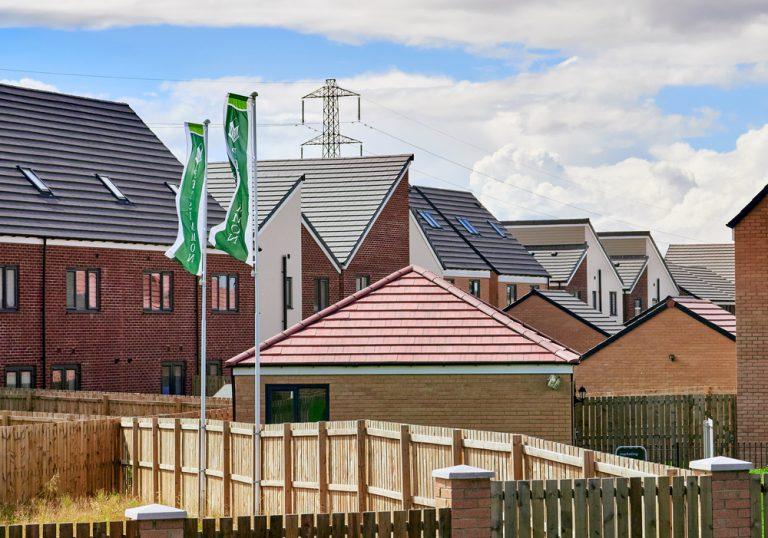
Persimmon pre-tax profits for 2018 surpassed £1.1 billion, with the company benefiting in particular from the government help-to-buy scheme.
Persimmon reported annual profits of £1.091 billion, up 13% from £966 million in 2017. This was largely as a result of help-to-buy, which accounted for almost half of all homes sold.
However, the housing minister has now launched a review on the scheme, particularly in light of Persimmon’s soaring profits.
The housebuilder also announced that interim chief executive Dave Jenkinson would remain in his role heading the company.
Last year, its previous chief executive Jeff Fairbun left the firm after a shareholder backlash against a £75 million pay-out.
Tom Brown, Managing Director of Real Estate at Ingenious, commented on the results: “Persimmon’s 2018’s pre-tax profits were broadly in line with forecasts however recent sharp falls in its share price and those of other housebuilders in the UK betray a sector which has a lot to lose from a disorderly Brexit and an economic downturn. The company has been in the firing line since the scandal broke of the bonus awarded to its now ex CEO.
“The government is right to put housebuilders under the spotlight as a condition of their inclusion in the key Help to Buy scheme which has underpinned pricing in the sector since being announced in 2013. Alongside good financial governance, the government should drive best practice across the industry in relation to build quality and after sales service. This coupled with local councils demanding funding infrastructure, can ensure that everyone shares in the benefits that new development can bring to communities.”
Persimmon shares (LON:PSN) are currently trading +1.54% as of 9:50AM (GMT).
Beneficiaries of financial policies unchecked by most British adults

New data has emerged revealing that most British adults do not check the beneficiaries of their financial policies and could therefore be leaving money to the wrong people. As the UK’s departure from the European Union draws closer, it is advised that financial policies are reviewed.
Phoenix Life, Europe’s largest life and pensions consolidator, conducted a study where it emerged that 54% of UK adults are unaware that their pension typically goes to the person who is named in their pension policy rather than their will.
As family structures develop and relationships evolve, it is fundamental that financial policies are regularly updates in order to avoid complications later in life.
Over 2,000 UK adults took part in the study that revealed a significant number of policy holders do not review the recipients of their life insurance policy, critical illness cover, personal pension, income protection and redundancy cover sine they were established.
Additional statistics regarding personal pensions, beyond those found in the Phoenix Life study, show that the number of new female state pension claimants have dropped by over 202,000 per year. With the equalisation of the state pension age coming into motion, the number of female claimants has dropped significantly, though the male recipient figure has increased by 89,000.
“Few people probably know that pensions don’t form part of the estate on death, which means unlike savings, property and investments, pensions aren’t covered by wills,” Customer Director at Phoenix Life, David Woollett, said.
“People will most likely take out a number of different policies over their lifetimes – whether it’s a pension, life insurance, critical illness – and, as well as ensuring the the beneficiaries are updated as circumstances change, policyholders should inform their recipients about the policy, otherwise they won’t know to make the claim,” he continued.
Data from the study also shows that despite 47% of UK adults holding a personal pension policy, these are the least to be reviewed among policies. This is most notably alarming in South West England where 24% have reviewed their pension policy.
The political and economic Brexit-induced chaos is hitting most areas of British finance, including pensions. As uncertainty looms, it would be a good time to check the beneficiaries of your financial policies with the departure date drawing closer. Considering the impact of Brexit on your personal retirement savings is fundamental.
Market fragility caused by Brexit could significantly impact both your pension pot and your retirement income.
At 14:59 GMT Monday, shares in Phoenix Group Holdings (LON:PHNX) were trading at -0.40%.
Karren Brady resigns as chair of Sir Philip Green’s holding company
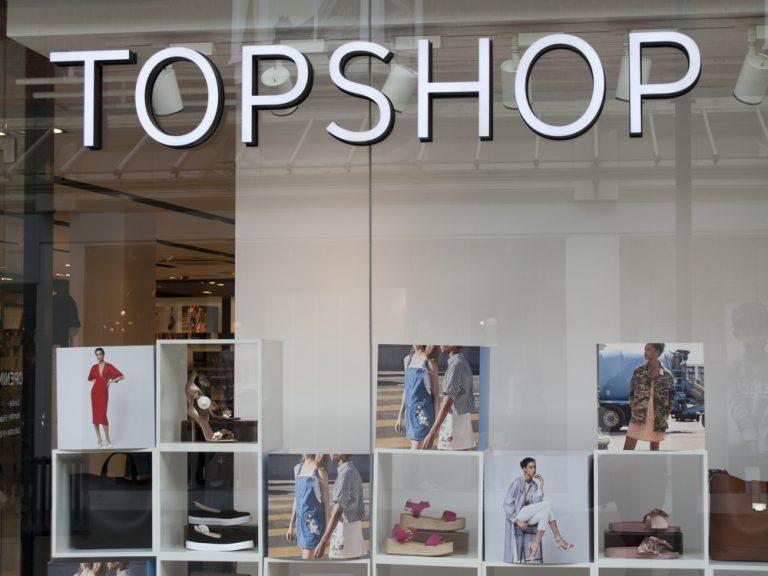
Baroness Karren Brady has quit as chair of the holding company for Sir Philip Green’s Arcadia Group, Taveta Investments.
The announcement comes just days after saying that she had a “duty” to employees to remain as chairman.
Earlier this month, Karren Brady had said that she would not resign from Taveta following The Telegraph’s reportage of staff complaints. When asked by the newspaper, she said that she would “not be resigning” as chairman, adding “why should I?”
Karren Brady had been chairman since July 2017. She initially joined the company as a non-executive director in 2010.
Taveta Investments is the parent company of Sir Philip Green’s Arcadia Group. Arcadia Group owns the UK high street’s top clothing retailers: Burton, Dorothy Perkins, Evans, Miss Selfridge, Topman, Topshop, Wallis and Outfit. It owns over 2500 UK outlets and hols concessions in British department stores such as Debenhams and Selfridges.
In a statement, the company said:
“Taveta would like to announce that Karren Brady and Sharon Brown (in their respective capacities as non-executive chairman and non-executive director) have resigned from its board.”
“Taveta thanks them for their contribution and wishes them well for the future.”
“Taveta is in active discussions with individuals who have significant relevant experience and expects to make a further announcement as to the composition of its board shortly.”
Support for the tycoon’s empire has become increasingly controversial as allegations of sexual harassment and racial abuse have been made against him. He denies these allegations.
Last week it was confirmed that Sir Philip Green was facing an investigation for sexual misconduct in the US for having allegedly groped a fitness instructor working at an Arizona wellness resort where he owns a property.
Additionally, the tycoon allegedly kissed, slapped and groped a female employee as well as racially abusing another.
Karren Brady has condemned powerful men who have faced sexual harassment allegations.
Elliott Advisors backs Hammerson’s asset disposals programme

The British shopping centre operator Hammerson has announced that it has won shareholder support on its asset selling programme aimed to reduce company debt. Indeed, shareholder Elliot Advisors has backed the plan to offload more assets as well as expand its board.
Hammerson announced on Monday that it planned to offload more of its assets in 2019, following the sale of assets worth over £570 million the year prior. The sale of additional assets, if entirely successful, aims to target a debt of £3 billion for the 2019 financial year.
The company outlined its plans to appoint an additional two non-executive directors in 2019.
In a separate statement to Hammerson’s financial results for the previous year, the U.S activist investor Elliott Advisors commented:
“Following constructive dialogue with Hammerson’s Board, Elliott welcomes both the Board’s decision to search for two additional independent non-executive Directors, and the formation of a new Investment and Disposals Committee, with oversight and responsibility for the Company’s ongoing disposals programme.”
“This increased focus on strategic disposals, as marked by updated targets for 2019 and a current pipeline of potential sales of over £900 million, signals a positive development in the company’s progress, and its ability to ensure that its portfolio of high quality assets delivers compelling value for all shareholders.”
As of July 5th, Elliott Advisors has held a 5.3% stake in the British shopping centre operator. It has agreed with Hammerson that it would vote for the resolutions proposed by the company at the forthcoming general meeting.
Elliott Advisors has been pressuring Hammerson to fundamentally reshape its portfolio. It is understood that last year, the shareholder used the decline on Hammerson’s share price to strengthen its 5.3% stake.
At 09:34 GMT Monday, shares in Hammerson plc (LON:HMSO) were trading at -1.97%.
Hammerson to offload more sites in 2019
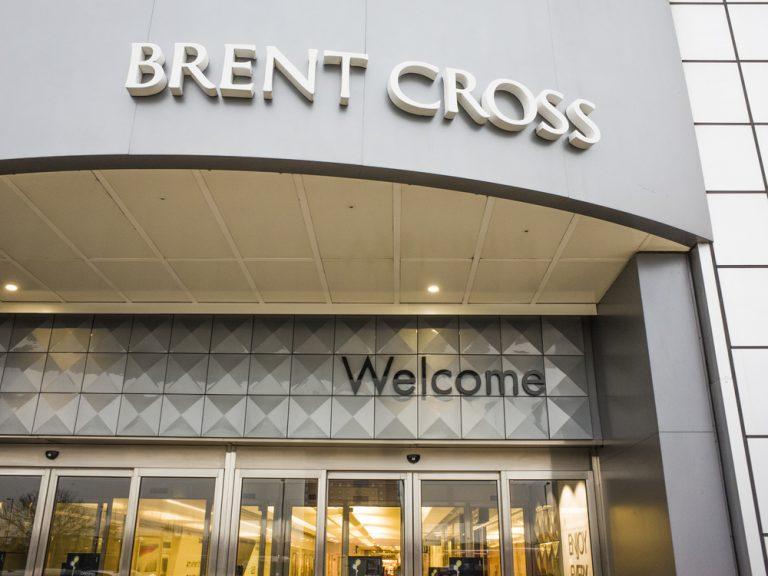
Hammerson has announced that it will offload more of its sites in order to raise over £500 million. Shares in the company decreased by over 2.5% during early trading on Monday.
Birmingham’s Bullring and London’s Brent Cross owner said that a portfolio-wide review in order to accelerate transactions has been beneficial in identifying additional disposal opportunities. In 2018, sales were worth over £570 million at an average disposal price 7% lower than that in December 2017.
If the strategic disposals programme is successful, Hammerson’s net debt would be below £3 billion by the end of the year.
The announcement came in the company’s financial results for the year ended 31 December. The company said that it had made further progress on reducing its net debt, which was down £179 million from 30 June to £3.4 billion.
“Having successfully achieved £570 million of disposals in 2018, we are aiming to dispose of at least £500 million in 2019. We remain committed to exiting retail parks over the medium term and are in active portfolio-wide discussions on transactions of over £900 million, which would add further strength to our balance sheet,” the Chief Executive of Hammerson commented.
The company added that its results were impacted by a weaker investment market, underscoring that UK property values in the second half of last year had decreased 9.3%.
“2018 was a tough year particularly in the UK, Tenant failures, the structural shift in retail and a more considered consumer created a difficult operating environment, putting pressure on property values. Outside of the UK our destinations performed better with a strong contribution from premium outlets,” Chief Executive David Atkins said.
Hammerson is yet another company that has been hit by the growing Brexit uncertainty that has weakened the high street. With less consumer spending on fashion, dining and experience, Hammerson and its rivals are struggling to grow.
2018 saw a variety of failures and rescue deals, such as the well-publicised troubles to hit John Lewis, that damaged the property development and investment company. Indeed, Hammerson posted a £268.1 million bottom line loss after its £388 million profit figure revealed in 2017.
The tough retail climate to hit UK retail has reduced property values.
At 08:54 GMT today, shares in Hammerson plc (LON:HMSO) were trading at -2.56%.


Dairy Crest to be sold in £975m takeover
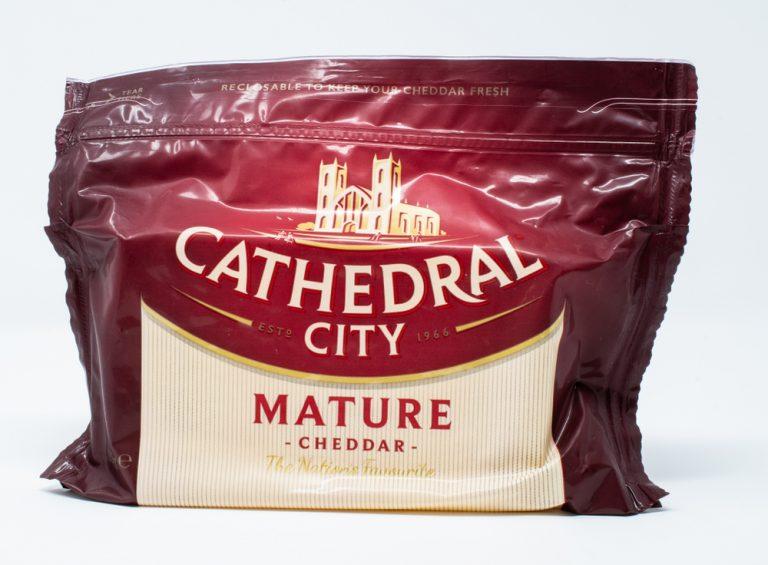
Dairy Crest (LON:DCG) has been bought by Canadian company Saputo, in a deal worth £975 million.
Dairy Crest, which owns brands such as Cathedral City Cheddar and Country Life butter.
The company have recommended that shareholders accept the deal, which values the company at almost £1 billion.
Saputo, which is based in Montreal, sells dairy products in more than 40 countries. In Canada it is the largest dairy processing producer, whilst in the U.S it is among one of the top three, owning brands such as Cracker Barrel.
Saputo chairman and chief executive Lino Saputo Jr said: “We believe that under Saputo ownership, Dairy Crest will be able to accelerate its long-term growth and business development potential and provide benefits to Dairy Crest’s employees and stakeholders.”
Commenting on the proposed takeover, Stephen Alexander, Chairman of Dairy Crest, added:
“The board is unanimously recommending this all-cash offer by Saputo to buy Dairy Crest at an attractive premium, which represents compelling value for Dairy Crest Shareholders. Dairy Crest is a leading UK dairy company and the proud manufacturer of Cathedral City, the largest UK cheese brand. Saputo is one of the top ten dairy processors in the world. Both companies have built strong positions in the cheese sectors in their respective home markets.
“The Acquisition should enable Dairy Crest to benefit from Saputo’s global expertise and strong financial position to fulfil and accelerate its growth ambitions. The businesses have strong shared values and the board is confident that Saputo’s plans to invest in and grow the Dairy Crest business mean the proposed transaction is positive for all its stakeholders.
Whilst the company assured said “virtually” all its UK jobs are safe, Unite Union said it would be pushing for an “urgent meeting” with Saputo to secure the future of its 1,100 employees.https://platform.twitter.com/widgets.js Shares in the FTSE-250 firm are currently +13.78% as of 13:39PM (GMT).Today we have announced that our Board is unanimously recommending an all-cash offer by Saputo to acquire Dairy Crest https://t.co/JiPK9bTZE9
— dairycrest (@dairycrest) February 22, 2019
Pearson profits rise amid cost-saving drive, pledges further 2019 growth

Pearson (LON:PSON) profits grew 8% for the year, despite a fall in sales, as cost-saving initiatives took effect.
The educational publisher said adjusted operating profit for the year to 31 December 2018 was £546 million, despite underlying revenue declining 1% on a year-on-year basis.
The fall in revenue was attributed to “portfolio changes”. The firm is in the midst of a restructuring its business, as it turns it focus more towards digital publishing.
The firm also said it expects adjusted operating profits of between £590 million and £640 million in 2019.
The company also anticipated cost cuts of £130 million, placing around 1,500 jobs at risk.
John Fallon, Pearson’s chief executive said: “We made good progress last year. We increased underlying profits, outperformed our cost savings plan and invested in the digital platforms that are making us a simpler, more efficient and innovative company.
He added: “We have a lot still to do, but we expect company-wide sales to stabilise this year, and grow again in 2020 and beyond.”
Shares fell back in January after the company issued a trading update for the year, nothing a decline year-on-year revenues, as a result of a fall in sales of US Higher Education Courseware (US HECW) and US K12 courseware.
Pearson was founded 175 years ago in 1844, initially operating in Yorkshire under the name S. Pearson & Son.
Shares in the company are currently down -0.52% as of 11:38AM (GMT).
Bahamas Petroleum Company announces license extension, shares up

Bahamas Petroleum Company announced it had secured the license extension of its four southern licences in the Bahamas, sending shares higher on Friday.
The oil and gas exploration firm confirmed in an update that it had received formal notification of the extension from the Government of the Bahamas.
The second period the exploration license will be valid until 31 December 2020.
Simon Potter, Chief Executive Officer of Bahamas Petroleum Company, said:
“The confirmation from the Government of The Bahamas that the current term of our four southern licences extends to 31 December 2020 provides the Company with a certainty of tenure over the Company’s licences, replacing any perceived “above ground” issues with complete clarity in fact and law.
He added: “This position has been arrived at following extensive government consultation and whilst this has taken the Company a while to establish, there is now a very clear two-year window to advance plans for and to drill an exploratory well providing certainty to potential partners as we move forward in our farm-out discussions. Today’s news will add considerable impetus to this process.”
The company added that alongside advisers, it continues the process to locate a farm-in partner for the initial exploration well.
Shares (LON:BPC) in the firm are currently +14.77% as of 11:07AM (GMT).
Metro Bank wins £120m in funding, shares rise

Metro Bank has been awarded £120 million in funding from BCR, sending shares higher on Friday.
The challenger bank said the additional funds will allow the bank to open new locations in the North by 2025, in turn helping to “radically transform” The UK’s small and medium sized enterprises (SME) banking experience.
Craig Donaldson, Chief Executive Officer at Metro Bank commented: “Securing this award from BCR Ltd allows us to accelerate our plans to revolutionise banking for SMEs. It will help us bring much needed competition to the underserved SME hotspots in the North, while investing in our digital capabilities and creating new jobs. We already provide tens of thousands of businesses with market-leading service and convenience, and these funds will enable us to introduce new services and products for more SME customers across the country.”
The funds were awarded by the Banking Competition Remedies (BCR). The funds will be provided by RBS (LON:RBS), under conditions of the government-led bail out of the bank back in 2008.
Metro Bank was founded back in 2010 by Anthony Thomson and Vernon Hill. It is now a constituent of the FTSE 250 on the London Stock Exchange.
Earlier this month it was revealed that Metro Bank had topped an industry customer service survey.
The bank received an 83% customer satisfaction rate, according to the survey conducted by the Competition and Markets Authority (CMA).
At the other end of the table, RBS came last with a customer satisfaction of 47%.
Metro Bank shares (LON:MTRO) are currently +4.40% as of 10:36AM (GMT).