
Dignity shares fall as price war hits profits

Dignity has reported a fall in third-year profits as the funeral provider has been hit by the market competition.
In the three weeks to September 29, profits for the group took a 27% hit to £11.1 million.
Market share for Dignity increased by 12.1% as the group performed an increase of 3,600 funerals so far this year to date.
The group’s chief executive Mike McCollum said: “We are pleased with how the group has performed in the period and following these results our expectations for the full year remain unchanged.”
“Our work on the transformation plan is critical and we are encouraged by the progress that has been made in the initial weeks.”
“Alongside the expansion of our digital offerings, we continue to provide a greater choice for consumers and our focus on high standards and excellent client service remains central to our plans for the future,” he added.
The funeral provided recently introduced the new no-frills cremation package, which costs £1,895.
Dignity and Co-op have been taking part in an intense price war that has been affecting profits.
In January this year, the price war led Dignity to issue a profit warning, wiping almost £500 million off the market value.
Analysts at Peel Hunt said: “The shift could be a result of marketing efforts and thus reverse in future periods or become more pronounced as having a low-cost funeral becomes more ‘fashionable’,”
“Bear in mind that most people choose funerals on personal recommendations, so the more that use a simple funeral (and like it) the more are likely to do so in future.”
Shares in Dignity (LON: DTY) are trading -6.32% at 978.00 (1127GMT).
Amur Minerals shares fall amid Kun-Manie delay

Amur Minerals shares fell over 9% on Monday after the company announced a delay to its Kun-Manie study.
The mineral exploration company said that results from the Pre-Feasibility Study for its Kun-Manie nickel copper sulphide project would take longer than initially expected.
Despite the delay, Amur Minerals confirmed that it continued to hold talks with potential strategic partners.
The firm said it now anticipated the PFS results in the first quarter of 2019.
Robin Young, CEO of Amur Minerals, commented:
“The completion of the PFS has taken longer than initially expected and it is understandable that this delay has caused concern. We want to ensure that the standard of the PFS meets with the expectations of the multiple intended audiences and therefore provides a more encompassing strategic long-term plan. It is envisaged that the additional time spent on the PFS, in association with the strategic plan, will establish a valuable and more fully encompassing assessment of Kun-Manie in line with our corporate development plan and potential.
He added: “The long-term nickel market remains very positive and it is our belief that the Kun-Maine project remains well positioned to capitalise on that market given its size, quality and location. I look forward to updating the market on the Company’s strategic plan in the coming weeks.”
Shares in Amur Minerals (LON:AMC) are now trading -4.70% as of 11.27AM (GMT), as investors react to the company update.
Elsewhere across the markets, Anglo African Agriculture shares soared on Monday, after the company issued a trading update.
Meanwhile in the media sector, Johnston shares rallied 20% on the back of speculation that Daily Mail owner DMGT is planning to make an offer on the I Newspaper.
Pound falls to 11-day low amid Brexit uncertainty

As Brexit uncertainty continues, the pound fell to an 11-day low against the dollar.
The pound slumped down almost 1% to $1.2845 on Monday’s early trading.
The pound is taking a hit after transport minister Jo Johnson resigned last week, blaming Theresa May and her “terrible mistake” of a Brexit deal.
Johnson said that the UK is “on the brink of the greatest crisis” since the second world war.
“Inflicting such serious economic and political harm on the country will leave an indelible impression of incompetence in the minds of the public,” he added on his resignation.
The head of research at London Capital Group, Jasper Lawler, said: “We expect the pound to be in for a rough ride, especially if Theresa May attempts to force her Brexit plan through. For there is growing opposition within her own government. There is a good chance that she may not come out the other side.”
“The chances of a Brexit deal are diminishing rather than increasing as we approach the finishing line. There is no high impacting UK data to be released today, domestic political risk combined with Brexit fears will weigh heavily on the pound.”
“Going forwards there are some data points which could steal trader’s attention in the week, such as the UK jobs figures, inflation data and retail sales later in the week. However, concrete progress in Brexit negotiations will be needed, otherwise the pound could quickly target $1.28,” he added.
The final deal is expected to be finalised by November 21, according to Brexit secretary Dominic Raab.
Johnston Press shares soar 20% on i sale rumours
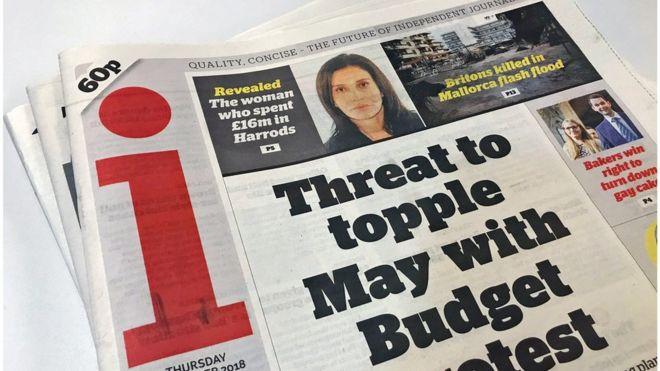
Shares in Johnston Press jumped by more than 20% on Monday morning.
Following reports that the Daily Mail-owner DMGT (LON: DMGT) is planning to buy the newspaper after it put itself for sale in October.
The news was first reported by Sky. Johnston Press has not yet commented on the developments.
The group, which owns The Scotsman and The Yorkshire Post, has been struggling £220 million debt, which must be paid off by June 2018.
Jane Martinson, who is the professor of business journalism at City University, said on the Today programme that DMGT might buy the i newspaper, which is “quite complementary to the other papers in its stable, particularly the Metro”.
“It is cheap, there is actually a cost to buy the i whereas the Metro is free. The overlap with the Metro is quite good in terms of readers, they are both neutral politically which is really interesting for DMGT, the owner of the Mail.”
According to Martinson, seeing Johnston Press sell of different titles is “a sad way to end”.
“They were making huge fat profit margins but used it to spend lots and lots of money for titles like the Scotsman, like the Yorkshire Press and it now looks like, saddled with £220 million to pay back next summer, they cannot do it.”
“They have had to put themselves up as a fire sale.”
In a note to investors last month, Johnston Press said: “In order to assess all strategic options to maximise value to its stakeholders, the board of Johnston Press announces today that it has decided to seek offers for the company.” “There can be no certainty that any offer will be made for Johnston Press, nor that any transaction will be executed, nor as to terms of any such offer or transaction.” Shares in Johnston Press (LON: JPR) are trading up 20.43% at 3.95 (1038GMT).Anglo African Agriculture shares rally over 60%

Anglo African Agriculture shares (LON:AAAP) rallied over 60% on Monday morning after the company issued a trading update.
The agricultural trading group, which focuses its efforts in Africa, confirmed that it had met the conditions of a proposed provision of a $1 million loan to a Kenyan-based port and logistics group.
David Lenigas, Non-Executive Chairman, commented; “I am delighted that we have completed our due diligence and decided to advance this loan to Comarco. This transaction and funding will allow them to fully capture the recent upswing in its port activities and for AAA to develop our relationship.”
He added: “Since our announcement that we intended entering into this loan, we have been approached by numerous parties expressing their interest to cooperate with us in various forms. This is significant, as this clearly demonstrates that we have managed to find a very valuable and uniquely positioned asset with potentially very large upside potential.”
Back in September, the company announced it had secured funding for the loan, totalling £1,055,000.
The company said that the capital was raised with the intention of helping to further develop Comarco Group.
The remainder of the funds would be used to support additional transaction costs.
Shares in Anglo African Agriculture are currently trading +60% as of 10:31 AM (GMT).


UK economy hits two-year high, growing 0.6%

The UK economy has picked up over the third quarter, growing at the fastest rate in two years.
The Office for National Statistics (ONS) showed economic growth to rise by 0.6%, however, has also warned that it is likely to slow down before Brexit.
“The economy saw a strong summer, although longer-term economic growth remained subdued,” said Rob Kent-Smith, the head of national accounts at the ONS.
“There are some signs of weakness in September, with slowing retail sales and a fall back in domestic car purchases.”
“However, car manufacture for export grew across the quarter, boosting factory output. Meanwhile, imports of cars dropped substantially helping to improve Britain’s trade balance.”
Figures in the future are likely to slow down as businesses and consumers are preparing themselves for a Brexit where no-deal has been decided on the Ireland border issue.
Andy Scott, associate director at independent financial risk management consultancy JCRA, said: “The overall picture of the UK economy is, however, one of resilience. With unemployment at multi-decade lows and wages accelerating, the robust levels of household spending should continue to act as a buffer against weakening sectors such as manufacturing, preventing the economy from stalling or worse, contracting.”
Brussels has predicted UK output growth to be 1.2% next year, placing the UK towards the bottom of the growth table next to Italy.
“Brexit-related uncertainties could intensify over the coming months, if the EU rejects whatever final document the cabinet agrees on or if MPs vote against a deal,” said Thomas Pugh, an economist at Capital Economics.
“In the absence of those developments, however, we expect growth of about 1.3% over 2018 as a whole.”
DUP accuses Theresa May of “total betrayal”
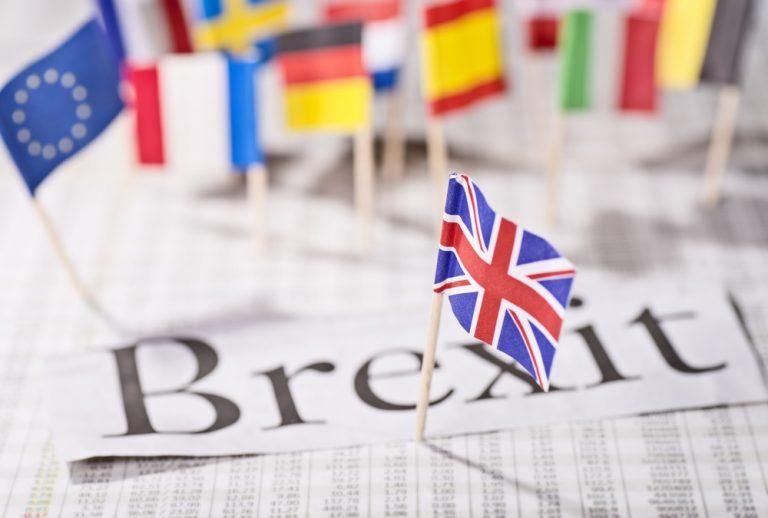
The Democratic Unionist Party (DUP) has rejected Theresa May’s suggested plans for a customs border down the Irish Sea.
Following a leaked letter from Theresa May to DUP leader Arlene Foster, East Antrim MP Sammy Wilson has accused the Prime Minister of “total betrayal”.
“If she continues down the road of bringing something forward which is unacceptable to a large part of her own party and ourselves, then I think the inevitable consequence is that it will be voted down in the House of Commons,” Wilson told Sky News.
“She is now contemplating signing up to a legal agreement which, regardless to her aspirations, would be binding on the government of the UK. Secondly, it would be a legal agreement which the government of the UK could not walk away from – that could only be broken if the government in the UK and the EU agreed to it being changed,” he added.
In the letter, which was leaked to the Times, May admitted that the EU was pushing a Northern Ireland-only backstop arrangement alongside a UK-wide solution.
May wrote in the letter: “They want to maintain a Northern Ireland-only ‘backstop to the backstop’ in case the future negotiations are unsuccessful.”
“I am clear that I could not accept there being any circumstances or conditions in which that ‘backstop to the backstop’, which would break up the UK customs territory, could come into force.”
“That is why it is critical that the provision for a UK-EU joint customs territory is legally binding in the Withdrawal Agreement itself, so that no ‘backstop to a backstop’ is required.”
Foster also commented on the letter and tweeted on Friday: “The PM’s letter raises alarm bells for those who value the integrity of our precious union & for those who want a proper Brexit for the whole UK. From her letter, it appears the PM is wedded to the idea of a border down the Irish Sea with NI in the EU SM [single market] regulatory regime.”
Despite issues surrounding the Irish border, the government has suggested Brexit deals are almost finalised.
Fastjet shares down 6% on new warning
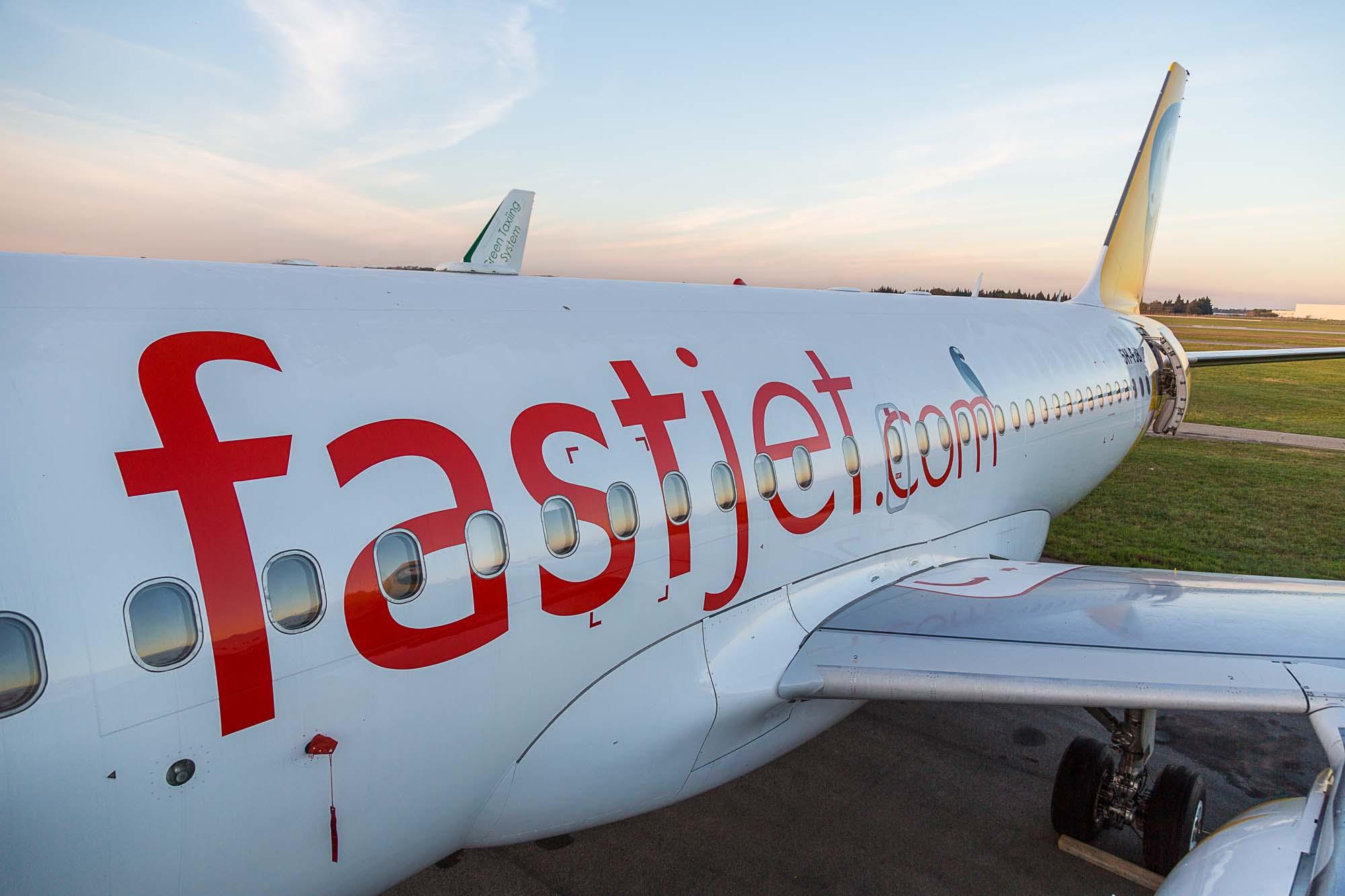
Fastjet, the budget African airline, has warned that it could collapse unless investors provide money by the end of the month.
The airline issued a warning in October saying that it was close to collapse unless an injection of cash was provided soon.
In a statement, the Fastjet said: “The company continues to review its current cash requirements and is able to continue operating during November due to some improvement in trading, cash generation and internal efficiencies.”
“The headroom available allows the company further time to continue discussions with its major shareholders and creditors,” it added.
“While discussions to date with certain shareholders and creditors have been positive, discussions are ongoing and there can be no guarantee of a successful outcome.”
“If the company is unable to carry out an equity fundraise and / or reach an agreement with its key creditors, the group would be unable to continue trading as a going concern.”
Following the news, shares in the group fell 6%.
The budget airline was founded by easyJet (LON:EZJ) founder, Sir Stelios Haji-Ioannou.
The group has a cash balance of $3.9 million (£3 million), however, £3 million of this is held inside Zimbabwe and has restricted access.
Shares plummeted 70% in June on a previous financial warning after saying it was “at risk of not being able to continue trading as a going concern”.
The airline was first launched in Tanzania in 2012 but has expanded over South Africa, Zimbabwe, Zambia, Mozambique, Uganda, Malawi and Kenya.
Shares are currently down 4.11% at 1.68 (1259GMT).
High street faces toughest conditions in 5 years
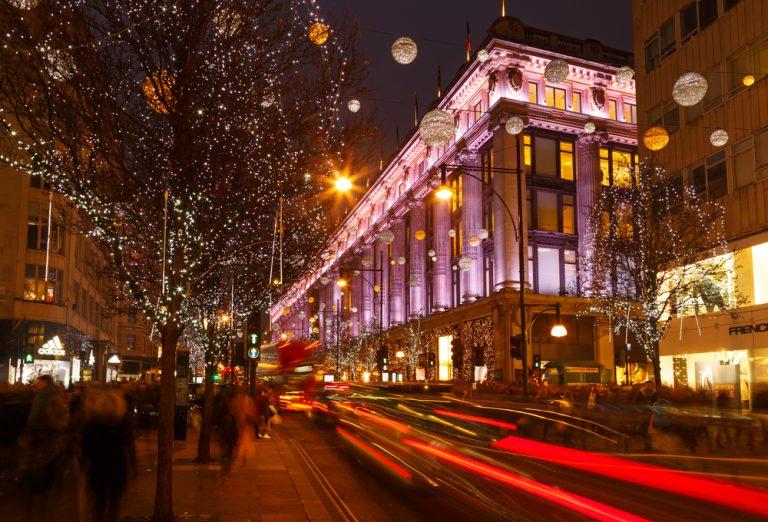
A new report by PwC has found has found that the UK high street is facing the toughest trading conditions in five years.
The number of shops, pubs and restaurants that have closed this year has surged to 4,400 in the first six months of 2018.
Fashion and electrical stores are being the hardest hit as shoppers are moving online.
Lisa Hooker, who is the consumer markets leader at PwC, said: “Looking ahead, the turmoil facing the sector is unlikely to abate.”
“Store closures in the second half of the year due to administrations and company voluntary arrangements [a form of insolvency] already announced will further intensify the situation,” she added.
Retail chains including House of Fraser, Evans Cycles and Maplin have collapsed into administration.
Other chains including Carpetright (LON: CPR), Mothercare (LON: MTC) and Homebase have had to carry out store closures and slash their rent bills.
Restaurants that have been affected include Jamie’s Italian, Carluccio’s and Gourmet Burger Kitchen as people are eating out less.
Pubs have also been hit in the current climate of the high street.
Brigid Simmonds, the chief executive of the British Beer & Pub Association, said: “Despite the positive measures announced in the budget, one in three pounds spent in the pub still goes to the taxman and pubs pay, per pound of turnover, more in business rates than any other sector.”
Fashion, however, remains the hardest hit with Patrick O’Brien, a retail analyst at GlobalData saying: “Clothing is where the shift to online is happening fastest. Over £7 billion of sales have moved online in clothing and footwear in the last five years. That dwarves any other sector.”
According to PwC, the greatest number of closures have been in Greater London, which had 716 store closures over this year and only 448 have opened.