
QUIZ shares plunge on profit warning

Shares in QUIZ have plummeted after the fashion retailer issued a profit warning.
Shares tumbled 25.5 percent in afternoon trading after the group said it would miss market forecasts after taking a hit from the House of Fraser collapse.
Full-year earnings are expected to come in at £11.5 million, down from the previous expectations of £15.5 million.
Quiz previously sold items in 11 House of Fraser stores and on the department store’s website.
Chief executive Tarak Ramzon said: “Although online sales through our third-party partners have been disappointing and will impact the Group’s performance for the full year, the changing mix towards increased own-website sales will support profitability growth moving forward.”
“The continued growth of the QUIZ brand in combination with our well-invested infrastructure and flexible business model continue to underpin the Board’s confidence in the Group’s long-term prospects.”
Sales are expected to be hit this year. Whilst previous estimates forecast sales totalling £150.5 million, the new expectation is £138 million.
As well as QUIZ, retailers including Ted Baker have been affected by the House of Fraser collapse.
Ted Baker shares fell earlier this week as the group posted a 3.2 percent fall in pre-tax profits. The House of Fraser collapse cost the retailer £600,000.
David Bernstein, the non-executive chairman, said: “We have a very clear strategy for the continued expansion of Ted Baker as a global lifestyle brand across both established and newer markets. Our flexible business model ensures that our customers have multiple channels to engage with the brand.”
“Our growing e-commerce business, underpinned by stores that showcase the brand, mean that we are well positioned to deal with the structural changes in an evolving retail environment and continue Ted Baker’s long-term development.”
Shares in Ted Baker (LON: TED) are trading at 2.056,00 (1635GMT).
Shares in QUIZ (LON: QUIZ) are trading down 36.72 percent at 93,50 (1709GMT).
May’s ‘end austerity’ pledge to leave £35bn budget shortfall
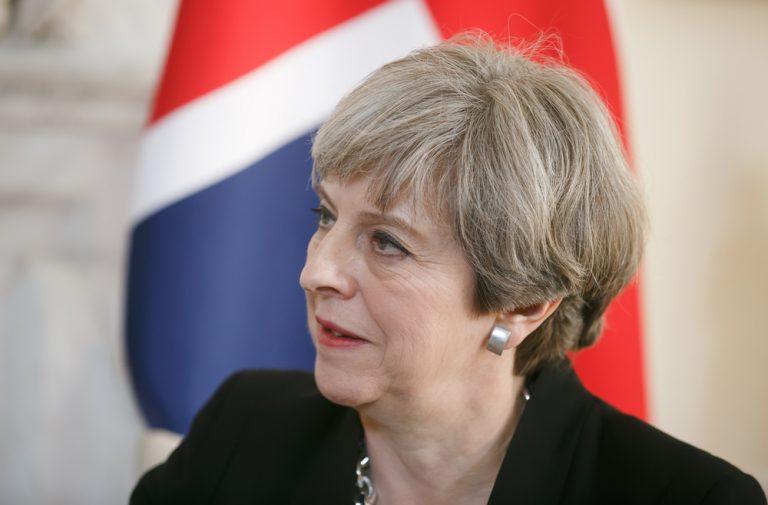
Theresa May’s party conference speech on Wednesday perhaps adopted a lighthearted tone, but her intentions were anything but. With a desire to consolidate the respect of the public and her party peers, Mrs May set about delivering a speech that both inspired confidence in her leadership and undermined Jeremy Corbyn.
After attacking Corbyn’s character and highlighting his views on military spending, she went about discussing social issues and lamenting that people’s hard work should pay off in the form of ending cuts to public spending.
Post 2010 austerity has come in the form of 7% cuts to non-pension welfare between 2010-2015, with similar cuts being observed in the last three sessions of government. In stark contrast, the prime minister’s speech laid out plans to effectively ‘end austerity’, alongside a model to renew the NHS, increase the rate of new council houses being built and continue the freeze on fuel duty.
The prime minister stated, “a decade after the financial crash, people need to know that the austerity it led to is over and that their hard work has paid off” — even if this was dependent on her government securing, “a good Brexit deal for Britain”.
Torsten Bell, director of the Resolution Foundation and a former official in the department, said Mrs May’s pledge, “will have gone down very badly indeed in the Treasury”.
Aside from being arguably more successful than her last major speech, Mrs May’s efforts on Wednesday have potentially done little more than stoke the pre-existing contempt within her party. With little time left before the autumn budget, Philip Hammond’s job of balancing the budget has become nothing short of impossible.
Mrs May’s ‘end austerity’ pledge is rapidly becoming a covenant of irony. After spending the best part of two years condemning Corbyn’s public-revenue-hungry policy package, she is now moving in the same direction in order to swing the electorate away from her opposition. The issue is that for her commitments to come into fruition, she will have to use similarly undesirable mechanisms to those proposed by the opposition leader – raise taxes.
While the prime minister has yet to mention any increases to income tax, such a move is inevitable unless she does something to clamp down on corporations. Her new proposals represent a £35 billion black hole in the annual government budget, and continuing the fuel duty freeze could raise this to £40 billion per annum.
Mrs May’s speech has received a mixed reception on its delivery, but questions should certainly be raised over its promises. Can she realistically view herself as a candidate for strong leadership in light of underwhelming Brexit negotiations and a move toward policies she once criticised her opponents for?
Trump’s Scottish golf resort posts fourth year of losses
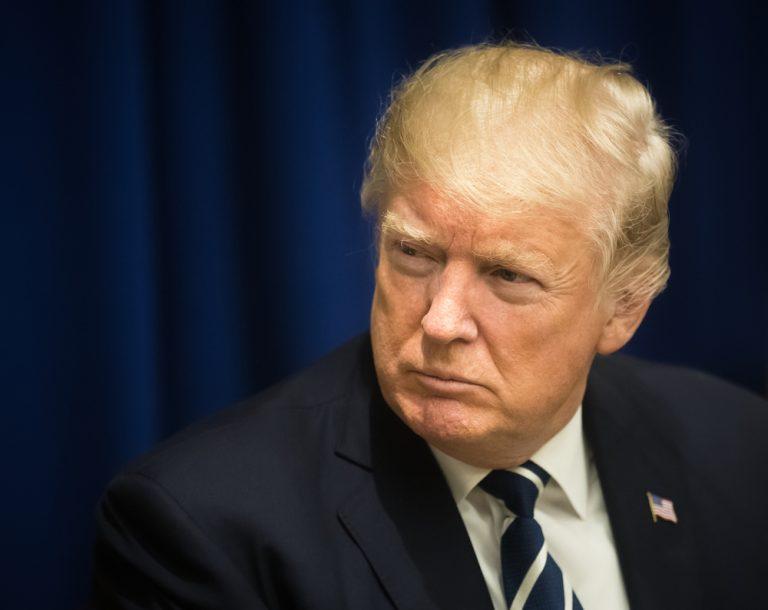
Donald Trump’s Scottish luxury golf resort faces its fourth consecutive year in the red.
The resort in Turnberry is one of the US President’s biggest investments, yet made a $4.5 million (£3.5 million) loss in 2017.
Trump said in 2017 that Turnberry was doing “unbelievably” well due to the fall in the pound, which encouraged visitors from the US.
In reality, the business has done poorly since Trump’s presidency.
The US President has invested an estimated $212 million on the property. It cost Trump $67 million to buy the property and an additional $144 million in renovations.
Turnberry’s general manager Ralph Porciani had high hopes for the golf resort for 2017. He said in January last year: “We’ll make a profit this year – it will be the first time we have made a good profit in the 14 years I have worked here.”
After realising this was not likely, Porciani said: “2018 is really our baseline year to start making Turnberry a sustainable business.”
Despite losses, the resort did significantly better than in 2016, where it posted £17.6 million losses following a six-month closure.
In the report, the director and son of the President, Eric Trump, said: “The directors believe that in the short to medium terms, the resort will have operating profitability for the first time in 10 years.
“It is expected that revenue will continue to increase in subsequent years as the property is re-established as an industry-leading resort.”
The Turnberry gold resort was a key site in the recent presidential visit to the UK. Trump arrived at the resort on July 13 and stayed two nights.
Assura rallies on latest round of acquisitions

British property healthcare business Assura Plc (LON:AGR) announced on Friday that they had added a further £50 million of property acquisitions to their portfolio for the year.
Most notable among these acquisitions was the Stratford Health Centre in Stratford-Upon-Avon, one of the largest primary healthcare facilities in the UK. The centre stands at 6,000 square metres and set Assura back £30 million, taking their total acquisitions bill for the year to £158 million.
With this latest round of expenditure and expansion, the FTSE 250 listed firm’s rent roll now stands at £7.7 million, though it has not yet named the two other facilities purchased last week.
“We are delighted to have added three more high quality assets to our portfolio, as we continue to deploy capital to grow our rent roll,” chief executive Jonathan Murphy said.
“Stratford, which is now one of the largest properties in our portfolio, is a great example of a medical centre acting as a hub for the community, bringing together a range of services in a primary healthcare setting,”
The company hope to continue making acquisitions on this scale, and today their shares are trading up 1.29% or 0.7p at 55p a share. Analysts from Peel Hunt have retained their ‘Hold’ stance on Assura stock, while Liberum Capital analysts have reiterated their ‘Buy’ stance.
Nonfarm Payrolls show lowest US unemployment rate since 1969

Nonfarm payroll employment figures for September 2018 released today by the US Labor Department indicated a decline in unemployment, which fell to figures unseen since December 1969.
The American unemployment rate declined by 0.2% to 3.7% over September, though the number of involuntary part-time workers in America’s workforce increased by 263,000 to 4.6 million.
Trump celebrates unemployment figures
US President Donald Trump took to Twitter to celebrate the statistics, despite the figure falling short of the expected 3.8%.The figures also revealed that job creation in September fell to its lowest level since last year. The US created just 134,000 new jobs over the past month, definitively lower than the expected 185,000 predicted by Refinitiv.Just out: 3.7% Unemployment is the lowest number since 1969!
— Donald J. Trump (@realDonaldTrump) 5 October 2018
Hurricane impact leads to disappointment
The Labor Department noted that the weaker-than-expected performance may be partly explained by the impact of Hurricane Florence, noting that “Hurricane Florence affected parts of the East Coast during the September reference periods for the establishment and household surveys.” Meanwhile, average hourly earnings increased by 8 cents, representing a 0.3% rise, over September, bringing the year-over-year increase in wages to 2.8%. US stock futures fell deeper into the red after the statistics were announced, whilst the dollar index creeped up by 0.1% to 95.877.Tweet of the Week – 5th October 2018

Theresa May’s attempts in her Conservative Party Conference speech to shed her ‘Maybot’ image and rehabilitate faith in her leadership after a disastrous showing during last year’s speech received a mixed response from the public and online commentators.
Referencing the mockery she received after her awkward and robotic dancing on film during her visit to Nairobi, Kenya in August, Mrs May emerged on stage to the tune of ABBA’s ‘Dancing Queen’, dancing and laughing in a rare moment of self-deprecation and humour.
Whether you saw the prime minister’s disco dancing as a triumphant show of retaliation against personal attacks on her robotic public personality, a cynical PR move to offset criticism of her speech’s policies in media coverage, or simply the natural extension of a political debate entirely beholden to showbiz-style stunts in a post-Trump era, your Twitter feed was probably buzzing.
Here are this week’s best tweets:
I spent too much time on this. #TheresaMay pic.twitter.com/4aODFe0VLU
— Luke (@Mr_LukeBenson) 3 October 2018
you are the dancing queen lost her seats, now 317 dancing queen feel that heat from the DUP (oh yeah)
— Jonathan (@demarionunn) 3 October 2018
The Imperial March pic.twitter.com/fuJrehX2vw
— Theresa May Dancing to Stuff (@dancingtheresaM) 3 October 2018
Leaked document reveals other songs considered for Theresa May’s conference speech: pic.twitter.com/cu7jjyfEoL
— Have I Got News For You (@haveigotnews) 4 October 2018
Tesla stocks fall after Musk twitter jibe

Elon Musk, the chief executive of Tesla, lashed out at the US Securities and Exchange Commission last night on Twitter, leading to an immediate fall in Tesla’s stock market value.
Mr Musk branded the SEC the “Shortseller Enrichment Commission” in a series of tweets which saw the CEO mock the regulator hours after a federal judge ordered him to justify how he and the SEC came up with a legal settlement.
The Tesla founder’s comments come days after he agreed to step down as the company’s chairman and pay a $20m (£15m) fine after the SEC sued him for alleged securities fraud.
The deal also requires that Mr Musk “establish a new committee of independent directors and put in place additional controls and procedures to oversee Musk’s communications.”
Twitter outburst
Mr Musk tweeted: “Just want to that (sic) that the Shortseller Enrichment Commision is doing incredible work! And the name change is so on point!” The CEO’s comments were mirrored by a fall in Tesla’s stock value, with shares falling by 4.4% to close at $281.83, dropping a further 3% after trading closed. The SEC’s $20m fine represents only 0.1% of Mr Musk’s net worth.Legal feud with stocks regulator
The SEC’s allegations came after Mr Musk asserted over Twitter that he planned to take Tesla off the stock market and into private ownership, declaring he had “funding secured”, which the regulator described as “false and misleading” to investors. Mr Musk said the funding would value Tesla at $420 per share, a number he rounded up from £419 as a joke due to its significance in cannabis meme culture, to impress his girlfriend, the pop singer Grimes. He has since abandoned the plan. As part of the SEC’s settlement, Tesla is supposed to monitor its CEO’s tweets. In August, Mr Musk opened up about the pressure of his position, describing the past year as “excruciating” after Tesla suffered a £709.6 million loss in its first quarter.Waitrose to trial ‘in-home’ delivery service
Waitrose is to begin trialling a new delivery service, allowing drivers access to customer homes while they are out.
The service is called While You’re Away and will be trialled in 100 customers in Coulsdon, south London.
The Yale smart-lock technology will give drivers a temporary access code allowing access to houses. The driver will then put food in the fridge, freezer or on top of the kitchen counter.
“There is certainly an increasing demand among our customers to make shopping with us even more convenient to fit around their busy lifestyles. Rather than waiting for a delivery or trying to put everything away, it gives customers more flexibility to use that time differently, including more time enjoying cooking and eating the food they’ve bought,” said Archie Mason, the head of business development at Waitrose & Partners.
“The concept of in-home delivery has started to prove popular in other countries so we are keen to establish if there is an appetite for it in the UK,” he added.
The delivery will be filmed by a small camera on the driver’s chest, which will be available for request by customers the next working day.
Richard Lim, who is the chief executive of consultancy Retail Economics, found through research that “surprisingly high proportion” of customers would be happy for drivers to enter homes.
“Convenience is the key driver [for this scheme] and in turn that’s going to drive loyalty, drive increased basket values and it will drive profitability as well,” he said.
Whilst profit margins for home deliveries are small, the aim is to increase loyalty and profitability.
Waitrose, which is owned by the John Lewis Partnership, is the first UK supermarket to trial “in-home” deliveries.
Toyota to recall 2.43m cars
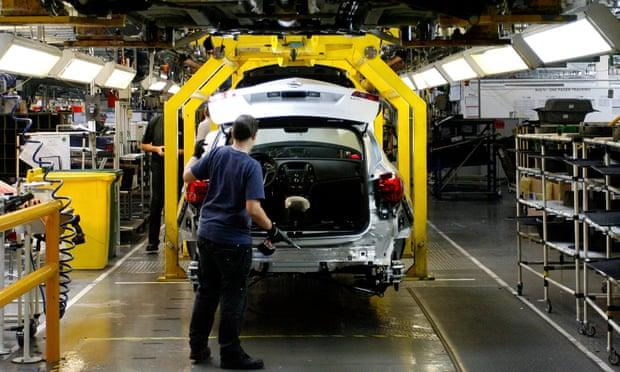
Toyota (TYO: 7203) has announced a recall of over 2.43 million vehicles over a fault in the systems.
The Japanese carmaker is recalling gasoline hybrid vehicles that were produced between October 2008 and November 2014.
The affected cars could be defected, causing them to lose power and stall. The group said it was not aware of any accidents yet caused.
“While power steering and braking would remain operational, a vehicle stall while driving at higher speeds could increase the risk of a crash,” the company said.
“The remedy conducted then did not anticipate the new condition identified in this recall.”
The recall will affect about 1.25 million vehicles sold in Japan, 830,000 vehicles that were sold in North America, and 290,000 vehicles sold in Europe.
Vehicles in China, Africa and other regions may also be affected.
It is not the first time that the carmaker has had to recall defect cars. In 2015, Toyota had to recall 6.5 million vehicles across the world due to a faulty window switch that was liable to short-circuit.
Earlier this week, the Japanese carmaker warned it would be forced to halt car production in the UK in the event of a no-deal Brexit.
Johan Van Zyl, the chief executive of Toyota Europe, disclosed plans to temporarily close the Derbyshire plant following the UK’s departure from the EU.
“If there would be any disruption we’d have to close our plant temporarily to make alternative arrangements,” he said.
“In the longer term, if we were to change the logistics it would add more cost and impact on our competitiveness, and of course the future of our operation.”
Unilever scraps plans for Rotterdam HQ
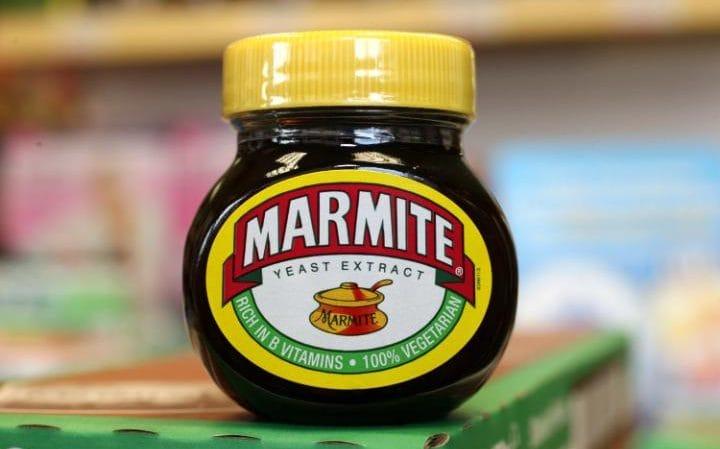
Following growing criticism from investors, Unilever (LON: ULVR) has scrapped plans to move their HQ to Rotterdam.
The decision to stay in the UK will mean the Marmite owner will stay on the FTSE 100.
Announcing the decision on Friday, the group said: “Unilever has built a long track record of consistent and competitive performance. The board continues to believe that simplifying our dual-headed structure would, over time, provide opportunities to further accelerate value creation and serve the best long-term interests of Unilever.”
“The board will now consider its next steps and will continue to engage with our shareholders. We will proceed with the plan to cancel the NV preference shares, further strengthening our corporate governance.”
Shares edged up just 0.1 percent on the news.
Investors including Columbia Threadneedle, L&G, M&G and Aviva Investors had all spoken out against the move, saying they would vote against the move.
As well as investors, unions were also against the vote and possible movement to Rotterdam.
Unite national officer Rhys McCarthy said:
“Investors understand the need for great British-based companies like Unilever to retain their headquarters in the UK.”
“The UK’s weak takeover rules which put short-termism ahead of the long term are clearly a major factor in Unilever’s proposed move following a failed hostile takeover bid, as is the swirling uncertainty around Brexit.”
“Ministers need to get a grip on Brexit and toughen takeover rules to stop more firms like Unilever seeking to flee overseas,” he added.
Unilever is one of the biggest firms on the FTSE 100 and is valued at about £124 billion.
The vote was due to take place at the end of October, with one vote taking place in Rotterdam and one vote in London.
Unilever acknowledged the lack of support they expected to get in the London vote, which would have required 75 percent support.
“We have had an extensive period of engagement with shareholders and have received widespread support for the principle behind simplification,” said the group in the statement.
“However, we recognise that the proposal has not received support from a significant group of shareholders and therefore consider it appropriate to withdraw.”