
Brexit: an imperfect storm

This piece is by no means factual, nor is it exhaustive or representative of the views of my peers. It is simply my unenlightened take on what Brexit means for the way we look at our Parliament, and I reserve the right to change my mind.
Brexit has underlined some of the systemic shortcomings in Westminster, by being one of the first instances of ‘politics’ in the modern era. While this sounds both cryptic and contentious, Westminster has – in the decades from Thatcher to present day – descended from a forum for political debate into a sphere of centrist amelioration politics and ultimately the politics of problem-solving and economic stewardship. What Brexit has done is given the political establishment an issue where the centre-ground doesn’t hold primacy – and doesn’t provide a basis for national unity – and thus the regular approach of compromise and fudging a solution, pales in the face of an issue where warring ideological factions are innate.
Ten opportunities 2 double in 2019: First two recommendations by Jon Levison

Our veterans know the ground rules, we pick the companies you do the trading. Our guideline is that if our tip has not worked within 3 months, unless it is specifically deemed to be longer-term, it may be best to sell and redeploy the funds.
These Opportunities 2 Double are different. We feel confident that our experience of recognising the financial and non-financial patterns in a company’s business cycle we have identified Ten great unrecognised opportunities.…..
If, however there was no risk it would not be a market. So please get comfortable with the degree of financial risk, which we do explain. Then consider if you agree that the blue-sky element of the business risk is sufficiently real and large for the company to double in price. We suggest selling half your shares if they double and will report any changes of mind. We are looking forward with some excitement in publishing the recommendations over the coming weeks.
This week we are publishing the first two.
____________________________________
TechFinancials (LSE:TECH)
4.9p (4.3p/5.5p)
Mkt Cap: £4.17m
Next results: Finals, June
TechFinancials (LSE: TECH) is moving its focus from a CFD trading technology business into blockchain technology. It has two blockchain projects. One is a diamond exchange platform and the other, more interesting, project is a blockchain-based sports ticketing business. The signing up of the first football, or other sports, club and outside investment should provide upward momentum for the share price.
TechFinancials is developing the ticketing venture with Footies Tech Ltd. The new company will licence the blockchain technology from TechFinancials, which will hold a 75% stake in the venture. TechFinancials will inject up to $500,000 into the company, as long as a client is signed up. Former Liverpool FC chief executive Ian Ayre will be chairman of the new company.
The idea is to use blockchain technology to enable the sports club to take control of the initial sale and any secondary ticket transactions. Because the ticketing is fully digital it will remove ticket touts and highly inflated prices from the equation. Tickets can be sold via the platform and the club will take a share of any profit over the ticket price. The club can also track attendance and make specific merchandise offers to fans.
A football club is likely to be the first to take up the platform, but it can be used for other sports clubs.
Assuming the first club is signed up in the first quarter then the roll-out should be after May but ahead of the new football season. There will be a set up fee, an annual service fee and a fee for each transaction.
The venture will need to raise further funds and it is likely to seek VCT investment. Depending on the pricing of any share issue, that could provide an uplift in the valuation of TechFinancials stake.
TechFinancials record is poor, although there is cash in the bank, and this investment is speculative. However, the potential for the ticketing technology is enormous and as long as the project shows that it is making progress then this will spark interest from investors and push up the TechFinancials share price.
Buy.
__________________________________
Hardide (LSE: HDD)
1.3p (1.25p/1.35p)
Mkt Cap: £22.3m
Next results: Interims, May
Hardide (LSE: HDD) is a very different company to TechFinancials because it already has a growing business, even if it has been loss-making. Hardide has developed coatings technology that can uniformly cover difficult shapes – inside and out – using chemical vapour deposition. Wear resistance is 250 times greater than steel.
Revenues have historically been dominated by the oil and gas sector, but aerospace should become an increasingly important client sector over the next few years.
A slump in demand from oil and gas customers hampered progress at Hardide, which has facilities in the UK and US, in recent years. The US generated 61% of revenues last year, so Hardide is not dependent on the UK economy. There is also increased value added on some contracts where Hardide is responsible for the manufacture, not just coating, of a part.
Aerospace companies have been testing the coatings on parts for aircraft and helicopters, but this has been a long, drawn out process. Airbus has agreed technical details for a range of components and it is a case of coming to a commercial agreement.
Leonardo Helicopters is getting to the point of part approval on a transmission system. There are other firms assessing the effectiveness of the coatings. The UK and US facilities have gained aerospace accreditation, so they are ready for orders.
The third US reactor was commissioned before the end of 2018 and a new pre-treatment line will be installed this year. There are capacity and space restrictions in the UK, so further investment on the current or a different site will be required.
Hardide is on course to move into profit in 2019-20 as oil and gas demand continues to recover and other sectors should grow revenues. There was net cash of £3.2m at the end of September 2018, but this will decline as further capital investments are made. One concern is that Hardide will require more cash in order to invest in further additions to capacity.
There is a good chance that the first aerospace orders will come through this year and this will significantly increase the potential for Hardide. Timing is difficult to predict so some patience may be needed.
Buy.
These tips were produced by John Levison for his OMG newsletter
Funding Circle ends 2018 ahead of expectations

Leading small and medium enterprise lending company, Funding Circle, has posted its fourth quarter results on Thursday, topping expectations.
For the three months to 31 December 2018, full-year revenue growth came in at 55%, exceeding the 50% guidance stated at the company’s IPO.
Loans under management totalled £3.1 billion, a 55% increased compared to the same period year earlier. This figure also exceeds the IPO expectations.
Total organisations were up 40% to £2.3 billion. Revenue growth exceeded organisation growth in the second half of 2018. This is as a result of policy changes for existing borrowers in the US, reducing overall organisations by leaving revenue untouched.
In September, Funding Circle planned a £2 billion flotation.
It aimed to raise £300 million in a stock market float that would value the company at around £1.95 billion. It hoped to use the fund raised to drive further expansion into different geographical locations. Additionally, the fund would mean that it could expand without having to worry about profitability I the medium term. CEO and co-founder of Funding Circle, Samir Desai, commented on the results: “Funding Circle delivered a strong end to 2018 which resulted in exceeding our revenue and Loans under Management guidance for the year. We were pleased to announce a number of new institutional investor transactions in Q4, which is further validation of the attractive risk-adjusted returns generated on the Funding Circle platform. We enter 2019 with continuing confidence and remain focused on delivering our growth strategy set out at IPO.” The company has reconfirmed its guidance given at its IPO with targeted revenue growth in excess of 40%. In November, The British Business Bank announced a commitment of up to £150 million for lending to small British business. The UK government’s economic development bank said it would commit this fund using Funding Circle’s lending platform. At 08:23 GMT today, shares in Funding Circle Holdings plc (LON:FCH) were trading at -1.52%.Trident Resources posts its maiden loss

After forming in 2018, mining asset acquisition firm Trident Resources Plc (LON:TRR) has recorded its first – though minor – loss.
The dip came as the company are said to be continuing their pursuit of a reverse takeover opportunity in the mining sector. The loss totalled a sum of £128,000 for the six months through October 2018, and came after the company raised £4 million in its initial public offering in April – with plans to invest in mining opportunities once it had been incorporated.
“In the short time since the IPO, the company has seen a strong flow of potential acquisition opportunities, which are consistent with the acquisition criteria set out in our IPO prospectus,” Trident Resources said in a statement.
“The market volatility and global economic uncertainty that characterised the end of 2018, and which has persisted into 2019, has led to a reduction in the capital available to the mining sector,” it added.
“This scarcity of capital reinforces my belief that the company is in an advantageous position from which to secure an acquisition that creates value for shareholders.”
As of 14/01/19, Trident shares were selling at 20.5p a share.
Van Elle downgrades outlook with H1 profit slump

Engineering and geotechnical contractor Van Elle Holdings Plc (LON:VANL) have seen their share price dip sharply as they book a sharp profit dive for the first half, which has forced the company to revise its gull-year financial outlook.
Full-year expectations hampered by difficult H1
The firm reported a 55% slump in first half profits, which has caused Van Elle to have to downgrade its expectations for the full year, as the company state project delays and high overheads will cause them to miss their targets. The latest company statement revealed that for the six months through December 2018, pre-tax profit had dropped to £2.4 million, which came as a result of revenue falling 18% to £42.9 million. Following these results, the company announced that it was to reduce its interim dividend by 29% to 1p per share. Also, that in the third quarter, contract margin performance in the general piling division had been weaker than expected and that several projects had been delayed. Chief Eexcutive, Mark Cutler, said, “As a result and despite good momentum being carried in from the first half, we don’t believe we will be able to deliver the significant step up in performance during the second half that we anticipated at the time of our trading statement in December 2018,” “These challenges have been frustrating, but it is pleasing to see outlook for the final quarter remaining robust and with a strong pipeline of target projects providing good forward visibility.” “Whilst we are mindful of the wider market environment, we are confident that the initiatives we are taking will develop a strong platform for future strong, profitable growth.”A period of transition
Since its listing on the AIM in 2016, Van Elle has gone through a series of difficult events. With the departure of its founder – who later returned to try and stage a coup within the board of directors – and the reduced workload following the collapse of Carillion (LON:CLLN), the firm were already facing a difficult H1. This has only been compounded with the arrival of a new Chief Executive, among other more recent senior management changes, and the £300,000 restructuring charge this ensued. “This is a transitional year for the business and since my arrival in August 2018, I have been undertaking a full review of the business,” Mark Cutler said. “As part of this process I have been taking action to refine the group’s commercial approach, streamline operations, strengthen the leadership team and re-focus on our key customers. This is already creating a strong platform from which to pursue our growth strategy. “The third quarter has been more challenging than we anticipated, with a disappointing performance in general piling and several project delays. As a result and despite good momentum being carried in from the first half, we don’t believe we will be able to deliver the significant step up in performance during the second half that we anticipated at the time of our trading statement in December 2018. “These challenges have been frustrating, but it is pleasing to see outlook for the final quarter remaining robust and with a strong pipeline of target projects providing good forward visibility. “Whilst we are mindful of the wider market environment, we are confident that the initiatives we are taking will develop a strong platform for future strong, profitable growth.”Van Elle as it stands
The company’s shares are currently trading at 64.06p, down 19.42% or 15.44p since markets opened 16/01/19 14:53 GMT. Analysts from Peel Hunt have downgraded their stance on Van Elle stock, from ‘Buy’ to ‘Hold’.Yellow Cake asset value rises with uranium prices

After making its debut on the AIM mid-way through 2018, uranium buyer Yellow Cake Plc (KIN:YCA) said that its net asset value rose in December, in line with increasing uranium prices.
Continued success for Yellow Cake
The company said that for the three months through December 2018, its net asset value had risen 5.9% to £2.53 per share, which represented a 27% jump since its initial public offering in July. Within the same time frame of July to December, uranium oxide prices had jumped 25% to $28.50 per pound. Yellow Cake Chief Executive, Andre Liebenberg, said, “We look to the future with optimism as countries around the world implement new uranium programmes and extend the lifecycle of existing projects,” “Our investment thesis remains sound and we are confident in the long-term outlook for the uranium price.”A positive outlook following their IPO
Following July’s successful IPO, the company’s Chief Executive said that, “Due to an exceptional set of circumstances, uranium is one of the few commodities yet to recover from the recent commodities bear market and we believe that uranium is currently fundamentally and structurally mispriced,” He added, “Yellow Cake’s long-term supply contract with Kazatomprom has allowed us to secure a highly significant and strategic position in physical uranium, at a competitive price, and to offer that exposure to a potential resurgence in the uranium price to investors, while avoiding direct exposure to exploration, development, mining and processing risk.” Peter Bacchus, Chairman and Chief Executive of Bacchus Capital said, “The highly successful initial public offering of Yellow Cake demonstrates the depth and breadth of interest emerging in uranium as a commodity, and reflects the U.K. market’s continued strong support for the natural resources sector where an opportunity presented is on-theme, clearly articulated and compelling in nature.”The outlook for 2019
Yellow Cake look set to expand and start 2019 on a positive footing. The company’s shares are currently trading at 226.5p 16/01/19 14:39 GMT, up 5.7p or 2.58% since trading began this morning. As of December, Berenberg analysts reiterated their ‘Buy’ stance on Yellow Cake stock.Cineworld projects 7.2% revenue hike as US market performs

Cinema chain Cineworld Group Plc (LON:CINE) has predicted a 7.2% full-year jump in revenues, on-year, with strong performance in the US market on the back of a series of box office big-sellers in 2018.
For the year to 31st of December 2018, the firm said that it expected to report revenue growth of 7.2% across its US, UK and ROW (Rest of World) revenue segments, with the US market expected to return a revenue spike of 8.6% on-year.
This progress comes as a result of strong box office performances by popular action movies – such as ‘Black Panther’, ‘Avengers: Infinity War’ and ‘Incredibles 2’ – which performed to or beyond expectations.
As proof of the success of such titles, group admissions to Cineworld grew 2.6% to a record level of 308 million – though this figure has also been attributed to Cinewrld’s ongoing refurbishment programme and the company’s expansion of its premium formats.
During the course of the 2018 financial year, the company opened 13 new sites and announced new agreements with IMAX, 4XD and ScreenX – which include plans to install 55 IMAX projectors, 80 4DX screens and 100 new ScreenX auditoriums.
The company then stated its positive outlook for 2019, with a spokesperson saying Cineworld were “well positioned” for another year of growth, citing an equally strong film slate for 2019, which includes titles such as, ‘Avengers: Endgame’, ‘Godzilla: King of the Monsters’ and ‘Toy Story 4’. Similarly, the company said its integration and development plans with Regal are ‘progressing well’ and that its US refurbishment programme was on track.
The company’s shares are currently trading down 12.6p or 4.56% at 264p per share 16/01/19 14:36 GMT. Analysts from Peel Hunt have reiterated their ‘Add’ stance for Cineworld stock.
Pearson revenues decline, shares slide

Pearson shares fell more than 6% on Wednesday after the publishing firm issued a trading update.
The publishing and education firm updated the market on its guidance for the year, with full-year results set to be announced on 22 February.
Pearson said it expects adjusted operating profit to be in the region of £540-£545 million for the year, proving in line with previous guidance of £520 to £560 million.
The company added that it expects adjusted earnings per share of between 70.0p and 71.0p, as a result of one-off tax benefits and a lower finance charge previously disclosed in q3.
Underlying revenues were fell 1% year on year, as a result of a decline in US Higher Education Courseware (US HECW) of 5% and US K12 courseware.
Pearson said that this decline was ‘largely offset by the rest of the business growing in aggregate at over 1%’. Overall, revenue in North America dipped 1%.
John Fallon, Chief Executive said:
“We have made good progress in 2018, returning Pearson to underlying profit growth. We are also building a platform to enable Pearson to achieve its full digital potential, empowering more people around the world to learn the knowledge and skills to flourish in the changing world of work. There is much still to do, but we are increasingly confident in Pearson’s potential to grow and prosper.”
Shares in Pearson (LON:PSON) are currently down -6.37% as of 14:26PM (GMT).
Snap Inc shares fall on CFO departure

The Snap chief financial officer is quitting from the group, less than a year after starting.
Tim Stone will be leaving the tech company in order to pursue other opportunities,” said Snap in a SEC filing.
“On January 15, 2019, Tim Stone, our Chief Financial Officer and principal financial officer, notified us of his intention to resign to pursue other opportunities. Mr. Stone has confirmed that this transition is not related to any disagreement with us on any matter relating to our accounting, strategy, management, operations, policies, regulatory matters, or practices (financial or otherwise),” said Snap in a statement.
“Mr. Stone’s last day has not been determined. Mr. Stone will continue to serve as Chief Financial Officer to assist in the search for a replacement and an effective transition of his duties, including through our scheduled full year 2018 financial results announcement.”
Following the news, shares in the group tumbled 8%.
Stone is the latest in a series of high profile positions that have left the group. Last year, Vice President of Marketing Steve LaBella, the Chief Strategy Officer Imran Khan and Human resources chief, Jason Halbert all resigned.
In the filing released on Wednesday, the group said they would post Q4 earnings on February 5, which are expected to be towards the top end of earnings guidance.
Shares in the group (NYSE: SNAP) are currently trading -0.15% at 1410GMT.
Sterling recovers with no-deal Brexit unlikely
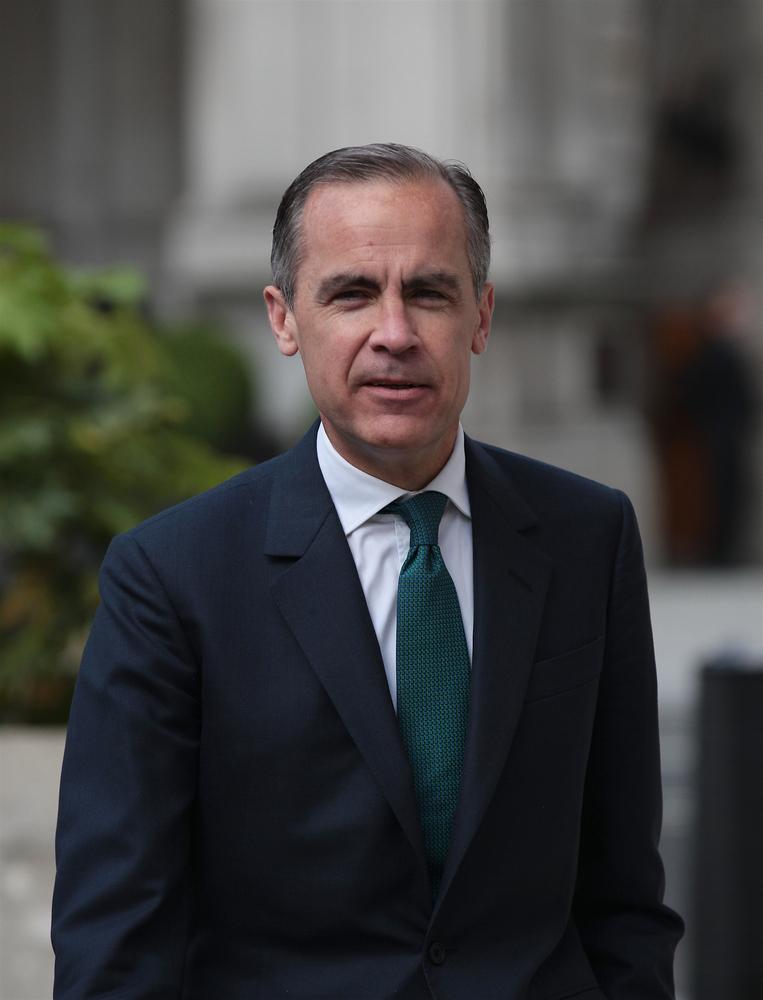
In what was a largely tight-lipped appearance before the Treasury Committee, Governor of the Bank of England Mark Carney cited today’s Sterling rebound as being due to a no-deal Brexit scenario looking less likely.
Following a sharp dip yesterday, in the build up to the historic meaningful vote in Commons, Carney told members of the house that today’s recovery reveals that financial markets are entertaining the possibility that the Brexit process will be extended, and consequently that a no-deal appears a more distant reality.