
Musk ditches two Tesla colours to ‘simplify manufacturing’
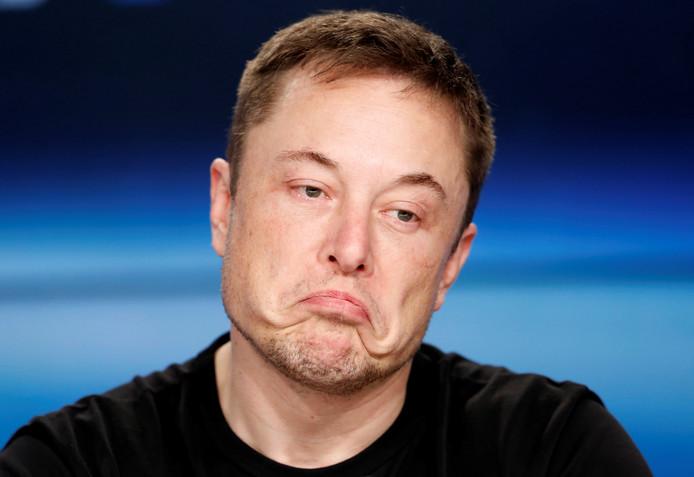
Elon Musk has said that Tesla will ditch two of seven Tesla colour options, in order to ease the production process.
The Tesla CEO said on Twitter (NYSE: TWTR) that he will be dropping Obsidian Black Metallic and Metallic Silver.
“Moving 2 of 7 Tesla colors off menu on Wednesday to simplify manufacturing,” he said on Tuesday. “Obsidian Black & Metallic Silver will still be available as special request, but at higher price.”
From Wednesday, the five remaining colours will be Solid Black, Midnight Silver Metallic, Deep Blue Metallic, Pearl-White Multi-Coat, and Red Multi-Coat.
On Friday, Musk sent a note to employees optimistic about the quarter and cars on the production line.
“We are the most amazing quarter in our history, building and delivering more than twice as many cars as we did last quarter,” said the note.
Musk has been in headlines multiple times over the past year. Last week, the CEO appeared on Joe Rogan’s podcast where he smoked marijuana and drank a glass of whiskey.
The following day, the Chief Account Officer Dave Morton and Chief People Officer Gaby Toledano both resigned from the electric car group.
His appearance on the podcast caused shares in the group to drop six percent.
“It’s particularly troubling given the issues that he has had already,” said Kabrina Chang, an associate professor at the Boston University Questrom School of Business in the US.
“If I were a board member or investor, this would not give me a ton of confidence that he’s moving in that direction. It does not seem like forward progress in terms of governance and professionalism of Tesla.”
Shares on Friday closed at $263.24 a share, the lowest since April.
Shares in Tesla (NASDAQ: TSLA) are currently 285.00.
RedT energy PLC wins UK framework contract for public sector
RedT Energy PLC (LON:RED) has been selected as a preferred supplier of energy storage solutions to the UK public sector.
The company has been awarded a place on Essentia’s Battery Storage Framework. Essentia is a wholly owned subsidiary of Guy’s and St Thomas’ NHS Foundation Trust.
The selection process was competitive. RedT will be the preferred supplier for several UK public sector projects after being successfully awarded the contract. These include the NHS, and has the scope to extend to the Central Government Estate, Local Authorities, Schools and Universities.
The NHS is considered one of the UK’s most energy intensive projects, spending in excess of £750 million on energy annually. RedT will work through the framework to provide energy and cost savings to public sector bodies such as the NHS.
CEO of redT, Scott McGregor, commented: “We’re very pleased to have been selected as a framework supplier for the public sector in the UK.”
“To be chosen is an important validation of our technology and business models to unlock cheaper energy costs and reaffirms our position as a leader within the energy storage sector. We look forward to working closely with the NHS and other public sector companies to reduce their energy costs and accelerate their clean energy targets in the future”
RedT Energy PLC shares were up by 13.75% at 12:00 BST today.
Carney to stay on at BoE until 2020, says Hammond
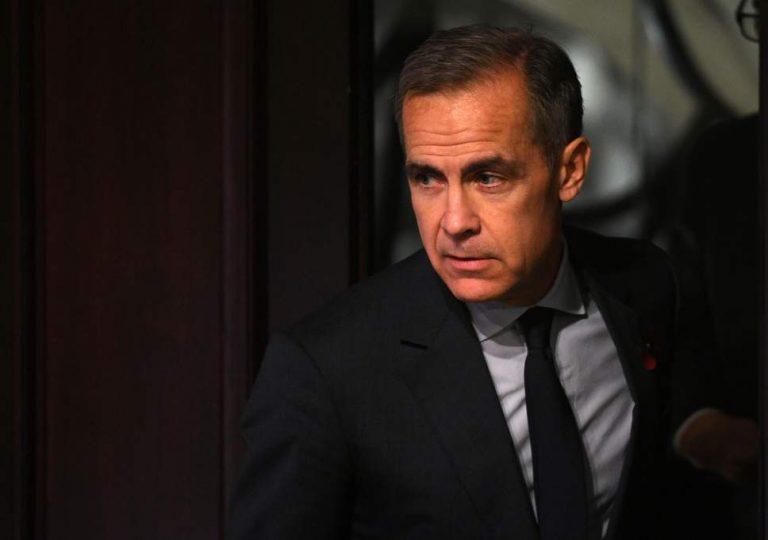
Philip Hammond has confirmed plans to Mark Carney to remain the Bank of England’s governor until 2020.
In a statement released on Tuesday, the chancellor said Carney and Sir Jon Cunliffe, the deputy governor have both been reappointed to ensure a smooth Brexit.
“I’m delighted that the governor has agreed to stay in his role for a further seven months to support a smooth exit from the European Union and provide vital stability for our economy,” said Hammond in the statement.
In reference to Cunliffe, Hammond said: “I’m delighted to announce the re-appointment of Sir Jon Cunliffe for a further term as Deputy Governor, and I’m confident his extensive experience will continue to be a valuable asset to the Bank of England.”
The reappointment will officially be made by the Queen, who has been advised by the prime minister and Hammond.
In a letter to Hammond, Carney said: “I recognise that during this critical period, it is important that everyone does everything they can to support a smooth and successful Brexit.”
“Accordingly, I am willing to do whatever I can in order to promote both a successful Brexit and an effective transition at the Bank of England,” he added.
Last week, MPs asked Carney if he would consider remaining on as the Bank of England’s chief to ensure a smooth Brexit.
Carney said at the time: “Even though I have already agreed to extend my time to support a smooth Brexit, I am willing to do whatever else I can in order to promote both a smooth Brexit and effective transition at the Bank of England. The chancellor and I have discussed this. I would expect an announcement to be made in due course.”
Nigel Farage did not respond well to Hammond’s statement. He wrote on Twitter: “Truly appalling decision to extend Mark Carney’s term at the Bank of England. He is a Remainer, how can we take this government seriously?”
In contrast, Nicky Morgan, who chairs the influential Treasury select committee, was more optimistic.
“This announcement provides much-needed stability and clarity during this important period. The government should now use the extra seven months to continue its succession planning. It should identify a candidate in good time for the Treasury committee to scrutinise the appointment,” she said.
Elementis PLC shares drop after revised deal with Mondo Minerals

Elementis PLC (LON:ELM) has announced that it will launch a rights issue to finance the acquisition of Mondo Minerals. It will acquire Mondo Minerals for a reduced value of $500 million following a revised agreement.
Elementis is a leading British speciality chemicals and personal care business. Founded in 1844, it currently employs around 1,300 workers.
This value of the acquisition is lower than the $600 million it had agreed earlier this June. The revised deal will see Elementis pay up to $53.0 million if Mondo Minerals meet specific performance criteria by December 2020.
If the performance targets are fully met, the terms of the revised deal would value Mondo Minerals at $553 million. This is on a cash free and debt free basis.
Additionally, Elementis has said it will finance the acquisition through the proceeds of a 1-for-4 rights issue and through a revolving credit facilities agreement.
Notably, the directors of Elementis have unanimously recommended that shareholders vote in favour of the acquisition.
Paul Waterman, CEO of Elementis, said: “Mondo Minerals is a high quality business with significant opportunities for future growth,”
“Following engagement with our shareholders, we have agreed terms of a revised deal with Advent that we believe represents compelling value.”
“We remain excited by Mondo’s prospects and the significant opportunities we believe this acquisition will unlock for Elementis.”
Shares in Elementis have dropped by 3.01% as of 12:40 BST today.
Cadbury owner is stockpiling ingredients in the event of a no-deal Brexit
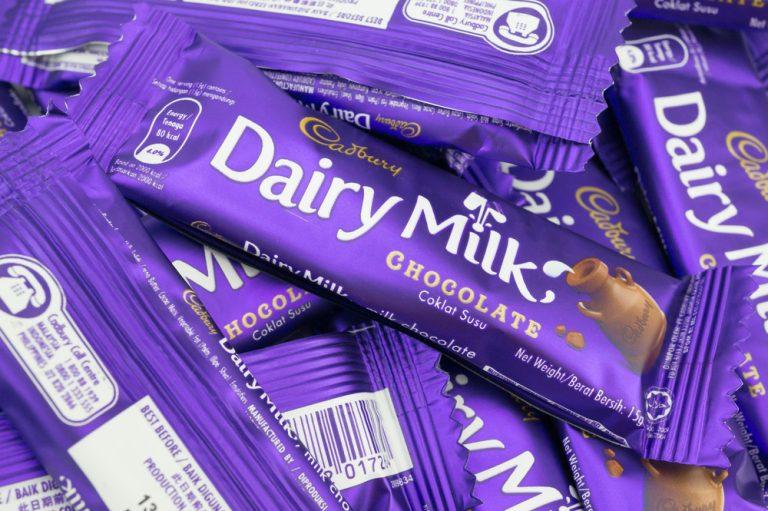
The owner of the Cadbury brand is stockpiling ingredients in case of a no-deal brexit, the Times reports. Owner of the multinational confectionary company, Mondelez International Inc (NASDAQ: MDLZ), is stockpiling ingredients, chocolates and biscuits.
Mondelez International is one of the world’s leading snack companies. In fact, it markets its products in 165 countries. In addition to Cadbury, its brand portfolio boasts names such as Milka, Oreo, Philadelphia, Ritz and Toblerone.
John Cadbury founded the Cadbury brand in 1824 after he opened a grocer’s store in Birmingham, England. He sold cocoa and drinking chocolate which he prepared himself. Since 2010, Mondelez International has wholly owned the confectionary company. As well as the UK, Australia, Canada, Malaysia, New Zealand, Nigeria and South Africa all market the Cadbury brand.
The Times has cited Hubert Weber, president of Mondelez Europe: “Like the whole of the food and drink industry in the UK, we would prefer a good deal that allows the free flow of products as that would have less of an impact to the UK consumer.
“However, we are also preparing for a hard Brexit and, from a buffering perspective for Mondelez, we are stocking higher levels of ingredients and finished products, although you can only do so much because of the shelf life of our products. We have a contingency plan in place to manage [a hard Brexit], as the UK is not self-sufficient in terms of food ingredients, so that could be a challenge.”
Currently, March 29 is the date scheduled to see the UK leave the EU. However, Theresa May’s party is yet to negotiate a full exit deal.
Mondelez International is not the only company to establish a Brexit contingency plan. The pharmaceutical companies Dechra and Novo Nordisk UK also announced their no-deal Brexit plans.
California governor signs clean energy initiative

California has announced its goal of committing to solely carbon-free electricity sources by 2045.
Governor Jerry Brown signed the deal on Monday, whilst also saying he vowed to honour the 2015 Paris climate deal.
California is the second state, following Hawaii, to commit to carbon-free energy.
“There is no understating the importance of this measure,” said Brown on Monday, with plans to “continue down that path to transition our economy to zero carbon emissions.”
“We want others to do likewise, and if enough people often enough do what is needed we will curb global warming,” Brown said. “But we’re definitely at the beginning of what’s going to be a long and difficult and contentious journey.”
The path chosen for California is different from Donald Trump’s environment policy. Trump said last year that he plans to pull the US out of the deal and negotiate a new “fair” deal for US businesses.
“It’s impossible to overstate how significant it is for a state as large and influential as California to commit to 100 percent clean energy,” the Sierra Club, an environmental organization, said in a statement.
“California is showing the world that a transition to 100 percent clean energy is within reach and it will continue to drive the transition away from fossil fuels — and it is doing this while the federal government abandons clean energy.”
A statement from a Pacific Gas & Electric spokesperson has said that prices could reportedly rise for customers following the new law.
“If it’s not affordable, it’s not sustainable,” it read.
Network Rail sells railway arches in £1.5bn deal
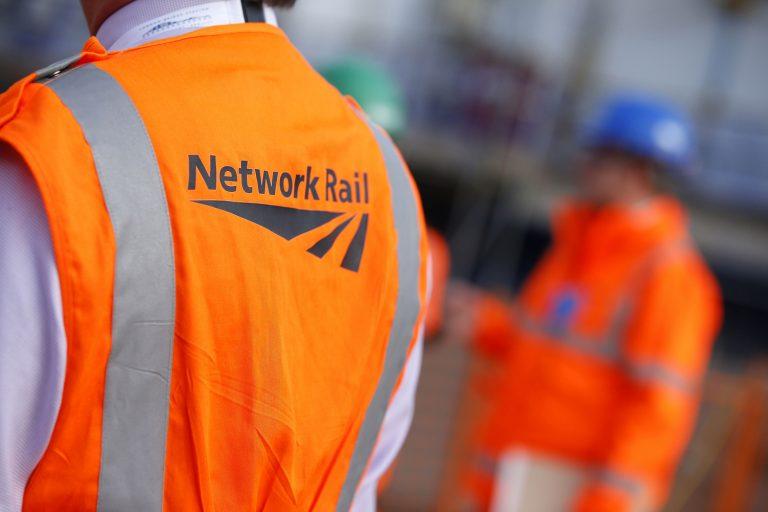
Network Rail has sold thousands of railway arches in a £1.5 billion property deal.
Britain’s rail network said that investors Blackstone Group and Telereal Trillium won the bid for the 5,200 properties.
The move has sparked concern among tenants, who believe the sale could lead to higher rents.
A spokesperson from the campaign group, Guardians of the Arches, said: “We continue to dispute whether selling off the whole estate in one job lot is the best way of supporting small businesses and the local economies which rely on them.”
Sir Peter Hendy CBE, the Network Rail chair, said: “This has been a very thorough, detailed and complex process and we are pleased we’re now in a position to announce Telereal Trillium and Blackstone Property Partners as the new owners of the commercial estate.”
“This deal is great news – for tenants it will mean significant commitment and investment, and for passengers and taxpayers it will mean massive, essential improvements without an extra burden on the public purse.”
David Biggs, managing director, Network Rail Property, said: “We are proud to have fostered so many small, independent, diverse businesses and communities across the country and we are confident that these will continue to thrive under the new owners.”
“Ultimately our role is to run, improve and grow the railway, and managing these properties isn’t essential to that. The new owners will invest in and grow the estate, and we can focus on our core business of running the railway.”
Rachael Maskell, the shadow rail secretary, was not excited for the sale and called of the transport secretary to block the sale.
Maskell said the sale would “undermine the financial sustainability of the railway and damage small and medium-sized enterprises across the country”.
Snap’s chief strategy officer steps down, shares fall

Snap’s chief strategy officer is the latest executive to leave the group.
Imran Khan said he was leaving the company to “pursue other opportunities”.
“After nearly four years at Snap, I have decided to step down,” Khan said in an email to staff.
“This has been a very difficult decision for me to make. There is never a perfect time to say goodbye, but I know that the time is now. We have a stellar leadership team in place to guide Snap through the next phase of growth and on to the next chapter.”
Shares fell almost two percent on Monday and have plunged 40 percent from their public share offering last year.
Snap has struggled to keep a large following since the group’s redesign of the app.
Earlier this year, Kylie Jenner said on Twitter she was not a fan of the photo messaging app since the re-design.
She tweeted: ‘“Sooo does anyone else not open Snapchat anymore?”
The tweet led to over $1 billion being wiped from the group’s value in February.
Over a million users signed a petition for Snapchat to reverse the unpopular new design.
Snapchat’s financials for the second quarter were revealed last month and showed the first drop in active users in the company’s history. The group said it lost three million users in the past three months.
“I think it’s really dangerous,” commented Rob Kniaz, the co-founder of the technology venture capital firm Hoxton Ventures.
“When you look at the numbers, if you’ve lost three million of your most active users by definition, it tells you something is materially wrong with the product and maybe the company.”
Snap has not made a profit since its flotation on the stock exchange.
Shares in Snap (NYSE: SNAP) closed down 1.91 percent at 9,74.
Dignity shares fall 6pc as Co-op increases sector competition

Shares in Dignity fell six percent after Co-op offered to beat the cost of the funeral services offered by rivals.
As the competition within the funeral industry grows more intense, Co-op said on Monday said it would reduce the cost of its “simple” funeral by £100, to £1,895.
“The key concern post Dignity’s announcement of price reductions in January to match the Co-op on Simple funerals was that the Co-op would respond – it now has with a £100 price reduction,” said analyst Charles Hall.
Although it cut prices earlier this year, Dignity’s budget option is still more expensive than the standard package from the Co-op.
Peel Hunt, an analyst firm, warned that if Dignity cut prices more it would knock up to £1.5 million off the group’s profits.
A report from Sunlife said in its Cost of Dying report that the cost of the average basic funeral had risen for the fifteenth year in a row to £4,271.
Dignity and Co-op both own a big share of the market and are responsible for 12 percent and 16 percent of the market respectively.
Robert Maclachlan, the managing director of Co-op’s Funeralcare business, said the decision to lower prices and match competitors was to focus on “tackling affordability”.
“In the last two years we have seen a huge shift in the number of clients seeking affordable funeral choices,” he said.
James Congdon, an analyst at Canaccord Genuity, said: “There is plenty of evidence that prices are too high.”
“With the backdrop of the CMA investigation into pricing, and clarity of pricing, perhaps its not a surprise that prices are coming down.”
Shares in Dignity (LON: DTY) are down 5.33 percent at 977,00 (1804GMT).
Nike sales surge 31pc on Kaepernick campaign, shares rise
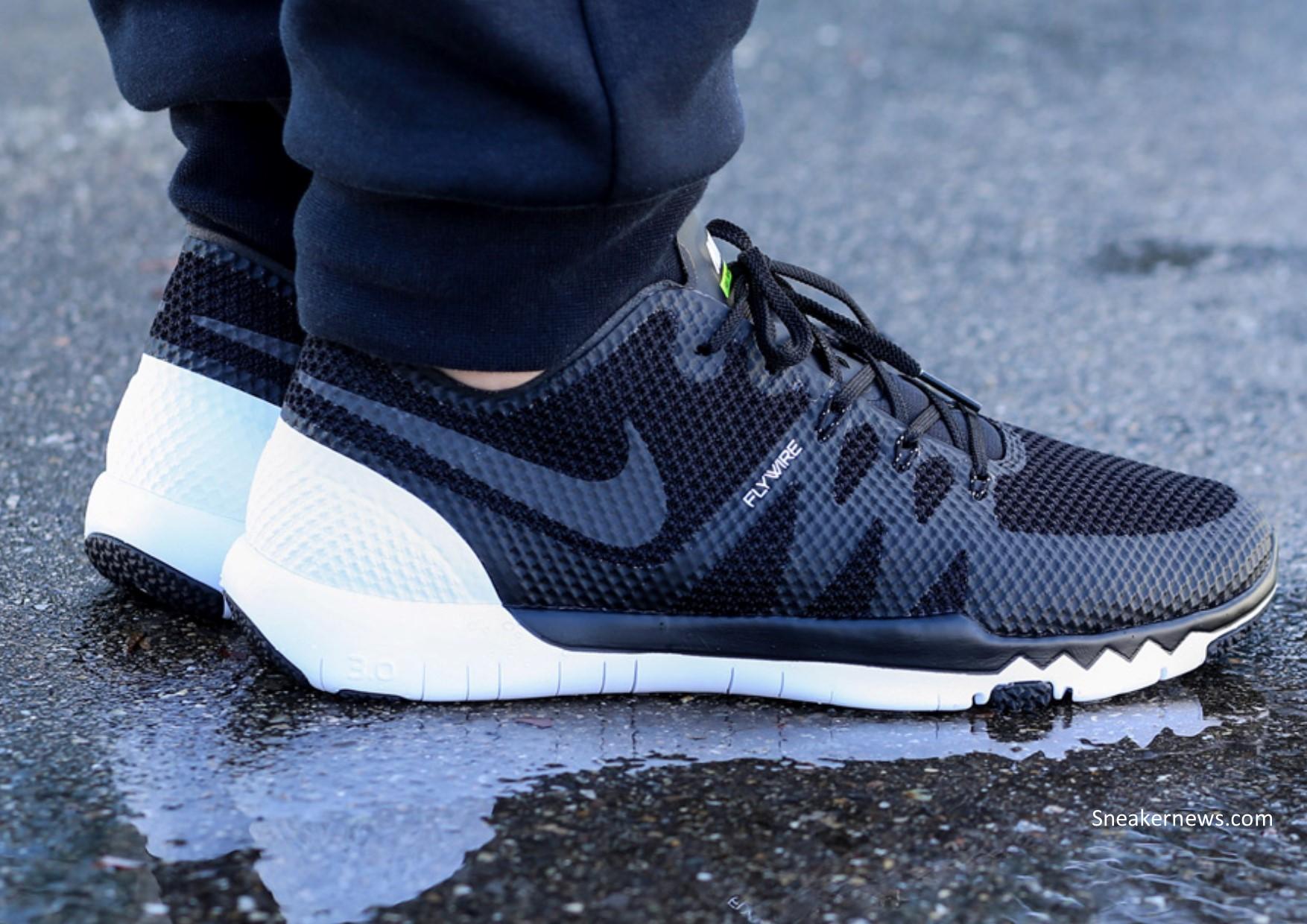
Nike sales surged by 31 percent following the controversial campaign fronted by Colin Kaepernick.
A report from Edison Trends, a top advertising research firm, found that sales in the sports retailer increased by almost a third compared to the same period last year.
The decision for Kaepernick to be the face of the campaign was a controversial one after in 2016 he refused to stand for the national anthem in protest at police brutality and racism.
“There was speculation that the Nike/Kaepernick campaign would lead to a drop in sales, but our data over the last week does not support that theory,” said Edison Trends co-founder, Hetal Pandya.
Following the announcement of the advertising campaign, people released images of them burning Nike materials onto social media.
Donald Trump has also voiced his anger at Nike’s choice of sports star for the recent campaign.
“Nike is getting absolutely killed with anger and boycotts,” Trump said.”I wonder if they had any idea that it would be this way?”
“As far as the NFL is concerned, I just find it hard to watch, and always will, until they stand for the FLAG!”
Nike have defended the deal and said Kaepernick was “one of the most inspirational athletes of this generation”.
Serena Williams, who is also part of the campaign, praised the decision. Williams said the retailer’s decision to use Kaepernick a “powerful statement to a lot of other companies”.
Shares in the group (NYSE: NKE) are up 2.15 percent at 82,03 (1631GMT).