
Tricorn profits and earnings per share up for H1

Tube manipulating specialist Tricorn Group Plc (LON:TCN) have reported that their profits were up 49% for the six months through September, though the firm warned that growth in its end markets was slowing.
The AIM-listed company’s profits were up to £0.55 million, while revenue stayed relatively flat at £11.4 million – the group said that their focus to-date in 2018 had been on improving margins.
The firm accredited their success not only to margins, but also noted the “improved profitability” of its Transport Division, and continued success from the “China Joint Venture” – both of which had allowed the company’s earnings per share to climb 52% to 1.52p.
Tricorn Chairman, Andrew Moss, said that the prosperity, “reflects the benefits of an efficient operational base spanning three key geographic regions, a global customer base and new business opportunities across both divisions, which are being implemented. The pipeline of new business opportunities remains encouraging.”
“Over the past two years, we have seen significant growth in our end markets. However, towards the end of the period, we witnessed signs of this growth slowing. Against this background, and after considering the impact of new business wins, the Board anticipates Group revenues in the second half to be similar to the first and full year underlying profit before tax to be in line with
market expectations.”
“The improved profitability of the Transportation division and the further progress of our joint venture in China enabled the Group to deliver a significant improvement in profit before tax which at £0.553m (2017: £0.370m) was 49.5% ahead of the Corresponding Period.”
The firm’s shares are currently trading down 6.62% or 1.49p at 21.01p a share 05/12/18 15:29 GMT.
Legal advice for Brexit and the backstop bottom line
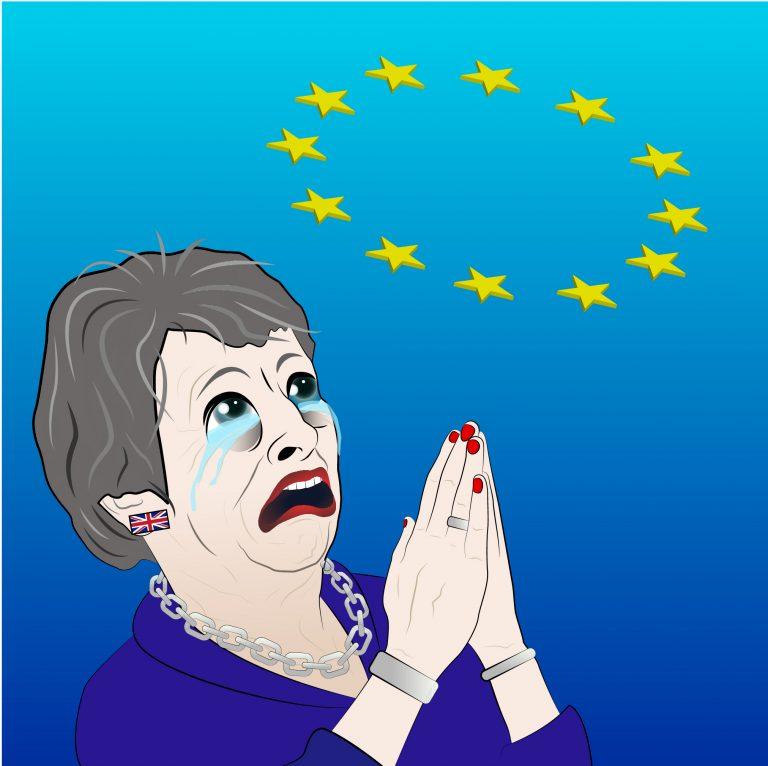
Following yesterday’s debacle and the triple vote loss, the government have since published the advice they received from legal personnel on the realities of Brexit.
Following what started as a slow filtration and dribble of information leading into PMQs this afternoon, it has since been revealed that despite many a promise from the prime minister,
the hard border with Ireland would “endure indefinitely”,until a trade deal is eventually struck with the EU. In the six page document published on Wednesday afternoon, legal attorney-general, Geoffrey Cox, stated that, “Despite statements in the [withdrawal agreement] protocol that it [the backstop] is not intended to be permanent, and the clear intention of the parties that it should be replaced by alternative, permanent arrangements, in international law the protocol would endure indefinitely until a superseding agreement took its place.” In regard to the success of a potential trade deal, the backstop could endure, “even when negotiations have clearly broken down”. “In the absence of a right of termination [on the backstop], there is a legal risk that the United Kingdom might become subject to protracted and repeating rounds of negotiations,” Shadow Secretary of State for leaving the EU, Kier Starmer, was ardent about the need for these documents to be published, and has since posted on Twitter, “Having reviewed the attorney-general’s legal advice, it’s obvious why this needed to be placed in the public domain.” “All week we have heard from government ministers that releasing this information could harm the national interest. Nothing of the sort. All this advice reveals is the central weaknesses in the government’s deal.” Nigel Dodds, deputy leader of the DUP, has since commented that the findings are “devastating” – and one would have to ask quite how much of Theresa May’s oh-so-famous ‘compromise’ would be needed to drown out the political death knells. “For all the prime minister’s promises and pledges the legal advice is crystal clear. In her words, no British prime minister could ever accept such a situation.” With the furore intensifying, all sides are interjecting with agendas, motives and complaints, and nobody seems able to posit a conciliatory solution. Brexit taps into the area that the British political establishment fears the most; a shift from incremental economic management based on market forces, onto actual, dramatic, political change. There is no rational answer or course of action, just the task of representing the will of British people, while efforts will inevitably be made by the centre-ground to maintain the status quo.
India, Economic Planning and Hindu Nationalism
This article was originally published by Queen Mary University of London on the South Asian Politics Forum.
Since his arrival in office in 2014, Narendra Modi has set about reforming the social and economic landscape of India, with his policies having mixed success in aiding economic development. While the earlier portion of his tenure was overseen by three advisors with thought based around the ideas of the Chicago School and globalisation, they – like the former chairman of the Reserve Bank of India – decided to distance themselves as in recent times Modi has opted for a stance more akin to economic nationalism. Whether coincidental or intentional, Narendra Modi’s policy package appears to increasingly step away from the pro foreign direct investment line of his predecessors, in a time where market tensions and a strong dollar look ominous for developing economies. While allowing more economic advice to filter into the BJP from bodies such as the Swadeshi Jagran Manch and Rashtriya Swayamsevak Sangh may not appear to be a prudent move for a country whose core goal over the past two decades has been to become a major player in the international market, it could be argued that protectionism in the short term could be a healthy means for India to carve out its own form of economic development, detached from the interests outside beneficiaries.
The thrust of Modi’s policy package to-date has been a drive to reshape India’s way of doing business; whether this be tighter regulation, investment in sectors outside of IT, or adjustments to make economics more suited to the socio-economic dimensions that best represent a more Swadeshi model – that being a model based on putting national economic goals and traditional industrial structures ahead of international competitiveness. As part of this, the free market way of thinking has been put on a back-burner. According to SJM chief Ashwani Majahan, India must be run by thinkers and officials that are “connected to the soil”.
The narrative of intervention as economic interruption
From an outside perspective, the adoption of pro-India or protectionist measures as part of Hindu Nationalism, appear to represent varying levels of success. Prior to Modi’s arrival in office, hard-line Hindu Nationalist and Swadeshi policies incurred negative economic implications. The 2004 and 2012 legislation outlawing the culling of livestock had adverse effects on milk, leather and meat markets, and because of damage to crops by roaming cattle, the agricultural sector. Since 2014, Modi’s Demonetarisation and the Make in India policies illustrate debatable success. While Modi argued that discarding higher denominations of rupee note would allow the government to flush untaxed capital out of the economy, the real-world impact was little-to-no evidence to support the government’s claims and the loss of 1.5 million jobs. Similarly, Modi’s attempts to stimulate domestic manufacturing with his major policy, Make in India, saw short-term success by boosting FDI but has yet to turn the Indian manufacturing sector into anything that can rival its IT sector in terms of growth or per-capita capital accruement. Finally, Modi’s attempts to stamp out vigilante profiteering by billionaires, and a culture of politico-economic patronage, largely failed as most of the perpetrators simply fled the country. In contrast, recent policy direction has more promise. Thus, the idea that Modi and his Hindu Nationalist advisers’ protectionist policies are a move of strategic prudence, should be entertained. Both Modi’s SJM and RSS counterparts have called for the implementation of tariffs and blocking the privatisation of failing corporations and banks. While RSS bureaucrats have opposed the government on its plans to privatise loss-makers Air India and Flipkart, they are gladly overseeing policies such as price controls on medicines, tariffs on US goods and “politics driven” bailouts for the farming sector. In response to the government’s recent policy shift away from its push for intensive manufacturing, critics – such as RBI deputy governor Viral Acharya – have been quick to cite India’s rolling deficit, while criticising Modi for pandering to popular demand before the nearing election, and even drawing comparisons to the plight of Argentina.India and long-term market prudence
While a valid case can be made for the negative effects that protectionism has on short-term liquidity, two practical counter points should be considered – regarding structure and agency. Firstly, something can be said for the ad hoc nature of protectionist policy in this context. Not only has the Sino-US trade war created uncertainty in international markets but manufacturing inflows have become more expensive – with recent monetary policy being reactive to ongoing currency concerns – as a strong dollar pushes up oil prices. Secondly, India’s protectionism is centred around fiscal initiatives and job creation in manufacturing and farming, both of which have benefitted from government intervention. Perhaps in light of recent phenomena, such as fears of inverted yield curves and attempts to tackle inflation in the US, developing a model of national planning more akin to Keynesian fiscal policy, could be appropriate for India. One should appreciate that unlike the government of Manmohan Singh, Modi’s recent measures indicate a different application of ‘game theory’ – namely that bolstering the high yield tech sector is not his core priority. Rather, he is moving towards a goal of high employment by protecting industries that are low-skill and personnel intensive, instead of capital intensive and high skill (and thus only accessible by the educated elites). In a more abstract form, the recent trend of tightening the leash on free market ideas has merit in the long-run. As argued by economists such as Amartya Sen, it is important for countries to define the course of their own development. While India’s economic and institutional development has come some way, protectionism could not only help India to develop its own independent economic character, but much like China has, India could have the opportunity to develop along strategic and structural lines, not just in line with GDP growth. Ultimately, Modi and his counterparts have had mixed success with economic policy, though protectionism could be reactive and even proactive, providing scope for India to sculpt its own model of development without having to pander to external forces. The US’s continued confidence in the Indian market should act as evidence enough that Hindu Nationalism has not hampered India’s economic status or prospects, but a happy medium should be found between profitability and India’s cultural, social and economic identities. What makes this case so unique is that India’s economic paradigm shift sets it up for Keynesian economic planning and a focus on national growth rather than international competitiveness – but unlike the US with the New Deal, it did not require economic slump as a pre-requisite for these ideas to come about.BT ditches Huawei kit from 4G network
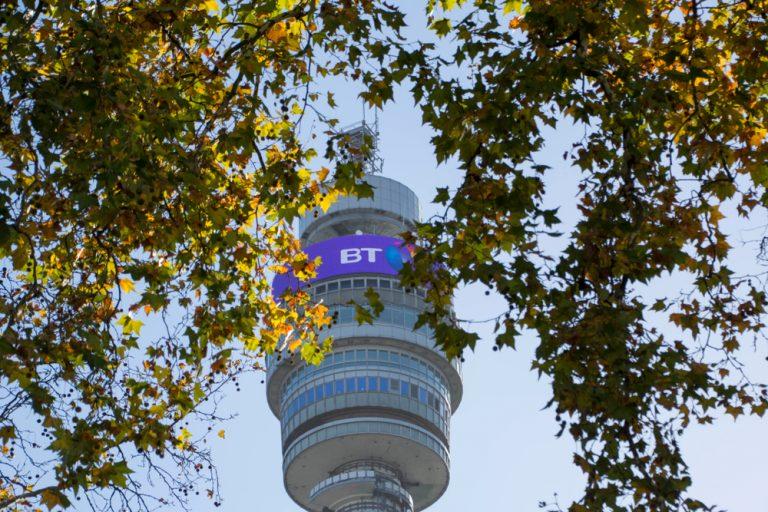
BT announced on Wednesday it is set to remove Huwei hardware from its core 4G network.
This comes amid concerns raised by various governments over the security of the Chinese company’s equipment.
A report conducted by the US-China Economic and Security Review Commission warned that the Chinese government could be involved in forcing Chinese firms such as Huawei to adapt products that are performing below expectations, in turn potentially facilitating overseas espionage activities.
Thus far, the US, New Zealand and Australia have all put into motion efforts to stop the use of Huawei equipment in national telecoms infrastructure.
The British telecommunications company has been using Huawei equipment since 2005, when it signed a deal with the Chinese firm.
A BT spokesperson said the company is in the process of removing Huawei products “from the core of our 3G and 4G networks as part of our network architecture principles in place since 2006”.
However, Huawei said that British Telecom would still be collaborating with the firm to develop elements of its 5G.
A spokesperson for the Chinese firm said: “Huawei has been working with BT for almost 15 years,” the spokesman said. “Since the beginning of this partnership, BT has operated on a principle of different vendors for different network layers. This agreement remains in place today.”
Shares in the company (LON:BT.A) are currently down -0.17% as of 14:34PM (GMT).
Thomas Cook shares soar 45% following record lows

Shares in Thomas Cook soared by 45% on Wednesday morning.
Following a week where shares plunged by 60%, they rebounded after Moody’s changed the outlook from negative from stable.
The company’s stock value has plummeted over the past week since the group issued a second profit warning in a couple of months.
Holiday bookings through Thomas Cook fell over the summer as the heat wave led more people to stay in the UK.
“2018 was a disappointing year for Thomas Cook, despite achieving some important milestones in our strategy for transforming the business,” said the group’s chief executive Peter Fankhauser last week.
“After a good start to the year, we experienced a larger-than-anticipated decline in gross margin following the prolonged period of hot weather in our key summer trading period,” he added.
Vitali Morgovski, Moody’s assistant vice president-analyst, said: “Our rating action reflects the deterioration of credit metrics after unfavourable earnings development in the financial 2018 and the group’s weakened liquidity.”
“Furthermore, the negative outlook reflects Moody’s concerns regarding the company’s ability to recover its profitability and cash generation in the coming fiscal year as the macroeconomic tailwind becomes less supportive whereas the outcome of Brexit negotiations and their potential impact on customer behaviour that may include a shift to late bookings exacerbates the uncertainty,” he added.
Shares in Thomas Cook (LON: TCG) are currently trading +36.37% (1311GMT).
Stagecoach shares rise despite first-half loss
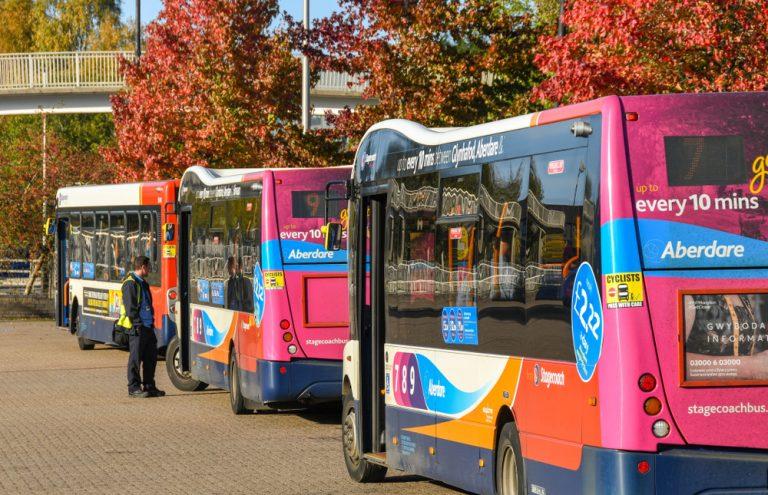
Stagecoach shares rose on Wednesday after the company reported its results for the first-half of the year.
The bus and rail operator posted a pre-tax loss of £23 million for the first six months of the year. This compared to the £97 million in profit earned the year before.
The group attributed to the loss to exceptional charges relating to North America goodwill, amounting to 85.4 million.
Moreover, the group are also considering offloading the North American arm of their business, with rising fuel costs threatening its MegaBus and CoachUSA operations in the U.S.
Chief Executive of Stagecoach, Martin Griffiths commented:
“While we recognise the competitive challenges in some of our markets in the UK and North America, we are confident that public transport will be central to delivering Government priorities to grow the economy, connect people and communities, reduce road congestion and improve air quality. We are reviewing strategic options for the North America Division and that includes ongoing discussions regarding a possible sale of all or part of the business.
“The Group is focused on making further progress in the second half of the year and we have increased our expectation of full-year adjusted earnings per share to reflect the above-forecast rail earnings in the first half of the year.”
The bus firm also announced that it had trialled autonomous buses on routes to Edinburgh and Fife as a result of £4.35 million in Innovate UK funding.
The company added that the interim dividend is to remain at 3.8p.
Shares in Stagecoach (LON:SGC) are currently trading +14.43% as of 13:10PM (GMT).
Brexit legal advice published, issues of contempt
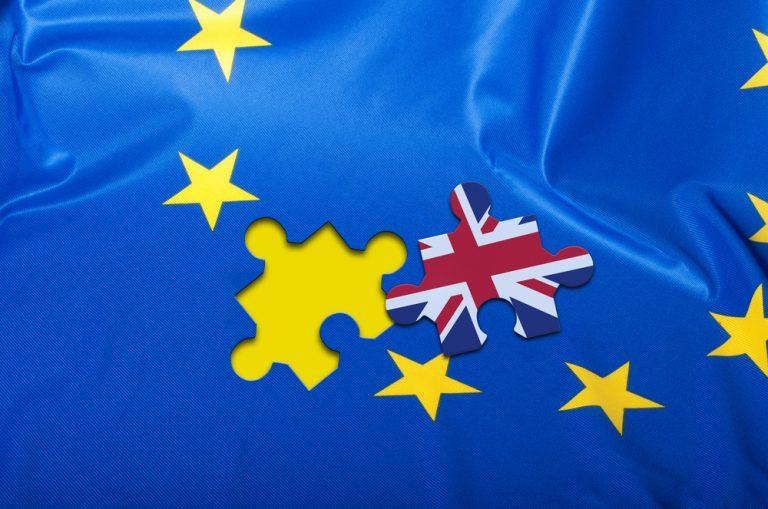
After losing three votes in one day on Tuesday, Theresa May’s government are being made to publish the Brexit legal advice, with MPs finding the government to be acting ‘in contempt of Parliament’.
While there was some upshot for the prime minister – in that Jacob Rees-Mogg’s vigilante faction seems to have been pacified for the time-being – what follows yesterday’s votes could be a drawn out process of pretty much ‘more of the same’. With next Tuesday’s vote on the Withdrawal Agreement likely to come crashing down, comments from MP Dominic Grieve are already moving towards a motion for a ‘Plan B’ proposal if nothing is agreed by January.
Andrea Leadsom says MPs will rue the day:
During an interview with Radio 4, the Leader of the House told listeners, “We will comply with [the vote] but not without some regret. This is a very important breach that has taken place here.” “Law officers themselves will be very reluctant to give advice which they might then see across the front pages of the newspapers.” “Frankly, any parliamentarian who wants at some point to be in government is going to live to regret their vote last night.” “The government is committed to leaving the European Union in line with the referendum and unless government were to do something completely different to change tack, or indeed to pass this deal, then we will be leaving the EU on 29 March next year without a deal,” she said. Ms Leadsom finished by remarking that at this time, Ms May remains the right person to lead the country, and MPs’ decision to unsettle the prime minister’s plans would be one they would, “live to regret”.Hashed out, replayed and we’re back to the same problems:
Issues remain over the Irish backstop, with MPs outlining the theoretical disaster that would be an effective customs line in the sea between mainland Britain and Northern Ireland. Former Tory chief whip, Mark Harper, weighed in, “She should listen to Conservative colleagues … It would undermine the UK common market and threaten the integrity of the UK by creating a customs and regulatory border down the Irish Sea,” Similarly, there is the issue of public confidence, or lack there-of. Discourse is increasing in camps calling for a peoples’ vote, with supporters of the Leave campaign growing increasingly apathetic with the government’s seeming inability to carry out definitive steps. Further, the prime minister is suffering from the split of the political establishment, with cross-party figures calling for an encore of democratic rigmarole. Fellow Conservative, Justine Greening, has called for a three-option second vote – warning that another vote would be necessary, “we could be debating Brexit not for the next five days but for the next five years”. “This is less about the future of the Tory party but more about how we can bring the country together.” Former PM Tony Blair has also publicly thrown his weight behind a peoples’ vote, Theresa May now has to contend with the shift of political discourse – especially in the media – towards the ideas that seem to be gaining momentum, particularly in the South-East. There is also the matter direct dissent. While he would be one among many, trade secretary Liam Fox has openly encouraged MPs to ‘take down’ Brexit by blocking or continuing to stall Bills currently going through the House – with Mr Fox drawing particular attention to the draft Trade Deal, which would be needed for the UK to take its place in the World Trade Organisation post-Brexit.Going Forwards:
Regardless of the to-and-fro, the law states the UK will be leaving the EU next year, and thus the law would have to be changed in order to prevent this. James Rees of the Brexit Committee has stated that outside of issues of UK-EU citizens’ rights and the Northern Irish border, consensus has been reached on one thing – that a No Deal Brexit would be damaging to the UK. Boris Johnson faced rebuttal and haranguing the government’s policy, with his party members stating that his tendency to recount issues and offer no solution, has grown wearying for a House suffering from a shortage of amicable solutions. The fashion continues to be – choose a country with a higher GDP per capita than ourselves, stick the word ‘plus’ behind it, and use this as a model for our Brexit deal, as if such a thing would be possible to draft and ratify within the remaining time period. PMQs have just begun and the legal advice has been released to ‘some’ MPs, curious readers should keep an eye on Twitter for the MPs who feel inclined to release some of these details publicly.Lloyds share price resumes decline after May’s defeat

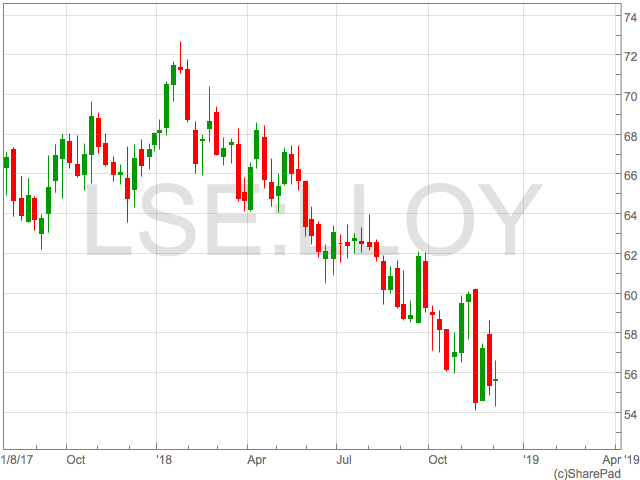
Lloyds share price (LON:LLOY) resumed a 10-month downtrend following Theresa May’s historical defeat in the House of Commons.
Lloyds shares fell on Wednesday morning after the UK Prime Minister’s government was found to be in contempt of parliament after losing a parliamentary vote by 18 votes.
Shares in Lloyds fell as low as 54.29p before rebounding.
It was the first time in history a government had been found to be in contempt of parliament, a serious matter that resulted in the government being forced to publish the full legal advice it had wanted to keep secret.
The impact on Lloyds share price and the rest of the banking sector has not be driven so much by Theresa May’s triple defeat on Tuesday but more the chances of her Brexit deal being passed looking ever more unlikely.
Tuesday’s contempt vote was followed by Brexit debate where numerous MPs said they would vote against her deal.
The outcome of the parliaments meaning vote 11th December could see the UK hurtling towards a ‘No-deal’ scenario, and the worst outcome for markets, particularly shares in UK banks.
Both the government and the Bank of England have warned leaving the EU without a deal would lead to significant reduction in UK GDP over the long term.
Today’s move in Lloyds share price is evidence investors will not be hanging around in bank shares to see the full impact.
Despite posting a strong start to 2018, Lloyds share price has been in steady decline entering a technical bear market with a decline of over 20% from highs of 72.3p to a closing low of 54.5p.
The decline comes in-spite of an 18% increase in statutory profit after tax to £3.7 billion in the nine months to 30th September.
Lloyds profitability
The Bank of England recently published stress tests on UK banks which highlighted the banks were adequately capitalised to deal with any negative economic fall out. However, such a scenario is likely to impact heavily on the banks’ profitability. The Bank of England predicted the UK economy could enter recession and contract by 8%, such a reduction would hit Lloyds’ profitability significantly despite being well capitalised. Mark Carney also told the Treasury Select Committee prices food prices could rise between 5-10% putting further pressure on households, this in turn could increase the rate of defaults on debt provided by banks such as Lloyds. A torrid 2018 for Lloyds shares
Despite posting a strong start to 2018, Lloyds share price has been in steady decline entering a technical bear market with a decline of over 20% from highs of 72.3p to a closing low of 54.5p.
The decline comes in-spite of an 18% increase in statutory profit after tax to £3.7 billion in the nine months to 30th September.
Joules reveals 17% rise in revenue, shares up 7.8%
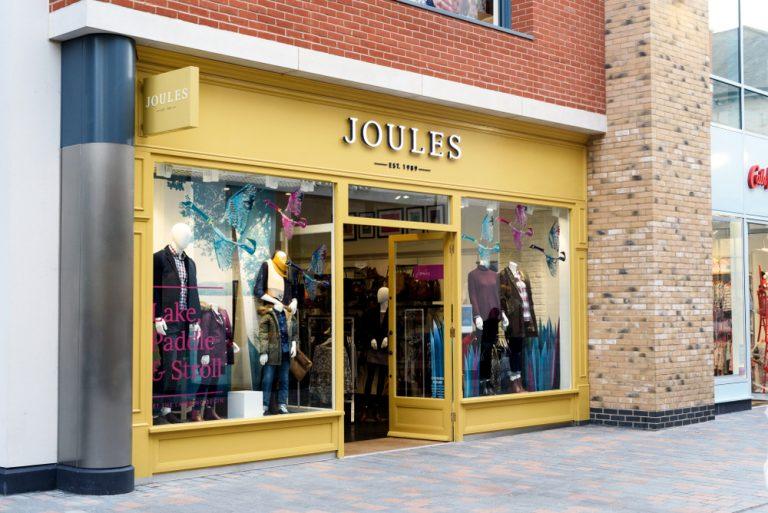
Joules has announced a 17.6% rise in revenue in the 26 weeks to 25 November. The fashion retailer has raised its first-half underlying profit expectations.
The group has also said that it will be carrying out contingency plans in the form of a third-party distribution facility in the EU to prevent disruption amid a hard Brexit.
Joules said: “These plans include establishing an EU-based third-party distribution facility; scheduling earlier inbound product deliveries for our spring/summer 2019 ranges; preparation for expected increased administrative activities; and hedging US dollar requirements more than 12 months forward.”
The group “anticipates that trading conditions in the UK will remain challenging over the near term, with continued macroeconomic uncertainty, rapidly changing consumer shopping behaviours and a highly competitive environment.”
Additionally, the fashion retailer has ordered in the Spring/Summer 2019 collection earlier than usual in order to prevent Brexit disruption and possible devaluing of the pound.
Chief executive Colin Porter said: “I am delighted to update on what has been another period of strong performance for Joules despite challenging trading conditions.”
“This performance, which is ahead of our initial expectations for the Period, is a testament to the strength of the Joules brand, the engagement of our loyal customers with our product collections, and our fantastic teams.”
“In the UK, our ‘total retail’ cross-channel model, underpinned by investment in infrastructure, has proven to be well suited to today’s rapidly changing consumer shopping behaviours. In addition, our international wholesale business continues to make excellent progress by both increasing sales to existing accounts and developing new accounts.”
“We have an outstanding brand, good momentum and a growing customer base and we look forward to the second half of the financial year with confidence.”
The interim financial results will be announced on 23 January.
In morning trade, shares in the group (LON: JOUL) are trading +7.83% (0953GMT).
CAA takes legal action against Ryanair

Ryanair is facing legal action over its refusal to compensate thousands of customers.
The Civil Aviation Authority has said that customers who had flights cancelled over summer are entitled to compensation under EU law.
Strikes over summer led to many flights to be delayed or cancelled, affecting thousands of UK passengers.
The airline has defended itself and says it does not owe passengers compensation because the strikes were “extraordinary circumstances”.
“Courts in Germany, Spain and Italy have already ruled that strikes are an ‘exceptional circumstance’ and EU261 compensation does not apply. We expect the UK CAA and courts will follow this precedent,” said Ryanair in a statement.
Under EU legislation, passengers can make an EU261 claim when flights are delayed by three hours or more, flights are cancelled or when they are denied boarding.
“As a result of Ryanair’s action, passengers with an existing claim will now have to await the outcome of the Civil Aviation Authority’s enforcement action,” said the CAA.
Rory Boland, the Which? travel editor, said: “Customers would have been outraged that Ryanair attempted to shirk its responsibilities by refusing to pay out compensation for cancelling services during the summer – which left hard-working families stranded with holiday plans stalled.”
“It is right that the CAA is now taking legal action against Ryanair on the basis that such strikes were not ‘extraordinary circumstances’ and should not be exempt, to ensure that the airline must finally do the right thing by its customers and pay the compensation owed.”
Shares in Ryanair (LON: RYA) are trading at 11,44 (0929GMT).