
Greggs sales increase over summer, shares jump

The heatwave failed to dampen our appetite for Greggs, where total sales increased by 7.3%.
Sales were not as high as the same period a year earlier, where they increased by 8.6%, however, due to the “particularly hot weather”, sales patterns were more difficult to predict.
In the year to date, total sales soared by 5.9% year-on-year. Like-for-likes increased by 2.1%.
Despite the difficult trading conditions, which has led to the closure of many retailers, Greggs expects around 100 net openings by the end of the year.
Tuesday’s trading update read:
“We were pleased with our trading performance during a period that included a long spell of hot weather, which made sales patterns more difficult to predict.”
“This, and the resulting mix of sales led to a lower-than-normal trading margin in the first part of the quarter, offset by improved trading as we came into September. Overall our expectations for the full year outturn remain unchanged.”
Shares jumped 5.1% on Tuesday morning.
Emma-Lou Montgomery, from Fidelity Personal Investing, said: “Just 10 years ago if someone had suggested bakery chain Greggs would one day win an award for the ‘Best vegan sandwich’ for its Mexican Bean Wrap at the PETA 2018 Vegan Food Awards you’d have choked on your sausage roll. But today Greggs has shown how businesses have to adapt or die.”
Paul Hickman, an analyst at Edison Investment Research, said: “Gross margin came under some pressure during the hot weather because cold drinks and products such as pasta salads are bought-in, and therefore earn lower margins, and also because there was more wastage on traditional products.”
“However, we anticipate that the strong volumes will have supported the contribution to operating profit, leaving the company on course for full-year pre-tax profit consensus of around £81 million.”
Shares in the group (LON: GRG) are currently trading +7.11% at 1.077,48 (0913GMT).
Google drops out of bidding for $10 billion cloud computing contract

Google has said it will drop out of bidding for a $10 billion cloud computing contract with the U.S. Defence Department. This is as a result of Google’s new ethical guidelines not aligning with the project. But, Google has not elaborated further on the conflict with corporate values.
The project is known as the Joint Enterprise Defence Infrastructure cloud, or JEDI. It involves transitioning a large amount of Defence Department data to a commercially operated cloud system. On 12 October companies are due to submit their bids for the contract that could last up to 10 years.
The announcement has come just months following the company’s decision not to renew an agreement with an artificial intelligence program. This was caused by protests from the company’s employees over collaborating with the military. As a result, a set of ethical principles were released to assist the company in deciding what projects to pursue in the future.
In a statement, a spokesman from Google said:
“We are not bidding on the JEDI contract because first, we couldn’t be assured that it would align with our AI principles.”
“And second, we determined that there were portions of the contract that were out of scope with our current government certifications.”
According to the Tech Workers Coalition, Google employees “have significant power, and are willing to use it”.
It is the extensive pressure from its employees that caused the decision to withdraw from the bidding competition. Moreover, a spokesman continued in a statement: “Had the JEDI contract been open to multiple vendors, we would have submitted a compelling solution for portions of it”. “Google Cloud believes that a multi-cloud approach is in the best interest of government agencies. It allows them to choose the right cloud for the right workload”. At 19:58 GMT-4 yesterday, shares in Google (NASDAQ:GOOGL) were trading at -1.02%.IMF: US/China trade war will hit global growth
The International Monetary Fund has warned that the US/China trade war will hit global growth.
In the IMF’s latest health check on the global economy, there are warnings that Donald Trump’s new policies are dragging down growth forecast, which will affect countries including the US, France, Germany and China.
“Trade policy reflects politics and politics remain unsettled in several countries, posing further risks,” said Maurice Obstfeld, the IMF chief economist.
Obstfeld went on to say that the world would become a “poorer and more dangerous place” unless world leaders worked together to increase living standards, improve education and reduce inequality.
The latest round of tariffs in the trade war between China and the US were $60 billion worth of tariffs on US goods.
Last month, US tariffs on $200 billion of Chinese imports came into effect.
The IMF said: “Escalating trade tensions and the potential shift away from a multilateral, rules-based trading system are key threats to the global outlook. Since the April 2018 forecast, protectionist rhetoric has increasingly turned into action, with the United States imposing tariffs on a variety of imports, including on $200 billion of imports from China, and trading partners undertaking or promising retaliatory and other protective measures.
“An intensification of trade tensions, and the associated rise in policy uncertainty, could dent business and financial market sentiment, trigger financial market volatility, and slow investment and trade.”
In terms of the UK and Brexit, the IMF said that a “no-deal” Brexit remains a risk to the UK economy.
The IMF has said that the government needs to do more to retrain or relocate workers in those industries that are “likely to be more affected by higher trade barriers after Brexit”.
The UK economy is expected to expand by 1.4 percent this year and 1.5 percent next year.
Spending habits decrease after British summer

Two surveys have shown that the UK’s summer spending habits have dropped. After a sharp increase over the summer, it is evident that habits dwindled in September. This demonstrates that the overall economy cannot rely on British consumers to soften the economic impacts of Brexit.
It has been reported that total spending increased by an annual 0.7% in September. But, this is the slowest rise since October 2017. This is excluding the Easter decline in April.
September’s 0.7% annual spending increase is significantly lower than the 2.3% growth during the same month last year.
A wider measurement of consumer spending, conducted by Barclaycard, demonstrates an increase by the smallest amount in five months. Indeed, it rose by an annual 3.9%. Esme Harwood, a director of Barclaycard, commented: “We’ve seen spending return to a more modest level as consumers balance their budgets after a longer than usual summer of spend. Rising prices are having an impact on shoppers’ spending priorities, with more of their household budget devoted to everyday essentials such as petrol.” Moreover, almost half of all Barclaycard consumers surveyed had plans to spend less on Christmas 2018 than they did the previous year. Household consumption is responsible for roughly 60% of the UK’s economy. In fact, the Bank of England, among other forecasters, have been impressed by its strength since the Brexit referendum. However, after a British summer of World Cup success and scorching weather, UK households have reigned in their spending habits. Often around September, retail spending experiences a back-to-school sales push. But, this was not the case this year and has proved less reliable in pushing sales. The UK’s head of retail at KPMG, Paul Martin, has said: “The final golden quarter of the year marks the ultimate test for many players, but retailers must also successfully navigate the upcoming government budget, Black Friday, Christmas, and of course Brexit.” Retailers such as John Lewis and Partners are experiencing tough economic times.Aviva’s chief steps down, shares rise 2pc

In a surprise move, the Aviva chief executive has stepped down.
Mark Wilson left Britain’s biggest insurance company saying it was “time for new leadership to take the group to the next phase of its development”.
Sir Adrian Montague is the group’s non-executive chairman and will replace Wilson until a new chief executive is found. The insurance group has said it will hope to replace Wilson in the next four months.
Montague said: “The board would like to thank Mark for what he has achieved in his six years at Aviva. He leaves the group in a far stronger state than when he joined.”
“There is much further to go in accelerating our strategic development and enhancing shareholder value. We have agreed with Mark this is the right time for a new leader to ensure Aviva delivers to its full potential.”
Wilson joined the group in 2013 and the group has significantly improved, although he came under fire when he took a board seat at rival asset manager BlackRock.
Wilson replaced by Andrew Moss, who was ousted by shareholders.
Wilson said: “When I joined Aviva, the company was in poor health. It is very different today. I have achieved what I wanted to achieve and now it’s time for me to move on to new things.”
All in all, Wilson’s contribution to the insurance group was seen as a positive one. Ashik Musaddi, who is a European insurance analyst at JP Morgan Cazenove, said:
“In the past Aviva used to struggle on capital with high balance sheet risk and limited growth prospects, however now Aviva is in a much better shape.”
“In line with the share price performance of UK life peers, shares have been under pressure as well, which in our view is partly driven by Brexit-related concerns and partly related to lack of growth visibility. Aviva has market leading positions in businesses like pensions, annuities, non life business and we believe Aviva should be able to capture growth in near future.”
Shares (LON: AV) in the group rose by 2% following the news and are currently trading at 473,95 (0831GMT).
Jaguar Land Rover to temporarily close Solihull plant
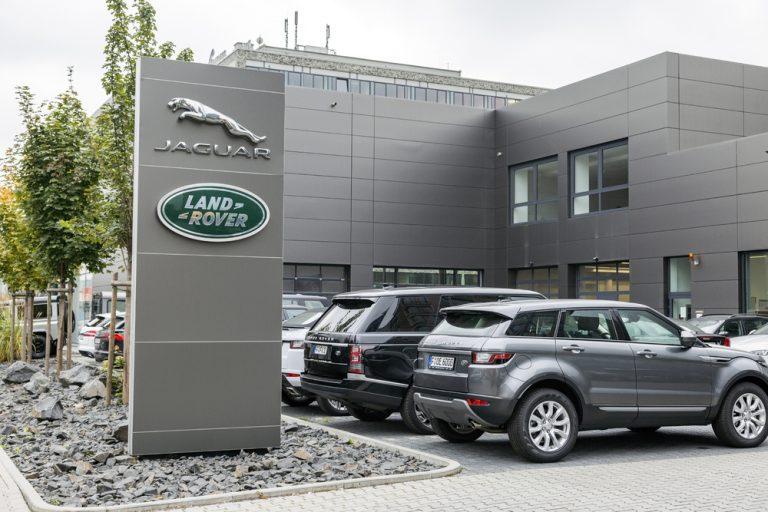
Jaguar Land Rover will close its Solihull plant for two weeks at the end of October.
The car manufacturer said it will close the plant at the end of October due to the slowing demand in China.
“As part of the company’s continued strategy for profitable growth, Jaguar Land Rover is focused on achieving operational efficiencies and will align supply to reflect fluctuating demand globally as required,” said a spokesperson.
“Customer orders in the system will not be impacted and employees affected will be paid for the duration of the shutdown.”
September sales to customers in China fell by 46 percent. The car manufacturer blamed the fall in demand in China for the £264 million loss in the three months to the end of June.
The chief commercial officer of Jaguar Land Rover, Felix Bräutigam, said: “Customer demand in China, in particular, has struggled to recover following changes in import tariffs in July and intensifying competition on price, while ongoing global negotiations on potential trade agreements have dampened purchase considerations.”
Labour MP Jack Dromey has expressed concern over the latest decision.
“This is yet another worrying sign for the future of Britain’s automotive industry,” he said.
“Brexit chaos and the government’s mishandling of the transition from diesel pose a growing threat to the jewel in the crown of British manufacturing and the government is running out of time to save it.”
“[JLR chief executive] Ralf Speth warned of the looming consequences of a no-deal Brexit and we were told by wide-eyed Brexiteers that he was ‘making it up’.”
“It is imperative that the government sorts itself out and gets a deal from the EU that protects jobs and trade because tens of thousands of jobs depend on it,” he added.
The Solihull plant will close from 22 October.
The news comes just week’s after the manufacturer’s plans to move its Castle Bromwich plant to a three-day week.
Hope Hicks: former Trump aid joins Fox

Fox (NASDAQ: FOXA) is to hire former Donald Trump aide as the group’s new chief communications officer.
Hope Hicks will join Murdoch’s media empire after resigning from Trump’s administration earlier this year.
Hicks will be the executive vice-president and chief communications officer for the group that runs Fox News, Fox Sports and Fox’s broadcast networks.
The media empire is the US President’s favourite cable channel.
The announcement of Hicks’ new role at Fox also came with the announcement that Danny O’Brien will take on the role of FOX EVP and Head of Government Relations.
O’Brien is currently at General Electric, where he serves as senior government affairs and policy executive.
“Hope and Danny are proven leaders and world-class public affairs professionals. Together they will define and project Fox’s voice to our relevant communities,” said Viet Dinh, the company’s chief legal and policy officer.
The news comes close to the Disney (NYSE: DIS) transaction, which is expected to close during the first half of 2019.
“One of the most exciting aspects of our Fox acquisition is that it will allow us to greatly accelerate our direct-to-consumer strategy,” said Robert Iger, Disney’s chief executive when he announced the deal.
“We believe creating a direct-to-consumer relationship is vital to the future of our media businesses, and it’s our highest priority.”
9 Key Considerations for Investing in Fine Wine from Daniel Carnio of OenoFuture

Investing in fine wine comes with its own unique risks, challenges and pitfalls. With wild tales of wine fraud repeatedly popping up in the media and dubious companies desperate to get their hands on your money, it pays to do your homework before you invest. Here are nine key considerations to help you to stay safe in the fine wine market and choose an investment company that truly has your interests at heart.
1. Cold Calls
Receiving a call out of the blue with an offer that sounds too good to be true should immediately trigger red flags. If you do receive an unexpected and uninvited phone call from a wine investment company, be on your guard and ask the caller where they obtained your contact details. Any reputable wine investment company will not use cold calls as their primary mode of contacting potential investors.
Thanks to the new GDPR (General Data Protection Regulation) which was introduced earlier this year and requires individuals to explicitly give permission for companies to contact them, we should see a marked decrease in cold calling. If it does happen – avoid giving away personal information and ask for your details to be removed from their database.
2. Due Diligence
If you do find a wine investment company that you are interested in, be sure to do some research before you commit to using their services. Find out how long the company has been running, who the key players are and what their backgrounds look like, and try to find out if their finances look healthy.
Spotting scams is fairly easy once you’ve done your homework on a company as most dodgy firms will only exist for a year or a few months and they will often have a director who has no knowledge of wine or investment. Once you’ve done your due diligence and gathered as much information on the company as possible, you’ll be in a strong position to decide whether to proceed with their services.
3. Face to Face
Another warning sign is a wine investment company that is unwilling to meet its investors in person. Serious investment companies will always seek to operate in a transparent manner and will be happy to conduct face-to-face meetings with potential investors or current clients. Disreputable companies will usually try to avoid all face-to-face contact so delaying or refusing meetings is a clear sign that something is not right.
4. Who’s Their Wine Expert
As part of your due diligence, make sure you consider who is advising the company on their wine purchases and recommendations. Any wine investment company worth their salt will have a passion for wine and will showcase the expertise of their wine advisors and buyers to demonstrate their credibility. These experts should have a deep understanding of the wine industry and be able to make logical investment proposals based on solid market research and fine wine knowledge.
5. The Wines Themselves
Related to the company’s wine expertise are the wines themselves. Always check the market price of the wines you are purchasing. The price you are offered may be a little lower or higher than the market price depending on the rarity of the wine, but a quick search on a website like Wine-Searcher should confirm whether the price you are being offered makes sense. Another option is to use Cellar Watch which tracks the prices of investment grade wines and gives you an accurate idea of what you should be paying. Having checked out the price you can always go back to the company and ask them to explain their pricing if it does not correlate to the prices you found elsewhere.
Other important criteria for the wines you are considering purchasing are high scores from leading wine critics and a good track record. Wine-Searcher allows you to see the average retail price of a bottle over the past couple of years which is a great way of assessing the potential performance of your investment.
 6. Commissions
Another critical consideration is how the company makes their money. Today most companies will charge a management fee, whereas others will add a significant markup to the price of the wine. What matters here is that the arrangement works for both parties. Try to look for companies which base their commission on the performance of the investment so your goals align with those of the investment company. This way the company has a long term view and are committed to the success of your investment since they will make their money in the future when you are also reaping the benefits of your purchases.
7. Storage
In the past it was very common for companies to store wine for their clients. The best way to protect yourself, though, is to make independent arrangements with a specialist service like Octavian Vaults or the London City Bond Vinothèque. Much like a safety deposit box at the bank, these services offer a secure storage facility for your wines where they are kept in perfect conditions.
Any reputable wine investment company will be able to transfer your wines to these independent bonded warehouses. Once you have purchased the wines, you should be free to do whatever you wish with them, whether that be to drink them, sell them on, or to keep them in a storage facility of your choice.
8. Check Your Insurance
Always make sure that your collection is insured. If you choose to store your wines at Octavian Vaults they do offer comprehensive insurance, whereas with London City Bond you will need to make alternative arrangements. One option is to simply extend your home insurance or if you have an extensive collection it may be better to take out insurance specifically for your wine.
While you’re checking over your insurance policy and preparing to sign on the dotted line, make sure that your wines are insured at market price and not at purchase price. This makes sure that even if you carefully store a case of wine for 10 years and accidentally smash the whole lot, you will still benefit financially from your investment.
9. Don’t Put All Your Eggs In One Basket
When you’re putting together an investment portfolio, make sure that you have a healthy diversification. Fine wine should constitute no more than 25% of your total portfolio. As with other types of investment, it is never a wise idea to focus your attention on just one sector. Having a healthy balance between fine wine and other types of investment will ensure that you are well-prepared to weather any unforeseeable storms and reap the benefits of your chosen investments.
For a comprehensive guide to the Fine Wine investment market, please click here.
6. Commissions
Another critical consideration is how the company makes their money. Today most companies will charge a management fee, whereas others will add a significant markup to the price of the wine. What matters here is that the arrangement works for both parties. Try to look for companies which base their commission on the performance of the investment so your goals align with those of the investment company. This way the company has a long term view and are committed to the success of your investment since they will make their money in the future when you are also reaping the benefits of your purchases.
7. Storage
In the past it was very common for companies to store wine for their clients. The best way to protect yourself, though, is to make independent arrangements with a specialist service like Octavian Vaults or the London City Bond Vinothèque. Much like a safety deposit box at the bank, these services offer a secure storage facility for your wines where they are kept in perfect conditions.
Any reputable wine investment company will be able to transfer your wines to these independent bonded warehouses. Once you have purchased the wines, you should be free to do whatever you wish with them, whether that be to drink them, sell them on, or to keep them in a storage facility of your choice.
8. Check Your Insurance
Always make sure that your collection is insured. If you choose to store your wines at Octavian Vaults they do offer comprehensive insurance, whereas with London City Bond you will need to make alternative arrangements. One option is to simply extend your home insurance or if you have an extensive collection it may be better to take out insurance specifically for your wine.
While you’re checking over your insurance policy and preparing to sign on the dotted line, make sure that your wines are insured at market price and not at purchase price. This makes sure that even if you carefully store a case of wine for 10 years and accidentally smash the whole lot, you will still benefit financially from your investment.
9. Don’t Put All Your Eggs In One Basket
When you’re putting together an investment portfolio, make sure that you have a healthy diversification. Fine wine should constitute no more than 25% of your total portfolio. As with other types of investment, it is never a wise idea to focus your attention on just one sector. Having a healthy balance between fine wine and other types of investment will ensure that you are well-prepared to weather any unforeseeable storms and reap the benefits of your chosen investments.
For a comprehensive guide to the Fine Wine investment market, please click here.
 6. Commissions
Another critical consideration is how the company makes their money. Today most companies will charge a management fee, whereas others will add a significant markup to the price of the wine. What matters here is that the arrangement works for both parties. Try to look for companies which base their commission on the performance of the investment so your goals align with those of the investment company. This way the company has a long term view and are committed to the success of your investment since they will make their money in the future when you are also reaping the benefits of your purchases.
7. Storage
In the past it was very common for companies to store wine for their clients. The best way to protect yourself, though, is to make independent arrangements with a specialist service like Octavian Vaults or the London City Bond Vinothèque. Much like a safety deposit box at the bank, these services offer a secure storage facility for your wines where they are kept in perfect conditions.
Any reputable wine investment company will be able to transfer your wines to these independent bonded warehouses. Once you have purchased the wines, you should be free to do whatever you wish with them, whether that be to drink them, sell them on, or to keep them in a storage facility of your choice.
8. Check Your Insurance
Always make sure that your collection is insured. If you choose to store your wines at Octavian Vaults they do offer comprehensive insurance, whereas with London City Bond you will need to make alternative arrangements. One option is to simply extend your home insurance or if you have an extensive collection it may be better to take out insurance specifically for your wine.
While you’re checking over your insurance policy and preparing to sign on the dotted line, make sure that your wines are insured at market price and not at purchase price. This makes sure that even if you carefully store a case of wine for 10 years and accidentally smash the whole lot, you will still benefit financially from your investment.
9. Don’t Put All Your Eggs In One Basket
When you’re putting together an investment portfolio, make sure that you have a healthy diversification. Fine wine should constitute no more than 25% of your total portfolio. As with other types of investment, it is never a wise idea to focus your attention on just one sector. Having a healthy balance between fine wine and other types of investment will ensure that you are well-prepared to weather any unforeseeable storms and reap the benefits of your chosen investments.
For a comprehensive guide to the Fine Wine investment market, please click here.
6. Commissions
Another critical consideration is how the company makes their money. Today most companies will charge a management fee, whereas others will add a significant markup to the price of the wine. What matters here is that the arrangement works for both parties. Try to look for companies which base their commission on the performance of the investment so your goals align with those of the investment company. This way the company has a long term view and are committed to the success of your investment since they will make their money in the future when you are also reaping the benefits of your purchases.
7. Storage
In the past it was very common for companies to store wine for their clients. The best way to protect yourself, though, is to make independent arrangements with a specialist service like Octavian Vaults or the London City Bond Vinothèque. Much like a safety deposit box at the bank, these services offer a secure storage facility for your wines where they are kept in perfect conditions.
Any reputable wine investment company will be able to transfer your wines to these independent bonded warehouses. Once you have purchased the wines, you should be free to do whatever you wish with them, whether that be to drink them, sell them on, or to keep them in a storage facility of your choice.
8. Check Your Insurance
Always make sure that your collection is insured. If you choose to store your wines at Octavian Vaults they do offer comprehensive insurance, whereas with London City Bond you will need to make alternative arrangements. One option is to simply extend your home insurance or if you have an extensive collection it may be better to take out insurance specifically for your wine.
While you’re checking over your insurance policy and preparing to sign on the dotted line, make sure that your wines are insured at market price and not at purchase price. This makes sure that even if you carefully store a case of wine for 10 years and accidentally smash the whole lot, you will still benefit financially from your investment.
9. Don’t Put All Your Eggs In One Basket
When you’re putting together an investment portfolio, make sure that you have a healthy diversification. Fine wine should constitute no more than 25% of your total portfolio. As with other types of investment, it is never a wise idea to focus your attention on just one sector. Having a healthy balance between fine wine and other types of investment will ensure that you are well-prepared to weather any unforeseeable storms and reap the benefits of your chosen investments.
For a comprehensive guide to the Fine Wine investment market, please click here. Renewable Energy: which countries are leading the green revolution?

Global efforts to switch to renewable energy have been ramping up in recent years, with nations increasingly banding together to fight climate change.
Accordingly, the International Energy Agency (IEA) has now said that it expects renewable energy used globally to grow 20 percent in the next five years, to 12.4 percent by 2023.
In fact, the IEA said that 2017 marked a record year for renewable energy, spearheaded by growth in the capacity of photovoltaic energy production facilities, with more than half of them in China.
So, which countries are leading the way for renewable energy?
UK
The UK is often considered to be a world leader in wind power, particularly following the implementation of the Climate Change Act back in 2008.
The Act paved the way for a series of electricity market reforms, and greater investment in renewables.
However, recent figures have suggested that investment into renewables continues to stagnate, despite widespread public support (around 85 percent) for its use.
According to a report by the Centre of Alternate Technology, renewables can meet the demands of UK’s electricity requirements.
Nevertheless, Last year only 29 percent of the UK’s electricity was sourced from renewables last year.
Yet some efforts to reduce the UK’s reliance upon fossil fuels have seen some progress.
Notably, coal electricity supplied just 1 percent of the UK’s electricity this summer, with the government aiming to phase out its use entirely by 2025.
Back in January, Prime Minister Theresa May gave a speech detailing a 25-year environment initiative, as it looks to ramp up its climate change efforts.
The speech emphasised the advantages of harnessing new low-emission carbon technologies as a means for creating sustainable growth.
Yet during May’s recent key-note speech at the conservative party conference in Birmingham, May tellingly failed to address the subject of renewables, suggesting green energy is not a priority.
Conversely, shadow leader Jeremy Corbyn pledged the Labour party to commit to spearheading a ‘green jobs revolution’, during his counterpart conference speech in Liverpool.
Mr Corbyn said Labour would endeavour to create some 400,000 jobs under the initiative, with expansive plans to boost solar energy and reduce the UK’s carbon emissions by 60 percent in 2030 and to zero by 2050.
Germany
Germany is often considered to be at the forefront of industrial revolution, leading car manufacturing for decades.
Nevertheless, Germany is also leading the way in pioneering green energy, which it refers to as the energiewende.
According to recent statistics, Germany generated enough renewable energy for the first months of 2018 to power every household for a year.
Germany’s combined wind, solar, biomass and hydroelectric power output hit a record of 104 billion kilowatt hours (kWh) between January and the end of June, according to energy firm E.On.
The figure is an increase of 9.5 percent compared to the same period of 2017, and also marks third more than three years ago, E.On said.
Moreover, as of 2017, Germany represented the biggest global market in cumulated capacity per capita.
Costa Rica
However, Costa Rica continues to lead the way with respect to renewable energy, surpassing the efforts of its European counterparts.
Last year, the Central American nation was powered by renewable energy for 300 days.
Costa Rica currently generates an astounding 99 percent of its electricity from renewable sources.
Specifically, it produced electricity from 78 percent hydropower, 10 percent wind, 10 percent geothermal energy and an additional one percent from biomass and solar.
U.S
More disappointingly, the U.S has continued to push back on climate change efforts in recent years, having backed out of the Paris Climate Change agreement.
According to a recent report, US renewable energy sources accounted for almost 20 percent of the country’s net energy generation for the first half of the year.
However, the Trump administration continues to deny climate change, backtracking upon green reforms introduced under his predecessor, Barack Obama.
Back in September, the U.S government announced its intention to reduce restrictions on oil and gas companies regarding releasing methane gases.
Matalan reports rise in sales
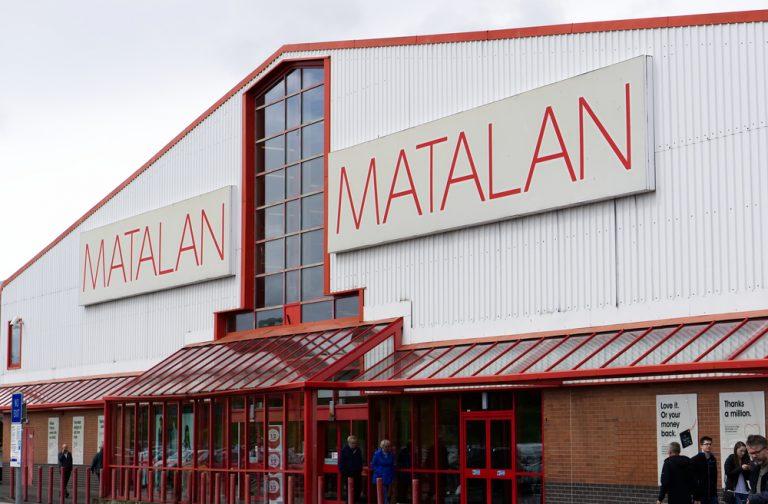
Matalan has posted a rise in sales in the second quarter thanks to customers purchasing more full-priced items over the summer.
In the 13 weeks to 25 August, total revenue reached £262.4 million compared to the £260 million total in the same period last year.
“A strong focus on our strategy, good operational disciplines and the hard work of our colleagues has enabled us to absorb significant currency pressure in the first half of the year,” said Jason Hargreaves, the retailer’s chief executive.
“This pressure increases through the remainder of the year and we don’t expect the difficult market conditions or consumer confidence to improve in the short term. However, we remain confident in our strategy, focused on execution and believe this will continue to drive outperformance to the market.”
Sales in full-priced items grew by 3.3 percent over the summer, whilst underlying earnings were £22.8 million.
Despite the increase in sales, Matalan described the market as “volatile and challenging”.
Due to the difficult high street conditions, the group has invested revamping the website. Online growth was 25 percent.
‘‘Decent results from Matalan and a better than anticipated performance at retail bellwether Next demonstrate that the heatwave benefitted those clothing specialists selling affordable items, despite consumer budgets remaining restricted and spend rising on leisure activities,” said Sofie Willmott, a senior retail analyst at GlobalData.
“Unlike many other clothing retailers including M&S and Debenhams, Matalan has not reduced its store numbers in the past year, demonstrating its commitment to physical retail,” she added.
Many fashion retailers are feeling the effects of the current trading environment. French Connection (LON: FCCN) confirmed on Monday that it may sell the business.
“Currently reviewing all strategic options in order to deliver maximum value for its shareholders, which includes the potential sale of the company,” said the group in a statement released on Monday.