
Google suffers as they look set to snub the Senate
Google’s parent company Alphabet Inc (NASDAQ:GOOGL) have seen their share price dip as it has been announced the firm plan to ignore the Senate Select Committee on Intelligence’s request to appear at a hearing for Russian meddling in the 2016 election, alongside Facebook and Twitter.
Though the company were asked to send either their CEO or the Chief Executive of their parent company Alphabet, Larry Page, they have opted instead to offer the services of their chief lawyer Kent Walker. While Twitter and Facebook have faced public scrutiny over the course of the last year, they still look set to appear at the hearing – whereas, symbolically, the likelihood is that Google’s seat in the hearing will be left empty.
While the Committee’s vice chair, Senator Mark Warner, has already tabled a subpoena as follow-up action should Google opt for a no-show, there is quite little that can be done to make the company abide by any rules other than their own. Indeed, only recently did the EU deliver the largest fine in its history to Google, to the tune of $5 billion, but this was shrugged off soon after as the company announced quarterly revenues of $33 billion.
Similarly, it has been said that non-compliance could be costly at least in regard to PR, with President Trump calling Google on on allegedly censoring content with conservative leanings, and now Senator Warner saying, “I think there will be a lot more questions raised that could have been actually dealt with if they sent a senior decision-maker [to the hearing] and not simply their counsel.”
However, many would be right in thinking that to this point, Google’s ability to dodge or quell controversy is bulletproof, and taking some short-term flack or financial repercussions would be far more favourable than having to weather the same kind of drawn-out public ridicule that Facebook CEO Mark Zuckerberg had to endure earlier this year.
Following the news, Alphabet’s share price is currently trading down $20.49 or 1.66% at $1211.21 a share.
Barratt Development has impressive year after shirking London market

Barratt Developments releases impressive results for the year through August, after reporting that it built its largest number of homes for a decade.
The company announced bumper pre-tax profits of £835.5 million, up 9.2% on-year. At the same time, sales grew 4.8% to £4.87 billion. Additionally, forward sales were up by 11.1% to £3 billion, completions rose 1.1% to 17,579 and average selling price grew 5% to 288,900.
Despite a plethora of market uncertainties, the company have exceeded expectations by capitalising on the demand for more affordable housing, as well as focusing the majority of developments outside of London because of adjustments to stamp duty. Having not bought a central London site since 2014, Barratt have avoided the uncomfortable situation faced by their rivals Berkeley, who are now having to contend with Brexit uncertainties and increased production costs alongside a lull in the London property bubble.
According to Berkeley, the property market currently lacks urgency and remains constrained by “high transaction costs, restrictive income multiple limits on mortgage borrowing and prevailing economic uncertainty, accentuated by Brexit.”
Despite the concerns faced by the market as a whole, Barratt look confident and they start their balance sheet for the new year, having just announced a 4.7% increase in final ordinary dividend per share to 17.9p together with a 17.3p special dividend per share, resulting in a total dividend for the financial year of 43.8p.
David Thomas went on to echo his confidence in the firm’s strong results,
“The Group has had another outstanding year delivering a strong operational and financial performance, and our highest volumes in a decade. As the UK’s largest housebuilder we are helping to address the country’s housing shortage – creating jobs and supporting economic growth whilst continuing to lead the industry in quality and customer service.
Our continued focus on operating efficiencies and margin initiatives is starting to deliver and we have today announced new medium term operational targets reflecting our confidence in the business going forward.
The Group starts the new financial year in a good position with a strong balance sheet, healthy forward sales and robust consumer demand supported by a positive mortgage environment.”
Going forwards, the company’s top brass appear bullish, though they appreciate the very real possibility that a bad Brexit scenario or Labour government could unsettle current liquidity.
Novo Nordisk UK announces no-deal Brexit contingency plan

Novo Nordisk UK (CPH:NOVO-B) has announced it is building up a four-month stock-pile in the event of a no-deal Brexit. The Danish company is taking this action in order to ensure patients’ insulin supply remains unaffected in the event of a no-deal Brexit.
The global pharmaceutical company founded in 1923 has its headquarters in Denmark. As a leading company in diabetes care, Novo Nordisk is Britain’s largest supplier of insulin. Moreover, the company employs roughly 43,100 people across 79 countries. Its products are marketed in more than 170 countries.
In addition to the increased stock supply, the company has already put in place a “robust” contingency plan. The decision to increase insulin stock builds upon Novo Nordisk’s no-deal Brexit program.
Corporate Vice President of Novo Nordisk UK, Pinder Sahota, has commented: “Our first commitment is to ensure that patients treated with our medicines remain unaffected in the event of a ‘no-deal’ Brexit.
“We are working closely with trade associations in the UK and the EU to ensure that the interests of our patients are at the forefront of negotiations.
Our decision to increase stock is in line with the technical notices and guidance published by the Government to industry.”
Fundamentally, Novo Nordisk is working with the Department of Health to guarantee continuity of supply, regardless of Brexit.
Mercedes unveils fully-electric SUV

Mercedes has revealed its first fully-electric car as the group aims to as it aims to take on Tesla (NASDAQ: TSLA).
The group is planning to invest over €10 billion (£9 billion) in its electric range, and over €1 billion in battery production.
The EQC will go on sale next year and be priced in the mid-£60,000s.
Recharging time for the vehicle using a high-current DC charger (110kW) will take around 40 minutes to charge up to 80 percent. Charging with the car’s 7.4kW on-board charger at home can take up to 10.8 hours.
The group has acknowledged that the lack of widespread recharging facilities and how this might prove to be problematic.
“I don’t see any specific problems with electric vehicles, but resources for mobility are limited and at some point we will have to decide on one powertrain or the other (although we are not there yet) and there is the issue of the charging infrastructure,” said Dr Dieter Zetsche, the CEO of Daimler AG (ETR: DAI) and Head of Mercedes-Benz Cars.
Zetsche added whilst investment was increasing on electric cars, environmental problems would still remain.
“I think we all agree that it is mandatory to find a way to decarbonise transportation,” he says. “At this point the most realistic path seems to be electric mobility, but that is not to say that all the issues have been solved.”
“As well as the ethical and environmental issues of the batteries and motors, there is also how the power to charge them is produced, recharging, where the materials come from and their recycling. And from a physical point of view of perhaps 100 million vehicles a year with 650kg batteries on board being driven round the globe, well I think probably not.”
Both BMW (ETR: BMW) and Audi (ETR: NSU) hope to address this problem with wireless charging, however, this feature is absent for the EQC.
“We had early prototypes of this [charging system] going a couple of years ago, but frankly speaking it’s not good enough [yet], we’ve got to jump further and didn’t think it worth introducing in the first cars. We’re in development of the second generation system as we speak,” said Ola Kallenius, the board member in charge of research and development at Mercedes.
Many car makers are investing in electric cars, adding pressure on Tesla who until recently had very little competition.
John Lewis to axe 270 jobs
John Lewis is undergoing several changes as the group plans to axe 270 jobs and change its name to “John Lewis & Partners”.
The group will cut back on jobs from 50 stores in IT, finance and store security. Employees were informed earlier this week.
Both John Lewis and Waitrose will rebrand, with Waitrose becoming “Waitrose & Partners”, to highlight the company is employee-owned.
The rebrand will kick off with an advert in which a group of schoolchildren sing Queen’s Bohemian Rhapsody and will end the line “for us, it’s personal”.
It will be the first advert featuring both Waitrose and John Lewis together.
Department stores are struggling amid a difficult trading environment, where groups are pressured to push sales online. Customers are also spending less due to a squeeze on spare cash.
Last month, House of Fraser collapsed into administration and was shortly purchased sportswear giant Sports Direct (LON: SPD) in a £90 million deal.
Debenhams (LON: DEB) has issued three profit warnings this year and is also cutting jobs.
Shares in Debenhams and Sports Direct dipped slightly after the announcement but remained positive on the day.
Amazon briefly surpasses $1tn valuation

Amazon has become the second company worldwide to surpass the $1 trillion status.
Just weeks after Apple, shares in the group rose almost two percent to a high of $2,050.50 in morning trade before slipping back.
Jeff Bezos founded Amazon is 1994 and in just 25 years, the group now has revenues of $178 billion (£139 billion).
“To reach a market capitalisation of over $ 1trillion is impressive. To do it in a little over 24 years is extraordinary,” said Neil Saunders, the managing director of GlobalData Retail.
“That Amazon has achieved this demonstrates its dramatic advancement in both the retail and technology sectors, as well as the influence it now wields over large parts of the consumer landscape.”
The tech giant first went public in 1997, when shares were worth just $18. On Tuesday shares hit $2,050, pushing the company’s valuation over $1 trillion. Shares closed slightly lower, valuing the company at $995 billion.
Amazon and Apple (NASDAQ: AAPL) have both been rivalling to reach the landmark $1 trillion valuations for months. Amazon lost the race when stock markets responded well to Apple’s financial results last month.
The trillion-dollar company has received criticism from all side on its journey to the top.
After Bezos bought the Washington Post, Trump did not respond well to the purchase.
“Is Fake News Washington Post being used as a lobbyist weapon against Congress to keep Politicians from looking into Amazon no-tax monopoly?” Trump said last year.
“Amazon Washington Post has gone crazy against me,” Trump also wrote on Twitter in July.
The group has also faced criticism over treatment of employees in UK warehouses and its tax payments.
Amazon only paid £4.5 million in corporation tax in 2017 despite UK sales of nearly £2 billion.
In May, the group was accused of treating workers in the UK warehouses like robots.
Amazon said it was “simply not correct to suggest that we have unsafe working conditions based on this data or on unsubstantiated anecdotes. Requests for ambulance services at our fulfilment centres are predominantly associated with personal health events and are not work related. Nevertheless, ambulance visits at our UK fulfilment centres last year was 0.00001 per worked hour, which is dramatically low.”
Shares in the group (NASDAQ: AMZN) closed on Tuesday up 1.33 percent at 2.039,51.
.
Smiths Group rallies with ICU bid
Smiths Group Plc (LON:SMIN) has seen its share price rally in trading today as US healthcare firm ICU Medical revived its failed bidding campaign for the medical arm of the British engineering firm.
It has been reported that the bid tabled on Monday – of between £2.5-£2.8 billion made up of cash and ICU shares – has since been rejected, though talks are set to continue with the absence of a stock exchange announcement to the contrary.
This latest round of talks comes after ICU, a healthcare company specialising in devices for infusion therapy and oncology, was about to completely pull out of talks with Smiths Group over a potential merger, which would have created a $7.5 billion giant.
Smith Medical accounts for just 30% of the group’s overall revenues, and is forecast to see a 2% revenue dip over the course of the year with new regulations meaning the loss of certifications and two contracts in the US.
Yesterday’s bid saw Smith’s share price rally 1.4%. It currently stands at 1,620p, up 2p or 0.12% since markets opened this morning. Analysts from Numis have reiterated their ‘Hold’ stance on Smith stock, while Deutsche Bank analysts have retained their ‘Buy’ stance.
Kefi Minerals PLC receives gold project approval

Kefi Minerals PLC (LON:KEFI) has announced that the Ethiopian Government has approved its Tulu Kapi Gold Project.
Moreover, the development has received approval from the Ethiopian central bank for its banking arrangements.
Fundamentally, the government consents are implementations of administrative matters. These include the registration of actual audited historical investment and approval of the finance-lease structure, among others.
Harry Anagnostaras-Adams, Managing Director, said “The Government has certainly accelerated the pace in recent times as regards the various regulatory processes for this, the first modern mine development in Ethiopia.
“All major policy matters are now resolved for the Project. There is every sign that the just-appointed Government leadership at the Federal, Oromia Regional and local levels is focused on making this happen very successfully and smoothly.
“KEFI and its partners in Project Company TKGM are very appreciative of the priority given to the Project at the same time when so many transformational changes are being made in Ethiopia generally. It is an exciting time to be establishing a new sector in Ethiopia.”
Kefi Minerals is a London-listed gold exploration and development company founded in 2006. It is primarily focused on the advanced Tulu Kapi Gold development project in Ethiopia.
JD.com shares dip following CEO being arrested
Beijing-based e-commerce outlet JD.com has seen its share price dip in trading today following the arrest and release of its CEO Richard Liu, over allegations of sexual misconduct in the US.
Though Liu’s lawyer is confident his client will not be charged, the JD.com boss returns to China with a degree of uncertainty that casts a shadow on the short-term success of his company. Though it is not clear whether he can cast decision-making votes without being physically present, Liu’s absence poses a practical dilemma as he holds an 80% stake in vote swing, in all the company’s decisions. Because of this, uncertainty over his future has made prospective investors more cautious, with this trend set to continue for China’s second largest e-commerce company, until a verdict is reached.
The company has since released a statement saying, “The local police quickly determined there was no substance to the claim against Mr Liu and he was subsequently able to resume his business activities as originally planned,” they added that legal action would be taken against “false reporting or rumors”.
John Elders, a spokesperson for Minneapolis police department stated, “We don’t know if there will be charges or not because we haven’t concluded an investigation.”
JD.com’s share price is down 25% since the start of the year, with shares currently trading $29.15, down $2.16 or 6.91% since markets opened
Mark Carney hints towards staying on as Bank of England governor
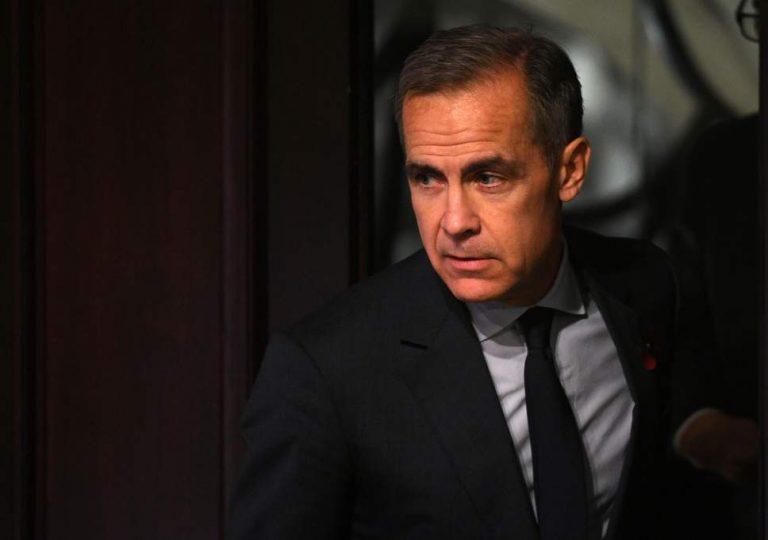
Mark Carney has said he is willing to remain the governor at the Bank of England if it will ensure a “smooth” Brexit transition.
Carney was scheduled to step down as the bank’s governor in June 2019 but has left hints he could plan to stay beyond this date.
“Even though I have already agreed to extend my time to support a smooth Brexit, I am willing to do whatever else I can in order to promote both a smooth Brexit and an effective transition at the Bank of England.”
“I am signalling a willingness to do whatever I can to support this process,” added Carney, talking to MPs on the Treasury committee.
The Governor at Threadneedle Street said nothing was yet confirmed but there would be an announcement in the near future.
“We (the Bank) have a very important supportive role to make sure whatever Brexit the government negotiates, that Parliament decides, that that is as much of a success as possible,” he said.
Carney has been with the Bank of England since 2013 when he was the first non-Brit to take the role in the lender’s 300-year history.
The government had initially played down the reports of his position and said the plan was still for him to leave in 2019.
Carney has had mixed reviews of his time at the Bank of England.
The governor has not gone down well with pro-Brexit campaigners, who have accused him of “crying wolf” before the EU Brexit referendum when he predicted that voting to leave could lead to a recession.
Last month, he was called the “high priest of Project Fear” by Conservative Brexiteer Jacob Rees-Mogg.
The former UKIP leader Nigel Farage even called on Carney to resign from the Bank of England.