
“Countrywide is on life support. If the biggest investor is bailing out, why should anyone else have any faith in the business?”As a slight upshot, Investec Asset Management increased its stake in the firm from 5.75% to 12.50%.
Countrywide shares continue free-fall and major investor reduces stake

Countrywide’s (LON:CWD) woes continue as their share price continues to fall, and eventually hit its all-time low late in Monday trading. Following this news, Major Countrywide shareholder Oaktree Capital (NYSE:OAK) slashed its stake in the company from 30% to little over 18%.
Following the backing of a management bid for £140 million in additional funding, the floundering estate agency launched new shares at 10p per share. The £140 million goes some way to paying off the firm’s debt, which is believed to stand at around £200 million – though the recent share price dip means that the company’s market cap is only £190 million, and its 10.5p share price as of last night is only narrowly above the cut-price 10p shares launched during their funding call.
The recent share price dip represents a 10% fall, in addition to the 7% decrease last Friday. The stake slash of Oaktree Capital only serves for to reinforce doubts over the company’s future success.
An anonymous insider has also gone on to say,
Socially Responsible Investing market worth £48 billion by 2027

The Socially Responsible Investing (SRI) market is set to grow by 173% reaching £48 billion by 2027, Triodos Bank reports.
An increasing amount of investors want their money to contribute positively, causing the significant growth.
Triodos Bank’s latest Annual Impact Investing survey reports that 19% of UK investors hope to invest in an SRI fund.
Interestingly, almost half of investors aged 18-34 are driving this increase.
In fact, 56% of milennials investors have invested in an ethical fund after something bad happening in the news. The 18-34 age group have cited natural disasters and the 2008 financial crisis as motivation for investing, to name a few.
Managing director of Triodos Bank UK, Bevis Watts, commented: “Demographic changes, social media and awareness of the challenges facing our planet mean that investors are waking up to the fact that there really is no such thing as a neutral investment. Every investment has an impact on individuals, society and the economy.”
Interestingly, the survey cites the top five industries investors would not consider investing in:
- Manufacturing or selling of arms and weapons
- Worker / supply chain exploitation
- Environmental negligence
- Tobacco
- Gambling
Taptica shares surge 6.8pc following jump in profits

Shares in Taptica were up 6.8 percent in late-morning trading on Tuesday.
The marketing and advertising firm reported a jump in both income and profits for its half-year results.
The group reported adjusted underlying earnings of $21.6 million, up from $13.1 million for the same time the year previous.
Revenues in the first half jumped increased from $65.6 million last year to $144 million.
Taptica’s chief executive Hagai Tal said the group full-year adjusted underlying earnings would be ahead of market expectations.
Tal said that the Taptica’s revenue share balance between the company’s brand advertising and performance-based marketing businesses would remain the same “for at least the rest of the year.”
The group’s chief executive also said the following the Cambridge Analytica, which took place last year, financial investors and private equities were regaining confidence and “returning to the space”, leading to slight recovery.
“We’re starting a new period where the sector is becoming more attractive to investors,” Tal added.
“We are pleased to report another half of significant year-onyear growth resulting from increased usage of apps by consumers as well as increasing mobile internet access resulting in existing clients growing their ad spend accordingly,” said Tal.
“We also experienced good growth through our expanded global presence. Specifically, the Company saw increasing demand from the AsiaPacific region as well as first contributions from its offices in the UK and India.”
Analysts at City broker finnCap said Taptica’s plans for international expansion, the Tremor acquisition, and $30 million in funding meant that the group was in a good position for “further earnings-enhancing M&A and discussions are already underway with targets”.
Taptica also declared an interim dividend of $0.04 per share, up from no interim dividend in the first half of 2018. The group ended second half with a net cash balance of $42.1 million, which was compared to a net debt of $4 million towards the end of last year.
The firm’s brand advertising division generated $71.9 million in the first half of the year.
The group also reported that its performance-based marketing business had a 9.9 percent increase in revenues to $72.1 million.
This increase was helped by “significant” contributions from its growing international presence, particularly in Japan.
Shares in the group (LON: TAP) are currently trading 5.22 percent higher at 363,00 (1419GMT).
Muji become latest Japanese group planning to leave London post-Brexit
The Japanese retailer Muji is reportedly planning on moving its European headquarters from London to a site in Germany following Brexit.
According to a report by Bloomberg, Ryohin Keikaku Co., is considering Germany for the move but has not confirmed the number of employees based in the London offices that will move if the relocation takes place.
In an email, a spokesperson for Muji said: “As a company we’re reviewing the risks from Brexit and always considering all available options. We have not made a decision on moving our office since no new location has been decided on.”
The company has 12 stores in the UK and employees around 50 people in the London office.
Japanese company Panasonic (TYO: 6752) also announced plans to move its European headquarters from the UK to Amsterdam due to Brexit.
“We will move our European headquarters to the Netherlands,” a spokeswoman for the firm told Agence France-Presse.
Reports of Muji relocating follows Japan’s biggest business lobbyist sharing concerns of Japanese businesses that are “seriously concerned” about their future in the UK post-Brexit.
Hiroaki Nakanishi, chairman of Keidanren, the Japanese business federation, said in an interview with the Financial Times: “Everyone is seriously concerned. We can not do anything.”
Nakanishi said Japanese businesses operating in the EU are concerned by the lack of clarity surrounding Brexit.
“Various scenarios get discussed, from no Brexit to plunging into Brexit without any child or deal at all,” Nakanishi added. “We’re now in a situation where we have to consider what to do in all of them.”
Several Japanese financial institutions including Nomura (TYO: 8604), Sumitomo Mitsui (TYO: 8316), and Daiwa Securities (TYO: 8601), have all made plans to move staff and operations out of the UK.
Following Brexit, companies could be forced to pay tariffs to import and export goods between the UK and EU, leading to concern for many businesses operating in the UK and EU.
Shares in Muji (TYO: 7453) are trading up 0.76 at 33.050 (1348GMT).
Danske Bank shares dip amidst money laundering scandal
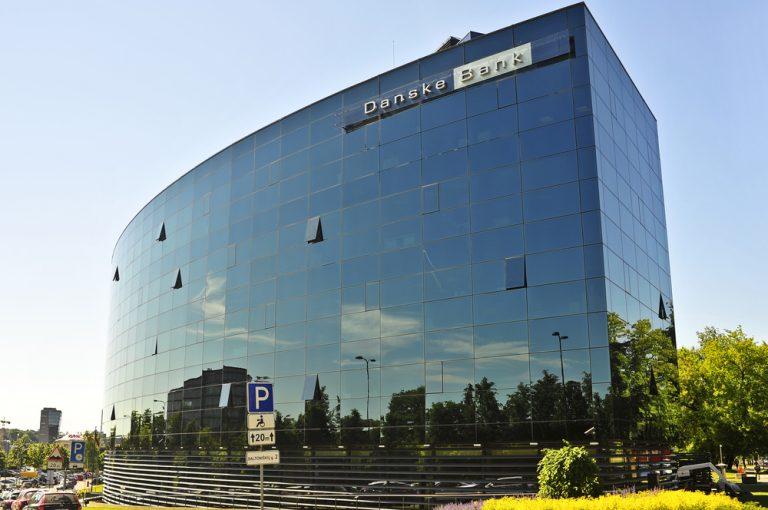
Danske Bank (CPH:DANSKE) have seen their share price fall in Tuesday morning trading following a media report, which uncovered additional information on an open investigation into malpractice. The report revealed that Danske’s Estonian branch was guilty of laundering far more money than had been previously uncovered.
Late on Monday night, the FT report announced that the Danish Bank had handled up to $30 billion of Russian and Ex-Soviet money in non-resident accounts in its Estonian branch in 2013 alone. This came in addition to an earlier investigation this July, in which a Danish newspaper reported that Danske had laundered up to $8.3 billion between 2007-2015.
Though unable to verify these reports, the reports of Danske’s in-house inquiry are expected to be published later this month.
“The matter is very complex, and no conclusion as to the number of suspicious customers or transactions – or indeed the extent of potential money laundering – can be drawn from any individual pieces of information taken out of context,” said a Danske spokesperson.
Danske’s share price currently stands at 176.75kr, down 12.4kr or 6.56% since markets opened.+
China’s President Jinping offers $60bn to Africa
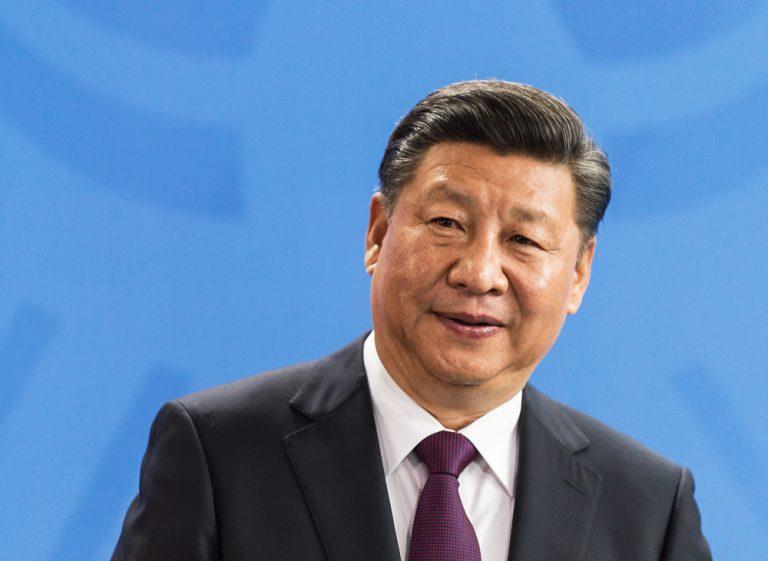
At the sixth triennial China-Africa Entrepreneur Conference, Chinese President Xi Jinping offered an additional $60 billion in funds to aid development in the African continent.
Addressing the audience at Beijing’s Great Hall of People, Xi announced that the fund would be given as $15 billion in aid, interest-free loans and concessional loans, a $20 billion credit line, $10 billion as a special fund for China-Africa development and $5 billion for imports from Africa. Additionally, President Jinping went on to say that Chinese businesses would be encouraged to invest over $10 billion in African countries within the next three years, and that debts that come into maturity in 2018 will be written off for Africa’s poorest countries.
At the conference, Xi was very keen not only to address underlying concerns surrounding the quid quo pro nature of China’s interactions with African countries, but also to stress that Chinese businesses would be encouraged to respect local cultures and focus on sustainable development projects – with allusions being made to his favoured Belt and Road initiative.
On the theme of spending the money carefully, the Chinese president went on to say that, “China-Africa cooperation must give Chinese and African people tangible benefits and successes that can be seen, that can be felt”
“China’s cooperation with Africa is clearly targeted at the major bottlenecks to development. Resources for our cooperation are not to be spent on any vanity projects but in places where they count the most,” he said.
In rebuttal to criticism about mass resource extraction, environmental damage and using workers drafted in from China rather than local labourers, Xi added,
“I hope that our entrepreneurs will act to fulfil social responsibilities and respect local culture and tradition”
“I also hope you will do more in staff training and bettering lives for the local people and will put more emphasis on the environment and resources,” Xi said.
While the South African and Rwandan presidents were quick to shore up President Jinping’s case and preemptively accuse the West of undue bitterness, news outlets such as Al Jazeera and politicians such as Malaysian president Mahathir Mohamad have condemned the move.
Al Jazeera’s Adrian Brown went on to comment that China’s financial offerings – which stand at almost $200 billion since 2000 – are an indictment of,
“debt-trap democracy”. He added that “It’s hard to think of any country in Africa that has not been touched by China”.These concerns have been compounded by Aly-Khan Satchu, a financial analyst in Nairobi, who said that Brown’s claims “real”. “There are worries that this infrastructure has been inflated in price, and that it is highly unlikely to make a return on investments that is necessary for these countries to get in order to pay back the debt,” he said. “The future of China-Africa relations is going to depend entirely on how China manages this debt situation, which is now spiralling out of control,” he added. What is perhaps more immediately concerning is that other than the risk of China exerting a form of soft power, Jinping’s outline for how the money would be spent was very ambiguous. After criticising other parties of being dictatorial in the financial affairs of Africa, Xi said that, “China does not interfere in Africa’s internal affairs and does not impose its own will on Africa”. The problem here is that analysts’ questions about the final destination of Chinese funding have not been answered. It would not – perhaps – be unreasonable to assume that the main beneficiaries of funding in the short-term would be small groups rather than countries as a whole. In exchange for favourable financial arrangements with African political elites, China has been given access to oil resources across several countries – Nigeria, Kenya, Mali, Niger and Ethiopia – to name only a handful. The idea that such an arrangement would be possible is hardly far-fetched, indeed only this year Glencore plc were subpoenaed by the USDOJ for paying off Congolese government officials for access to cobalt mining fields, so what is to say that buying access to mineral resources would be above a resource-hungry country such as China? Indeed, one need only observe President Jinping defending the conference’s guest list to realise that the idea of altruistic funding is a thin veneer. Among the guests was President Omar Al-Bashir of Sudan, who persecuted his own people ten years ago, is wanted for war crimes by the International Criminal Court and has held office for thirty years. The Chinese president remarked that “foreign forces” should not interfere in Sudan’s personal affairs, and Foreign Ministry spokeswoman Hua Chinying then added that, “China has always had reservations about the International Criminal Court’s indictment and arrest order against Sudan’s president. We hope the ICC can prudently handle the relevant issue”. Far be it from a Western source to critique a country’s use of soft power, corruption or exploitation, but as our transgressions were brought to light, so too should China’s malpractice. That is not to say that investment and infrastructural development is without merit, but IMF Structural Adjustment Programmes and Western business partnerships with African political bodies have certainly not been without fault.
Companies leading the way in UK FinTech

Yesterday we reported that Funding Circle will be the first UK FinTech company to be listed on the London Stock Exchange. We take a look at some of the leading UK FinTech companies at the moment – CrowdCube, Monzo and PayBase.
CrowdCube
CrowdCube is crowdfunding investment platform established in 2011. The company aims to increase the accessibility and affordability of investing. It enables everyday investors as well as professional and venture capital firms to invest in start ups. Investing is made as easy. Being over 18 and being a resident in the UK (or a country where receiving financial promotions is legal) are some of the only requirements. Equally, you must be legally entitled to invest in the types of investments offered by CrowdCube. Other than that, anyone can register as a member, find a pitch and enter the amount they wish to invest. Currently, there are 577,911 registered members with £504,507,399 invested in pitches, and 751 successful raises. Success stories include BrewDog, CrowdCube’s first “unicorn”. It raised 13.13 million from 4,586 investors and was valued at £1 billion in 2017.Monzo
Next is the UK-based mobile-bank, Monzo. It allows users to manage their money through spending targets and easy summaries. The prepaid Monzo Card can be used anywhere in the world. Up to £200 can be withdrawn abroad for free every 30 days and no fees are added. Equally, Monzo users can pay people in as little as seconds, set up direct debits and even send money abroad. Additionally, users can include a flexible overdraft and an easy current account switch service. In August, the Guardian reported that the bank is set to be yet another FinTech “unicorn”. Monzo has lined up new finance that values the company at £787 million in only three years. In 2016, the company had its first crowdfunding round and raised a shocking £1 million in 96 seconds. The bank is only available on smartphone and has over 900,000 customers.PayBase
PayBase is a startup based in London. The platform is an end-to-end solution for payments, compliance and risk. Additionally, it allows companies to benefit from a sophisticated payments infrastructure by offering more than just processing inbound payments. Companies such as online marketplaces, sharing and gig economy platforms and charities would all benefit from this service. In an interview, PayBase explained their commitment to delivering an accessible payment solution, unmatchable by anyone in the industry. The PayBase platform was created after Payfriendz, a peer-to-peer payments app. Interestingly, the startup received a grant of almost £700,000 from Innovate UK in 2017.OptiBiotix Health PLC announces agreement with a US company

OptiBiotix Health PLC (LON: OPTI) has announced an agreement with a US company for the use of its cholesterol reducing Lactobacillus plantarum strain as a pharmaceutical drug product. The US company has requested its identity and terms of the agreement to remain confidential.
The life sciences company, OptiBiotix Health, develops compounds to combat obesity, high cholesterol and diabetes.
OptiBiotix will offer the US company an exclusive licence. In return, the US company must take responsibility for all development, preclinical and human clinical testing, regulatory filings and approvals, product manufacture, marketing and product sales in the US Therapeutics market. However, OptiBiotix will be responsible for the manufacture of its Lactobacillus plantarum strain to pharmaceutical drug standards.
OptiBiotix is set to receive a six figure payment from the US company upon signing the agreement. Additionally, OptiBiotix will receive two subsequent amounts totalling a seven-figure sum. This will be followed by an additional six-figure sum on product launch.
CEO of OptiBiotix, Stephen O’Hara, said: “We are pleased to announce this agreement which extends the opportunities provided by OptiBiotix’s cholesterol reducing Lactobacillus plantarum strain into the high value pharmaceutical drug market.
“The agreement allows our US partner to develop our strain as a pharmaceutical drug product in return for upfront, development and product launch milestones payments, plus royalties on future product sales. This is a substantive investment by our US partner which recognises the potential of our strain and the scale of the opportunity in one of the largest and fastest growing markets around the world.”
SNP membership overtakes Tories
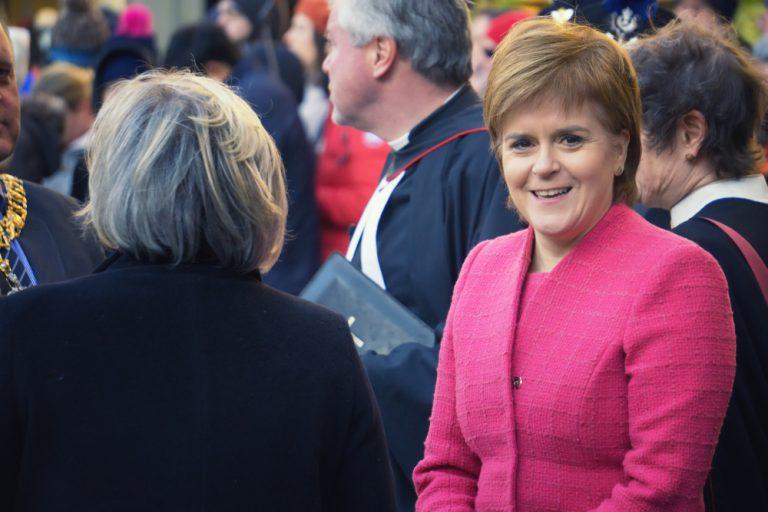
SNP membership has overtaken the Conservative party for the first time.
According to the House of Commons Library data, the Scottish party have pushed past the Conservatives with just under 125,000 members compared to 124,000 for the Tories.
“The latest available data shows that membership of the SNP (August 2018) has surpassed the latest reported figures for the Conservatives (March 2018),” tweeted a House of Commons Library spokesman.
The party is now in third place in the UK. Labour remains most popular with 540,000 registered members.
Nicola Sturgeon responded to the news and said: “Wow – the SNP is now officially the second biggest party in the whole of the UK.”
A Conservative spokesman said that the party would not comment on the recent House of Commons estimates.
The party’s success in overtaking the Conservatives comes amid the reaction among many Scots to the referendum campaign.
Derek Mackay, MSP and SNP business convener, said: “Over 7,000 people joined the SNP in just five days in June, propelling us ahead of a waning Tory party which is at risk of imploding completely over Brexit.”
“Like the extraordinary membership surge of 2014 joining the SNP has once again become not just a powerful symbol, but the best way to ensure Scotland’s voice is heard.”
“People were rightly outraged at Tory plans to remove powers from the Scottish Parliament, and that only 15 minutes were given over at Westminster to debate the impact of the EU Withdrawal Bill on devolution,” he added.
The Liberal Democrats have around 99,200 registered members, the Green Party has 39,400, Ukip has 23,600 and Plaid Cymru has an estimated 8,000 members.
The SNP had 9,500 members in 2003, which rose to 25,000 by December 2013. The party now has a record high of just under 125,000 members.
Joining the Scottish party costs a minimum of £36 a year.
TSB boss Pester steps down amid tech issues
The chief executive of TSB has stepped down following major tech troubles at the bank.
Dr Paul Pester, who has been the lender’s boss over the past seven years, is to resign after TSB apologised for its most recent technical issues on Monday.
Monday saw disruption to the bank’s online services, leaving many customers unable to log in.
This was following the tech issues in April where customers were left without access to online banking services for several weeks.
The Financial Conduct Authority launched a formal investigation into the meltdown in June. With Andrew Bailey, the group’s chief executive making the decision “given the level of public interest”.
TSB said the IT meltdown in April had cost the group £176.4 million and pushed it to a half-year loss.
MPs called on Pester to resign following the IT issues, however, he responded by remaining in his post and saying: “I’m focused 100 percent on putting things right for our customers.”
“The last few months have been challenging for everyone at TSB,” said Pester.
“However, I want to thank all my colleagues across TSB for their dedication and commitment during this period and for their focus on putting things right for TSB customers.”
“It has been a privilege to lead TSB through its creation and first five years. I look forward to seeing the next stage of our bank’s history evolve.”
TSB chairman Richard Meddings will take on Pester’s role until a new chief executive has been appointed.
“Although there is more to do to achieve full stability for customers, the bank’s IT systems and services are much improved since the IT migration. Paul and the Board have therefore agreed that this is the right time to appoint a new CEO for TSB,” said Meddings.
TSB is owned by Banco Sabadell (BME: SAB). Shares in the group are trading at 1,34 (0848GMT)