
Supermarket sales of organic food & drink reach record high

Supermarket sales of organic food and drink have increased for seven consecutive years, marking strong growth.
According to new independent data, figures have shown total sales organic fresh produce and dairy sales hitting a record £2.2 billion.
Liz Bowles, Soil Association’s head of farming, said: “We know that interest in organic food has been growing in recent years and it’s great to see that farmers continue to be rewarded for growing food as it should be, with no artificial additives, fewer pesticides, no GM and with the highest standards of animal welfare.”
“Sales in 2018 are continuing to grow although all UK agricultural businesses are suffering from the unprecedented drought and heat which has affected large parts of the globe,” she added.
The data showed that in the 52 weeks to the end of June, shoppers spent £1.5 billion on organically grown food and drink.
Sales continued to increase this year, despite the extreme weather leading to a cold winter and a hot, dry summer which put strain on crops.
Sales of organically grown food and drink have significantly grown since the recession.
While the sector may have hit record highs, it is still very small in comparison to the overall food and drink sector, which is worth £28.8 billion according to the Food and Drink Federation.
Big brands have seen the potential of the growing organically grown food and drinks market and have begun entering the market. This includes Red Bull’s new Organics soft drinks range and Coca-Cola’s (NYSE: KO) Honest Kids Organic Juice.
The data was supplied by Nielsen Scantrack and was revealed by the Soil Association, a trade body which licenses organic products and promotes organic farming.
The Soil Association Certification certifies over 70 percent of all UK organic products. Last year the trade body approved over 3,000 new products and producers, including seaweed gin.
Dechra Pharmaceuticals PLC will implement a hard Brexit plan

Dechra Pharmaceuticals PLC (LON: DPH) has announced the implementation of a hard Brexit mitigation plan. The company has emphasised that the financial impact of this is irrelevant.
After the announcement, shares dropped by as much as 21%. This is their lowest figure since early March.
Founded in 1997, the company is an England-based manufacturer of veterinary products with its headquarters in Northwich. Dechra Pharmaceuticals is organised into two divisions; European Pharmaceuticals and US Pharmaceuticals.
The hard Brexit mitigation plan include an EU based laboratory testing facility and staff for batch testing and the transfer of product registration to an EU-domiciled legal entity. As a result, an upfront investment of £0.2 million in capital and £1 million in one-off expenses will be required. Additionally, the company has added that additional costs of roughly £0.8 million is required if EU-batch testing and increased customs duty is required.
Dechra Pharmaceuticals have said: “Our current view on the potential changes that may result from Brexit is: in terms of manufacturing and product registration, Dechra is accustomed to trading with multiple countries and different rules and legislation; despite the possible additional administrative burden, our distribution model can adapt to changes in tariffs and duties; our business is naturally hedged and diversified, which helps in a period of economic uncertainty and exchange rate volatility; and we will monitor the impact on workforce and global mobility to maintain an effective system for resource planning.”
The company will continue to assess the potential risks of Brexit as the process develops.
Raise to minimum wage will boost local economies by £1bn, new research shows

A new study by the Smith Institute has found that a rise in the minimum wage would help boost local economies by over £1 billion.
The thinktank’s study said a small rise to the minimum wage would encourage employers to deploy workers more productively, helping to escape the spiral of low productivity affecting businesses today.
“Big employers often like to talk about the positive role they play in their local community. One way that they can go beyond the warm words is to pay their staff the living wage and demand their suppliers do the same,” said Paul Hunter, the deputy director of the Smith Institute.
“This is not just about good corporate citizenship. Evidence shows workers paid fairly are more productive. And, as our research shows, the living wage can also provide a boost to the local economy on which established employers are dependent.”
The study suggests raising the minimum wage in businesses from £7.38 an hour, or £7.83 for those aged 25 years or older, to the voluntary living wage.
The Living wage is run by the Living Wage Foundation and recommends employees being paid a minimum of £10.20 an hour in London and £8.75 elsewhere in the UK.
Labour mayor of the Sheffield city region, Dan Jarvis, said: “It is concerning that Sheffield city region has the highest percentage of employees earning below the voluntary living wage of all the regions considered in the report. Ensuring that people are paid a proper wage which meets the cost of living is vital for residents and good for the economy.”
The leftwing thinktank also used the report to highlight the importance of public and private-sector employers such as universities, hospitals and football clubs and the role they can have in promoting on the living wage.
Frontera shares rally amidst collaboration talks

Frontera Resources Corporation (LON:FRR) have seen their share price rally by over sixty percent in Monday trading after announcing to investors that a potential deal is on the table with two industry majors.
Talks are being held with firms the company has already announced arrangements with for non-disclosure and data exchange. Alongside further technical work, the company is progressing with commercial discussions over “possible transactions involving a farmout or joint operating arrangement within its Block 12 holdings in Georgia.”
“Whilst these discussions are at an early stage, they have taken a significant step forward with both interested parties having attended extended site surveys and management meetings,” Frontera said.
“As a result of these discussions and to assist with data analysis, the company has been conducting extended well tests to better establish production capabilities.”
While Frontera have noted consistent delivery of oil and gas from their wells, they have said they are not yet in a position to report specific volumes until all tests are completed on their Taribani and Dino wells in Georgia.
Frontera CEO Zaza Mamulaishvili added, “Due to the current technical and commercial discussions with industry majors, which may lead to a farmout or joint operating arrangement in specific areas within Block 12 with respect to both oil and natural gas, the Company has changed the initial well testing program such that the current production test from Zones 14, 15 and 19 will continue for a longer period of time than what was anticipated before and additional tests could potentially be performed. We look forward to updating the market as we progress with our work.”
Frontera shares are currently trading at 0.38p, up 63.83% since trading began this morning
TSB apologises for latest IT meltdown

TSB apologised on Monday to customers following disruption to online and mobile banking.
The lender is still recovering from April, where the group’s customers were left without access to online banking services for several weeks.
Users of online banking were denied access for using the “wrong” login and password details on Monday morning, despite details being correct.
“We’re really sorry that some of our customers are experiencing intermittent issues,” said the bank.
“There was an issue yesterday [Sunday] afternoon which was resolved, however customers may be experiencing a slowness in service. Customers are still able to use their cards as normal. We’d like to apologise for any inconvenience this may cause.”
Gareth Shaw, money expert at Which? said: “TSB customers who endured chaos with their bank earlier in the year will be asking themselves how on earth this could be happening again. TSB bosses gave robust assurances that lessons had been learned – so this will come as a real blow to all those who stuck with the bank. For TSB customers at their wits’ end with the bank – there has never been an easier time to switch, and the current account switch service makes the process as painless as possible.”
“Customers can incur fines, penalties and fees when they’re not able to access their finances, so the bank must offer compensation to all those affected.”
In July, the bank revealed that the IT meltdown in April had cost the group £176.4 million, resulting in a half-year loss.
An estimated 26,000 customers closed their TSB account in the second quarter.
The issue in April happened when customer data moved from an IT system operated by Lloyds Banking Group (LON: LLOY) to one managed by Sabadell (BME: SAB).
TSB has about 5 million customers.
The lender tweeted on Monday that customers were facing problems.
Rosslyn Data Technologies PLC secures contract worth over $650,000

Rosslyn Data Technologies PLC (LON:RDT) has announced that it has secured a data analytics contract worth over US$650,000. The contract is set to cover three years with US$250,000 to be billed in the first year and US$200,000 per annum in the following years. In addition, the contract includes an option to extend beyond its three-year duration.
Rosslyn Data Technologies is a leading global big data company that provides data extraction, data cleansing and data enrichment technologies to its clients. Rosslyn’s RAPid platform is the primary product the company offers. Its customers are multinational and include Coca-Cola Enterprises, Babcock Corporate Services PLC and Xerox Business Services.
The client Rosslyn Data Technologies have secured a contract with is a high profile global defence, aerospace and security company. It operates in a complex technology landscape and covers a wide range of companies and geographies and a mass of data repositories and systems. Rosslyn’s RAPid platform will be used to implement the project in less than eight weeks. Implementing the project in such a quick period demonstrates the power of Rosslyn’s award-winning analytics platform.
CEO Roger Bullen said: “I am delighted that Rosslyn, through our partner program, has won another high profile client in a competitive and demanding process. Our focus on the complex data analytics market continues to deliver a number of opportunities and this extremely important win demonstrates the continued demand for our data services in this growing sector.
“Being selected by this leading company shows that our RAPid Analytics Platform is the technology of choice for companies serious about leveraging the value of their data in order to improve business performance. This win also underpins the progress we are making in increasing our average annual contract value, which is continuing to grow.”
Funding Circle is set to be listed on the London Stock Exchange

Funding Circle plans to raise an estimate of £300 million from an IPO on the London Stock Exchange. As a result, Funding Circle will become the first of Britain’s new generation of financial technology companies to go public. Additionally, existing shareholders will also be able to sell existing shares.
The peer-to-peer lender offers loans to small businesses in the US, Germany, the Netherlands and the UK. Funding Circle is the leading small and medium enterprise loans platform in these countries.
Founded in August 2010, the company has leant over £5 billion in loans to 50,000 small businesses by connecting them with 80,000 retail and institutional investors looking to lend money. This includes £1 billion from the first half of 2018 alone.
Financial technology, or “FinTech”, is the new technology that competes with the traditional financial services.
Mobile banking and cryptocurrency are a few examples of technologies that increase the accessibility of financial services to the general public. Today, London has become a hub for financial technology. In addition to Funding Circle, Monzo, TransferWise, Algomi and Blockchain are just a few FinTech companies to call London their home. Market analysts are expecting a valuation of Funding Circle to approach £2 billion after its IPO. Funding Circle could sell at least 25% worth of the company to increase its value. CEO and co-founder of Funding Circle, Samir Desai, said: “At Funding Circle our mission is to build a better financial world. Today’s announcement is the start of the next stage in our exciting and transformational journey. “Over the last eight years, we have worked hard to build a platform that is number one in every market we operate in. By combining cutting-edge technology with our own proprietary credit models and sophisticated data analytics, we deliver a better deal for small businesses and investors around the world.”Export dip means UK manufacturing growth hits two year low

Following IHS Markit’s figures revealing that China’s manufacturing growth is losing momentum, figures released later this morning have revealed that UK manufacturing growth is at its lowest level for the last twenty-five months.
This news comes amid tariff tensions which have affected market liquidity on a global scale, but more importantly because of ongoing Brexit uncertainty, which has knocked consumer confidence and increased production costs.
Since the vote in 2016, figures show that the decision to leave the EU has cost the UK economy over two percent of its expected output, as well as up to four percent of potential investment.
What is more concerning about today’s news is that in addition to faltering consumer confidence at home, even a devalued pound could not save British manufacturers from suffering the lowest number of export orders since April 2016.
Rob Dobson, director at IHS Markit said, “Foreign demand declined for the first time since April 2016, despite the weakness of sterling, amid reports of slower global economic growth and the increasingly uncertain trading environment.”
Stephen Cooper, UK head of industrial manufacturing at KPMG, added that,
the PMI report has “a bit of back to school dread about it”“Optimism has fallen whilst job creation is virtually at a standstill, with cuts by larger businesses neutralised by job growth in SMEs.“Together with export orders – also at a 25 month low despite continued sterling weakness – these figures are particularly concerning against the backdrop of global trade wars and increasing uncertainty around Brexit – both of which will be weighing on businesses.” Going forwards, global trade tensions will do nothing to help the situation of UK manufacturing, but the issue at the forefront still remains – certainty over the scale of our involvement with the EU needs to be clarified as soon as possible.
Hurricane Energy shares increase by 11% after Spirit Energy deal

Hurricane Energy PLC (LON:HUR) announced a significant partnership deal with Spirit Energy earlier this morning. This transaction opens up a significant new work programme across Hurricane’s assets. Spirit Energy is to fund US$387 million of Hurricane’s shares and will receive a 50% stake in return.
The UK based oil and gas company, Hurricane Energy, focuses on hydrocarbon resources in naturally fractured basement reservoirs. Additionally, Spirit Energy is an independent exploration and production operator. It is owned by Centrica PLC (69%) and two of Bayerngas Norge’s former shareholders led by Stadtwerke München Group (31%).
The 50% farm-in of Hurricane’s Lincoln and Warwick licences will cover the Greater Warwick Area. The partnership hopes to accelerate their potential monetisation by targeting reserve growth.
The Greater Warwick Area programme will take place in two phases across 2019 and 2020. Following the successful drilling across the two years, Spirit Energy is set to take on the role of the Greater Warwick Area licence operator.
Hurricane Energy shares have seen an 11.01% increase this morning after the deal.
Chief Executive of Hurricane, Dr Robert Trice, said: “We are delighted to be working with Spirit Energy. We share a common vision for the development of the Greater Warwick Area and more importantly a shared understanding of the potential of fractured basement in the UKCS. Their prior experience of basement in Norwayand elsewhere underpins this understanding. “This transaction allows us to accelerate monetisation of our GWA resource base through a work programme designed to target significant reserve growth. The initial phases include three wells, one of which is anticipated to be tied-back to the Aoka Mizu in 2020. At this point Hurricane will have two significant accumulations developed to Early Production System stage, providing long term production data – critical to the realisation of value from fractured basement fields – as well as generating significant cash flows. “We are already planning for three further GWA wells and commencement of full field development FEED during 2020, allowing us to aim for development sanction in 2021. “As a result of the GWA Farm-in, Lancaster EPS cash flows have been freed up to focus on appraisal of the Greater Lancaster Area. “As we approach first oil on Lancaster, which remains on track for 1H 2019, we have increased financial flexibility and two parallel work programmes to drive our Rona Ridge resources towards monetisation.”Chinese manufacturing growth hits 15 month low
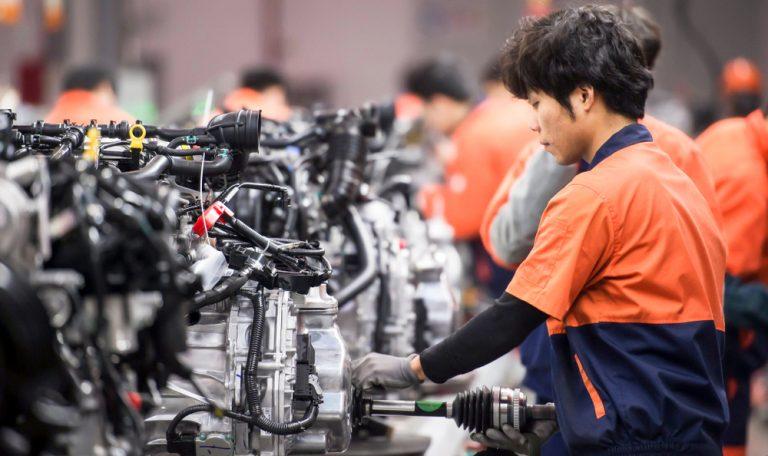
With global manufacturing feeling the pinch of Sino-US trade tensions, figures for August reveal that Chinese manufacturing growth has hit a 15 month low.
With tariffs coming into force, Chinese businesses have seen the prices of imported goods jump at the same time as the number of export orders dipping for the fifth consecutive month; both of which have played a role in factory bosses having to cut staff.
While manufacturing output has not decreased, China’s PMI looks daunting. The PMI or Purchasing Managers’ Index is a measurement done by The Institute for Supply Management (ISM), which uses a monthly survey of a company’s new orders, inventory levels, production, supplier deliveries and employment to gauge performance. PMI is measured out of one hundred, with a score being allocated based on the number of answers indicating improvement, no change, or decrease – a score over fifty indicating a positive change.
Beijing-based media outlet Caixin commented, “Latest data indicated that demand conditions softened, with total new business rising at the slowest pace for 15 months. Weaker foreign demand contributed to the softer increase in overall new work, with export sales declining for the fifth month in a row.”
“Optimism regarding future production remained relatively subdued in August, with confidence little-changed from June’s recent low. Positive forecasts were generally linked to expectations of rising client demand. However, concerns over the ongoing China-US trade war and softer demand conditions weighed on overall sentiment.”
The latest data published this morning by Caixin and research group Markit, show that China’s PMI stands at 50.6 for August, down 0.2 from the month before.
Chinese analysts have so far forecast that this trend is likely to continue going forward, with tensions persisting and the possibility of further tariffs looming in the autumn. The bleak outlook for manufacturing has been shared by European companies over the summer, with British manufacturing figures from within the hour appearing equally bearish.