
Fresnillo updates output guidance for gold and silver

Precious metals mining company Fresnillo Plc (LON:FRES) have upgraded their output guidance for gold for the fourth quarter, whilst downgrading silver.
One of the London-listed go-to precious metal players has today announced that it has seen a 1.7 % on-year increase in gold output, as well as an on-year increase of 8.5% in silver output to date.
While guidance for gold has been upgraded from 900,000-930,000 to 920,000 to 940,000 ounces, silver has been downgraded from 64.5-67.5 million to 62.0-64.5 million ounces. This comes after a dip in output for gold in the third quarter, which saw the firm’s Q3 gold output drop 3.5% on-year, while silver output grew 6.3%.
Output has been boosted by strong performance from the firm’s Pyrites Plant and higher volumes of ore milled at the San Julian site. The firm’s current standing represents a return to form after its blip in June, but does not represent the same ground-breaking success enjoyed by other miners.
“Gold production continues to beat expectations and we are once again revising our guidance upwards following another strong quarter, in particular at our Saucito and Noche Buena mines where volumes exceed targets,” said Octavio Alvídrez, Fresnillo CEO.
“Though silver production is up against all comparable periods, we are revising full year silver guidance following continued challenges at the Fresnillo and Saucito mines. These are world class, tier one silver assets, and we remain both determined, and confident, given the actions we are taking, that we will deliver a better performance in the last quarter and in 2019.”
While year-to-date silver output is up 8.5%, ongoing concerns have seen the firm’s share price dip 1.9% or 18.6p in morning trading to 958.6p. RBC Capital Markets analysts have reiterated their ‘Top Pick’ stance on Fresnillo stock, having upgraded the stokc earlier in the month. Citigroup have reiterated their ‘Neutral’ stance.
Premier Veterinary Group shares fall over 30%

Premier Veterinary Group (LON:PVG) shares fell by more than 30% on Wednesday, after the company forecast a loss for the year.
Premier Veterinary Group said it expects group turnover for the year ending 30 September to be approximately £3.15 million, indicating growth of 24% from the previous year.
Nevertheless, PVG said earnings before tax, interest and amortisation (EBITDA) for the year is expected to represent a loss of £3.25 million.
Looking ahead, the company also said that it is in advanced discussions to finalise an agreement with a “leading UK corporate group to provide collection, administration and support services to facilitate the provision of animal health plans across all of that group’s outlets.”
Premier Veterinary Group said the contract would generate revenues of around £1 million, based on the current number of pets on plan, should the agreement be set into motion.
The firm said that should the agreement be completed, it is set to be implemented in the second half of the current financial year.
Consequently, any benefits generated from said agreement would not be fully realised until the financial year ending September 2020.
Earlier this year, shares in the veterinary group soared after the firm announced that it had completed a major US contract signing.
According to the agreement, PVG said that the contract would see the introduction of its preventative healthcare programme for pets to 15 of the customer’s animal hospitals.
Back in August, shares in the group rose as much as 10% on the back of the news.
Premier Veterinary Group is a provider of independent veterinary care operating in the UK, Europe and USA.
The company was founded in 1969 and has been listed on the London Stock Exchange as of 2015.
Shares in Premier Veterinary Group are currently trading -35.70% as of 10.36AM (GMT), as investors react to the trading update.
Metro Bank profits jump 197% in third quarter
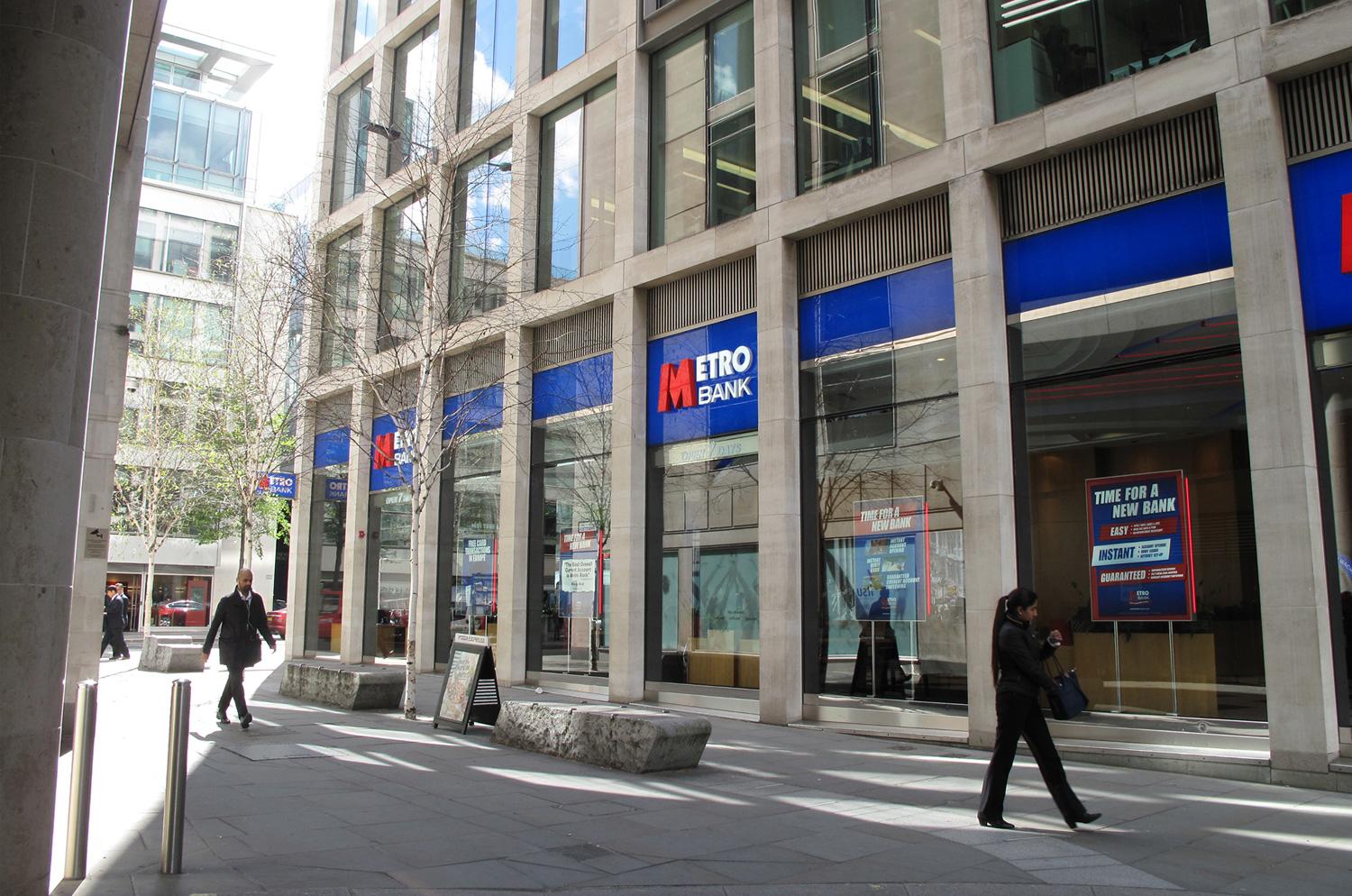
Metro Bank (LON: MTRO) has released impressive results for the third quarter of 2018, with profits jumping 197%.
Profits in the bank jumped from £13.2 million in the same period last year to £39.2 million in the past three months,
Metro Bank also added 102,000 new customers in the most previous quarter, bringing the total number of new customers added just this year to 300,000.
The total number of customers has now passed 1.5 million and the lender has 60 stores.
“Nine month and third quarter 2018 results demonstrate continued growth across Metro Bank,” said the bank.
“Recent competitive trends in the mortgage market, however, have persisted despite the base rate increase in August as we have continued to focus on high quality growth of low-risk assets,” it added.
The group’s chief executive Craig Donaldson said: “The first nine months of 2018 show another strong performance from Metro Bank.”
“We delivered double-digit growth in deposits, record lending growth year-on-year and for the fourth successive quarter exceeded £1 billion in net lending.”
“Profit trebled to £39.2 million and we welcomed over 300,000 new customer accounts.”
However, the lender’s net interest margin fell from 1.94% to 1.77%. Investors did not take this news lightly and shares fell over 11% lower to 2,276p.
Barclays (LON: BARC) also posted strong results for the third quarter, with profits up to £1.5 billion in the three months to September 30, which is up from £1.1 billion in the same period a year previously.
Deutsche Bank (ETR: DBK) had less impressive results, with profits falling by 65%.
Octavio Marenzi, chief executive of consultancy Opimas, said: “There was weakness right across all lines of business and the return on equity achieved of only 1.3% is pretty awful.”
“It does seem that Deutsche Bank is starting to look at headcount reductions more seriously, particularly at the bank’s troubled Corporate and Investment Bank, with headcount down 3%, but this kind of reduction looks homeopathic at a time when more radical surgery is needed.“
Deutsche Bank posts 65% fall in profits
Deutsche Bank (ETR: DBK) has reported a slump in third-quarter results, with profits falling by 65%.
Following three years of losses and failed stress tests, investors are calling on the lender to have a “radical surgery” to treat the bank’s problems.
Previously, Deutsche Bank said it was on track to make a profit this year but under the restructuring from the new chief executive, Christian Sewing, the bank continued to make losses.
The share price fell 4% in early trading and have fallen 43% this year.
“We have our costs under control and sufficient capital to grow. We are on track to be profitable in 2018, for the first time since 2014,” said Sewing.
The bank’s net profit was €229 million (£202.2 million), which is down from the €649 million posted a year ago.
Octavio Marenzi, chief executive of consultancy Opimas, said: “There was weakness right across all lines of business and the return on equity achieved of only 1.3% is pretty awful.”
“It does seem that Deutsche Bank is starting to look at headcount reductions more seriously, particularly at the bank’s troubled Corporate and Investment Bank, with headcount down 3%, but this kind of reduction looks homeopathic at a time when more radical surgery is needed.“
In attempts to save money, the lender is carrying out a series of cost-cutting drives including plans to axe 7,000 of the 97,000 global workforce.
Whilst Deutsche Bank has posted significant losses for the third quarter, Barclays ( (LON: BARC) had more promising results and posted £1.5 billion in profits for the three months to September 30.
“In spite of macroeconomic uncertainty and particularly concerns over Brexit, which weigh heavily on market sentiment, 2018 is proving to be a year of delivery on our strategy at Barclays. We remain focused on generating improved returns and on distributing a greater proportion of excess capital to shareholders over time,” said Jes Staley, the chief executive.
Barclays is “100% prepared” for Brexit
Jes Staley, the lender’s chief executive, has said that Barclays (LON: BARC) is “100% prepared” for a hard Brexit.
Barclays profits were up to £1.5 billion in the three months to September 30, up from £1.1 billion in the same period a year previously.
The group has expanded the Irish subsidiary by 150-200 jobs, to make Ireland the lender’s main base to continue trade within the EU.
“At Barclays we are well on our way to being prepared for a hard Brexit,” Staley told Bloomberg TV.
“We have increased the size of the bank’s subsidiary in Ireland. We have filed all the necessary applications to relicence our branches. We are fully prepared to be 100% operational in case of a hard Brexit.”
Despite the confidence, Staley also said he would like to see the government negotiate on the Brexit deal.
“We have been prudent. We are pretty well positioned for a hard Brexit. However, like everyone else we would like to see a negotiated Brexit that will not harm the economy in the UK,” he said.
“In spite of macroeconomic uncertainty and particularly concerns over Brexit, which weigh heavily on market sentiment, 2018 is proving to be a year of delivery on our strategy at Barclays. We remain focused on generating improved returns and on distributing a greater proportion of excess capital to shareholders over time.”
Earlier this year, Staley faced controversy when he was ordered to pay a £1.1 million fine after he attempted to unmask a whistleblower.
Mark Steward, the FCA’s executive director, said: “Mr Staley breached the standard of care required and expected of a chief executive in a way that risked undermining confidence in Barclays’ whistleblowing procedures. Chief executives must act with a high degree of care and prudence at all times.”
“Whistleblowers play a vital role in exposing poor practice and misconduct in the financial services sector. It is critical that individuals are able to speak up anonymously and without fear of retaliation if they want to raise concerns.”
St James’s Place: £100 billion assets under management
Wealth management firm St James’s Place now manages £100 billion worth of assets as a result of increased client inflows. But, despite this, shares in the company dropped by a considerable amount this morning.
The company offers advice concerning pensions, investments and tax. Indeed, there has been a growing demand of its services. This is despite a difficult market backdrop which has caused various investors to pull funds from a variety of money management firms.
Despite the increase in its portfolio, St James’s Place has seen a slowdown in quarterly growth.
It is true that total funds under management rose to £100.6 billion, which was assisted by net inflows of £2.5 billion and investment gains of £1.5 billion. However, growth in gross flows into its investments and tax-free savings products slowed down over the period. Panmure Gordon analyst, Barrie Cornes, has said to clients: “There has been a very slight – 3% – miss to gross flows consensus, but we believe that this is in part due to the very tough comparator from last year combined with the state market – SJP isn’t immune.” Chief Executive of St James’s Place, Andrew Croft, underline the company’s positive performance given broad market instability caused by increasing geopolitical concerns. Equally, he noted it remained on track to meet its medium-term objectives. Andrew Croft, Chief Executive of St James’s Place, has commented: “There remains growing demand for high-quality financial advice, notwithstanding the current macro and geo-political uncertainty.” By the end of September, 22% of the firm’s funds under management were invested in U.S equities, with 19.5% in fixed income. Moreover, 18.7% were invested in UK equities. At 16:39 BST today, shares in St. James’s Place PLC (LON:STJ) were trading at -5.25%. At the beginning of August, we reported that St James’s Place gave investors a boost by increasing its dividend by 20%, following a strong first half performance.McDonald’s shares rise on strong sales
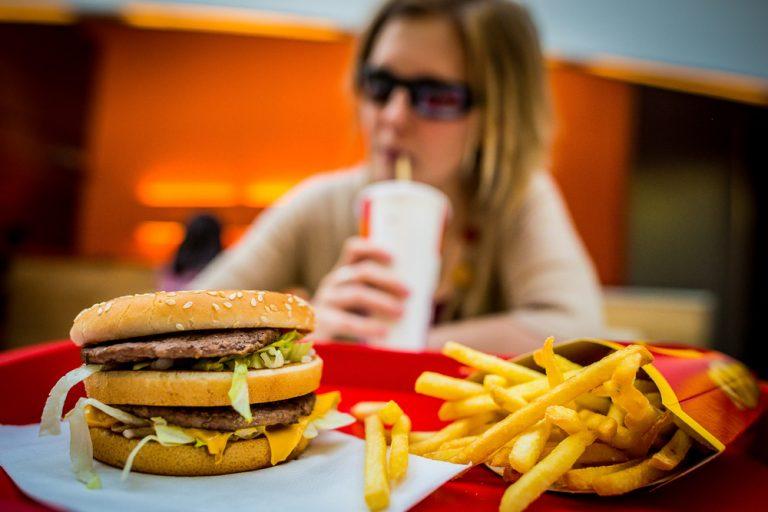
McDonald’s has reported a rise in global sales for the third quarter of 2018, sending shares up 3% on opening.
The fast-food chain saw a growth in sales in the UK, Australian and Japanese markets.
McDonald’s president and chief executive officer, Steve Easterbrook, said: “In addition to achieving 13 consecutive quarters of positive global comparable sales, we have made substantial progress modernising restaurants around the world, enhancing hospitality and elevating the experience for the millions of customers we serve every day.”
“We remain confident that our strategy will drive long-term, profitable growth,” he added.
Revenue surpassed analysts expectations of $5.32 billion, reaching $5.37 billion.
Sales with the fast-food giant’s own US markets increased by 2.4% in the three months to the end of September. This is the slowest pace of growth in six quarters.
McDonald’s has partnered with Uber Eats to increase profits and is working on plans to revitalize sales.
Neil Saunders, who is the managing director of GlobalData Retail, in a statement: “This is a price that they are willing to pay so long as they see results in the form of better sales and profits. However, now these benefits are coming through more slowly, many are starting to question the strategy.”
“In our opinion, the changes McDonald’s is making are right and will pay dividends over time. Indeed, a failure to change would be disastrous. However, the challenge is to ensure that sales growth comes through at a faster pace and that costs are moderated to counterbalance the investment,” he added.
This month saw employees from McDonald’s and UberEats go on strike and protest over a pay dispute.
Shares in the group (NYSE: MCD) are currently trading up 6.40% at 177,29 (1539GMT).
Bloomsbury profits grow on Harry Potter sales
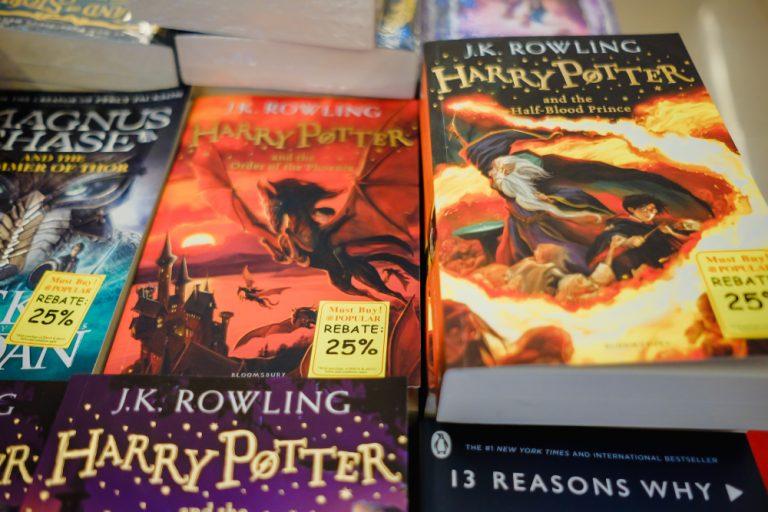
Bloomsbury Publishing has posted strong first-half year results, sending shares up 2.24%.
Growing profits were helped by the surge in sales of Anthony Bourdain’s Kitchen Confidential, as well as the continuing demand for Harry Potter books.
“It was unexpected; there were a lot of ebook downloads, a lot of people wanted to read his master work,” said Nigel Newton, the chief executive of Bloomsbury Publishing, about the recent demand in Kitchen Confidential sales following the death of TV chef and writer, Bourdain.
On the Harry Potter demand, Newton said: “Last year’s Harry Potter anniversary generated one of the highest levels of revenue since the initial publications, and we’ve been pleased to build on this momentum in the first half.”
Sales in Harry Potter were up 5% in the first six months of this year.
Total revenues for the group rose 4% to £75.3 million, up from £72.1 million a year earlier.
“I am very pleased with the performance of our business over the last six months,” said Newton.
“These strong results, following our excellent results for the interim and full year last year, demonstrates the underlying strength, resilience and further potential of our strategy.”
“We have made very good progress in all seven of our Bigger Bloomsbury initiatives focusing on our key growth drivers with targeted strategies across the Group to help grow our revenues and improve our margins over the next five years,” he added.
The group has confirmed that it is trading in line with expectations for the full year.
Shares in the group (LON: BMY) are trading at 199,70 (1503GMT).
Uber introduces electric car fee in London

Uber has announced plans to charge London passengers an extra 15p per mile to help its drivers buy electric cars.
The new clean air fee aims to raise a £200 million fund to encourage many of its drivers to invest in electric vehicles.
“It represents our wanting our partnership in London not only to be a strong partnership but trailblazing in solving air pollution, which every great city in the world is struggling with, and our mayor here in London is looking to improve,” said Uber chief executive, Dara Khosrowshahi.
The rise in journey price for London passengers will be 45p for the average three-mile journey, all of which will go to help drivers buy electric vehicles.
The ride-hailing app hopes for 45,000 drivers to convert to electric cars by 2021 and for every single driver of the London fleet to be electric by 2025.
“You’re going to see many initiatives but what it adds up to is us moving from being a simple ride-sharing service to transforming to an on-demand mobility service,” said Khosrowshahi.
“We ultimately want to be that go-to mobility platform – whether you’re going to move with the car or a bike or ultimately a bus or the tube service. All this is aimed at eventually replacing car ownership itself.”
“Cars are unused 95% of the time and take up enormous amounts of space, in parking etc – we want to give that space back to the city.”
“It’s our goal to help people replace their car with their phone by offering a range of mobility options – whether cars, bikes, scooters or public transport – all in the Uber app,” he added.
The initiative from Uber comes soon after the government has cut for buying greener cars and abolished support for new hybrids.
The RAC and AA (LON: AA) motoring groups called the move a backward step.
Uber’s decision comes in an attempt to prove itself to Transport for London, which initially decided not to renew its licence to operate last year.
FTSE 100 hits 7-month low as oil sinks

The FTSE 100 fell on Tuesday in tandem with global equity markets and hit a 7-month low building on October’s declines.
The FTSE 100 sell-off was broad with poor company results and sharp declines in oil dragging the index well beneath the 7,000 level.
Brent and WTI oil fell as much as 2% after Saudi Arabia said they were prepared to step in and ramp up production to fill the gap left by Iranian sanctions.
BP (LON:BP) and Royal Dutch Shell (LON:RDSB) were down 1.5%-2.1% accounting for a large proportion of the Footsie’s fall.
Oil also fell as Turkish President Erdogan delivered a speech on his government’s investigations on the murder of Saudi journalist Khashoggi which implicated the Saudi leadership in the murder but stopped short of any major threats. This would suggest that Turkey didn’t have the backing of allies such as the USA for any major action that could destabilise the flow of Saudi oil to the global economy.