
“I just ask you to go out and make sure all of your people vote,” Trump said.
“Because if they don’t – it’s Nov. 6 – if they don’t vote we’re going to have a miserable two years and we’re going to have, frankly, a very hard period of time because then it just gets to be one election – you’re one election away from losing everything you’ve got.”
African Battery Metals PLC leaves Sierra Leone
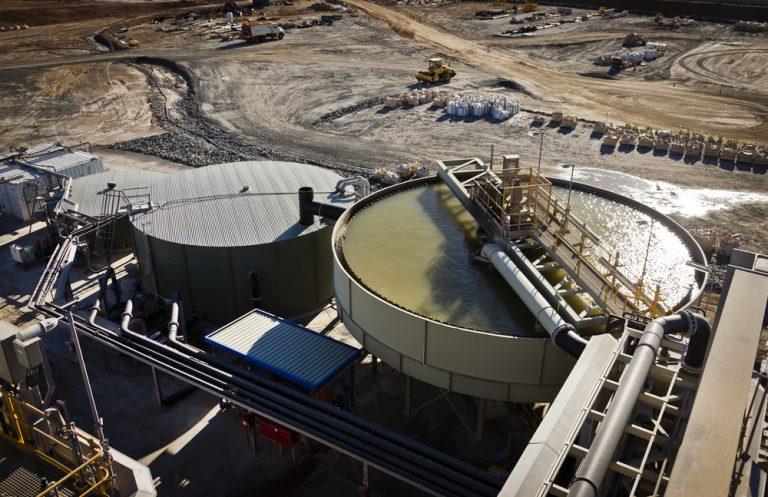
African Battery Metals PLC (LON:ABM) has renounced interests in Sierra Leone in order to focus on new projects in Cameroon and Cote d’Ivoire.
The Africa focused resource company aims to explore the key metals used in next generation batteries that fuel the new electric vehicle revolution.
African Battery Metals PLC has decided to relinquish activities in Sierra Leone after having acquired two new nickel and cobalt projects in Cameroon and Cote d’Ivoire. This is also following a review of their assets.
In doing so, the company is able to focus all its resources on developing its portfolio and pinpoint opportunities that matches its investment criteria. This will develop their value and produce a major metals-focused resource company.
New shareholders of African Battery Metals PLC include the highly successful international resource entrepreneurs Stephen Dattels and Ian Stalker. The company’s shareholders have endorsed the strategy of a rapid growth achieved organically and through acquisition. The move from Sierra Leone was prompted by this as well as the exploration license being due for renewal.
Roger Murphy, CEO, has commented: “As our strategy states, we are focused on battery metals. With the acquisition of two highly prospective nickel and cobalt assets which complement our existing DRC cobalt projects, and the Sierra Leone licenses being up for renewal and extensive consultation with our stakeholders, we have elected not to continue with activities in Sierra Leone.”
“We believe that in order to maximise shareholder value we need to focus resources on our core strategy. We have a platform from which to grow, both through the development of our current portfolio and by securing additional highly value accretive acquisitions and in the process deliver a leading battery metals-focused resource company.”
UKOG plc fails at resistance level as investors await test results

A recent rally in the share price of UK Oil & Gas plc (LON:UKOG) has failed to break above 2.7p, a level the share price has failed to move above since February thus year.
The company updated the market in the form of a competent persons report in June of this year which highlighted a contingent resource of 22 million barrels of oil net to UKOG. UKOG famously discovered a significant oil field near Gatwick airport which became known as the ‘Gatwick Gusher’.
The company is in the process of testing the play for economic viability and potential production rates. In late 2017 UKOG was granted permission by Surrey County Council and the environment agency to conduct flow tests at Horsehill and construct sidetracks to HH-1.
The UKOG share price rallied sharply earlier this year after David Lenigas tweeted about the potential oil quality and the state of the well.
 UKOG’s share price was down 2% on Thursday morning at 2.4p.
However since then, the share price has languished as investors await further news on whether hard results are to follow Lenigas’s tweet.If Lenigas’s claims can be confirmed it would mean the the prospect holds oil that is lighter than both US WTI Oil and Brent. Oil with an API gravity between 40 and 45 tends to fetch the highest prices. Brent Crude and West Texas Intermediate have an API gravity between 38-39.40 API oil at Horse Hill in the Kimmeridge limestones was a great surprise. Because that is better quality than North Sea #Brent . The better surprise was that both the Kimmeridge and Portland oil were DRY #Oil on the initial flow tests – No water! Amazing! @UKOGlistedonAIM
— David Lenigas (@DavidLenigas) 2 July 2018
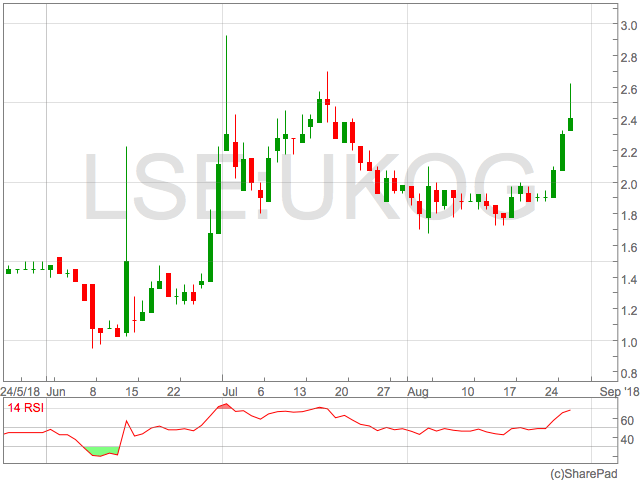 UKOG’s share price was down 2% on Thursday morning at 2.4p.
 UK car production slumps 11pc in July

Car production in the UK slumped 11 percent compared to the same period last year.
The Society of Motor Manufacturers and Traders reported that the drop was due to factors “including model changes, seasonal and operational adjustments and preparation for the introduction of the tough new emissions standards”.
The latest figures from the SMMT showed a fall of 35 percent in models built for the UK and just 121,000 cars leaving production lines in July.
“While the industry is undoubtedly feeling the effects of recent uncertainty in the domestic market, drawing long-term conclusions from monthly snapshots requires a health warning,” said Mike Hawes, the SMMT Chief Executive.
“The bigger picture is complex and month by month fluctuations are inevitable as manufacturers manage product cycles, operational changes and the delicate balance of supply and demand from market to market.
“To ensure future growth, we need political and economic clarity at home, and the continuation of beneficial trading arrangements with the EU and other key markets,” he added.
Despite the fall in numbers, the UK is still on track to meet 2018 expectations. In the first seven months of the year, the number of cars built was down by 16 percent for the UK market and 1.2 percent for export. This is a significant improvement on the previous month in June, when production for the UK fell by 47 percent. Whilst the UK exports most of the cars made here, the majority of the vehicles we own are imported. About 86 percent of new cars are imported, with 69 percent of new cars coming from the EU.Earlier this year, the CBI president Paul Drechsler said that the UK’s car industry was in danger post-Brexit.
Jaguar Land Rover has announced plans to move production of its Land Rover Discovery model to Slovakia.
The group has also announced plans to cut 1,000 UK jobs, due to Brexit uncertainty.
Vodaphone Australia announces A$15bn merger with TPG
Vodafone Australia and TPG Telecom both announced an A$15 billion merger on Thursday.
Under the deal, which will rival Telstra (ASX: TLS) and Optus, TPG shareholders will own 49.9 percent of the group, with Vodafone Australia shareholders owning a majority of 50.1 percent.
“The combination of the two companies will create an organisation with the necessary scale, breadth and financial strength for the future,” Iñaki Berroeta, the chief executive of Vodafone Australia said in a statement.
“The equal terms of the combination preserves the competitive strengths of the two businesses, meaning a sustainable long-term fixed/mobile competitor to Telstra and Optus.”
Berroeta will become the managing director and chief executive of the merged group. David Teoh, who is currently the CEO and chairman of TPG, will become the chairman of the new group.
The deal is expected to be completed next year, subject to approval by watchdogs and the board.
Bernstein analyst, Samuel Chen said: “When you combine the fixed and mobile assets, the new TPG would be in a proper position to deal with Optus … and a full-fledged telecom operation.”
Vodafone Australia is the country’s third largest mobile operator and is jointly owned by Vodafone Group and Hutchinson Telecommunications Australia.
The group has a customer base of around six million.
According to analysts, TPG has an 11,000km-long fibre network providing broadband to businesses. However, the group want to branch out into retail with a fibre-to-the-building offer which could provide broadband to up to 500,000 apartment blocks.
In June, Telstra announced plans to cut 8,000 jobs in a bid to slash costs.
“We have to do this … as an industry we’re at a tipping point,” said chief executive Andy Penn.
“We understand the impact this will have on our employees and once we make decisions on specific changes, we are committed to talking to impacted staff first and ensuring we support them through this period.”
Shares in Hutchison Telecommunications Australia (ASX: HTA) jumped 44 percent. Shares in TPG Telecom (ASX: TPM) surged 18 percent.
Dyson to invest in Wiltshire research facility for electric car tests
Sir James Dyson has announced plans to expand his Wiltshire research facility for the testing of his electric cars.
The investment has come one year after Dyson’s plans to manufacture an electric car and rival Elon Musk’s Tesla.
The British technology company will invest about £200 million at Hullavington, the testing facility on a former second world war airfield.
Jim Rowan, the chief executive of Dyson, predicted that Hullavington will become a “world-class vehicle testing campus”.
“We are now firmly focused on the next stage of our automotive project strengthening our credentials as a global research and development organisation,” he said.
The expansion plans for the Hullavington site includes planning applications for over 10 miles of vehicle-testing tracks with high-speed sections, hills and off-road routes.
The plans for the electric car are so far unclear and there has not yet been a prototype released.
However, talking to GQ magazine earlier this month, it is expected to be aimed at the upper end of the market, will have “some” driverless features and may not even look like a conventional vehicle.
“What we’re doing is quite radical,” he said.
Before the referendum, Dyson was a strong Brexiteer.
“Brexit can supercharge British technology and refocus minds on global trade if only we grab the opportunity with both hands – the government must embrace it and support British businesses,” he told the Guardian.
This is contrary to several major industrial companies and carmakers, including Airbus (EPA: AIR), BMW (ETR: BMW) and Jaguar Land Rover. They have said that a hard Brexit would lead to a reassessment of jobs and investments in the UK.
The tech group made its 100 millionth machine last year as well as posting a 40 percent rise in turnover to £3.5 billion. Profits for the group jumped by a third to a record £801 million.
Dyson has over 12,000 staff, including 4,500 engineers and scientists worldwide.
Trump: there will be ‘left-wing violence’ if Democrats win mid-term elections
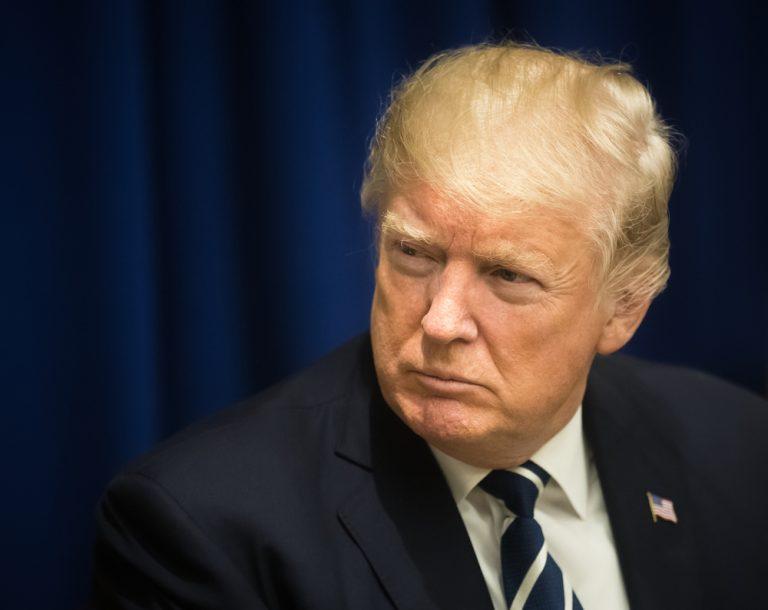
Donald Trump has warned against a “violent” overturn of his policies, should Democrats win the midterm elections.
The US President appealed to conservative Christian groups, saying November’s vote is a “referendum” on freedom of speech and religion, which is threatened by “violent people”.
In a leaked audio recording that was obtained by the Times, Trump said that Democrats will “overturn everything that we’ve done and they’ll do it quickly and violently.”
“It’s not a question of like or dislike, it’s a question that they will overturn everything that we’ve done and they will do it quickly and violently. And violently. There is violence. When you look at Antifa – these are violent people,” he said.
“In this room, you have people who preach to almost 200 million people. Depending on which Sunday we’re talking about,” the US President told Evangelical leaders.
“Little thing: Merry Christmas, right? You couldn’t say ‘Merry Christmas’,” he added.
This is not the first time that Trump has warned of violence from US citizens.
During the 2016 presidential campaign, the President said his supporters would be likely to react violently if he did not win the Republican nomination.
“I think you’d have riots,” he said.
The mid-term elections will take place November 6.
British retail prices expected to soar post-Brexit

The British Retail Consortium has warned that customers in the UK will face major price hikes if a Brexit deal is not reached.
Revealing an increase in British shop prices for the first time in more than five years, the BRC has said prices can continue to rise depending on the UK’s withdrawal from the EU.
The August increase broke a 63-month streak of deflation as food inflation increase to 1.9 percent.
According to the BRC, the increase seen in August was due to the heat wave is seen in the UK over recent months, which led to a decrease in production and increases in the prices of oil and agricultural products.
BRC’s chief executive, Helen Dickinson, said: “Despite significant increases in costs in the supply chain, this month’s figures show that retailers are keeping price increases faced by consumers to a minimum.”
“Current inflationary pressures pale in comparison to potential increases in costs retailers will face in the event the we leave the EU without a deal. If that does happen retailers will not be able to shield consumers from price increases.”
Dickinson added that whilst the weather was seen to have significant impacts on British retail prices, the event of a no-deal Brexit could have a “severe, quick and significant” impact on prices.
One such severe example is the possibility of the cost of importing cheddar from Ireland rising by 44 percent overnight.
“The EU and UK negotiating teams must deliver a withdrawal agreement in the coming weeks to avoid the severe consequences that would result from such a cliff edge scenario next March,” she added.
A report by the London School of Economics released in July found that everyday dairy products including butter and yoghurt could become luxury items in Britain following Brexit.
“Our dependence on imported dairy products means that disruption to the supply chain will have a big impact. Most likely we would see shortages of products and a sharp rise in prices, turning everyday staples like butter, yoghurts, cheese and infant formula, into occasional luxuries. Speciality cheeses, where there are currently limited options for production, may become very scarce,” said Ash Amirahmadi, the UK managing director of Arla Foods.
Toople PLC wins major contract deal

Toople PLC (LON:TOOP) has secured a crucial new wholesale contract with a well-known reseller, whose name has not been specified, located in the South of England.
The company provides a range of telecoms services primarily targeted at the UK SME market. Services offered include business broadband, fibre, EFM and Ethernet data services, business mobile phones, cloud PBX and SIP Trunking and Traditional Services (calls and lines).
The contract has been initially secured for three years. In this period, at least £3.5 million in additional revenue is expected to be delivered.
During the beginning of the contract, the well-known reseller will relocate its current hosted telephony estate to Toople’s platform as well as re-branding Toople’s broadband proposals and advertising them to existing and prospective customers.
CEO of Toople, Andy Hollingworth, has commented:
“This is a great win for Toople as all the revenues relate to our next generation of telephony and superfast broadband services. As this and our other recent contract wins demonstrate, we are seeing increased interest from reseller partners and those active in the wholesale market. This is because we have a number of competitive advantages in terms of our platform, price and next generation service offerings.”
Financial interests of MPs 2018
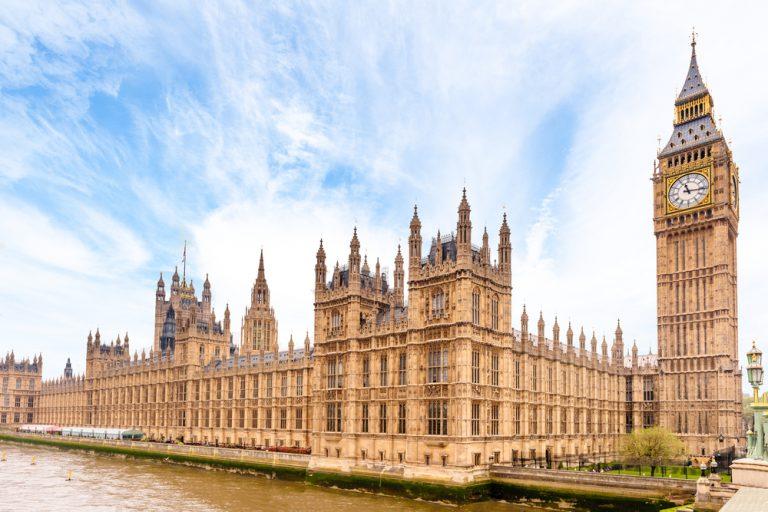
Following the highly publicised financial interests of George Osborne in recent years, we take a look at the financial interests of a selection of MPs after the recent updating of the Register of Members’ Financial Interests.
Jacob Rees-Mogg co-founded Somerset Capital Management (SCM) in 2007. The London-based firm has recently established an investment fund in Ireland and is warning clients of the financial risk a hard Brexit may cause.
SCM has warned: “During, and possibly after, [Brexit] there is likely to be a considerable uncertainty as to the position of the UK and the arrangements which will apply to its relationships with the EU.”
This announcement causes embarrassment for the the influential Conservative MP who has repeatedly disregarded the financial concerns caused by Brexit.
Rees-Mogg is paid roughly £14,000-a-month for working 30 hours a month there.
Grant Shapps is recorded as the unpaid Chair of the Governance Board for OpenBrix Ltd from 1 July to 31 July 2018. However, the Conservative MP recently resigned from his position.
OpenBrix Ltd is a property website that uses blockchain to remove traditional estate agents. His resignation was timed just months prior to the company’s completion of a fundraising campaign that could bring in £19 million.
Grant Shapps declared his work unpaid on the Register of Member’s Financial Interests. However, the Financial Times have reported that he could have earned over £100,000 from the fundraising campaign.
The MP claims to have resigned because he doesn’t want to “overstretch” himself.
Sir Edward Leigh is a Conservative Party MP and Non-Executive Director of Europe Arab Bank. The company provides a range of banking and financial services in Europe, North America, the Middle East, and North Africa.
from October 2016 he received an annual salary of £74,000 in this role, for an expected monthly commitment of 20-30 hours.
John Baron is a director of Equi Ltd which runs an investment trust website.
The Conservative MP also receives £800 per month for a monthly investment column in the FT’s Investors’ Chronicle magazine. However, all fees are waived in lieu of FT donations to charities of Baron’s choice.
Richard Benyon is the director and Chair of the UK Water Partnership, a not for profit company set to promote the interests of the UK water sector. The Conservative MP has held this position since October 2015.
Benyon is paid £15,000 a year for an expected annual commitment of 12-14 days.
Conservative Party MP Nick Boles is contracted from May 2018 to May 2020 as the Non-Executive Director of Totemic Ltd. The company specialises in personal financial management and offers services such as insurances, mortgages and debt advice.
Boles will receive £30,000 per year for 16 hours of work per month.
Johnston Press shares plummet 21pc on fall in revenue

Shares in the newspaper publisher Johnston Press plc (LON:JPR) fell as much as 21 percent after posting a drop in revenue.
Owner of the Yorkshire Post and Scotsman reported a ten percent fall in revenue in the first half of 2018 following changes to Google’s online search algorithm and Facebook feed.
Revenue fell from £103.3 million in 2017 to £93 million to the first six months of 2018.
The group, which owns about 200 titles across the UK, reported a growth in pre-tax profit of £6.2 million compared with a loss of £10.2 million the same period a year previously thanks to strong sales of the “i” national paper.
“The continued challenges posed by Google and Facebook, seen most recently through algorithm and news feed changes, have contributed to total digital revenue decline, while balance sheet constraints have restricted the group’s ability to invest and counter these effects,” said David King, the new chief executive of Johnston Press.
“As part of the strategic review, the group continues to explore its options for the refinancing or restructuring of the group’s debt but, as yet, no decisions have been made nor agreements reached.”
King said that the sales of the “i” newspaper “demonstrated that it is possible to grow a newspaper brand, despite the prevailing headwinds”.
Shares in the group (LON: JPR) are currently trading down 18.04 percent at 4,18 (1333GMT).