
Deliveroo sales double, yet losses increase 43pc on ‘major investments’

Deliveroo has reported sales to almost double to £277 million.
Despite the impressive growth in sales, the privately owned company recorded an increase in losses by 43 percent following major investments.
Deliveroo invested £106 million more last year than in 2016, spending money a new head office based in London and opening Editions pop-up kitchens.
“Our growth is matched only by our ambition. We want to become the world’s definitive food company and we have invested heavily in innovation, technology, people and restaurants. We are changing the way people eat and helping restaurants to expand to new areas and in new ways,” said the group’s co-founder and chief executive, Will Shu.
The company has invested £10 million in order to offer free accident and injury and third-party liability insurance for Deliveroo riders.
The group works with 50,000 restaurants and employs the same number of riders.
Fiona Cincotta, a senior market analyst at Cityindex said: “Deliveroo has no plans of slowing down and says that it will continue investing in further expansion.”
“And this is where the balancing act comes in. While new regions like Taiwan are likely to become a very interesting and fast-growing area for the company it is questionable as to at which point the company’s bottom line will turn black – at the current pace unlikely before the planned IPO.”
“Looking at its competitors it is clear that the expansive growth in the food delivery business can be sustained only for a relatively small number of years.”
“Shares in London-listed Just Eat which listed in 2014 rose rapidly until 2018 but are now trading at roughly the same level as they did at the beginning of the year.”
“German-listed Delivery Hero also recently warned it does not expect to break even this year or in 2019 after investments of €80 million (£71 million),” she added.
Beyond ‘Boris Bikes’: What lies next for Boris Johnson?
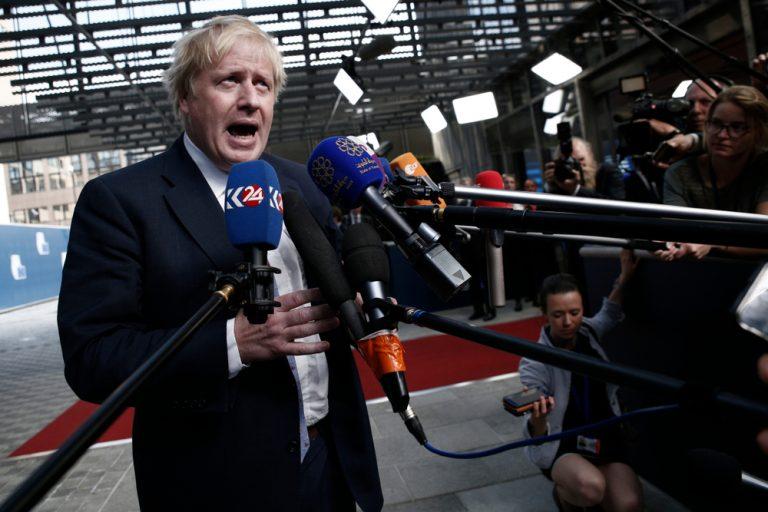
Despite resigning from the cabinet back in July, Boris Johnson is never far from the headlines.
Perhaps one of the most well-known advocates of Vote Leave, Boris Johnson had long been a popular figure in British politics, famed for his superfluous use of language and eccentric character.
However, in recent months, the former London Mayor has proved an increasingly divisive figure within the Conservative party.
Various incidents have cast doubts over whether the former Etonian can indeed emerge as a credible successor to challenge the increasingly unstable leadership of Theresa May.
It seems the former foreign secretary continues to abide by the phrase – there is no such thing as bad publicity.
Towards the end of Johnson’s tenure at City Hall, Boris Johnson commanded an impressive approval rating of 61 percent compared to then Prime Minister David Cameron’s 23 percent, according to polling by YouGov.
Johnson enjoyed a remarkable popularity in an era characterised by mass disillusionment with politics and politicians, and falling turnouts.
It seems Johnson bucked the trend, in turn carving his name as a powerhouse in Conservative politics.
Indeed, he was widely regarded as one of the most influential figures within the party, proving instrumental in securing the success of the Leave Campaign.
The Brexit referendum upset has no doubt marked itself as one of the most seismic political events in the UK’s history, perhaps a testament to Johnson’s gravitas.
However, according to YouGov’s polling, Johnson’s has continued to decline in recent months, suggesting that like most politicians and their relationship with the public, all honeymoons must inevitably come to an end.
Public confidence in Johnson continues to weaken with his support base continuing to fragment, particularly following the fallout from a series of inflammatory comments he made regarding muslim women.
Disintegrating public confidence in Johnson has only been compounded by mounting criticism from his Conservative peers, as the party too question his viability.
Most recently, the chancellor Philip Hammond added to concerns over Johnson’s capabilities as a potential leadership contender, dismissing his ability to engage effectively in ‘grown-up politics’.
Ahead of his speech at the party conference in Birmingham, Hammond told the Daily Mail:
“Boris is a wonderful character, but he’s never been a detail man.”
Moreover, the chancellor suggested that to date, Johnson’s political achievements were limited to the installation of the fleet of ‘Boris Bikes’ he has become associated with.
As such, Hammond decidedly dismissed the notion of Johnson as a future PM. When questioned on the matter, he commented: “I don’t expect it to happen”.
Boris Johnson is known for his tendency to sprout elaborate political statements, often cloaked in colourful adjectives.
Yet, many are starting to question whether there is indeed any substance beyond the style – particularly with respect to Brexit.
His achievements during his time as Foreign Secretary too remain elusive.
His short tenure was dominated by inconsistency, in a government position that necessitates resoluteness, particularly when navigating the murky waters of international diplomacy.
Nevertheless, former journalist and MP for Uxbridge doesn’t seem to be backing down just yet.
A vocal opponent of the Prime Minister’s chequers deal, Johnson has repeatedly taken to his weekly column in The Telegraph to criticise the government’s lack of progress in Brexit negotiations.
Most recently, in a lengthy 4,500 word article, Johnson laid out a potential alternative for Brexit in the form of a ‘Super-Canada’ style deal, perhaps marking his most clear bid for leadership yet.
Specifically, Johnson called for May to renege on the December agreement, keeping Northern Ireland in the customs union and parts of the single market in a bid to avoid enforcing a hard border.
Johnson also advocated that the UK should opt for a “super Canada trade deal” with zero tariffs and quotas, alongside prioritising investment in technology to aid customs.
Moreover, in an interview with the BBC, Johnson crucially failed to dampen speculation that he was indeed preparing to pursue the top job.
“I resigned from the Cabinet because I could not see how I could not see how I could support an arrangement I don’t think is in this country’s interest.”, he said, when pressed on the matter.
Whilst his opponents remain unconvinced of his ‘super Canada’ alternative, Johnson shows no signs of slowing down, as he continues to take aim at Theresa May’s government.
https://platform.twitter.com/widgets.js Having resigned earlier this year from his cabinet position, Johnson will not be making an official speech at this year’s party conference. Nevertheless, Boris Johnson’s absence will be far from felt, as he continues to take up the column inches, and attempt to dominate the front pages. The question still remains – will Johnson stick to commenting behind the scenes, or will he seize the so-called ‘poisoned chalice’ of Brexit? With day two of the conservative conference well under way, all eyes will be on the Prime Minister, Theresa May, who is set to delivers her keynote speech on Wednesday.Boris Johnson just inflicted Theresa May with the greatest trolling in historyhttps://t.co/ewwk82HSI2 pic.twitter.com/JhH4DimBk3
— Mirror Politics (@MirrorPolitics) October 1, 2018
Carillion collapse triggers 20pc spike in construction firm insolvencies

A new report has revealed that the collapse of Carillion has triggered the number of UK construction firms going insolvent by 20 percent.
An analysis by the accountancy firm Moore Stephens revealed that 780 construction companies fell into insolvency in the first quarter of 2018 – a fifth higher than the same period a year earlier.
Lee Causer, a spokesman for Moore Stephens, said: “The collapse of Carillion sent shockwaves through the construction sector, and we are seeing more insolvencies as a direct result.”
“Large construction companies are infamous for squeezing the profit margins of the contractors and subcontractors who work for them. These contractors often cannot negotiate against the terms set for them by their larger clients.”
The report suggests that small to medium-sized enterprises and specialist subcontractors were hit hardest.
“Many of them will have relied on the giant for significant amounts of their work. It is also likely that these subcontractors would have had to write off virtually everything owed to them by Carillion.”
Carillion filed for bankruptcy in January after it emerged that the group had debts of about £1 billion – causing shares to plunge 90 percent.
Following the collapse, thousands of subcontractors were left with debts.
News emerged last week that taxpayers will pay over £150 million following the collapse of Carillion. The bill for redundancy payments alone will reach £65 million.
Earlier this year, a report by the National Audit Office (NAO) expected costs to reach £148 million.
“Doing a thorough job of protecting the public interest means that government needs to understand the financial health and sustainability of its major suppliers, and avoid creating relationships with those which are already weakened,” said Sir Amyas Morse, head of the NAO at the time. “Government has further to go in developing in this direction.”
Aston Martin lowers share price for IPO

Aston Martin has lowered maximum price for the initial public offering, valuing the group at £4.5 billion.
The luxury carmaker has cut its target price to between £18 and £20 per share, from the previous £17.50 to £22 per share.
Despite the reduction in price, shareholders remain optimistic. The private equity firm, Invest Industrial, bought a 37.5 percent stake in 2012, when Aston Martin was valued about £400 million.
Carmakers are expected to be hit hardest when the UK crashes out of the EU in just five months time.
Aston Martin’s chief executive Andy Palmer said last month that Aston is “well insulated” from problems that could lead to the UK leaving the EU without a trade deal.
“We can demonstrate that Brexit is not a major effect for us,” he said.
“If there is a tariff into Europe, it’s countered by a tariff into the UK for our competitors so you might lose a little bit of market share in the EU but you pick it up in the UK.”
Aston Martin has contingency plans to close the Warwickshire plant for nine days following Brexit if there is no deal.
The company has been performing strongly, selling 5,098 cars last year – its highest number in nine years.
Demand for the luxury cars is also growing in China, where the group hope to open 10 new showrooms.
Greg Clark, the secretary of state for business, energy and industrial strategy, said: “Aston Martin is an iconic brand that is an integral part of Britain’s proud automotive heritage.”
“Through our modern industrial strategy we are building on this success, and the new Vantage is a British-built car exemplifying the skill and innovation that sets the UK auto sector apart from its competitors.”
Philip Hammond slams Boris Johnson ahead of Conservative Conference speech
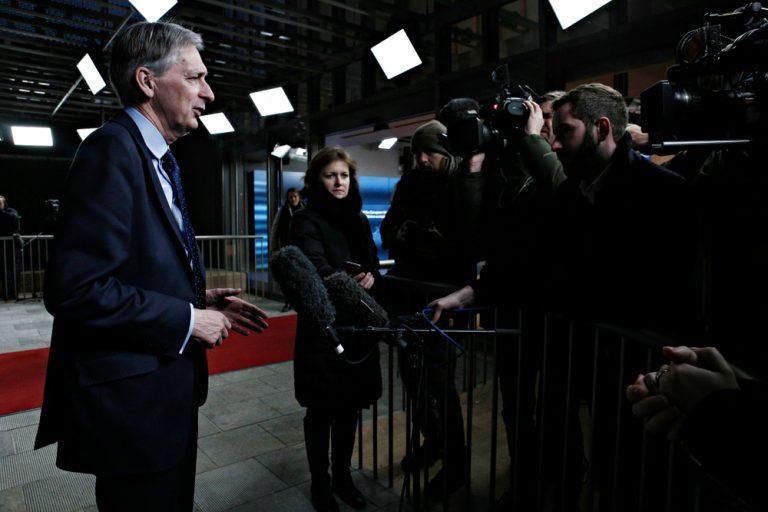
Phillip Hammond has criticised former foreign secretary Boris Johnson in a series of interviews prior to his speech at the conservative conference in Birmingham.
In particular, the chancellor expressed doubts over Mr Johnson’s leadership ambitions in an interview with the Daily Mail.
Hammond said of Boris becoming PM: “I don’t expect it to happen”.
Hammond dismissed the former London Mayor as proving incapable of “grown-up politics”.
Moreover, the chancellor criticised Johnson’s tendency to prove weak on detail, indicating that his only political achievement were London’s “Boris Bikes” that were installed during his time as Mayor.
Specifically, Hammond said: “Boris is a wonderful character, but he’s never been a detail man. I’ve had many discussions with him on Brexit.”
Alongside suggesting that Johnson proved more of a style over substance man, he also took the opportunity to mimic Johnson.
Describing discussions he had with the former foreign secretary over a Canada trade deal, Hammond said:
“Boris sits there and at the end of it he says ‘yeah but, er, there must be a way, I mean, if you just, if you, erm, come on, we can do it Phil, we can do it. I know we can get there.’ ‘And that’s it!”
Similarly, in another interview with Good Morning Britain ahead of his conference speech, Hammond took issue with Johnson’s “fantasy world” idea of Brexit.
He commented:
“It isn’t about taking back control, it’s about fantasy world. The European Union have been very clear that as they negotiate with us they have their red lines, just as we have our red lines, and they are not prepared to negotiate for a free trade agreement which includes the whole of the United Kingdom because of the impact that would have on the border between Northern Ireland and the Republic of Ireland.”
The chancellor is set to deliver his speech at 12PM on Monday at the party conference in Birmingham.
The Conservative conference comes a week after the Labour party’s counterpart conference in Liverpool, in which Jeremy Corbyn committed the party to a “green jobs revolution”.
Theresa May’s party has come under increased pressure in recent months, amid much publicised division within the cabinet over how best to proceed after Brexit.
This was only compounded by the resignation of high profile cabinet ministers such as David Davis and Boris Johnson, who have condemned the government’s strategy.
Whilst the conservatives have long prided themselves as a party of competence, Brexit seems to be exposing widening gulfs within the party.
It seems the so-called ‘Night of the long knives’, a notoriously brutal cabinet reshuffle amid party disarray under conservative party leader Macmillan, may be well on its way to receiving a sequel.
Lloyds share price remains in downtrend
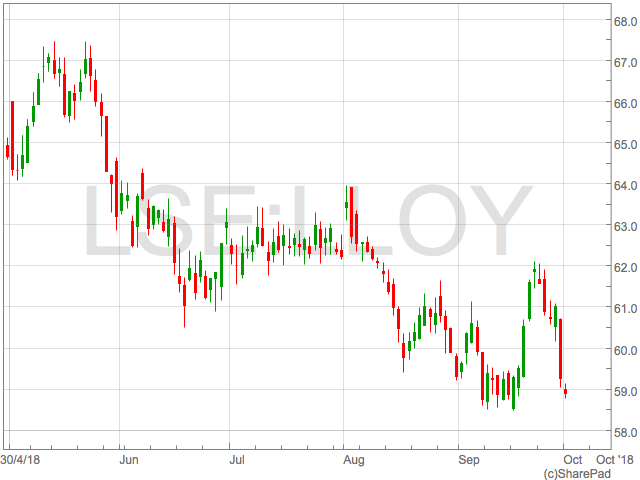
The Lloyd’ Banking Group (LON:LLOY) share price remains in a steady down trend having broken back below 60p towards the lowest levels since late 2016.
The bank posted highs of 72.6p in January 2018 but has since shed nearly 20% of its value.
The persistent declines come in spite of strong results released in August in which the company announced an interim dividend hike to 1.07p from 1p. Underlying profits jumped 23% to £3.1 billion for the first half of the year.
However, investors have shunned Lloyd’s as mounting concerns over Brexit create uncertainity for the future of the bank.
In their half year report, CEO António Horta-Osório commented on the results:
“The UK faces a period of political and economic uncertainty in the run-up to the UK’s departure from the European Union, however the UK economy remains resilient and, excluding the impact of adverse weather, continues to demonstrate robust growth. The economy is benefiting from the highest employment rate in half a century and household indebtedness remains significantly below pre-crisis levels, with strong growth in the world economy also positive for UK exports.”
 Adding to souring sentiment surrounding the stock, fund management star Neil Woodford has reduced his stake in the company over the past year.
Woodford is not alone in disposing of Lloyd’s shares. Goldman Sachs released a sell rating for the stock in September with a price target of 55p.
Despite negativity from Woodford and Goldmans, some analysts are positive on the stock with Credit Suisse recently issues an outperform rating on the share and Hargreaves Lansdown analysts say the bank is in ‘rude health’.
Adding to souring sentiment surrounding the stock, fund management star Neil Woodford has reduced his stake in the company over the past year.
Woodford is not alone in disposing of Lloyd’s shares. Goldman Sachs released a sell rating for the stock in September with a price target of 55p.
Despite negativity from Woodford and Goldmans, some analysts are positive on the stock with Credit Suisse recently issues an outperform rating on the share and Hargreaves Lansdown analysts say the bank is in ‘rude health’.
 Adding to souring sentiment surrounding the stock, fund management star Neil Woodford has reduced his stake in the company over the past year.
Woodford is not alone in disposing of Lloyd’s shares. Goldman Sachs released a sell rating for the stock in September with a price target of 55p.
Despite negativity from Woodford and Goldmans, some analysts are positive on the stock with Credit Suisse recently issues an outperform rating on the share and Hargreaves Lansdown analysts say the bank is in ‘rude health’.
Adding to souring sentiment surrounding the stock, fund management star Neil Woodford has reduced his stake in the company over the past year.
Woodford is not alone in disposing of Lloyd’s shares. Goldman Sachs released a sell rating for the stock in September with a price target of 55p.
Despite negativity from Woodford and Goldmans, some analysts are positive on the stock with Credit Suisse recently issues an outperform rating on the share and Hargreaves Lansdown analysts say the bank is in ‘rude health’. Avocet Mining shares plunge amid possible break-up

Shares in Avocet Mining (LON:AVM) plunged more than 30 percent on Monday morning, after the company issued an interim update.
The gold mining firm said that it still remains in talks with its largest shareholder, Elliot Management, to restructure its debts.
Whilst the company said it had sufficient funds providing capital and interest from the loan, Elliot Management does not need to be repaid during the period.
The company said that loans of $29.9 million as of 30 June from Manchester Securities Corp (an affiliate of Elliott) ultimately ‘remain an unsustainable debt burden’.
The statement added that a potential of these ongoing discussions could be that ‘the Avocet Group is broken up further in an orderly manner and eventually wound up.’
Should that occur, Avocet said given the amount of debt owed, there will be ‘very minimal or no return’s for company shareholders.’
Earlier this month, the mining firm announced that it had transferred 30 percent of its Tri-K gold project to the Moroccan mining group Managem SA.
Following the transfer, Managem SA will hold a majority 70 percent stake in the project.
Avocet is a gold mining and exploration company, which is primarily focused in West African Gold. It has operations in both Burkina Faso and Guinea.
The company has been listed on the London Stock Exchange as of 1996, as well as the Oslo Børs.
Shares in Avocet Mining are currently trading -38.08 percent as of 11.08AM (GMT).
Ryanair warns on profits as strike action hits
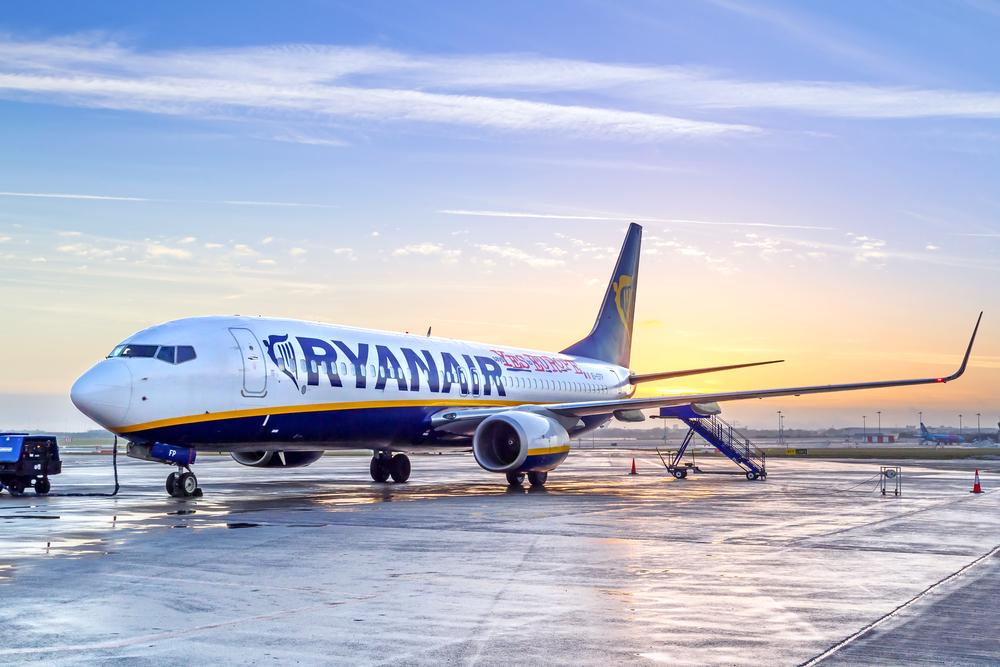
Ryanair has warned on profits for the year, attributing the weaker performance to the impact of strike action and rising fuel prices.
The budget Irish airline said full-year profits will be down 12 percent.
It now expects profits to fall within the range of between €1.1 billion and €1.2 billion, down from the previously forecast €1.25 billion-€1.35 billion.
The company said that pilot and cabin crew strikes in September had particularly affected profits, proving a deterrent for customers booking future flights.
Moreover, Ryanair said that rising oil prices had also continued to add to profit pressure across the period.
Earlier this month, Ryanair pilots across Germany, Spain, Italy, Portugal and Belgium announced plans to coordinate strike action for 24 hours.
The action led to the airline cancelling as many as 250 flights, affecting some 40,000 customers.
Chief executive, Michael O’Leary, said: “While we successfully managed five strikes by 25% of our Irish pilots this summer, two recent co-ordinated strikes by cabin crew and pilots across five EU countries has affected passenger numbers (through flight cancellations), bookings and yields (as we re-accommodate disrupted passengers), and forward air fares into Q3.
“While we regret these disruptions, we have on both strike days operated over 90% of our schedule.
“However, customer confidence, forward bookings and Q3 fares have been affected, most notably over the October school midterms and Christmas, in those five countries where unnecessary strikes have been repeated.”
The airline said that it has taking the decision to close certain routes and bases, in a bid to slim down costs.
It said that its Eindhoven base in the Netherlands will close, however routes to the location will continue.
This is also the case at its base in Germany, amid cuts at its Niederrhein base.
Shares in Ryanair (LON:RYA) are currently trading -8.73 percent as of 10.29 AM (GMT).
Tesco Bank faces £16.4m penalty over cyber attack
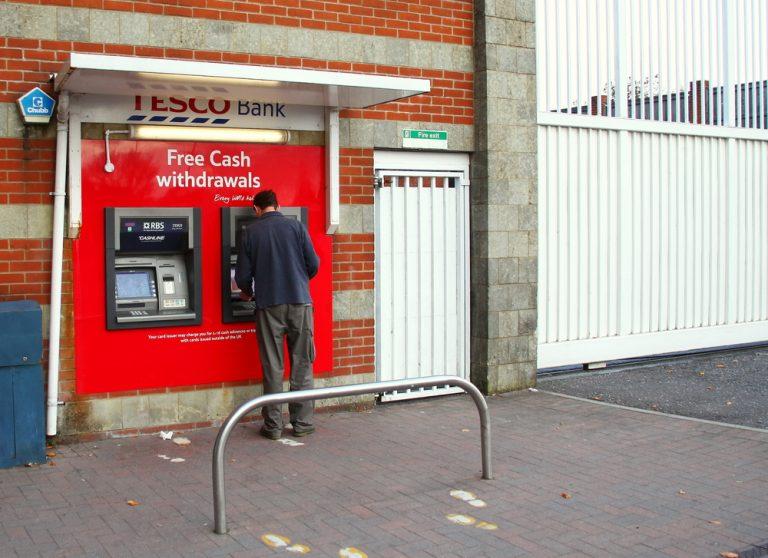
Tesco Bank has been fined £16.4 million by the Financial Conduct Authority (FCA) for failing to protect customers during a cyber attack back in 2016.
The FCA said the attack netted cyber-attackers £2.26 million after fraudsters targeted customers accounts.
Tesco have admitted that the attack results in 34 fraudulent transactions, in which funds were lifted from its customers.
The FCA said that the attack could have been avoided and that Tesco’s banking business failed to respond adequately to the security breach.
Mark Steward, executive director of enforcement and market oversight at the FCA, commented on the decision:
“The fine the FCA imposed on Tesco Bank today reflects the fact that the FCA has no tolerance for banks that fail to protect customers from foreseeable risks,” he said.
“In this case, the attack was the subject of a very specific warning that Tesco Bank did not properly address until after the attack started. This was too little, too late. Customers should not have been exposed to the risk at all.”
He added: “Banks must ensure that their financial crime systems and the individuals who design and operate them work to substantially reduce the risk of such attacks occurring in the first place.”
Gerry Mallon, Tesco Bank’s chief executive, said:-“We are very sorry for the impact that this fraud attack had on our customers. Our priority is always the safety and security of our customers’ accounts and we fully accept the FCA’s notice.”
“We have significantly enhanced our security measures to ensure that our customers’ accounts have the highest levels of protection. I apologise to our customers for the inconvenience caused in 2016.”
Last week it had been reported that the FCA was considering imposing a larger record fine of £33.6 million.
However, amid negotiations between the financial regulator and the bank, the fine was reduced after agreeing upon an early settlement.
Tesco shares (LON: TSCO) are currently trading -0.29 percent as of 10.17AM (GMT).
Netflix sued by easyJet founder over “brand thief” claims

Netflix (NASDAQ: NFLX) is being sued by the founder of easyJet (LON: EZJ) over the new series Easy, claiming it infringes his company’s European trademarks.
The easyJet founder, Sir Stelios Haji-Ioannou, will take legal action over the streaming service claiming that it is simply another “brand thief” attempting to “piggyback” off his easyGroup business.
The new series on Netflix has been described as an “eclectic, star-studded anthology [which] follows diverse Chicagoans fumbling through the modern maze of love, sex, technology and culture”.
The easyGroup business, which also owns easyBus, easyCar, easyVan easyHotel (LON: EZH), as well as many other brands, is seeking a high court injunction to prevent Netflix from using the programme name in Europe.
A spokesman for easyGroup said: “EasyGroup now owns more than 1,000 registered trademarks within the easy family of brands all over the world and takes its protection from unauthorised use very seriously.”
Haji-Ioannou said: “This is a case of typically arrogant behaviour by a very large American tech company who never bothered to check what legal rights other companies have outside the US.”
“When Joe Swanberg came up with the name ‘easy’ for his new TV series a couple of years ago they should have checked with their European lawyers before using it. We own the European trademark in the word easy and another thousand trademarks with easy as a prefix and we can’t allow people to use it now as a brand name, especially when they are doing it mostly with our colours and font.”
“At least I am pleased that Netflix have said that they will stop at series three anyway. However, we have to stop them from promoting the older series in Europe for online streaming.”
Netflix said in a statement that “viewers can tell the difference between a show they watch and a plane they fly in”.