
EU retaliates to US tariffs, trade war escalates
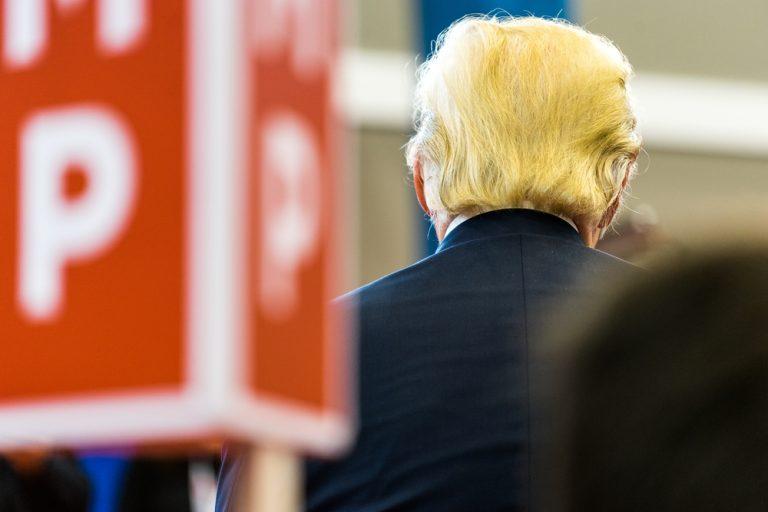
The European Union has introduced tariffs on $3.2 billion (£2.4 billion) worth of US goods.
The tariffs came into force on Friday and are viewed to be in retaliation for the imported steel and aluminium tariffs that were imposed by the Trump administration earlier this month.
The 25 percent tariff will be placed on US products such as whiskey, tobacco, Harley Davidson motorcycles (NYSE: HOG) and peanut butter. A 50 percent tariff has been placed on footwear, certain clothing, and washing machines.
On Thursday, European Commission president Jean-Claude Juncker said to the Irish Parliament that the US imposed tariffs went “against all logic and history.”
“Our response must be clear but measured,” he added. “We will do what we have to do to rebalance and safeguard” the EU.
The tariffs enforced by the EU affect mainly goods produced in Republican states in order to affect the President’s party in the run-up to the November midterm elections.
The US tariffs on steel and aluminium not only affect the EU but also Canada, Mexico, India and other allies.
Canada announced plans to impose retaliatory tariffs on C$16.6 billion (£9.5 billion) worth of US exports from 1 July. Two weeks ago, Mexico put tariffs on $3 billion worth of American products.
Speaking on Thursday, Trump told a crowd in Duluth, Minn: “You look at the European Union, they put up barriers so that we can’t sell our farm products in. And yet they sell Mercedes (ETR: DAI) and BMW (ETR: BMW), and the cars come in by the millions. And we hardly tax them at all.”
A CNN poll showed that people in the US would rather maintain a good relationship with ally countries than impose tariffs on foreign goods. One-quarter of the poll’s respondents said they would prioritise high tariffs over strong relationships with trade partners.
Greece reaches hard-fought debt relief deal with Eurozone
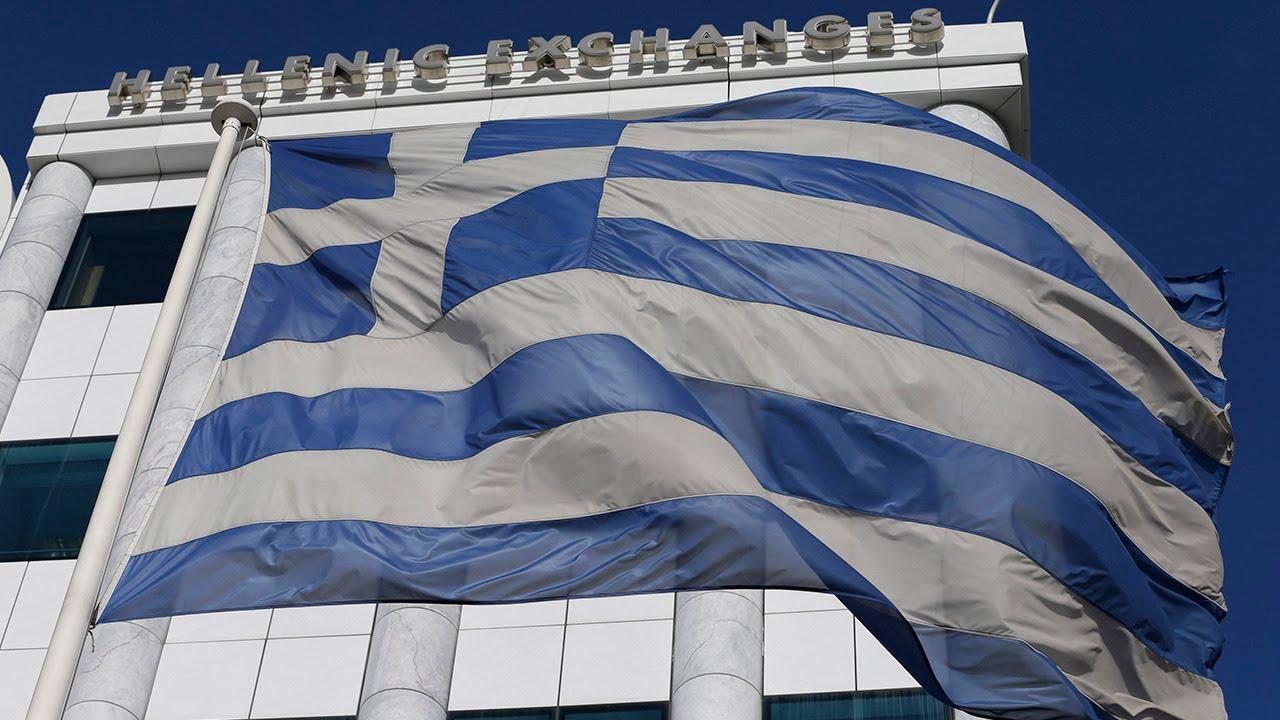
Greece reached a hard-fought debt relief deal with Eurozone nations, after talks that continued into the early hours of Friday morning.
The deal gives Greece more time to repay its €96.9 billion worth of loans, which were agreed after the country’s debt situation spiralled out of control. The period for repaying the loans has been extended, with Greece paying little or no interest.
The finance ministers of 19 Eurozone nations met on Thursday night to discuss the final stages of Greece’s eight-year bailout program, and the agreed deal has been hailed as “historic”.
EU Economic Affairs Commissioner Pierre Moscovici said it would be the end of Greece’s debt crisis.
Greece faced serious financial difficulties back in 2010, when an initial plan to manage its budget deficit was agreed. Greece’s economy has since stabilised, but its debt still stands at around 180 percent of GDP.
Greek prime minister Alexis Tsipras has been pushing hard for austerity measures, sending wages down by nearly 20 percent over the period and welfare payments cut by 70 percent.
Finance Minister Euclid Tsakaloto said, “I think Greece is turning a page.”
“I think that it has all the building blocks there to leave the programme with confidence that we can access the markets, that we can implement our growth strategy and turn the agenda away from one of fiscal adjustment, which has been completed, to one of growth.
“So I think it is a historic moment as people have said, a momentous moment.”
Imaginatik announces partnership with leading European winery

Innovation management software company Imaginatik (LON:IMTK) plans to develop its growth strategy in partnership with a European wine producer, sending shares up 10 percent in early trading.
The producer, which it declined to name, is ‘one of the leading, award-winning wineries of the world’, and has chosen Imaginatik’s Innovation Central tool to develop and deploy its growth strategies.
“We are very proud to have been selected as this award-winning winery’s change and innovation partner and to have the opportunity to contribute to its ongoing success,” said Shawn Taylor, Chief Financial Officer of Imaginatik.
“It is an early success in our sales team’s drive to expand deeper into additional territories.”
He added: “The cloud-based nature of our software means that it is deployable anywhere in the world, and with the majority of our revenue being derived from the US we have a proven ability to support international customers.”
Imaginatik shares soared 10 percent at market open, but are now trading down 0.99 percent at 0.50 (0954GMT).
Morning Round-Up: EU markets up, Opec deal uncertain

The markets got off to a good start on Friday morning, with the FTSE 100 trading up 0.4 percent higher in early trading.
The FTSE 250 is also trading up, with the positive sentiment spreading across Europe. The DAX is soaring, up 2.54 percent, with Spain’s IBEX 35 up 0.35 percent and the CAC40 up 0.40 percent
According to Fiona Cincotta, Senior Market Analyst at City, European markets have been defying the trend set by US stocks.
“Concerns over the fallout of the US-China trade war have seen the Dow Jones Industrial Average close down for eight consecutive sessions while the Nasdaq sank 0.9 percent on Thursday, the biggest single-day fall since April.
“The pound is 0.42 percent stronger against the dollar building on a 1% increase late Thursday as the Bank of England voted to keep rates unchanged. Although the rate decision was not a surprise the unexpected hawkish vote ended up giving sterling a boost.”
The FTSE is being aided by rising oil shares. BP (LON:BP) and Shell are up 0.3 percent, reflecting higher prices for crude oil.
Iran is looking set to scupper Opec’s oil agreement, having said it was unlikely to agree to boost oil production with the group.
Saudi Arabia and non-Opec Russia want to raise production by 1 million barrels per day after calls from the US, China and India to lower the price of crude oil. However, US sanctions on Iran could push down their output.
Next Fifteen shares up on big account wins

Shares in communications group Next Fifteen (LON:NFC) rose over 2 percent on Friday morning, after organic revenue growth lent a boost to the start of the financial year.
The group’s new financial year has seen previously strong trading patterns from the previous quarter continue, with organic revenue growth remaining in the high single digits. Recent acquisitions are all performing well, according to the statement, with the addition of major accounts like Just Eat, Samsung and AB InBev giving the board confidence for the year ahead.
“Next 15 is pleased to report that it has made a good start to the new financial year with a continuation of trading patterns from the previous quarter,” chief executive Tim Dyson said in speech notes for the company’s annual general meeting.
Shares in Next Fifteen are currently trading up 2.15 percent at 522.00 (0903GMT).
Playtech shares edge up on Italian deal green light

Shares in gambling software developer Playtech (LON:PTEC) edged up on Friday, after the Italian financial market regulator approved their takeover of Snaitech.
Consob gave the go ahead to the mandatory takeover offer for the remaining shares of Snaitech not owned by the group, in the wake of its €846 million takeover bid.
Playtech acquired 70.6 percent of Snaitech in April, before buying another 10.3% of shares. They’ve now got the green light to buy the rest of the shares and take control of the whole company.
The acceptance period will start on Tuesday morning and end on 23rd July and the consideration, equal to Euro €2.19 per share, will be paid to the tendering shareholders on 30 July. If certain conditions were met, the acceptance period would be reopened for a further five trading days starting from 31 July.
Playtech’s takeover will consolidate the group’s presence in Italy, one of Europe’s largest and growing gaming markets.
Shares in Playtech are currently up 0.74 percent at 763.00 (0849GMT). Airbus may move operations out of the UK on hard Brexit fears

Airbus said on Friday that it may be forced to move its operations out of the UK, as fears of a ‘hard Brexit’ take their toll.
The group said they were not making a statement as part of “project fear”, but instead a “dawning reality”.
Its current plans to build aircraft wings in British factories may be ditched over concerns that EU regulations will no longer apply from March 2019. Airbus hinted that it may opt to transfer production to North America, China or another European country.
Airbus is currently a major employer in the UK, with 14,000 people working at 25 different sites across the country. When asked about the potential impact of a no-deal with the EU, BBC Radio 4’s Today programme Tom Williams, chief operating officer of Airbus Commercial Aircraft, said today:
“We are seriously considering whether we should continue that development or we should find alternate solutions.”
In the group’s Brexit risk assessment, it said a no-deal – leaving the single market and customs union without a deal – would “lead to severe disruption and interruption of UK production”.
“This scenario would force Airbus to reconsider its investments in the UK, and its long-term footprint in the country,” it added.
Airbus (EPA:AIR) shares are currently trading up 0.99 percent at 99.57 (0832GMT).
FTSE 100 falls following Bank of England minutes
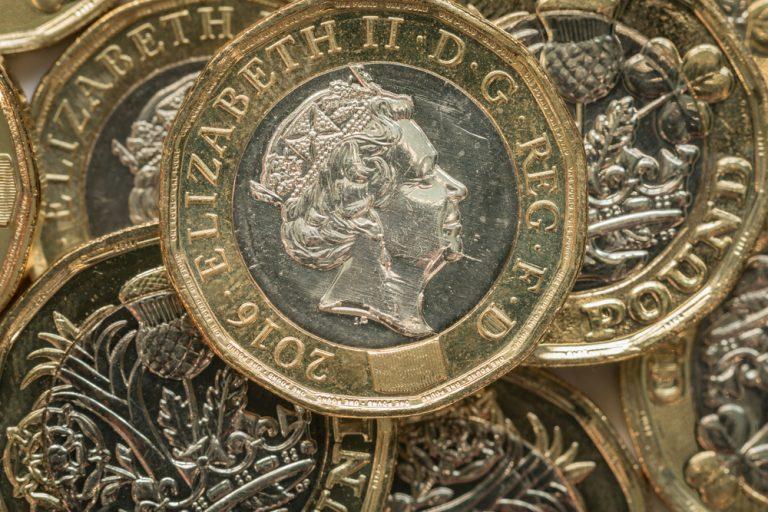
The FTSE 100 continued it’s fall on Thursday as the Bank of England held interest rates at 0.5% but moved closer to a rate hike.
The Bank of Englands chief economist Andy Haldane changed his stance and voted for a hike in rates, meaning the MPC were split 6-3, increasing the chance of a rate hike at the next meeting set for 2nd August.
The minutes released alongside the interest rate decision pointed to the softness in the UK economy experienced in the fast half of this year being reversed, providing justification for members of the MPC to seek interest rates later in the year.
“As widely anticipated, the Bank of England Monetary Policy Committee has kept interest rates on ice at 0.5%. With recent data showing UK CPI at 2.4% – above target but below recent highs – and wage growth also being pegged back, there was no chance of a shock rise this week.
“The Bank of England does, however, appear to be standing firm on its desire to hike rates in August, even in the wake of recent weaker than expected economic data. After abandoning its widely signalled rate hike in May, Mark Carney is determined to shake off the moniker of the ‘unreliable boyfriend’ if he can,”said Ed Monk, associate director for Personal Investing at Fidelity International.
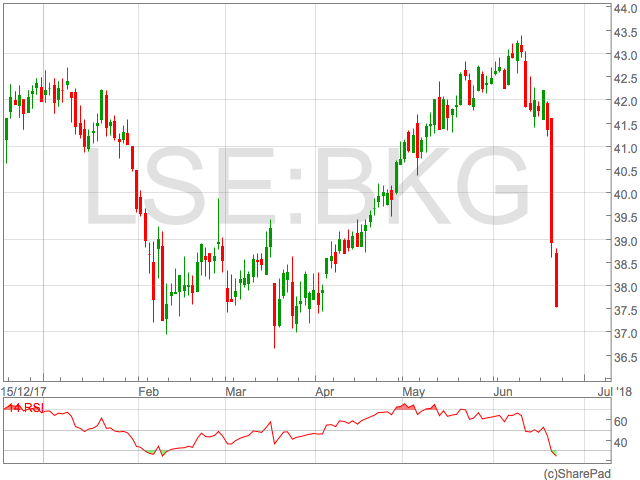
 Some of the biggest fallers in the FTSE 100 were again the house builders who were still reeling from a trading update from Berkeley Group suggesting the housing market was set for a lull which could see thier profits fall – something unlikely to be helped by rising rates.
Taylor Wimpey (LON:TW), Persimmon (LON:PSN), Barratt Developments (LON:BDEV) and Berkeley Group (LON:BKG) were down between 2.9% and 3.7% on Thursday.
The BoE also commented on asset purchase balance sheet saying rates were likely to be increased significantly before there was any consideration of reducing the balance sheet.
Some analysts questioned the substance of the today’s balance sheet comments from the Bank of England suggesting any meaningful action was still some way.
Some of the biggest fallers in the FTSE 100 were again the house builders who were still reeling from a trading update from Berkeley Group suggesting the housing market was set for a lull which could see thier profits fall – something unlikely to be helped by rising rates.
Taylor Wimpey (LON:TW), Persimmon (LON:PSN), Barratt Developments (LON:BDEV) and Berkeley Group (LON:BKG) were down between 2.9% and 3.7% on Thursday.
The BoE also commented on asset purchase balance sheet saying rates were likely to be increased significantly before there was any consideration of reducing the balance sheet.
Some analysts questioned the substance of the today’s balance sheet comments from the Bank of England suggesting any meaningful action was still some way.
FTSE 100 sinks
The announcement drove a sharp decline in the FTSE 100 as sterling rallied strongly against the dollar.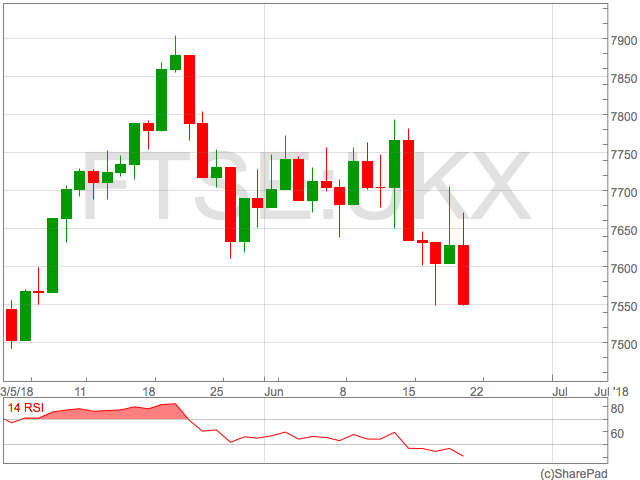 Some of the biggest fallers in the FTSE 100 were again the house builders who were still reeling from a trading update from Berkeley Group suggesting the housing market was set for a lull which could see thier profits fall – something unlikely to be helped by rising rates.
Taylor Wimpey (LON:TW), Persimmon (LON:PSN), Barratt Developments (LON:BDEV) and Berkeley Group (LON:BKG) were down between 2.9% and 3.7% on Thursday.
Some of the biggest fallers in the FTSE 100 were again the house builders who were still reeling from a trading update from Berkeley Group suggesting the housing market was set for a lull which could see thier profits fall – something unlikely to be helped by rising rates.
Taylor Wimpey (LON:TW), Persimmon (LON:PSN), Barratt Developments (LON:BDEV) and Berkeley Group (LON:BKG) were down between 2.9% and 3.7% on Thursday.
 The BoE also commented on asset purchase balance sheet saying rates were likely to be increased significantly before there was any consideration of reducing the balance sheet.
Some analysts questioned the substance of the today’s balance sheet comments from the Bank of England suggesting any meaningful action was still some way.
The BoE also commented on asset purchase balance sheet saying rates were likely to be increased significantly before there was any consideration of reducing the balance sheet.
Some analysts questioned the substance of the today’s balance sheet comments from the Bank of England suggesting any meaningful action was still some way.
Today’s plans to bring in an unwind of QE from years and years away to merely years away could be seen as bid to remind investors that sterling can rise as well as fall.
— WorldFirst (@World_First) 21 June 2018
Chinese central bank ends slump with market liquidity

The Chinese central bank took steps to increase market liquidity on Tuesday and Wednesday, in the wake of the five-day stock market slump.
Following the three-week low reached by stock markets earlier this week, policy-makers in Beijing concluded that a full-scale Sino-US trade war could not be ruled out, but a pragmatic step in the short-term would be to try and increase market liquidity.
As such – having stopped short of quantitative easing – the Chinese central bank opted to lend financial institutions 200 billion yuan (31 billion USD) and fix the yuan rate higher against the dollar. In the aftermath of posting the currency’s biggest daily fall for a year-and-a-half, such steps were deemed necessary to decrease volatility and increase confidence.
Thus far the policies appear to have had the desired effect; gains in China have encouraged the pan-European STOXX 600 to rally 0.6 percent and European auto shares to rise by 0.2 percent. This is promising, considering European auto shares is a sector that is particularly vulnerable to US tariffs.
However, such rallies are only a step in the right direction. European auto shares have declined 2 percent in the last five days alone, and such scenarios could be repeated in the coming weeks.
According to Francois Savary, chief investment officer at Prime Partners, “The framework is set: there is monetary policy tightening, less liquidity, more geopolitical uncertainty and an economic situation which in Europe at least we need to be more cautious about.”
Going forwards, it is expected that further efforts will be made to increase liquidity. A Chinese central bank paper has stated that cuts to banks’ reserve requirement ratios will be used to loosen monetary conditions, and on Wednesday China’s cabinet pledged to use “targeted RRR cuts”. However, the threat of monetary policy tightening by the US central bank and Sino-US tariff tensions still loom, and the way the markets will react to this uncertainty is unknown.
Mears Group shares up on “encouraging progress”
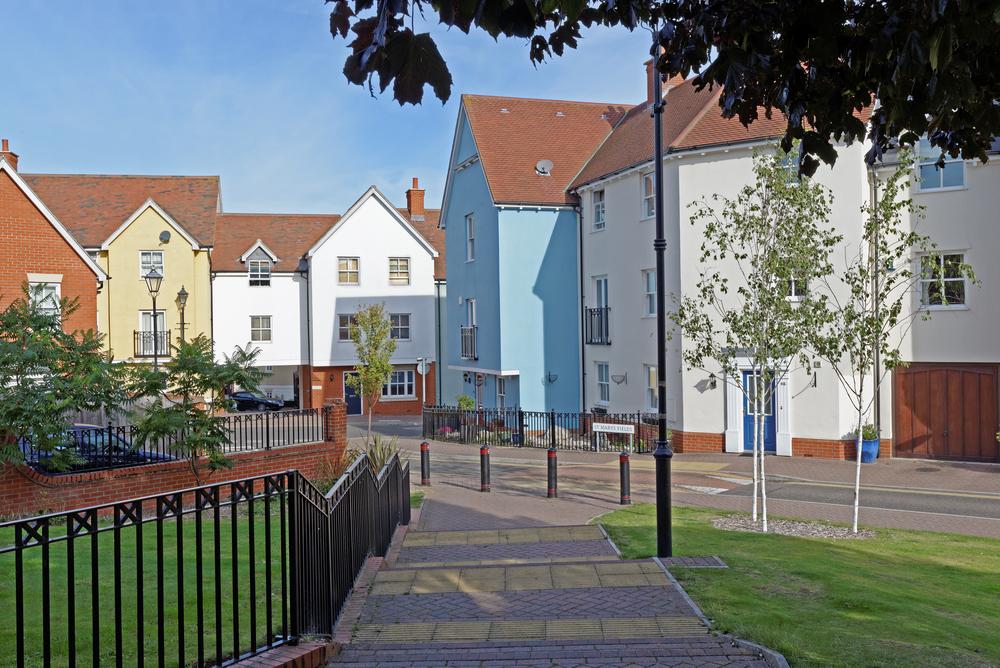
Shares in housing services firm Mears Group (LON:MER) rose over 3 percent on Wednesday morning, after the group said it had made “encouraging progress”.
In a trading update ahead of first-half results, the company said revenues in its housing division had stabilised and that full year results were likely to be in line with market expectations.
The group, who supply supporting services to the property and care sectors, said the housing division had secured new work of around £70 million. The care division also had a ‘good’ first half.
The housing bidding pipeline was “considerable” and included two opportunities that were very significant in scale, Mears said.
“The group has made encouraging progress and is at an advanced bidding stage on a number of these,” it added.
Shares in Mears Group (LON:MER) are currently up 3.18 percent at 324.00 (0859GMT).