
Carpetright swings into loss, shares fall 2pc
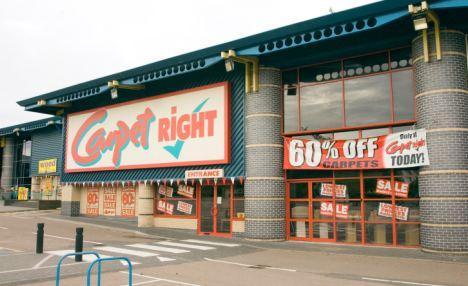
Carpetright has reported a £70.5 million annual loss and falling sales as the retailer continues to struggle throughout the “very difficult year”.
The troubled retailer swung into a loss following the costs of a restructuring program, which involves the closure of 92 stores, and weak sales.
Wilf Walsh, chief executive of the group, said the retailer is working on a recovery plan.
“After a difficult trading year impacted by reduced consumer spend, increased competition and the legacy of an unsustainable, over-rented store portfolio – the CVA and recapitalisation offers us the chance to rebuild Carpetright, which remains the clear market leader in floor coverings with outstanding consumer brand awareness,” he said.
In the year to 28 April, Carpetright sales fell 3.6 percent.
The group’s loss is compared to a £900,000 pretax profit a year earlier.
Earlier this year, the group agreed to a Company Voluntary Arrangement (CVA), allowing it to close stores and reduce rent by up to 50 percent on 113 more stores.
David Madden, an analyst at CMC Markets, said: “Carpetright has had a difficult few months. Things have gone from bad to worse in 2018, as the company had more than its fair share of profit warnings, which has taken its toll on the share price.”
“The good news is that the CVA has given the company some much-needed breathing space.”
Carpetright is among several high street retailers who are going through a difficult period.
Maplins fell into administration in February and closed all 200 stores. Last week, House of Fraser announced plans to close half of its stores. Up to 6,000 jobs are set to be axed as a result of the House of Fraser closures.
Mothercare (LON: MTC) and Poundworld have also reported disappointing results this year.
Shares in Carpetright (LON: CPR) fell two percent on the news.
Grayling remains “optimistic” for Heathrow vote
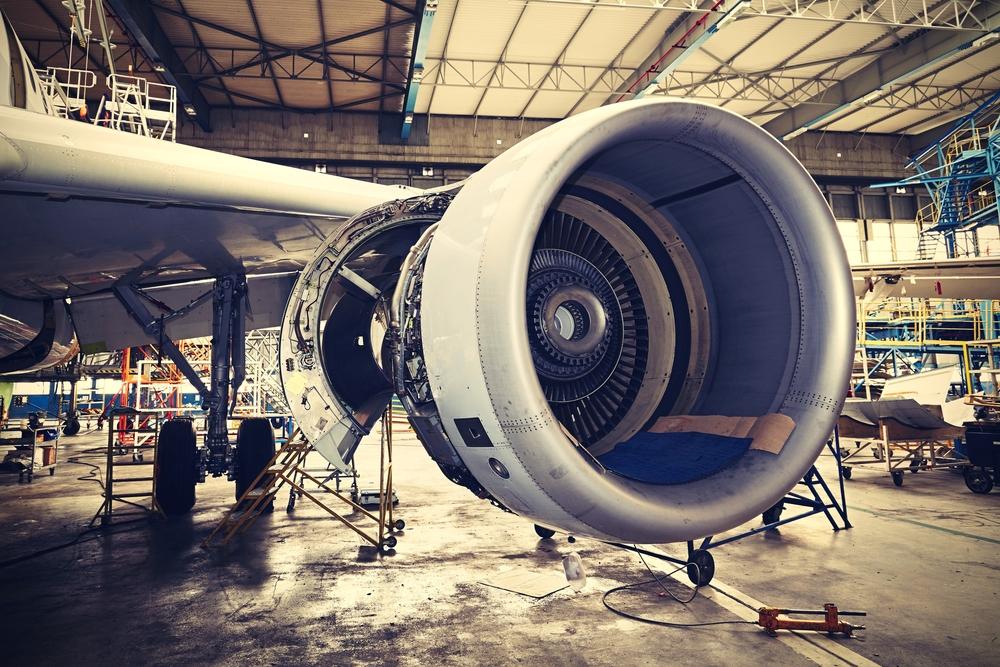
Transport secretary Chris Grayling has said he is “cautiously optimistic” about the parliamentary vote on Heathrow’s third runway.
The Conservative government is expecting significant support from the Labour party after the Unite union called on Labour MPs to vote in favour of the controversial third runway.
“I’m cautiously optimistic. It’s never over until it’s over and the vote has actually happened, but there is strong support from across the political spectrum for this,” Grayling told BBC Radio 4’s Today programme on Monday.
“It’s not usual for me to find myself campaigning on the same side as Len McCluskey of Unite, but he is right in arguing that this is a project that can make a real difference to Britain.”
Len McCluskey, the leader of Unite, said the third runway would be important in creating hundreds and thousands of new jobs in the UK.
When asked about the effects of the runway for climate change, Graylin said: “We’ve talked about climate change right the way through, and the airports commission, which started this work for us, looked very carefully at the issue of climate change.”
“The big difference that is being made in the aviation sector is technology. The new generation of aircraft are quieter, they are much more fuel-efficient.”
When questioned about who was paying for the runway, Grayling made clear that it would not be the taxpayer.
He said: “This is very clearly a private sector project. The taxpayer is not going to be paying for the expansion of Heathrow airport.”
“Some of it Heathrow will pay for, some of it the private sector will pay for, some of it the government will pay for. If you look at Crossrail, if you look at HS2, which are very much an important part of the package, these are things we’re doing already.”
Boris Johnson, who remains an opponent of the Heathrow expansion, is in Afganistan and will not be present for the vote.
The foreign secretary previously pledged to “lie down … in front of the bulldozers”.
BIG Partnership profits spike
Following a lucrative year for advertisement and integrated account initiatives, Scottish PR firm, The BIG Partnership, reported its ‘best year ever’.
The firm saw its most successful year since its inception in 2000, with revenues increasing to 8.8 million GBP and profits peaking at 1.4 million GBP. Following an 11 million GBP take-over by five board members last year, the company recruited 27 new staff and with recent profits, its 107 staff enjoyed a bonus windfall of 250,000 GBP.
After expanding operations and opening a new office in Dundee, the firm recorded a digital revenue increase of 51% within a year, with its Manchester office reporting doubled profits on the year before.
The BIG Partnership provides services for 300 clients, ranging form creating online content, videos, social media advertising and optimising results for search engines, to providing integrated accounts across digital, design, public relations and marketing.
In light of recent success, director Alan Barr commented, “This year has been the strongest in our history and we have continued to invest heavily in our people.” He added, “We have strong momentum as we start our new financial year and will be unveiling some further senior hires very soon.”
Looking forwards, the PR firm have confirmed plans to take on 20 new personnel within the next year, including 15 senior positions and a “heavy hitter” as senior creative director.
FTSE drops as trade war escalates

The FTSE 100 dropped 0.9 percent today, in the midst of Sino-US tariffs.
The next set of US tariffs on 34 billion USD of Chinese goods will be implemented on the 6th of July, with a further 450 billion USD of tariffs earmarked, should China choose to retaliate. In addition, the US has put a block on companies with more than 25 percent Chinese ownership from investing in US firms which provide ‘industrially significant technology’, for instance aerospace, electric cars and robotics. As a counter-measure to this, the Chinese government has reduced the reserve limits on Chinese banks, which could free up as much as 108 billion USD into the economy.
The escalation of this conflict has already had an impact on European economies and in the UK, high street retailers and consumer confidence have been knocked. However, following a rally towards the end of last week – spurred by oil prices and a drop in the value of the pound – the UK economy is now bearing the brunt of the trade war, as the FTSE 100 dropped 70 points.
The recent downturn comes as British estate agents and tech firms face off trade war fears. Countrywide dipped over 20 percent this morning and Micro Focus faced a similar fate to its counterparts in Europe and the US, with a share price dip of 4.99 percent.
There “are signs that the rise in uncertainty associated with the first protectionist steps and the ratcheting up of rhetoric have already been inhibiting investment” said The Bank of International Settlements chief executive, Agustin Carstens.
Nick Campling, co-head of Mirbaud Securities added that, “the time has probably come whereby all things very exposed to global trade flows will begin to under-perform perhaps quite sharply”.
Looking to the future, recent protectionist measures by China and America most likely mark a point of no-return that will adversely affect the global economy. The FTSE 100 will have to look realistically at its ability to inspire trade in the international sphere and consumer confidence at home, in the wake of the US-China trade war and the looming Brexit deal.
Red Emperor Resources share price soars following large oil prospect acquisition

Shares in Red Emperor Resources (LON:RMP) soared on Monday after the company announced it is set to acquire a large oil prospect acquisition in Alaska.
Shares have jumped over 100 per cent after the company announced it had formed a consortium with “well-funded and experienced” JV partners” to commence drilling in early 2019.
Red Emperor’s working interest in the prospect will be 31.5 per cent in the prospect leases, and the company will be fully funded to meet its share of commitments associated with the deal.
Red Emperor’s Managing Director, Greg Bandy, commented: “We are delighted to have been able to negotiate such an exciting new acquisition alongside quality consortium partners 88 Energy and Otto Energy. We would also like to thank Otto’s technical team for their hard work in generating the prospect and working with us to get this deal done. The impending drill program represents a significant opportunity for Red Emperor to gain exposure to one of the most prospective oil provinces in the world.”
Gracjan Lambert, the firm’s Chief Executive, commented: “I am extremely pleased to have joined the company as CEO on the back of such exciting news. I look forward to our continued success building on the acquisition of this high-quality asset.”
Red Emperor Resources is a natural resources exploration company, founded in 2007 and headquartered in Australia.
Alongside its latest acquisition in Alaska, the firm has interests in South East Asia and the Republic of Georgia.
Red Emperor Resources is currently listed on the AIM market of the London Stock Exchange.
Shares in the company are currently trading +105.78 percent as of 13.51PM (GMT), as investors react to the announcement.
Harley-Davidson shares sink on EU tariff warning

Shares in Harley-Davidson (NYSE:HOG) dropped in pre-market trading on the New York market, after the group highlighted the major impact EU tariffs will have on production.
The motorcycle-maker said that it had already made plans to move some manufacturing out of America, after the EU tariffs rose from 6 percent to 31 percent on Monday. This will add around $2,200 to the price of a US-exported motorcycle, having a serious effect on their competitiveness in the EU market.
“Harley-Davidson expects ramping-up production in international plants will require incremental investment and could take at least 9 to 18 months to be fully complete”, the company said in a statement released on Monday.
It is the “only sustainable option” to ensure Harleys can still be sold in Europe.
“Increasing international production to alleviate the EU tariff burden is not the company’s preference, but represents the only sustainable option to make its motorcycles accessible to customers in the EU and maintain a viable business in Europe,” it concluded.
The news will come as a blow to Harley workers in the US, although it is not yet clear how many jobs could be at risk. Many of the jobs at stake could be at their Wisconsin plant, a state who voted firmly in favour of Trump in the 2016 presidential election on his promise to bring back jobs to America.
Shares in Harley-Davidson fell almost 2 percent in pre-market trading in New York, with traders estimating that the $100 million annual cost of Europe’s new tariffs is likely to hurt the group’s annual results. Bitcoin falls to its lowest levels this year

The Bitcoin price faces increased pressure as action and scrutiny against the world’s largest cryptocurrency continues.
Despite reaching highs of almost 20,000 USD towards the end of 2017, Bitcoin has fallen almost 56% since the start of 2018, and on Sunday alone fell five percent from 5,920 to 5,825 USD. Last week saw the largest digital currency rally one percent, but the overall trend seems to be a downward one – a direction of travel it has not been accustomed to since its inception in 2009, especially with its 1300 percent growth in 2017.
Such trends have only been exacerbated with recent indictments of crypto-trading in Eastern Asia. Crypto-trading venues; bitFlyer, QUOINE, BTC Box, Bit Bank, Tech Bureau and Bit Point are under the cosh from Japan’s Financial Services Agency in light of fresh money laundering allegations. Further, a recent hack on South Korean cryptocurrency Bithumb, saw a heist of 35 billion USD worth of coins – in turn, pressure is mounting on cryptocurrencies to make the necessary changes to stop such phenomena repeating themselves.
Despite recent rankings in China showing that Bitcoin has fallen to the seventeenth largest cryptocurrency in the country, some say recent trends are just a blip.
Indeed, following its ascendancy over the last nine years, it must be appreciated that there is still a lot of money tied up in crypto-trading. In the last week, investors in Silicone Valley have reported growth in diamond trading using Bitcoin, with Stephen Silver Fine Jewelry reporting a 20% growth in ‘crypto-transactions’ in the last year.
As recently as March, CEO of Twitter, Jack Dorsey, remarked bullishly, “The world ultimately will have a single currency, the internet will have a single currency. I personally believe that it will be bitcoin, [the timeline would play out] probably over ten years, but it could go faster.”
Going forwards, David Soloman of Goldman Sachs announced the launch of a Bitcoin trading desk, and stated the bank are “cautious but exploring those activities”. It is not yet time to eulogize Bitcoin, but its growth has certainly stagnated.
IWG receives bid from Terra Firma

Serviced office group IWG (LON:IWG) has received a bid from private equity firm Terra Firma, the latest in a flurry of interest for the group.
IWG, previously called Regus, has seen approaches from US property firm Starwood Capital, UK private equity firm TDR Capital and US buyout firm Lone Star but no deals have been signed. At the end of last year, Canadian private equity firm Onex and Brookfield Asset Management also made a joint approach which was rejected by IWG.
The serviced office sector has been hotting up of late, facing increasing competition from the likes of WeWork, which is backed by SoftBank and has been valued at $20 billion.
IWG has offices in about 3,000 locations in 114 countries around the world, operating under brands including Regus and Spaces.
Countrywide shares plunge 20pc on weak earnings

Shares in estate agent Countrywide dropped over 20 percent at market open on Monday, after the group reported weaker earnings than initially expected.
Longer transaction cycles and a subdued market had held back earnings, which will be lower than in the same period last year. The group also confirmed its intention to raise fresh funds in a bid to slash its debt burden
Adjusted earnings are now expected to be around £20 million lower in the first half, Countrywide said. In the first half the group posted an adjusted ebitda of just £28.1 million, after a “ disappointing year”.
“Our focus remains on building back the sales pipeline and we expect to substantially close the pipeline gap by the end of the year. We will provide full year guidance and a detailed recovery plan at the interim results on 26 July 2018,” the company said.
Shares in Countrywide (LON:CWD) are currently trading down 21.72 percent at 61.45 (0938GMT).
House of Fraser confirms branch closures and 6000 job losses
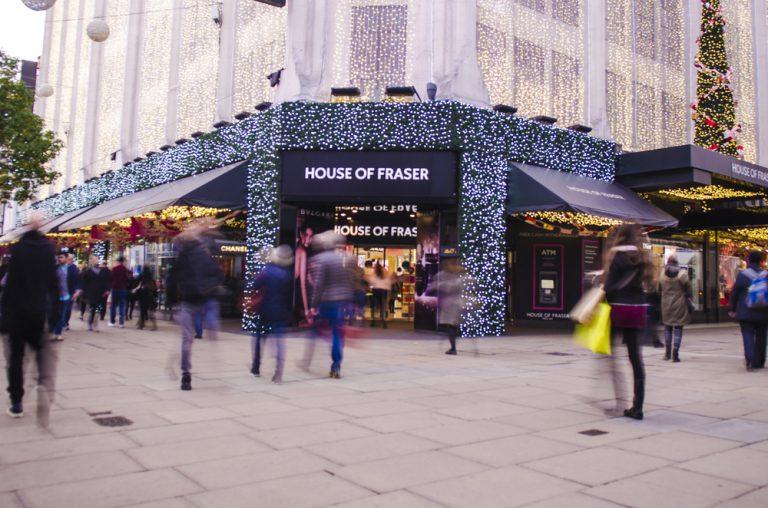
In the midst of waning consumer confidence, House of Fraser has confirmed plans to close 31 of its 59 branches within the next year – among that number, are their prime location outlet in Oxford Street and headquarters in Baker Street.
After 169 years, the high street retailer is seeking a Company Voluntary Arrangement (CVA) to avoid becoming the latest horror story, in the crisis that has hit UK high street retailers hard in 2018. The CVA could see as many as 6000 staff lose their jobs as branches begin to close at the start of 2019.
This step is seen as necessary and perhaps inevitable in the wake of what was described in their investor presentation as a ‘perfect storm of circumstances’. While some factors such as low consumer confidence can be felt across the board, House of Fraser – along with Marks and Spencer and Toys ‘R’ Us – has suffered greatly at the hands of a diminished footfall, which sparked losses as great as 44 million GBP by the end of 2017.
Regarding the measures proposed by the CVA, Chairman Frank Slevin commented, “Whilst closing stores is a very difficult decision, especially given the length of relationship House of Fraser has with all its locations, there should be no doubt that it is absolutely necessary if we are to continue to trade and be competitive.”
Going forwards, more widespread discussions will be had about the nature of CVAs, as while House of Fraser Limited received the 75% votes of approval to allow the CVA to go ahead, they faced fierce opposition from landlords on their proposal of lower rent on their remaining sites after 2019. Alongside the CVA, Hamleys owner C. Banner International is preparing to invest 70 million GBP, and buy a 51% stake of what remains of the business.