
CYBG makes Virgin Money £1.6bn takeover offer
The owner of Yorkshire Bank and Clydesdale Bank has confirmed that it is in talks with Virgin Money (LON: VM) for a potential merger.
The merger between the banks would create the largest “challenger bank” and provide services for six million personal and business customers.
In a statement to the London Stock Exchange, Virgin Money confirmed a “preliminary and conditional proposal” from CYBG (LON: CYBG) that is worth approximately £1.6 billion.
If the deal goes ahead, Virgin Money will own 36.5 percent of the group.
CYGB has said that the proposal “provides the Virgin Money shareholders with an attractive up-front premium and the opportunity to participate in the continuing progress of the combined group”.
“CYBG recognises the strength and appeal of the Virgin Money brand. Our proposal would ensure that the Virgin Money brand would play a significant role in the combined group, subject to reaching agreement with Virgin Group,”
“The combination would create the UK’s leading challenger bank offering both personal and SME customers a genuine alternative to the large incumbent banks”.
Virgin Money is reviewing the proposal and said there is no guarantee that a formal offer will be made.
Following the news, Virgin Money shares increased by 7.7 percent to 336.6p. CYGB shares rose one percent to 321.4p.
CYBG will have to make a formal offer or withdraw its offer by June 4.
Thomas Moore, investment director for UK equities at Aberdeen Standard Investments, told the BBC’s Today programme: “The big mainstream banks have got huge cost advantages and it is important that there is strong competition for customers and this kind of deal will help ensure that.”
“If you have too many small lenders… without the scale economies that the likes of Lloyds and RBS has, then you’ll find that the competitive environment is too tilted in favour of those big mainstream banks.”
William Hill results mixed, despite strong online growth
William Hill (LON:WMH) delivered strong growth in its online business in the 17 weeks to April 24th, boosted by a “sustained period of bookmaker-friendly sporting results”.
The group recorded a 3 percent growth in net revenue, driven by its online offering and a pickup in the US.
In the UK online net revenue rose 12 percent, with Sportsbook up 17 percent and gaming up 8 percent. Retail fared less well, with net revenue down 4 percent due to a with 9 percent fall in Sportsbook and flat gaming figures.
The group confirmed that performance is in line with market expectations for 2018, assuming normalised gross win margins.
CEO Philip Bowcock commented: “William Hill has had a positive start to 2018, making further progress against our strategic priorities to grow UK market share, drive international revenues and deliver key transformation projects.
“Continued momentum in Online and strong growth in the US have driven a good performance during the period.
“In the UK, an unprecedented run of bookmaker-friendly sporting results led to unusual wagering and gaming trends, which we expect to normalise over time.
“The sale of our Australia business has further strengthened our balance sheet.
“While we await the outcome of the UK Triennial Review and the Supreme Court’s decision on US sports betting legislation, we remain focused on continuing to deliver a great customer experience, particularly ahead of this summer’s World Cup.”
Shares in William Hill are trading flat, currently down 0.0072 percent at 278.70 (0914GMT).
FirstGroup shares sink 12pc after Apollo withdrawal
Shares in transport group FirstGroup (LON:FGP) sunk 12 percent on Tuesday morning, after private equity firm Apollo Management said they wouldn’t be making an offer for the company.
The group released a statement following on from the one made on the 11th April, where they outlined making a possible offer for FirstGroup, confirming “on its own behalf and on behalf of the Apollo Funds, that neither it nor the Apollo Funds intends to make an offer to acquire FirstGroup”.
Shareholders in FirstGroup will be disappointed about the news, with several of them urging Apollo to make an offer because the transport company needs a “fresh face at the helm”.
FirstGroup operates in both the UK and the US, where it owns the famous Greyhound bus network. In the UK it runs bus services and the South Western rail line.
Apollo, who had $249 billion in assets under management at the end of 2017, has made a number of investments in the UK in the past, taking on jewellery retailer Claire’s and lending a hand to estate agent Countrywide.
Shares in FirstGroup (LON:FGP) are currently trading down 9.78 percent at 100.15 (0905GMT).
Hiscox shares edge up on 20pc rise in premiums

Specialist insurer Hiscox (LON:HSX) saw shares rise marginally at market open, after reporting a 20.4 percent rise in gross premiums.
Gross written premiums grew by 20.3 percent in constant currency to $1,155.8m in the first three months of the year to 31 March, but it added that growth in the ‘big-ticket’ business would be more measured for the rest of the year.
Hiscox Retail division continued its good momentum, with the firm benefitting from the subsidence of price declines seen last year in reinsurance. The firm’s US portfolio saw the most movement, with prices up 9 percent on average. Mid-year renewals in June and July are expected to see limited rate improvement.
“After a costly year for catastrophes in 2017, our London Market and reinsurance businesses mobilised quickly to grasp the opportunity and grew strongly. Sadly, discipline and good sense is receding in the market, so for the rest of the year growth in big-ticket business will be more measured,” said Bronek Masojada, Group CEO.
Hiscox (LON:HSX) are an international insurance company, specialising in niche areas including property and other insurance for high net worth individuals. Shares in Hiscox are currently up 0.33 percent at 1,513.00 (0852GMT).
Takeda and Shire confirm takeover agreement
Japanese pharmaceutical firm Takeda has reached an agreement with rival Shire for a £46 billion takeover, after several previous offers were declined earlier this month.
Under the terms of the acquisition, each Shire shareholder will receive $30.33 for each Shire share and either 0.839 new Takeda shares or 1.678 Takeda ADSs. The acquisition terms imply an equivalent value of £48.17 per Shire share.
Up to three Shire directors are set to join the board once the acquisition is completed, and the takeover will take effect from the first half of 2019.
Takeda said it hopes the deal will create a global, values-based, R&D driven biopharmaceutical leader incorporated and headquartered in Japan and strengthen its core therapeutic areas.
Shire chief executive Flemming Ornskov said: “I would like to thank the entire Shire team for all that we have accomplished over the last five years to transform Shire into the leading rare disease biotech company and a tenacious champion for patients in need.
“I am confident that this relentless focus will enable us to continue delivering against our priorities throughout this process.”
Shares in Shire (LON:SHP) are currently trading up 2.85 percent, at 3,966.00 (0831GMT).
Oil prices hit a four year high ahead of Iran deadline
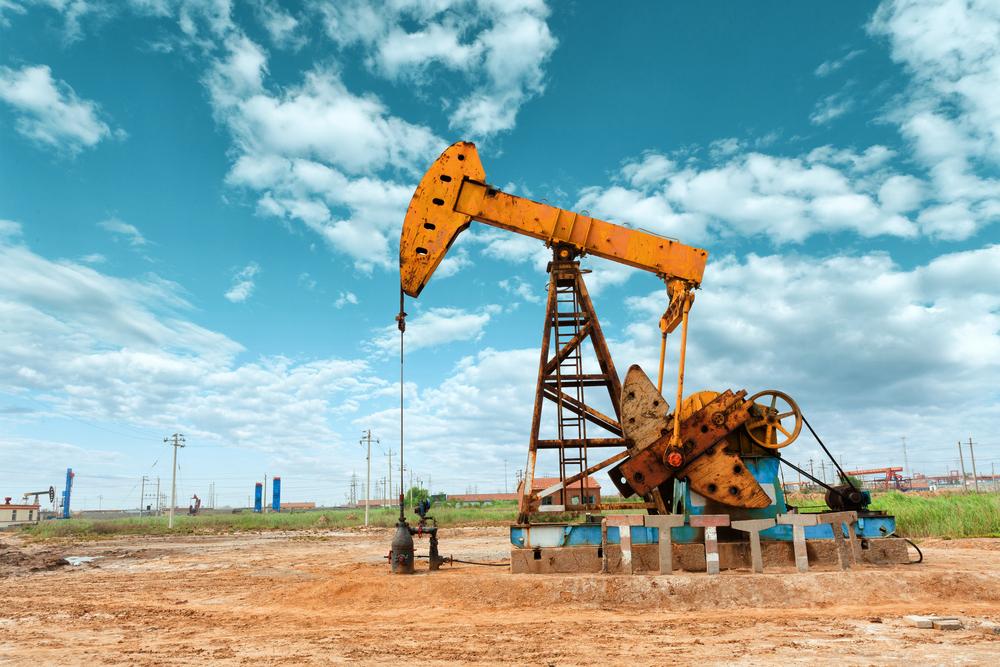
The price of oil hit a new high on Monday, with the benchmark surpassing $70 a barrel.
Oil prices rallied to a high that has not seen since 2014, primarily driven by troubles in Venezuela and concerns over the US reimposing sanctions in Iran.
Donald Trump’s decision over whether the US will withdraw from a 2015 international agreement with Iran is due May 12.
The US President has not confirmed what he will decide by May 12 but has suggested plans to withdraw, saying that the accord is “a horrible agreement for the United States.”
“That doesn’t mean I wouldn’t negotiate a new agreement,” he added.
The head of research for the Middle East and North Africa region at MUFG bank, Ehsan Khoman, said: “There is some scope for profit-taking now that prices are at 42-month highs but that is been overshadowed by the potential re-imposition of sanctions on Iran.”
Ole Hansen, head of the commodity strategy at Saxo Bank A/S in Copenhagen, said: “The market at this stage is pricing in the US stepping away from the nuclear deal, so it’s allowed the risk premium to build even further. If Trump should decide either to postpone or go for a surprise renegotiation of the deal, the oil price could slump by $5 quite easily.”
Iran’s President, Hassan Rouhani, said that if the US is to leave the agreement it will “entail historic regret”.
“We have plans to resist any decision by Trump on the nuclear accord,” the President said.
“Orders have been issued to our atomic energy organisation … and to the economic sector to confront America’s plots against our country. America is making a mistake if it leaves the nuclear accord. If America leaves the nuclear accord, this will entail historic regret for it.”
In the lead up to Trump’s decision, Boris Johnson has travelled to the US to urge the President to not scrap the deal.
Brent Crude was 1.14 percent and reached $75.64 per barrel – the highest level since November 2014. U.S. West Texas Intermediate (WTI) crude futures increased by 85 cents to $70.57.
John Lewis denies Amazon’s takeover approach for Waitrose
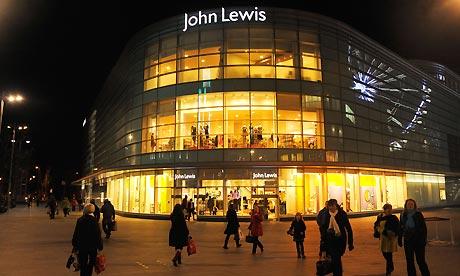
John Lewis Partnership has denied speculation that Amazon approached the group last year in a bid to takeover Waitrose.
According to reports over the weekend, a senior Amazon (NASDAQ: AMZN) executive had made contact with John Lewis (LON: JLH) over a potential deal but talks had been blocked by the board.
Since Amazon’s online delivery service, Amazon Fresh, was launched in the UK two years ago analysts have suggested the internet giant could be interested in buying up a UK supermarket chain.
John Lewis Partnership chairman, Sir Charlie Mayfield, denied any approach from Amazon. “These times are ripe for speculation but there has been no approach to the Partnership by Amazon regarding Waitrose and nor would I expect there to be,” he said.
Amazon said that it did not comment on speculation.
Amazon has been rumoured to make a grocery acquisition in the UK after its $13.7 billion (£10.12 billion) purchase of Whole Foods Markets in the US.
John Lewis has vehemently denied the approach from Amazon. Because the group is owned by its employees, a potential sale would have been very controversial.
Amazon’s growing strength as a retailer has been considered a threat to the market. The proposed £15 billion merger between Sainsbury’s (LON: SBRY) and Walmart-owned Asda (NYSE: WMT) is understood to be an attempt to create and new grocery superpower and fight off Amazon’s growing strength.
According to Terry Hunter, the managing director of digital commerce group Astound, the proposed Sainsbury-Asda merger “shows that the two chains feel they will be stronger together as they reposition themselves to combat the growing threat from the low-cost German supermarkets and Amazon.”
Nestle pays $7.2bn to sell Starbucks products
Nestle (VTX: NESN) will pay Starbucks $7.2 billion (£5.2 billion) in cash to sell the company’s coffee around the world.
The Swiss-based food giant will own the rights to market Starbucks coffee (NASDAQ: SBUX) in a “significant step” for the group.
“This global coffee alliance will bring the Starbucks experience to the homes of millions more around the world through the reach and reputation of Nestle,” said Kevin Johnson, Starbucks chief executive.
Mark Schneider, Nestle’s chief executive, announced the group’s third biggest acquisition with plans to boost the company’s profits through expansion.
Schneider described the deal as “a great day for coffee lovers around the world”.
The Nescafe and Nespresso owner said that 500 Starbucks employees will transfer over to Nestle business but will remain located in Seattle.
Matthew Barry, an analyst at Euromonitor, said the deal was important for Nestle who is attempting to reinforce its position as the world’s biggest coffee company.
“Nestle is far and away the largest hot drinks company globally, with more in sales than the next five largest hot drinks companies combined.”
“However, Nestle’s leadership position is less secure than it once was,” he said.
Despite the deal between the coffee giants, a Nestle source revealed that the Nestle name will not appear on Starbucks products in order to avoid consumers “to perceive that Starbucks is now part of a bigger family.”
Nestle expects the deal to contribute positively to its earnings per share and growth targets in 2019.
Previous deals with Nestle include the 68 percent stake it purchased in Blue Bottle Coffee for $425 million last year. The group also sold its US sweets and chocolate business to Ferrero Group for 2.7 billion Swiss francs (£1.9 billion).
Nestle shares rose 0.5 percent in early trading.
GBP/USD fails to gain traction despite weak US jobs release
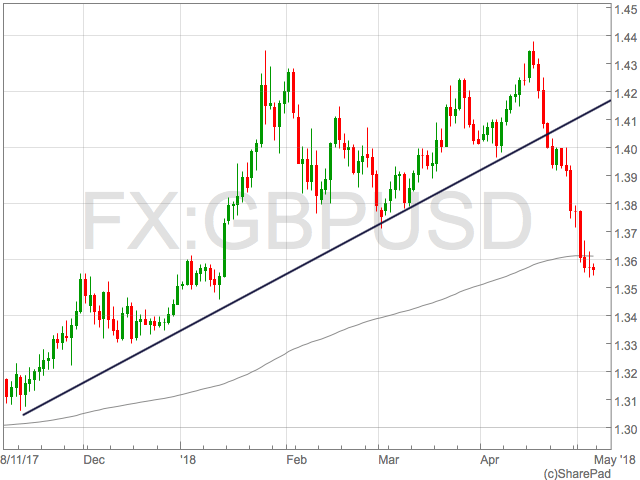
The cable rate failed to rebound on Friday despite a week of sharp gains and a miss in the headline Non-Farm payroll release.
The US added 164,000 jobs in April missing estimates of 192,000. while the unemployment rate fell to 3.9%, the lowest for 18 years.
The miss in the key jobs figures caused weakness in dollar with USD/JPY sinking sharply but the dollar weakness provided to reprise for GBP/USD which languished beneath the 1.3600.
 GBP/USD broke a solid 6 month uptrend in mid April and has since dropped nearly 1,000 points as the UK economic outlook deteriorates and reduces the chance of a rate hike at the Bank of Englands next meeting.
In early 2018 markets had priced in the rate hike for May but have since violently unwound this trade causing the cable rate to retreat from the highest levels since the vote to leave the EU.
GBP/USD broke a solid 6 month uptrend in mid April and has since dropped nearly 1,000 points as the UK economic outlook deteriorates and reduces the chance of a rate hike at the Bank of Englands next meeting.
In early 2018 markets had priced in the rate hike for May but have since violently unwound this trade causing the cable rate to retreat from the highest levels since the vote to leave the EU.
GBP/USD broke a solid 6 month uptrend in mid April and has since dropped nearly 1,000 points as the UK economic outlook deteriorates and reduces the chance of a rate hike at the Bank of Englands next meeting.
In early 2018 markets had priced in the rate hike for May but have since violently unwound this trade causing the cable rate to retreat from the highest levels since the vote to leave the EU.
FTSE 100 outperforms
The weakness in the sterling has reignited the strong negative correlation between sterling and the FTSE 100 with London’s leading index outperforming its European and US counterparts throughout the week.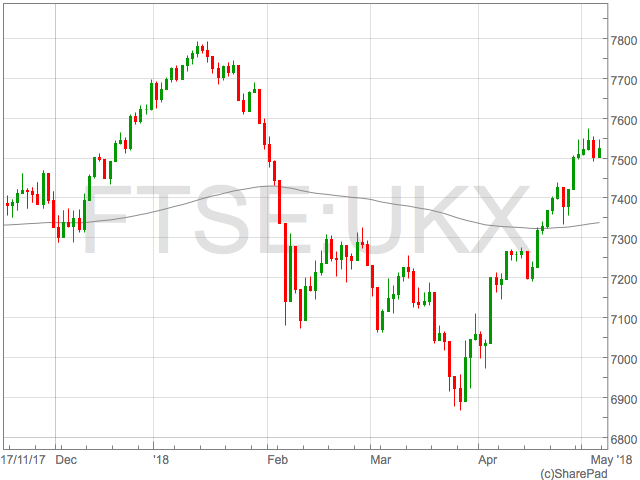
BT to announce 6,000 job cuts
BT (LON: BT.A) is set to announce plans to 6,000 jobs worldwide in a new £500 million cost cuttings drive.
The telecoms giant is expected to reveal the news next Thursday alongside their annual financial results.
First revealed by the Financial Times, the company is attempting to rebuild confidence among investors following the Italian accounting scandal.
Chief executive Gavin Patterson will announce the group’s plans to cut around six percent of the company’s 98,000 global workforce. The additional cuts will result in 10,000 jobs cut in the last year.
If the plans take place, it will be the largest round of redundancies in almost a decade.
The group announced plans to cut 4,000 roles last May in order to save £300 million over the next two years.
The jobs affected are likely to be managerial and back-office personnel.
The most recent cost-cutting drive is in order to make up for the Italian accounting scandal, which cost the group £530 million to resolve.
Last month, boss Graham Sutherland stepped down allowing wholesale head Gerry McQuade to take control.
“I’d like to thank Graham [Sutherland] for all he has done for BT over the past 12 years. During his time as CEO of the businesses in Ireland and MD of BT Business, he materially improved the profitability and performance of those divisions,” said Patterson.
“Most recently as CEO of BT business and public sector he has successfully led the integration of EE business into BT and the turnaround of our public sector division. I wish him all the very best for the future.”