
What is David Cameron up to now?

More than a year after David Cameron stepped down from his post in the wake of a crushing referendum defeat, little has been seen or heard of the ex-Prime Minister. So how does the man who was once tasked with running the country fill his days?
What is the new MiFID II legislation and does it affect me?

With impending changes to the finance sector looming, it’s important for both businesses and investors to get to grips with the latest Markets in Financial Instruments Directive, or MiFID II.
The EU legislation is the second part of original legislation introduced in 2007, designed to regulates firms who provide services to clients linked to ‘financial instruments’. This includes shares, bonds, units in collective investment schemes and derivative, as well as the venues where those instruments are traded.
The changes are currently set to take effect from 3 January 2018, with the end goal of increasing transparency in the sector, lowering the costs of market data and improving efficiency in trading behaviour. As a wide-ranging piece of legislation, MiFID II has the potential to affect a large proportion of firms in the sector.
What does the legislation do?
The legislation hopes to make the industry more transparent, approachable and increase trust in the sector. The price of financial advice often puts off potential investors, especially millennials; most advisory services charge a standard 3 percent, but there can be hidden ongoing charges of 0.5 to 1 per cent on top. MiFID II will mean firms will have to be clearer about their charge, and provide investors with a complete breakdown of their costs and charges as well as costs associated with managing your investments. They will also need to be more careful about the financial advice they give out, assessing the suitability of their advice and reassessing whether it is still suitable at least once a year. They also need to be more open about how independent they are, and whether they have any conflicts of interest. The recording of both mobile and landline calls will become obligatory, with the information needing to be kept secure for five year period in a secure and professional manner.How does it affect investors?
As part of the legislation, investment managers are required to keep up-to-date information on their clients. In the next few months before the legislation comes into force, your investment management team will ask your for updated personal details – if you don’t reply to their request, you will be prevented from trading as of January 3rd.Foxtons shares up 5pc despite weak revenue figures

Shares in estate agency Foxtons (LON:FOXT) rose over 5 percent on Wednesday, despite a fall in total revenue.
Revenue came in at £35.1 million during the three months to September 30th, down from £37.5 million the previous year. Total revenue for the year to date fell in 2017 to £93.7 million. Sales revenue fell to £10.3 million over the quarter, with revenues in their mortgage business, Alexander Hall, in line with the prior year at £2.3 million.
Nic Budden, CEO, commented in the results:
“This was a resilient third quarter performance when set against the challenging conditions in the London property market. We have maintained our relentless focus on delivering a leading proposition for our customers and in our lettings business we are pleased with the reaction to our recent growth initiatives.”
Foxtons have seen a string of a disappointing results over the last couple of quarters, continually battling falling profits and revenues as the property market in London continues to underperform.
Shares rose on the results however, with investors taking heart from a rise in the number of lettings.
OECD: Maintain close ties with E.U. or face costs

OECD today announced in their economic survey for the United Kingdom that the UK need to maintain close ties with the EU or risk damaging the economy significantly.
The report stated that “negotiating the closest possible EU-UK economic relationship would limit the cost of exit”.
Among the costs the report has listed is the negative impact to business investment that uncertainty surrounding Brexit will cause. This may also compound the “productivity challenge” the UK is currently facing, according to the OECD.
These findings are increasingly prevalent as the government continues to plan for a “no deal” scenario as the UK leaves the EU.
Today in the House of Commons, Richard Drax, Conservative MP, suggested that leaving the EU without a deal must be an option considered in order to honour the referendum result last year. David Davis, who is in charge of negotiations with the EU, said this was “entirely logical”.
This comes less than a week after it was revealed that the government will spend £250 million on preparation for the possibility of no deal.
The OECD report addresses the more specific scenario of a “disorderly Brexit”. It is reported that, were this to occur, it would push “the exchange rate to new lows”, “business investment would seize up, and heightened price pressures would choke off private consumption”.
Philip Hammond, Chancellor of the Exchequer, also stated in the forward of a recent white paper that the UK will have three strategic objectives concerning their future relationship with the EU: “ensuring UK-EU trade is as frictionless as possible; avoiding a ‘hard border’ between Ireland and Northern Ireland; and establishing an independent international trade policy”.
The risk of a “no deal” scenario may be that the UK will be unable to achieve any of these objectives.
The OECD however state “the outcome of Brexit negotiations is difficult to foresee”. They continue, suggesting leaving the EU may have the potential to “boost trade, investment and growth substantially”. This is mentioned with the caveat of the need for a transition period.
David Davis today suggested in that this transition period may not apply if a final deal is yet to be agreed.
Three hot emerging markets for 2017

For investors prepared to take a little risk in return for higher returns, emerging markets present an enticing opportunity. ‘Emerging markets’ describes economies growing at a fast pace and working to make their economic progress more sustainable.
Emerging markets are generally less efficient and have less strict standards in accounting and securities regulation than advanced economies, which include the United States, Europe and Japan). However, there is the necessary physical financial infrastructure, for expansion, including banks and a stock exchange.
Due to the volatile environments of emerging economies, investor returns can be hit or miss. These are our ones to watch…
Chile
Chile has been one of the fastest-growing economies ni Latin America over the past decade, with its economy growing at an average annual rate of above 5 percent since 1990. Chile’s fortunes have been affected this year by uncertainty from an upcoming election, but the country has continued to see a positive GDP figure of 2.75 percent in 2017. Its economy has been boosted by a rise in copper price, as well as the stabilisation of oil prices. The OECD expects to see growth of 2.8 percent in 2018, with a pickup underpinned by “improving external demand and, reflecting more accommodative financial conditions, investment.” The country has recently approved new emerging market strategies, with Chile’s risk regulator expanding the number of emerging market funds available to the country’s AFPs with the addition of funds from asset managers Investec and Morgan Stanley.Peru
Peru is the “rising star” of the South American countries, according to the IMF, boasting land rich in natural resources such as copper, silver, gold, timber and natural gas. Its GDP growth stood at 3.9 percent in 2016, with the Peruvian central bank raising its 2018 growth outlook to 4.2 percent in 2018. The current government headed by President Pedro Pablo Kuczynski, who was elected in July 2016, is in the midst of a plan to transform the country by prioritizing investment in technology and infrastructure projects, and marketing the country as a hub for international trade in the region. However, Julio Velarde, Governor of the Central Reserve Bank of Peru, sees three main economic challenges facing the country: “First, the last Government had a higher deficit than the new Government was expecting, which has meant reductions in public expenditure. Second, Peru – like many countries in Latin America – has been affected by the corruption scandals related to Brazilian companies such as Odebrecht. Third, earlier this year, we had the worst flooding in the north of the country since 1925.”India
There has been significant investor optimism in India since the election of Narenda Modi, who swore to push India to the forefront of international investment.
India is ripe for growth, as one of the world’s largest democracies boasting a young, entrepreneurial population with a high interest in education.
The two largest India exchange traded funds trading in the US are each up more than 25 percent year-to-date, outpacing the MSCI Emerging Markets Index which tracks the progress of emerging markets globally.
“The Indian economy is growing much faster than many other emerging markets and it’s quite natural that money is chasing Indian equities,” said Vinay Menon, head, equity capital markets, JP Morgan India.
Price of Bitcoin hits all-time high

The world’s best known cryptocurrency Bitcoin smashed its previous record on Thursday, soaring above $5,000 for the first time.
Bitcoin traded at $5,186 in morning trade, over five times its price of $966 at the start of the year. The price of Bitcoin is known for being volatile, sinking to below $3000 in September after the Chinese authorities cracked down on cryptocurrency exchanges.
“Speculators are bullish on bitcoin’s value with the anticipation of China’s reintegration with global crypto markets,” Aurelien Menant, CEO of cryptocurrency exchange Gatecoin, told CNBC by email.
Bitcoin allows quasi-anonymous trade across borders by bypassing banks and traditional currencies. There have, however, been concerns about its use for money laundering and crime, leading JP Morgan CEO Jamie Dimon to publicly condemn the currency as a “fraud”.
Federal Reserve concerned as inflation remains slow
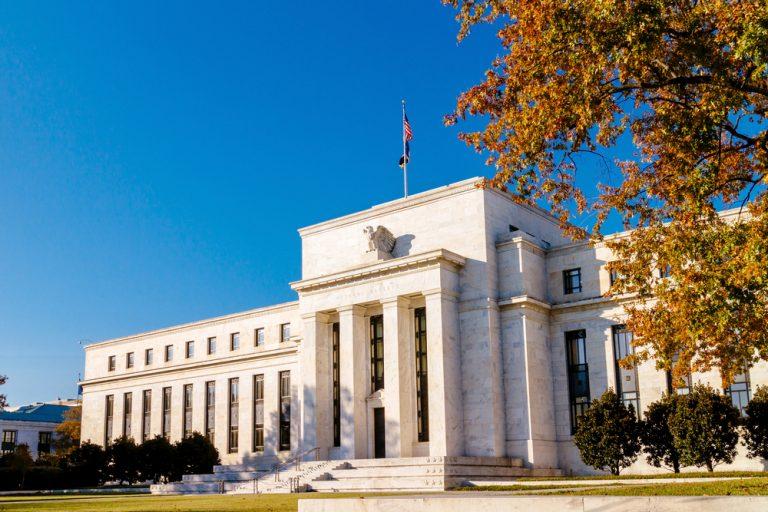
The US Federal Reserve is growing increasingly concerned about the low rate of inflation, warning that lagging rates may be due to longer term factors rather than short term as initially thought.
The Fed urged patience on Wednesday, with several members saying the decision to raise rates further would depend on incoming economic data. They confirmed that “all agreed that they would closely monitor and assess incoming data before making any further adjustment to the federal funds rate”.
Inflation remains some way off the Fed’s 2 percent target rate, with the Fed’s preferred gauge showing a gain of only about 1.4 percent. However, members remained confident that the target would be hit in the near future.
“Many participants continued to believe that the cyclical pressures associated with a tightening labor market or an economy operating above its potential were likely to show through to higher inflation over the medium term,” the minutes said.
“In addition, many judged that at least part of the softening in inflation this year was the result of idiosyncratic or one-time factors, and, thus, their effects were likely to fade over time.”
The Fed also drew attention to other factors affecting the US’s economic growth, including the recent hurricanes hitting the country. These may well affect growth in the short term, but they are not expected to have a significant long-term effect.
Renold share price drops 10pc as profit expecatation falls

Shares in engineering solution company Renold (LON:RNO) dropped 10 percent on Thursday, after the group confirmed that adjusted operating profit for the full year would be towards the lower end of expectations.
The company, who are a leading international supplier of industrial chains and related power transmission products, issued a trading update for the six months to 30th September 2017. Whilst it Torque Transmission division performed in-line with expectations, profitability in its Chain division was affected by machine break-downs at their Einbeck facility and sustained increases in raw material costs.
Renold’s Board confirmed that, due to this unexpected slowdown, it expects adjusted operating profit for the year to 31 March 2018 to be “slightly below the lower end of the current range of analyst forecasts.”
It added that it expects performance in the chain division to improve in the second half, with the machine issues resolved and price increases feeding into revenue.
Group revenue in the period grew by 8.0 percent and, and by 2.7 percent on an underlying basis. Order intake in the period grew by 9.9 percent on an underlying basis.
Shares in Renold are currently trading down 10.45 percent at 46.12 (1039GMT).
Telford Homes shares fall despite benefiting from London housing “crisis”

Telford Homes (LON:TEF) shares sunk on Wednesday, after it warned that pre-tax profits for the six months to September 30 are likely to be lower than last year.
Whilst pre-tax profits stumbled over the last six months, the housebuilder attributed the fall to “development timings which are all on track”. The company confirmed that for the full-year it remained on track, with analysts expecting full-year profits of more than £40 million.
Telford said it had seen “limited” impact from the market uncertainty which has hit the sector in the wake of the European referendum, adding that it has benefited strongly from the “chronic” housing shortage in London.
“There remains an ongoing and acute need for more homes to be built across London which is recognised by all political parties and the Mayor. This is particularly true for non-prime locations where homes can be developed at more affordable prices and rents. The imbalance between this need and the supply of new homes continues to underpin the Board’s long term belief in growing Telford Homes and increasing the Group’s development capacity”, the company said in a statement.
Jon Di-Stefano, Chief Executive of Telford Homes, continued:
“I expect more build to rent transactions as institutional demand continues to grow alongside continuing open market sales at our well located developments. Our ultimate belief in what we do is underpinned by a chronic lack of supply and we expect to deliver more of the homes that London needs in the coming years.”
Shares in Telford Homes are currently trading down 2.08 percent at 399.75 (1319GMT).
Catalonia chaos “wake-up call” for investors, despite Spanish markets strong performance

The chaos in Catalonia is a wake-up call for global investors, warns the boss of one of the world’s largest independent financial services organisations.
The warning from Nigel Green, founder and CEO of deVere Group, follows the president of the Catalan government, Carles Puigdemont’s, highly anticipated speech in which he said Catalans had “won their right to become an independent country” from Spain following the disputed referendum on 1 October. The Premier added that he will first seek to open a dialogue with Madrid.
Up until now the chaos in Catalonia had been largely dismissed by global investors as a regional issue, however Green said on Wednesday: “The aftermath of geopolitical events of this magnitude have the potential to influence capital markets which, of course, drive investor returns.
“In the short term there will be ongoing and increasing uncertainty which is likely to create turbulence in the domestic and regional financial markets. In the longer term, if Catalonia splits, Spain’s economy – Europe’s fourth largest – could lose 20 per cent of its revenue. Plus the process could adversely affect investment into both Spain and Catalonia.”
Spanish stock markets rose on Wednesday despite the tensions in the Northern region, outperforming the rest of the European markets after Catalonia’s leader failed to declare formal independence from Spain.