ARM Holdings up 44% in takeover deal
ARM Holdings plc (LON:ARM) has soared 43% after the company announced it was subject to a takeover deal with SoftBank Group Corp in a deal worth up to $32 billion.
The 1700p offer represents a premium of 43% of ARM’s closing price of 1189p per share on Friday 15 July, as investors in the company are also entitled to receive an interim dividend of 3.78p per share to be paid on 10 October.
The 1700p offer also represents a 69.3% premium of the volume weighted average closing price of 1004p per ARM share over the past three months.
The deal to buy the UK based chip-designer is a significant move that see’s the Japanese tech giant advance its position into the mobile industry. ARM had become attractive buy for oversea investors as the weakening of the pound has made such a takeover more feasible.
ARM has the highest market value for a technology company in London due to wide use of its chip technology by both Apple and Samsung.
SoftBank have stated that the transition will see the number of employees in ARM in the UK double and the business will continue to be based in Cambridge under individual management.
Chairman and CEO of SoftBank, Masayoshi Son said:
“We have long admired ARM as a world renowned and highly respected Technology Company that is by some distance the market-leader in its field. ARM will be an excellent strategic fit within the SoftBank group as we invest to capture the very significant opportunities provided by the “Internet of Things”
“This investment also marks our strong commitment to the UK and the competitive advantage provided by the deep pool of science and technology talent in Cambridge. As an integral part of the transaction, we intend to at least double the number of employees employed by ARM in the UK over the next five years.
18/07/2016
Travel stocks fall after Nice Terror attack
Shares in the European markets fell this morning with travel stocks taking a hit following the tragic terror attack in Nice last night.
FTSE 100 Companies such as IAG, the owner of British Airways, easyJet and Flybe all fell up to 3% as soon as trading started this morning.
Other companies such as Thomas Cook fell by 2.1% alongside Air France KLM who have seen their shares fall by 1.6%. Popular hotel company Accor which holds many accommodation sites in the capital has seen its shares fall almost 3% as well as Belmond LTD who opened up down 2.5%.
The fall comes as up to 84 people have been killed and over 100 people injured as a terrorist drove a truck through crowds of people celebrating Bastille Day at a fireworks display along the famous promenade.
15/07/2015
RICS survey on housing market conveys long-term uncertainty
The RICS UK Residential Market Survey for June, published only hours before the Bank of England decision to hold off on new stimulating measures became public, was pessimistic about the UK’s housing market in the short term and conveyed long term post-Brexit uncertainty.
Commenting on the impact of Brexit, RICS Chief Economist Simon Rubinsohn said: “The RICS UK Residential Market Survey for June 2016 indicates uncertainty fuelled by the EU referendum has resulted in a marked drop in activity in the housing market.”
Both buyer inquiries and supply of property on the market have continued to fall over the past month, continuing the down trend which has been observed over the past three months. The most worrying development in recent activity is th sharp drop in buyer inquiries to the lowest since the financial crisis. Similarly, the 45% increase in surveyors reporting reductions in new instructions than the month before, represents the steepest fall ever recorded by RICS and therefore clearly extends former trends.
Recorded sales have also dropped continuously over the past 3 months and this trend is expected to continue over the coming months. While housing prices are still growing in most UK regions, price growth has slowed considerably. In London house prices continue to decrease on average. Most decreases are seen in Central London and prices are expected to be lowered further in the next months.
The report gives an outlook over the next 12 months still characterised by further drops in growth rates and even prices, while rents are expected to remain constituent. This can be attributed to post-Brexit uncertainty and market jitters, but also to the recent tax changes which affected London and Southern England the most.
Bank of England interest rates remain unchanged
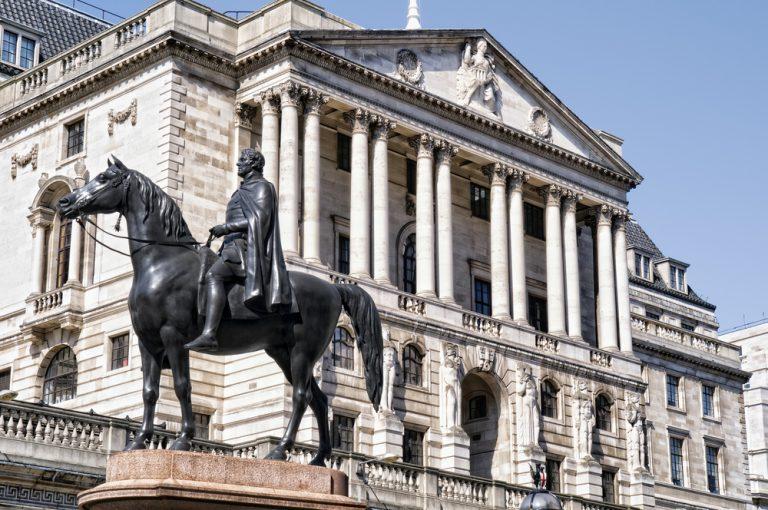
In the Bank of England statement this noon, Mark Carney announced that the interest rates will remain unchanged.
This contrasts earlier speculations he may lower rates to 0.25% in the first reduction in over seven years.
The vote to leave interest rates at 0.5% came with an 8 to 1 decision by the MPC. While the committee did agree that the country’s economic performance and outlook post Brexit is likely to warrant a stimulus in the future, only Gertjan Vlieghe, a former hedge fund economist, thought an immediate stimulus was necessary. The rest of the committee agreed with Governor Mark Carney to leave interest rates unchanged until more data is collected and revise the decision next month.
The decision not to lower interest rates comes as a surprise and disappointment to many in the financial markets. It was considered that possible post-Brexit recessionary pressures will have to be addressed with stimulating monetary measures.
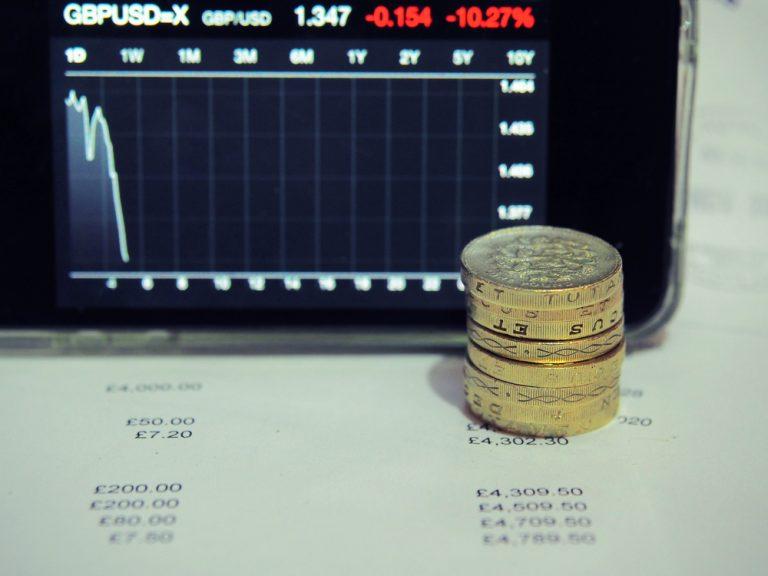
In the immediate aftermath of the decision, the pound jumped 200 points. The FTSE100 fell by over 70 points.
Further, the MPC unanimously voted to leave its’ quantitative easing program of £375bn. unchanged. The decision further reflects the current view to wait on more data and hold off on the implementation of new stimulating measures until at least next month.
The decisions on how to proceed next month will also be largely influenced by the next inflation report. The next report will become public at noon on the 4th August.
For a more detailed report on the meeting view the Bank of England’s Monetary Policy Summary and minutes of the Monetary Policy Committee meeting.
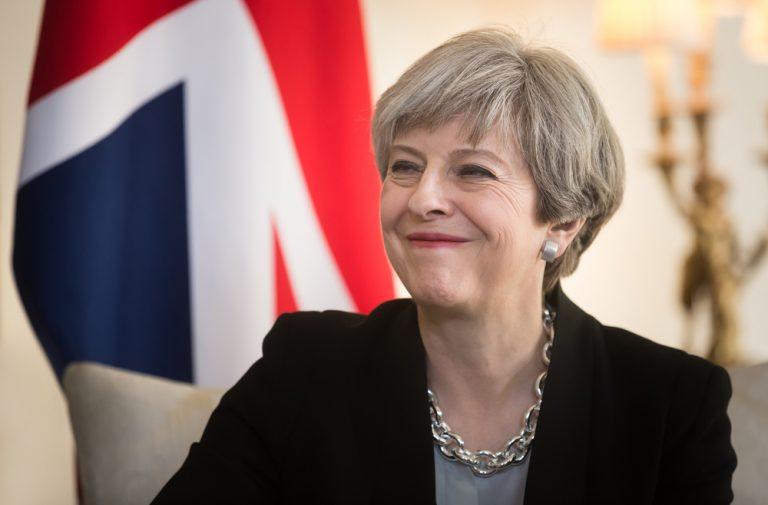
Theresa May’s new cabinet
Today’s updates
Over the course of this afternoon new appointments have become public, revealing a great number of changes throughout the cabinet while only a small amount of ministers stay in their current positions. Ministers staying in current positions Jeremy Hunt is one of the small amount of ministers who will stay on in their former positions. He is joined by Alun Cairns who will keep his role as Welsh Secretary, while David Mundell continues to be the Scottish Secretary. Lasty, the role of Gerneral Attorney will continue to be held by Jeremy Wright. Ministers taking on new roles Justine Greening will take over from Nicky Morgan as Secretary of State for Education and Minister for Women and Equalities. Liz Truss is leaving her role as Environment, Food & Rural Affairs Secretary to take over from Michael Gove as Lord Chancellor & Justice Secretary. The position as Chief Whip, formerly held by Mark Harper, was given to Gavin Williamson. Oliver Letwin is being replaced in his post as Chancellor of the Duchy of Lancaster by former Transport Secretary Patrick McLoughlin. Baroness Evans has been appointed as Leader of the House of Lords. The role of Transport Secretary has been given to Chris Grayling. Damian Green has been appointed the new Work and Pensions Secretary. Andrea Leadsom will take on the role as Environment, Food & Rural Affairs Secretary. The new Cultural Secretary is Karen Bradley. The position as International Development Secretary was filled with former employment minister Priti Patel. Greg Clark is the new Business and Energy Secretary. James Brokenshire has been appointed as Northern Ireland Secretary. Sajid Javid, former Business and Energy Secretary has been appointed Communities and Local Government Secretary. David Lidington has been promoted to the leader of the House of Commons, taking over from Chris Grayling. David Gauke is taking over from Greg Hands as Chief Secretary to the Treasury.So far, the public still awaits confirmed appointments on other cabinet roles, a full list given below.
Employment minister (Open due to promotion of Priti Patel) Small Business Minister (Currently held by Anna Soubry) Cabinet Office Minister and Paymaster General (Currently held by Matt Hancock) Minister without Portfolio (Currently held by Robert Halfon)Barrat Developments shares drop despite 20% rise in profits
Barratt Developments (LON:BDEV) today dropped 17p to 396.3p in early morning trading despite the group announcing a 20% rise in profits. The fall came as the developer warned it was too early to draw conclusions regarding market conditions after Brexit.
Barratt announced that profit before tax increased 20% from £565.5m to £680m as well as completion rates rising 5.3% to 17,319. The increase in profit was a result selling prices increasing by 10.6% from £235,000 to £260,000.
Wholly owned forward sales climbed 18.7% from £1.60bn with forward group sales including joint ventures rising 0.5% to £1.76bn.
The group’s year end net cash stood at £590m up from £186.5m in 2015.
Despite the group declaring that it is in a ‘good position’, the company’s share price plunged alongside the likes of Taylor Wimpy and Persimmon in the immediate aftermath of the EU referendum vote as the housing sector was rocked with the uncertainty of a UK recession.
David Thomas, Chief Executive said:
“We have delivered another strong performance for the year. The disciplined growth in completion volumes reflects the strength of our sector leading build and sales teams.
Following the EU referendum, it is too early to say what the impact of the uncertainty facing the UK economy will be. The sector continues to receive focused government support, mortgage availability is good and there remains an undersupply of new homes. With a strong balance sheet and forward order book, and industry leading quality and customer service, we remain confident in the positive fundamentals of both the housing sector and our business.”
The group further stated that they are mindful of the greater uncertainty the UK economy now faces and that contingency plans are now in place to take the appropriate action if needed and they will continue to monitor the market closely.
The company is due to release it’s annual results on Wednesday 7 September 2016
At 2:40pm London time Barratt Developments traded at 402.20p, down 2.2%.
13/07/2016
Poundland agrees to £597m takeover
Discount store Poundland (LON:PLND) has agreed to a financial takeover from Steinhoff International in a £597m deal.
Having already taken over Bensons for Beds and Harvey’s in the UK, the agreement comes as the South African company takes advantage of the weaker pound in buying the company which will increase its reach in Europe through Poundland’s 900 stores.
Markus Jooste, CEO of Steinhoff, said:
“Steinhoff is developing a fast-growing, price-led retail business across the UK and the rest of Europe. Poundland would be a complementary fit to this growth story”
The deal will see Steinhoff pay 222p per share.
The price represents a premium of 40.3% of the closing price of 158.25p on 13 June 2016.
Poundland believes that this offer will increase its shareholders value as trading environments since the EU Referendum have become difficult, adding to prior economic uncertainty.
The discount retailer has struggled after the £55m purchase of 99p stores with full year profits plunging and its share price falling from 418p to below 200p.
In Reaction to the agreement, shares in Poundland increased back above the 200 mark by 12% to 219.75p
Darren Shapland, Chairman of Poundland, said:
“The Poundland Board believes that SEAG’s all-cash offer presents Poundland shareholders with an opportunity to realise their shareholding at a certain and attractive price, securing earlier delivery of the Poundland Group’s medium term value than could be expected from the ongoing turnaround process against a background of increasing economic uncertainty in the UK and a more challenging trading environment
13/07/2016
Burberry sales down 3% in Q1, shares rally
Burberry (LSE:BRBY) have announced a decline in like-for-like sales warning of further declines in wholesale revenue in the six months ending 30 September.
In what has been a challenging year for the iconic British fashion institution, Burberry’s recent announcement of a reshuffle in the boardroom came too late to prevent a slide in performance; like-for-like sales dropped 3% with underlying retail revenue remaining unchanged at £423m.
Changes at the top mean Marco Gobbetti will replace current chief executive Christopher Bailey, Bailey will become ‘President’ and chief creative officer.
Christopher Bailey, who will remain as chief executive until Marco Gobbetti’s appointment next year attributed the dip in performance to challenging ‘external environments’ as the company has faced continuous declines in sales over the past 12 months across its main consumer regions in the Asia Pacific.
Areas such as Hong Kong have seen double digit declines as consumer spending has fallen driven by reduction in tourism from regions such as Japan and Beijing that are home to one of its largest markets.
Burberry said it expects wholesale revenue in the next six months ending September 30 to be down 10% compared to last year.
As a result of the recent Brexit vote, the company said that if exchange rates remain at current levels, adjusted profits would benefit by £90m as the pound has recently fallen against the dollar and yuan slipping to a 31 year low.
Soon to be Chief Creative and current Chief Executive Christopher Bailey said:
“We continue to focus on managing our business with agility whilst implementing the ambitious evolution of our strategies and ways of working we outlined in May, to position Burberry for long-term growth. These plans are now well underway and on track to deliver our financial goals
This progress, together with our recent management appointments, gives us real confidence for the future”
At 11:59am BST Burberry Group PLC traded at 1,284.00 +81.00 (6.73%)
13/07/2016
Barclaycard report shows post Brexit spending rise
In the midst of economic uncertainty and the threat of a recession in the wake of the EU Referendum, shoppers initially brushed off any concerns of lower incomes and continued to spend according to a report from Barclaycard.
Data collected by Barclaycard acquired by monitoring the spending patterns through credit and debit cards, showed in the aftermath of Britain’s decision to leave the EU, consumer spending had grown by 2.14%.
The data shows that there was a significant difference between spending in the weeks before and after the vote as spending on sectors such as entertainment increased by 10%, while pubs recorded a rise of 12.1% on top of a growth of 12.7% in June as the start of the 2016 EURO’S came into full swing.
However, the fear of economic uncertainty was evident in traditional peaks in spending at the end of the month due to payday packets, as spending in pubs and restaurants declined by 0.44% and 0.46%.
The report proposes that consumers were taking a ‘cautious mind-set around discretionary spending’ in the wake of Britain’s decision to leave the EU.
Despite these figures showing that the fear of economic uncertainly was starting to settle in the minds of consumers, two separate surveys conducted by Barclaycard suggest otherwise.
Surveys taken in June immediately after the result and in early July show that consumer confidence in household finances is increasing. In June, out of 1,700 consumers, 39% believed their finances will not be impacted by Brexit while Results from July’s survey show that this figure increased to 52%.
The results in the report show that despite concerns of an economic crisis, consumers within Barclaycard remain confident in Britain’s ability to sustain a growing economy
12/07/2016
ASOS reports 30% rise in revenue following Brexit
ASOS PLC (LSE:ASC) have reported in their latest trading statement that total revenue for the four months ended 30 June 2016 has risen by 30% to £514.6m compared to £396.7m the year prior.
In addition, the fashion group reported a total sales growth of 30% up from £386m to £500.5m. This was helped by a rise in UK sales that increased by 28% from £158.4m to £203.1m as International sales in total increased by 59% from 2015.
Success can also be observed in international sales which included a 53% rise in US sales and the successful launch of the European website in 2015 that has since grown by 32% generating £139.5m. The group revealed a 24% rise in active customers rounding up to 12 million.
Nick Beighton, CEO, said that the company now expects sales growth to reach the upper end of the 20-25% range.
Nick Beighton said:
“I am pleased to report strong retail sales growth of 30% (+26% on constant currency basis) over the four months to 30 June 2016, underpinned by our continued price and proposition investments. UK growth remains strong at +28% and we have seen further acceleration across the US, EU and ROW segments; overall International retail sales increased by 31% (25% on constant currency basis).”
“As anticipated, our retail gross margin for the period is down c.180bps, approximately 40% of which (c.70bps) is due to moving our main sale forward one week into this financial period, with the balance as a result of continued price investment”
Companies like ASOS who are heavily reliant on international sales were put at risk following the Brexit vote. However, the company has defied Brexit fears by earning 60% of its sales overseas.
Since the February lows, ASOS has rallied over 70% to currently trade at 4478p
12/07/2016