
Coats Group shares fall over 5 percent on “challenging market”

UK thread manufacturer Coats Group (LON:COA) saw an increase in both revenue and profit over the course of 2016, despite “challenging” market conditions.
Revenue rose 2 percent on a CER basis to $1,457 million, with reported revenue falling 1 percent.
Adjusted earnings per share for 2016 were up 23 percent to 4.91c, with the Group’s board recommending a final dividend of 0.84 us cents per share payable in May 2017.
Operating profit grew 16 percent to $158 million, with free cash flow up 10 percent to $78 million.
Rajiv Sharma, Group Chief Executive, said market conditions were “challenging” but that Coats delivered a “strong performance”.
“We delivered productivity and procurement gains, and tightly managed our overheads which had a positive operational gearing effect in the Industrial Division.
We also completed the acquisitions of Gotex and Fast React during the year, both of which have leading positions in their markets and which are already delivering strong growth ahead of management expectations under Coats’ ownership.
“We enter 2017 on a solid footing however remain cautious about market conditions. We expect to continue to deliver growth in line with management’s expectations through our initiatives to deliver market share gains, productivity improvements and tight cost control.”
After the results financial analyst Peel Hunt raised its price target on Coats Group to £0.70 per share. Peel Hunt currently have 2 buy ratings on the stock.
Share in Coat Group fell 5.58 percent on the news, currently trading at 55.00 (1036GMT).
British Airways owner delivers strong results, despite currency hit
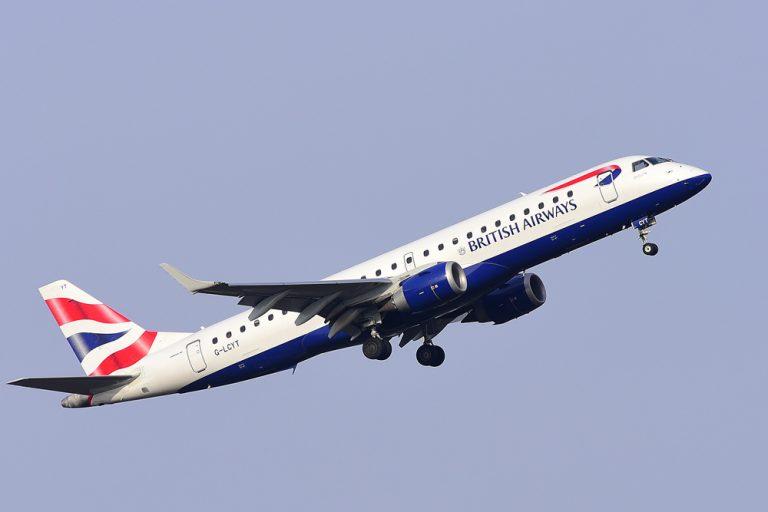
British Airways owner IAG (LON:IAG) said performance had been hit by negative currency movements on Friday, but still saw pre-tax profits rise by nearly 33 percent.
The company confirmed profits were hit by the weak pound in the wake of Brexit to the tune of 460 million euros, but that pre-tax profits still rose 32.7 percent to 2.4 billion.
Shares rose nearly 2 percent after the release of the figures, as investors were cheered by the signs of improving profitability.
Revenue fell 1.3 percent, with revenue per passenger taking a 5.4 percent hit. However, the key operating profit figure rose 7.2 percent to 2.48 billion euros, despite cautious forward-looking statements made after the referendum in June.
The airline group also announced that it intended to carry out a share buyback of 500 million euros during the course of 2017.
Chief Executive Officer Willie Walsh called the outcome “a good performance in a challenging environment.”
Shares in International Consolidated Airlines are currently trading up 2.08 percent at 514.75 (0935GMT).
Peugeot owner sees profits double, sparking further talks with General Motors
Carmaker PSA Group saw profits almost double in the last year, showing strong trading ahead of a possible deal to purchase General Motors’ European business.
Net income at PSA Group rose 92 percent over the last year to 1.73 billion euros, with recurring operating income rising to 3.24 billion euros. This includes a loss of 280 million euros from currency swings in the wake of Brexit.The company also announced plans for a 48 euro cents dividend per share.
The strong results will increase the intensity of discussions between PSA, who own Peugeot and Citroen, and General Motors. The chairman of PSA Group has spoken of his desire to create “European car champion” through a purchase of General Motors’ European car business, who own Opel and Vauxhall.
PSA’s chairman Carlos Tavares said the deal would be “nice to have” but that it “wasn’t a must”, before adding:
“We believe there is an opportunity to create a European car champion, resulting from the combination of a French company and German company and without forgetting our U.K. friends.
“Opel has making red ink for 10 years, and burning approximately 1 billion in cash every year. We believe we can help.”
Detroit-based General Motors have been struggling with a lack of demand for several years, last making a profit in Europe in 1990.
However, the potential deal has been met with criticism by several European counties, who are worried about a loss of jobs as a result of the potential merger.
Opel employee representatives and union leaders in Germany are pushing for a safeguarding of their jobs, and Britain’s biggest trade union has demanded that the government protect Vauxhall as Britain prepares to leave the EU.
Trading tips: the mind behind the markets

As Benjamin Franklin once said, “investment into knowledge pays the best interest.” When it comes to taking the very first steps into the journey of becoming a commodities or currency trader, this sentence has never held more importance.
As with every human decision, psychology is the driving force, and often determines action. If action is controlled by psychology, what is psychology controlled by?
The answer is simple: knowledge. In an ever-growing online trading industry, where access to different asset classes is getting easier by the day, it’s not enough to understand what an instrument is and the factors that drive it. The visual noise of technical and market movements can be blinding and overpowering, so if a novice trader wants to make it to the top, taking the psychology of trading into account is important.
The main difference between an unsuccessful and a successful trader is the ability to control one’s psychology and emotions at the most vital decision-making moments, when in a split second a choice must be made about a position in the market.
When traders find themselves having to make quick decisions, they need a certain presence of mind, discipline and emotional control, all this can be achieved when there is a firm plan, a strategy one could say, which helps them know when to make which decisions about booking profits and taking losses.
As positions move in favor of the trader all seems great, but once that position starts crashing, all novice traders will start frantically asking themselves questions such as:
“Should I buy?”
“Should I sell?”
“Should I take profits and be done with it?”
“Should I take the loss and hope my position improves?”
A professional trader doesn’t have all the answers, but has a plan, hence there is no space to let excitement, fear, greed or self-doubt make the decisions. A well-thought-through successful trading plan could help every trader develop the discipline to make the markets work in their favor.
easyMarkets recognizes this major problem that most newbies suffer from, which is why they are developing a new educational video series called “Discover Trading,” which includes, among other subjects, the new and not very often explored subject of trading psychology.
Traders will learn all about the psychology of trading and money management techniques. Successful traders have a full arsenal of knowledge at their disposal, with easyMarkets levelling the playing field and make that knowledge accessible to all.
At the end of the day, traders are not born, they are made.
James Trescothick, Reputation and Education Manager at easyMarkets on 23/02/2017

This post is sponsored by easyMarkets.com
Risk warning: Forward Rate Agreements, Options and CFDs (OTC Trading) are leveraged products that carry a substantial risk of loss up to your invested capital and may not be suitable for everyone. Please ensure that you understand fully the risks involved and do not invest money you cannot afford to lose. Our group of companies through its subsidiaries is licensed by the Cyprus Securities & Exchange Commission (Easy Forex Trading Ltd- CySEC, License Number 079/07), which has been passported in the European Union through the MiFID Directive and in Australia by ASIC (Easy Markets Pty Ltd -AFS license No. 246566).
British fish and chip wholesaler ‘Norman Rogers’ smashes crowdfunding target
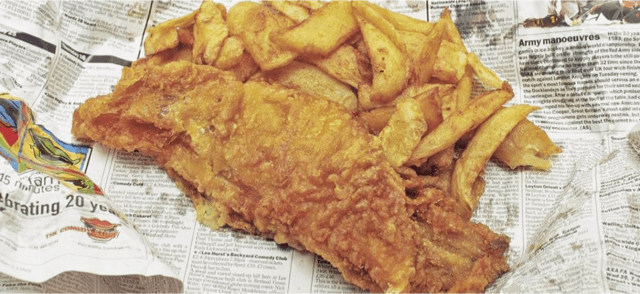
Grimsby based fish and chip wholesaler Norman Rogers have raised over £60,000 of debt funds on Crowd2Fund, beating their target in just over a week.
The company was first established in 2014 by Henry Norman Rogers, whose family has a strong fishing heritage. Having worked in the fishing industry since he left school, Rogers is a fifth generation fish merchant – the trade is “in his blood”.
Norman Rogers predominantly sells to trade, and provides British cooks with the freshest fish to make the nation’s favourite dishes. This includes the sale of the company’s renowned fish and chips offering, and MSC certified seafood.
The crowdfunded loan will enable Norman Rogers to scale up their offering and focus on supplying fish and chip shops nationally, rather than remaining geographically focussed in the North of England.
The company have already attracted an impressive client base; one of the company’s newest clients is the largest operator of fish and chip shops in the UK. The cash injection will allow the group to better manage their working capital of larger customers with bigger orders.
The campaign, which attracted over 130 lenders, demonstrates that there is a market for crowdfunding debt for companies outside of London, and in longstanding and heritage industries intrinsically linked to British culture.
Often such companies find it even harder to access finance from traditional lenders, in a post Brexit environment with low interest rates and high inflation. Prior to raising funds on Crowd2Fund Henry was not aware of crowdfunding:
“I was going to go to a bank but my financial adviser told me about crowdfunding and Crowd2Fund. It is great to have on board over 130 investors, many of which had never heard of my business before. I am looking forward to updating them on the future growth of the company.”
BT PLC Special Report: Time to buy?

Copyright Fat Prophets® is a registered trade mark/trading name of Mint Financial (UK) Limited, which is authorised and regulated by the Financial Conduct Authority, Number 220591, registered in England and Wales, Number 04255908, with a registered office at 100 Fenchurch Street, London, EC3M 5JD. (www.fatprophets.co.uk)
DISCLAIMER The views and opinions expressed herein are for information purposes only. They are subject to change without notice, and do not take into account the specific investment objectives, financial situation or individual needs of any particular person. They should not be viewed as recommendations, independent research, or advice of any kind. The views accurately reflect the personal views of the author. They are not personal recommendations and should not be regarded as solicitations or offers to buy or sell any of the securities or instruments mentioned. The views are based on public information that we considers reliable but does not represent that the information contained herein is accurate or complete. With investment comes risk. The price and value of investments mentioned and income arising from them may fluctuate. Past performance is not an indicator of future results, and future returns are not guaranteed. We acknowledge an individual’s tax situation is unique and tax legislation may be subject to change in the future
Hotel Chocolat delivers sweet results for investors, shares up over 5 pc
Hotel Chocolat (LON:HOTC) delivered strong Christmas trading results on Wednesday, with a 28 percent profit boost sending shares up over 5 percent.
The strong sales were the result of a “very successful” Christmas, which caused pre-tax profit to rise to £11.2 million in the first half of the luxury chocolatier’s financial year.
Reported revenue rose 14 percent to £62.5 million. Underlying earnings (EBITDA) rose 27 percent to £13.7 million from £10.8 million and underlying EBTIDA margins increased to 21.9 percent from 19.7 percent.
In a statement alongside the results, Hotel Chocolat said it was confident strong sales would continue into their upcoming key trading periods, Mother’s Day and Easter.
The chocolatier, who run both coffee shops and chocolate stores all over the UK, have seen shares rise 73 percent since it floated on the stock market in May of last year. The group opened a further 10 new stores during the period, contributing 4 percent to group sales year-on-year.
Angus Thirlwell, Chief Executive Officer of Hotel Chocolat said the brand had made “good progress” over the six months period, adding to both sales and profitability.
“The critical Christmas period was very successful, helped by good availability, popular and innovative new ranges and significantly increased digital transactions. We have strong plans in place for the key spring seasons of Mother’s Day and Easter and are confident of further progress”, he added.
Shares in Hotel Chocolat are currently trading up 6.55 percent at 271.98 (1058GMT). Events giant UBM reports strong trading, Liberum reiterates buy rating

Events organiser UBM was one of the biggest movers on the FTSE 250 on Wednesday, after strong results led to Liberum Capital reiterating their buy rating on the stock.
UBM, who are primarily engaged in organising international events and exhibitions, saw its headline pre-tax profits rise to £120.1 million in 2016, up from £119.6 million a year earlier.
Revenues were boosted to £863.0 million, up from £769.9 million in 2015.
The group made significant changes to its business structure over the course of the year, acquiring Asia-focused exhibitions firm Allworld for $485 million and selling its PR Newswire business.
The strong results led to analysts at Liberum Capital reiterating their buy rating on the stock. In a note to clients, the financial firm said: “We would expect consensus upgrades (we were 3-4 percent below consensus) following these results and reiterate our thesis that investors should increase exposure to stocks with exposure to US growth.”
Tim Cobbold, CEO of UBM, commented:
“During 2016 we made significant strategic progress and delivered performance ahead of expectations.
“We took further steps to focus UBM on the attractive B2B events sector by completing the PRN disposal and, in December, acquiring Allworld. At the same time, we made excellent progress implementing the Events First strategy at an operational level and delivered a strong financial performance ahead of market expectations.
“While remaining conscious of the global macro-economic and geopolitical uncertainties, in 2017 the Board expects to see higher underlying revenue growth (excluding the impact of further portfolio rationalisation), enhanced by the consolidation of Allworld and the positive impact of odd-year biennials.”
Shares in UBM are currently trading up 4.54 percent at 759.50 (1129GMT).
Over 50s more likely to spend on home, leisure and travel, says new research

Over 50s are some of the biggest spenders on home, leisure and travel, despite earning potential falling after retirement.
According to the new research by Saga Personal Loans, those surveyed said they typically spent around £17,000 on home renovations, including around £5,000 on a new bathrooms and £13,000 on a new kitchen.
Speaking to 8,000 over 50s, the research found that spending also increase on both motoring and travel. People in their 70s said they have bought three new cars since turning 50, with accessible travel becoming a necessity with age for everything including food-shopping and commuting.
With retirement comes an urge to travel, according to the research, with people in their 70s saying they had had 22 foreign holidays since turning 50.
These figures come despite recent changes to the state pension, which saw the so-called Money Purchase Annual Allowance (MPAA) be cut to £4,000 in April 2017, from its current level of £10,000.
Nici Audhlam-Gardiner, managing director, Saga Money, commented:
“As we get older our income sources become more diverse; typically we have a steady pension income and often earn further income from investment and other sources. Lenders have been short sighted by turning down people by looking only at earned income which is one of the reasons we launched Saga Personal Loans, to give more people access to credit they can afford in order to live the way they want to.
“Industry research also shows us that people over 55 are keen to pay off their debts as quickly as possible and as loans give them an absolute end date and the ability to overpay, they often prefer using a loan to spending on a credit card.”
Royal Bank of Scotland shares rise after change to Williams & Glynn sale

Shares in the Royal Bank of Scotland rose on Monday, after the HM Treasury confirmed that it may not have to spin-off its Williams & Glynn branch in order to meet its state aid obligations.
In a statement, the bank confirmed that the commissioner responsible for EU competition policy will open proceedings to “gather evidence on an alternative plan for RBS to meet its remaining State Aid obligations”, without needing to separate and divest of the Williams & Glynn business by the current deadline of 31st December 2017.
RBS has long struggled to divest itself of its W&G unit, spending billions on attempting to find a sale. The spin-off was originally agreed as part of the bank’s £45 billion government bailout during the 2008 financial crisis.
RBS CEO Ross McEwan said in a statement on Monday: “Today’s proposal would provide a path to increased competition in the SME marketplace. If agreed it would deliver an outcome on our EC State Aid divestment obligations more quickly and with more certainty than undertaking a difficult and complex sale and would provide much-needed certainty for customers and staff.”
“Subject to the plan becoming finalised and further discussions with the European Commission and Her Majesty’s Treasury we will assess the timing and manner in which we reincorporate the business into the RBS franchises. This reintegration would likely create some additional restructuring charges during 2017 and 2018,” he added.
Shares in the Royal Bank of Scotland are currently up on the news, trading 5.88 percent higher at 256.65 (1016GMT).