Trump must “show some backbone” and repeal Obama’s highly controversial global tax law that negatively impacts foreign financial institutions (FFIs)and Americans living abroad, says boss of deVere Group.Nigel Green has asked the President Elect to address the problems brought on by the Foreign Account Tax Compliance Act (FATCA), which has adversely affected FFIs and millions of Americans around the world.Green said: “Donald Trump has publicly stated that he will revoke some of Obama’s executive orders. I would urge him to make repealing FATCA one of those he revokes.“This must be a major priority as FATCA negatively impacts millions of U.S. citizens. It has been responsible for the record number of Americans, most of whom are proud patriots, feeling that there is no other option than to relinquish their U.S. citizenship.“Since FATCA was introduced, official figures show that more and more Americans give up their U.S. passports every year. This correlates with a deVere Group survey carried out last year that reveals 73 percent of Americans living overseas are tempted to give up their U.S. passports.”He continues: “This toxic legislation turns law-abiding Americans living overseas, of whom there are approximately eight million, into financial pariahs.“For instance, many U.S. citizens cannot even now hold a bank account in their country of residence as foreign banks routinely feel Americans are too much trouble thanks to FATCA’s onerous and costly rules by which they would need to abide to take them on as clients. This makes normal life extremely challenging, to say the least.“By using its super power status, the U.S. has over the last few years been coercing foreign financial institutions around the world into accepting FATCA, or facing stiff financial penalties and extraterritorial sanctions. These FFIs are now working as de facto agents of America’s tax authority.”Green concluded that this issue is a “golden opportunity for Trump to show his mettle and reverse a fatally flawed, misguided, imperialistic law”.The FATCA came into effect in July 2014 and requires all non-U.S. financial institutions (including banks, insurance companies, investment funds and pension funds) to report the financial information of American clients who have accounts holding more than $50,000 directly to the IRS.The official aim of the legislation is to try and combat tax evasion. However, its opponents, including Nigel Green, a long-term vocal critic of the legislation, says: “Tackling tax evasion is a noble and worthwhile objective, yet FATCA’s dragnet approach will be highly ineffective at achieving this as well as being prohibitively costly.”
Jah Plant Hire, a specialist plant hire company based in Northamptonshire is seeking a £50,000 on Crowd2Fund.com to help manage their fast growth.
Operating since 1982, the company – which trades as Anglia Crane – was taken over by current owner Jay Hawkes. Since then, Anglia Crane has seen significant growth, expanding from a fleet of just four machines to over 450 to become one of the fastest growing hire companies in the UK.
Hawkes has a strong history in construction, running his own business prior to Anglia Crane. During this time, he identified a gap in the market to provide eco-friendly, fuel efficient plant hire; inspiring him to purchase the company and turn it into the high growth business that is today.
Alongside the eco-friendly element of the business, another key factor is service delivery.
Anglia Managing Director Jay Hawkins,, centre, with Kubota UK MD Dave Roberts, left, and Julian Payne from local dealer, Shell Plant, who placed the highest bid for the machine.
“First class service that customers can rely upon is one of the key selling points of the business”, Hawkes said.
Corporate social responsibility is at the heart of the business, working with a number of local charities to reduce the environmental impact of the construction industry.
“The funds will be used to bolster the working capital in the business. As with any business, as it grows the strain on working capital can appear. Having a strong working capital position will allow the business to capitalise on future opportunities,” said Hawkes.
Hawkes’ long term vision for the business is to consolidate future growth to become the go-to nationwide plant hire business.
Anglia Crane chose to raise with crowdfunding platform Crowd2Fund.com due to its innovation in the industry. Hawkes says, “Anglia Crane is in an established industry that uses modern, innovative technology to fulfil our customers’ needs. I see Crowd2Fund in exactly the same way. Linking investors with my business without having to pay extortionate fees along with the flexibility it offers investors really excites me.”
Outsourcing group Mitie Group saw profits shrink in the first half of the year, hurt by customer uncertainty in the wake of the European Referendum.
The group’s pretax loss fell to £100.4 million for the six months ended September 30th, down from last year’s pretax profit of £45.1 million. Revenue fell 2.6 per cent in the first half, from £1.123 billion to £1.093 billion, with operating profit before other items falling 40 per cent to £35.4 million from £58.1 million.
In September, the company cut its operating profit forecast due to “changing market conditions as clients adjust to rising labour costs and economic uncertainty”.
Chief executive Ruby McGregor-Smith said:
“The steps we have taken to counter these impacts include the restructuring of both frontline and support functions across facilities management and the decision to withdraw from the domiciliary care market.
“Second half performance is expected to improve with our new operating model as we adapt to market conditions.”
Mitie Group (LON:MTO) shares fell significantly in early trading, currently down 14.43 percent at 181.30 (0809GMT).
Electrocomponents posted a 76 percent rise in first-half pre-tax profit on Friday, following a raise in cost-saving targets.
The UK-based electronics distributor announced that it has raised its cost-savings targets to £18 million pounds ($22.3 million) for the year ending March 2017, up from initial projections of £15 million pounds.
In addition, the company said it expects to see £30 million pounds in annual savings by March 2018, compared with initial predictions of around £25 million.
According to its Friday reporting, headline pretax profit rose to £55.1 million in the six months until end of September, which marks a slight improvement upon initial forecasts of £54 million, and a considerable increase from the £31.3 million pounds previously reported in 2015.
In a statement, the company detailed the cost saving projects, noting that:
“We have raised our cost savings guidance to £18m of net savings in 2017 and total annualised net savings of £30 million by March 2018. Work continues to identify further efficiencies and simplify the way we operate. All these actions mean that we are well positioned to make strong progress in the year to March 2017.”
Chief executive Lindsley Ruth commented on the promising set of earnings, stating that he was:
“Extremely pleased by the progress we are making [via the firm’s Performance Improvement Plan] to put the customer back at the heart of this business, increase accountability and operate for less.”
“While we have taken a major step forward, we are only just at the beginning of this journey and still a long way from best in class” he continued, reiterating that he expects the company to go from strength to strength in terms of revenue potential.
Furthermore, the company noted that it expected to benefit from the weakening pound sterling and boosting second-half earnings. This would in turn encourage lower costs relating to business in Europe and Asian markets, which would ultimately mitigate that the negative impact of higher costs in its UK divisions.
Electrocomponents is a UK based electronic distributor with headquarters located in Oxford. The company is a constituent of the FTSE-250 index and currently employs around 6,000 employees.
The Bank of England’s Mark Carney recently suggested that inflation, sometimes known as ‘the silent thief’, may be close to 2.8 percent by the second quarter of 2018. Since the result of the European Referendum at the end of June, and the following drawdown in sterling, inflation has never been far from the conversation in investment circles.
The burgeoning resurrection of inflation began in 2015 when the oil price regained its volatility, and real-life signs of a post-Brexit leap hit the headlines in October with the very British concern over the cost of Marmite.
More specifically, concerns over who should be bearing the burden of the increased cost caused by the translational effect of the weakened pound. The effects of rising Consumer Price Inflation (CPI) spread further than the breakfast table and a much weaker currency and higher oil prices will continue to affect UK consumers over the next 12 months and beyond.
Recent estimates from asset managers and economists have indicated that the UK will endure inflation of anywhere between 2.5 percent and 5 percent over the next year. However, the most likely figure (barring a significant move in sterling) is probably around the lower end of this range. CPI has remained well below the Government’s official target of 2 percent for some time, meaning that investors have not had to contemplate protecting against its capital-eroding effects over the last few years – but that is about to change.
In typical periods of rising inflation the Bank of England would be expected to increase interest rates, but this is not likely to be the case. Governor Mark Carney has stated that the institution is likely to “look through” an inflationary overshoot to support the economy and avoid stifling the UK’s recovery.
Against this backdrop investors are faced with the prospect of potentially having to achieve returns above 3 percent from their assets just to maintain the purchasing power of their capital. Traditional safe havens in inflationary times have included gold (which tends to rise in inflationary times), index-linked gilts (that track the rate of RPI, or Retail Price Inflation, which includes housing costs) and property (as premises often have inflation-linked annual revisions on rents). All these assets have received more attention from investors lately. Naturally, these investments all have their own risks:
Gold has a questionable valuation, no yield and could come under significant pressure if the US dollar continues to appreciate (as the Federal Reserve continues its hikes); index-linked gilts provide a ‘call-option’ on inflation but are irrevocably attached to an asset with a very high valuation; and property funds have well-publicised issues surrounding their liquidity this year, though they do possess the enviable diversification benefit of not being a share or a bond.
Tom Sparke, Investment Manager, Gibbs Denley Financial Services
So which assets should investors use to seek shelter from the inflationary storm?
Infrastructure
Much has been said about infrastructure in recent months. The Chancellor, Philip Hammond, alluded to this as part of a fiscal stimulus package for the UK, and President-elect Donald Trump has promised spending in this area. The associated multiplier effects of such developments should also help to boost employment, spending and confidence. Many infrastructure assets, such as investments in ongoing transport and energy projects, have inbuilt inflation protection and the returns from the yields alone may outpace CPI.
Some collective schemes operating in these areas have already seen significant price increases this year, but opportunities look attractive in both open and closed-ended structures.
Index-Linked Corporate Bonds
While we might want to avoid some potential capital losses in UK sovereign fixed income, the outlook for corporate bonds looks significantly better. Inflation-linked issues in the UK credit market are not hugely numerous but some funds, like those run by M&G and Insight, may synthesise these by purchasing an index-linked gilt and using Credit Default Swaps (CDS).
Global inflation-linked funds are also available, but may not provide as appropriate protection.
Equities and High-Yield Bonds
Aside from the ‘alternatives’ universe, global equities and high-yield bonds have both provided a return higher than inflation in the past, but the associated risks (such as volatility and default) tend to be higher and, as ever, appropriate diversification is key.
Inflation looks to be inevitable, but it almost certainly won’t be handled the same way it previously has been, and central banks will stay on the sidelines rather than raise rates. Protection from the so-called thief is a good idea, but we must be wary of the unintended consequences of jumping into some traditional safe havens.
Tom Sparke  IMC CertPFS (DM), Investment Manager, Gibbs Denley Financial Services

This post is sponsored by Gibbs Denley Financial Services Limited is a Chartered
Financial Planner based in East Anglia, with over 25 years in business.
Tom Sparke heads up their in-house Investment Management team, which operates
discretionary risk-rated model portfolios for individual and corporate clients.
Birmingham offers better value for money than both Brisbane and Brooklyn for property investors, according to research compiled by Investorist.
The UK’s second biggest city has seen a massive regeneration as of late, with the completion of a vast redevelopment of Birmingham New Street station and the construction of a new Birmingham library just in the midst of the city centre. Alongside a complete makeover of the city’s largest train station, the West Midlands capital has also seen the instalment of a state of the art tram transportation system, completed this summer.
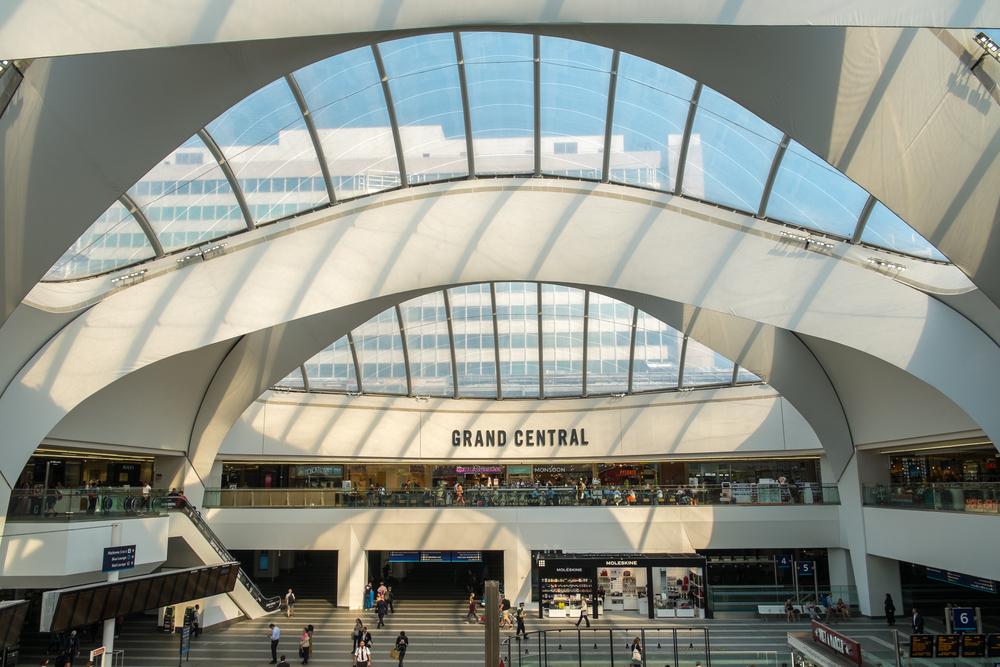
The completely renovated Birmingham New Street Station – now Grand Central.
According to recently released data, as well as the growing infrastructure, Birmingham is becoming a more attractive place in terms of off-plan property investment opportunities. Investorist found that compared to other international urban cities such as Brisbane and Brooklyn, Birmingham offered the most value. In Brooklyn for instance, an apartment listed came in at £10,793 per square metre, and thus making it the most expensive of the three cities. Brisbane followed, at £3,976 per square metre, while Birmingham offered a superior deal, at just £3,068 per square metre.
Jon Ellis, CEO and Founder of revolutionary trading platform Investorist believes that;
“Birmingham offers an excellent investment landscape, from high end retail space to some outstanding residential property developments. It’s a city that appeals to investors on many levels and the post-Brexit drop in the sterling’s value has made it even more attractive to those who have other investment currencies to spend”
“Quite simply, investors can get more for their money by looking at off-plan buy-to-let homes in the UK right now than they can in many destinations around the world. Demand for good quality rental properties in the UK is underpinned by a range of factors that should see it weather the Brexit fallout, such as the increasing size of the private rental sector and the significant deposit requirement faced by first time buyers.”
In addition, the city boasts an ever bustling presence of culture and entertainment and nightlife. If you’re looking for something particularly seasonal, the Birmingham Royal Ballet is host to annual festive performances of The Nutcracker from the 25th of November-13th December.
Majestic Wine reported mixed results on Thursday, sliding into a loss for the six months to September 26th but seeing shares rise over 6 percent after the announcement.
The wine sellers reported a pre-tax loss of £4.4 million, a significant fall from the £4.3 million profit made in the first half of 2016.
However, sales rose 13.2 percent to £205.6 million and the company reiterated their goal to hit £500 million annual sales by the end of the 2019 financial year.
Majestic Retail sales rose 5.7 percent like for like for the 6th consecutive quarter, with their Naked Wines brand seeing a 26.7 percent sales increase.
Majestic Wine also confirmed that their transformation plan to deliver ‘future sustained growth in shareholder value’ remained on track.
Rowan Gormley, Group Chief Executive, commented:
“Our plan is working. We said that we would deliver sustainable growth, not by opening more stores, but by investing in better customer service and better customer retention. Both of these are working – sales are up over 10 percent and the projects driving that sales growth, like nationwide next day delivery, are on time and on budget.
“Now that we have built a solid platform for future growth, future cost growth will be much lower. We are reiterating our commitment to hitting our goal of delivering £500m sales by 2019, and we believe that will translate into healthy profit growth now that the step change in investment is complete. We are reinstating the dividend as a signal of our continued confidence in the plan.”
Majestic Wine (LON:WINE) shares are currently trading up 6.05 percent at 319.50 pence per share (0931GMT).
Royal Mail (LON:RMG) shares fell on Thursday after the postal service posted a 5 percent fall in first-half profit and announced an extensive cost-avoidance plan.
Despite a stronger performance in Europe, fierce competition from Deutsche Post, UK Mail and Amazon’s new delivery service affected profits in the first half of the year. The company announced plans to avoid £600 million in costs by March 2018, a significant rise from its previous £500 million target.
Operating profit fell £320 million in the six months to September 25th, but the results were aided by a 1 percent revenue increase to £4.58 billion.
“The key drivers for the UK letters and parcels markets remain unchanged. Letter volumes, particularly advertising letter volumes, are linked to movements in GDP and we are monitoring developments in the UK economy closely,” Royal Mail said in a statement.
Shares are currently down 4.95 percent to 474.20 pence per share (0910GMT).
Google have announced plans to open a new headquarters in London, which is set to create around 3,000 jobs by the year 2020.
The headquarters will be a re-development of the current space occupied by Google in Kings Cross, London. Currently, Google employs around 4,000 people across the UK; however with this latest investment, that figure could rise to 7,000.
Chief executive Sundar Pichai remained optimistic about the opportunities for business in the UK, despite the potential impact of Brexit. However, Mr Pichai did emphasise the importance of open borders and freedom of movement for the growth of the technology industry.
“The UK has been a tremendous market for us,” Mr Pichai told a correspondent at the BBC.
“We see big opportunities here. This is a big commitment from us – we have some of the best talent in the world in the UK and to be able to build great products from here sets us up well for the long term.”
Mr Pichai spoke of the prospects in investing further into the U.K, in spite of the ongoing Brexit-related setbacks for the economy:
“The innovation we see here, the talent we have available here and how on the cutting edge of technology we are able to be here makes it an incredible place for us to invest,” he said.
“We do value how open and connected it is and we can bring in talent from anywhere in the world and we value those attributes and we are optimistic that those will stay true over time.
“So we did [make the investment decision] taking into consideration [the referendum], but we are very optimistic.”
Mr Pichai also warned that the full effects of the referendum may not yet have been realised. However, he remained positive about the status of the capital as a source of world-class talent and innovation for the technology sector.
“When I look at London [I see] a place in which we are able to attract great talent, find great talent in the UK, thanks to a great educational system here, but it has also been a place where people are willing to come from anywhere in the world.”
Whilst the company neglected to give specifics over the size of the investment, speculation from experts puts the re-development in the region of £1 billion. It is set to encompass 650,000 sq-ft and has been designed by Thomas Heatherwick – the designer behind the Olympic cauldron.
German economic growth halved in the third quarter, falling to 0.2 percent as weaker exports took their toll.
The 0.2 percent growth seen between July and September was a steep drop on the 0.7 percent and 0.4 percent seen in the first and second quarter respectively, and was slower than analysts had expected.
Germany’s Federal Statistics Office said in a statement:
“The development of foreign trade had a downward effect on growth.
“Exports were slightly down while imports were slightly up compared with the second quarter of 2016.
“Positive impulses on the quarter came mainly from domestic demand,” the statistics body added.
“Both household and state spending managed to increase further.”
EasyJet profits hit by “challenges”
EasyJet saw pre-tax profits fall 27.9 percent in the year to September, after issuing a profit warning last month.
Profits fell to £495 million, despite a 6.6 percent rise in passenger numbers. Revenues fell 0.4 percent to £4.67 billion.
The company cited weak sterling, terror attacks and air traffic control strikes as the reasons for the “challenging environment”.
The group also confirmed the set-up of a continental-based airline to counteract the UK’s exit from the EU.
Cineworld up on big box office films
Big box office hits helped Cineworld see a 14.6 percent rise in revenue for the 45 weeks to November 10th, with the group “confident” of delivering in line with expectations for the full year.
“The Secret Life of Pets”, “Finding Dory”, and “The BFG”, as well as the December release of “Fantastic Beasts and Where to Find Them” have boosted profits.
Box office revenue rose by 8.5 percent for the period, whilst total revenue across the UK and Ireland markets rose 8.4 percent.