Bank of England warns against leaving the EU

0
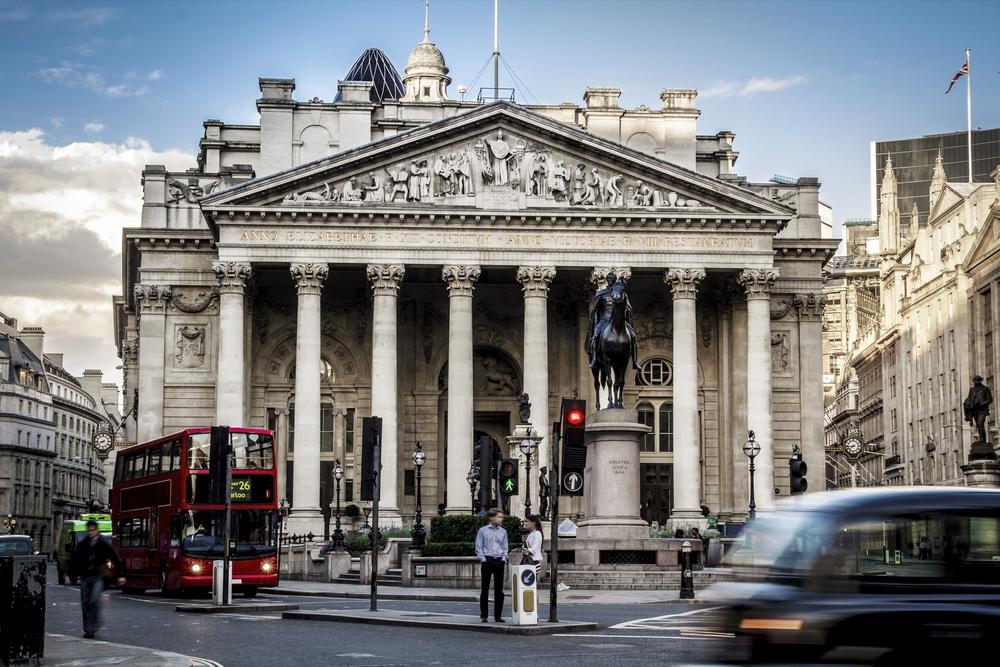
Following pressure from the government to “set out the facts, set out the figures so people can make a judgement” Mark Carney, the governor of the Bank of England, warned on Tuesday of the possible consequences if the UK is to leave the European Union following the referendum due on the 23rd of June this year. Although Carney maintained that he was not making any recommendation on how to vote, his comments are not likely to be supported by the euro-sceptics. Carey did not comment on the long-term impacts of the results of the referendum for the economy but he did state that the short-term impacts would result in a hit to the country’s growth and would lead to a vast reduction in foreign investment. Carney told lawmakers in British parliament: “One would expect some activity to move. I’d say a number of institutions are contingency planning for that possibility.” Such comments were not taken lightly from those in support of the Brexit campaign, with Conservative Party member Jacob Rees-Mogg saying it was “beneath the dignity” of the Bank of England to make “speculative” comments about Britain’s membership to the EU, and believed Carney was damaging the banks reputation. He has since felt support after attack from euro-sceptics following his seemingly pro-EU comments. “Mark Carney waded into the Brexit debate and emerged unscathed, defending the integrity of the Bank of England from accusations of bias from lawmakers, while highlighting the risks of the Brexit.” said Ranko Berich, head of market analysis at Monex Europe.  
08/03/2016

China’s exports tumble 25% in February

Only days after Chinese leaders aimed to reassure investors that the outlook for China’s economy remained positive, the customs administration revealed that exports in February fell by 25.4%, its fastest drop in almost seven years. In a research note, Mizuho Securities Asia Ltd. economist Jianguang Shen said: “China’s exports declined more than expected in February, confirming our view that external trade will likely be a drag on economic growth in 2016 amid lackluster global demand. Government stimulus to boost domestic activity will be critical for stabilizing economic growth in 2016.” As well as exports, imports also declined by 13.8% last month. Experts aren’t necessarily concerned with this drop in exports due to the timings of this years Lunar new year holidays, which fell early in February and are associated with sharply reduced business activity. China Economist at Capital Economics in Singapore, Julian Evans-Prichard has said “Exports were very strong last year in February because the Lunar New Year started so late and much of the usual disruption from the holiday was pushed into March. So the implication is that we’ll probably see a significant reversal and a stronger number next month. We suspect that overall exports remain weak but we don’t see much evidence of marked deterioration, for instance there was no sudden drop-off in export orders in the Markit PMI (activity survey), and they generally do a pretty good job of adjusting for seasonality.”  
08/03/2016
 

Stock analysts: are they worth listening to?

Analysts have been evaluating and predicting future trends for a long time and now they are getting more and more exposure with 24/7 stock market news, with their word often being taken as truth. However with a study showing that 49% of analyst ratings on the Dow 30 were incorrect in 2012, is their word really worth following? Looking at the oil prices compared to the analysts expectations over the past couple of years, there is clear evidence that the reality has far from reflected the analysts expectations. For example if we consider the start of 2009, we can see that whilst analysts forecasted the oil prices to be around $65 per barrel, in reality prices stood $25 higher than this at $95 per barrel. This is not a one off case, and has been seen to happen again and again with worse consequences. Take the start of 2014. Analysts predicted a declining price in oil, just for the opposite to happen. Oil prices in 2014 increased throughout the first half of the year until reaching its highest level in May. Of course, analysts do get a fair share of predictions right but how do we know if we should rely on their advice? Predicting the future of any investment product is difficult. Whilst Jim Cramer from CNBC media fairly stated that “Wall Street analysts don’t exactly have a sterling track record”, some are known to have made some brilliant forecasts. The bottom line is that it is important to remember that whilst stock analysts might have a greater insight into the future of the stock market than you, it is important to take their report as apart of a bigger picture and to not take their predictions as the sole basis for your investment decision.  
08/03/2016
   

What to expect from ECB’s Draghi ahead of March meeting

0
Mario Draghi, chief of the European Central Bank, will meet in Brussels on Thursday for the ECB’s March policy decisions discussing the lowering of interest rates, threats to the eurozone and consequences of the declining oil price. Due to the negative Eurozone inflation seen in February, there is already predicted to be a a new fresh easing package unveiled following Thursday’s talks. Draghi said on 1st March, “The review has to be seen against the background of increased downside risks to the earlier outlook amid heightened uncertainty about emerging market economies’ growth prospects, volatility in the financial and commodity markets, and geopolitical risks. In this environment, euro area inflation dynamics continue to be weaker than expected,” There has also been a prediction that there will be an increase in the 60 billion euro per month asset buys, however this is is still questioned by others who see this Thursday’s ECB conference as a time for technical changes to quantitative easing. The open question is how much of that stimulus will seep into the real economy vs the short term impact on financial asset valuations. Draghi has also commented ahead of Thursday’s meeting, saying there would be a more in-depth analysis of the potential second-round effects of the inflation fall and said the ECB would not hesitate to act, if needed. “The Governing Council has a variety of instruments at its disposal to respond, if warranted, and there are no limits to how far we are willing to deploy our instruments within our mandate to achieve our objective of inflation rates below, but close to 2 percent over the medium term,”  
08/03/2016
       

Korean brokers see potential in investment crowdfunding

0
Korean brokerages are beginning to see the potential in crowdfunding, according to reports by the Korean Herald. IBK Securities and Korea Asset Securities are among Korean financial firms applying for licenses to run equity crowdfunding platforms. An official at the Financial Services Commission commented: “Under the registration system, those who meet the basic requirement such as the amount of capital will get a green light to launch the service.” Investment crowdfunding was legalised in Korea in July last year, opening up the market to Korean start-ups who ha previously been limited to VC or angel investment. The country already had a booming rewards-based crowdfunding market, with platform Tumblebug raising over 40 million dollars by May 2015. Five platforms, Yinc, Wadiz, Ucanstart, SFRfunding and Opentrade, have been operating online crowdfunding businesses since January, after having registered with the FSC. 08/03/2016

Burberry shares soar following potential takeover bid

Luxury fashion brand, Burberry, has seeked help from financial advisers following information that an unknown investor has built up a stake of more than 5% in recent weeks. The stake in Burberry became disclosed after it surpassed the 5% threshold held by UK transparency laws on 11th February, however this was soon reduced so Burberry was not able to identify the stakeholder. Analysts have suggested that private equity investors or rival luxury goods such as LVMH may be behind the transaction with attempts to launch a takeover, with Macquarie analyst Daniele Gianera saying that “Burberry is one of the few luxury brands without family interest and thus an easier target for acquisition,” Burberry’s share price has been steadily falling over the past year, it is currently down 22% from this time last year due to the country’s economic slow down and and exposure to China. Following news of a potential takeover, Burberry was one of the highest risers of the FTSE 100 on Tuesday morning, rising almost 5%  
08/03/2016

Morning Round-Up: Sainsbury’s positive, nPower in trouble and strong German figures

Sainsbury’s increase sales Sainsbury’s became the only one of the Big Four supermarkets to increase overall sales last month, according to the latest industry data. Sales rose 0.5 percent year on year in the 12 weeks to the 28th February, but saw market share remain flat at 16.8 percent. Britain’s overall grocery market grew at 0.5 percent, the fastest rate of growth since October 2015. Sainsbury’s (LON:SBRY) are currently trading down 0.26 percent at 269.80 (0922GMT).
Read UK Investor’s full analysis of the latest supermarket figures here.
NPower to cut 2,400 jobs
Energy giant Npower has announced plans to cut 2,400 jobs after suffering poor financial results and being fined a record amount for problems with customer billing.
The cuts are equal to a fifth of its workforce, and according to the German-owned company will be from both the UK and overseas. The “big six” energy firm has been plagued by a spate of problems, including being fined a record £26 million in December over billing problems. Npower lost €137 million last year, compared with €227 million profit in 2014. German industrial output rises German industrial output got off to a positive start in 2016, according to data from the German Economy Minister, rising at its fastest pace in more than six years. Output rose by 3.3 percent on the month, significantly outstripping the Reuters forecast of a 0.5 percent gain. The rise was the biggest since September 2009.
 08/03/2016

What’s in store for British supermarket shares?

British supermarkets may well have put an end to their steady downward spiral, according to the latest grocery share figures from Kantar Worldpanel.

For the 12 weeks ending 28 February 2016, supermarkets saw small increase in supermarket sales, up by 0.5 percent compared with a year ago. Whilst a relatively minimal rise in comparison to the problems the market has been experiencing over the last year, it remains the fastest rate of growth since October 2015. However, falling grocery prices remain a problem for the chain, down 1.6 percent. Fraser McKevitt, head of retail and consumer insight at Kantar Worldpanel, commented on the figures:

“Despite prices continuing to decline, the combination of Valentine’s Day, and consumers stocking up for an early Easter has boosted certain categories. February chocolate sales are up by 13 percent, cut flowers have increased by 7 percent, and sparkling wine sales are up by 15 percent. New Year resolutions to eat more healthily don’t seem to have been forgotten, helping fruit and vegetable revenues to grow by 4 percent despite like-for-like produce prices falling.”

Individually, Sainsbury’s was the winner again, becoming the only one of the Big Four to increase overall spend. Sales grew for the eighth period in a row, up by 0.5 percent – this is the longest run of sales growth for any of the four main retailers since March 2013. However, overall share remained flat at 16.8 percent.

Tesco also continued to see positive figures, improving on last month’s 1.6 percent decline with a decline of 0.8 percent. A renewed focus on price promotions has helped stem the flow of shoppers leaving the retailer despite the closure of around 50 stores in the last year.

However, Morrisons in-store sales remain disappointing – down by 3.2 percent due to operating fewer stores than last year. This is partially offset by a strong growth in online sales, with its forthcoming tie-up with Amazon possibly provide another boost to the business. Discounters Aldi and Lidl continue to offer a challenge to the Big Four, with their combined share climbing back to the 10 percent high they reached before Christmas. Lidl’s sales grew by 18.9 percent and Aldi’s by 15.1 percent.

Tesco (LON:TSCO) shares are higher this morning at 193.75, with Morrisons (LON:MRW) down 2.67 percent at 206.60.

Miranda Wadham on 08/03/2016

Special Report: Compounding Your Portfolio Returns

Discover the power of implementing a compounding strategy when investing in shares.

This special report covers the wonders of applying an element of compounding to your portfolio and presents the sectors and stocks ideal for pursuing such a strategy.

The power of compounding is underestimated by many investors and the aim of this report is to empower individual investors and give them the knowledge to create long-term returns.

This report covers:

  • Sectors and stocks ideal for compounding

  • Compounding statistics

  • The basics of compounding your returns

  • Those stocks to treat with caution

Download this report now for free for a limited time.

A copy will be emailed to you immediately.

Copyright Fat Prophets® is a registered trade mark/trading name of Mint Financial (UK) Limited, which is authorised and regulated by the Financial Conduct Authority, Number 220591, registered in England and Wales, Number 04255908, with a registered office at 100 Fenchurch Street, London, EC3M 5JD. (www.fatprophets.co.uk)
DISCLAIMER The views and opinions expressed herein are for information purposes only. They are subject to change without notice, and do not take into account the specific investment objectives, financial situation or individual needs of any particular person. They should not be viewed as recommendations, independent research, or advice of any kind. The views accurately reflect the personal views of the author. They are not personal recommendations and should not be regarded as solicitations or offers to buy or sell any of the securities or instruments mentioned. The views are based on public information that we considers reliable but does not represent that the information contained herein is accurate or complete. With investment comes risk. The price and value of investments mentioned and income arising from them may fluctuate. Past performance is not an indicator of future results, and future returns are not guaranteed. We acknowledge an individual’s tax situation is unique and tax legislation may be subject to change in the future

Budget airline Fastjet sees shares fall by a third

Shares in African budget airline Fastjet fell by a third this morning as challenging market conditions hit the company harder than expected. In a statement, Fastjet announced the effects of low demand had been “a lot more prolonged than management originally forecast” and, despite taking action to manage costs and overheads, expects results for 2016 to be “significantly below market expectations.” They added that the Group no longer expected to be cash flow positive for the year. However, the company has “sufficient funds to meet its operational requirements” and may consider raising further funds later this year. “We remain confident in its low-cost airline model and is well positioned to capture the significant growth potential of the developing African aviation market.” Fastjet (LON:FJET) is currently trading down 30.41 percent at 46.80 (0947GMT).
07/03/2016