
22/08/2016
Morning Round-Up: ChemChina-Syngenta approval, Wireless Group up, USD up on Fed

ChemChina-Syngenta deal approved
The largest ever foreign acquisition by a Chinese company has just been cleared, after the US national security panel examined ChemChina’s takeover bid for Syngenta.
The takeover was agreed in February and sees ChemChina pay $43 billion for the world’s largest pesticides maker, pushing Syngenta shares up over 11 percent.
The approval remained a major hurdle for the takeover and now paves the way for the finalisation of the deal by the end of the year.
Wireless group post positive results
Radio station owner Wireless Group saw results “broadly in line” with expectations for the first six months of the year, boosted by sports station talkSPORT.
The Group benefited from the £79.2 million sale of its TV business to ITV back in February, boosting pre-tax profit up to £82.1 million up form a £500,000 loss a year ago.
The Group’s Chairman Richard Huntingford commented:
“The recent RAJAR and JNLR figures demonstrate the strength of the Group’s ongoing brands in its key markets as well as the ability to launch successfully new digital brands that are attractive to listeners which stands the Group in good stead going forward.”
Wireless Group shares are up 1.21 percent at 314.00 (1101GMT).
Dollar up on Fed decision
The dollar strengthened on Monday as speculation increased ahead of this week’s statement from the Federal Reserve on when it expects to raise rates.
Fed Vice Chairman Stanley Fischer pushed markets up on Sunday after he signalled the economy was strong enough to implement a rate rise soon, ahead of the Fed’s meeting later this week.
The dollar index rose 0.4 percent, with US 10-year Treasury yields hitting a two week high.
Medivation shares up as Pfizer enters advanced takeover talks

Swiss pharmaceutical company Pfizer (NYSE:PFE) are in talks to acquire Medivation Inc in order to boost their oncology offerings.
Medivation has seen several takeover offers from pharmaceutical companies globally, including Merck & Co Inc and Gilead Sciences Inc. Pfizer is reported to be offering just over $80 per share for Medivation, a significant increase on Sanofi’s offer of $52.50 back in April.
Pfizer is already a market leader in cancer treatment, and a takeover of Medivation will give them access to Medivation’s prostate cancer drug Xtandi, as well as the breast cancer treatment Talazoparib, which is still under development.
Medivation (NASDAQ:MDVN) shares were up over 20 percent at close on Friday.
22/08/2016
The BoE is introducing its New Fiver
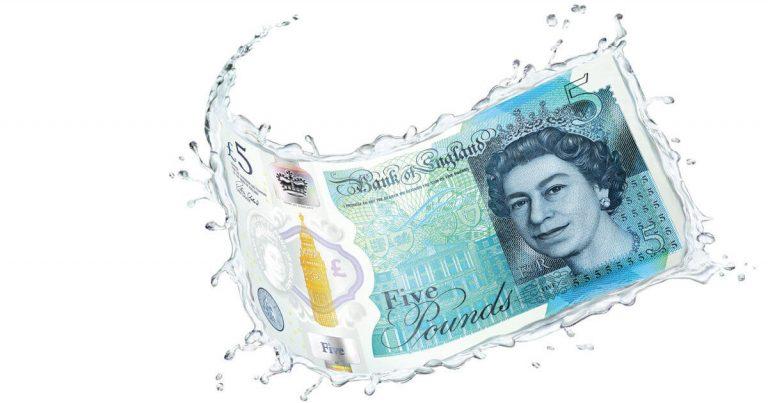
The Bank of England is currently touring the UK to introduce the British public to ‘ The New Fiver ’, which will enter circulation in 24 days.
The BoE is taking its new fiver on a roadshow. The aim is to familiarise the British public with the benefits of the country’s newest innovation in safe and sustainable cash. Yesterday, the new fiver was on show at Adventure Island in Southend on Sea. Next week the roadshow will move around Scotland.
The new fiver will be stonger, cleaner and safer
The new bank note is said to be a stronger, cleaner and safer alternative to the current five-pound bank note. It is printed on polymer, a thin and flexible plastic. Polymer is stronger than paper, making it more resilient to tearing and scrunching. The material is also dirt and moisture resistant, which will ensure that the new fiver stays clean and lasts longer. The BoE expects polymer notes to last 2.5 times longer than current bank notes. Printing more sustainable notes will also have an environmental impact, as a longer lifetime of notes means that less need to be printed in total. Therefore, less energy is spent on the manufacturing of bank notes and their transportation, and the material is fully recyclable. The BoE reports that in 2015 alone 21,835 notes had to be replaced. 10,761 notes were torn, 5,364 chewed or eaten, 2,912 contaminated, 1,800 washed and 997 damaged or destroyed by fire; large numbers which, according to the BoE, will be reduced greatly by the more resilient material of the new five-pound note. The new note will also be less susceptible to counterfeiting as new design features will make the note harder to copy. A transparent window and a foil Elizabeth Tower, in gold on the front and silver on the back of the note, are all features designed to prevent illegal currency. Polymer notes with similar security features are already in use successfully in other countries. Australia launched its first polymer bank notes in 1988. It was also the first country to use a transparent window as a security feature on such notes. Today all Australian bank notes are made from polymer. As per design, the new fiver features Winston Churchill on the back.BoE Governor Mark Carney stated:
“Winston Churchill was one of the greatest statesmen of all time and is the only Prime Minister to win the Nobel Prize for literature. As he himself said, a “nation that forgets its past has no future”. Our banknotes are repositories of the United Kingdom’s collective memory and are testaments to the outstanding achievements of the nation’s greatest individuals. Like Churchill, the new polymer note will also stand the test of time.”New bank notes enter circulation in 24 days
The new fiver will be entering into distribution on the 13th September this year. All paper five-pound bank notes will cease to be legal tender. Any paper five-pound bank note will from then onward have to be exchanged at the Bank of England. The BoE has also announced that both the ten-pound and the twenty-pound bank note will also be replaced by new Polymer notes in the coming years. The new ten-pound bank note will come into circulation next summer and will feature Jane Austin on the back. By 2020, the new twenty-pound note, featuring JMW Turner on the back, will be distributed. The Scottish banks are also set to release first polymer notes later this year. The Royal mint is also set to release a new £1 coin in March next year.Katharina Fleiner 19/08/2016
Mondo may announce new company name as early as next Thursday

FinTech company Mondo may be set to release its new name to the public on Thursday 25th, the company indicated in a tweet on Thursday afternoon.
Earlier this summer, Mondo asked the public’s advice on a name change after a similarly named unspecified company challenged the UK FinTech start-up. The business identified three rules to guide their search:
- The name should start with the letter “M.”
- The name should represent us and work across different languages and cultures
- It can’t be Banky McBankface,
Mondo also stated:
“It can be painful to change the name of a product, but – being the optimists we are – we think this is a great opportunity to come up with something even better. Our commitment to transparency means we’d love your help finding something that will represent us from now on.” The London-based FinTech start up started developing its smart phone banking service in February 2015. It broke a crowdfunding world record, raising more than £1 million in just over 1.5 minutes in its equity crowdfunding campaign on CrowdCube earlier this year. Mondo’s name change comes just two weeks after the company declared itself a licensed bank, which is now regulated by the Financial Conduct Authority and Prudential Regulation Authority.Looking to the future, Mondo commented:
“We’ll continue to distribute Mondo Beta cards and develop the Mondo app so that it’s ready to become your bank account in early 2017 and, of course, all current users will have the option of seamlessly switching to ‘full Mondo’! Thank you so much to everyone who is part of the wider Mondo community. We couldn’t have done it without you and we can’t wait to see what the next 18 months will bring.” The London FinTech industry is currently one of the most thriving new developments in the ongoing digitalisation of services. However, some people in the industry are concerned that the consequences from the recent Brexit vote may negatively effect FinTech business growth in the UK.Katharina Fleiner 19/08/2016
Judicial investigation causes fresh trouble for Monte dei Paschi

The CEO of troubled Italian bank Monte dei Paschi di Siena, Fabrizio Viola, and its former Chairman Alessandro Profumo are under investigation for alleged false accounting, according to a person with knowledge of the matter.
The latest development is part of an ongoing probe into misrepresentation of the bank’s finances starting in 2015, and was been confirmed by an MPS spokesperson on Thursday. The case has been handed over to prosecutors in Milan, who are “obliged to open an investigation if they receive a complaint”, according to MPS. The prosecutors now have 18 months to decide whether to shelve the investigation or seek trial for Viola and Profumo.
MPS has been in trouble for several years after overpaying on the purchase of rival Antonveneta and engineering risky derivatives trades back in 2007. Profumo and Viola were hired in 2012 to get the bank back on its feet, and oversaw two cash calls to the tune of $8 billion euros before Profumo stepped down.
Monte dei Paschi performed the worst in Europe in stress tests carried out earlier this year, and is now looking for either a private or public bailout.
19/08/2016
Banana Republic drags down Gap results
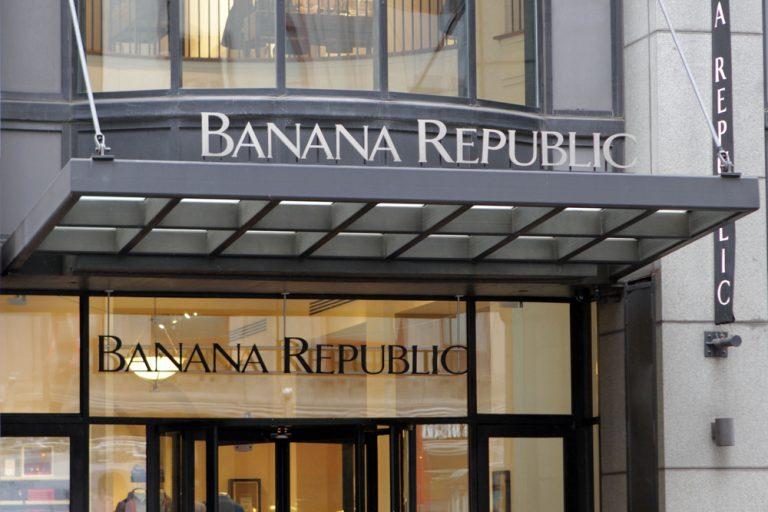
American clothing retailer Gap saw earnings come in below analysts’ estimates as it fails to revive Banana Republic’s flagging image.
Its Banana Republic line has consistently seen poor sales, which have now fallen again for the sixth straight quarter, despite Gap working on turning its image around.
The company’s net income fell to $125 million in the second quarter, down from from $219 million a year earlier. Net sales remained at $3.85 billion, the same figure as was provided last week.
However, shares in Gap rose on Friday after the news, up 1.65 percent to 25.88 (1151GMT).
19/08/2016
Morning Round-Up: budget surplus smaller for July, Fed President open to Sept rise, Microsoft votes on LinkedIn
Budget surplus smaller than expected for July
Public sector net borrowing had a £1 billion surplus in July, the first month since the vote to leave the European Union, less than the £1.2 billion figure this time last year and lower than expectations.
July was the second month in a row debt has fallen as a percentage of GDP, according to the Office for National Statistics figures released on Friday. Public borrowing stood at £23.7 billion between April and July, £3 billion less than 2015.
Fed President open to September rate hike
San Francisco Fed Bank President John Williams has become the latest Fed member to highlight September as a possibility for a rate hike.
He said, “I think every one of our meetings should be in play in principle … I definitely think September should be.”
He argued that if rates remain low for too long, it could have a negative effect on the economy.
Microsoft shareholders to vote on LinkedIn deal
Microsoft shareholders will cast their votes today on the company’s proposed buyout of business networking site LinkedIn.
If the $26 billion takeover goes ahead it will break records as the biggest tech buyout in history, valuing each LinkedIn user’s profile at $62.
Microsoft is hoping to use the site to reinvigorate its business, as its renowned Windows and Office products, get increasingly sidelined by users switching to tablets and other competitors. However, the deal will be a risk – LinkedIn has consistently lost money over the past two years, with shares tanking on negative economic forecasts.
ECB indicates it will stick with successful monetary policy for foreseeable future
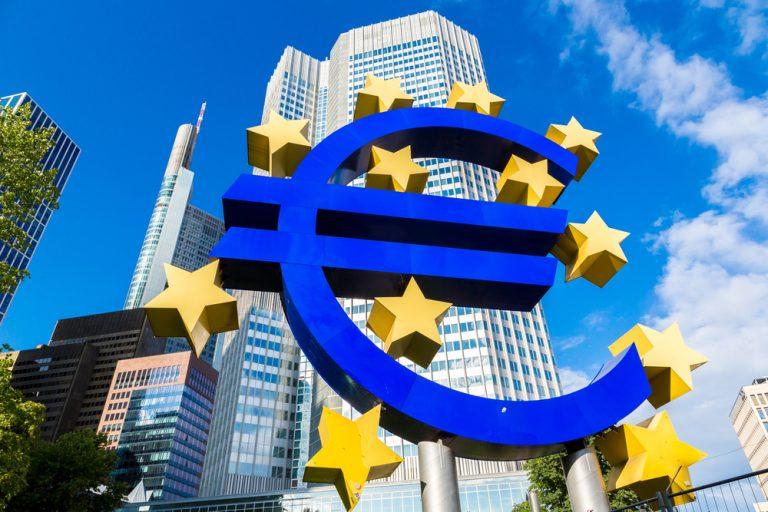
The latest Monetary Policy Account, published by the ECB this morning, indicated that monetary policy will remain largely unchanged for a prolonged period of time.
Current monetary policy measures seem to be fulfilling their purpose
The Council Members agreed with the Vice-Presidents statements that recent data, collected since the last policy meeting in July, indicate that current policy measures are fulfilling their role. The latest set of monetary policy measures were adopted in March. Since then the interest rate on the main refinancing operations, marginal lending facility and the deposit facility are held at 0.00%, 0.25% and ‑0.40% respectively. The ECB also targets monthly asset purchases of €80 billion for further expansion. It has been noted that the European economy seems to be recovering well from the latest period of recession. While inflation remains below the target close to 2%, headline HICP rates turned positive in June due to rising energy prices and a fading effect of decreasing oil prices. Data published this morning by Eurostat showed the Core Euro-Zone CPI fwas 0.9% in July. A measure matching both analysts’ estimates and figures from the previous month. The all-inclusive CPI also remained flat at 0.2%. Month on Month figures have however turned positive again for both core and all-inclusive measures, with the all-inclusive CPI dropping 0.8 percentage points to -0.6%, missing estimates by 0.1%. There have been promising developments in manufacturing and services in the Euro-Zone over the past months and according to the latest ZEW survey of economic sentiment, investor confidence in the EMU has recovered from it’s initial post-Brexit slump. The ECB indicated that it expects the Euro-Zone economic recovery to continue and “these base effects were expected to lead to a significant increase in headline inflation towards the end of 2016.”Brexit and a weak banking sector do present some challenges
However, the council members did identify some factors which could add uncertainty to the EMU economy, and in particular the financial sectors. Such include post-Brexit developments as well as the persisting weaknesses in the banking-sector of some Euro countries. Most notably, Italy is still struggling with grave imbalances in their banking sector. Especially Monte di Paschi de Siena is considered to be highly over-leveraged and discussion of possible rescue of the bank through either the private or public sector has been a hot topic.ECB will be likely to hold off on adjusting policy measures in next-month’s meeting
The ECB is however confident that by continuing its’ current monetary policy strategy it can aid further economic strengthening in the Euro-Zone, while managing prevailing risks and preserving the necessary tools and flexibility to respond to future shocks. Interest rates are therefore unlikely to increase any time soon, and the ECB is set to continue its’ monthly asset purchases of €80 billion until at least March 2017 as well as further if needed. The next monetary policy meeting of the governing council of the ECB will be held on the 8th September.Katharina Fleiner 18/08/2016
The Hebridean Food Company overshoots funding target on CrowdCube
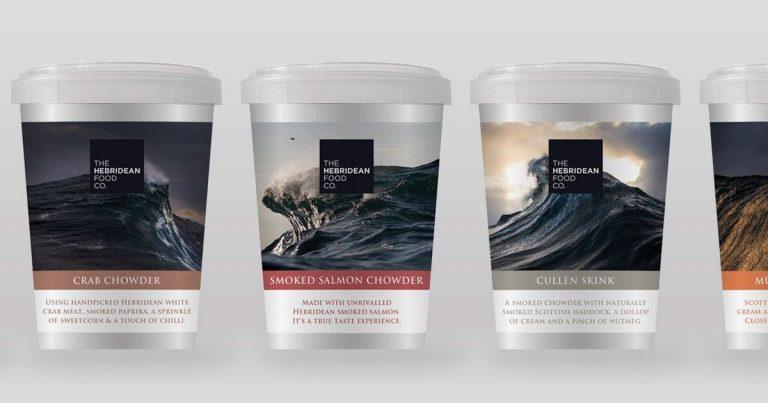
With two days to go in its Crowdcube campaign The Hebridean Food Company has overshot its crowdfunding target. It raised a further 260% of the £60,000 aimed at, reaching a total of £156,090.
The company was able to attract 281 investors to expand it’s business.
The Hebridean Food Company produces soups and sauces for the sale in supermarkets. It advertises the soups to be made solely from “slowly grown food, bursting with character and community at its very heart.” In its funding bid the business stated: “We have created our products so that they are never over processed, using plenty of meat and packed with hearty vegetables. Working with a world class chef we have created a fantastic range of meat and seafood soups.” The Hebridean Food Company is trying to target a gap in supermarket supply of soups without artificial preservatives, flavouring and colouring by offering unprocessed, but flavoursome and affordable alternatives.Growth in fresh soup market is promising
It taps into the world wide £125 million fresh soup market, which is currently growing in value by 8.6% a year. In only seven months the company has already achieved great success. The leading global discount market chain, Aldi, currently features one of their soups on their range. Aldi will add two more products in September. Wholefoods, the American Food Market which exclusively offers food free from artificial preservatives, colours, flavours, sweeteners and hydrogenated fats, has also committed to working with the soup producer. Lastly, the firm has recently secured a supply contract with Southbank Fresh Fish. The distributor caters to supermarkets and other retail stores such as UK department store Selfridges & Co.The Hebridean Food Company is ready to invest in expansion
Having not only reached, but far overshot its crowdfunding target, with another two days to go in their campaign over the UK platform CrowdCube, the company can now focus on investing in further expansion and innovation. The company stated: “We have the capacity in our premises to produce 900,000 tubs of 400g soups (£1.62m turnover) and with this investment we will expand our production capacity to produce £3m worth of products annually.”Katharina Fleiner 18/08/2016
How crowdfunding sent the Canadian Olympic team to Rio

In the heat of the Olympics, as the world’s best athletes wow the world with their talent, it can be easy to forget the amount of training required to reach that standard – and money. The world’s best coaches, facilities and training programmes don’t come for free, and with government funding and part-time work not always enough, some athletes have turned to crowdfunding to realise their dreams.
Crowdfunding has spread to almost every sector over the past couple of years, helping businesses and individuals alike to grow. Canadian athletes in particular have pioneered crowdfunding in the industry, finding it difficult to train, compete and live on the $18,000 per year provided to athletes by the Sport Canada’s Athlete Assistance Program.
Two of the biggest sports crowdfunding sites have been launched by Canadian Olympic athletes, Pursu.it and MakeAChamp. Pursu.it was founded by former Olympic kayaker Julia Rivard and former gymnast Leak Skerry in 2012, just after the last Olympic games. Crowdfunding was a relatively new phenomenon, which could have a been a risk – but it’s paid off. Since then, the site has raised $680,440 for 105 athletes.

MakeAChamp is a similar site, offering a messaging service allowing the athletes to keep their supporters up-to-date with their progress. This year, 24 Canadian athletes ran campaigns on MakeAChamp, with ten launching campaigns with Pursu.it, to cover everything from training, to travel and equipment costs.
Athletes’ campaigns have been hugely successful in the run-up to the Olympics, especially when combined with the power of social media. British diving champion Tom Daley tweeted a link to the Pursu.it page of fellow diver Maxim Bouchard, causing his donations to soar and reach his $12,000 goal.
Miranda Wadham on 18/08/2016