Fed split over interest rate rise
Minutes from the latest Federal Reserve meeting show a split in policymaker sentiment, with members split over when to raise rates.
Whilst some policymakers agree more data is needed before any action is taken, others were keen to tighten policy within the next few months:
“Some members anticipated that economic conditions would soon warrant taking another step in removing policy accommodation,” the Fed said in the minutes.
Several Fed policymakers, however, said a slowdown in the future pace of hiring would argue against a near-term hike, and members of the FOMC said they wanted to “leave their policy options open.”
The release of the minutes saw the dollar strengthen , but negatively affected US stocks.
Co-op bank fearful over future
The Co-op bank has expressed concern over “economic uncertainty” in the wake of Brexit.
The bank narrowed its losses in the first six months of the year to £177 million, but the report was lacking in positivity going forward.
It warned that the decision to leave the EU would be “challenging” for the banking sector, and that it may also have an impact on mortgage loan growth.
Cisco to cut 5,500 jobs
Tech giant Cisco has announced plans to cut 7 percent of its global workforce, calling it a “decisive” move needed to reinvest in the business.
The job cut, which amounts to around 5,500 jobs, comes after its main business selling network switches and routers begun to run into trouble. Increasing competition has led to fourth quarter revenue from routers falling 6 percent.
The job cut will allow it to reinvest money into higher growth areas of the company, such as its firewall business and computer protection software.
Overall, Cisco reported a 21 percent increase on profit for the fourth quarter.
CleanTech, or clean technology, emerged as an umbrella term for all services, technologies and products which hope to cater to the growing demand for solutions to environmental issues. It hopes to offer customers services or products, while at the same time generating further value for the wider community by tackling a more far reaching environmental issue. As Climate Change is rising on the global political agenda, consumers are also voicing demand for new ways to offer private sector solutions to environmental issues. CleanTech has therefore grown to become a more and more viable – and profitable – business concept.
CleanTech businesses are fast growing in numbers and enter into a wide range of different sectors. We found seven promising business projects which look to not only attract consumers but also promote sustainable living.
Ecovative is a New York based biomaterials company founded by the two mechanical engineers, Eben Bayer and Gavin McIntyre, in 2009.
Mushroom® Packaging was the company’s first commercial offering, and was licensed to Sealed Air in NA and Europe in 2012.
The company produces eco-friendly materials such as mushroom packaging and bio-fabricated wood. In 2008 the two founders received a $750,000 grant from a green business competition. A year later started delivering its mushroom packaging to companies such as Dell and Crate & Barell.
Since then Ecovative has gained great influx in funding from private investors as well as government agencies. They reached close to $18 Million in funding in March this year.
The business expanded the product range and moved its production of mushroom packaging to a full-scale 20,000 square foot manufacturing plant in Troy, NY. This year the company launched Ecovative Interiors, a full range of interior design products grown from mushroom materials.
CEO and Co-founder Eben Bayer has spoken at multiple conferences, such as Ted Talks about the vlaue of CleanTech and particularly the possibility of mushroom replacing plastic in the future. Ecovative has also been given considerable attention in the press this year for their new innovations such as the “Grow-at-home modelling kits” and its funding success. It has also been reported that Ikea, the world’s largest furniture retailer, is looking into replacing current packaging with Ecovative’s mushroom option.
Big Belly Solar produces rubbish bins for the use in public spaces, which uses solar power to compact waste. The rubbish bin is also network connected to deliver information to a computer or smart-device, making for easier handling and data analysis.
The CleanTech company, which was founded in Massachusetts in 2003, was named “Top Smart City Application” at the Internet of Things Awards in 2014/15. It’s business idea previously won $500,000 in funding from the Verizon Powerful Answers contest.
Big Bellys are now operating in 47 countries world-wide, including the UK and its’ business concept seems promising to expand further.
We Farm is a UK based start-up which offers a digital solution to increase efficiency for farmers all around the world by sharing best practices, exchanging new ideas and answering each other’s questions via texts and an online platform.
The company’s webpage states their mission as:
“Small-scale farmers are highly vulnerable to the effects of climate change and they face many challenges including lack of access to traditional markets, agricultural inputs and finance.
Every day small-scale farmers develop a diverse range of innovative, low-cost solutions in response to the many challenges that they face. But with the majority of farmers living in remote areas without internet access, they cannot share this information with other farmers… Until now, with WeFarm.”
The CleanTech business was founded two years ago. It was named a Nominet Trust 100 company in 2015 and won the Google’s Impact Challenge the same year. It has since raised over £1 million in funding through grants.
The business is currently generating its revenues by charging governments, as well as suppliers and researches to access the data accumulated on their platform.
In the next 12 months We Farm is hoping to expand its network globally and grow its revenue stream by offering third party advertisement on their platform.
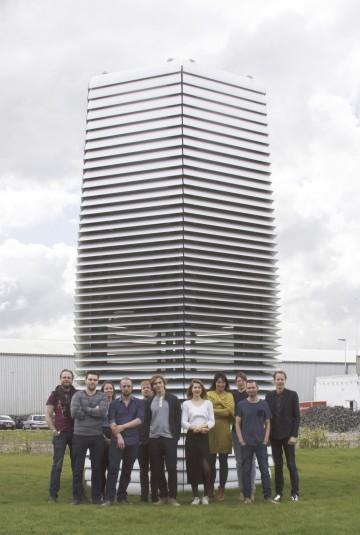
The Smog Free Project is a CleanTech idea developed by Dutch Designer and Artist Daan Roosegaarde. Together with a team of experts, he developed the largest existing smog vacuum cleaner to suck particles out of the air and create a clean air environment.
The project attracted much attention lately with the World Economic Forum launching a video describing the idea and developments of Roosegaarde.
What is very interesting about the project is that by a large part it is able to fund itself. The sale of jewellery, made from compressed smog the machines collect, raises revenue to build more machines.
The project has gained support from the Chinese Ministry of Environmental Protection. It will start a China Tour in September this year, which hopes to generate more attention and valuable publicity.
While the idea is not yet commercialised it provides valuable inspiration for business.
Modifi is a start-up co-founded by Jim Poss, founder and former CEO of Big Belly Solar, earlier featured in this list. Together with a team of tech savvy professionals from BigBelly Solar, Oracle, Google and Amazon he founded Modifi in 2014.
Modifi transforms old unused mobile phones into sensors and uses such to track, measure and monitor assets, such as for example your home or business, from a mobile location over a remote platform.
While still in its infant shoes the company raised $675,000 in equity funding over the platform CrunchBase in October 2015 to expand its CleanTech business.
It is currently supplying its sensors to three major clients, managing 8.1m “end-points” (networked devices) and is hoping to grow this figure exponentially in the coming years.
Conceptos Plasticos is a company, based in Colombia, which started out as a free housing project for the homeless but has since turned into a revenue generating business and flourished under growing demand for its’ services.
The business melts plastics and rubber waste into alternative construction foundations for both permanent and temporary housing. The material blocks, which have been compared to Lego blocks, can be assembled to create housing, shelters, classrooms, community halls and even entire buildings in an easy way in which an entire family or community can participate.
The company names governments, NGOs, Foundations, as well as private companies, as their current customers paying for the alternative and cheap housing solution which also helps to recycle plastic waste.
It is however not only generating income through selling its materials, but also by educating communities on how to use it and train people in the construction of the new housing solutions.
Conceptos Plasticos stated that it would take four people without construction experience only five days to assemble a family house. According to the company, a 14 family shelter would take 15 unskilled labourers only ten days to build.
The company is currently searching for additional funding on the Venture to expand it’s business operations further.
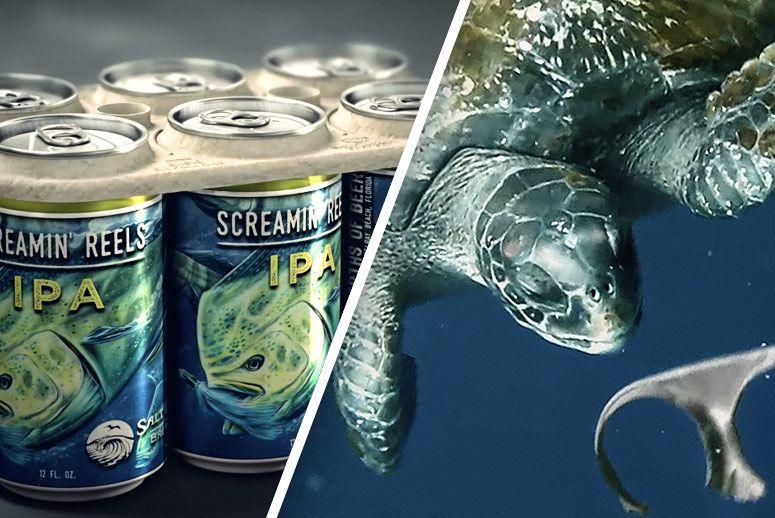
In a new and innovative move to save on plastic rings in the packaging of beer can six packs, the Florida, US based Saltwater Brewery developed edible six pack rings made from barley and wheat left over in the brewing process.
The new business innovation does not only reduce wasting of production ingredients barley and wheat, but also helps to save animal lives. The plastic rings, which traditionally hold together can beer six packs, often end up harming animals which get caught in them or try to swallow the material. The new model completely decomposes but can also be eaten safely by animals.
The firm’s move to sustainable materials has been viewed as a great development in CleanTech, celebrated by environmentalists and innovators alike.
As Gold and Silver prices have been on the rise this year, mining companies are now discussing to resume dividend payments.
Gold and Silver price falls since 2011 peak hit mining companies hard
Prices of gold and silver usually rally in times of economic uncertainty and low Fed rates, which indicate lower interest paid on other interest earning assets. The precious metals last peaked in 2011. Gold reached US$1900 per ounce and silver rallied to US$47 per ounce.
However, from 2012 until the start of 2016 gold dropped a more than 42%. Silver fell as much as 70%.
The lower prices hit mining companies specialised in the dealings with these precious metals hard. Many abandoned dividend payments to their investors as they accrued large deficits.
Gold and Silver began new rally this year
Since the start of 2016, economic uncertainty has however pushed more investors back into gold and silver, considered as safe-haven-assets.
Gold rallied 26.5% since the beginning of 2016. Silver jumped 41.5%.
The price hike in gold and silver, as well as lower currency rates, have greatly improved the position of gold and silver miners. This will largely benefit their investors.
“The amount of free cash flow the industry is generating has increased significantly in recent months,” said Jonathan Guy, analyst at Numis in London. “Gold is up and costs have been falling and so there is much more potential for companies to resume or increase dividends. The market is going to be looking for companies to deliver messages on higher payouts.”
Gold Mining companies increase pay-out to investors
Centamin plc, a UK based gold mining company focused on the Arabian-Nubian Shield, doubled its’ interim dividend last week. The company’s share prices this year to date rose by nearly 176%.
Randgold Resources stated that by the end of the year it could have accumulated enough cash to its’ debt free balance sheet to increase its’ dividend payment. The company saw shares rally 105% on the London Stock Exchange this year to date.
South African AngloGold Ashanti, the world’s third largest gold mining company by volume, on Monday reported its H1 interim earnings and results are very promising as well. The company managed to reduce its’ net debt from US$3.079 billion in H1 of 2015 to US$2.098 billion in H1 2016. It also reported that adjusted headline earnings more than doubled to $159 million compared to the same period last year. The company decided to halt paying dividends in 2013 after frequently under-performing due to decreasing gold prices. In eye of the positive earnings report, AngloGold has stated that it thinking to resume dividend payments by 2017.
Silver miners have bettered performance as well
The small Canadian silver mining company, Silver Wheaton Corp, saw share prices rally nearly 150% this year to date. It reported its’ third quarterly dividend payment for this year last week.
Hochschild Mining UK has also stated that it is considering to resume dividend payments, on the back of improving earnings for the first time since 2013.
Gold Funds dominate top 10 of best performing funds this year
Funds specialising in investments in gold and silver have outperformed all others this year due to the positive developments for the gold and silver industry. On our list of the ten best performing funds in 2016, the overwhelming majority is made up of gold funds, which, after years of reporting considerable losses, have in 2016 taken the lead in generating returns for their investors.
Nickel and Copper suffer under slower Chinese growth in 2016
While gold and silver have been the best-performing metals, other metals have suffered this year. Nickel and copper in particular were hit by slowing economic growth in China, which caused the world’s largest consumer of such mainly industrially used metals to cut down on its’ demand.
The mixed climate in the metal sector has caused some more diversified mining companies to regard pay-outs to investors with more care in order to preserve cash.
While BHP Billiton and Rio Tinto have cut payment commitments to investors recently, Glencore and Anglo American abandoned pay-outs altogether for now.
US employment data released on Friday, as well as an increase in the expected level of the Fed Funds Rate, has taken effect on the volatile price of gold.
Expected level of Jan 2018 Fed Funds futures rose by 0.09 percent last Friday after strong employment data boosted the markets. Positive data of this kind has led to increased speculation over when the Fed will make a decision to hike rates -affecting the highly sensitive gold market accordingly. This latest piece of data has pushed gold up towards the $1350s.
New York Fed President William Dudley encouraged sentiment yesterday by saying a September rate hike was “possible”, with Atlanta Fed President Dennis Lockhart admitting the US could see two rate hikes before the end of 2016.
Shares in Danish brewer Carlsberg (CPH:CARL-A) fell over 3.5 percent this morning after half year results came in just below expectations.
The company reported a six month operating profit of 2.45 billion Danish crowns, down 4 percent on the year before, alongside a 1 percent fall in sales. However, organic revenue grew by 4 percent.
CEO Cees ‘t Haart, who began a seven-year plan to boost growth last year, commented:
“We have a number of operations which are not contributing in the way that we would have liked. We are evaluating these and we are taking action.”
Carlsberg stuck to its full-year forecast despite facing problems in both Russia and Eastern Europe which may have an impact on full-year results.
Carlsberg is currently trading down 3.68 percent at 655.00 (1134GMT).
Stocks, currencies and bonds are all sensitive to political change and a US presidential election is always a period of uncertainty for the markets. So how are the various markets likely to be impacted by the run up to the 2016 US presidential election, which takes place on 8 November?
Nikolas Xenofontos, Director of Risk Management at leading online trading services provider easyMarkets, believes that the wildcard factor of Donald Trump in this year’s election could have a big impact on the US economy. He explains,
“The rise of an anti-establishment candidate like Donald Trump speaks volumes about the desire for change in the US. Party-line politics have been left behind, with Trump standing out as a self-financed candidate who isn’t beholden to any special interest groups and doesn’t plan on following the usual script that most successful candidates use to reach the White House. This independence is both refreshing and worrying when it comes to the financial markets, as there are a lot of unknown factors at play, which could serve to make investors nervous over the coming months.”
Donald Trump’s musings on economic change and policy, should he become president, have already caused a stir. He has floated the idea of replacing Janet Yellen as Chair of the Federal Reserve and has highlighted the benefits of a weak dollar, commenting,
“While there are certain benefits, it sounds better to have a strong dollar than in actuality it is.”
Currency intervention is a risky business. A weaker dollar could benefit US multinationals, which have been struggling of late in the face of the greenback’s strength: Wall Street is in the process of recording its fourth consecutive quarter of earnings decline, in the face of weak international demand. However, currency intervention could easily prompt countries with a history of intervention, such as Japan, China and South Korea, to introduce additional measures to make their currencies more competitive.
In true establishment fashion, Mrs. Clinton has refused to make explicit comments on how to handle currency devaluation.
The US’s international trading position could also be under threat from Donald Trump’s approach to trade deals. His hardball approach includes large tariffs on imports, which could lead to both rising prices for consumers and tariff retaliation from other countries, making US exports less attractive. Trump’s planned major overhaul of US-China trade relations is also likely to cause a shift in the status quo. He has commented that he is not, “too afraid to protect and advance American interests and to challenge China to live up to its obligations.” However, the businessman has also promised to “win more” deals and successful negotiations certainly have the potential to strengthen the US’s trade position.
The uncertainty created by an upcoming election often weighs most heavily on stocks. Uncertainty is the bane of the financial markets, and investors react in unpredictable ways when they’re worried about the future. Investors are already wary of healthcare stocks, which Donald Trump’s repeatedly mentioned repeal of the Affordable Care Act could throw into a tailspin.
Content by online trading services provider easymarkets.com
UK unemployment hits record low
The UK’s unemployment rate remained at 4.9% between April and June, its lowest rate for eight years.
The total number of unemployed fell by 52,000 to 1.64 million between April and June, with the labour market continuing on a “strong trend”.
In terms of the effect of Brexit, however, ONS statistician David Freeman commented, “little of today’s data covers the period since the result of the EU referendum became known, with only claimant count and vacancies going beyond June – to July for the former and to May-July for the latter.”
FTSE dragged by Admiral
The FTSE 100 dropped this morning after open, pulled down by an 8 percent fall in Admiral shares.
The insurance firm saw reasonably strong results, with a pre-tax profit of £189.5 million in line with forecasts. However it warned of risks moving forward with Brexit, and highlighted the current effect if has had on their solvency ratio.
Admiral (LON:ADM) are currently trading down 8.21 percent at 2,068.84 (1030GMT).
Households more positive post-Brexit in August – Markit
British households have recovered slightly from post-Brexit uncertainty, according to Markit’s Household Finance Index.
The HFI figure for August hit its highest level in four months at 44.9. Markit senior economist Jack Kennedy said in a statement:
“Concerns seem to have eased in line with the removal of some of the immediate political uncertainty arising from the shock referendum result, combined with a strong monetary policy response from the Bank of England.”
After economic sentiment in the European Monetary Union had slumped to its lowest since August 2012 last month, figures recovered into positive territory. This indicates that only seven weeks after the Brexit vote, the majority of investors are once again optimistic about the economic situation in the Euro-Zone.
The August figure for the ZEW Survey indicator for economic sentiment in the Euro-Zone came in at 4.6; showing the positive sentiment of investors and constituting a major improvement on July’s measure at minus 14.7, the lowest rating since August 2012. The figure also beat analysts’ estimates by 10.7.
ZEW Survey of economic sentiment in Germany also positive
Investor sentiment has also bettered in Germany, where the ZEW Survey of economic sentiment came in at 0.5 in August, 7.3 points higher than July figures. However, the measure missed estimates by 1.3 points.
The ZEW survey evaluation of the current economic situation in Germany reported a figure of 57.6, up 7.8 points from July and beating estimates by 7.6 points. This further indicates that a large share of investors are optimistic about the future of the German economy once again.
Eurostat published promising data on Euro-Zone June trade balance
At the same time as these positive results came in from the Centre of European Economic Research, Eurostat published its data on the Euro-Zone trade balance in June.
Non-seasonally-adjusted trade balance grew from €24.6 billion in May to €29.2 billion in June, beating estimates by €3.4 billion and adding to the cohort of positive EMU economic data.
UK Retail Price Index in July also promising
The release of positive economic data from the Euro-Zone followed shortly after the UK’s National Statistics published its’ July data on Producer – as well as Retail Price Index with equally promising figures.
The producer price index year on year jumped 0.5 percentage points, to 0.3% in July, beating estimated by 0.1%.
National Statistics reported the retail price index year on year figure at 1.9%. The figure grew 0.3% compared to June and beat analysts’ estimates by 0.2%.
Euro trades up against the US Dollar
The Euro has today risen gradually against the US Dollar with the EUR/USD gaining around 1.1% until 1.25pm. At 1.25pm the EUR/USD stood at 1.13008.
The EUR/GBP pair yo-yoed greatly in the first half of the day as economic data from both the Euro-Zone and the UK spelled good news for the two currencies. At 1.30pm the EUR/GBP stood at 1.13008.
With train fares set to rise again today, commuters’ anger over Britain’s overpriced, under-performing rail service once again bubbles to the surface. The news that fares have increased at double the pace of wages over the past six years will surprise no one who commutes by rail, and helped along by Jeremy Corbyn, has stirred up serious anti-privatisation sentiment.
British Rail was privatised in 1993 and has since seen a rise in the number of passengers and journeys offered – as well as ticket prices. However, the UK’s rail network is more complicated than simple private/public status – Network Rail was set up by the government in 2002 and owns and operates most of the rail infrastructure in England, Wales and Scotland, with the government giving train companies subsidies to run services for a certain period.
Labour leader Jeremy Corbyn has made no secret of the fact that, should he become Prime Minister, the state would assume control of private rail franchises as they expire – making a third of the network publicly owned by 2025. With prices rising by 25 percent in the last six years alone, several groups have lobbied for the re-nationalisation of the UK’s rail network.
Research by WeOwnIt suggests taking back the railways could save £352 million per year. Privately owned companies have a legal duty to maximise returns for shareholders, putting prices above customer satisfaction. Network Rail is wasteful and inadequately managed, yet its bosses take big bonuses – the maximum amount sits at 20 percent of the annual salary, brought down by CEO Mark Carne from its previous limit of 160 percent.
Whilst about half of ticket prices are regulated, the rest are not – making it difficult and time-consuming for customers to suss out the best deal. Tickets in the UK cost nearly twice as much as other European countries, including France, Italy and Germany, who have more high speed networks and better infrastructure.
In nearly 20 years since its privatisation publicly owned Network Rail has accumulated £41 billion worth of debt, meaning the government may well sell off the remaining ownership of the British railways.
However, whilst YouGov research shows that the majority of the public is behind nationalisation – would it be a better option, or is it simply more of Corbyn’s idealistic rhetoric?
Southern Rail, who recently went on strike in London
The British government was forced to privatise the railways in 1993 because the network had deteriorated beyond what the government could afford to repair; underfunded, dirty and unreliable, the network’s passenger numbers fell by about a third between 1960 and 1995. Since its privatisation, they have more than doubled in just under 20 years.
Without competition and the motive of customer satisfaction to turn a profit, a nationalised rail network could be inefficient and just as costly as the current arrangement. As it stands, the quasi-privatised system used at the moment ensures that fares and ticketing – or at least, 50 percent of them – are controlled by regulation, services are subsided by around £4 billion of public funds, and the infrastructure is owned by the tax-payer. This begs the question – will a costly nationalisation process really make any difference?
In 1993, a hasty privatisation plan was pushed through – and it had several law flaws. 20 years on however, the system is starting to work. Undeniably overcrowding is a problem – but the biggest issue causing this is outdated infrastructure rather than inadequate train companies. If Network Rail can modernise the railways and work with the franchise holders, both bound by legal standards, there is no reason why the British rail network cannot thrive without nationalisation.
UK extreme sports brand Ruroc, who have created the world’s first integrated ski helmet, goggle and mask, are beginning their second crowdfunding round with Crowd2Fund.Ruroc are looking for £400,000 of equity investment to design and launch a road and motor certified helmet, alongside a number of other new products. Since their last crowdfunding campaign, Ruroc has expanded, offshored production to China and trebled its staff count; all leading to an impressive turnover in 2015 and close to £1.5 million in sales.
Established in 2010, Ruroc have already made a significant stamp on the market with their helmets being used by over 30,000 people, and have cultivated a strong social media following.
Their last crowdfunding campaign was a £150,000 revenue loan, this year the company have made the decision to raise funds by selling equity; partly due to a recent ownership structure change and a new focus on long term development.
Managing Director Dan Rees commented:
“The [crowdfunded] loan raise was perfect for where we were. We’d just completed stage one of our MBO and acquired the majority stake in Ruroc; we needed to stabilise the business and understand exactly how we were going to take it from £1 million to £10 million.
“Now we have our road map and a product release plan for the next five years we know exactly what we are going to need not just financially but also internally.”
Additionally, the company received several enquiries from private equity funds off after the high-profile crowdfunded debt raise. The vote to leave the European Union in June also weighed on the decision to raise further funds:
“We are determined to make the most of the opportunities which Brexit brings for a UK export company like ours. We are partnering with Crowd2Fund to allow us to raise finance and extend our investor team to meet the demands of an increasing global customer base online.”
Conversely, Ruroc’s fortune have initially increased post Brexit, due to their products becoming more attractive due to fluctuations in sterling currency rates making their products more competitively price in the market place.
It is planned that the funds will be used to develop and launch an innovative road/motor certified helmet in 2017. The company have already hit 50% of their target, and Rees hopes that the campaign will reach the attention of a number of industry experts.