
Brexit Leadership odds
In one of the most dramatic and historic nights in British politics, Britain has decided to leave the EU. Speculation has now begun over who will lead the Brexit after David Cameron steps down later this year.
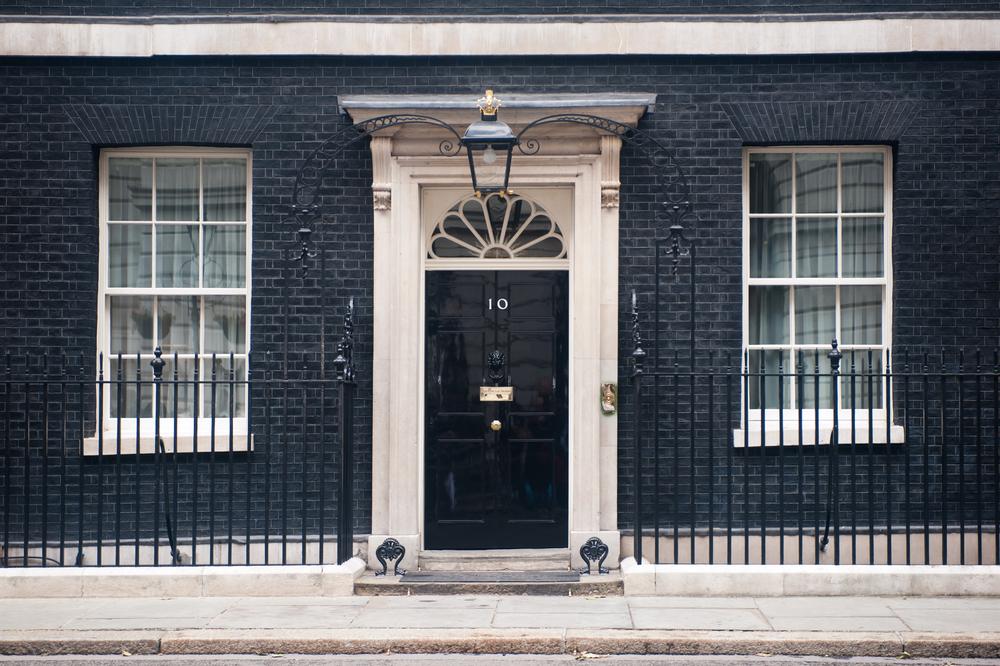
Despite Cameron’s efforts to persuade the public to remain a member of the EU, the nation has voted against his plea by 52% to 48%. In an emotional statement made outside Downing Street this morning, Mr Cameron acknowledged that the country is in need of ‘fresh leadership’ and said he has informed the Queen that Britain should have a new Prime Minister arranged by the start of the Conservative conference in October.
As discussions begin over who will be the next conservative party leader, who are the bookies backing this morning?
Boris Johnson:
As leader of the leave campaign and one of the most recognisable personalities in British politics, former London mayor now stands on firm ground with many MPs backing his leave campaign to take the lead of the party.
Ladbrokes odds: 4/5
Theresa May:
One of few household MPs to keep her head down during the EU debate, the home secretary is regarded as a unity candidate and may be best positioned to challenge the leadership if a Brexiteer is in the running.
Ladbrokes odds: 3/1
Michael Gove:
A formidable figure beside Boris Johnson in the leave campaign, Mr Gove managed to rally plenty of support during his first live TV debate and led to leadership speculation. He has publicly stated that he is not interested in 10 Downing Street – but could he be Boris Johnson’s closest ally if he were to run for leadership?
Ladbrokes odds: 5/1
Andrea Leadsom:
The Conservative MP stunned remain campaigners after her successful live TV debate in Wembley earlier this week, sharing the stage with Boris Johnson. Her calm manner and financially literate speeches gave the former banker an in to a potential career move that could see her knocking on the door of number 11.
Ladbrokes odds: 10/1
George Osbourne:
In previous years he has been dubbed as the most obvious successor to David Cameron. However, a failed campaign alongside his colleges may see the chancellor’s hopes of moving into No 10 slashed. A post-referendum reshuffle may mean he needs to seek a new cabinet position to stand a chance of being a future Prime Minister.
Ladbrokes odds: 12/1
24/06/2016
China’s rising debt – New concerns post Brexit

As the UK decides to leave the Eurpean Union, markets plummet in Asia. This could be especially worrying for China after the country only recently, and as it looks now only for a short time, defeated great concerns about its rising debt levels.
China’s rising debt
Chinese rising debt first became a major concern in 2014 when debt levels reached US$ 28 trillion, nearly 282% of its’ GDP. Only Greece, Portugal, Ireland and Singapore saw greater debt to GDP ratios. China had fuelled its impressive economic rise since the 1990s through foreign investment and exports, but its’ economy had started to slow after a 2007 peak at 14 trillion GDP and fell below US$ 8 trillion in 2014 which caused concern over China’s ability to service its’ debt. Nether the less China has over the past two year managed to defend its’ market position and the first quarter of 2016 saw the highest rate of growth since the end of 2014. GDP has risen above US$ 8 trillion again, leading many to believe that the Chinese economy may be on a way to recovery. However, new gained strength in the economy was once again funded through borrowing, with bad loans being serviced by new loans and the Chinese government investing heavily in construction and investment through a further expansion of credit. Debt levels are still at 240% of GDP and public debt has further risen from 58% in 2014 to 65% in 2016. These figures may even be an underestimate of real levels as local governments, necessitated to borrow due to low tax incomes, often write of borrowing as corporate debt due to legal barriers to local government borrowing.Asian markets plummet
China may have hoped they avoided painful structural adjustments to decrease debt levels for a prolonged period of time, but last night’s Brexit results may destroy any hope that he country has for now escaped the critical stage. Asian markets have started to plummet with Tokyo, Hong Kong and Sydney loosing 7.2 percent, 4.7 percent and 3.18 percent respectively. The Chinese and communist party controlled news wire Xinhua had previously estimated that a Brexit vote would likely put downward pressure on global markets and could cause Chinese markets to drop 5 to 10% and first motions in the market have shown such fears to be true. This development may result in the debate over the concerns around Chinese rising debt to be wide open again, especially considering the costly venture of currency manipulation China was involved in throughout the past two years, which lost China US$ 8 billion of its impressive accrual of foreign exchange reserves.China’s foreing exchange reserves
Like many other Asian countries China started to accumulate foreign exchange reserve after the Asian Financial Crisis in the late 1990s and by 2014 its’ reserves stood close to US$ 4 trillion, which is more than the amount of all foreign exchange reserve of the next six biggest reserves held by other countries combined and equalled nearly half the Chinese GDP. But as of 2016 Chinese foreign exchange reserves stand at only US$ 3.2 trillion and in January this year alone a further US$ 99.5 billion. Much of these losses can be attributed to a miscalculation on the events and American actions post the Global Financial Crisis. Post the global financial crisis, the US greatly depreciated its’ currency through a number of waves of quantitative easing. China, trying to maintain its’ peg to the dollar and keep its’ competitiveness, engaged in major currency manipulation to hinder its’ currency from appreciating. However, the US did surprisingly well in soaking up the added liquidity and by 2014 the dollar was getting stronger again. Not having anticipated these developments, many countries such as Brazil saw themselves in trouble as their currencies suddenly started to plummet. In order for China not to follow Brazil’s path it had to use vast amounts of its’ foreign exchange reserves to prop up its’ currency.What this could mean for the future
The change in foreign exchange reserves, in respect to the 2014 position, may have major consequences for China, should rising debt levels become a concern again. While in 2014, the vast amount of foreign reserves may have calmed investors and assured that confidence in China could be sustained, by now China has already lost much of its’ reserves to prop up its’ currency. Should the talk about China’s debt spark up again in the eye of trembling Asian markets, China may this time not find itself in the position to defend its’ currency and economic position. It remains to see if last night’s Brexit vote is to cause long term downwards effects on world markets and how the Chinese Central Bank will deal with such events.Katharina Fleiner 24/06/2016
David Cameron resigns: the referendum’s key figures
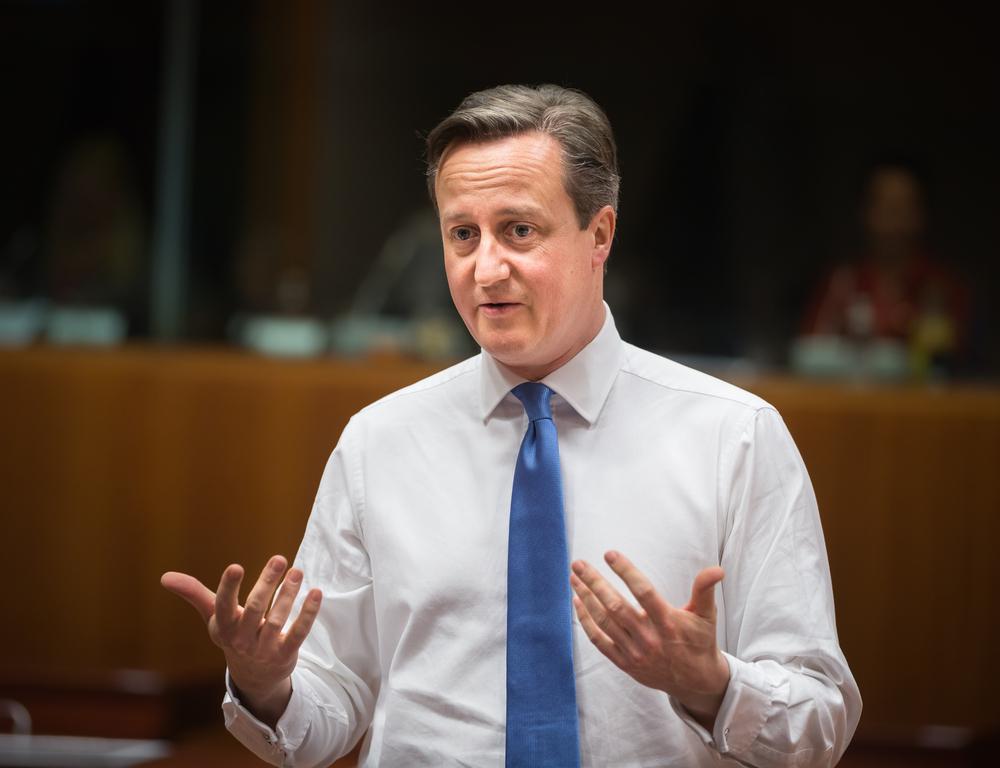
The result was announced this morning: Britain will no longer be part of the European Union. But the final count, standing at 51.9 percent Leave and 48.1 percent Remain, left many voters dissatisfied.
1) 51.9% Leave, 48.1% Remain
The precise figures of the referendum have led to the resignation of Prime Minister David Cameron, whose key belief that Britain is stronger in the European Union will now contrast heavily with that of the country.
He told press outside Downing Street that he was “honoured to have been prime minister of this country for six years,” before admitting there needs to be “the captain that steers our country to the next destination”.
A new election will doubtless add to the country’s economic fragility and further volatility of the Pound.
2) Young – Old divide
The contrast between the opinions of British young people and those above 50 was staggering. 64% of those between 18 and 24 voted Remain, compared to just 33% of those of 65.
These figures suggest a strong divide along age lines, despite young people being arguably most affected by the outcome.
3) Scotland/Ireland – England
All 32 local authorities in Scotland voted to Remain, with a stronger than average 62 percent in favour of Remain. Northern Ireland also voted heavily Remain, marking a bleak divide between the interests of England and Wales and the rest of the UK. Given these figures, suggestions of another referendum on Scottish membership of the UK have already raised, with Scottish leader Nicola Sturgeon confirming that Scotland wants to remain part of the EU. Deputy First Minister of Northern Ireland Martin McGuinness has also called for a border poll on a united Ireland.
24/06/2016
London markets to open, but face challenging day

The London Stock Exchange will open as normal today following a Leave win in the EU referendum, Reuters has reported.
There had been suggestions overnight that the markets would stay closed today to allow volatility to subside. Markets are likely to take a hammering today, with those in Asia having already faced a difficult day; Tokyo’s main index, the Nikkei 225, closed down nearly 8 percent as the votes were counted.
Sterling has dropped to almost unprecedented levels, plummeting over 10 percent to hit a 31-year low; bonds were also sold off sharply, immediately affecting the cost of government borrowing. Traders worked throughout the night yesterday, attempting to contain losses as volatility swept across all sectors.
24/06/2016
BREAKING: Britain set to leave the EU

With 70 percent of votes being counted, Britain is set to leave the European Union.
Leave took the lead shortly after counting began, with Remain struggling to catch up. Percentages stayed within a slim margin, however, with Leave currently having 51.7 percent of the vote. UK Investor predicts the result to be 48 percent – 52 percent in Leave’s favour.
Markets have already started moving downwards, with the pound hitting its lowest level against the dollar since 1985. Asian markets have been hit heavily, with the Hang Seng down 4.78 percent and the Nikkei 225 down 6.68 percent. (0459GMT).
Scotland voted most decisively in favour of Remain, triggering concerns of another referendum on Scottish Independence in the near future. Both Wales and England leant towards Out, swinging the vote in the Leave campaign’s favour.
Turnout was strong throughout the country, hitting 72 percent; higher than that achieved in the last General Election.
Results are still being counted and are not yet final.
DS Smith pre tax profit up 1%

DS Smith (LON:SMDS) today announced a pre-tax profit of £201m up 1% from the previous year for the year ended 30 April 2016. The FTSE 250 Company also said that over the 12 month period revenue rose 6% to £4,066m compared to £3,820m the previous year.
Adjusted operating profits increased by 13% to £379m from £355m as adjusted earnings per share rose 12% to 27.0p from 24.3p a year earlier.
The Company has recommended a final dividend price of 8.8p alongside the interim dividend of 4.0p which gives a total dividend for the year of 12.8p per share. This constitutes a 12% growth from the previous year.
Miles Roberts, Group Chief Executive said:
“We are delighted to report another year of strong growth underpinned by ten per cent organic growth in our adjusted operating profit supplemented by six per cent from acquisitions. Strong financial discipline allows us again to deliver on all our priorities…
Looking ahead, while economic conditions remain uncertain, our innovation-led offering and the scale of our business means that we are confident about further growth and sustainable returns in the years ahead.”
DS Smith said it has proposed two further acquisitions following the success of its recent five acquisitions that are performing ahead of expectations. As part of it’s expansion the company seeks to buy UK-based Creo , a specialist point of sale display and Portuguese packaging company Gopaca that will increase the company’s position in the European market.
At 1:24PM BST DS Smith PLC traded at 412.37 + 25.47 (6.58%)
Eurozone economic performance

New data on the performance of both the manufacturing and services sectors of the Eurozone published by Markit Economics this morning have expansion in both areas despite service PMIs missing estimates.
Overall performance in the Manufacturing sector is up with the Markit Manufacturing PMI rising to 52.6, beating estimates. The lastest instalment of data has highlighted that the manufacturing sector of the European Monetary Union is expanding more than economists first thought.
The services sector underperformed manufactruing as the Marit PMI for Services missed estimates and came in at 52.4. Although lower than estimates it still pointed towards an overall expansion in services throughout the Eruozone.
The composite PMI, including manufacturing and services both, is down 0.3 points to the previous month, standing at 52.8, missing estimates of 53.1 figure. This number fits into this year’s trend of expansion with small variations in activity and no recorded contraction in the past 18 months. This morning’s release suggests a long term stable expansion of both services and manufacturing sectors, god news for the Euro which rallied against the Dollar.
Numbers have also been published for Eurozone members Germany and France individually.
Germany
Germany’s Markit Manufacturing PMI rose from 52.1 to 54.4 which is 2.5 points higher than the estimated number and presents a record high for the index in the past 18 months. Germany’s Services sector has not done quite as well as expected with a slightly lower PMI value than estimated of 53.2, which is the lowest it has been since March. However, as both sectors have seen expansion the Composite PMI stands at 54.1, a slight drop to the previous month and the predictions but nether the less representative of Germany’s relatively stable growth levels over the past year.France
France performed worse than expected with contraction levels lower than estimated numbers in both Manufacturing and Services. The Markit Manufacturing PMI now stands at 47.9, which is the lowest it has been since February 2015, while the Markit Services PMI stands at 49.9, its first level of recorded contraction since March this year but France has not seen a prolonged period of expansions (with Markit Services PMI levels above 50) since December 2015.The composite PMI for France now stands at 49.4.Italy
Further data published by the Italian National Institute of Statistics shows mixed results for Italian economic performance. While Industrial sales are up 2.1% in April, after a 1.6% slump the month before, this only represents a 0.1% increase on the year to year scale. Data on industrial orders only show a 1% increase in April after a 3.6% fall in March and a 11% decrease to the previous year.Tesco reports “encouraging” progress
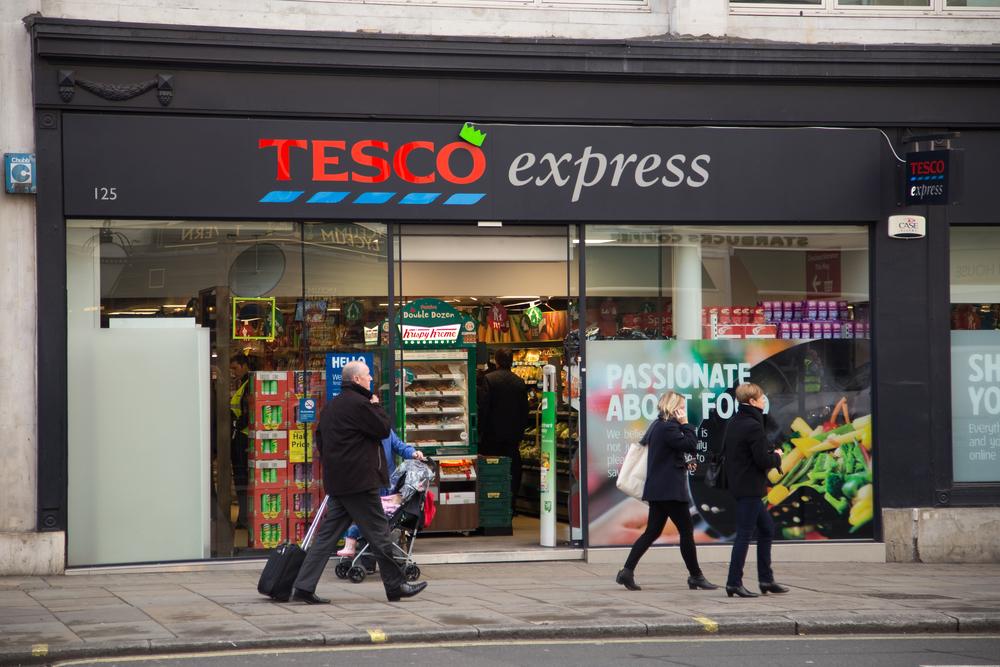
Troubled supermarket Tesco has posted a second successive quarter of UK underlying sales growth for the first time in over five years, suggesting that new CEO Dave Lewis’ turnaround plan maybe having an effect.
Sales at stores in its home market open more than a year rose 0.3 percent in the 13 weeks to May 28, with like-for-like sales for the entire group growing by 0.9 percent.
In a statement, Lewis said: “We are encouraged by the progress we are making. I am confident that the improvements we are making for customers are working and will create long-term value for our shareholders.”
Under Lewis’ plan, Tesco have been selling off assets to focus on growing its main supermarket business. In the past few weeks Tesco has sold Dobbies Garden Centres and restaurant chain Giraffe, and announced today that its Harris & Hoole coffee shop chain will be sold to Caffe Nero.
Tesco shares are currently up 1.90 percent at 169.50.
23/06/2016
Morning Round-Up: Markets up on referendum, S&P warn on UK downgrade, McDonalds China franchise bids

Markets positive ahead of referendum
Asian stocks and oil rose during Asian trade on Thursday, ahead of the Brexit vote, with Sterling holding steady.
The pound climbed to a six-month high against the dollar, improving on its 6 percent rise of last week as the markets bet on a Remain vote.
Both the Nikkei and the Hang Seng index ended the day on a positive note, up 1.07 and 0.32 percent respectively. The FTSE opened higher on Thursday, currently up 0.72 percent.
S&P likely to downgrade UK after Brexit – Bild
Credit ratings agency Standard & Poor’s are likely to downgrade Britain’s AAA rating relatively quickly should a the country vote to leave the European Union today, S&P chief sovereign ratings officer Moritz Kraemer told German daily Bild.
Both political and economic instability would lead to a less certain environment, especially combined with the lack of post-Brexit plan.
Kraemer told Bild, “If Great Britain decides for a Brexit in the EU referendum on Thursday, then the AAA credit rating would come due and would be downgraded within a short period of time”.
Bidding begins for McDonald’s franchise
A bid has been confirmed for McDonald’s restaurants in China and Hong Kong, as the American company look towards franchising its outlets.
According to the BBC both Sanpower and the Beijing Tourist Group have entered a joint bid for the franchise, just months after McDonald’s announced its plan in March.
The US company have reportedly received several bids, which could total more than $3 billion.23/06/2016
UK Pensions: Brexit effects on your retirement

As the referendum is now only one day away and arguments for both ‘Remain’ and ‘Leave’ are being considered, one of the major questions, which may come to affect voting decisions greatly, is that of the effect a Brexit vote could have on UK pensions. It was noted, after the Scottish independence referendum, that pension security was the major concern which won the vote for the ‘No-to-independence’ side. If the consideration of pension safety should play a similar role in Thursday’s referendum, staying in the EU clearly becomes the more likely choice for a number of reasons discussed below.